In brief
A lab test playbook for Australian MSPs comparing NVIDIA Ethernet switching and SONiC AI fabrics across RoCE, telemetry, failover, optics, and support evidence.
Key takeaways
- Australian enterprise and data center programs face a specific set of constraints that make blind adoption of any single AI networking stack risky.
- The test plan is designed for a lab environment with at minimum two leaf switches, one spine switch, two or more GPU server nodes with ConnectX-7 or equivalent RDMA-capable NICs, and appropriate optics.
- Before building a test plan, MSPs need a clear understanding of what each stack actually consists of and where the boundaries of openness versus integration sit.
Why Australian MSPs Need a Structured AI Fabric Lab Test Plan
Australian enterprise and data center programs face a specific set of constraints that make blind adoption of any single AI networking stack risky. Sovereign data requirements, limited domestic ASIC and optics supply chains, power density constraints in metro colocation facilities, and a relatively small pool of network engineers experienced with RDMA and lossless Ethernet all create pressure on MSPs and integrators to prove technology choices before committing client infrastructure.
The test plan is designed for a lab environment with at minimum two leaf switches, one spine switch, two or more GPU server nodes with ConnectX-7 or equivalent RDMA-capable NICs, and appropriate optics. It covers functional validation, performance benchmarking, failure injection, operational tooling comparison, and total cost of ownership analysis. Every section includes checklists and decision criteria that map to xSONiC’s AI fabric and GPU backend fabric solution pillars.
Understanding the Two Stacks: NVIDIA Ethernet Switching vs SONiC-Based Open Networking
Before building a test plan, MSPs need a clear understanding of what each stack actually consists of and where the boundaries of openness versus integration sit.
NVIDIA Ethernet Switching Stack
The NVIDIA Ethernet switching portfolio for AI clusters centers on the Spectrum-4 ASIC (found in SN5000 series switches) and the Spectrum-X platform, which is purpose-built for AI/ML fabric workloads. Spectrum-X bundles adaptive routing, congestion control, and telemetry features designed specifically for multi-node GPU training traffic patterns. The NOS options include Cumulus Linux (NVIDIA’s proprietary Linux-based NOS) and, for some platforms, SONiC support. NVIDIA also provides ConnectX-7 NICs, BlueField-3 DPUs, and LinkX optical cables and transceivers as a vertically integrated stack.
Key characteristics of the NVIDIA stack for AI:
- Adaptive routing at the switch ASIC level for load balancing across ECMP paths
- SHARP (Scalable Hierarchical Aggregation and Reduction Protocol) for in-network computing during collective operations
- Tight integration with NCCL (NVIDIA Collective Communications Library) for GPU-to-GPU communication
- Proprietary telemetry extensions (What Just Happened - WJH) for real-time fault detection
- Cumulus Linux as the default NOS, with limited SONiC support on select platforms
SONiC-Based Open Networking Stack
SONiC is an open-source network operating system originally developed by Microsoft and now governed by the SONiC Foundation under the Linux Foundation. It runs on switches from multiple hardware vendors and ASICs, using the Switch Abstraction Interface (SAI) to decouple the NOS from the underlying silicon. SONiC provides BGP, RDMA support (including RoCE v2, PFC, ECN, DCBX), and a containerized modular architecture that allows individual network functions to be updated independently.
Key characteristics of SONiC for AI fabric deployment:
- Multi-vendor hardware support through SAI abstraction (Broadcom, Marvell, Barefoot Tofino, and others)
- Production-hardened in hyperscaler data centers (Microsoft Azure, Alibaba, and others)
- Standard Linux interfaces and tools for configuration management
- Community-driven development with enterprise distributions available from multiple vendors
- Programmable pipeline support on compatible ASICs
For Australian MSPs, the critical distinction is supply chain and vendor dependency. NVIDIA’s stack offers deep vertical integration but locks the MSP into a single vendor ecosystem for hardware, NOS, NICs, optics, and support. SONiC-based stacks offer hardware choice and multi-vendor sourcing but require the MSP or integrator to build operational expertise in open networking.
Lab Environment Requirements and Prerequisites
A credible AI fabric comparison lab requires a minimum viable topology and tooling. The following checklist defines the baseline requirements for Australian MSPs and integrators setting up a test environment.
Hardware Checklist
| Component | NVIDIA Stack | SONiC/Open Stack | Notes |
|---|---|---|---|
| Spine Switch (x1 minimum) | NVIDIA SN5000 series | Same as leaf, or dedicated spine model | Ensure non-blocking fabric capacity |
| GPU Server Nodes (x2 minimum) | Servers with ConnectX-7 NICs | Same servers with ConnectX-7 or RDMA-capable NICs | Identical NICs isolate NOS as the variable |
| Management Switch | Any managed switch | Same | Out-of-band management network |
| Test Controller | Linux server with iperf3, Perftest, NCCL tests | Same | Identical test tooling on both stacks |
Software and Firmware Checklist
Australian-Specific Considerations
- Verify that selected hardware models have Australian RCM (Regulatory Compliance Mark) certification or equivalent
- Confirm import lead times for non-NVIDIA optics and bare-metal switches from ODM partners
- Check that the lab facility has adequate power for GPU server nodes (minimum 2-4kW per server for multi-GPU configurations)
Test Plan Phase 1: Functional Validation
The first phase of the lab test plan validates that both stacks correctly implement the core AI fabric features. This phase does not measure performance; it confirms that the features work as documented and can be configured correctly.
RoCE v2 Basic Connectivity Test Checklist
- Configure RoCE v2 on both switch stacks (PFC, ECN, DCBX)
- Verify PFC frame generation and handling between switch and NIC
- Confirm ECN marking at configured queue thresholds
- Validate DCBX parameter exchange between switch port and ConnectX-7 NIC
- Run ib_write_bw between two GPU nodes over the fabric and confirm RDMA operation
- Run ib_read_lat and confirm sub-microsecond single-hop latency
- Verify that RoCE v2 traffic is correctly isolated in its own priority queue
- Confirm that non-RDMA traffic (management, storage) does not interfere with RDMA queue
Lossless Ethernet Validation Checklist
- Inject controlled traffic congestion at a leaf switch uplink
- Verify that PFC pauses are generated on the congested priority
- Confirm that no packet drops occur on the RDMA priority during congestion
- Validate that PFC pause propagation does not cause head-of-line blocking on non-RDMA queues
- Test PFC deadlock detection and recovery mechanisms (if supported)
- Verify ECN-based congestion notification end-to-end from switch to NIC
BGP and Underlay Validation Checklist
- Configure BGP unnumbered or numbered underlay on both stacks
- Verify ECMP path selection across spine switches
- Confirm BGP convergence time after a link failure event
- Validate that RDMA overlay traffic is unaffected by underlay reconvergence (within acceptable microsecond thresholds)
Decision Criteria for Phase 1
If either stack fails any functional validation test, it should be eliminated from Phase 2 performance testing unless the failure is a known issue with a documented fix timeline. Document all failures with packet captures, configuration dumps, and firmware/software version details.
Phase 2: Performance, Failure, and Operations Acceptance
The second phase should compare both stacks under the same traffic, failure, and operations conditions. The test controller should run the same perftest, iperf3, NCCL, and telemetry collection workflow for each fabric. Do not accept vendor benchmark screenshots unless the MSP can reproduce the result in its own lab.
| Test area | Evidence to collect | Minimum lab target | Rework trigger |
|---|---|---|---|
| RDMA throughput | ib_write_bw and ib_read_bw across 2 or more GPU nodes | Sustained line-rate class throughput on 100G, 400G, or 800G links with no RDMA priority drops | Throughput collapses under all-to-all traffic |
| Tail latency | ib_read_lat, queue depth, and telemetry during background congestion | p99 and p99.9 latency reported, not only average latency | Vendor provides average latency only |
| Congestion control | ECN marks, CNP counters, PFC pause frames, queue occupancy | Congestion event identified to switch, port, and queue within 15 minutes | PFC storms or head-of-line blocking are invisible |
| Failover | Link pull, spine reboot, BGP restart, optics replacement | Recovery time and packet loss recorded for 3 failure cases | Failure recovery is described but not measured |
| Operations | Config diff, upgrade, rollback, log bundle, support ticket simulation | 1 planned change and 1 rollback completed by the MSP runbook | Vendor engineer required for basic rollback |
Phase 3: Procurement Decision Gate
The procurement gate should score performance and operations separately. A fabric that wins one benchmark but requires a single-vendor optics path, unclear licensing, or non-local escalation may still be the wrong answer for an Australian MSP. Conversely, a SONiC fabric that is 5-10% slower in a synthetic test but has clear automation, multi-vendor sourcing, and documented rollback may be more defensible for managed service delivery.
Engineering FAQ
What should an MSP prove before recommending an AI Ethernet fabric? Prove RoCE v2 connectivity, tail latency, congestion handling, failover recovery, optics compatibility, telemetry export, upgrade rollback, and support escalation on the exact switch, NIC, optics, and NOS versions proposed.
Why test NVIDIA and SONiC fabrics in the same lab? AI fabric claims are workload-sensitive. The same GPU count, traffic pattern, cable plant, failure case, and telemetry collector are needed before a buyer can compare vendor-integrated Ethernet against a disaggregated SONiC design.
What makes the test result usable in an RFP? The result must include configs, firmware versions, optics SKUs, topology, traffic profile, raw test output, failure logs, acceptance thresholds, and unresolved caveats. A summary score without evidence is not procurement-ready.
Related xSONiC Resources
Sources Reviewed
- Ethernet Network Adapters - ConnectX NICs | NVIDIA
- NVIDIA BlueField Data Processing Unit
- NVIDIA Spectrum-X Ethernet Platform
- NVIDIA Ethernet Switching
- SONiC Project Documentation
- OpenFabrics perftest
- Broadcom Ethernet Switching
- Marvell Switching
- Open Compute Networking
- SONiC GitHub
- SONiC Foundation
Product fit
Products referenced for evaluation
These products are referenced for evaluation context in the article. Confirm workload, port, optics, software, interoperability, and support requirements against the exact deployment before procurement.
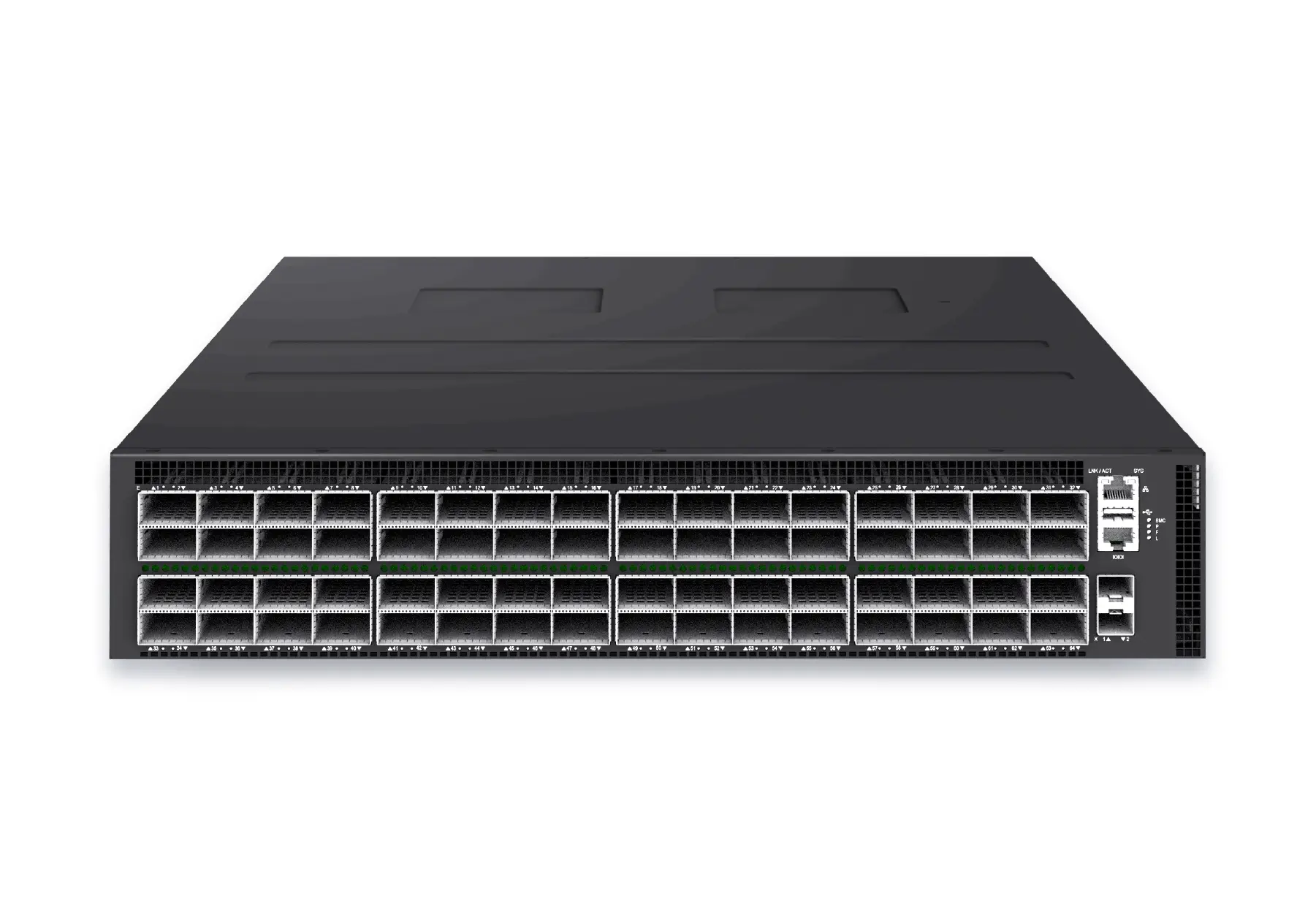 datacenter aiXS-DC-64X800-AI-G164-port 800G AI fabric switch for large-scale GPU clusters, HPC backbones, and ultra-high-throughput data center networks.View product
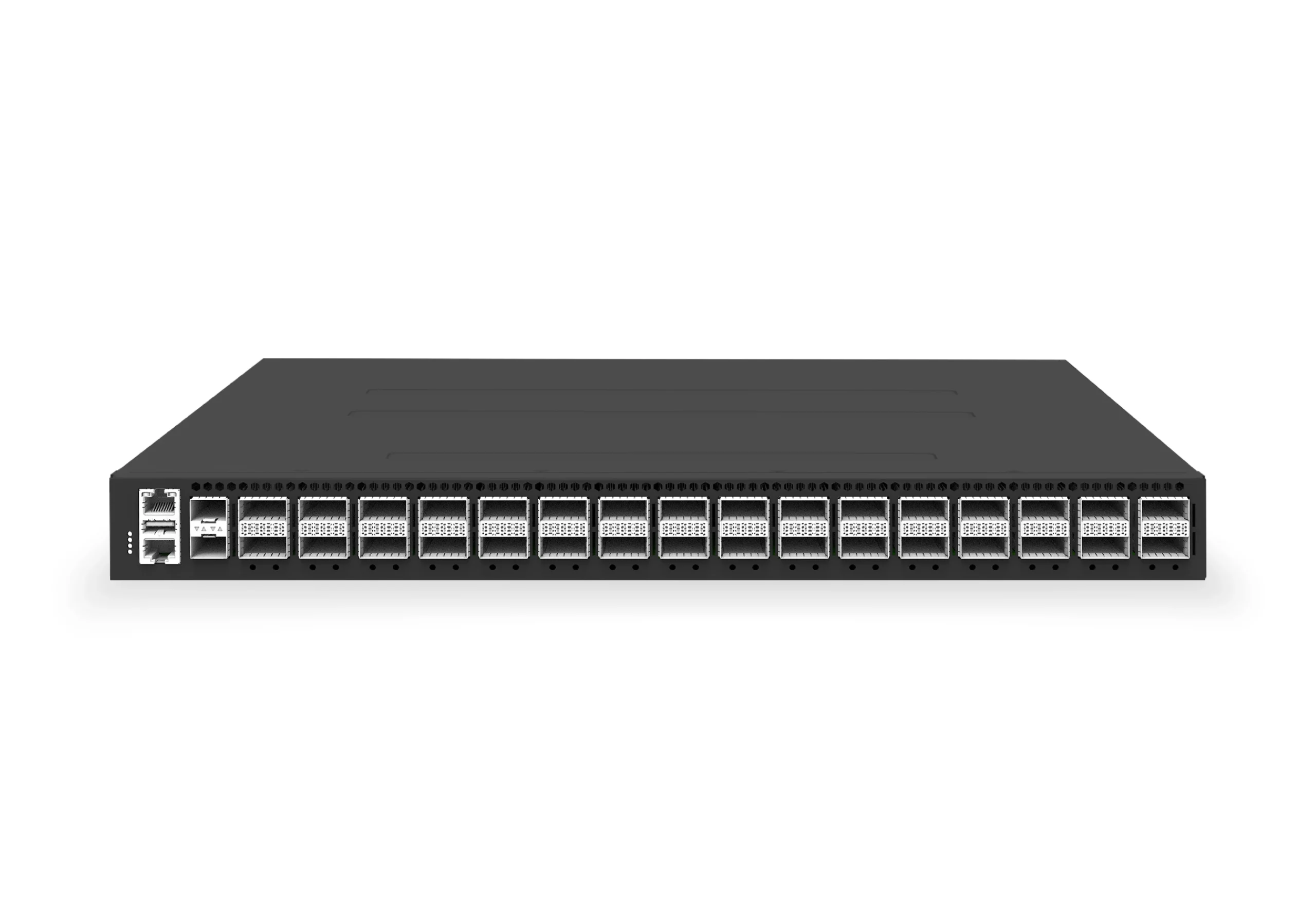 datacenter aiXS-DC-32X400-SP-G232-port 400G spine/core switch for high-capacity data center fabrics and AI-ready backbones.View product
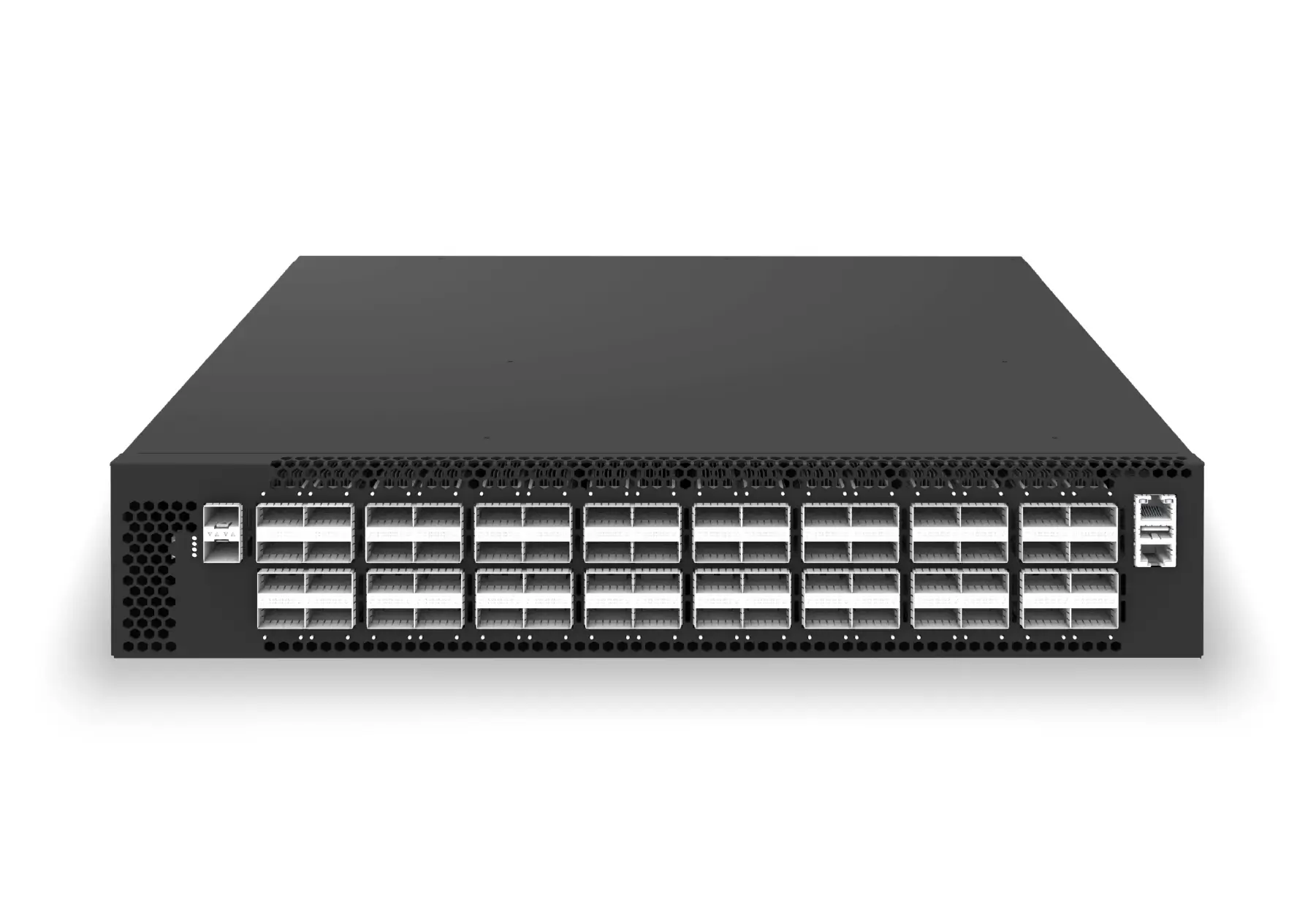 datacenter aiXS-DC-64X200-LS-G164-port 200G leaf/spine switch for high-bandwidth storage, compute, and scale-out data center fabrics.View product
Continue reading
Related articles
 Technical ArticleOpen Networking Support for Enterprise Buyers: How SONiC and Open NOS Models Actually WorkEngineering guidance on Open Networking Support for Enterprise Buyers for Australian campus teams, covering PoE budgets, access-layer resilience, migration risk.Read article
 Technical ArticleFrom Proprietary Lock-In to Open Networking: A Practical Enterprise SONiC Migration PlaybookA practical Enterprise SONiC migration playbook for Australian buyers moving from proprietary switch OS to open networking.Read article
 Technical ArticleWhy Centralized AI Fabric Management Is the Missing Layer in Open NetworkingEngineering guidance on Centralized AI Fabric Management Is the Missing Layer in Open Networking for Australian network teams, covering underlay design, EVPN-VXLAN.Read article