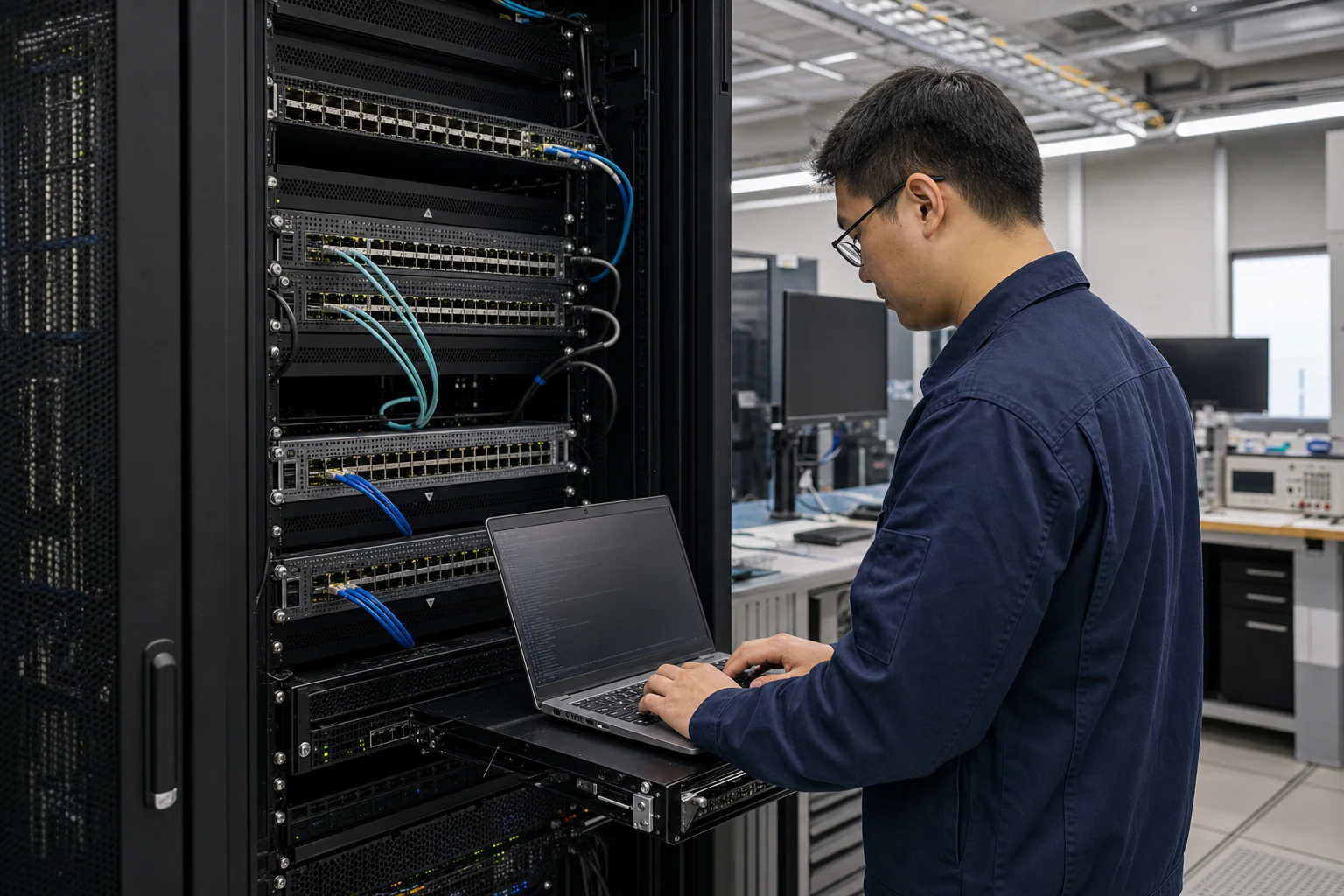
In brief
Engineering guidance on Lab Test Plan for Bare Metal Switch Evaluation for Australian campus teams, covering PoE budgets, access-layer resilience, migration risk.
Key takeaways
- The move from vendor-locked switching to bare metal hardware with a custom network operating system is no longer a fringe experiment.
- But swapping a proprietary switch for a bare metal box is not a like-for-like replacement.
- This guide provides a repeatable lab test plan for data center and enterprise network teams evaluating bare metal switches for custom NOS deployments.
Why Bare Metal Switch Evaluation Needs a Structured Lab Plan
The move from vendor-locked switching to bare metal hardware with a custom network operating system is no longer a fringe experiment. Cloud-scale operators adopted this model years ago. Now, Australian enterprise and colocation operators are following the same path, driven by the need for automation flexibility, supply chain independence, and workload-specific fabric design.
But swapping a proprietary switch for a bare metal box is not a like-for-like replacement. The hardware, the NOS, the management plane, and the operational tooling all change. A structured lab test plan is the bridge between evaluating open networking on paper and knowing it will work in your environment.
This guide provides a repeatable lab test plan for data center and enterprise network teams evaluating bare metal switches for custom NOS deployments. It covers hardware selection, NOS validation, protocol testing, performance benchmarking, and operational readiness, with practical notes for Australian programs.
Define Your Evaluation Objectives Before Buying Hardware
Every lab test plan starts with clear objectives. Before ordering evaluation units, answer these questions:
- What workload are you targeting? A spine-leaf fabric for AI training clusters has different requirements than an enterprise campus aggregation layer or a multi-tenant colocation fabric.
- Which NOS are you evaluating? SONiC (Software for Open Networking in the Cloud), a SONiC-based distribution, or another open NOS like DANOS or Cumulus? SONiC is the most widely deployed open NOS, production-hardened in hyperscaler data centers and backed by the Linux Foundation and the Open Compute Project Networking project (sonicfoundation.dev, opencompute.org/projects/networking).
- What is your success criteria? Define pass/fail thresholds for throughput, latency, convergence time, automation integration, and operational familiarity before the lab begins.
- What is your timeline? A focused lab evaluation typically runs four to eight weeks for hardware and NOS validation, with an additional two to four weeks for integration and operational testing.
For Australian operators, an additional consideration is supply chain lead time and local support availability. Bare metal switches sourced through regional distributors may have different lead times than incumbent vendor orders. Confirm delivery schedules and spare stock availability before committing to a lab timeline.
Hardware Selection Criteria for Bare Metal Evaluation Units
Bare metal switches are not all the same. The ASIC inside the switch determines much of what the NOS can do. Key hardware criteria include:
| Criterion | What to Evaluate |
|---|---|
| ASIC vendor and generation | Broadcom switch silicon, Marvell Prestera, or other. Confirm the ASIC supports your target protocols and port speeds. The Open Compute Project maintains a list of supported devices and platforms for SONiC (github.com/sonic-net/SONiC). |
| Port density and speed | Match to your fabric topology. A leaf switch may need 48x 25GbE downlinks and 6x 100GbE uplinks. A spine may need 32x 100GbE or 400GbE ports. |
| Form factor | 1RU fixed, 2RU, or modular. Confirm rack depth, power supply redundancy, and airflow direction match your facility. |
| CPU and memory | The NOS control plane runs on an embedded x86 or ARM processor. Minimum specs vary by NOS, but SONiC typically requires at least 4GB RAM and a dual-core CPU for production use. |
| ONIE support | Open Network Install Environment (ONIE) is the standard bootloader for bare metal switches. Confirm ONIE is pre-installed or easily installable. OCP lists ONIE as a core networking sub-project (opencompute.org/projects/networking). |
| Console and management interfaces | Serial console, out-of-band management port, and USB recovery are essential for lab work. |
Plan to evaluate at least two to four switches in the lab. A minimal spine-leaf test fabric needs one spine and two leaf switches at minimum, plus a management station or automation server.
Lab Environment Setup
A bare metal switch evaluation lab does not need to replicate your entire production network, but it must be realistic enough to catch issues that a rack-bench test would miss.
Physical Setup
- Two or more racks or rack positions with proper power distribution and cooling. Even a small lab fabric generates meaningful heat.
- Patch panel or structured cabling to connect switch ports to test endpoints. Use the same cable types (DAC, AOC, or fiber with transceivers) you plan to use in production.
- Test endpoints: servers with 25GbE or 100GbE NICs, or traffic generator hardware/software (e.g., TRex, Ostinato, or commercial appliances).
- Console server or serial access: bare metal switches may not have a web GUI. Console access is your primary recovery path.
Software and Automation Stack
- NOS image: Download the SONiC image compatible with your switch hardware. SONiC builds are available from the sonic-net GitHub repository. For Enterprise SONiC distributions, confirm licensing terms and support scope.
- Configuration management: Prepare Ansible playbooks or NAPALM/Nornir scripts to test automated provisioning and day-1 configuration.
- Monitoring: Deploy a lightweight SNMP or gNMI/gRPC collector. NETCONF/YANG-based management is the target state for many open networking programs.
- Version control: Store all configurations in a Git repository from day one. This is a core operational benefit of open networking.
Layer-by-Layer Test Plan
Structure your evaluation in layers, from basic connectivity to advanced protocol validation.
Layer 1 and Layer 2 Validation
- Confirm all ports link up at expected speeds and negotiate correctly.
- Verify LLDP neighbor discovery between switches and endpoints.
- Test VLAN trunking and access port configurations.
- Validate link aggregation (LACP) if used.
- Confirm transceiver compatibility: plug in SFP28, QSFP28, and QSFP-DD optics from your intended vendor. Bare metal switches are generally optics-agnostic, but verify with your specific transceivers.
Layer 3 and Routing Protocol Testing
- Configure BGP peering between leaf and spine switches. SONiC supports BGP natively via FRRouting (FRR), which is production-hardened at hyperscaler scale (sonicfoundation.dev).
- Test OSPF or IS-IS if your environment requires it.
- Validate ECMP (Equal-Cost Multi-Path) load balancing across multiple spine uplinks.
- Test route scale: inject 10,000 to 100,000 routes and measure convergence time and memory usage.
- Confirm VRF (Virtual Routing and Forwarding) isolation if multi-tenancy is a requirement.
Overlay and Fabric Protocol Testing
- EVPN-VXLAN: Configure EVPN-VXLAN fabric with distributed anycast gateway. Test host mobility, ARP suppression, and symmetric/asymmetric routing modes. This is the most common fabric overlay for modern data center deployments.
- VXLAN multi-tenancy: Verify tenant isolation across VNI boundaries.
- BGP-EVPN route types: Validate Type-2 (MAC/IP), Type-3 (multicast), Type-5 (IP prefix) route advertisement and withdrawal.
Automation and Management Plane Testing
- Test NETCONF/YANG-based configuration push and retrieval. SONiC supports SONiC YANG models and OpenConfig where available.
- Validate gNMI streaming telemetry for interface counters, BGP state, and system health.
- Test Ansible-based configuration deployment for day-1 provisioning and day-2 changes.
- Verify REST API or SONiC Management Framework if your NOS version supports it.
- Confirm configuration rollback and commit-restore workflows.
High Availability and Failure Testing
- Test control plane failover if your hardware supports dual supervisors or redundant management modules.
- Pull cables and verify sub-second failover for multichassis LAG (MC-LAG) or EVPN multihoming.
- Reboot a switch and measure fabric convergence time.
- Kill a BGP session and confirm route withdrawal and reconvergence.
- Test firmware upgrade and downgrade procedures without service disruption.
Performance Benchmarking
Performance testing validates that bare metal switches meet your workload requirements under realistic traffic patterns.
- Throughput: Generate line-rate traffic across all ports simultaneously. Confirm non-blocking forwarding at the rated port speed.
- Latency: Measure tail latency under load for cut-through and store-and-forward modes. For AI fabric workloads, latency consistency is critical.
- Buffer behavior: Test microburst handling with varying packet sizes. Bare metal switches with the same ASIC may perform similarly, but NOS configuration differences can affect buffer allocation.
- Scale limits: Measure the maximum number of MAC addresses, ARP entries, routes, and ECMP next-hops the switch can handle before hitting hardware table limits.
Operational Readiness Assessment
The final phase of the lab evaluation is not about the switch. It is about your team and your operational processes.
- Day-1 provisioning: Can your team deploy a bare metal switch from unboxing to production-ready in a predictable timeframe using automation?
- Day-2 operations: Can your NOC or operations team monitor, troubleshoot, and update bare metal switches using the same tooling they already use, or does the tooling need to change?
- Incident response: Run failure scenarios and document the troubleshooting workflow. Bare metal switches with SONiC use standard Linux tooling (tcpdump, ip, etc.) for diagnostics, which is an advantage over proprietary CLIs.
- Documentation: Build a runbook for common operations: initial provisioning, config backup, firmware update, interface troubleshooting, and hardware RMA.
- Skills gap: Identify training needs. If your team has only worked with vendor-locked NOS, allocate time for SONiC and Linux networking training.
Australian Program Considerations
Australian data center and enterprise operators face a specific set of factors when planning open networking evaluations:
- Sovereign infrastructure requirements: Government and regulated industry buyers may require data sovereignty and local support. Confirm that bare metal switch vendors and NOS support channels can meet Australian compliance requirements.
- Colocation and cloud adjacency: Australian colocation providers like NextDC, Equinix AU, and Macquarie Data Centres are expanding AI-ready capacity. Bare metal switches can be evaluated for deployment into these facilities, but confirm power, cooling, and cabling compatibility with the target colo.
- Supply chain and logistics: Factor in import lead times and local stock availability. Australian programs may need to plan evaluations further in advance than US or APAC counterparts.
- Community and support: The SONiC community is active globally, with events and working groups through the SONiC Foundation and OCP. Australian operators can engage through the OCP APAC community and regional events.
From Lab to Production: What Comes Next
A successful lab evaluation is not the end of the process. It is the foundation for a production deployment plan. After the lab phase:
- Document all test results, pass/fail outcomes, and open issues.
- Define your production configuration templates based on lab-validated configs.
- Build a phased deployment plan: start with a non-critical fabric segment (dev/test, staging) before touching production.
- Establish a NOS update and patch management process.
- Engage with your bare metal switch vendor for production support agreements and hardware SLAs.
The open networking model gives operators more control over their network stack, but it also requires operators to own more of the integration and support responsibility. A thorough lab test plan is the best way to de-risk that transition.
Ready to start evaluating bare metal switches for your Australian data center or enterprise network? Contact the xSONiC team to discuss evaluation units, lab support, and open networking program planning.
Engineering Evidence Floor
For SONiC and open networking articles, the acceptance standard is operational proof, not community momentum. The evidence package should name the switch SKU, ASIC, SAI version, ONIE status, SONiC image, optics matrix, automation interface, support path, and rollback procedure. A practical pilot should run for 30 days, include 3 automated configuration changes, validate 100G/400G links where relevant, and prove that a P1 evidence bundle can be assembled within 2 hours.
| Evidence area | What to validate | Acceptance gate | Rework trigger |
|---|---|---|---|
| Platform | SKU, ASIC, ONIE, SAI, image, and optics | 2 platforms boot, upgrade, and rollback | Hardware support is assumed |
| Automation | Source of truth, API/gNMI/NETCONF, backup, and diff | 3 changes pass state readback | CLI drift becomes normal |
| Operations | Logs, telemetry, failure runbook, and escalation owner | P1 bundle ready within 2 hours | Fault isolation depends on one engineer |
| Lifecycle | Patch cadence, CVE process, spare plan, and support SLA | 12 months plan approved | Security and RMA ownership is unclear |
| Commercial | Hardware, support, optics, training, and migration labour | Risk-adjusted TCO is documented | Savings vanish after rework |
Engineering FAQ
What should be tested before moving campus switching to SONiC or open networking? Test PoE behaviour, NAC integration, VLAN and policy design, STP or MC-LAG interaction, multicast, monitoring, upgrade rollback, and help-desk workflows. Campus readiness is an operations test, not only a forwarding test.
Where do campus refresh projects usually carry hidden risk? The risk often sits in closets: power budget, old cabling, undocumented uplinks, mixed endpoint types, voice devices, cameras, badge systems, and change windows. Those details should be inventoried before selecting switch models.
How should Australian campus teams structure a pilot? Choose one representative site or building, document endpoint classes, run PoE and failover tests, verify monitoring, train operations staff, and define rollback steps before expanding to the broader estate.
Related xSONiC Resources
Sources Reviewed
- IEEE 802.1Q Bridges and Bridged Networks
- IEEE 802.1AX Link Aggregation
- Ethernet Network Adapters - ConnectX NICs | NVIDIA
- NVIDIA BlueField Data Processing Unit
- NVIDIA Spectrum-X Ethernet Platform
- OpenConfig gNMI Specification
- OpenConfig
- RFC 7950 - The YANG 1.1 Data Modeling Language
- RFC 6241 - Network Configuration Protocol (NETCONF)
- SONiC Project Documentation
- Broadcom Ethernet Switching
- Marvell Switching
- NVIDIA Ethernet Switching
- Open Compute Networking
- SONiC GitHub
- SONiC Foundation
Product fit
Products referenced for evaluation
These products are referenced for evaluation context in the article. Confirm workload, port, optics, software, interoperability, and support requirements against the exact deployment before procurement.
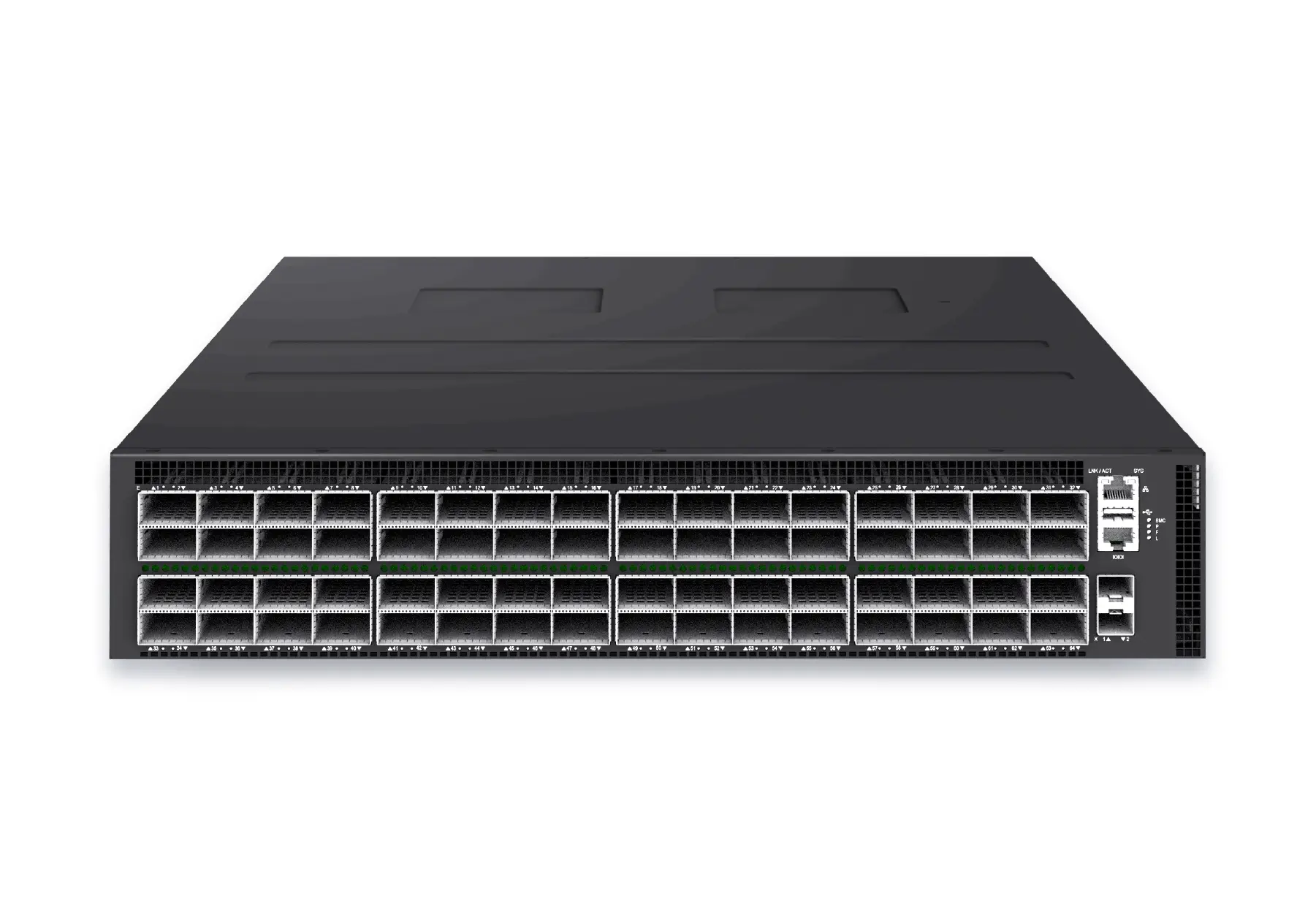 datacenter aiXS-DC-64X800-AI-G164-port 800G AI fabric switch for large-scale GPU clusters, HPC backbones, and ultra-high-throughput data center networks.View product
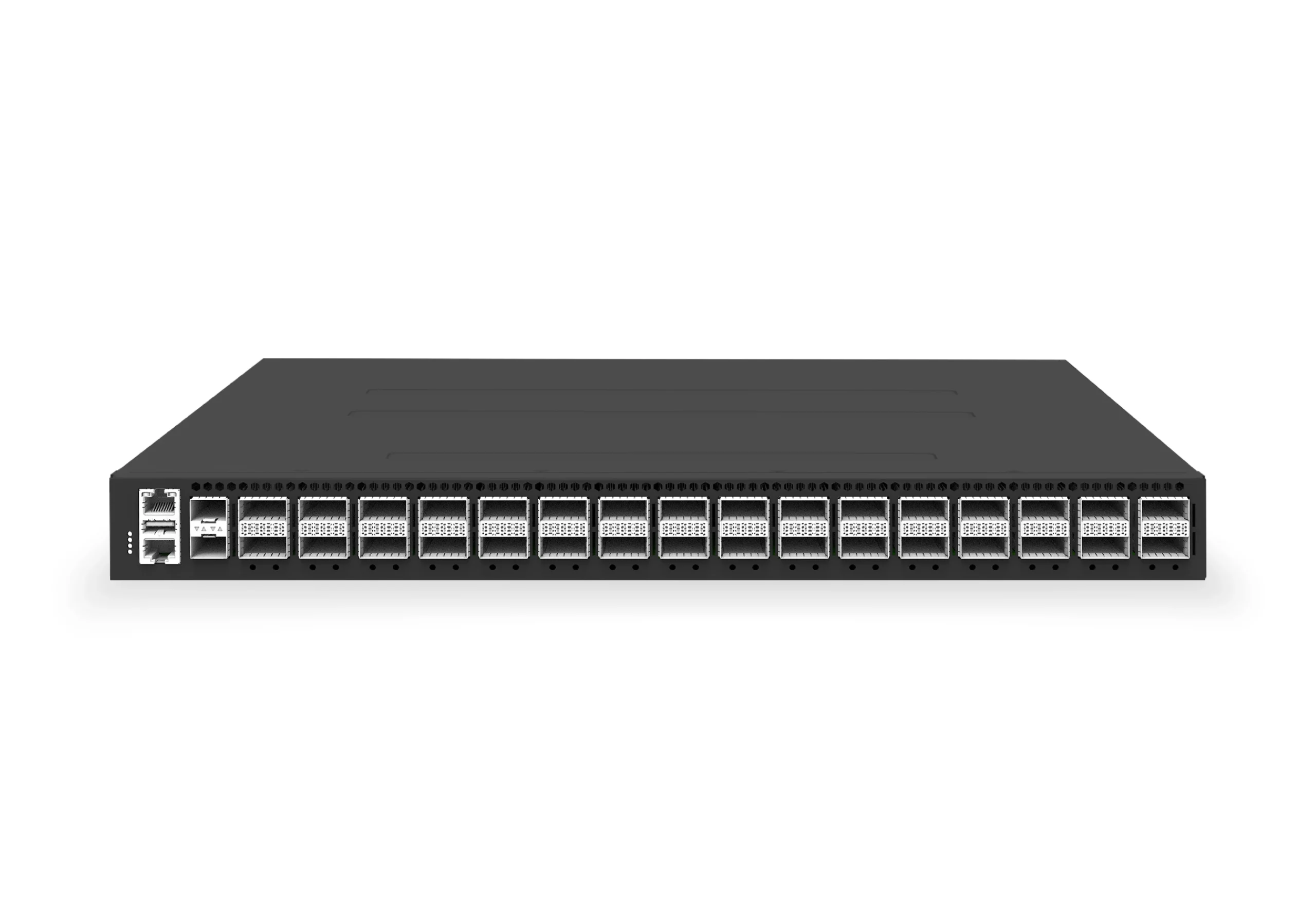 datacenter aiXS-DC-32X400-SP-G232-port 400G spine/core switch for high-capacity data center fabrics and AI-ready backbones.View product
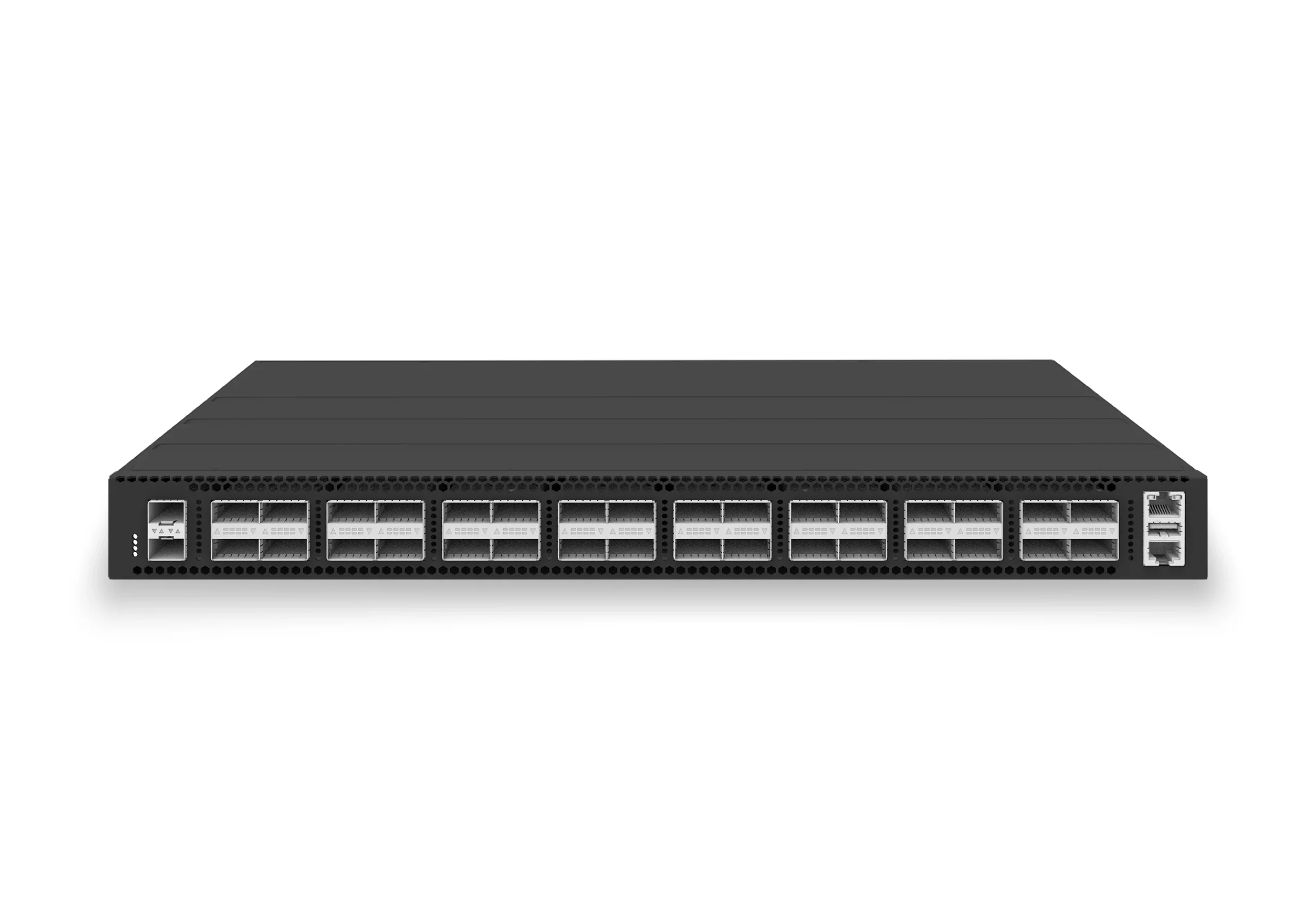 datacenter aiXS-DC-32X100-LS-G232-port 100G leaf/spine switch for VXLAN fabrics, RoCE-ready workloads, and tenant-scale routing.View product
Continue reading
Related articles
 Technical ArticleSONiC Switch Pre-Production Validation Checklist: A 12-Point Testing Playbook for Open Networking TeamsEngineering guidance on SONiC Switch Pre-Production Validation Checklist for Australian data centre buyers, covering form factor choice, link budgets, cabling.Read article
 Technical ArticleWhy Australian Data Centers Are Re-evaluating Open Networking for AI InfrastructureEngineering guide for AI fabric buyers covering RoCE, SONiC, telemetry, optics, support ownership, and deployment validation.Read article
 Technical ArticleSONiC Switch Validation Before Production: What Australian Network Teams Need on Their ChecklistEngineering guide for SONiC and open networking buyers covering platform fit, automation, support, telemetry, and validation evidence.Read article