In brief
Engineering guide for AI fabric buyers covering RoCE, SONiC, telemetry, optics, support ownership, and deployment validation.
Key takeaways
- InfiniBand remains a strong fabric for very large AI training environments, while Ethernet with RoCE v2 is increasingly practical for enterprise private AI when buyers need open standards, familiar operations, and multi-vendor switching options.
- For Australian organisations building private LLM inference, RAG platforms, multimodal AI services, or moderate training clusters, this is not a religious argument.
- InfiniBand was designed for high-performance computing and remains highly relevant where the fabric is a specialised compute interconnect rather than a general data center network.
Engineering Position
InfiniBand remains a strong fabric for very large AI training environments, while Ethernet with RoCE v2 is increasingly practical for enterprise private AI when buyers need open standards, familiar operations, and multi-vendor switching options. The right decision depends on cluster scale, workload pattern, engineering skills, procurement risk, and the quality of the proof of concept.
For Australian organisations building private LLM inference, RAG platforms, multimodal AI services, or moderate training clusters, this is not a religious argument. It is a validation exercise: which fabric can deliver the required job completion time, failure recovery, telemetry, and operating model at the scale you will actually run?
What InfiniBand Does Well
InfiniBand was designed for high-performance computing and remains highly relevant where the fabric is a specialised compute interconnect rather than a general data center network. Its strengths are familiar to HPC teams:
- Native RDMA semantics.
- Mature low-latency fabric behaviour.
- Strong adoption in large training and supercomputing environments.
- Integrated switch, adapter, and management stacks from a concentrated ecosystem.
Those properties matter when the deployment is measured in hundreds or thousands of accelerators, when training job efficiency dominates every other cost, and when the operator has a dedicated HPC networking function.
The trade-off is operational separation. InfiniBand usually means a distinct fabric, distinct tooling, distinct skills, and a narrower procurement path. That may be completely acceptable for a research supercomputing centre or hyperscale AI build. It is less convenient for enterprise IT teams trying to operate AI infrastructure beside existing Ethernet data center networks.
What Ethernet Changes For Private AI
Ethernet’s case for private AI is strongest when the buyer values open standards and operational reuse. Modern Ethernet AI fabrics are not ordinary office networks; they combine high-speed switching, RoCE v2, congestion controls, telemetry, and an engineered leaf-spine design.
Key ingredients are:
| Ingredient | Why it matters |
|---|---|
| 400G/800G switch ports | Supports high-bandwidth GPU and storage fabrics with fewer links |
| RoCE v2 | Enables RDMA over Ethernet for accelerator and storage traffic |
| PFC and ECN | Controls loss and congestion for RoCE traffic |
| Fabric telemetry | Exposes queue pressure, drops, ECN marks, microbursts, and path imbalance |
| SONiC and SAI | Provide an open NOS and ASIC abstraction path for supported hardware |
| Standards ecosystem | IEEE, Ultra Ethernet, and OCP work improve buyer confidence and interoperability expectations |
NVIDIA Spectrum-X is a useful proof point because it packages Ethernet switching, adapters, congestion management, and telemetry as an AI fabric system. The broader lesson is not that every buyer must choose that platform; it is that Ethernet for AI should be evaluated as a full fabric stack, not as a generic switch purchase.
Decision Framework
Use this framework during architecture review.
| Question | InfiniBand often fits when | Ethernet often fits when |
|---|---|---|
| Cluster scale | Very large training clusters dominate the roadmap | Inference, RAG, fine-tuning, or moderate training dominate |
| Skills | Dedicated HPC fabric engineers are available | Existing network team operates Ethernet, BGP, automation, and observability |
| Procurement | A tightly integrated stack is acceptable | Multi-vendor switching, optics, and NOS flexibility matter |
| Operations | A separate AI fabric toolchain is acceptable | AI fabric should align with existing data center operations |
| Validation target | Absolute training performance is the primary constraint | Balanced performance, cost, observability, and maintainability matter |
| Lock-in tolerance | Single-ecosystem integration is acceptable | Open standards and supplier options are strategic requirements |
Do not decide from a feature table alone. Run a workload-representative proof of concept using the same accelerator generation, NICs, optics, cabling distance, routing design, telemetry stack, and operational procedures intended for production.
Proof-Of-Concept Tests Buyers Should Require
A credible fabric comparison should include:
- Baseline throughput and latency under production-like GPU traffic.
- Congestion tests with queue depth, ECN marks, PFC events, and packet drops recorded.
- Link failure and switch failure tests with job impact measured.
- Optics and cable validation at real rack distances.
- NOS upgrade, rollback, config restore, and telemetry export tests.
- Multi-tenant or mixed-workload tests if the fabric will carry storage, inference, and management traffic.
- Operator review: can the local team troubleshoot the fabric without waiting for specialist escalation?
This last point is easy to undervalue. A fabric that benchmarks well but cannot be operated by the resident team will create risk every time the AI platform grows or fails.
Why SONiC Matters In The Ethernet Option
SONiC changes the Ethernet side of the decision because it separates the network operating model from a single proprietary switch software stack. The SONiC Foundation positions SONiC as a Linux-based network operating system for cloud and data center networking, while OCP SAI provides a common switch abstraction API across supported ASICs.
For enterprise AI buyers, the practical value is:
- More control over automation and telemetry workflows.
- A clearer path to hardware diversity where supported platforms are qualified.
- Familiar routing and data center operations patterns.
- Less dependence on a single proprietary NOS lifecycle.
This does not make SONiC a shortcut. Buyers still need support commitments, a validated hardware compatibility list, a tested image lifecycle, and clear operational ownership. Open networking works well when it is engineered deliberately.
Australian Buyer Notes
Australian private AI deployments often have different constraints from hyperscale AI campuses. Data sovereignty, limited specialist hiring pools, multi-site operations, procurement flexibility, and existing Ethernet skills can matter as much as peak benchmark performance.
Ethernet with SONiC and RoCE v2 is worth evaluating when:
- The project is private AI inference, RAG, internal model hosting, or moderate fine-tuning.
- The network team already operates Ethernet data center fabrics.
- Procurement wants more than one switch, optics, or services path.
- Observability and troubleshooting ownership must remain with the local team.
- AI networking needs to integrate with packet broker visibility, security monitoring, and existing data center change processes.
InfiniBand remains worth evaluating when:
- The project is a large training cluster where fabric efficiency dominates the business case.
- The team already has HPC fabric expertise.
- The buyer accepts a separate specialised fabric.
- The selected accelerator ecosystem strongly prefers an InfiniBand reference architecture.
Where xSONiC Fits
xSONiC fits the Ethernet path: open switching, SONiC-oriented operations, high-speed data center platforms, and practical integration with optics and visibility infrastructure. The relevant next step is not a blanket claim that Ethernet replaces InfiniBand everywhere. It is a proof of concept that measures whether an Ethernet fabric can meet the buyer’s private AI workload and operating model.
Related resources:
- AI Fabric solutions
- GPU Backend Fabric architecture
- RoCE v2 guide
- data center switches
- contact the xSONiC team
Bottom Line
For very large training clusters, InfiniBand remains a serious option and may be the correct choice. For enterprise private AI, Ethernet with RoCE v2 and SONiC deserves a formal evaluation because it can combine high-speed GPU networking with open operations and existing Ethernet skills. The decision should be made by proof-of-concept data, not by vendor slogans.
Engineering Evidence Floor
For this topic, treat the article as buyer-ready only when the fabric claim is tied to measurable acceptance data. The baseline evidence package should include the selected switch SKU, SONiC image, ASIC/SAI version, NIC firmware, optics list, RoCE policy, telemetry counters, support owner, and rollback method. In a small pilot, capture at least 30 minutes of traffic at the intended 100G/400G/800G speed, one link failure, one switch reboot, one optics fault, and one support handoff. That evidence separates a credible AI fabric plan from a bandwidth brochure.
| Evidence area | What to validate | Acceptance gate | Rework trigger |
|---|---|---|---|
| Transport | PFC, ECN, DCBX, MTU, queue mapping, and CNP counters | 30 minutes load test at 100G/400G/800G | RoCE is asserted but not measured |
| Platform | Switch SKU, ASIC, SAI, SONiC image, and optics list | 2 switch roles pass upgrade and rollback | Generic compatibility is used as proof |
| Failure | Link loss, switch reboot, route convergence, and workload impact | 3 failure cases captured with timestamps | Steady-state throughput is the only evidence |
| Telemetry | Queue depth, drops, optics DOM, gNMI, and packet visibility | Operators explain a slowdown within 15 minutes | GPU and network teams use different data |
| Support | APAC escalation, RMA, spares, and patch lifecycle | 12 months operating plan approved | Ownership splits across vendors |
Engineering FAQ
How should NVMe form factor selection be made? Start with workload profile, usable capacity, serviceability, thermal envelope, write endurance, PCIe generation, slot layout, and replacement process. U.2, E1.S, M.2, and AIC devices solve different mechanical and operational problems.
What matters more than peak sequential speed? Sustained performance, thermal throttling behaviour, write endurance, latency under load, firmware stability, power-loss protection, and fleet manageability usually matter more than a single benchmark number.
How should storage be validated for AI or cloud workloads? Test the selected form factor in the real chassis with expected airflow, queue depth, write mix, temperature range, and monitoring stack. Validation should include steady-state and recovery behaviour, not only fresh-drive performance.
Sources Reviewed
- Ethernet Network Adapters - ConnectX NICs | NVIDIA
- NVIDIA BlueField Data Processing Unit
- NVIDIA Spectrum-X Ethernet Platform
- ACSC Essential Eight
- OAIC Notifiable Data Breaches
- APRA CPS 234 Information Security
- NETSCOUT Network Packet Definition
- Cloudflare Network Packet Definition
- SONiC Project Documentation
- Broadcom Ethernet Switching
- Marvell Switching
- NVIDIA Ethernet Switching
- Open Compute Networking
- SONiC GitHub
- SONiC Foundation
Product fit
Products referenced for evaluation
These products are referenced for evaluation context in the article. Confirm workload, port, optics, software, interoperability, and support requirements against the exact deployment before procurement.
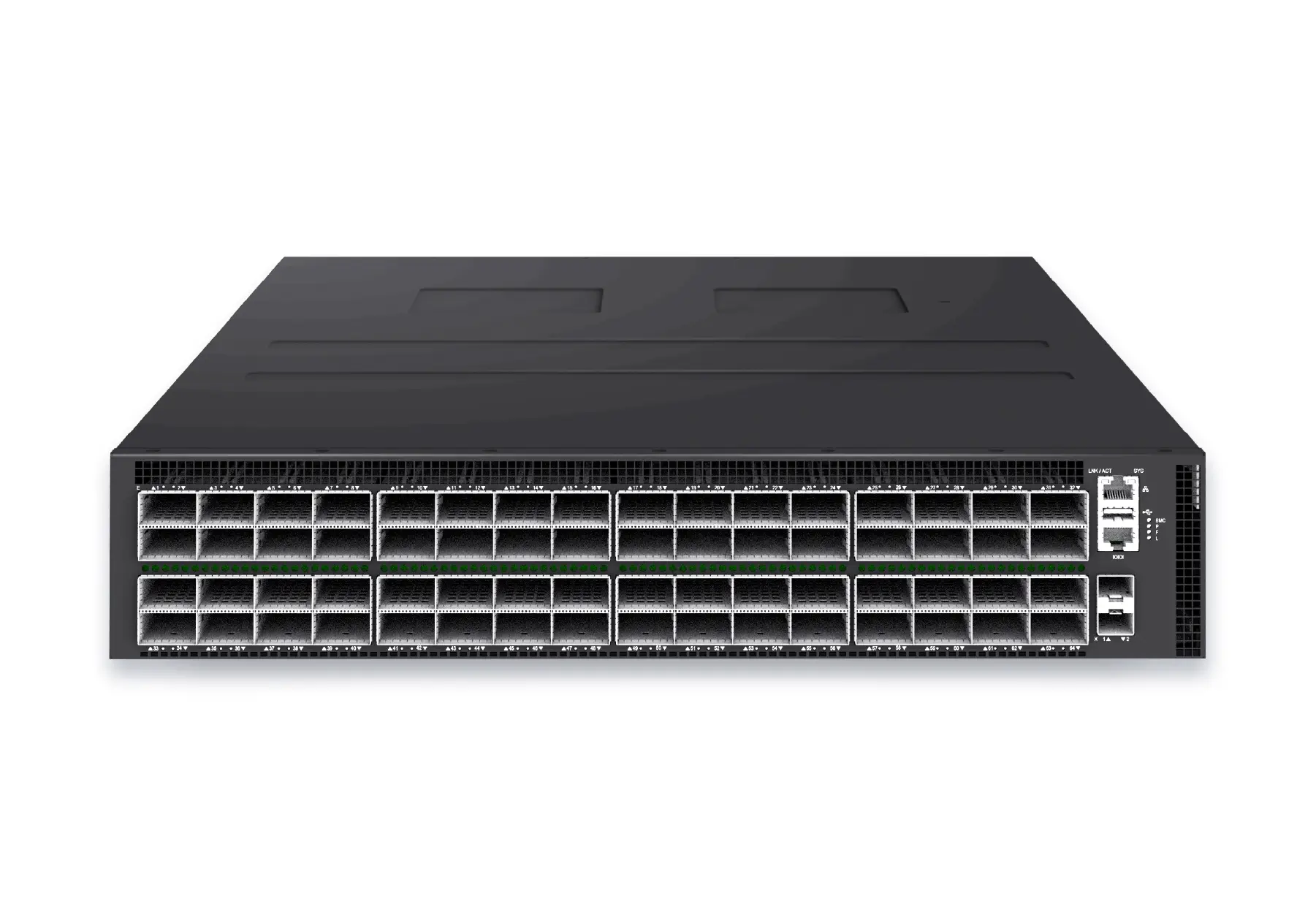 datacenter aiXS-DC-64X800-AI-G164-port 800G AI fabric switch for large-scale GPU clusters, HPC backbones, and ultra-high-throughput data center networks.View product
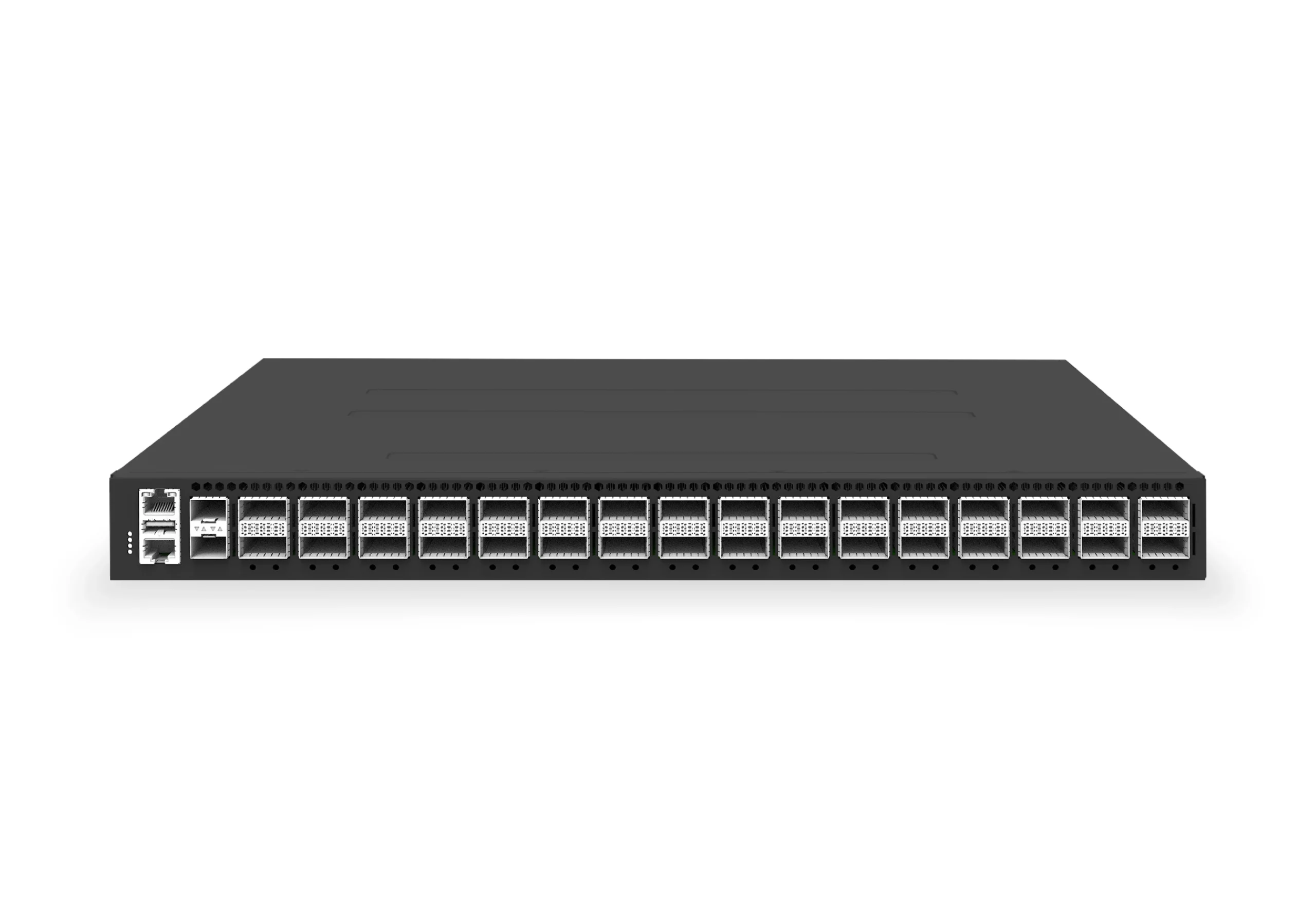 datacenter aiXS-DC-32X400-SP-G232-port 400G spine/core switch for high-capacity data center fabrics and AI-ready backbones.View product
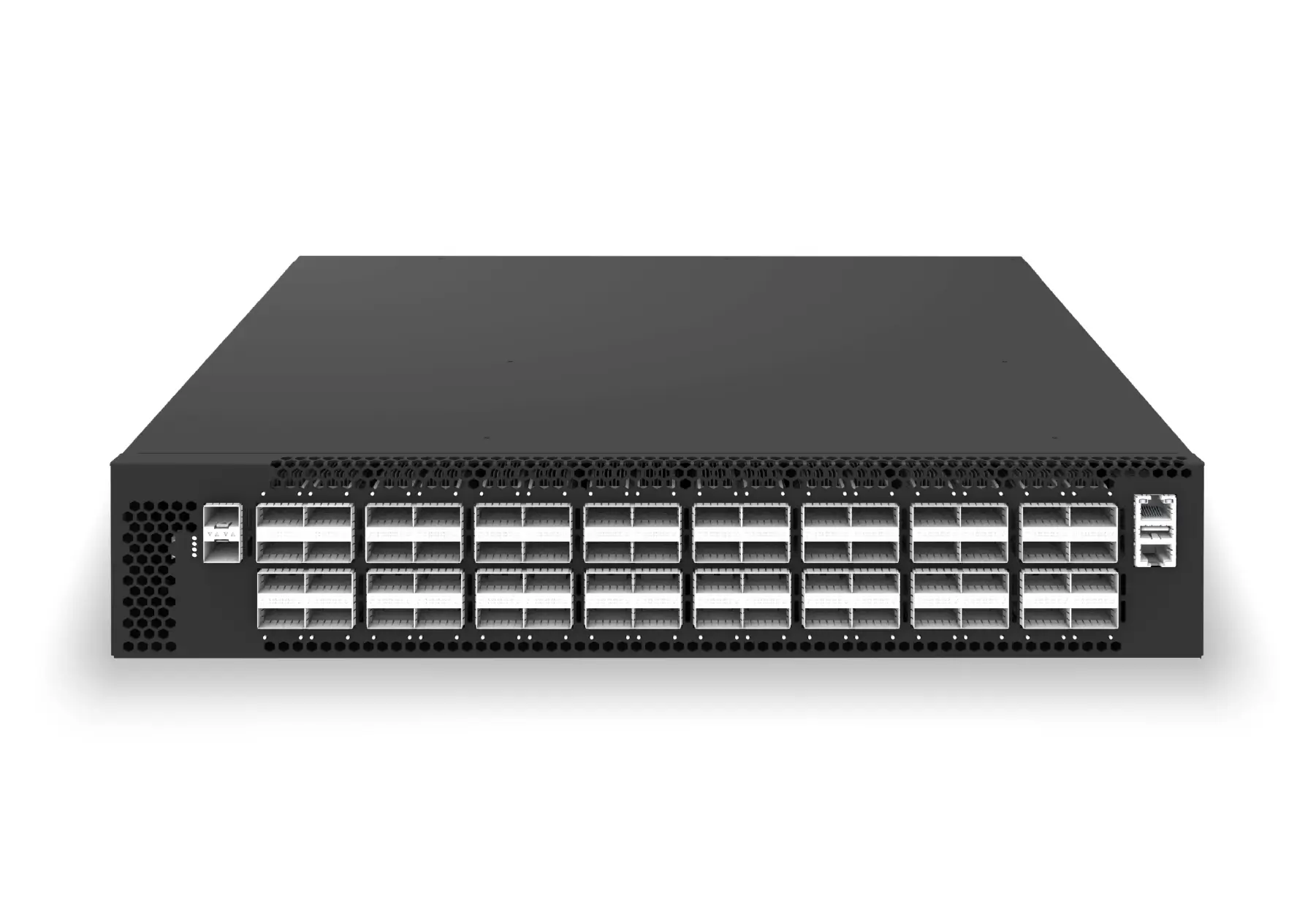 datacenter aiXS-DC-64X200-LS-G164-port 200G leaf/spine switch for high-bandwidth storage, compute, and scale-out data center fabrics.View product
Continue reading
Related articles
 Technical ArticleHow SONiC-Powered 400G and 800G Switches Change AI Data Center Fabric Design in AustraliaEngineering guide for 400G and 800G optics planning covering form factor, reach, telemetry, thermal limits, supply risk, and validation.Read article
 Technical ArticleRoCE v2 GPU Backend Fabrics at 400G and 800G: What Australian Data Center Operators Need to Know in 2026Engineering guide for AI fabric buyers covering RoCE, SONiC, telemetry, optics, support ownership, and deployment validation.Read article
 Technical ArticleWhat Australian Data Center Buyers Need to Know Before Choosing SONiC Switches for 400G and 800G UpgradesEngineering guide for 400G and 800G optics planning covering form factor, reach, telemetry, thermal limits, supply risk, and validation.Read article