In brief
Engineering analysis of how SONiC and open NOS options change data center switch lock-in, covering SAI, support ownership, migration risk, and validation.
Key takeaways
- Software for Open Networking in the Cloud (SONiC) is a free and open-source network operating system based on Linux that runs on switches from multiple vendors and ASICs, according to the SONiC Foundation, a Linux Foundation project.
- The key architectural distinction that matters for lock-in discussions is SONiC's use of the Switch Abstraction Interface (SAI).
- For CIOs and network architects in Australia evaluating data center refresh cycles, the practical question is no longer whether open-source NOS options exist, but whether they are operationally mature enough to justify displacing incumbent vendor stacks in their specific environment.
What Changed: SONiC Moves From Hyperscale Curiosity to Enterprise Procurement Option
Software for Open Networking in the Cloud (SONiC) is a free and open-source network operating system based on Linux that runs on switches from multiple vendors and ASICs, according to the SONiC Foundation, a Linux Foundation project. The platform offers a full suite of network functionality, including BGP and RDMA, that has been production-hardened in the data centers of large cloud service providers.
The key architectural distinction that matters for lock-in discussions is SONiC’s use of the Switch Abstraction Interface (SAI). The SONiC Foundation describes SAI as the mechanism that decouples hardware from software, which in practice means a network team can potentially change switch hardware vendors without rewriting the entire NOS control plane. SONiC’s container-based architecture, where each network function runs in its own Docker container, adds a second layer of portability: individual components can be upgraded or replaced without impacting the entire switch stack.
For CIOs and network architects in Australia evaluating data center refresh cycles, the practical question is no longer whether open-source NOS options exist, but whether they are operationally mature enough to justify displacing incumbent vendor stacks in their specific environment.
Why This Matters: The Lock-In Cost That Shows Up in Every Refresh Cycle
Vendor lock-in in data center switching is not a theoretical concern. It manifests in predictable ways during every three-to-five-year hardware refresh cycle: restricted ASIC choices tied to a single NOS vendor, licensing structures that escalate with port count or feature tier, and operational tooling that creates switching costs well beyond the hardware itself.
The SONiC model, as documented by the SONiC Foundation and the project’s GitHub repository, addresses the first two dimensions directly. By running on switches from various hardware vendors and supporting multiple network chip families through the SAI abstraction layer, SONiC breaks the one-to-one binding between NOS license and hardware platform. The project is licensed under the Apache License 2.0, which removes software licensing cost as a variable in switching procurement.
However, the third dimension — operational tooling and skills — is where the lock-in analysis gets more nuanced for enterprise buyers. SONiC’s containerized, Linux-based architecture requires a different skill set than traditional vendor CLIs. For Australian enterprises with lean network teams, the operational readiness question is as important as the technology question.
The Buyer Calculus: What CIOs Should Evaluate Before Committing to an Open NOS Path
Moving from a proprietary switching stack to an open NOS is a strategic decision, not a simple procurement swap. Based on the SONiC project’s documented architecture and community model, CIOs and network architects evaluating this path should weigh several factors:
Hardware ecosystem breadth: SONiC’s SAI model supports multiple ASIC families, but the depth of that support varies by vendor and chip generation. Not every feature available in a proprietary NOS will have a SAI equivalent. Buyers should request specific feature parity matrices for their required protocol set.
Operational maturity: SONiC is described as production-hardened in large cloud environments, but hyperscale operations teams are structurally different from enterprise network teams. The question for Australian enterprise buyers is whether their operational model can support a Linux-based, containerized NOS, or whether they need a commercial distribution with enterprise support.
Community and vendor support: The SONiC Foundation lists premier members and contributing organizations, but the availability of local Australian support, training, and integration services requires separate investigation.
Automation readiness: SONiC supports standard Linux interfaces and JSON-based configuration, which aligns well with modern network automation practices. For organizations already investing in Ansible, Terraform, or NETCONF/YANG-based automation, the open NOS model can reduce tooling friction.
Australian Context: Hyperscale Growth Meets Enterprise AI Ambition
Australia’s data center market has been in an expansion phase driven by hyperscale cloud provider investment, growing enterprise AI workload requirements, and data sovereignty considerations. This growth intensifies the switching lock-in question because every new data center build or expansion is a procurement decision with multi-year consequences.
For Australian CIOs planning AI infrastructure — GPU clusters, RDMA fabrics, high-bandwidth leaf-spine topologies — the NOS choice directly impacts fabric performance, observability, and the ability to scale without being constrained by a single vendor’s ASIC roadmap. SONiC’s documented support for BGP and RDMA makes it a relevant option for AI fabric designs, but buyers should verify feature completeness for their specific RDMA and congestion management requirements.
The practical lock-in test is numerical. A buyer should be able to move at least 1 representative config between 2 switch SKUs, validate 3 optics classes, run 1 image upgrade and 1 rollback, and collect the same telemetry fields before declaring the open NOS path portable. For a production AI pod, add failure evidence: BGP reconvergence timing, ECN/PFC counters during congestion, and a support handoff completed inside the agreed P1 response window. Without those artifacts, the organisation may have changed vendors without actually reducing lock-in.
Lock-in reduction acceptance matrix
Open NOS adoption should be treated as a lock-in reduction program with measurable acceptance evidence. The organisation is not less locked in just because the software is open source; it is less locked in only when hardware, support, automation, optics, and operations can move without rewriting the whole environment.
| Lock-in dimension | Evidence to request | Reject or rework if |
|---|---|---|
| Hardware portability | Switch SKU list, ASIC family, SAI version, supported SONiC image, optics matrix, and feature parity table | The design depends on one ASIC, one vendor image, or an undocumented SAI feature path |
| Operational portability | CLI/API model, config backup, image upgrade, rollback procedure, log bundle, and troubleshooting runbook | The team can operate the incumbent NOS but has no Linux, container, or SONiC failure workflow |
| Support ownership | Vendor support boundary, community dependency, local escalation hours, CVE process, and hardware replacement SLA | A platform, NOS, optics, or ASIC defect can fall between suppliers during a production incident |
| Automation and telemetry | Ansible/API/NETCONF/gNMI support, configuration source of truth, telemetry fields, and drift detection | The open NOS choice creates a new manual island instead of reducing tool lock-in |
| Exit path | Second-source switch option, configuration portability test, migration window, and rollback to incumbent design | The buyer cannot prove how to move away from the selected distributor, SKU, or support provider |
What to Watch Next: Indicators That Signal the Market Is Shifting
Several observable indicators would signal that open NOS adoption is moving from hyperscale early adopters to mainstream enterprise in Australia:
- Commercial SONiC distribution availability with enterprise SLAs and local support presence.
- ASIC vendors expanding SAI feature coverage to reach parity with their proprietary NOS offerings.
- Australian system integrators and managed service providers adding SONiC-based solutions to their portfolios.
- Independent benchmarking and TCO studies that compare open and proprietary switching stacks in enterprise-scale environments (not just hyperscale).
- Australian enterprise reference customers willing to discuss open NOS deployment experiences publicly.
The SONiC Foundation’s GitHub repository shows active development with nearly 3,000 commits and a substantial contributor base, which suggests continued community investment. The multi-vendor hardware model remains the platform’s core value proposition for lock-in reduction.
Engineering Evidence Floor
For SONiC and open networking articles, the acceptance standard is operational proof, not community momentum. The evidence package should name the switch SKU, ASIC, SAI version, ONIE status, SONiC image, optics matrix, automation interface, support path, and rollback procedure. A practical pilot should run for 30 days, include 3 automated configuration changes, validate 100G/400G links where relevant, and prove that a P1 evidence bundle can be assembled within 2 hours.
| Evidence area | What to validate | Acceptance gate | Rework trigger |
|---|---|---|---|
| Platform | SKU, ASIC, ONIE, SAI, image, and optics | 2 platforms boot, upgrade, and rollback | Hardware support is assumed |
| Automation | Source of truth, API/gNMI/NETCONF, backup, and diff | 3 changes pass state readback | CLI drift becomes normal |
| Operations | Logs, telemetry, failure runbook, and escalation owner | P1 bundle ready within 2 hours | Fault isolation depends on one engineer |
| Lifecycle | Patch cadence, CVE process, spare plan, and support SLA | 12 months plan approved | Security and RMA ownership is unclear |
| Commercial | Hardware, support, optics, training, and migration labour | Risk-adjusted TCO is documented | Savings vanish after rework |
Engineering FAQ
Does SONiC eliminate vendor lock-in? It reduces one form of lock-in by separating NOS strategy from switch hardware, but buyers can still become locked into a distribution, support provider, automation stack, optics matrix, or ASIC feature set.
What should a CIO ask before approving an open NOS migration? Ask who owns support, which features are validated, how upgrades are tested, what rollback looks like, how CVEs are handled, and whether the operations team can support Linux-based network troubleshooting.
Where does SAI matter most? SAI matters when a team wants consistent NOS behaviour across different ASICs. It does not guarantee identical feature depth or performance across platforms.
What is the safest migration pattern? Start with a lab and one bounded fabric role, such as a leaf-spine segment or AI test fabric, then expand only after automation, telemetry, failure recovery, and support escalation have been proven.
Related xSONiC Resources
Sources Reviewed
- Ethernet Network Adapters - ConnectX NICs | NVIDIA
- NVIDIA BlueField Data Processing Unit
- NVIDIA Spectrum-X Ethernet Platform
- OpenConfig gNMI Specification
- OpenConfig
- RFC 7950 - The YANG 1.1 Data Modeling Language
- RFC 6241 - Network Configuration Protocol (NETCONF)
- SONiC Project Documentation
- Broadcom Ethernet Switching
- Marvell Switching
- NVIDIA Ethernet Switching
- Open Compute Networking
- SONiC GitHub
- SONiC Foundation
Product fit
Products referenced for evaluation
These products are referenced for evaluation context in the article. Confirm workload, port, optics, software, interoperability, and support requirements against the exact deployment before procurement.
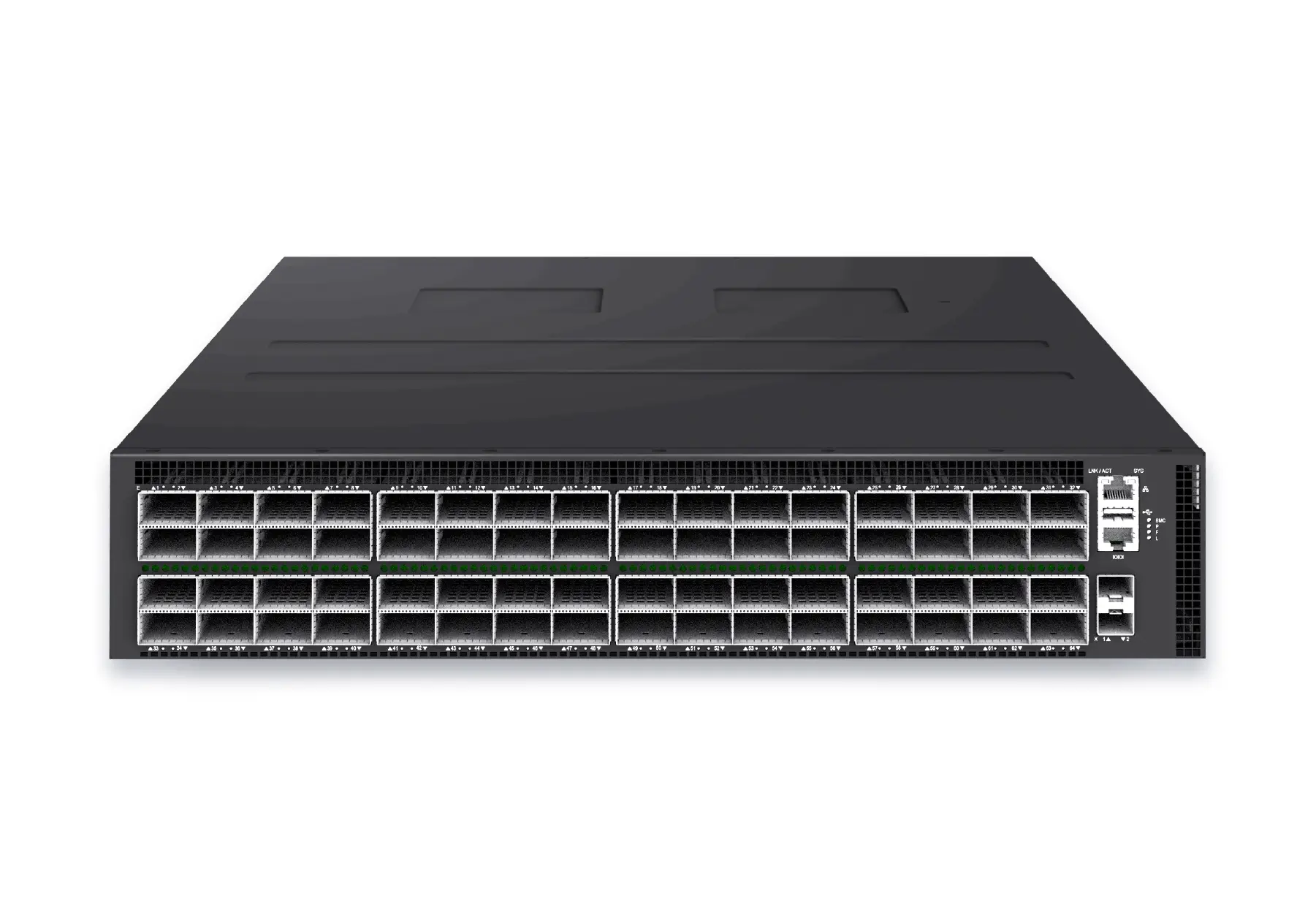 datacenter aiXS-DC-64X800-AI-G164-port 800G AI fabric switch for large-scale GPU clusters, HPC backbones, and ultra-high-throughput data center networks.View product
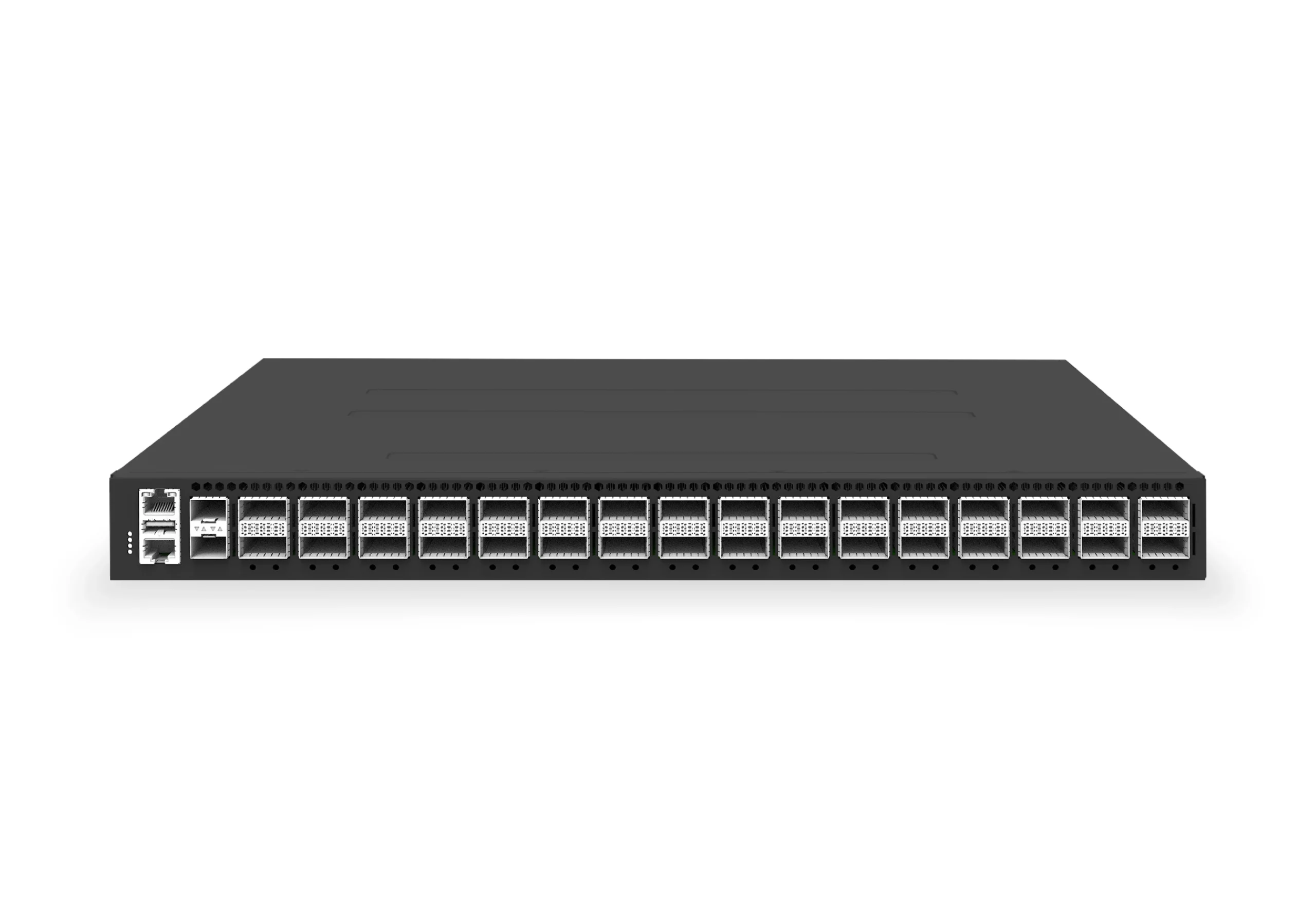 datacenter aiXS-DC-32X400-SP-G232-port 400G spine/core switch for high-capacity data center fabrics and AI-ready backbones.View product
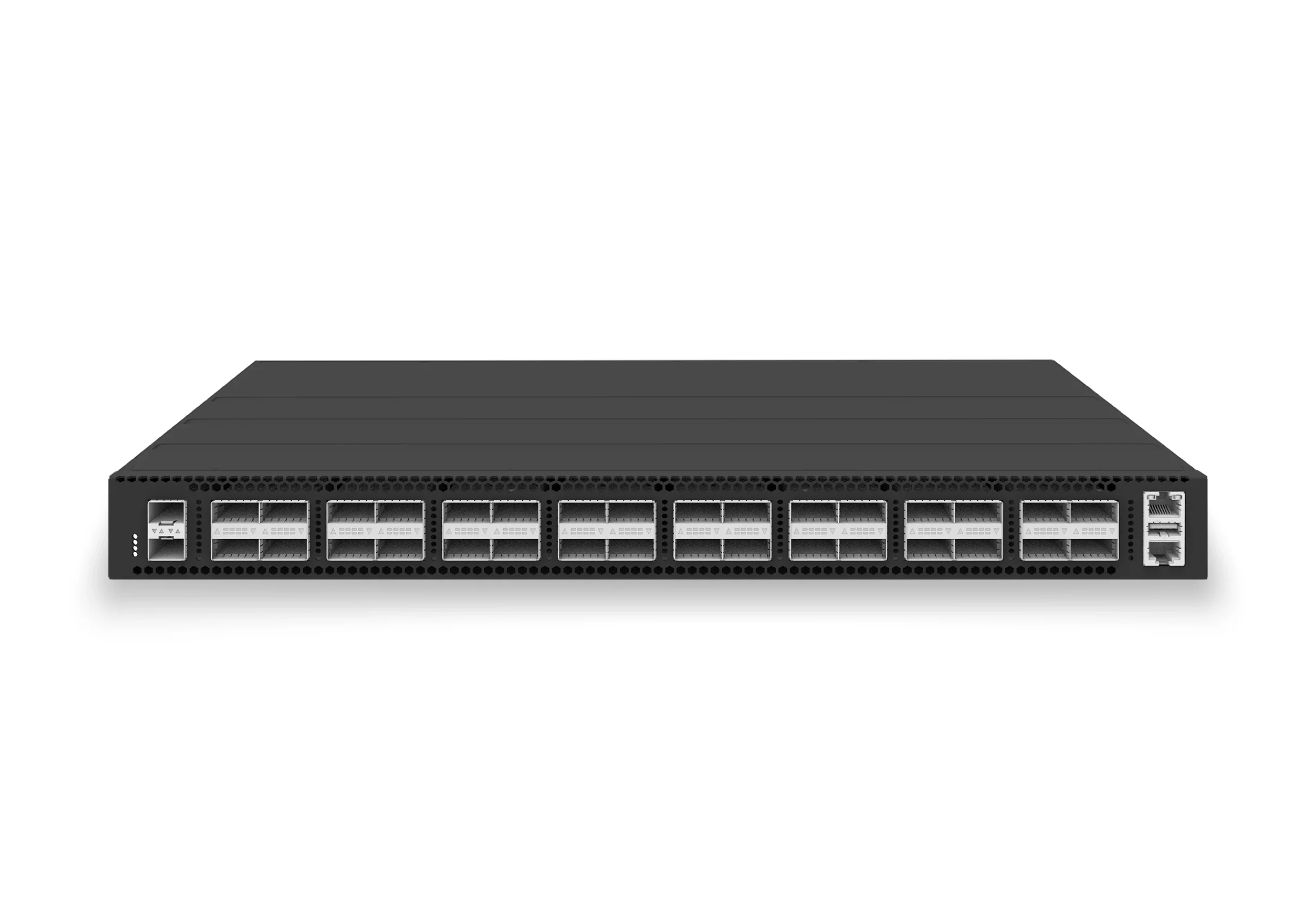 datacenter aiXS-DC-32X100-LS-G232-port 100G leaf/spine switch for VXLAN fabrics, RoCE-ready workloads, and tenant-scale routing.View product
Continue reading
Related articles
 Technical ArticleSONiC Switch Pre-Production Validation Checklist: A 12-Point Testing Playbook for Open Networking TeamsEngineering guidance on SONiC Switch Pre-Production Validation Checklist for Australian data centre buyers, covering form factor choice, link budgets, cabling.Read article
 Technical ArticleWhy Australian Data Centers Are Re-evaluating Open Networking for AI InfrastructureEngineering guide for AI fabric buyers covering RoCE, SONiC, telemetry, optics, support ownership, and deployment validation.Read article
 Technical ArticleSONiC Switch Validation Before Production: What Australian Network Teams Need on Their ChecklistEngineering guide for SONiC and open networking buyers covering platform fit, automation, support, telemetry, and validation evidence.Read article