In brief
A technical review of NVIDIA BlueField DPUs for AI data centre infrastructure, covering network, storage, and security offload implications for Australian operators.
Key takeaways
- As organisations across Australia accelerate their AI ambitions, traditional data centre architectures are reaching their limits.
- The latest generation BlueField-4 DPU delivers 800Gb/s of throughput and reportedly offers six times the compute performance of its predecessor, the BlueField-3.
- Key capabilities according to NVIDIA include: - Hardware-accelerated networking with software-defined overlays - NVMe over Fabrics (NVMe-oF) and GPUDirect Storage for high-speed data access - Real-time, zero-trust cybersecurity enforcement at the infrastructure level - Multi-service architecture supporting elastic provisioning across cloud environments
The Rise of Purpose-Built AI Infrastructure
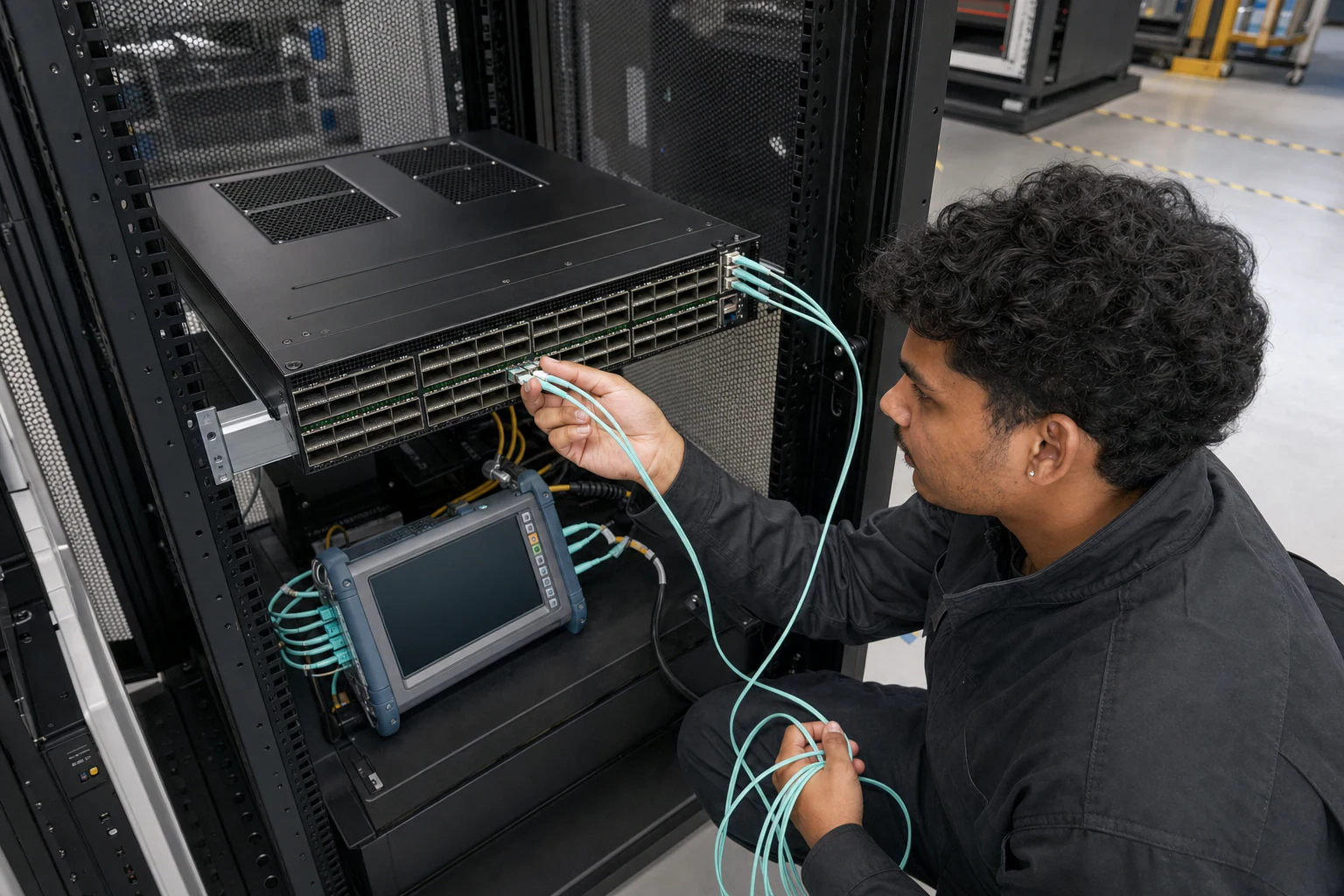
As organisations across Australia accelerate their AI ambitions, traditional data centre architectures are reaching their limits. The computational demands of large language models, agentic AI systems, and real-time inference workloads require infrastructure specifically designed for these tasks. NVIDIA’s BlueField platform represents a fundamental shift-moving networking, storage, and security processing off the main CPU and onto dedicated Data Processing Units (DPUs) that operate independently of the host system.
BlueField-4: 800Gb/s Platform for Gigascale AI
The latest generation BlueField-4 DPU delivers 800Gb/s of throughput and reportedly offers six times the compute performance of its predecessor, the BlueField-3. This platform is engineered to address the specific bottlenecks encountered at scale in AI factories-purpose-built data centres designed to train and deploy large AI models.
Key capabilities according to NVIDIA include:
- Hardware-accelerated networking with software-defined overlays
- NVMe over Fabrics (NVMe-oF) and GPUDirect Storage for high-speed data access
- Real-time, zero-trust cybersecurity enforcement at the infrastructure level
- Multi-service architecture supporting elastic provisioning across cloud environments
The BlueField-4 also powers NVIDIA’s Context Memory Storage Platform (CMX), which provides a shared, pod-level context tier optimised for ephemeral key-value cache in long-context and multi-turn AI inference scenarios.
BlueField-3: The Established 400Gb/s Foundation
For organisations not yet requiring the full capacity of BlueField-4, the BlueField-3 DPU provides 400Gb/s infrastructure compute with line-rate processing of software-defined networking, storage, and cybersecurity functions. NVIDIA describes it as combining ‘powerful computing, high-speed networking, and extensive programmability’ for demanding workloads including hybrid cloud, high-performance computing, and 5G networks.
The BlueField-3 remains a viable option for enterprises building out their first AI-optimised infrastructure or those with workloads that do not yet demand 800Gb/s interconnect speeds.
The Software Layer: DOCA and SONiC
Hardware alone does not define the BlueField platform. NVIDIA’s DOCA software framework enables developers to build applications that run on BlueField and ConnectX hardware, supporting use cases from agentic AI orchestration to security acceleration.
The platform also supports SONiC (Software for Open Networking in the Cloud), an open-source network operating system hosted under the Linux Foundation. SONiC is described as ‘a free and open-source network operating system based on Linux that runs on switches from multiple vendors and ASICs.’ Its modular, container-based architecture-where each network function runs in its own Docker container-provides fault isolation, simplified upgrades, and multi-vendor flexibility.
NVIDIA offers ‘Pure SONiC,’ their community-developed distribution, alongside Cumulus Linux for customers seeking either open-source flexibility or a commercially supported networking OS.
Spectrum-X Ethernet: Purpose-Built for AI Networking
The Spectrum-X Ethernet platform, which combines Spectrum switches with BlueField DPUs, reportedly improves AI networking performance compared to standard Ethernet configurations. NVIDIA states that Spectrum-X delivers ‘zero-touch accelerated RDMA over Converged Ethernet (RoCE)’ and supports network operating systems including Cumulus Linux and Pure SONiC.
For Australian data centre operators, this ecosystem means a single-vendor networking stack that can be validated end-to-end while retaining the flexibility of open-source NOS options.
Security and Multi-Tenancy at Silicon Speed
A distinguishing feature of the BlueField platform is its approach to cybersecurity. Rather than treating security as a perimeter function, BlueField enforces zero-trust policies at the infrastructure node level-in silicon, not software. NVIDIA has partnered with security vendors including Akamai, Forescout, Palo Alto Networks, Siemens, and Xage Security to integrate BlueField acceleration into operational technology (OT) and enterprise cybersecurity.
The latest DOCA capabilities reportedly deliver ‘1,000x faster threat detection and zero-trust file access’ for enterprise AI workloads. For Australian organisations in regulated industries such as financial services, healthcare, and critical infrastructure, this silicon-level security enforcement could address compliance requirements around data sovereignty and workload isolation.
Storage Acceleration for AI Workloads
AI training and inference generate enormous data movement demands. BlueField addresses this through hardware-accelerated storage capabilities including NVMe over Fabrics (NVMe-oF), GPUDirect Storage, and support for block, file, and object storage protocols.
The BlueField-4 STX Storage Processor, based on NVIDIA’s Vera CPU architecture, is designed to power AI storage platforms with what NVIDIA describes as ‘accelerated AI-native data movement and in-silicon security.’ This is intended to make networked storage perform comparably to direct-attached storage-a significant consideration for AI workloads where data access latency directly impacts training times and inference response.
Oracle Cloud Infrastructure (OCI) is cited by NVIDIA as using BlueField DPUs to ‘offload data centre tasks from CPUs, achieving greater performance, efficiency, and security’ as part of their sustainability initiatives.
Considerations for Australian Data Centre Operators
For organisations in Australia evaluating BlueField-enabled infrastructure, several factors merit attention:
-
Ecosystem maturity: SONiC and NVIDIA’s networking software stack have strong backing from the Linux Foundation and major cloud providers. However, Australian-specific support channels and partner availability should be confirmed.
-
Integration with existing infrastructure: BlueField’s support for standard Ethernet and open-source NOS options like SONiC provides flexibility for integration with heterogeneous environments.
-
Security and compliance: Silicon-level zero-trust enforcement may align with Australian data sovereignty requirements, but specific regulatory applicability should be assessed.
-
Power and sustainability: With Australian data centres facing increasing scrutiny around energy consumption, BlueField’s infrastructure offloading capabilities-which reduce CPU utilisation for networking, storage, and security tasks-could contribute to improved power efficiency.
-
Scalability pathway: The BlueField-3 to BlueField-4 progression offers a scaling path from 400Gb/s to 800Gb/s, allowing phased infrastructure investment.
For the first engineering review, tie each DPU use case to a measurable bottleneck. A credible pilot should compare host CPU utilisation before and after offload, validate 200G/400G or 800G connectivity as applicable, record 30 minutes of storage or overlay traffic under load, and rehearse firmware rollback inside a 24 hours maintenance window. Without those acceptance gates, the DPU risks becoming another expensive component that is installed but not operationally owned.
BlueField deployment acceptance matrix
A BlueField decision should be accepted only when the DPU operating model is clear. The device is not just a faster NIC; it adds a programmable infrastructure layer that must be owned, patched, monitored, and tested separately from the host OS and the switch fabric.
| Acceptance item | Evidence to capture | Reject or rework if |
|---|---|---|
| Offload use case | SDN overlay, NVMe-oF, GPUDirect Storage, zero-trust policy, encryption, telemetry, or service-chaining requirement | The DPU is selected because it is new hardware, but no host CPU, security, storage, or latency bottleneck is documented |
| Host and software lifecycle | Server compatibility, BlueField generation, DOCA/BSP version, firmware path, host driver, hypervisor or Kubernetes integration, and rollback method | The operations team cannot patch or recover the DPU without disrupting the host workload |
| Security ownership | Policy engine, key management, TLS/IPsec/MACsec need, zero-trust enforcement point, logs, and audit evidence | Security offload is enabled but policy ownership is split between platform, network, and security teams |
| Storage and GPU data path | NVMe-oF design, GPUDirect Storage requirement, storage target, queue depth, CPU utilisation, and failure test | The design claims storage acceleration without proving the path from storage to GPU memory |
| Fabric integration | Switch/NOS image, RoCE policy, optics, telemetry counters, packet visibility, and support escalation | A DPU issue cannot be separated from host, switch, optics, storage, or application behaviour during incident review |
Engineering FAQ
When does a DPU justify its cost in an AI data centre? A DPU becomes easier to justify when the host CPU is spending meaningful cycles on overlay networking, storage, security inspection, encryption, or multi-tenant isolation. In small clusters, the operational overhead may outweigh the benefit; in larger AI fabrics, offload can protect GPU utilisation and make security controls less intrusive.
Is BlueField a replacement for switch telemetry or packet visibility? No. BlueField sits at the server edge and can offload infrastructure services close to the workload. It should be combined with switch telemetry, RoCE counters, packet broker capture, and storage metrics so operators can see both host-edge behaviour and fabric-wide congestion.
What should Australian operators verify before standardising on BlueField? Verify server compatibility, DOCA version support, hypervisor or Kubernetes integration, security policy ownership, local support, and failure procedures. A DPU introduces a second programmable infrastructure layer, so rollback and lifecycle management need the same discipline as switch NOS upgrades.
Where does xSONiC fit beside a BlueField deployment? xSONiC fits at the fabric and visibility layer: SONiC-based switches provide the Ethernet underlay, RoCE transport, and telemetry hooks that BlueField-enabled servers depend on. The combined design should be validated under the actual GPU, storage, and workload profile.
Related xSONiC Resources
Sources Reviewed
- NVIDIA BlueField Data Processing Unit
- NVIDIA Launches BlueField-4
- NVIDIA Vera BlueField-4 STX
- NVIDIA BlueField BSP Documentation
- NVIDIA Spectrum-X Ethernet Platform
- NIST SP 800-207 Zero Trust Architecture
- ACSC Essential Eight
- OAIC Notifiable Data Breaches
- APRA CPS 234 Information Security
- SONiC Project Documentation
- NVIDIA Ethernet Switching
- Open Compute Networking
- SONiC GitHub
- SONiC Foundation
Product fit
Products referenced for evaluation
These products are referenced for evaluation context in the article. Confirm workload, port, optics, software, interoperability, and support requirements against the exact deployment before procurement.
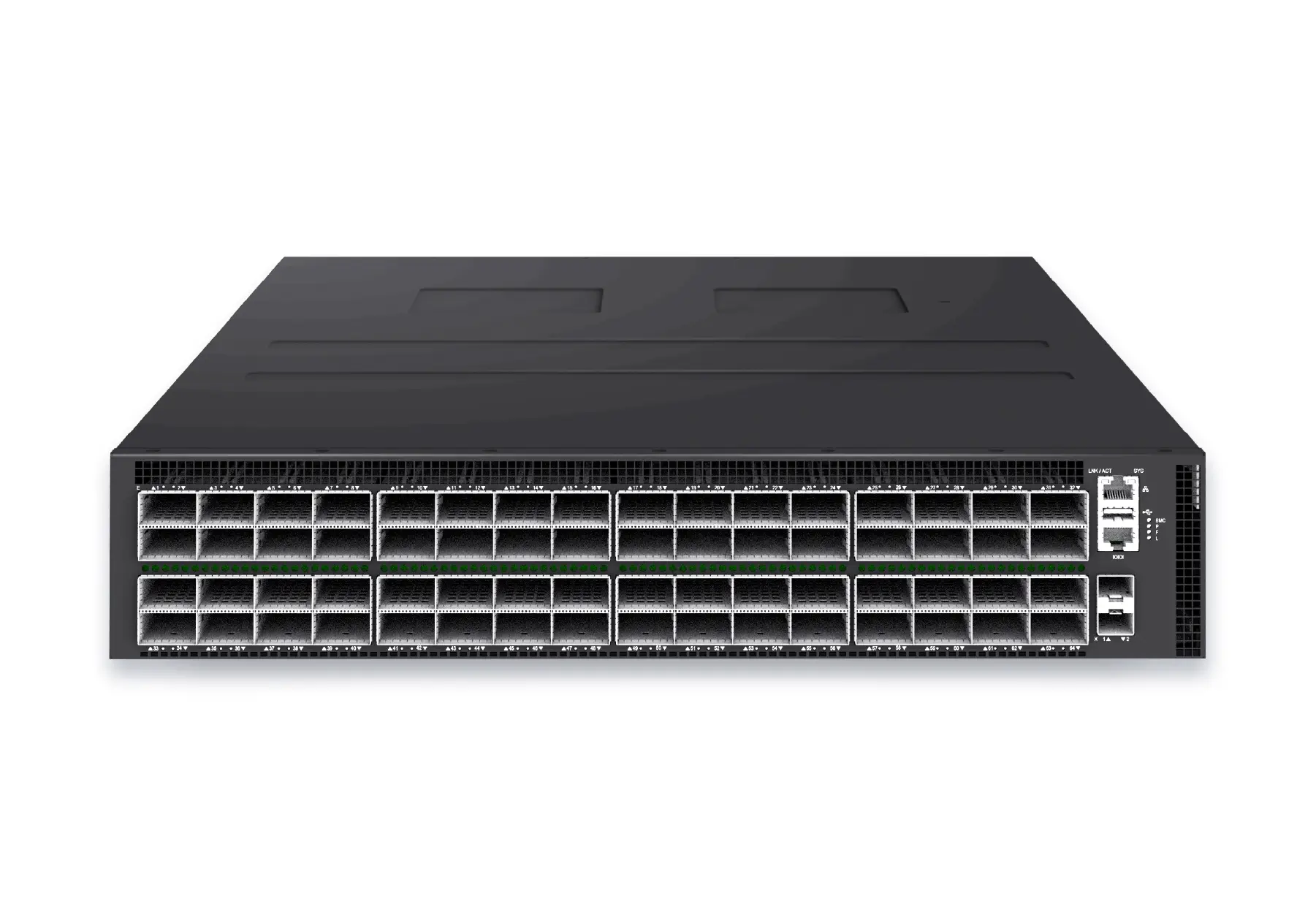 datacenter aiXS-DC-64X800-AI-G164-port 800G AI fabric switch for large-scale GPU clusters, HPC backbones, and ultra-high-throughput data center networks.View product
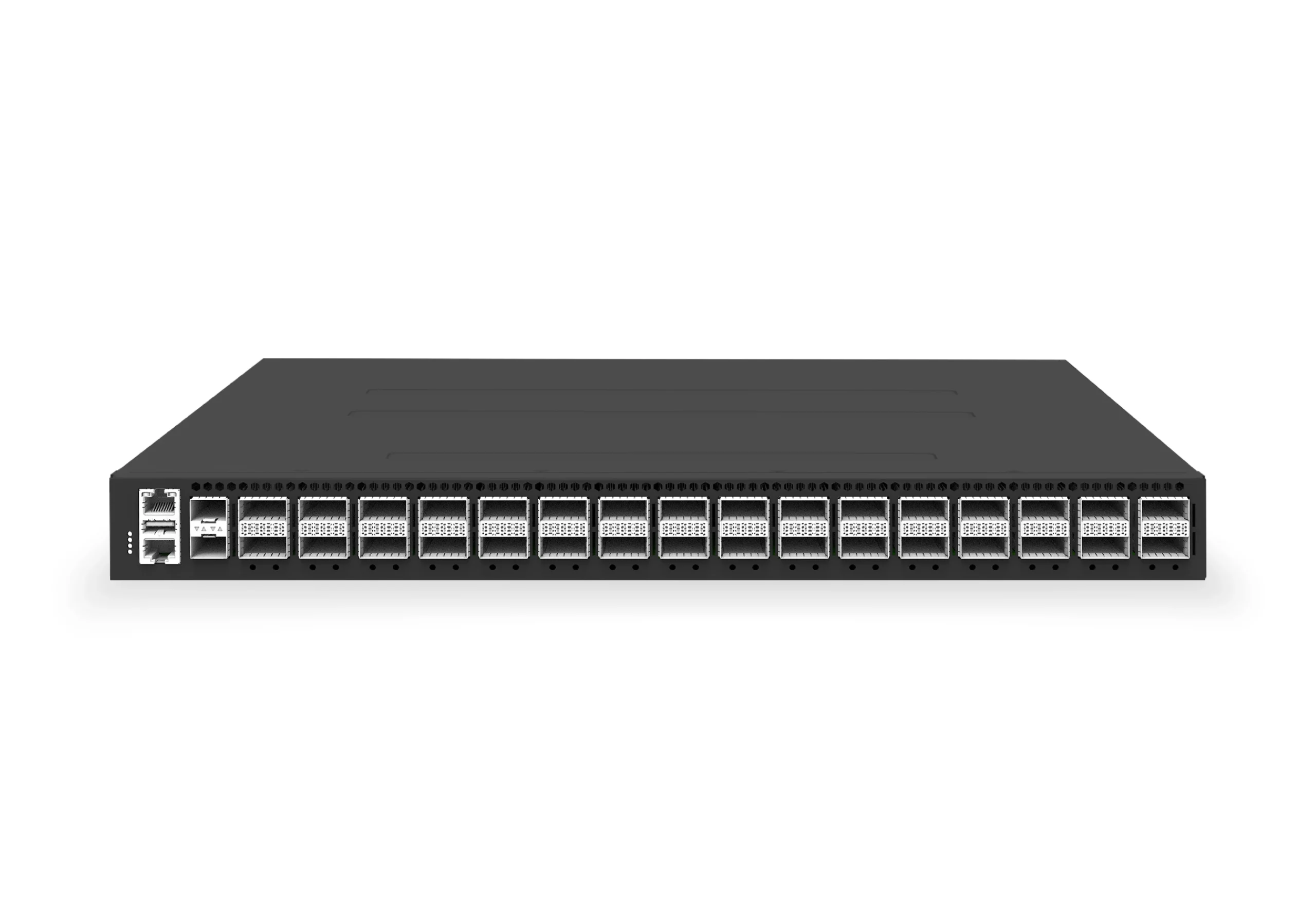 datacenter aiXS-DC-32X400-SP-G232-port 400G spine/core switch for high-capacity data center fabrics and AI-ready backbones.View product
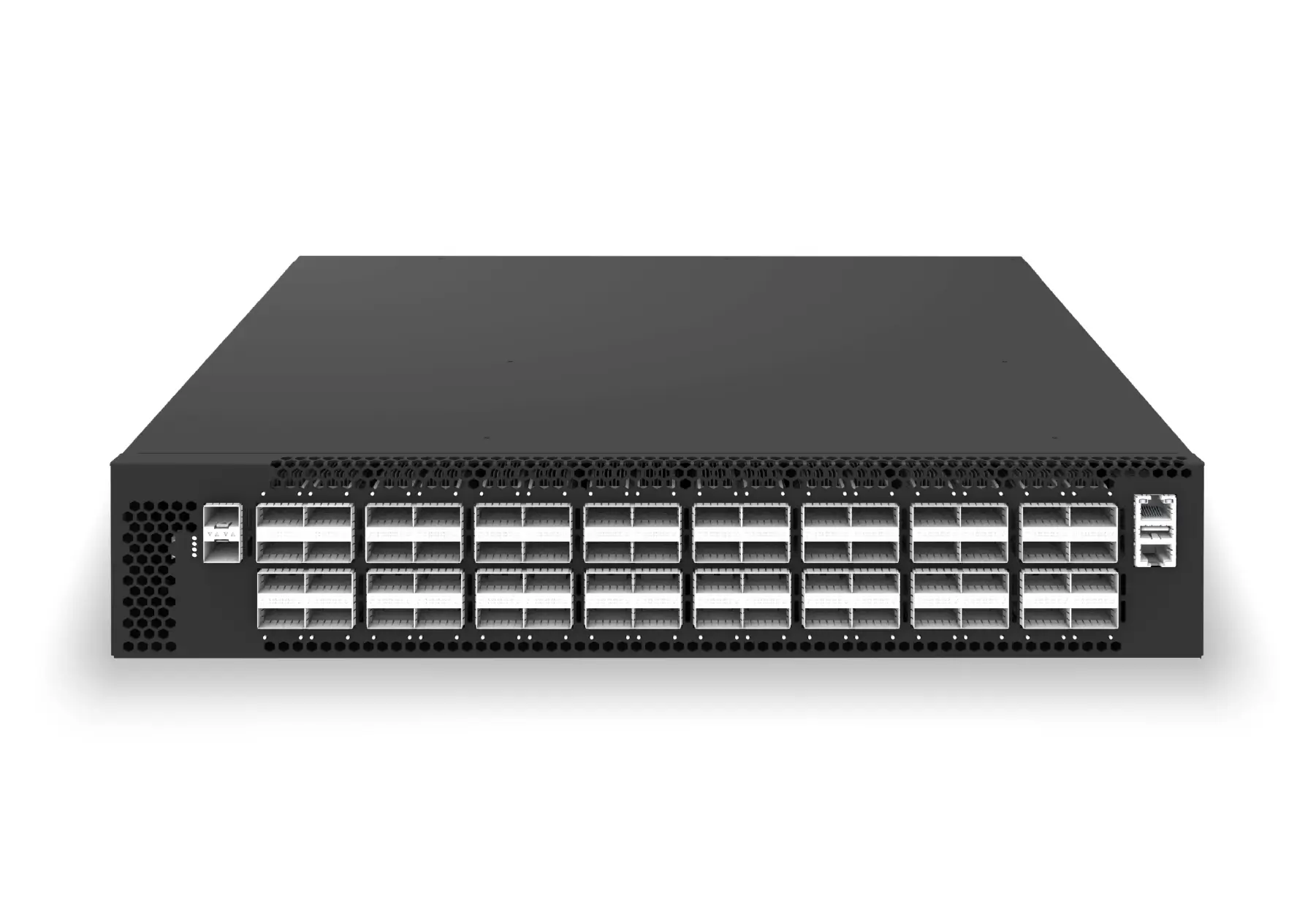 datacenter aiXS-DC-64X200-LS-G164-port 200G leaf/spine switch for high-bandwidth storage, compute, and scale-out data center fabrics.View product
Continue reading
Related articles
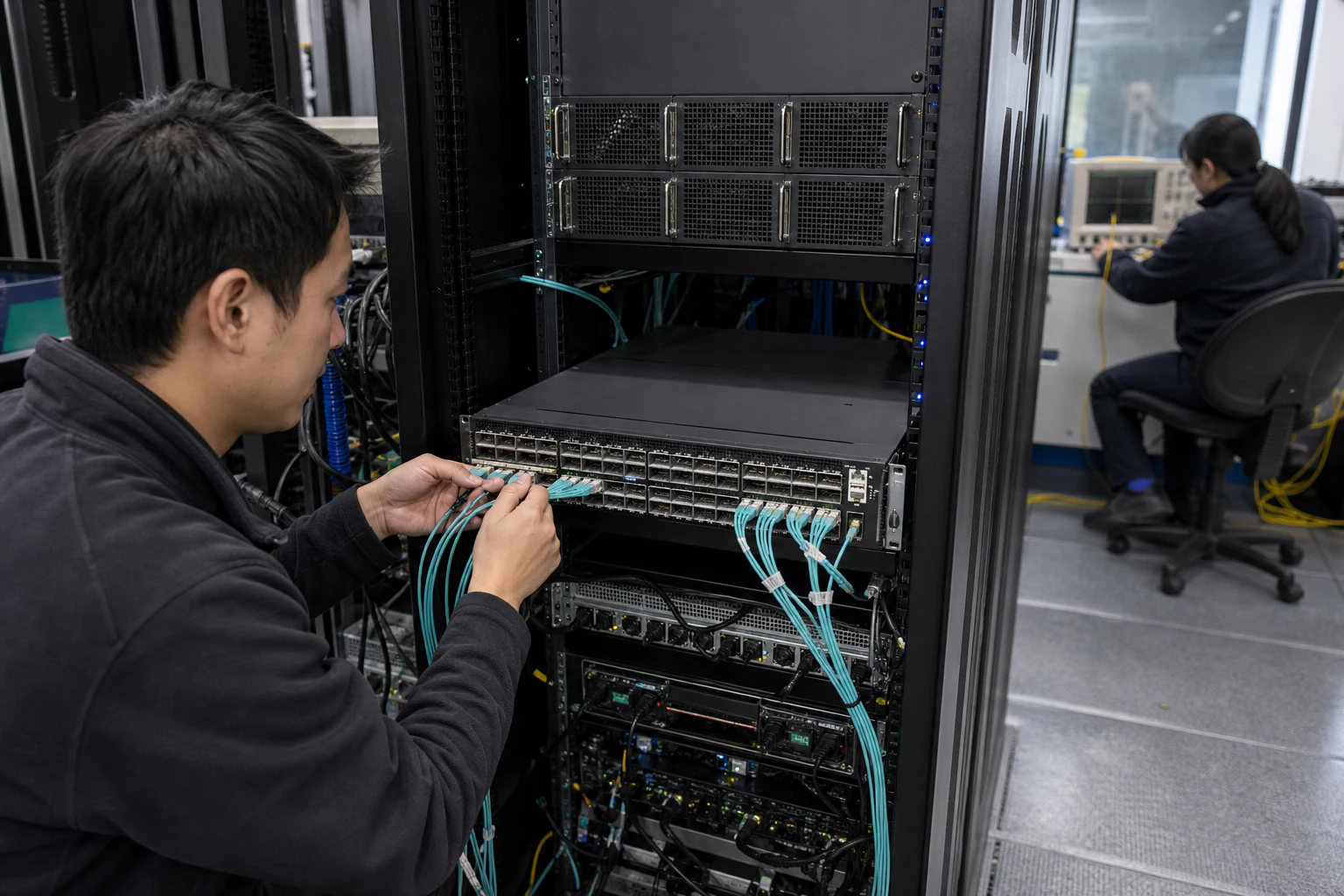 Technical ArticleDCBX, PFC, ECN, and Fast CNP: Building Lossless Ethernet for AI Training FabricsEngineering guidance on DCBX, PFC, ECN, and Fast CNP for Australian AI fabric teams building lossless Ethernet for RoCE v2 training clusters.Read article
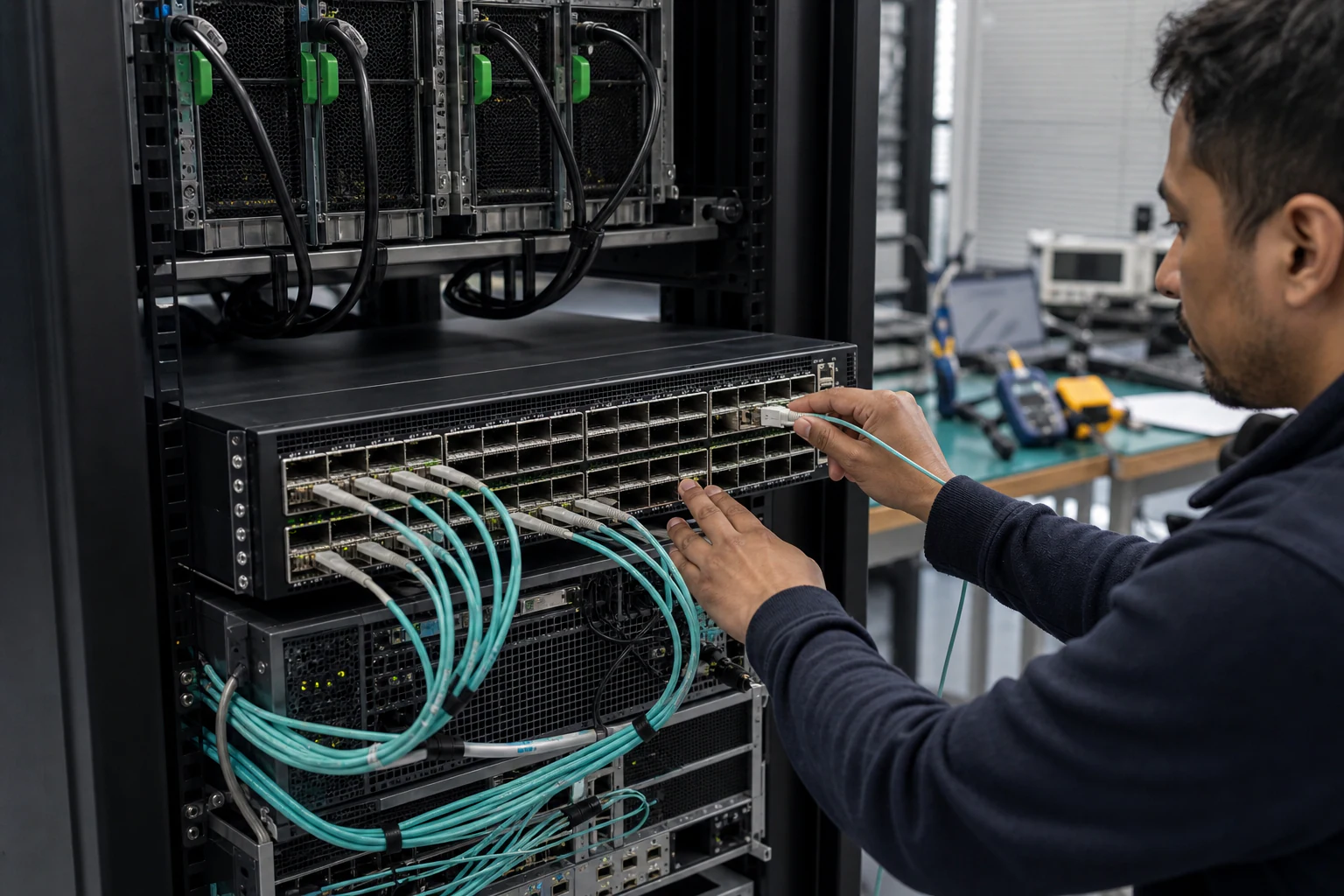 Technical ArticleWhat AI Data Center Ethernet Demands Mean for SONiC Network Operators in AustraliaEngineering guide for Australian SONiC operators running AI Ethernet fabrics, covering RoCE, 400G/800G links, telemetry, failures, optics, and support.Read article
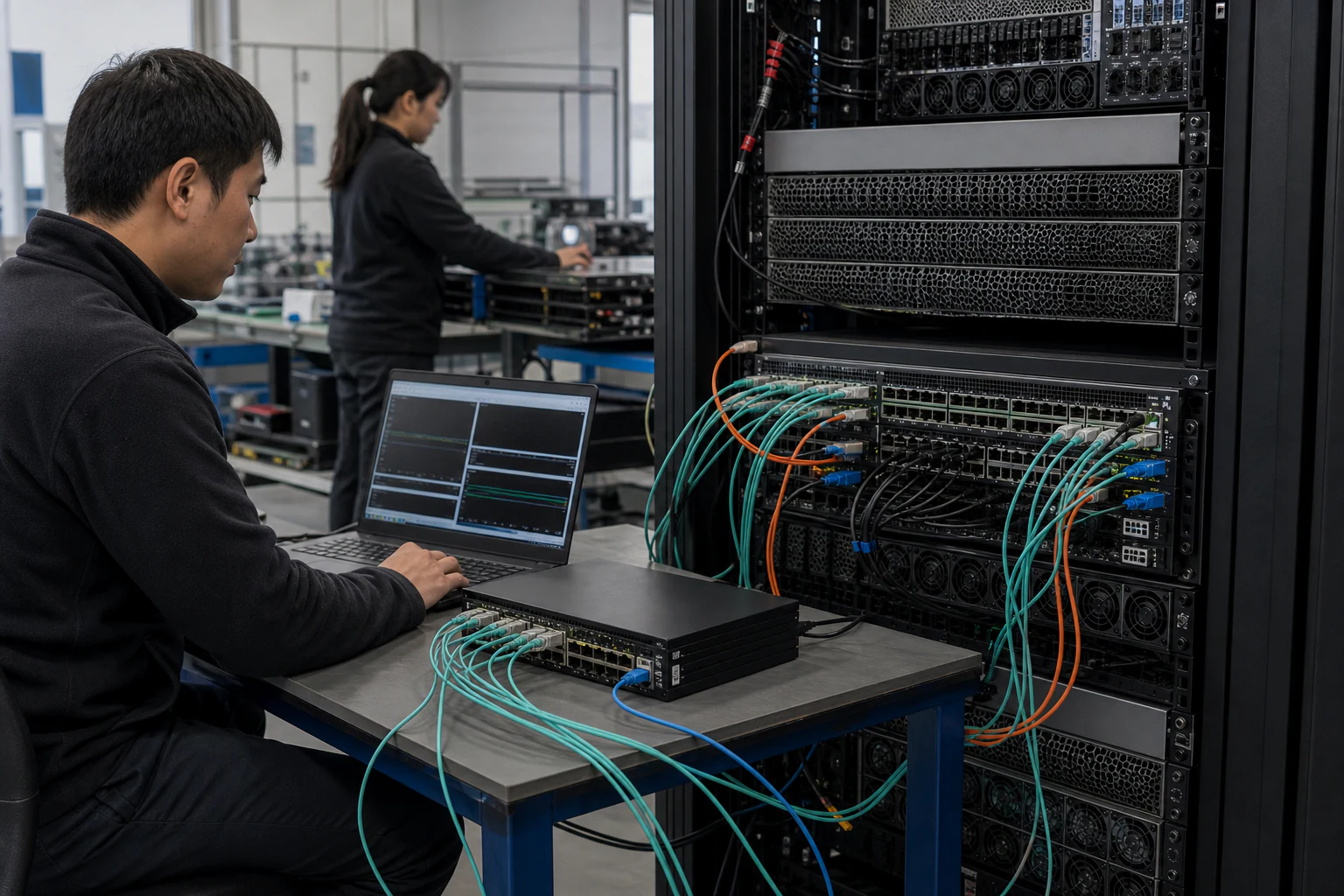 Technical ArticleWhat AI Fabric Ethernet Switching Actually Requires -- and Where SONiC Fits in the StackA practical engineering guide to AI fabric Ethernet switching requirements, explaining where SONiC fits across RoCE v2, PFC, ECN, DCBX, telemetry, and 400G/800G operations.Read article