In brief
A practical capacity planning and vendor evaluation framework for Australian enterprise and data center procurement teams evaluating SONiC-based switching solutions.
Key takeaways
- SONiC (Software for Open Networking in the Cloud) is no longer a hyperscaler-only play.
- The architecture is modular by design: SONiC uses a container-based architecture where each network function runs in its own Docker container, providing better fault isolation, easier debugging and troubleshooting, simplified upgrades and maintenance, and enhanced scalability.
- For Australian procurement leads, the shift matters because SONiC now appears on evaluation shortlists for enterprise campus refresh, data center spine-leaf builds, and AI fabric deployments.
What Happened: SONiC Moves From Hyperscaler to Enterprise Procurement Shortlist
SONiC (Software for Open Networking in the Cloud) is no longer a hyperscaler-only play. The SONiC Foundation, a Linux Foundation Project, describes SONiC as a free and open-source network operating system based on Linux that runs on switches from multiple vendors and ASICs, offering a full suite of network functionality including BGP and RDMA that has been production-hardened in the data centers of some of the largest cloud service providers.
The architecture is modular by design: SONiC uses a container-based architecture where each network function runs in its own Docker container, providing better fault isolation, easier debugging and troubleshooting, simplified upgrades and maintenance, and enhanced scalability. This modularity is precisely what enterprise buyers need when they want to avoid monolithic vendor lock-in while still getting production-grade network OS capabilities.
For Australian procurement leads, the shift matters because SONiC now appears on evaluation shortlists for enterprise campus refresh, data center spine-leaf builds, and AI fabric deployments. But the gap between SONiC being open source and SONiC being enterprise-ready at any given vendor is significant. The Open Compute Project Networking project, which includes SONiC as a sub-project alongside ONIE and SAI, aims to create a set of technologies that are disaggregated and fully open, allowing for rapid innovation in the network space. That aspiration does not automatically translate into the support model, testing discipline, or integration depth that an Australian enterprise procurement team needs to see before committing budget.
Why It Matters for Australian Enterprise and Data Center Programs
Three converging forces make SONiC vendor evaluation urgent for Australian procurement leads:
First, Australia’s data center buildout is entering an AI-driven acceleration phase. In a January 2026 OCP Podcast episode, David Hirst, CEO of Macquarie Data Centres, described how AI workloads have changed everything in the Australian market, shifting data center design from a real estate model to what he called chip-out thinking. Hirst noted that Australia’s sovereign approach matters, that AI workloads are bursty and unpredictable, and that early collaboration across hyperscalers, government, and the supply chain is becoming essential. Liquid cooling, megawatt-per-rack designs, and compliance as a market advantage were all cited as defining features of the Australian data center landscape.
Second, data sovereignty requirements in Australia create a procurement filter that vendor sales teams outside the region often underestimate. Hirst explicitly discussed how local requirements, power challenges, and long-term operators versus short-term developers shape the Australian market differently from North America or Europe.
Third, enterprise campus networking in Australia is overdue for refresh cycles. Many organizations still run proprietary stacks from incumbent vendors, and the combination of SONiC maturity, open switching hardware availability, and competitive pressure from cloud-first architecture designs is pushing procurement teams to evaluate alternatives. But evaluating a SONiC vendor is not the same as evaluating a traditional networking vendor, and procurement leads need a different framework.
The Capacity Planning Model: Five Evaluation Criteria for SONiC Switch Vendors
Based on SONiC Foundation governance documentation, OCP Networking project scope, and the Australian market context described above, procurement leads should evaluate SONiC switch vendors across five dimensions:
-
Hardware and ASIC Compatibility: SONiC runs on switches from multiple vendors and uses the Switch Abstraction Interface (SAI), which decouples hardware from software and helps accelerate hardware innovation. Procurement leads should confirm that a vendor’s switches are on the SONiC supported devices and platforms list, that SAI implementations are tested and validated for the specific ASIC families in use, and that the vendor can demonstrate multi-ASIC support rather than dependence on a single chip supplier.
-
Enterprise Support SLA and Escalation Model: The SONiC Foundation and the open-source community provide governance, but they do not provide enterprise SLAs. Vendor support for SONiC-based products must include a clear escalation path: does the vendor have in-house SONiC engineering staff, or are they reselling another party’s integration work? Is there a documented bug-fix timeline? Does the vendor participate in SONiC community governance and code contribution? These questions matter because in the Australian market, the distance from upstream development hubs makes local or APAC-based support capacity a practical requirement.
-
Integration Depth with Existing Infrastructure: SONiC supports standard Linux interfaces and tools, and its container-based architecture allows modular deployment. But enterprise environments in Australia often run mixed-vendor estates. Procurement leads should evaluate how well a SONiC vendor’s offering integrates with existing management, monitoring, and automation toolchains, including NETCONF/YANG, SNMP, and telemetry pipelines.
-
Roadmap Alignment with Australian Workload Patterns: The Macquarie Data Centres discussion at OCP highlighted that AI workloads behave differently than cloud workloads, that compliance is a market advantage in Australia, and that power and cooling constraints shape procurement decisions differently than in other regions. A SONiC switch vendor should demonstrate a roadmap that accounts for 100G to 400G to 800G upgrade paths, RoCE v2 and RDMA support for AI fabric workloads, and campus PoE capabilities for enterprise edge deployments.
-
Total Cost of Ownership Over Five to Seven Years: SONiC’s open-source model changes the cost structure of network operating systems, but hardware, support contracts, integration labor, and training costs still dominate the TCO calculation. Procurement leads should model TCO over the expected lifecycle of the deployment, not just the initial hardware price, and should compare vendor-provided support costs against the alternative of building in-house SONiC expertise.
Vendor Landscape: What Procurement Leads Will Encounter
The SONiC switch vendor landscape includes several tiers that Australian procurement teams should understand:
ASIC and Platform Vendors: Companies like Broadcom and NVIDIA supply the switching silicon and, in some cases, reference platforms. NVIDIA’s Spectrum Ethernet switch portfolio, for example, supports multiple network operating systems including NVIDIA Cumulus Linux and what NVIDIA calls Pure SONiC, described as a community-developed, open source network operating system based on Linux. NVIDIA also offers NVIDIA NetQ for network observability and NVIDIA DSX Air for data center simulation. Broadcom’s Ethernet switching portfolio similarly underpins many SONiC-compatible hardware platforms.
White-Box and Bare-Metal Switch Vendors: These vendors ship open switching hardware designed for custom NOS deployments. In the SONiC ecosystem, bare-metal switch vendors provide the hardware platform on top of which SONiC is installed. The quality of hardware integration, thermal design, port density, and forward compatibility with newer SONiC releases varies significantly between vendors.
System Integrators and Value-Added Resellers: In the Australian market, many SONiC deployments will involve a system integrator or VAR that combines hardware from one vendor, SONiC from the open-source project or a commercial distribution, and their own integration and support services. Procurement leads should distinguish between vendors who contribute to the SONiC codebase and those who simply resell.
The critical evaluation question is not which vendor offers SONiC support on paper, but which vendor can demonstrate tested, production-grade SONiC deployments with Australian-appropriate support models.
Australian-Specific Procurement Considerations
Several factors make Australian SONiC procurement different from global patterns:
Data Sovereignty and Compliance: Australia’s data sovereignty requirements, particularly for government and regulated industry buyers, mean that procurement leads should verify where SONiC image builds are produced, where vulnerability patches are tested, and whether the vendor can demonstrate compliance with Australian signals directorate guidance and relevant industry frameworks.
APAC Support Time Zones: Vendor support operations based solely in North America or Europe create response-time risk for Australian production environments. Procurement leads should require documented APAC support coverage with specified response times.
Power and Cooling Constraints: As noted in the Macquarie Data Centres OCP discussion, Australian data centers face unique power challenges and are increasingly designing for liquid cooling and megawatt-per-rack density. SONiC switch vendors should demonstrate that their platforms are tested for the thermal and power profiles of Australian data center environments.
Supply Chain and Logistics: Hardware lead times, spare parts availability in-country, and RMA logistics are practical but often overlooked evaluation criteria. A SONiC switch that performs well in a lab but requires weeks-long replacement cycles is a risk in production.
The SONiC Community Advantage and Its Limits
SONiC’s community model is a genuine advantage for enterprise buyers. The SONiC Foundation governance structure, the active GitHub repository with 2,800+ stars and 1,300+ forks, and the OCP Networking project’s scope covering ONIE, SAI, and SONiC as sub-projects all indicate a healthy, growing ecosystem. SONiC was the first solution to break monolithic switch software into multiple containerized components that accelerate software evolution, and the rapidly growing ecosystem means major network chip vendors and hardware vendors now participate.
However, procurement leads should be clear-eyed about the limits. The SONiC Foundation provides project governance, not enterprise support guarantees. The open-source community provides code, testing infrastructure, and documentation, not on-call engineering for Australian production environments. The vendor’s role is to bridge that gap, and the quality of that bridge varies enormously.
For Australian enterprise and data center programs, the right evaluation model treats SONiC as the foundation layer and evaluates the vendor’s support, integration, testing, and commitment to the upstream community as the differentiating factors.
Vendor Support Acceptance Matrix
For Australian procurement teams, the support model is the product. SONiC’s open-source foundation is valuable, but production buyers need a supplier that can own the switch, NOS image, optics, support workflow, and escalation path when a fault crosses layers.
| Support Area | Evidence to Request | Acceptance Test | Rework Trigger |
|---|---|---|---|
| APAC escalation | Named support hours, 24x7 critical incident path, L1/L2/L3 ownership, response targets | Open a pilot support ticket and verify response within the quoted SLA | Support depends only on overseas business-hours coverage |
| SONiC image ownership | Release branch, vendor patches, kernel version, SAI dependency, rollback image | Install the quoted image on 2 switches, reload 3 times, and confirm config persistence | Supplier cannot state which image will ship |
| Hardware and optics | Switch SKU, ASIC generation, airflow, power draw, validated optics list, RMA process | Validate 100G/400G/800G optics and collect DOM, error, fan, and PSU telemetry | Third-party optics policy is unclear or unsupported in writing |
| Security and patching | CVE process, advisory cadence, emergency patch path, maintenance guidance | Review a 90-day patch ageing report and run one rollback test | Critical CVEs have no owner or tested upgrade path |
| Operations integration | NETCONF/YANG, gNMI/OpenConfig, syslog, SNMP, config backup, monitoring notes | Push a golden config, export telemetry for 24 hours, restore backup, and verify alerts | Pilot requires unrepeatable manual CLI work |
| Commercial lifecycle | 36-month and 60-month support pricing, spares, EoL notice, training, renewal terms | Compare TCO including support, optics, spares, integration, and training | Low hardware price hides support or renewal exposure |
Action Items for Procurement Leads
Procurement teams evaluating SONiC switch vendors for Australian enterprise and data center programs should take the following steps:
- Require every vendor to submit the exact switch SKU, ASIC, SONiC image, SAI dependency, airflow, power draw, optics policy, and support owner.
- Run a 2-switch pilot before volume award; include reload, rollback, optics, BGP, telemetry, and config restore tests.
- Score support separately from hardware price, with APAC escalation and patch ownership carrying explicit weight.
- Ask for 36-month and 60-month TCO, including support renewals, spares, optics, training, and integration effort.
- Reject proposals that cannot produce acceptance evidence. “Community SONiC support” is not a production SLA.
The SONiC ecosystem is mature enough for enterprise adoption, but the vendor selection decision remains the highest-risk variable in the procurement process.
Engineering FAQ
What is the most important support question for a SONiC switch vendor? Ask who owns a production incident when hardware, SONiC, optics, and automation are all involved. If the supplier cannot name the escalation owner, the support model is not ready.
How should procurement score open-source community strength? Treat community strength as a positive signal, not an SLA. Score the vendor on tested images, patch cadence, local escalation, documentation, and contribution depth.
What should a pilot report include? Include topology, switch SKU, ASIC, SONiC release, optics, test cases, pass/fail evidence, telemetry samples, rollback result, known caveats, and the support ticket trail.
Where does xSONiC fit in vendor evaluation? xSONiC should be evaluated on the same evidence: supported image, validated hardware, optics policy, telemetry integration, APAC response path, and lifecycle cost.
Related xSONiC Resources
Sources Reviewed
- Ethernet Network Adapters - ConnectX NICs | NVIDIA
- NVIDIA BlueField Data Processing Unit
- NVIDIA Spectrum-X Ethernet Platform
- OpenConfig gNMI Specification
- OpenConfig
- RFC 7950 - The YANG 1.1 Data Modeling Language
- RFC 6241 - Network Configuration Protocol (NETCONF)
- IEEE 802.11be Wireless LAN Standard
- IEEE 802.3bt Power over Ethernet
- SONiC Project Documentation
- Broadcom Ethernet Switching
- Marvell Switching
- NVIDIA Ethernet Switching
- Open Compute Networking
- SONiC GitHub
- SONiC Foundation
Product fit
Products referenced for evaluation
These products are referenced for evaluation context in the article. Confirm workload, port, optics, software, interoperability, and support requirements against the exact deployment before procurement.
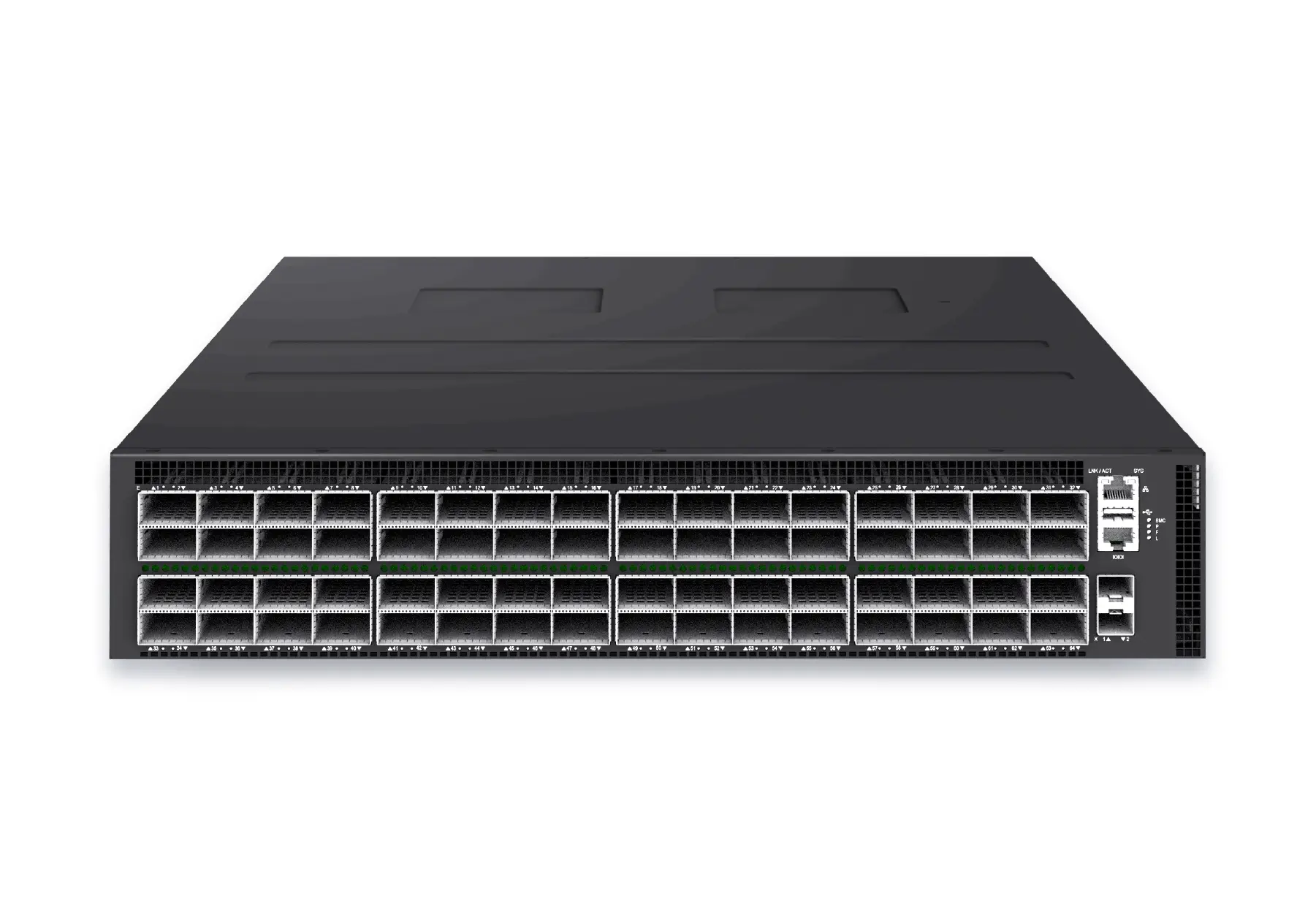 datacenter aiXS-DC-64X800-AI-G164-port 800G AI fabric switch for large-scale GPU clusters, HPC backbones, and ultra-high-throughput data center networks.View product
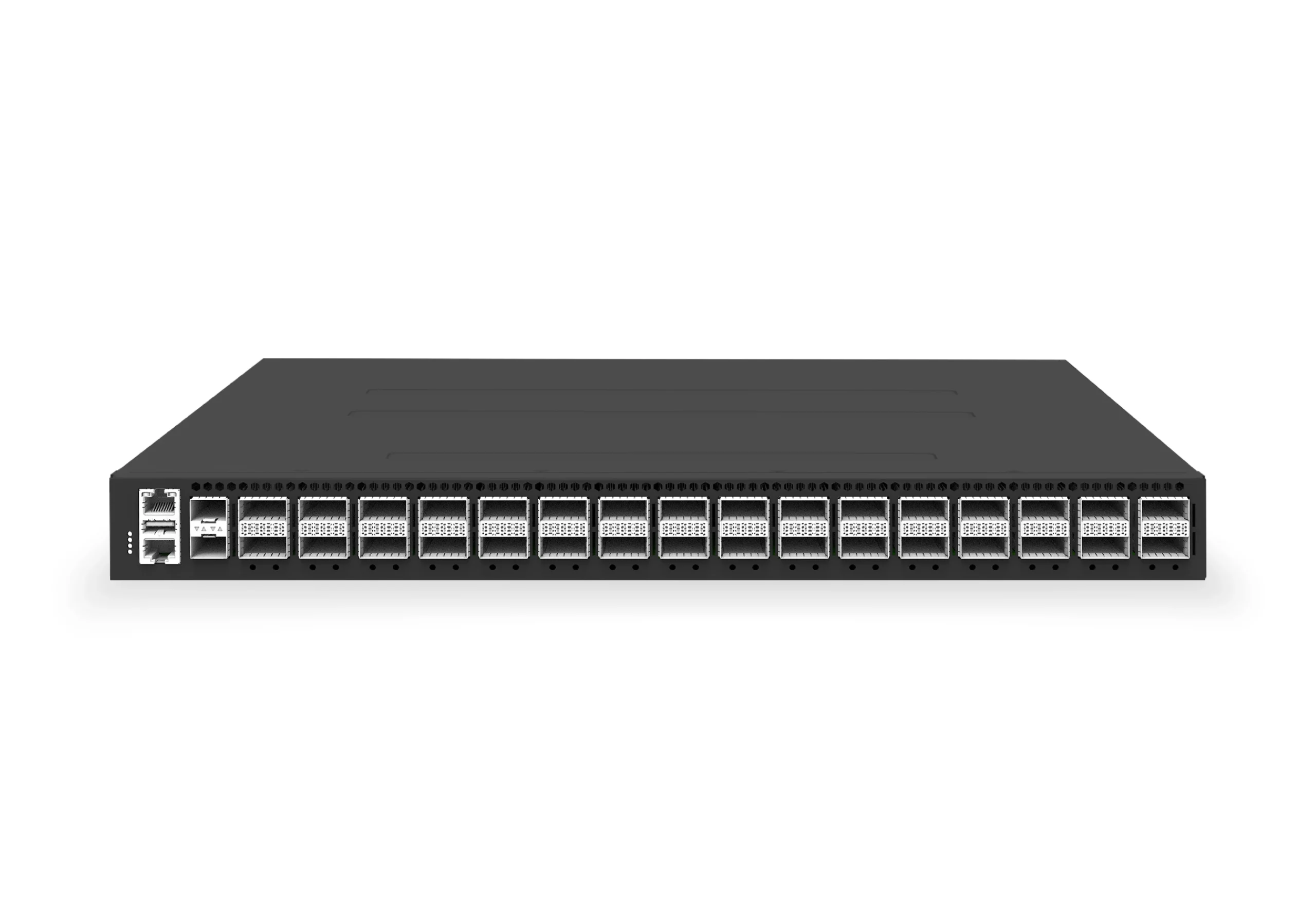 datacenter aiXS-DC-32X400-SP-G232-port 400G spine/core switch for high-capacity data center fabrics and AI-ready backbones.View product
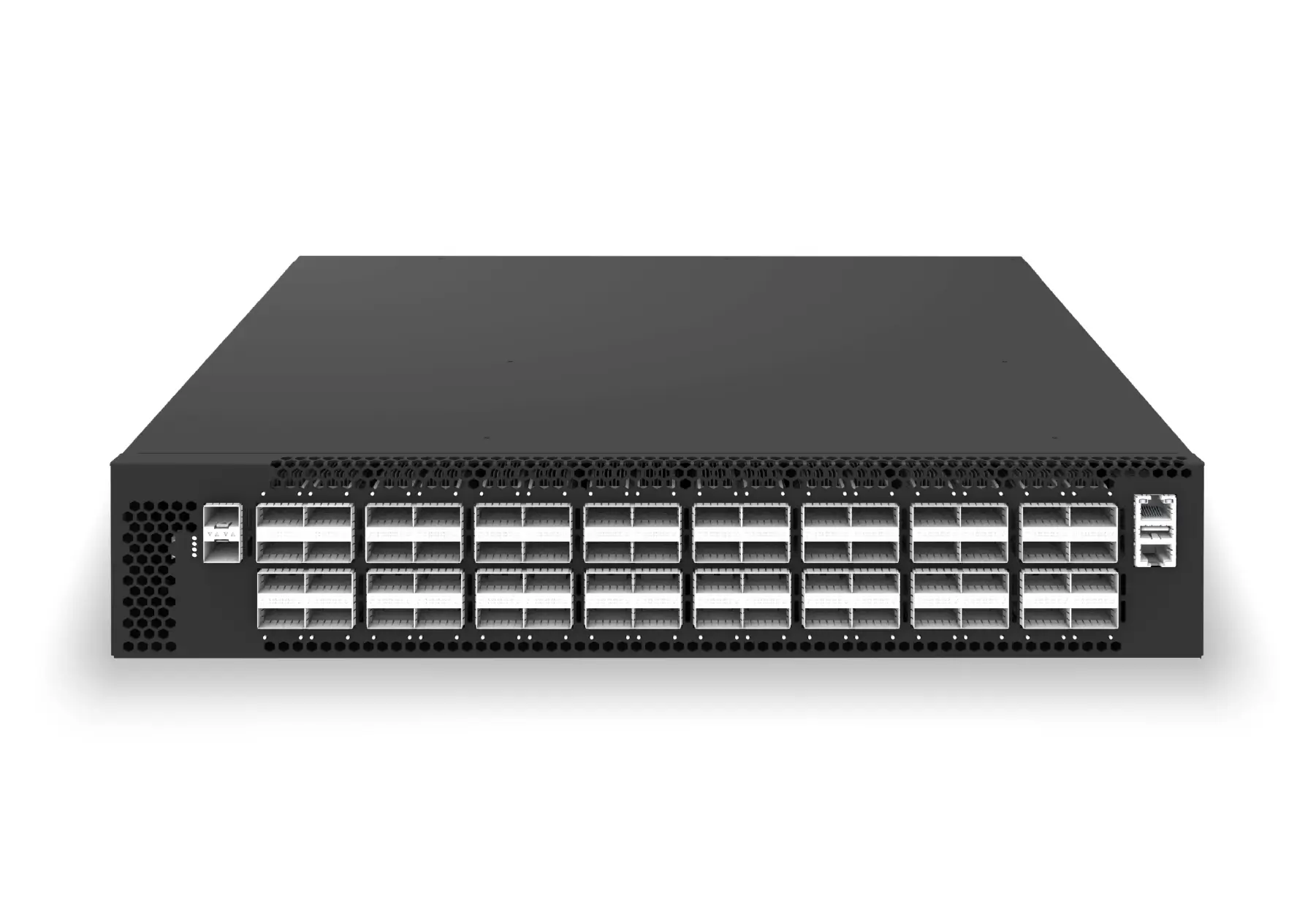 datacenter aiXS-DC-64X200-LS-G164-port 200G leaf/spine switch for high-bandwidth storage, compute, and scale-out data center fabrics.View product
Continue reading
Related articles
 Technical ArticleWhat AI Fabric Ethernet Switching Requires: A Buyer Guide for SONiC-Based Data CentersEngineering guidance on AI Fabric Ethernet Switching Requires for Australian network and security teams, covering traffic visibility, capacity modelling, tool feeds.Read article
 Technical ArticleProprietary Switch OS Lock-in vs Enterprise SONiC: An Australian Buyer Migration AnalysisMigration analysis for Australian buyers comparing proprietary switch OS lock-in with Enterprise SONiC pilot, support, automation, and TCO evidence.Read article
 Technical ArticleWhite Box Switch vs Traditional Switch: What Enterprise Buyers in Australia Need to KnowEngineering comparison of white-box and traditional switches for Australian enterprise buyers, covering SONiC, support, optics, risk, and TCO.Read article