In brief
Campus procurement scorecard for Australian AI platform teams covering MC-LAG, STP, PBR, PoE, telemetry, automation, and lifecycle cost.
Key takeaways
- Australian enterprise IT programs are entering a period where two historically separate budget conversations are colliding.
- The convergence point is procurement. When a single enterprise program approves both a data center AI fabric expansion and a campus refresh in the same fiscal year, the procurement scorecard for the campus layer must account for more than port density and PoE budget.
- This matters in Australia specifically because the market is experiencing simultaneous data center capacity growth and enterprise campus modernization pressure.
Why AI Platform Teams Are Redefining Campus Procurement in Australia
Australian enterprise IT programs are entering a period where two historically separate budget conversations are colliding. On one side, data center teams are scaling AI fabric investments — GPU backend networks, RoCE v2 RDMA fabrics, and 400G/800G spine-leaf topologies — driven by private LLM inference and RAG workloads. On the other side, campus network teams are running up against end-of-life access-layer switches and aging spanning tree topologies that were never designed to support the traffic patterns AI-era endpoints create.
The convergence point is procurement. When a single enterprise program approves both a data center AI fabric expansion and a campus refresh in the same fiscal year, the procurement scorecard for the campus layer must account for more than port density and PoE budget. It needs to evaluate resilience architectures like MC-LAG (Multi-Chassis Link Aggregation Group) and STP (Spanning Tree Protocol) convergence behavior, traffic steering capabilities like policy-based routing (PBR), and the long-term operational flexibility of the network operating system itself.
This matters in Australia specifically because the market is experiencing simultaneous data center capacity growth and enterprise campus modernization pressure. As noted in recent OCP Podcast coverage of the Australian data center market, Australia’s sovereign data requirements, urban density constraints, and rapid AI workload growth are forcing infrastructure teams to plan campus and data center networks as integrated systems rather than isolated domains.
The Procurement Scorecard Gap: What Most RFx Documents Miss
A structured procurement process, as defined by organizations like Procurify, follows a predictable arc: need identification, supplier selection or sourcing, approval and budget check, contracting and terms, order execution, and performance review. For campus networking, the critical question is not whether this process exists, but whether the scorecard criteria reflect what AI-era campus networks actually require.
Most enterprise campus RFx templates were built for a world where the access layer was a commodity decision. They score on port count, PoE wattage, warranty length, and per-unit cost. What they typically underweight or omit entirely includes:
- MC-LAG and STP convergence behavior: How quickly does the campus failover when an uplink or aggregation switch fails? Does the architecture require STP blocking ports that waste bandwidth, or does it use MC-LAG to keep all links active? What is the measured convergence time under load?
- Policy-based routing (PBR) granularity: Can the campus enforce traffic steering policies based on source, destination, application, or user group without hair-pinning traffic through a central firewall? This becomes critical when AI inference traffic from campus endpoints needs to reach data center GPU clusters without adding latency.
- NOS portability and programmability: Is the network operating system locked to a single hardware vendor, or can it run on multiple switch platforms? Does it support standard APIs like NETCONF/YANG or gNMI for automated provisioning and telemetry?
- Total lifecycle cost beyond the purchase order: What is the cost of software subscriptions, support renewals, and feature enablement over a 5-7 year campus refresh cycle?
A procurement scorecard that does not include these criteria is making a purchasing decision, not a procurement decision. The distinction matters: purchasing is the transactional execution after approval; procurement is the upstream strategic work of defining requirements, evaluating suppliers against those requirements, and managing supplier performance over time.
MC-LAG and STP: Why Resilience Architecture Is a Procurement Criteria
Traditional campus networks rely on STP (Spanning Tree Protocol) for loop prevention and redundancy. STP works, but it works by blocking redundant links, which means organizations pay for switch ports and uplinks that sit idle during normal operation. The convergence time during a failure event — typically in the range of 30-50 seconds for classic STP, or 1-2 seconds for RSTP (Rapid STP) — is increasingly unacceptable when campus endpoints are streaming data to AI inference clusters in the data center.
MC-LAG (Multi-Chassis Link Aggregation Group) changes this equation. By allowing two aggregation or distribution switches to appear as a single logical switch to downstream access-layer devices, MC-LAG keeps all links active, eliminates STP blocking, and provides sub-second failover. The access switch sees a single LAG partner rather than two independent switches running STP.
For Australian enterprise programs evaluating campus refresh options, the procurement scorecard should include specific MC-LAG and STP evaluation criteria:
| Scorecard Criteria | What to Measure | Why It Matters for AI-Era Campus |
|---|---|---|
| Convergence time under link failure | Measured failover in milliseconds | AI inference traffic cannot tolerate 30-second STP reconvergence |
| Active-active uplink utilization | Percentage of uplinks carrying traffic during normal operation | Idle STP-blocked links represent wasted capex |
| STP compatibility mode | Whether MC-LAG requires STP to be disabled or can coexist | Mixed-vendor campus segments may still need STP for legacy devices |
| Control plane independence | Whether MC-LAG peers share state independently or rely on a shared controller | Single controller failure should not collapse both peers |
| Scale limits | Maximum number of MC-LAG peers, port members, and LAG groups | Campus aggregation layers in large Australian campuses may need 4+ peer scale |
xSONiC’s campus switching solutions, built on Enterprise SONiC, support MC-LAG and STP configurations that allow procurement teams to evaluate these criteria against open networking hardware rather than accepting whatever a single incumbent vendor provides. The MC-LAG and STP solution pillar at xSONiC provides detailed architecture guidance for campus deployments.
Policy-Based Routing: The Campus Traffic Steering Problem AI Creates
Policy-based routing (PBR) lets network operators steer traffic based on criteria beyond the destination IP address. In a traditional campus, PBR is often used for guest network segregation, voice VLAN prioritization, or compliance-driven traffic inspection. In an AI-era campus, PBR takes on a more demanding role.
Consider a typical Australian enterprise scenario: a campus user runs an AI-assisted application that sends inference requests to a private LLM hosted on GPU servers in the organization’s data center. The traffic path from the campus access switch, through aggregation, across a WAN or metro link, into the data center spine-leaf fabric, and to the GPU inference server must be low-latency and predictable. Without PBR, this traffic follows the default routing path, which may traverse a central firewall, a WAN optimizer, or a load balancer that adds milliseconds of latency at each hop.
With PBR, the campus network can steer AI inference traffic directly toward the optimal data center path while still routing general internet traffic through security inspection. This requires:
- Classification granularity: matching on source subnet, VLAN, DSCP marking, or application signature
- Next-hop flexibility: redirecting matched traffic to a specific gateway or tunnel endpoint
- Failover behavior: if the preferred next-hop is down, does PBR fall back to the default route or drop traffic?
- Logging and telemetry: can the operator see which traffic was policy-routed vs. which followed the default path?
For procurement teams, the scorecard question is straightforward: does the campus switching platform support PBR with sufficient classification depth, and can it be managed through standardized APIs for automated policy updates? Closed-proprietary campus platforms often support PBR but limit it to CLI-only configuration with no API or automation integration, creating operational debt that compounds over a 5-7 year refresh cycle.
xSONiC’s PBR solution pillar provides campus architecture guidance for enterprises evaluating policy-based routing on SONiC-based platforms, including integration with NETCONF/YANG for automated policy provisioning.
The Open Networking Procurement Case: SONiC in Australian Campus Programs
SONiC (Software for Open Networking in the Cloud) is an open-source network operating system hosted under the Linux Foundation and supported by the Open Compute Project (OCP) Networking project. Originally production-hardened in hyperscale data centers, SONiC has been expanding its feature set toward campus and enterprise use cases, including MC-LAG, STP variants, PBR, PoE management, and campus-specific automation.
For Australian enterprise procurement teams, the open networking model represented by SONiC introduces a fundamentally different scorecard dynamic. Instead of evaluating a single vendor’s bundled hardware-plus-software proposition, teams can evaluate:
- Hardware selection independently of NOS: Multiple switch ASIC vendors (including those supplying Ethernet switches and switch fabric devices from major silicon providers) support SONiC, allowing procurement to score hardware on port density, power efficiency, and physical form factor separately from software capabilities.
- Software feature parity: Does the SONiC distribution support the campus features the scorecard requires — MC-LAG, STP, PBR, PoE, NETCONF/YANG, SNMP, sFlow?
- Community and ecosystem support: SONiC’s GitHub repository shows active development with thousands of commits, and the SONiC Foundation tracks supported devices and platforms across multiple hardware vendors.
- Total cost of ownership: Without annual per-switch software license fees, the TCO model shifts toward hardware cost plus optional support contracts.
This is where the procurement scorecard becomes a strategic tool rather than a compliance exercise. Australian enterprise programs that score only on incumbent vendor criteria — brand familiarity, existing support contracts, bundled license pricing — are not evaluating the full market. Programs that add open networking criteria — NOS portability, API standardization, multi-vendor hardware compatibility — create competitive tension in their sourcing process that benefits the buyer regardless of which vendor ultimately wins.
Australian Market Context: Data Center Growth Driving Campus Requirements
Australia’s data center market is experiencing rapid growth driven by AI workload demand, sovereign data requirements, and urban density constraints. Recent coverage from the OCP Podcast featured Macquarie Data Centres CEO David Hirst discussing how AI workloads are shifting data center design from real estate models to compute-centric planning, with liquid cooling, megawatt-per-rack power densities, and early cross-ecosystem collaboration becoming standard requirements.
This data center investment wave has direct implications for campus network procurement:
- Traffic patterns change: When enterprises build AI inference capacity locally rather than relying solely on cloud APIs, campus-to-data-center traffic increases and latency sensitivity tightens.
- Integration requirements emerge: Campus switches must interoperate with data center fabric management systems, telemetry pipelines, and security policy engines.
- Skills convergence: Network teams that manage campus SONiC deployments can apply the same operational model to data center SONiC fabrics, reducing training overhead.
- Procurement consolidation: Organizations that source campus and data center switching from the same open networking ecosystem can negotiate better terms and simplify their vendor management.
For Australian enterprise and government programs, the procurement scorecard should explicitly evaluate whether a campus switching decision creates or eliminates integration friction with the organization’s data center AI fabric. This is a criteria that traditional campus RFx documents rarely include, but it is increasingly the criteria that determines 5-year operational cost.
Recommendations: Building the AI-Era Campus Procurement Scorecard
Based on the analysis above, procurement teams in Australian enterprise and data center programs should consider adding the following to their campus network scorecard when evaluating MC-LAG/STP and PBR capabilities:
Resilience and Convergence
- MC-LAG active-active uplink support with measured failover time
- STP compatibility and convergence behavior under mixed-mode operation
- Control plane redundancy architecture
Traffic Engineering
- PBR classification depth (source, destination, DSCP, VLAN, application)
- PBR failover behavior and logging
- API-driven policy provisioning (NETCONF/YANG, gNMI, REST)
Open Networking and Portability
- NOS portability across multiple hardware platforms
- Multi-vendor ASIC support
- Community or ecosystem health (commit frequency, supported platform count, release cadence)
Integration with Data Center
- Compatibility with data center fabric management and telemetry systems
- Unified policy model across campus and data center domains
- Consistent operational tooling (CLI, API, automation framework)
Total Lifecycle Cost
- Hardware cost per access port
- Software licensing model (perpetual vs. subscription vs. open source)
- Support contract terms and renewal cost trajectory
- Operational cost of automation and provisioning
These criteria do not prescribe a specific vendor or NOS. They create a scorecard that allows procurement teams to evaluate incumbent vendors, open networking alternatives like xSONiC’s Enterprise SONiC campus solutions, and hybrid approaches on equal footing. The goal is not to replace incumbents by default, but to ensure that the procurement process surfaces the trade-offs that matter for AI-era campus operations.
Use measurable gates in the final scorecard. Require MC-LAG or STP convergence to be tested under load, 30 days of pilot telemetry from at least 1 representative access closet, 24 hours of NOC alert validation, and PoE testing against the highest expected IEEE 802.3bt class mix. For AI-adjacent campus traffic, test at least 1 PBR policy for inference API traffic and 1 failover case where the preferred next hop is withdrawn.
Engineering FAQ
What should be tested before moving campus switching to SONiC or open networking? Test PoE behaviour, NAC integration, VLAN and policy design, STP or MC-LAG interaction, multicast, monitoring, upgrade rollback, and help-desk workflows. Campus readiness is an operations test, not only a forwarding test.
Where do campus refresh projects usually carry hidden risk? The risk often sits in closets: power budget, old cabling, undocumented uplinks, mixed endpoint types, voice devices, cameras, badge systems, and change windows. Those details should be inventoried before selecting switch models.
How should Australian campus teams structure a pilot? Choose one representative site or building, document endpoint classes, run PoE and failover tests, verify monitoring, train operations staff, and define rollback steps before expanding to the broader estate.
Related xSONiC Resources
Sources Reviewed
- IEEE 802.1Q Bridges and Bridged Networks
- IEEE 802.1AX Link Aggregation
- Ethernet Network Adapters - ConnectX NICs | NVIDIA
- NVIDIA BlueField Data Processing Unit
- NVIDIA Spectrum-X Ethernet Platform
- OpenConfig gNMI Specification
- OpenConfig
- RFC 7950 - The YANG 1.1 Data Modeling Language
- RFC 6241 - Network Configuration Protocol (NETCONF)
- ACSC Essential Eight
- OAIC Notifiable Data Breaches
- APRA CPS 234 Information Security
- NETSCOUT Network Packet Definition
- Cloudflare Network Packet Definition
- IEEE 802.11be Wireless LAN Standard
- IEEE 802.3bt Power over Ethernet
- SONiC Project Documentation
- Broadcom Ethernet Switching
- Marvell Switching
- NVIDIA Ethernet Switching
- Open Compute Networking
- SONiC GitHub
- SONiC Foundation
Product fit
Products referenced for evaluation
These products are referenced for evaluation context in the article. Confirm workload, port, optics, software, interoperability, and support requirements against the exact deployment before procurement.
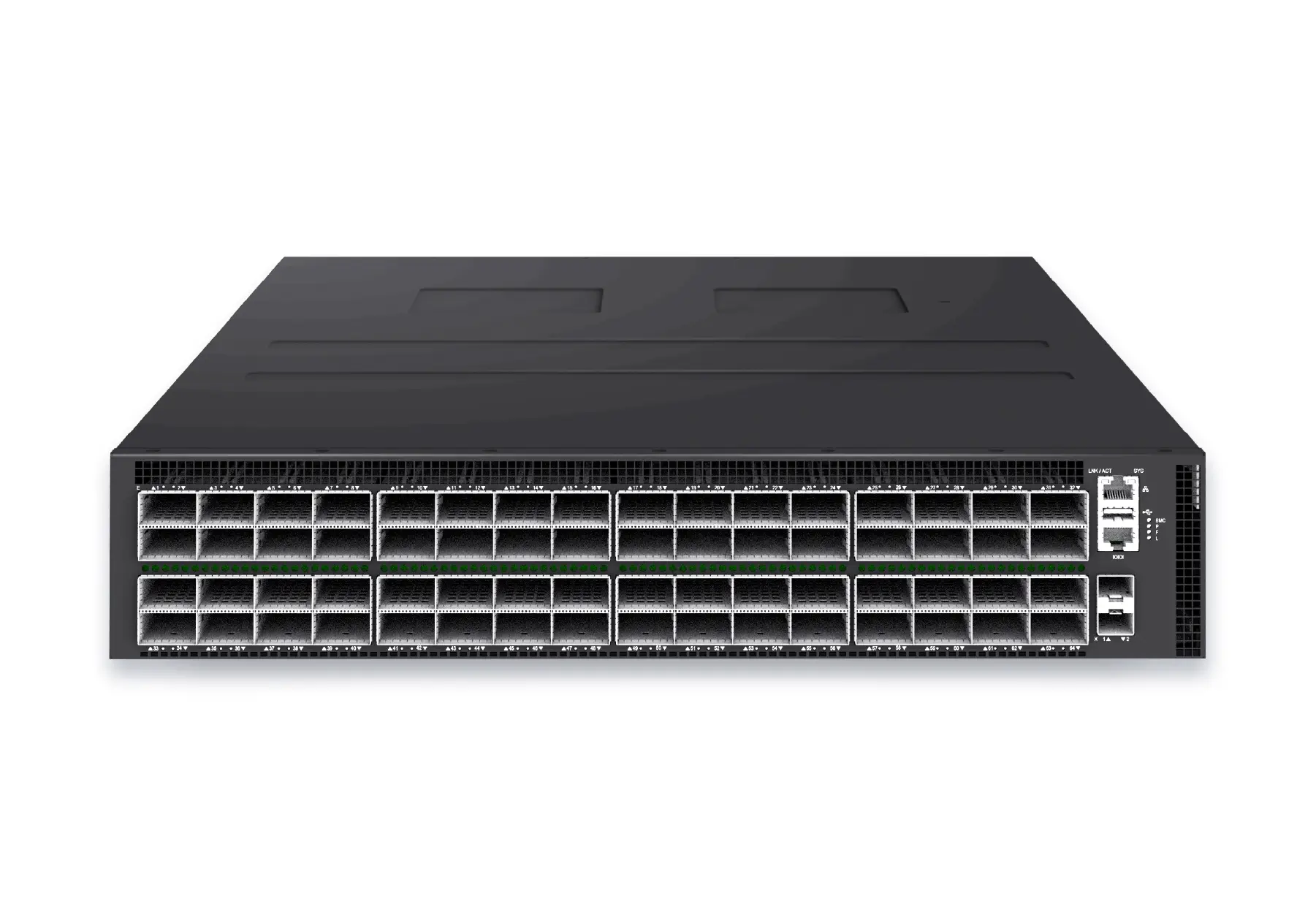 datacenter aiXS-DC-64X800-AI-G164-port 800G AI fabric switch for large-scale GPU clusters, HPC backbones, and ultra-high-throughput data center networks.View product
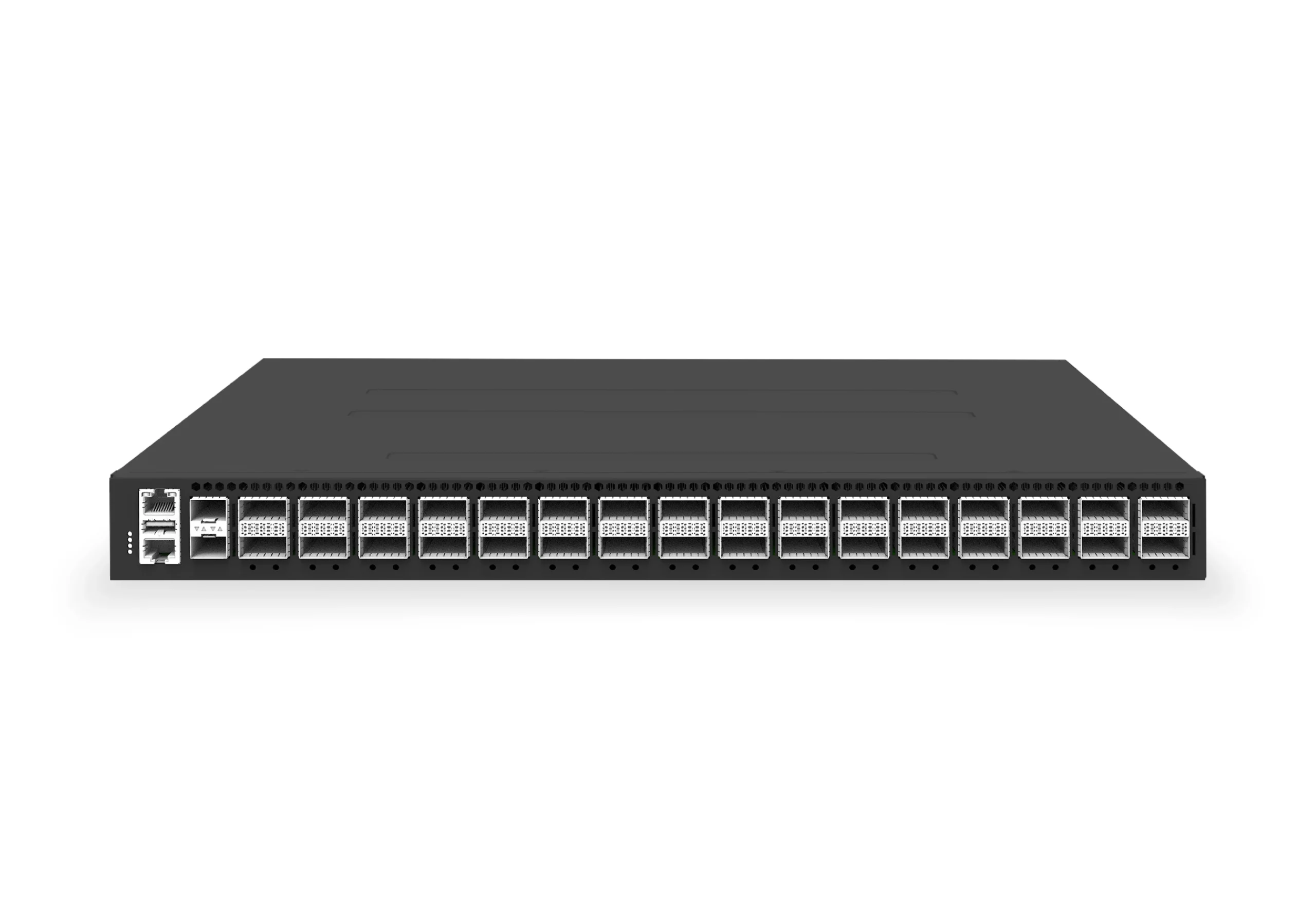 datacenter aiXS-DC-32X400-SP-G232-port 400G spine/core switch for high-capacity data center fabrics and AI-ready backbones.View product
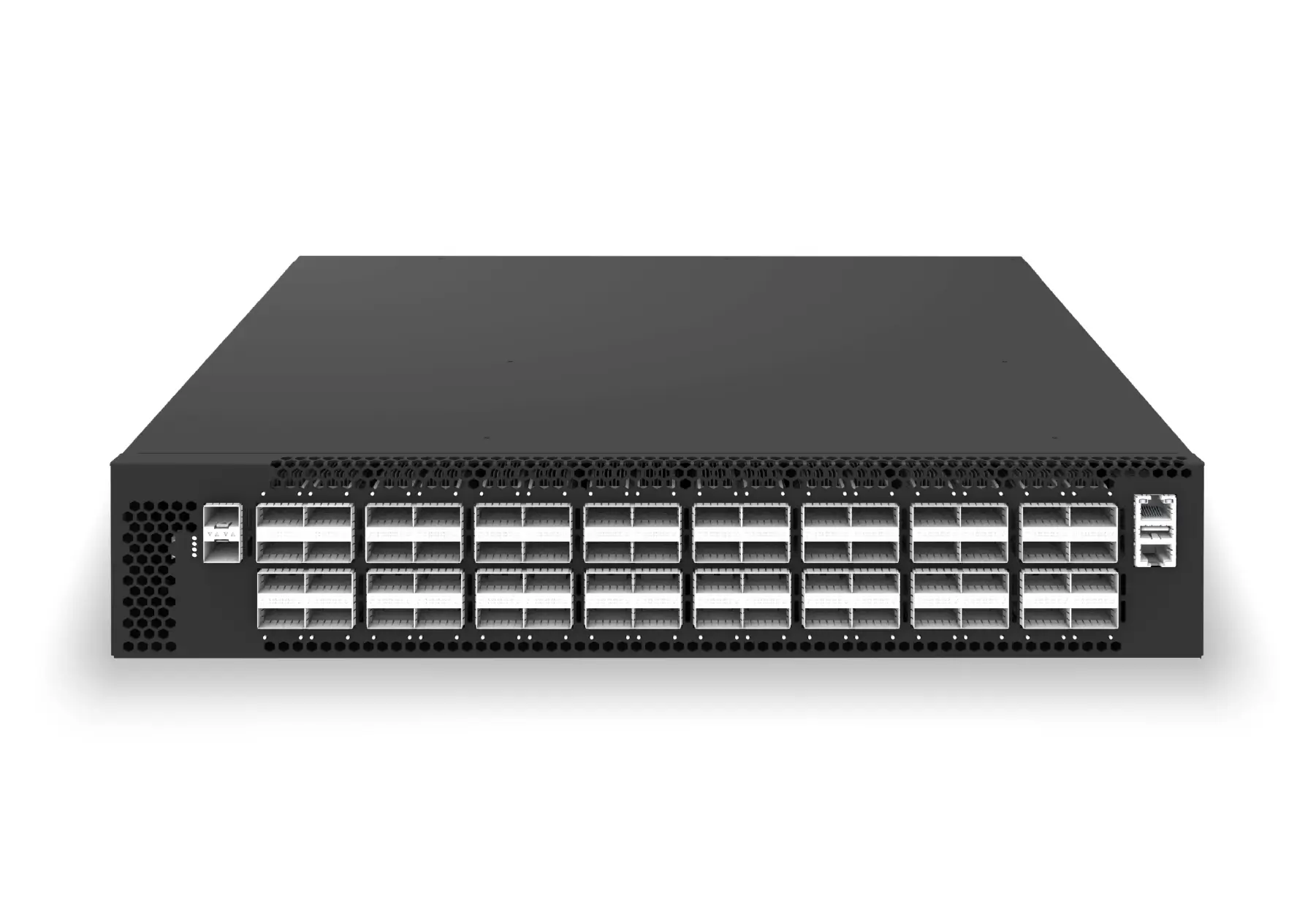 datacenter aiXS-DC-64X200-LS-G164-port 200G leaf/spine switch for high-bandwidth storage, compute, and scale-out data center fabrics.View product
Continue reading
Related articles
 Technical ArticleWhy Enterprise SONiC Is Gaining Ground in Campus Access and Aggregation: An Australian PerspectiveEngineering guide for campus switching teams covering PoE, access design, MC-LAG/STP risk, telemetry, support, and pilot validation.Read article
 Technical ArticleWhy Australian Enterprises Are Rethinking Campus Switching with Enterprise SONiCEngineering guide for campus switching teams covering PoE, access design, MC-LAG/STP risk, telemetry, support, and pilot validation.Read article
 Technical ArticleEthernet Switch Speeds Explained: Choosing the Right Network Fabric from 1G Campus Access to 800G AI BackbonesEngineering guide for campus switching teams covering PoE, access design, MC-LAG/STP risk, telemetry, support, and pilot validation.Read article