
In brief
Engineering guide to ConnectX Ethernet NIC validation for AI and cloud fabrics, covering 400G/800G readiness, RoCE, PCIe, optics, security, and telemetry.
Key takeaways
- Modern AI training clusters are fundamentally bandwidth-intensive. When GPUs across multiple servers exchange model parameters, gradients, and activations during distributed training, the network becomes a critical bottleneck.
- For Australian organisations deploying AI infrastructure-whether on-premises, in colocation facilities, or through hyperscale cloud providers-the choice of network interface card (NIC) directly impacts training throughput, inference latency, and overall return on compute investment.
- The NVIDIA ConnectX NIC family spans Ethernet speeds from 10Gb/s through 400Gb/s, offering a progression of capabilities suited to different deployment scales.
Why Network Performance Matters for AI Workloads
Modern AI training clusters are fundamentally bandwidth-intensive. When GPUs across multiple servers exchange model parameters, gradients, and activations during distributed training, the network becomes a critical bottleneck. A single slow link can stall an entire cluster, wasting expensive GPU cycles.
For Australian organisations deploying AI infrastructure-whether on-premises, in colocation facilities, or through hyperscale cloud providers-the choice of network interface card (NIC) directly impacts training throughput, inference latency, and overall return on compute investment.
The ConnectX Family: An Overview
The NVIDIA ConnectX NIC family spans Ethernet speeds from 10Gb/s through 400Gb/s, offering a progression of capabilities suited to different deployment scales. The current generation includes three main product tiers:
ConnectX-7: The flagship adapter delivering up to 400Gb/s across four ports, designed for hyperscale AI and cloud environments ConnectX-6 Dx: A versatile 100/200Gb/s option with mature feature support for enterprise data centres ConnectX-6 Lx: A cost-optimised 25/50Gb/s NIC for edge, enterprise, and telecom workloads
All ConnectX NICs share a common acceleration framework built on NVIDIA’s hardware offload engines, meaning organisations can scale from edge deployments to GPU clusters using a consistent feature set.
Key Acceleration Technologies
ConnectX NICs incorporate several hardware offload technologies that are particularly relevant for AI and cloud deployments:
ASAP2 (Accelerated Switch and Packet Processing) This technology accelerates software-defined networking operations directly in hardware, reducing CPU overhead for packet processing. For organisations running overlay networks (VXLAN, Geneve) in virtualised or containerised environments, ASAP2 can free CPU cycles for application workloads.
RDMA over Converged Ethernet (RoCE) RoCE enables direct memory access between servers without CPU involvement, which is critical for GPU Direct RDMA-a technology that allows GPUs in different servers to exchange data without staging through system memory. ConnectX NICs are noted for their RoCE performance, supporting lossless Ethernet configurations required for latency-sensitive AI training.
GPUDirect Storage This capability enables direct data paths between storage devices and GPU memory, bypassing CPU bottlenecks during data loading. ConnectX-7 adds NVMe-over-TCP acceleration, expanding storage integration options.
Inline Security Offload ConnectX-7 supports hardware-accelerated TLS, IPsec, and MACsec encryption/decryption at line rate up to 400Gb/s. This is relevant for organisations with compliance requirements or multi-tenant environments where encryption overhead would otherwise impact throughput.
Precision Timing Starting with ConnectX-6 Dx, the NICs provide hardware timestamping for data centre time synchronisation, supporting distributed systems that require consistent clocking.
Multi-Host and Density Optimisation
An underappreciated feature of ConnectX NICs is NVIDIA Multi-Host technology, which allows a single NIC to serve multiple host servers simultaneously. This can improve server density in rack-constrained environments-relevant for Australian colocation facilities where rack space and power are at a premium.
The NICs are also certified across major operating systems (Linux, Windows) and virtualisation/containerisation platforms (VMware, KVM, Kubernetes), providing deployment flexibility.
Ethernet SuperNICs: A New Category for AI Networking
For organisations scaling beyond single-server AI inference, NVIDIA has introduced Ethernet SuperNICs as a purpose-built network accelerator class for distributed AI workloads. These devices offer up to 800Gb/s throughput with intelligent congestion management, programmable I/O, and crypto acceleration-features designed specifically for GPU-to-GPU communication patterns in large training clusters.
This emerging product category is distinct from traditional NICs and targets hyperscale AI environments where network predictability directly impacts training job completion times.
SONiC: The Open-Source Network Operating System Option
For organisations with in-house network engineering capability, SONiC (Software for Open Networking in the Cloud) represents an open-source, Linux-based network operating system that supports RDMA and BGP, among other features. Originally developed for hyperscale cloud environments and now a Linux Foundation project, SONiC decouples hardware from software, allowing networking teams to use consistent tooling across multi-vendor switch fabrics.
NVIDIA offers ‘Pure SONiC’ as a supported option alongside Cumulus Linux, providing flexibility for organisations with different operational preferences.
For Australian organisations evaluating open networking, SONiC’s container-based architecture (each network function runs in its own Docker container) offers practical benefits for troubleshooting, upgrades, and operational isolation.
Spectrum-X: The End-to-End AI Ethernet Platform
ConnectX NICs don’t operate in isolation-they’re part of NVIDIA’s broader Spectrum-X Ethernet platform designed for AI workloads. The Spectrum-X platform includes Spectrum Ethernet switches (up to 800Gb/s port speeds), ConnectX adapters, and networking software, all optimised for AI traffic patterns.
Considerations for Australian Deployments
When evaluating ConnectX NICs for Australian infrastructure, several factors warrant consideration:
Supply Chain and Support Australian organisations should verify local channel availability, support response times, and warranty terms before committing to specific models. GPU cluster deployments often have tight timelines, so lead time certainty matters.
Integration with Existing Infrastructure The ConnectX family’s broad OS and virtualisation certification is helpful, but specific compatibility with your server platform, GPU model, and storage system should be confirmed through vendor support or pre-deployment testing.
Network Fabric Design For AI training clusters, the NIC choice is only one part of the network design. Lossless Ethernet configuration (DCB/PFC), congestion management, and switch selection all contribute to achievable throughput. Organisations without in-house network expertise may benefit from consulting with networking specialists experienced in GPU cluster deployments.
Total Cost of Ownership While the NIC itself is a relatively small component of overall cluster cost, the acceleration features can meaningfully reduce CPU overhead, improve GPU utilisation, and shorten training job times-all of which affect total cost of ownership for AI infrastructure.
ConnectX acceptance matrix
ConnectX should be evaluated as part of the host and fabric, not as a standalone adapter. The same NIC can be an accelerator or a bottleneck depending on PCIe placement, firmware, optics, switch queue policy, and the workload traffic pattern.
| Acceptance item | Evidence to capture | Reject or rework if |
|---|---|---|
| Host platform fit | Server SKU, PCIe generation, lane count, NUMA placement, BIOS settings, driver, firmware, and power/airflow envelope | A 200G, 400G, or 800G adapter is installed in a slot or chassis that cannot sustain the intended traffic |
| RoCE and GPU data path | RoCE v2 settings, PFC/ECN/DCBX policy, MTU, GPUDirect RDMA/Storage requirement, and GPU collective benchmark | The adapter passes link tests but GPU utilisation drops during real east-west or storage traffic |
| Switch and optics compatibility | Switch SKU, SONiC or commercial NOS image, cable/optic SKU, reach, FEC, DOM telemetry, and spare strategy | NIC selection happens before the fabric port, FEC mode, optics availability, and replacement plan are proven |
| Security and offload | TLS/IPsec/MACsec need, overlay offload, storage offload, CPU utilisation, and policy owner | Security or storage acceleration is assumed but not measured under representative workload |
| Operations lifecycle | Telemetry counters, firmware upgrade method, rollback plan, alert routing, and support escalation | The team cannot identify firmware drift, queue pressure, optic faults, or failed offload behaviour during an incident |
Engineering FAQ
Is a faster NIC always the best upgrade for an AI cluster? No. A 400G or 800G NIC helps only when the rest of the fabric can sustain the traffic pattern. Check switch buffer behaviour, congestion control, optics, PCIe lane availability, CPU/GPU topology, storage throughput, and workload communication pattern before assuming the NIC is the bottleneck.
What is the practical difference between a NIC and an Ethernet SuperNIC? A conventional NIC provides host connectivity and offloads common packet, RDMA, virtualisation, and security functions. An Ethernet SuperNIC is positioned for large distributed AI workloads where congestion management, programmable I/O, crypto acceleration, and GPU-to-GPU communication predictability matter more than generic server connectivity.
How should Australian teams validate ConnectX with SONiC fabrics? Validate NIC firmware, driver version, RoCE v2 configuration, PFC/ECN policy, MTU, optics, telemetry counters, and failure recovery against the exact SONiC switch build. The safest acceptance test is workload-level: GPU utilisation should stay stable while the network is under representative east-west load.
Where does xSONiC fit around ConnectX deployments? xSONiC fits as the open Ethernet switching layer that ConnectX-equipped servers attach to. The buyer should evaluate the switch, NIC, optics, cabling, and automation workflow as one system instead of treating the NIC as an isolated component.
Related xSONiC Resources
Sources Reviewed
- Ethernet Network Adapters - ConnectX NICs | NVIDIA
- NVIDIA ConnectX-7 Ethernet Datasheet
- NVIDIA ConnectX-7 Adapter Specifications
- NVIDIA Spectrum-X Ethernet Platform
- NVIDIA Ethernet Platform Products
- SONiC Project Documentation
- NVIDIA Ethernet Switching
- Open Compute Networking
- SONiC GitHub
- SONiC Foundation
Product fit
Products referenced for evaluation
These products are referenced for evaluation context in the article. Confirm workload, port, optics, software, interoperability, and support requirements against the exact deployment before procurement.
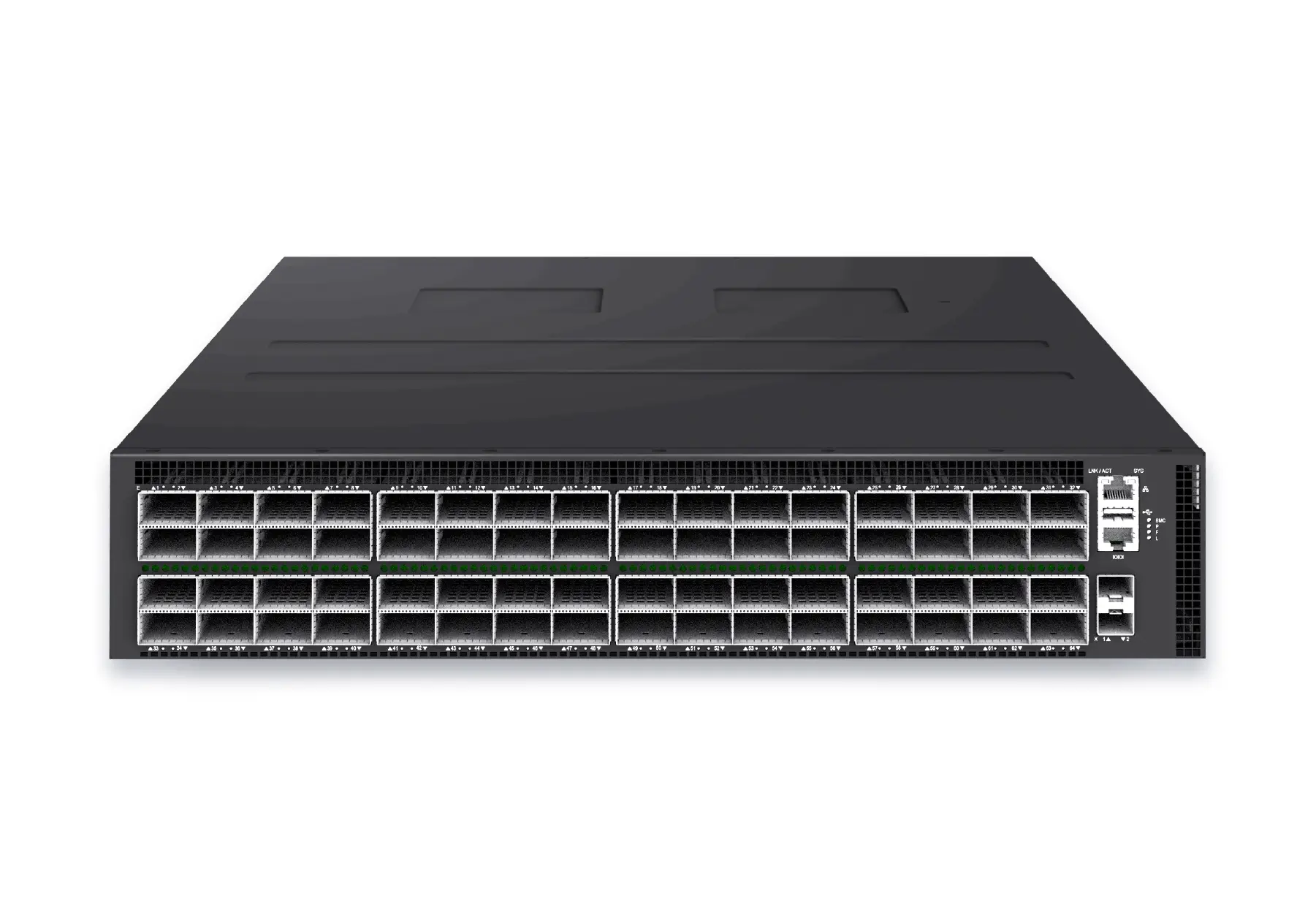 datacenter aiXS-DC-64X800-AI-G164-port 800G AI fabric switch for large-scale GPU clusters, HPC backbones, and ultra-high-throughput data center networks.View product
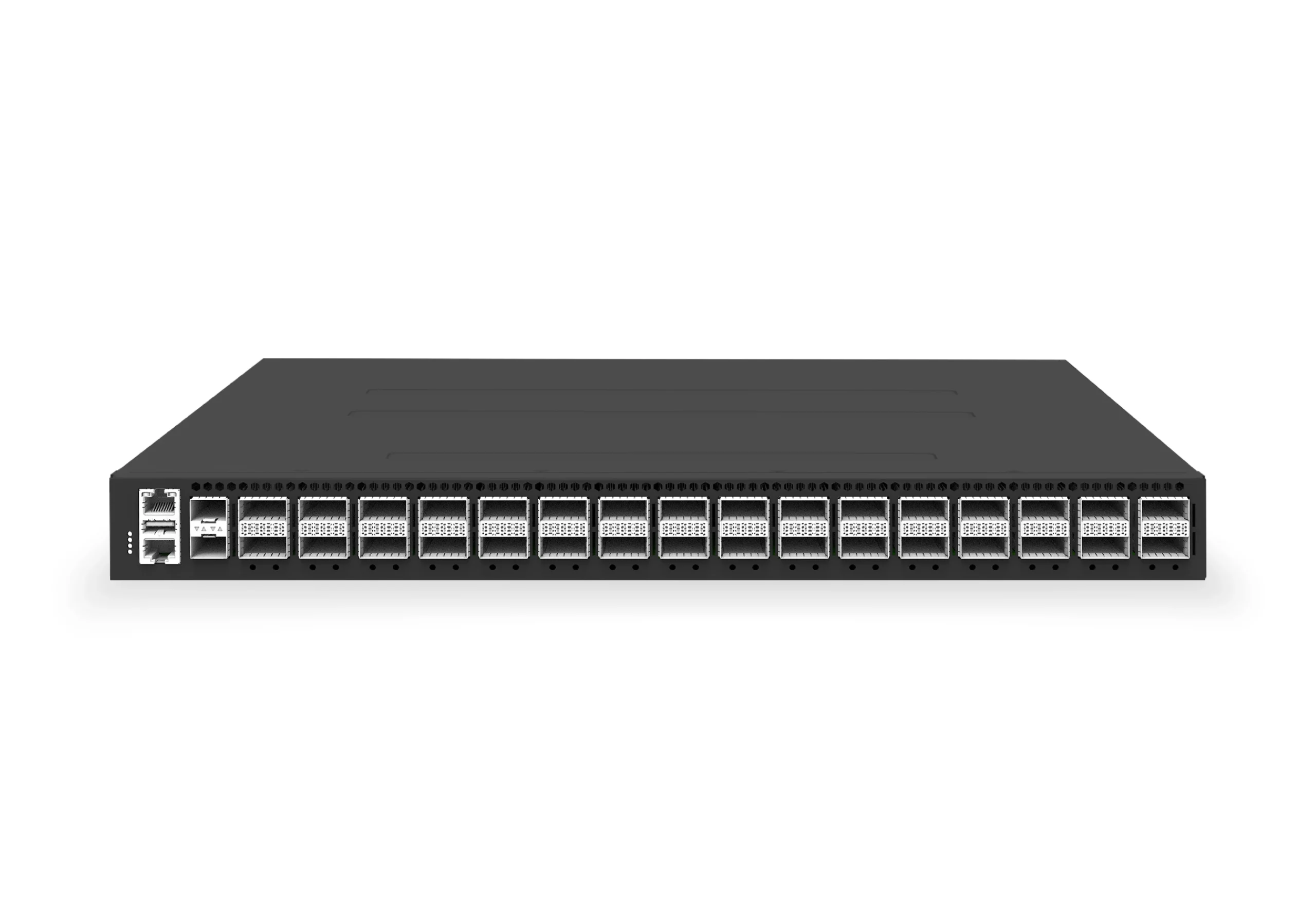 datacenter aiXS-DC-32X400-SP-G232-port 400G spine/core switch for high-capacity data center fabrics and AI-ready backbones.View product
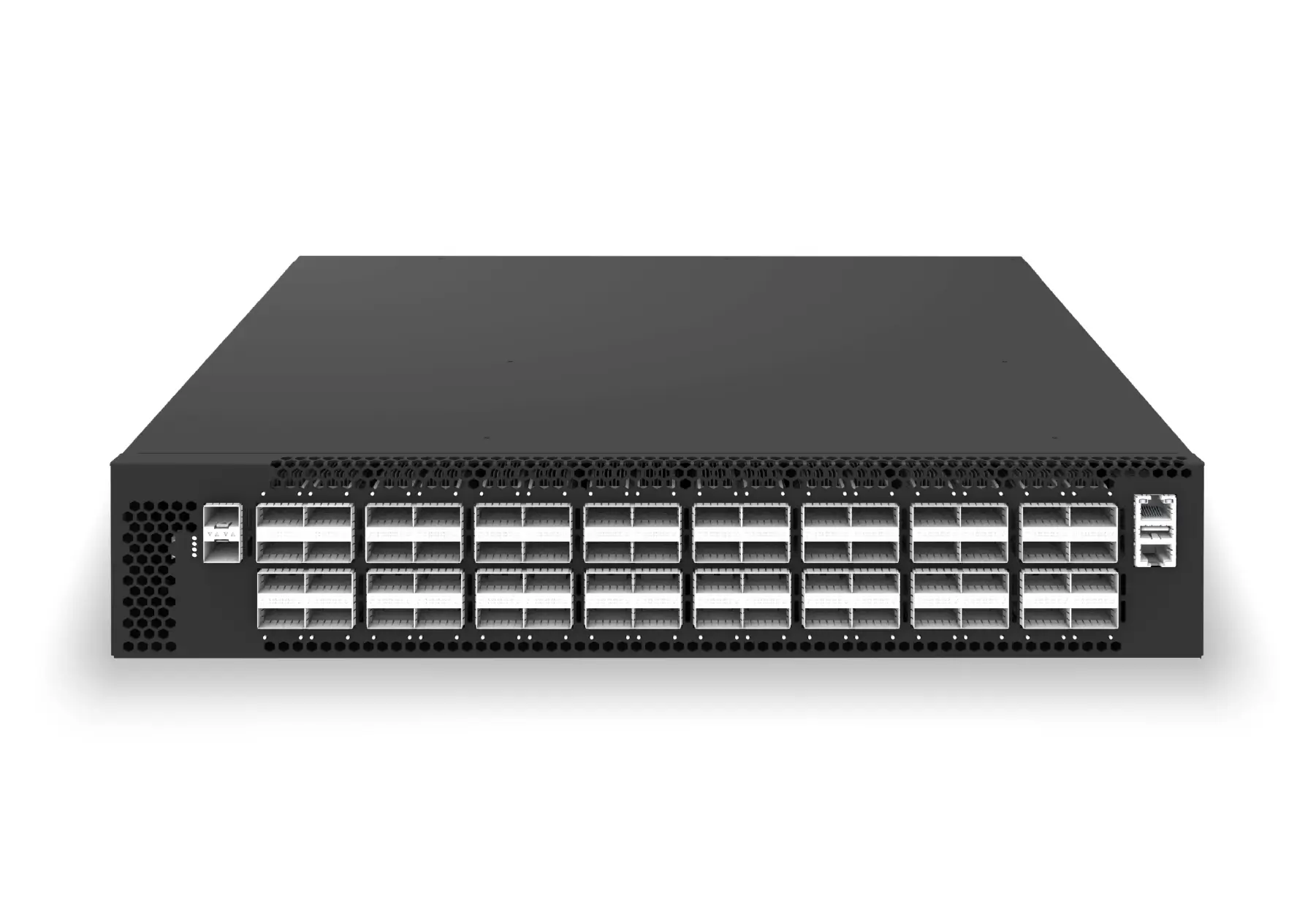 datacenter aiXS-DC-64X200-LS-G164-port 200G leaf/spine switch for high-bandwidth storage, compute, and scale-out data center fabrics.View product
Continue reading
Related articles
 Technical ArticleHow SONiC-Powered 400G and 800G Switches Change AI Data Center Fabric Design in AustraliaEngineering guide for 400G and 800G optics planning covering form factor, reach, telemetry, thermal limits, supply risk, and validation.Read article
 Technical ArticleRoCE v2 GPU Backend Fabrics at 400G and 800G: What Australian Data Center Operators Need to Know in 2026Engineering guide for AI fabric buyers covering RoCE, SONiC, telemetry, optics, support ownership, and deployment validation.Read article
 Technical ArticleWhat Australian Data Center Buyers Need to Know Before Choosing SONiC Switches for 400G and 800G UpgradesEngineering guide for 400G and 800G optics planning covering form factor, reach, telemetry, thermal limits, supply risk, and validation.Read article