
In brief
Engineering guidance on EVPN-VXLAN Underlay and Overlay Design for Enterprise SONiC Switches for Australian campus teams, covering PoE budgets, access-layer resilience.
Key takeaways
- Enterprise network teams in Australia face a familiar tension. Data center fabrics need to scale across multiple sites, support tenant isolation for hybrid cloud workloads, and handle the east-west traffic patterns that AI and distributed applications demand.
- SONiC (Software for Open Networking in the Cloud) addresses this by offering a production-hardened, open-source network operating system that supports EVPN-VXLAN natively.
- For Australian enterprises evaluating a campus refresh or data center fabric build, the question is no longer whether SONiC can run EVPN-VXLAN.
Why EVPN-VXLAN on SONiC Matters Now
Enterprise network teams in Australia face a familiar tension. Data center fabrics need to scale across multiple sites, support tenant isolation for hybrid cloud workloads, and handle the east-west traffic patterns that AI and distributed applications demand. At the same time, proprietary NOS platforms lock buyers into single-vendor upgrade cycles and opaque licensing structures.
SONiC (Software for Open Networking in the Cloud) addresses this by offering a production-hardened, open-source network operating system that supports EVPN-VXLAN natively. Built on a modular, container-based architecture where each network function runs in its own Docker container, SONiC provides the fault isolation and simplified upgrade paths that monolithic switch software cannot match.
For Australian enterprises evaluating a campus refresh or data center fabric build, the question is no longer whether SONiC can run EVPN-VXLAN. The question is how to design the underlay and overlay correctly for your environment.
This guide walks through the practical architecture decisions.
EVPN-VXLAN Architecture Fundamentals
Before diving into SONiC-specific design, it helps to establish the two-layer model that EVPN-VXLAN uses.
The Underlay: IP Reachability
The underlay is a pure Layer 3 IP fabric that provides reachability between VTEP (VXLAN Tunnel Endpoint) addresses. It carries encapsulated VXLAN traffic but has no knowledge of tenant or VLAN state.
Design choices for the underlay include:
- Routing protocol: BGP (eBGP or iBGP), OSPF, or IS-IS. BGP is the most common choice in SONiC deployments because SONiC has mature BGP support and its architecture was originally designed for large-scale BGP fabrics in cloud provider environments.
- Addressing: Typically loopback addresses assigned to each VTEP. IPv4 is standard, but IPv6 underlay support is available.
- Topology: Spine-leaf (Clos) is the recommended topology. Every leaf switch connects to every spine switch, creating a predictable, non-blocking fabric with well-understood failure domains.
The Overlay: Tenant and Service Delivery
The overlay carries the EVPN control plane and VXLAN data plane. EVPN uses MP-BGP to distribute MAC/IP binding information, while VXLAN encapsulates Layer 2 frames in UDP packets for transport across the Layer 3 underlay.
Key overlay design decisions:
- EVPN route types: Type 2 (MAC/IP advertisement), Type 3 (multicast Ethernet segment), Type 5 (IP prefix advertisement for inter-subnet routing).
- Multi-tenancy model: VRF-based tenant isolation with EVPN Type 5 routes for inter-VRF communication via a centralized or distributed gateway.
- Symmetric vs. asymmetric IRB: Symmetric IRB is generally preferred for production fabrics because it avoids the trombone routing problem and scales better with the number of subnets.
Underlay Design Choices on SONiC
BGP as the Preferred Underlay Protocol
SONiC was designed from the ground up for BGP-centric networking. The FRRouting (FRR) suite runs inside a dedicated container, providing a full BGP implementation that supports:
- eBGP underlay with unique AS per leaf and per spine
- iBGP with route reflectors for larger fabrics
- BGP unnumbered for simplified addressing on point-to-point leaf-spine links
For Australian enterprise deployments, eBGP with unique AS per device is the recommended starting point. It simplifies troubleshooting because AS path analysis immediately shows the path through the fabric, and it avoids the complexity of route reflector placement.
Spine-Leaf Topology Sizing
A typical enterprise spine-leaf fabric on SONiC-based switches might look like this:
| Component | Small (PoC/Lab) | Medium (Single DC) | Large (Multi-Site) |
|---|---|---|---|
| Spine switches | 2 | 4 | 4-8 per site |
| Leaf switches | 4 | 16-32 | 32-64 per site |
| Uplink speed | 100G | 100G/400G | 400G/800G |
| Server-facing ports | 25G/100G | 25G/100G | 100G/200G |
| VTEP loopback pool | /32 per device | /32 per device | /32 per device |
Underlay IP Addressing
Keep the underlay addressing simple:
- Assign a /32 loopback address to each switch for its VTEP source IP.
- Use /31 point-to-point links between leaf and spine switches.
- Reserve a contiguous block for future fabric expansion.
Overlay Design: EVPN Control Plane on SONiC
EVPN Multi-Homing
SONiC supports EVPN multi-homing (ESI-based), which allows a server or downstream switch to connect to multiple leaf switches with active-active forwarding. This eliminates the need for legacy MC-LAG configurations in the data center and improves utilization of all uplinks.
Key considerations:
- All-active multi-homing: Preferred for most deployments. Both leaf switches forward traffic for the multi-homed host.
- Split-horizon filtering: SONiC handles this through EVPN ESI split-horizon rules, preventing loops and duplicate traffic.
- DF (Designated Forwarder) election: SONiC supports the standard DF election algorithm for multi-homed Ethernet segments.
Inter-VLAN Routing with Symmetric IRB
For tenant workloads that span multiple subnets, symmetric Integrated Routing and Bridging (IRB) is the recommended approach:
- Traffic is routed at the source VTEP toward the destination VTEP.
- The destination VTEP performs a second routing lookup for the final hop.
- No traffic trombone occurs, even when source and destination hosts are on different subnets.
SONiC implements symmetric IRB through its VXLAN and EVPN modules. The configuration involves defining VLAN-VNI mappings, enabling IRB interfaces, and configuring EVPN Type 5 routes for prefix advertisement.
Multi-Tenancy with VRFs
Each tenant gets its own VRF instance on SONiC. Inter-tenant communication (when required) flows through a controlled routing policy, typically via a centralized firewall or gateway.
| Tenant Isolation Method | Use Case | SONiC Support |
|---|---|---|
| VRF-lite per tenant | Simple multi-tenancy | Native |
| EVPN Type 5 prefix routes | Inter-subnet routing across VTEPs | Native |
| Route-target filtering | Controlling which tenants see which routes | Via FRR BGP config |
| ACL-based micro-segmentation | Per-flow or per-application policy | Via SAI/ASIC ACLs |
Operational Considerations for Australian Enterprises
SONiC Configuration and Automation
SONiC uses JSON-based configuration (config_db.json) as its primary configuration model. For enterprise teams accustomed to CLI-driven workflows, this requires an adjustment, but it brings significant advantages:
- Version control: Configuration files integrate naturally with Git-based workflows.
- Idempotent automation: Tools like Ansible, Puppet, or custom Python scripts can manage SONiC configurations predictably.
- NETCONF/YANG: SONiC has growing support for NETCONF and YANG models, enabling integration with existing network management platforms.
Monitoring and Visibility
SONiC provides several built-in monitoring capabilities:
showCLI commands for real-time state inspection- Streaming telemetry support for integration with monitoring platforms like Prometheus, Grafana, or ELK
- LLDP for neighbor discovery and topology mapping
- BGP session monitoring through FRR commands
For Australian enterprises running hybrid monitoring stacks (on-premises SIEM with cloud-based analytics), SONiC’s streaming telemetry exports integrate with standard collection pipelines.
Hardware Selection: ASIC Considerations
SONiC runs on switches from multiple vendors and ASICs, as documented by the SONiC Foundation. The Switch Abstraction Interface (SAI) decouples the NOS from the silicon, giving buyers flexibility in hardware selection.
When selecting hardware for an EVPN-VXLAN fabric, evaluate:
- VXLAN VTEP hardware offload: Not all ASICs support hardware VTEP termination. Confirm that the switch ASIC handles VXLAN encapsulation and decapsulation in hardware.
- VRF scale: Check the maximum number of VRFs the ASIC supports.
- ACL and TCAM capacity: Multi-tenant EVPN fabrics with micro-segmentation require adequate TCAM resources.
- Table sizes: Route scale, MAC address table size, and ECMP group size should align with your fabric design.
NVIDIA Spectrum switches, for example, support SONiC and offer hardware VXLAN offload with documented scale characteristics up to 512K IPv4 routes on current-generation silicon.
Design Checklist: EVPN-VXLAN Fabric on SONiC
Use this checklist when planning a new EVPN-VXLAN deployment on SONiC-based switches:
- Define fabric scale: number of spines, leaves, and future growth targets
- Select underlay addressing scheme (loopback /32s, /31 point-to-point links)
- Choose underlay routing protocol (eBGP with unique AS per device recommended)
- Define VTEP loopback address pool
- Plan tenant VRF instances and route-target assignments
- Choose IRB mode (symmetric IRB recommended)
- Confirm ASIC support for hardware VXLAN offload on selected switches
- Define VLAN-to-VNI mapping for each tenant
- Plan inter-VRF routing policy (centralized gateway or distributed)
- Set up configuration management (Git + Ansible, or equivalent)
- Design monitoring and telemetry pipeline
- Validate with a PoC before production rollout
Linking EVPN-VXLAN to Your Broader Fabric Strategy
EVPN-VXLAN does not exist in isolation. For many Australian enterprises, the EVPN fabric is the foundation layer that supports:
- AI/ML cluster backends: VXLAN segments isolate GPU traffic and RDMA flows. See the xSONiC AI Fabric solution for how EVPN-VXLAN connects to high-performance compute fabrics.
- Campus-to-DC extension: EVPN-VXLAN can extend from the data center leaf into the campus aggregation layer, enabling consistent policy across sites.
- Multi-site fabrics: EVPN-VXLAN with Type 5 routes enables inter-site connectivity without MPLS, which is relevant for enterprises with geographically distributed operations across Australian states.
The open nature of SONiC means you can start with a single-vendor hardware platform and expand to multi-vendor as your fabric grows, without redesigning the overlay.
What This Means for Your Next Refresh
If your current data center fabric relies on a proprietary NOS with EVPN-VXLAN support, the path to SONiC is shorter than many teams expect. The protocol behavior is standards-based. The configuration model is documented. The community is active, with the SONiC Foundation operating under the Linux Foundation with contributions from major networking silicon and equipment vendors.
The risk is not in the protocol. It is in the operational transition. Teams need to plan for:
- Training on SONiC’s configuration model (JSON-based, CLI supplementary)
- Integration with existing monitoring and automation toolchains
- Hardware selection that confirms VXLAN and EVPN feature support on the target ASIC
For Australian enterprises, where data sovereignty and operational simplicity are priorities, SONiC-based EVPN-VXLAN fabrics offer a credible alternative to proprietary stacks with the added benefit of community-driven feature development and no per-switch NOS licensing costs.
Engineering FAQ
What should be tested before moving campus switching to SONiC or open networking? Test PoE behaviour, NAC integration, VLAN and policy design, STP or MC-LAG interaction, multicast, monitoring, upgrade rollback, and help-desk workflows. Campus readiness is an operations test, not only a forwarding test.
Where do campus refresh projects usually carry hidden risk? The risk often sits in closets: power budget, old cabling, undocumented uplinks, mixed endpoint types, voice devices, cameras, badge systems, and change windows. Those details should be inventoried before selecting switch models.
How should Australian campus teams structure a pilot? Choose one representative site or building, document endpoint classes, run PoE and failover tests, verify monitoring, train operations staff, and define rollback steps before expanding to the broader estate.
Related xSONiC Resources
Sources Reviewed
- IEEE 802.1Q Bridges and Bridged Networks
- IEEE 802.1AX Link Aggregation
- Ethernet Network Adapters - ConnectX NICs | NVIDIA
- NVIDIA BlueField Data Processing Unit
- NVIDIA Spectrum-X Ethernet Platform
- OpenConfig gNMI Specification
- OpenConfig
- RFC 7950 - The YANG 1.1 Data Modeling Language
- RFC 6241 - Network Configuration Protocol (NETCONF)
- ACSC Essential Eight
- OAIC Notifiable Data Breaches
- APRA CPS 234 Information Security
- NETSCOUT Network Packet Definition
- Cloudflare Network Packet Definition
- SONiC Project Documentation
- Broadcom Ethernet Switching
- Marvell Switching
- NVIDIA Ethernet Switching
- Open Compute Networking
- SONiC GitHub
- SONiC Foundation
Product fit
Products referenced for evaluation
These products are referenced for evaluation context in the article. Confirm workload, port, optics, software, interoperability, and support requirements against the exact deployment before procurement.
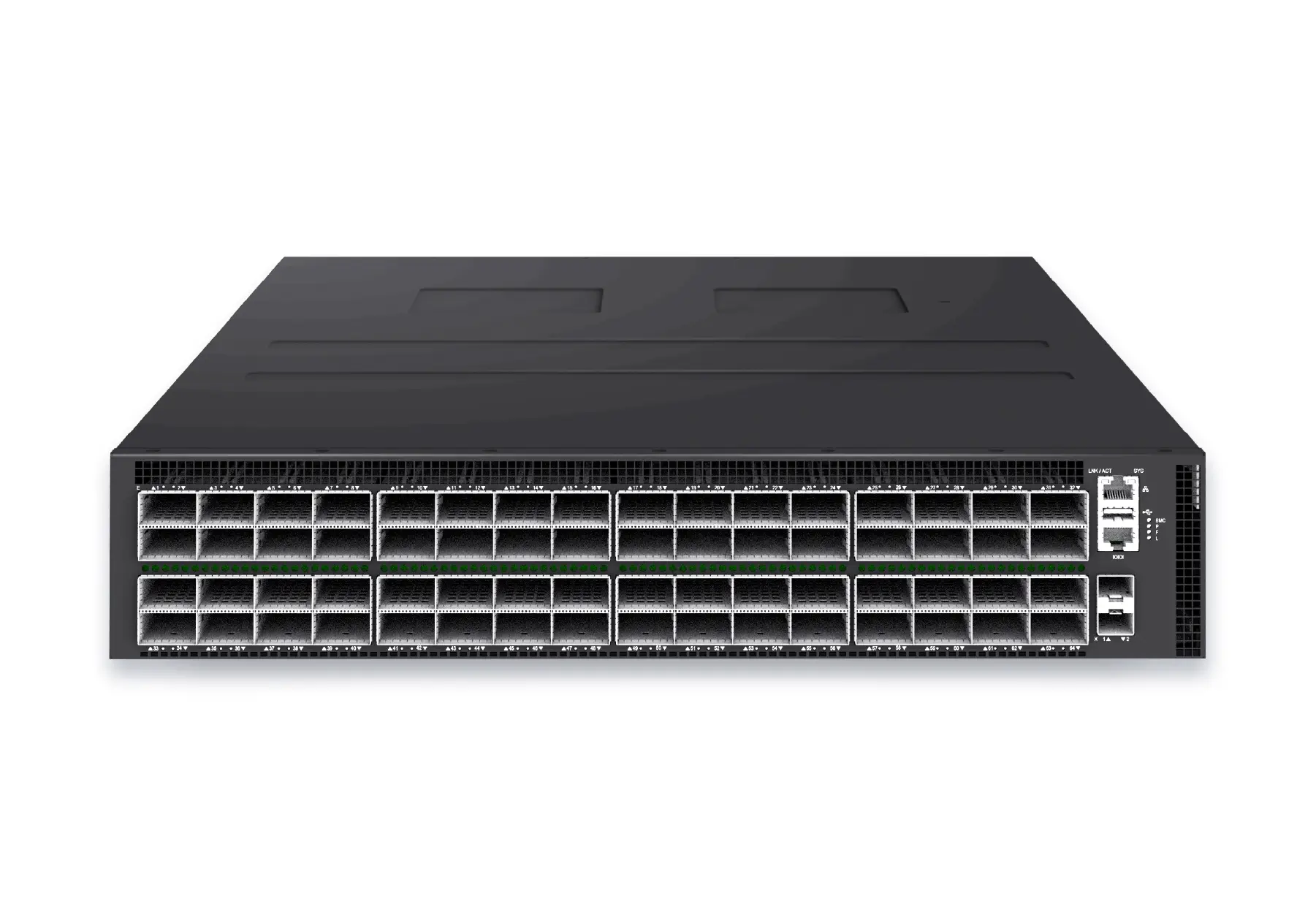 datacenter aiXS-DC-64X800-AI-G164-port 800G AI fabric switch for large-scale GPU clusters, HPC backbones, and ultra-high-throughput data center networks.View product
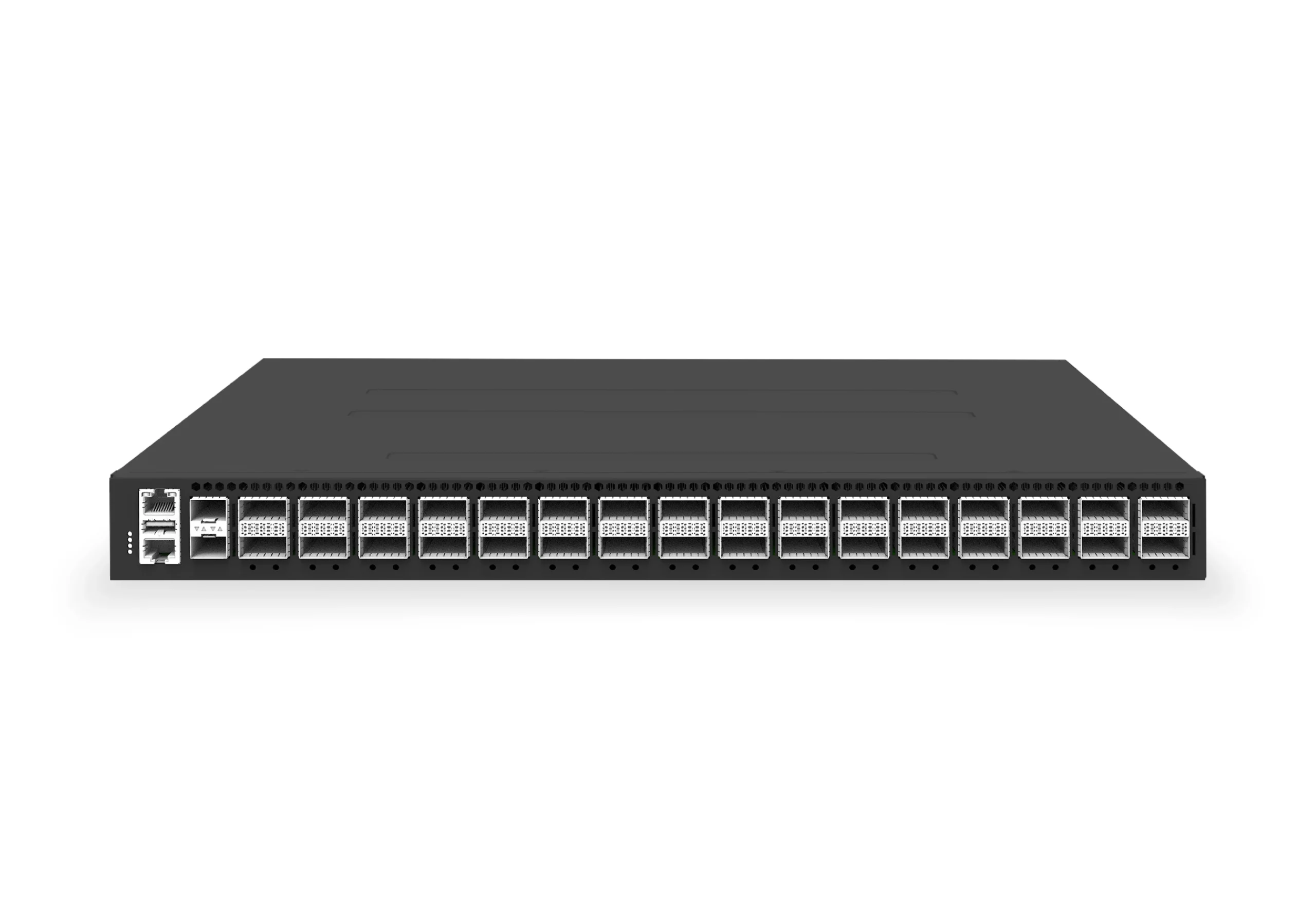 datacenter aiXS-DC-32X400-SP-G232-port 400G spine/core switch for high-capacity data center fabrics and AI-ready backbones.View product
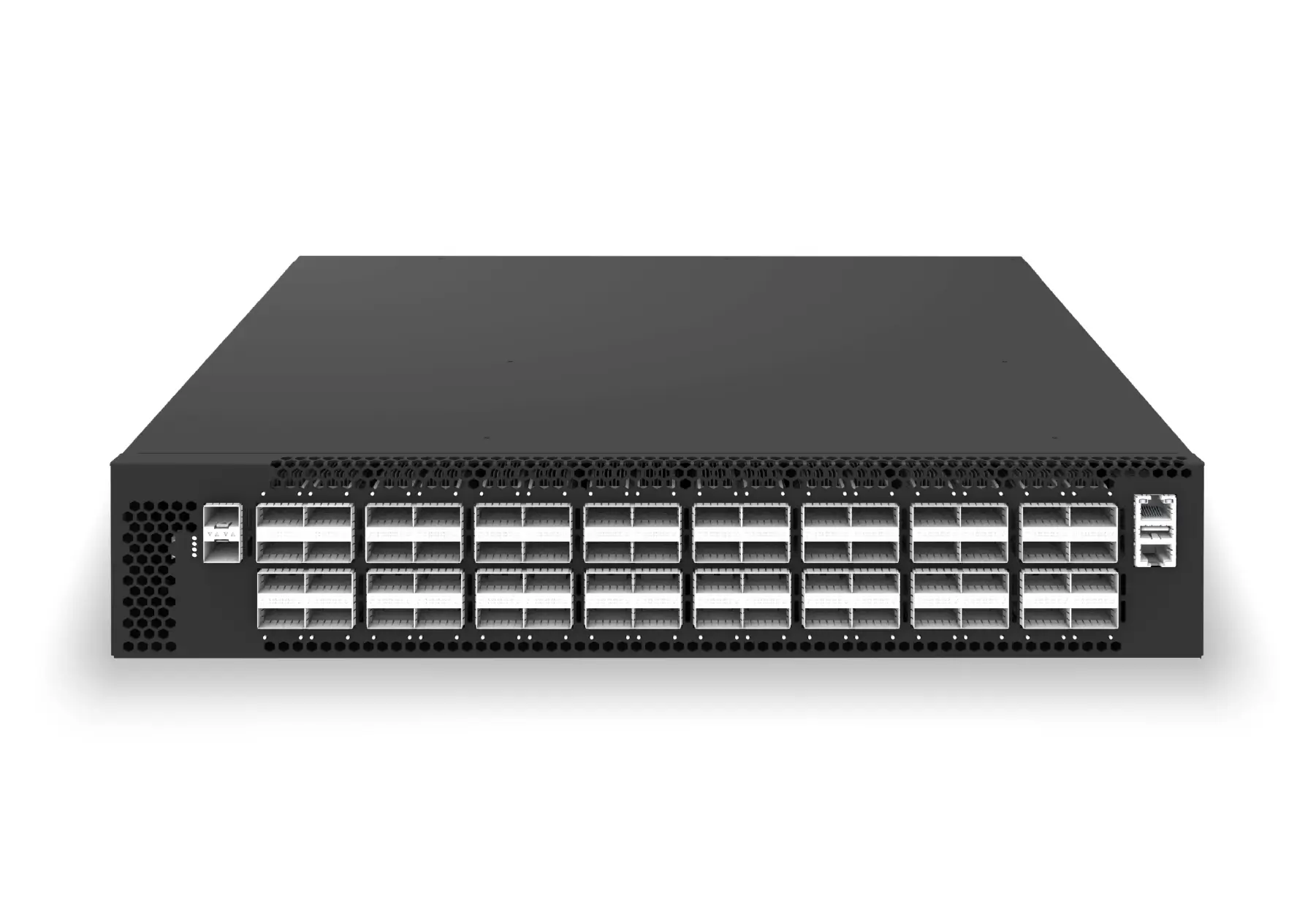 datacenter aiXS-DC-64X200-LS-G164-port 200G leaf/spine switch for high-bandwidth storage, compute, and scale-out data center fabrics.View product
Continue reading
Related articles
 Technical ArticleOpen Networking Support for Enterprise Buyers: How SONiC and Open NOS Models Actually WorkEngineering guidance on Open Networking Support for Enterprise Buyers for Australian campus teams, covering PoE budgets, access-layer resilience, migration risk.Read article
 Technical ArticleFrom Proprietary Lock-In to Open Networking: A Practical Enterprise SONiC Migration PlaybookA practical Enterprise SONiC migration playbook for Australian buyers moving from proprietary switch OS to open networking.Read article
 Technical ArticleWhy Centralized AI Fabric Management Is the Missing Layer in Open NetworkingEngineering guidance on Centralized AI Fabric Management Is the Missing Layer in Open Networking for Australian network teams, covering underlay design, EVPN-VXLAN.Read article