In brief
Bare metal switch and custom NOS evaluation guide for Australian buyers covering ASICs, SAI, ONIE, SONiC, automation, support, and TCO.
Key takeaways
- Australian enterprise and data center network teams are revisiting a question that hyperscalers answered years ago: should you buy your switches and your network operating system from the same vendor, or decouple them?
- The answer, increasingly, is to decouple. But the path from closed-box switching to open NOS deployment is not as simple as vendor marketing suggests.
- SONiC, which stands for Software for Open Networking in the Cloud, is a free and open-source network operating system maintained under the Linux Foundation.
The Open Networking Question Is Back on the Table for Australian Buyers
Australian enterprise and data center network teams are revisiting a question that hyperscalers answered years ago: should you buy your switches and your network operating system from the same vendor, or decouple them?
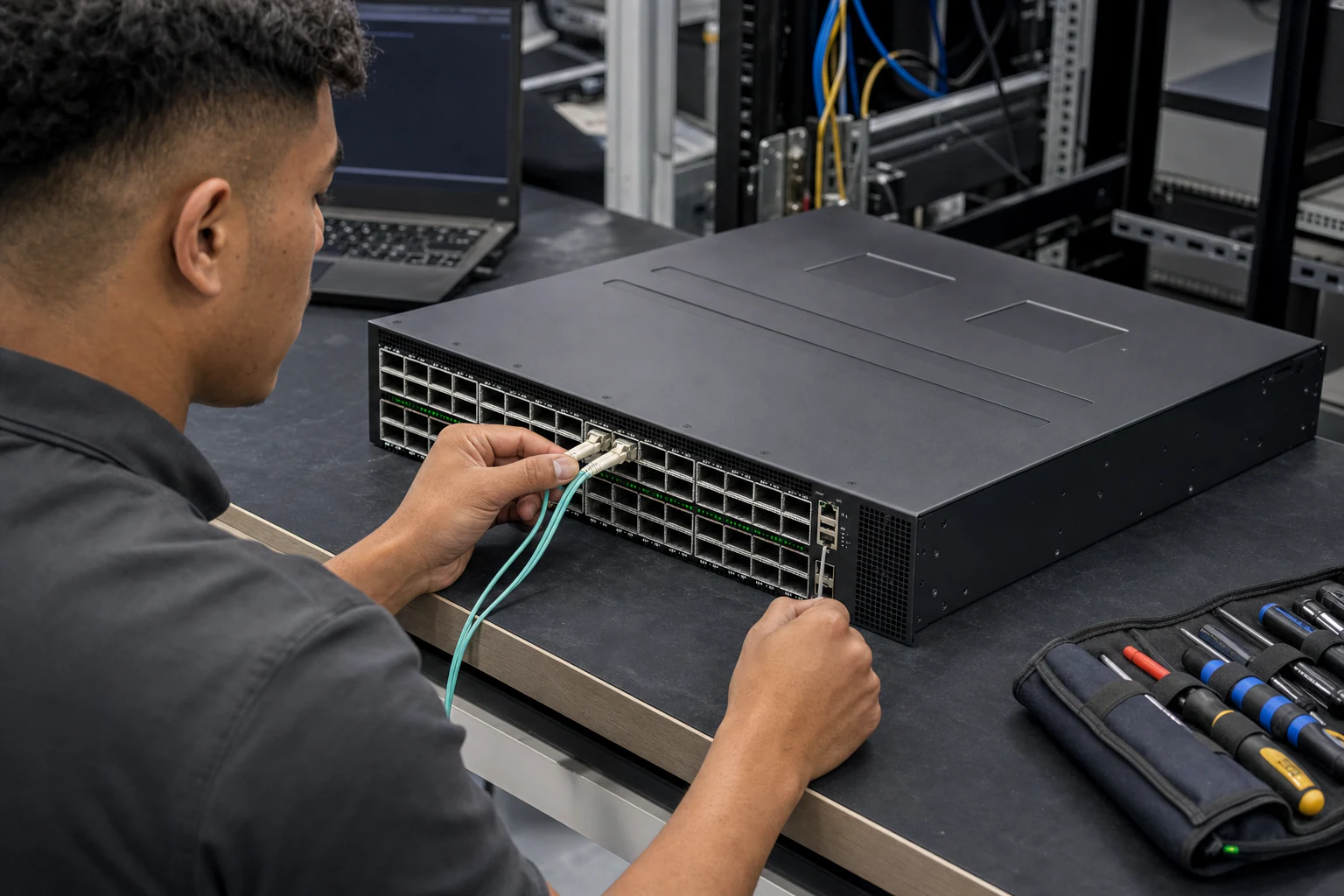
The answer, increasingly, is to decouple. But the path from closed-box switching to open NOS deployment is not as simple as vendor marketing suggests. This analysis examines what has changed in 2025, what SONiC offers today, and how Australian buyers can evaluate bare metal switch platforms for custom NOS deployment without falling into common traps.
What SONiC Actually Is (and Is Not)
SONiC, which stands for Software for Open Networking in the Cloud, is a free and open-source network operating system maintained under the Linux Foundation. According to the SONiC Foundation, it is ‘based on Linux that runs on switches from multiple vendors and ASICs’ and offers ‘a full suite of network functionality, like BGP and RDMA, that has been production-hardened in the data centers of some of the largest cloud service providers.’
Key architectural facts from the official SONiC GitHub repository:
- Multi-vendor support: SONiC runs on switches from various hardware vendors using the Switch Abstraction Interface (SAI)
- Container-based architecture: Each network function runs in its own Docker container, providing fault isolation and simplified upgrades
- Standard Linux interfaces: Uses standard Linux tools and interfaces, making it accessible to teams with existing Linux skills
- Apache 2.0 license: Fully open source with no licensing fees
This is not a niche experiment. SONiC has been production-deployed at scale by some of the world’s largest cloud operators. The question for Australian enterprise buyers is whether that maturity translates to their operational context.
The Australian Market Context
Australia presents a specific set of networking procurement realities that influence bare metal and open NOS evaluation:
Geography and support: Australia’s distance from major networking vendor headquarters means support response times for proprietary platforms are often measured in business days, not hours. For open NOS deployments, this reality cuts both ways. Community support is global and asynchronous, while some commercial SONiC distributions offer localised support.
Skills availability: SONiC runs on standard Linux and uses well-known networking protocols. Australian network engineers with Linux and BGP experience can transition to SONiC operations, but dedicated SONiC expertise remains concentrated among cloud and hyperscale operators. Building internal capability requires investment.
Procurement cycles: Australian government and enterprise procurement often favours multi-vender evaluation and avoids single-vendor lock-in. Bare metal switching with a decoupled NOS aligns with these procurement principles, but evaluation frameworks need to be established.
Data sovereignty and compliance: For regulated industries, the ability to audit and control the NOS stack is a tangible advantage of open source. SONiC’s Apache 2.0 license and transparent codebase support compliance requirements.
What Has Changed in 2025
Several developments make bare metal NOS evaluation more practical today than even two years ago:
NVIDIA now ships Pure SONiC: NVIDIA’s Ethernet switch portfolio, including the Spectrum-4 and Spectrum-6 lines, officially supports SONiC as a NOS option alongside Cumulus Linux. The company’s website lists Pure SONiC as ‘a community-developed, open source network operating system based on Linux that runs on switches from multiple vendors.’ This is significant because it means one of the largest switching silicon vendors is actively supporting SONiC on their hardware.
SAI abstraction maturity: The Switch Abstraction Interface that underpins SONiC’s multi-vendor capability has matured. More ASIC vendors provide production-quality SAI implementations, reducing the portability risk that early adopters faced.
Ecosystem breadth: SONiC now supports BGP, EVPN-VXLAN, RDMA over Converged Ethernet (RoCE), and telemetry features that were previously only available in proprietary NOS platforms. For Australian data center operators evaluating AI fabric or high-performance computing networks, this feature parity matters.
A Practical Evaluation Framework
Australian network teams considering bare metal switches with SONiC or other custom NOS platforms should evaluate across five dimensions:
1. Hardware Compatibility
Not all bare metal switches are equal. The SONiC project maintains a supported devices list, and compatibility varies by ASIC vendor, switch model, and feature subset. Evaluate:
- Does the switch hardware appear on the SONiC supported devices list?
- Which ASIC does it use, and how mature is the SAI implementation for that ASIC?
- What port speeds and densities does the platform offer for your workload?
2. Feature Requirements
Map your current and planned feature requirements against SONiC’s capabilities:
| Feature Area | SONiC Support | Notes |
|---|---|---|
| BGP routing | Production-ready | Used in hyperscale deployments |
| EVPN-VXLAN | Supported | Requires feature-specific validation |
| RoCE/RDMA | Supported | Critical for AI fabric workloads |
| PoE | Limited | May require vendor-specific extensions |
| MPLS | Limited | Evaluate against requirements |
| NETCONF/YANG | Supported | For automation-heavy environments |
3. Operational Model
SONiC’s containerised architecture means upgrades, troubleshooting, and configuration differ from traditional CLI-driven switches. Evaluate:
- Does your team have Linux and Docker operational skills?
- What is your automation framework, and does it integrate with SONiC’s management interfaces?
- What monitoring and telemetry stack do you use, and does it integrate with SONiC’s streaming telemetry?
4. Support and Ecosystem
For Australian deployments, evaluate the support model carefully:
- Community support: Active but asynchronous, no SLA
- Hardware vendor support: Some bare metal switch vendors provide NOS-agnostic hardware support
5. Total Cost of Ownership
The economics of bare metal plus SONiC versus integrated vendor platforms depend on scale, skills, and operational model. Key cost factors:
- Hardware acquisition cost (typically lower for bare metal)
- NOS licensing cost (zero for SONiC, significant for proprietary platforms)
- Operational cost (potentially higher initially for open NOS teams)
- Support contract cost (varies by commercial distribution)
- Training and skills development cost
Bare Metal Switch Acceptance Matrix
| Evaluation area | Acceptance evidence | Rework trigger |
|---|---|---|
| Hardware identity | Exact switch SKU, ASIC, ONIE version, bootloader, PSU/fan airflow, rack depth, and port map recorded | Lab platform is not identical to the production quote |
| NOS compatibility | SONiC or custom NOS image, SAI version, SDK owner, and supported feature matrix validated for 100G, 400G, or 800G roles | Required feature depends on an unmaintained or unofficial image |
| Optics and cabling | QSFP28, QSFP-DD, OSFP, DAC, AOC, FEC, DOM, breakout, and link recovery tested | Optics support is assumed from a different vendor platform |
| Automation and operations | ZTP, config backup, telemetry, rollback, image upgrade, and drift detection run for a 30-day pilot | Day-2 operation requires console access or untracked CLI changes |
| Support and commercial model | Hardware, NOS, optics, integration, spare, and escalation owners named in 36-month and 60-month TCO | The buyer cannot identify who owns a production fault |
Where xSONiC Fits
xSONiC bare metal switches are designed for exactly this evaluation path. Built on merchant silicon with open NOS compatibility, xSONiC platforms let Australian network teams evaluate SONiC or other custom NOS options without committing to a proprietary stack.
For data center teams evaluating AI fabric deployments, xSONiC’s bare metal platforms pair with SONiC’s RDMA and RoCE capabilities to support GPU backend networks. For enterprise campus teams exploring open networking at the access and aggregation layers, the same hardware approach applies with appropriate NOS selection.
The evaluation starts with hardware that does not lock you in. That is the bare metal promise, and it is why the NOS choice matters as much as the switch itself.
What to Watch Next
Australian network teams should monitor several developments that will influence bare metal NOS adoption:
- SONiC release cadence: The project’s regular releases continue to close feature gaps with proprietary platforms
- Australian community growth: Local SONiC user groups and deployment case studies will provide relevant operational evidence
- AI infrastructure demand: As Australian organisations build private AI infrastructure, the need for flexible, high-performance networking will accelerate open NOS evaluation
- Commercial distribution competition: More commercial SONiC support options will improve the support model for Australian buyers
The bottom line: bare metal switches with custom NOS are no longer a hyperscaler-only proposition. For Australian network teams willing to invest in evaluation and skills development, the economics and operational flexibility are increasingly compelling. The question is no longer whether to evaluate open networking, but how to structure the evaluation to produce a confident deployment decision.
Engineering FAQ
What is the first proof point for a bare metal switch evaluation? Prove that the exact hardware SKU, ASIC, ONIE version, NOS image, optics, and automation workflow match the production bill of materials.
Why is ONIE part of the evaluation? ONIE determines how reliably the switch can install and recover NOS images. If image install, rollback, or rescue boot is fragile, the open NOS choice becomes operationally risky.
How should Australian buyers compare bare metal TCO? Compare hardware, optics, support, spares, validation lab, training, automation work, and 36-month/60-month exit cost, not only initial switch price.
Related xSONiC Resources
Sources Reviewed
- Ethernet Network Adapters - ConnectX NICs | NVIDIA
- NVIDIA BlueField Data Processing Unit
- NVIDIA Spectrum-X Ethernet Platform
- OpenConfig gNMI Specification
- OpenConfig
- RFC 7950 - The YANG 1.1 Data Modeling Language
- RFC 6241 - Network Configuration Protocol (NETCONF)
- IEEE 802.11be Wireless LAN Standard
- IEEE 802.3bt Power over Ethernet
- SONiC Project Documentation
- Broadcom Ethernet Switching
- Marvell Switching
- NVIDIA Ethernet Switching
- Open Compute Networking
- SONiC GitHub
- SONiC Foundation
Product fit
Products referenced for evaluation
These products are referenced for evaluation context in the article. Confirm workload, port, optics, software, interoperability, and support requirements against the exact deployment before procurement.
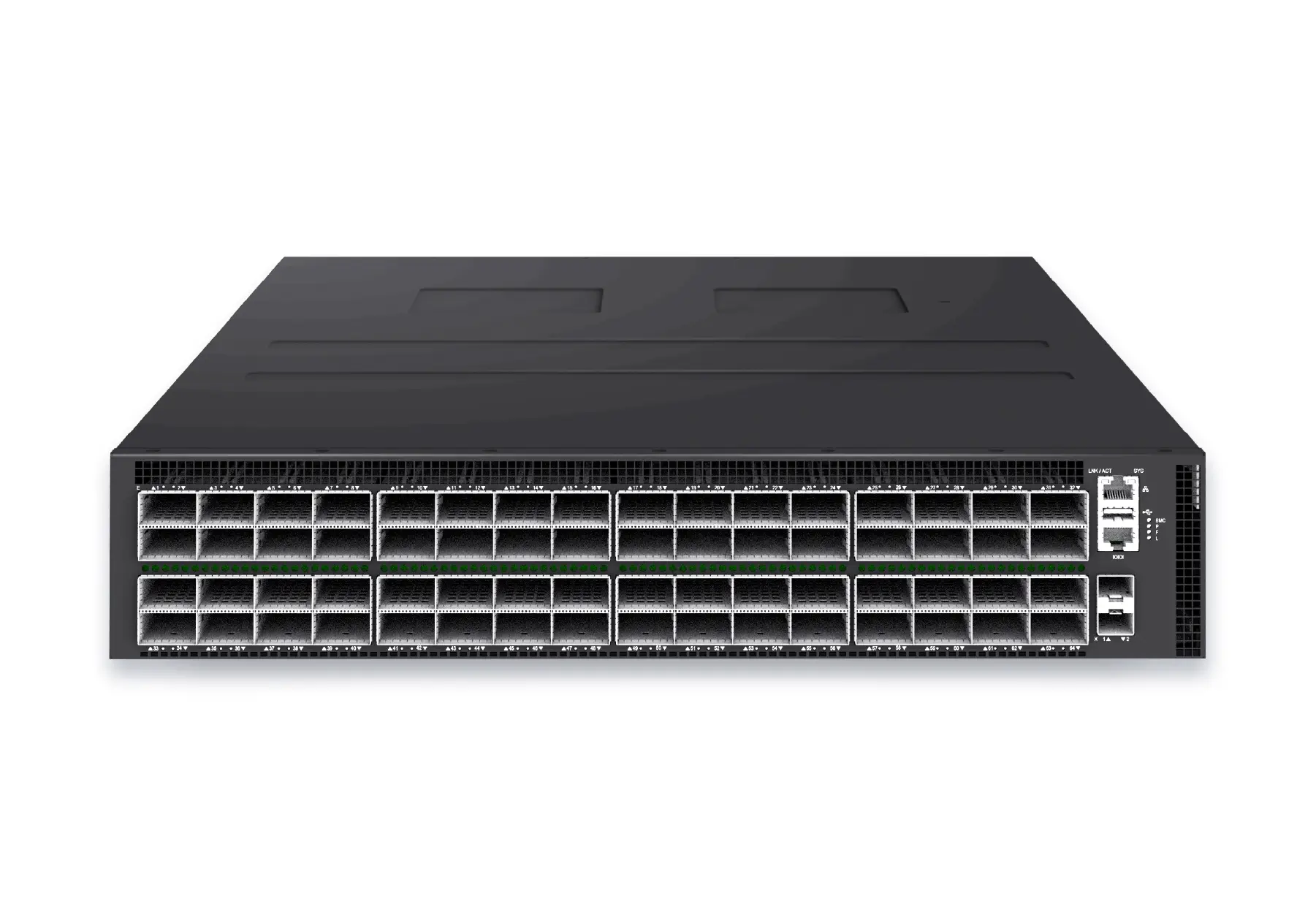 datacenter aiXS-DC-64X800-AI-G164-port 800G AI fabric switch for large-scale GPU clusters, HPC backbones, and ultra-high-throughput data center networks.View product
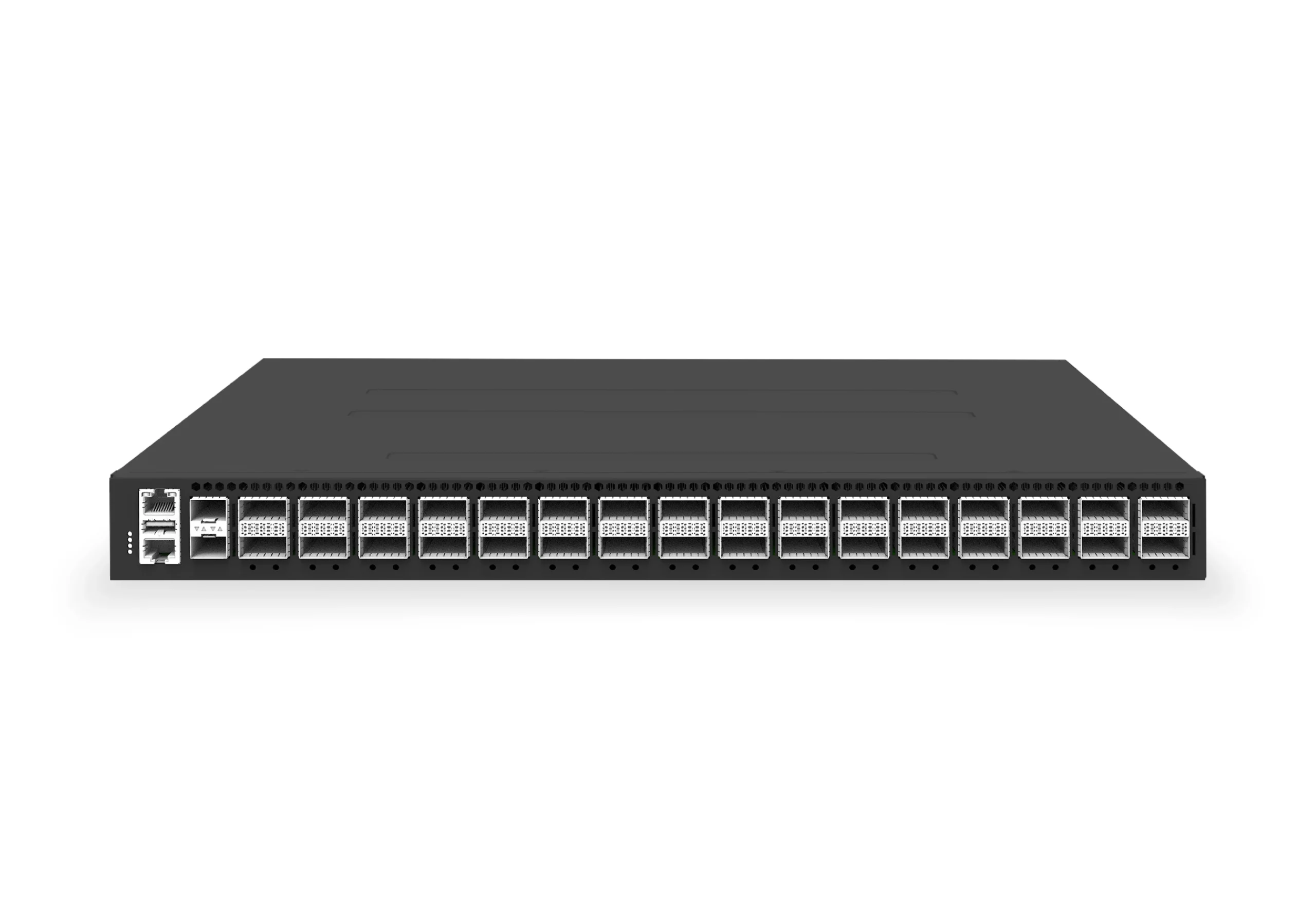 datacenter aiXS-DC-32X400-SP-G232-port 400G spine/core switch for high-capacity data center fabrics and AI-ready backbones.View product
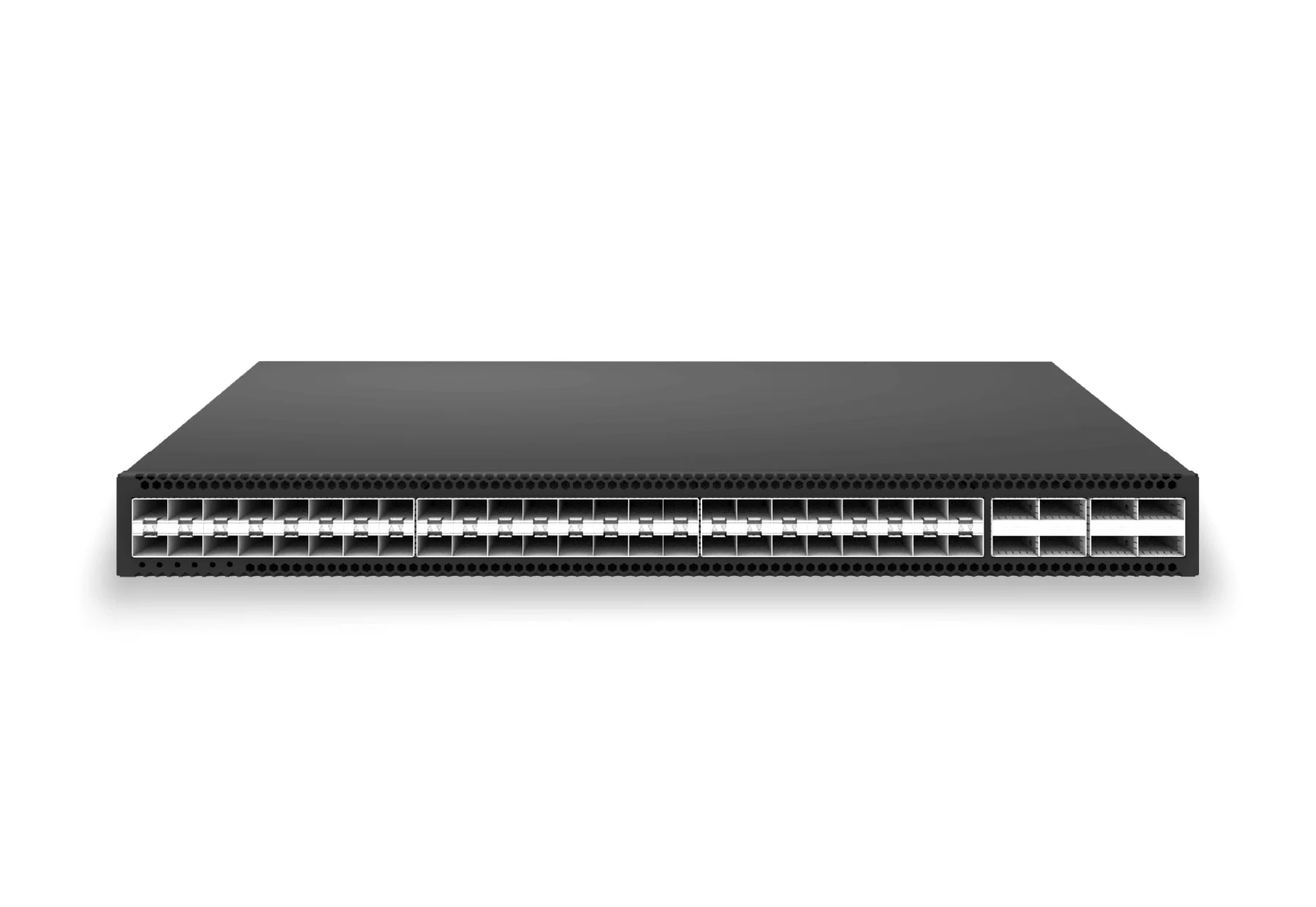 access aggregateXS-AA-48X25-8X100-AGG48x 25G SFP28 aggregation/core switch with 8x 100G QSFP28 for enterprise access and aggregation networks.View product
Continue reading
Related articles
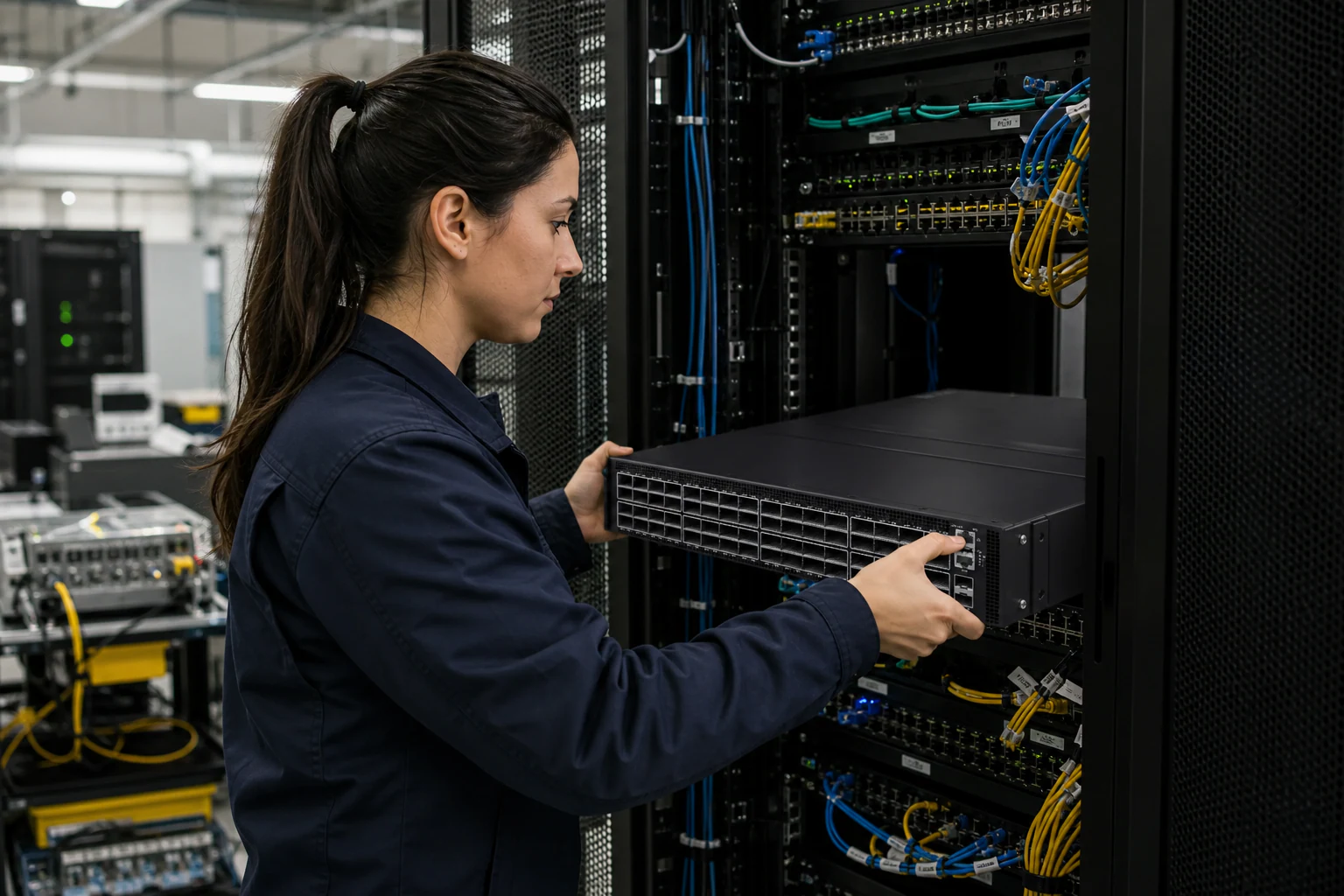 Technical ArticleWhy SONiC Open Networking on Celestica Data Center Switches Matters for Australian EnterprisesHow SONiC on Celestica data center switches should be evaluated by Australian operators for ASIC fit, support, RoCE, automation, and TCO.Read article
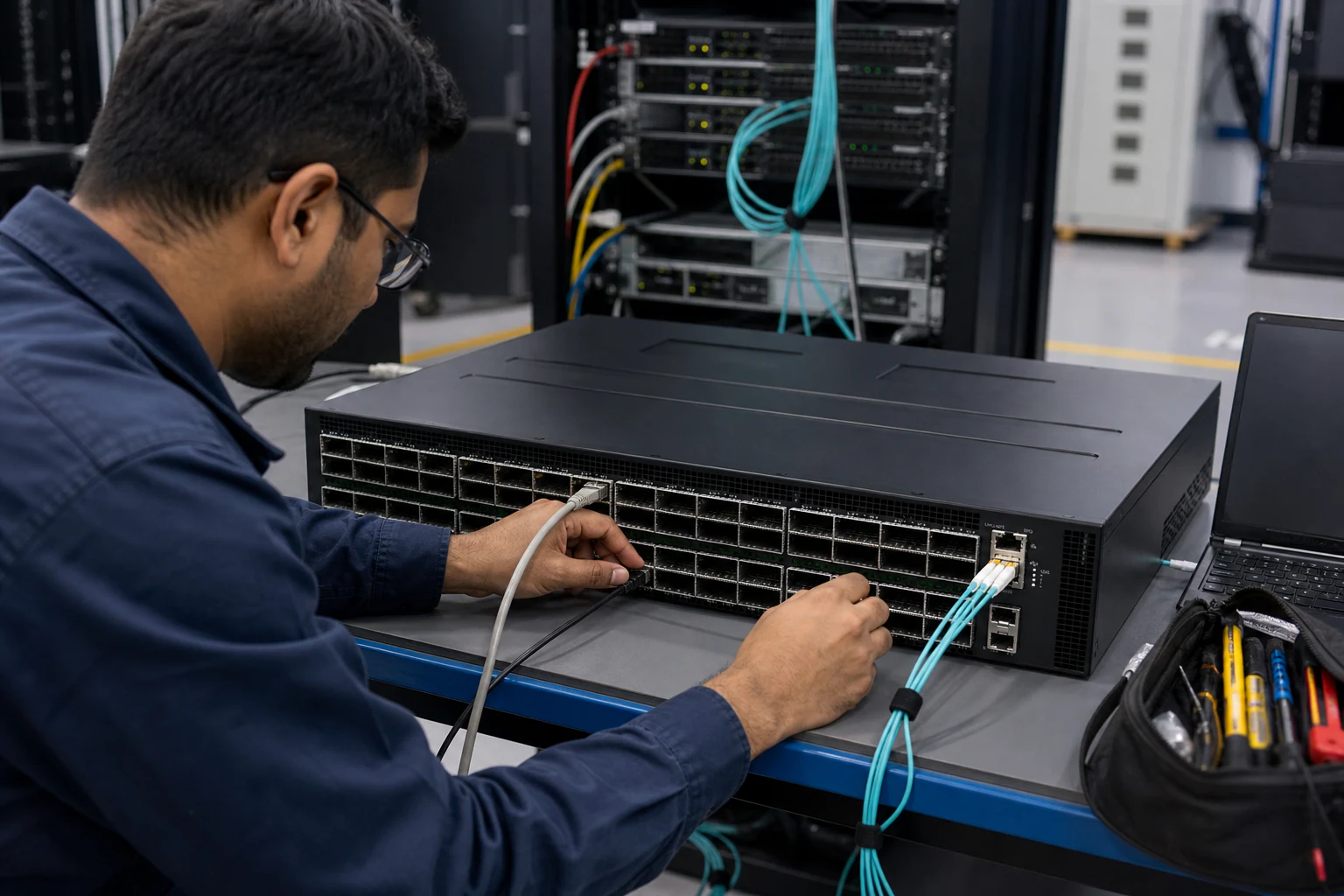 Technical ArticleWhy Enterprise Buyers Are Moving to SONiC on White Box Switches: A Practical Guide for Australian NetworksPractical guide for Australian enterprise buyers evaluating SONiC on white-box switches, covering hardware, ASICs, support, automation, and TCO.Read article
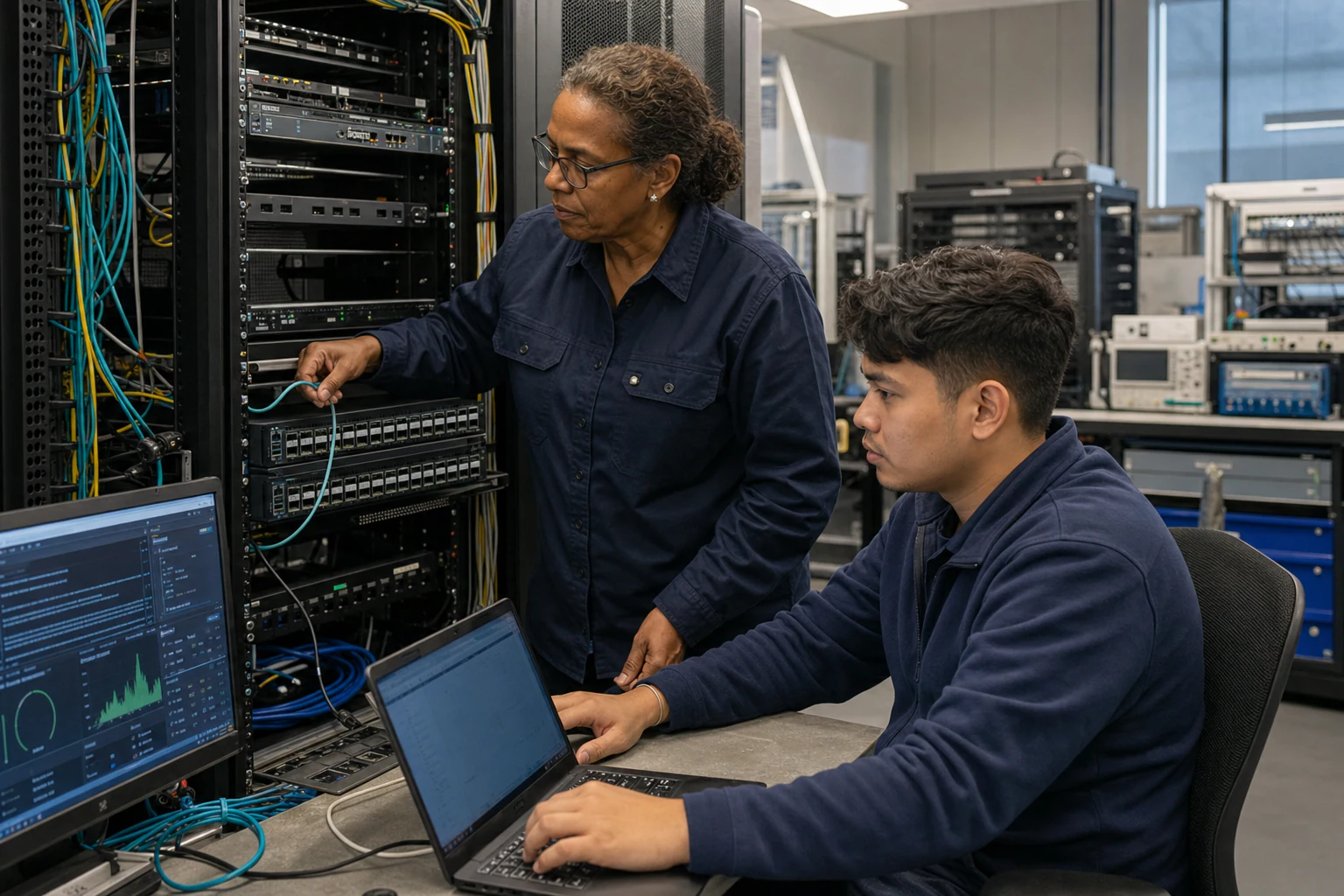 Technical ArticleNETCONF and YANG Models Are Reshaping How SONiC Networks Get Managed in 2025How NETCONF and YANG reshape SONiC network management for Australian teams, covering schemas, automation, rollback, drift, and validation.Read article