In brief
Engineering guide for SONiC and open networking buyers covering platform fit, automation, support, telemetry, and validation evidence.
Key takeaways
- Enterprise network teams evaluating SONiC-based open networking consistently surface one concern above all others: who do I call at 2 AM when production breaks?
- This is not a trivial question. SONiC (Software for Open Networking in the Cloud) is an open-source network operating system built on Linux and maintained under the Linux Foundation.
- The gap between hyperscaler-grade self-support and enterprise-grade vendor support is the central tension in the SONiC adoption story right now.
The Support Question Every Enterprise SONiC Buyer Asks
Enterprise network teams evaluating SONiC-based open networking consistently surface one concern above all others: who do I call at 2 AM when production breaks?
This is not a trivial question. SONiC (Software for Open Networking in the Cloud) is an open-source network operating system built on Linux and maintained under the Linux Foundation. It runs on switches from multiple vendors and multiple ASICs, and it has been production-hardened in the data centers of some of the largest cloud service providers in the world. That track record is real. But hyperscalers run their own network engineering teams with deep SONiC expertise. Most enterprise buyers in Australia do not.
The gap between hyperscaler-grade self-support and enterprise-grade vendor support is the central tension in the SONiC adoption story right now. Understanding the support models available is critical for any procurement team making a multi-year switching decision.
What SONiC’s Architecture Means for Support
SONiC is not a monolithic switch OS. It is built on a containerized architecture where each network function runs in its own Docker container. This design provides better fault isolation, easier debugging, and simplified upgrades. It also means that support is not one-size-fits-all.
When a BGP session flaps or an RDMA flow stalls, the root cause could be in the containerized routing stack, the SAI (Switch Abstraction Interface) layer, the ASIC driver, the hardware itself, or the Linux kernel. Each of these layers may have a different upstream maintainer, a different release cadence, and a different community.
For a hyperscaler with dedicated SONiC engineers, this modularity is a feature. For an enterprise buyer with a lean networking team, it can feel like a risk. The support model you choose determines whether that modularity works for you or against you.
The Three Support Models on the Table
Model 1: Community Support (Pure SONiC)
The SONiC Foundation and the GitHub community maintain the open-source project. Issues can be filed on GitHub, discussions happen on Slack and mailing lists, and the community holds regular workshops and hackathons.
This model works for organisations with in-house Linux and networking expertise who are comfortable triaging and resolving issues through open-source workflows. It costs nothing in licensing fees, but it costs significantly in engineering time.
For Australian enterprise buyers, the practical limitation is timezone alignment and response SLAs. Community support does not come with guaranteed response times, and critical production issues cannot wait for a Slack reply during US business hours.
Model 2: Vendor-Integrated NOS Support
Several switch hardware vendors now offer SONiC as a supported NOS option alongside proprietary alternatives. NVIDIA, for example, offers Pure SONiC as one of several NOS choices for its Spectrum Ethernet switch portfolio, alongside Cumulus Linux. This gives buyers access to vendor-backed support with defined SLAs, firmware updates, and integration testing.
The advantage is clear: you get a support contract with a named vendor, escalation paths, and (in some cases) validated hardware-software compatibility matrices. The trade-off is that you are selecting a specific hardware vendor’s supported SONiC distribution, which may lag behind the upstream community release or carry vendor-specific patches.
For enterprise buyers who want the operational model of a traditional vendor relationship but the architecture of open networking, this is often the most pragmatic path. It is also the model most familiar to procurement teams used to buying Cisco or Arista with attached support contracts.
Model 3: Independent Open Networking Vendor Support
A third model is emerging: vendors who specialise in open networking hardware and software integration, offering enterprise-grade support without tying the buyer to a single upstream NOS distribution. These vendors typically provide validated hardware platforms, integration services, and support contracts that cover the full stack from ASIC to application.
This model is relevant for buyers who want to decouple their hardware and software choices more aggressively than the vendor-integrated model allows, but who still need a support contract with defined SLAs and local expertise.
What Australian Enterprise Buyers Should Demand
Regardless of which model you choose, there are non-negotiable elements for enterprise production deployments:
- Defined SLAs with local timezone coverage. Community support without Australian business-hours coverage is not enterprise support.
- Validated hardware compatibility. SONiC supports a wide range of switches and ASICs, but not every combination is validated for every use case. Demand a compatibility matrix.
- Upgrade and patch management. SONiC’s containerized architecture enables rolling upgrades, but the process must be validated for your specific deployment. Who owns that validation?
- Integration with existing automation. SONiC supports standard Linux interfaces and tools, NETCONF/YANG, and programmatic configuration. Your support provider should help you integrate, not just hand you a switch and a wiki link.
- Clear escalation paths. When a bug is in the SAI layer, the ASIC driver, or the SONiC container, who escalates to whom? The support model must answer this before you deploy.
Support Acceptance Matrix
Treat support as an engineering deliverable, not as a line item attached to the switch quote. A credible enterprise SONiC proposal should survive these acceptance tests before any production fabric is approved.
| Support area | Minimum evidence to request | Engineering acceptance target | Failure signal |
|---|---|---|---|
| Incident SLA | Written P1/P2/P3 response and restore targets, including AEST/AEDT coverage | P1 triage path is available 24x7 or explicitly matched to the production support window; P2 response target is documented before purchase | SLA only states “business hours” without timezone or severity definitions |
| Stack ownership | Named owner for hardware, NOS image, SAI layer, ASIC SDK, optics qualification, and Linux kernel issues | One vendor or integrator owns first-line triage and escalation across all five layers | Buyer must open separate cases with hardware, NOS, and optics vendors |
| Upgrade validation | Tested upgrade and rollback procedure for the exact switch SKU and SONiC image | Upgrade plan includes pre-checks, image staging, rollback timing, config backup, and post-change telemetry checks | Vendor only links to upstream SONiC release notes |
| AI fabric support | RoCE v2, ECN, PFC, buffer, ECMP, and telemetry troubleshooting runbook | Support team can reproduce lossless fabric incidents using counters, queue telemetry, and host NIC evidence | Support boundary stops at “switch is forwarding packets” |
| Australian logistics | Local or APAC spare stock, RMA process, and escalation contact list | Critical switch replacement path is measured in hours or agreed business days, not uncertain international shipping | No local spare strategy for production spine/leaf switches |
For AI fabrics, include at least four quantitative checks in the support contract: port speed mix (100G/200G/400G/800G), expected oversubscription ratio, lossless traffic class mapping, and telemetry counters required during incidents. Those numbers give TAC something concrete to debug when a training or inference workload stalls.
The AI Fabric Accelerant
The SONiC support conversation is intensifying because of AI infrastructure demand. Enterprises building GPU clusters for private LLM inference, RAG pipelines, and multimodal AI services need low-latency, high-bandwidth fabrics with RoCE v2, congestion management, and telemetry. SONiC’s production heritage in RDMA and BGP makes it a natural fit, but the support requirements for AI fabric are more demanding than for traditional data center networking.
When a GPU training job stalls because of a microburst-induced packet drop, the troubleshooting path crosses multiple layers: the switch ASIC, the RDMA stack, the congestion notification mechanism, and the host NIC driver. A support model that only covers the NOS container is insufficient. Buyers need integrated support across the full fabric stack.
This is where the vendor-integrated and independent vendor models diverge most clearly from pure community support. The ability to escalate a fabric-level issue through a single support channel, rather than debugging across multiple open-source communities, is a genuine operational advantage.
The Procurement Reality in Australia
Australian enterprise buyers face a specific procurement challenge: the local channel for open networking hardware and support is thinner than in North America or Europe. Large switch vendors with Australian offices can offer vendor-integrated SONiC support, but specialist open networking integrators are fewer on the ground.
This makes the vendor selection decision more consequential. Changing open networking vendors mid-deployment is operationally expensive, even when the NOS is portable. The support relationship, local presence, and integration capability matter as much as the hardware specs.
Buyers should evaluate potential vendors on:
- Local Australian technical support and sales engineering capacity
- Demonstrated experience with SONiC deployment in similar scale environments
- Willingness to provide reference architectures and validated designs for your workload
- Integration capability with your existing automation stack (Ansible, Terraform, NETCONF/YANG, gNMI)
- Clear product roadmap alignment with upstream SONiC releases
What This Means for Open Networking Adoption
The support question is not a reason to avoid open networking. It is a reason to be deliberate about your support model selection. The hyperscaler self-support model does not translate to enterprise deployments, but that does not mean enterprise buyers are locked into proprietary stacks.
The vendor-integrated and independent vendor models are maturing rapidly. The key is to evaluate the full support stack, not just the NOS license cost. A free NOS with no support contract is more expensive in production than a supported NOS with a defined SLA, once you factor in engineering time, incident response, and upgrade management.
For Australian buyers evaluating SONiC-based switching for data center, campus, or AI fabric deployments, the support model should be a primary evaluation criterion, not an afterthought. Ask the hard questions before you deploy, not after.
Next Steps for Buyers
If you are evaluating open networking for your next infrastructure refresh, start by mapping your internal capabilities against the three support models. Then shortlist vendors who can provide the level of support your team actually needs, not the level you wish you had.
Contact xSONiC to discuss open networking support options for your Australian deployment, or explore our data center AI switches and access and aggregation switches to see the hardware platforms behind enterprise-grade SONiC.
Engineering FAQ
Is community SONiC support enough for production enterprise networks? Usually not by itself. Community support can be excellent for engineering teams that can debug Linux, SAI, ASIC behaviour, and SONiC containers internally, but it does not provide contractual response times, local timezone coverage, or one accountable escalation owner.
What support boundary matters most in an AI fabric? The boundary between switch forwarding, lossless Ethernet behaviour, host NIC behaviour, and workload symptoms. A useful support model must cover RoCE v2, ECN/PFC, queue drops, buffer pressure, ECMP imbalance, and telemetry evidence rather than treating the switch as an isolated box.
What should be written into the support contract? Include response targets, severity definitions, timezone coverage, RMA logistics, supported SONiC image versions, upgrade ownership, optics compatibility, escalation contacts, and the exact layer where responsibility moves from the local provider to the ASIC or upstream SONiC maintainer.
Related xSONiC Resources
Sources Reviewed
- Ethernet Network Adapters - ConnectX NICs | NVIDIA
- NVIDIA BlueField Data Processing Unit
- NVIDIA Spectrum-X Ethernet Platform
- OpenConfig gNMI Specification
- OpenConfig
- RFC 7950 - The YANG 1.1 Data Modeling Language
- RFC 6241 - Network Configuration Protocol (NETCONF)
- SONiC Project Documentation
- Broadcom Ethernet Switching
- Marvell Switching
- NVIDIA Ethernet Switching
- Open Compute Networking
- Open Compute SONiC
- SONiC GitHub
- SONiC Foundation
Product fit
Products referenced for evaluation
These products are referenced for evaluation context in the article. Confirm workload, port, optics, software, interoperability, and support requirements against the exact deployment before procurement.
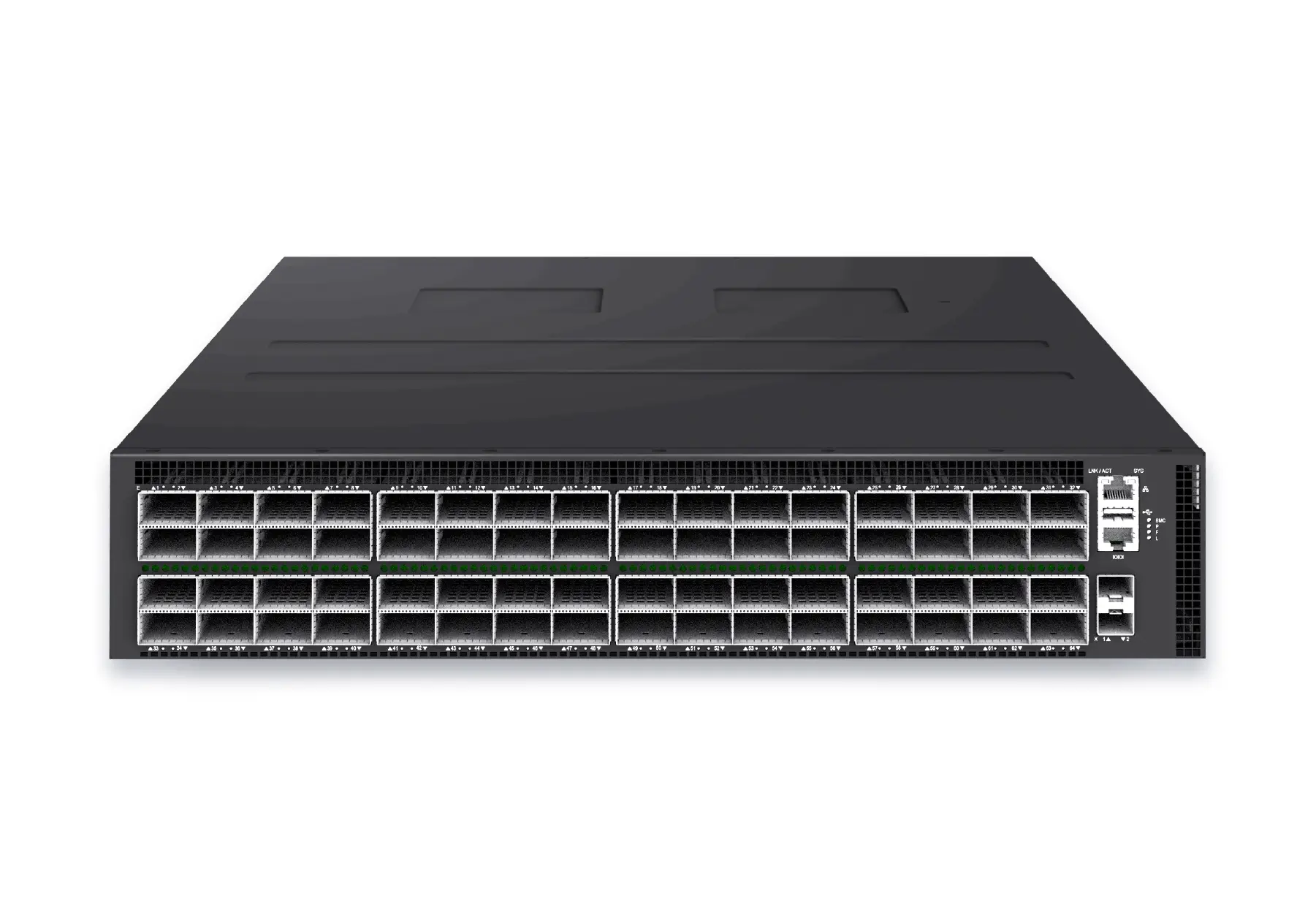 datacenter aiXS-DC-64X800-AI-G164-port 800G AI fabric switch for large-scale GPU clusters, HPC backbones, and ultra-high-throughput data center networks.View product
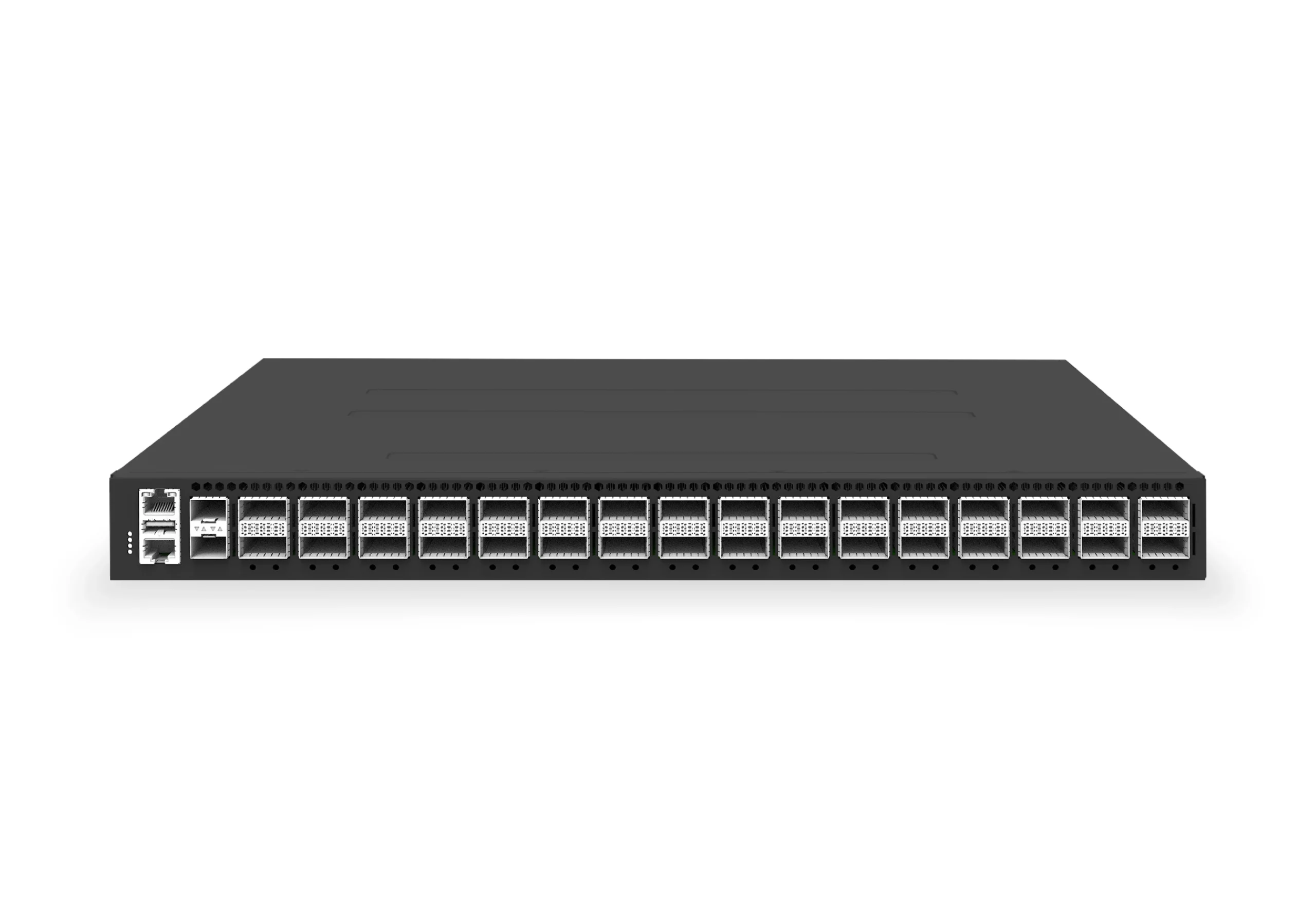 datacenter aiXS-DC-32X400-SP-G232-port 400G spine/core switch for high-capacity data center fabrics and AI-ready backbones.View product
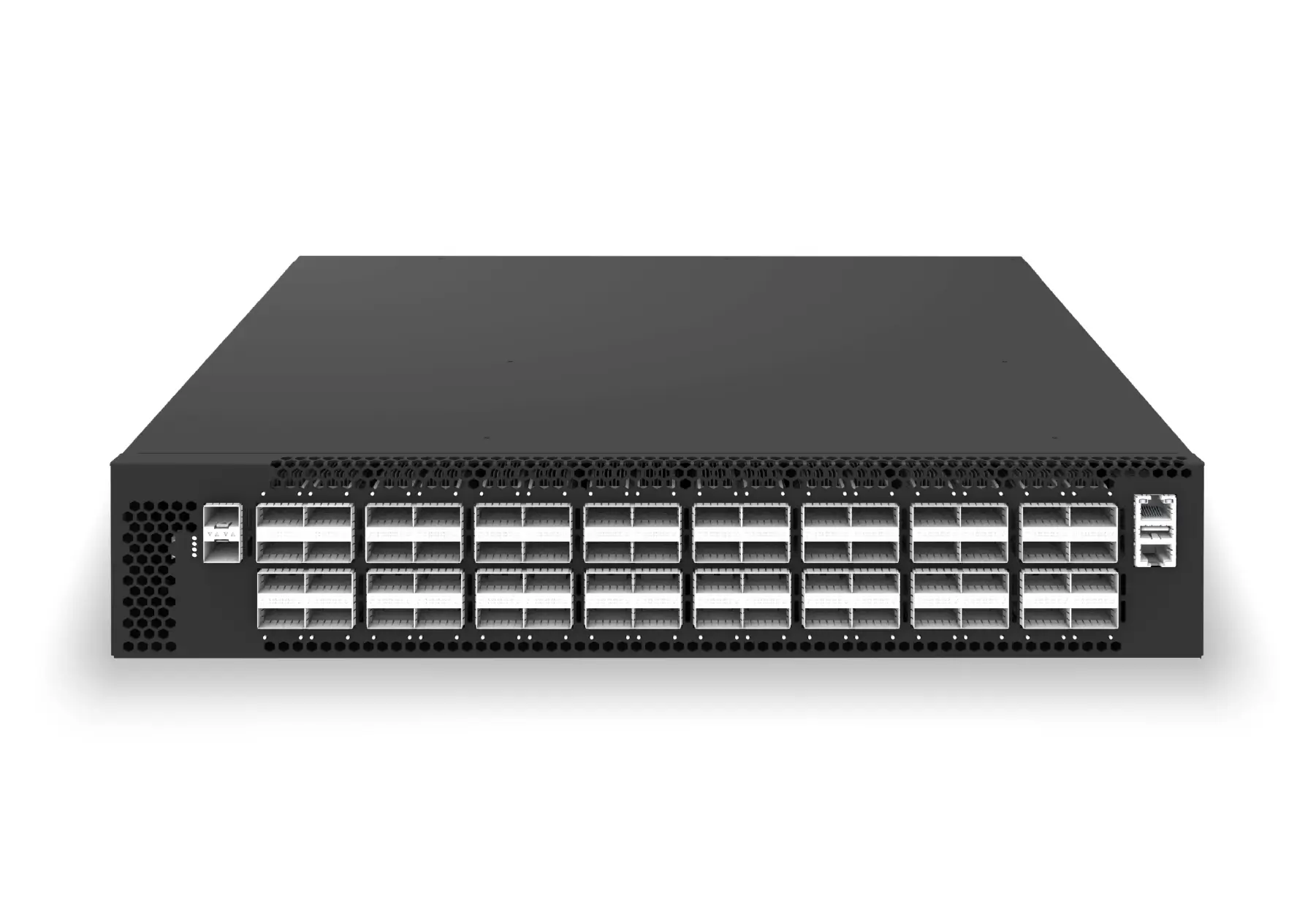 datacenter aiXS-DC-64X200-LS-G164-port 200G leaf/spine switch for high-bandwidth storage, compute, and scale-out data center fabrics.View product
Continue reading
Related articles
 Technical ArticleSONiC Switch Pre-Production Validation Checklist: A 12-Point Testing Playbook for Open Networking TeamsEngineering guidance on SONiC Switch Pre-Production Validation Checklist for Australian data centre buyers, covering form factor choice, link budgets, cabling.Read article
 Technical ArticleWhy Australian Data Centers Are Re-evaluating Open Networking for AI InfrastructureEngineering guide for AI fabric buyers covering RoCE, SONiC, telemetry, optics, support ownership, and deployment validation.Read article
 Technical ArticleSONiC Switch Validation Before Production: What Australian Network Teams Need on Their ChecklistEngineering guide for SONiC and open networking buyers covering platform fit, automation, support, telemetry, and validation evidence.Read article