In brief
Engineering guidance on Enterprise Risks and Validation Checklist for White Box Switches for Australian SONiC buyers, covering ASIC capability, SAI maturity, feature.
Key takeaways
- The economics of open networking are hard to ignore. White box and bare-metal switches built on merchant silicon run a fraction of the cost of branded equivalents at equivalent port speeds.
- But the pitch and the deployment are two different conversations. Moving from a single-vendor managed switch estate to a disaggregated hardware-plus-software model introduces risks that do not show up in a procurement spreadsheet.
- White box switches are not generic servers. They rely on specific ASICs from vendors such as Broadcom, Marvell, and NVIDIA, and the NOS you choose must be compiled and validated for that exact hardware platform.
Why enterprises are looking at white box switches — and why the conversation needs a risk framework
The economics of open networking are hard to ignore. White box and bare-metal switches built on merchant silicon run a fraction of the cost of branded equivalents at equivalent port speeds. For Australian enterprises facing tightening IT budgets and rising 400G/800G upgrade cycles, the appeal is straightforward: spend less on hardware, avoid vendor lock-in, and gain the freedom to choose your own network operating system.
But the pitch and the deployment are two different conversations. Moving from a single-vendor managed switch estate to a disaggregated hardware-plus-software model introduces risks that do not show up in a procurement spreadsheet. If your team has only ever operated a vendor-provided NOS with bundled TAC support, the shift to open networking requires a deliberate validation process.
The real risks: what can go wrong with white box switching in an enterprise
1. Hardware and ASIC compatibility gaps
White box switches are not generic servers. They rely on specific ASICs from vendors such as Broadcom, Marvell, and NVIDIA, and the NOS you choose must be compiled and validated for that exact hardware platform. A SONiC image built for one switch model will not necessarily work on another, even if both use the same ASIC family.
The SONiC project maintains a supported devices and platforms list that enterprises should treat as a starting point, not a guarantee. Running an unvalidated hardware-NOS combination in production is one of the fastest paths to unpredictable behaviour, from silent packet drops to management plane failures.
Risk signal: Your procurement team selects a switch based on price alone, without confirming that the chosen NOS has been tested and certified on that exact SKU and ASIC revision.
2. NOS maturity and production readiness
SONiC (Software for Open Networking in the Cloud) is the most prominent open-source NOS for white box switches. It is a Linux-based, containerized operating system that decouples hardware from software through the Switch Abstraction Interface (SAI). The project has been production-hardened in the data centres of some of the largest cloud service providers worldwide.
However, production-hardened at hyperscale does not mean turnkey for every enterprise. SONiC’s modular, container-based architecture — where each network function runs in its own Docker container — provides better fault isolation and simpler upgrades, but it also means your operations team must be comfortable with Linux, Docker, and JSON-based configuration workflows. If your current network team manages switches exclusively through vendor GUIs or proprietary CLIs, the learning curve is real.
Risk signal: Your team lacks Linux administration skills and has no plan to acquire them before deployment.
3. Support and accountability gaps
With a traditional vendor switch, you have a single throat to choke. Hardware failure? Call the vendor. Software bug? Same number. With white box switching, responsibility is split:
- Hardware: The ODM or reseller who supplied the bare-metal switch
- NOS: The open-source community, or an enterprise distribution provider
- ASIC support: The silicon vendor’s SDK and SAI implementation
- Integration: Your own team or a consulting partner
If something breaks at 2 AM on a Saturday, who do you call? This is not a theoretical concern. Australian enterprises in regulated industries — financial services, healthcare, government — often have contractual obligations around support response times that a community Slack channel cannot satisfy.
Risk signal: No defined support agreement covering hardware, NOS, and integration layers has been negotiated before deployment.
4. Operational tooling and observability
Enterprise networks require monitoring, telemetry, and lifecycle management. Branded switch vendors typically bundle or sell tightly integrated management platforms. With white box switches, you need to assemble your own operational stack.
This is not necessarily a disadvantage — SONiC supports standard Linux interfaces and tools, and vendors such as NVIDIA offer complementary platforms like NetQ for real-time network observability and DSX Air for pre-deployment simulation. NVIDIA’s Spectrum Ethernet switch portfolio, for example, supports multiple NOS choices including Pure SONiC and Cumulus Linux, with integrated operational tooling. But the integration effort falls on your team.
Risk signal: No operational tooling plan exists beyond the NOS installation itself.
5. Feature parity and protocol support
Not every white box NOS supports every enterprise protocol. If your campus or data centre relies on specific features — EVPN-VXLAN for multi-tenant overlay, Policy-Based Routing, MC-LAG for high availability, or NETCONF/YANG for programmability — you need to verify that the NOS and hardware combination supports them at the scale you require.
SONiC’s feature set is extensive for data centre use cases, including BGP and RDMA support, but feature availability varies between SONiC distributions and between hardware platforms. A feature listed on a roadmap is not the same as a feature validated at your scale.
Risk signal: Feature requirements have not been mapped against the specific SONiC distribution and hardware platform under evaluation.
6. Security and supply chain provenance
White box switches sourced from ODMs may lack the supply chain transparency that Australian government and critical infrastructure buyers require. Firmware provenance, secure boot, and vulnerability patching processes vary between ODMs and NOS distributions.
SONiC is open source under the Apache License 2.0, which provides code transparency. But the binary images you deploy may include proprietary drivers, ASIC SDKs, or patches from third parties that are not subject to the same open review.
Risk signal: No supply chain audit or firmware provenance check has been conducted on the hardware and software stack.
7. Migration complexity and rollback planning
Replacing an existing vendor switch estate with white box hardware is not a like-for-like swap. Configuration translation, feature mapping, cabling changes, and staff retraining all add time and risk. If the migration fails, can you roll back cleanly?
Risk signal: No migration plan with defined rollback points has been created.
The white box switch validation checklist
Use this checklist before committing budget to a white box switch deployment. Each item maps to the risks above.
| # | Validation Step | Status | Owner |
|---|
How SONiC-based platforms reduce specific risks
SONiC does not eliminate the risks above, but its architecture addresses several of them directly:
-
Multi-vendor hardware portability. SONiC runs on switches from multiple vendors and ASICs, decoupling hardware from software through the Switch Abstraction Interface (SAI). This reduces lock-in risk and gives enterprises a path to switch hardware suppliers without retraining on a new NOS.
-
Containerized, modular architecture. Each network function runs in its own Docker container, providing fault isolation and simplifying troubleshooting. Upgrades can target individual components rather than requiring full switch reboots.
-
Standard Linux tooling. SONiC uses standard Linux interfaces and tools, which means teams with existing Linux and automation skills can transfer those capabilities to network operations.
-
Production track record. SONiC has been production-hardened in the data centres of some of the largest cloud service providers, which provides evidence of scalability and stability — though enterprise deployments require independent validation at your own scale.
-
Community and ecosystem. The SONiC Foundation, a Linux Foundation project, maintains governance, documentation, and a growing ecosystem of contributing organisations. This provides a long-term development trajectory that purely proprietary NOS options cannot match.
For Australian enterprises evaluating open networking, platforms like xSONiC bare-metal switches and xSONiC data center AI switches are designed to run SONiC-based operating systems on validated hardware. This narrows the compatibility gap and provides a defined support path that pure DIY white box deployments lack.
What this means for Australian enterprise buyers
The white box switch value proposition is real, but it is not risk-free. The enterprises that succeed with open networking are those that treat it as a structured engineering decision, not a procurement shortcut.
Before you commit:
- Validate the full stack. Hardware, ASIC, NOS, features, and tooling must be confirmed as a complete, tested combination — not assembled ad hoc.
- Invest in people. The operational model changes. Your team needs Linux skills, automation capabilities, and a willingness to own the integration layer.
- Demand support clarity. Community support is valuable for development and troubleshooting, but production environments need defined SLAs with named accountability.
- Pilot before you procure. A lab trial on the exact production hardware and NOS image is the single most effective risk mitigation step.
Open networking is not a leap of faith. It is a structured migration that rewards preparation. Use the checklist above, map it to your environment, and make the decision with eyes open.
Engineering Evidence Floor
For SONiC and open networking articles, the acceptance standard is operational proof, not community momentum. The evidence package should name the switch SKU, ASIC, SAI version, ONIE status, SONiC image, optics matrix, automation interface, support path, and rollback procedure. A practical pilot should run for 30 days, include 3 automated configuration changes, validate 100G/400G links where relevant, and prove that a P1 evidence bundle can be assembled within 2 hours.
| Evidence area | What to validate | Acceptance gate | Rework trigger |
|---|---|---|---|
| Platform | SKU, ASIC, ONIE, SAI, image, and optics | 2 platforms boot, upgrade, and rollback | Hardware support is assumed |
| Automation | Source of truth, API/gNMI/NETCONF, backup, and diff | 3 changes pass state readback | CLI drift becomes normal |
| Operations | Logs, telemetry, failure runbook, and escalation owner | P1 bundle ready within 2 hours | Fault isolation depends on one engineer |
| Lifecycle | Patch cadence, CVE process, spare plan, and support SLA | 12 months plan approved | Security and RMA ownership is unclear |
| Commercial | Hardware, support, optics, training, and migration labour | Risk-adjusted TCO is documented | Savings vanish after rework |
Engineering FAQ
What should buyers compare when evaluating switch silicon for SONiC? Compare feature support, buffer profile, port speed, optics compatibility, telemetry counters, SAI maturity, SDK release cadence, power and cooling, and vendor image validation. ASIC choice affects operations as much as throughput.
Why is SAI maturity important? SAI is the abstraction layer between SONiC and the ASIC. If a required feature is incomplete or behaves differently on a platform, the open NOS does not remove that limitation. Buyers should ask for tested feature matrices.
What evidence should an Australian buyer request from a switch vendor? Request the exact switch SKU, ASIC family, SONiC distribution, SAI version, optics matrix, known caveats, release notes, support process, and proof that the intended design has been tested.
Related xSONiC Resources
Sources Reviewed
- IEEE 802.1Q Bridges and Bridged Networks
- IEEE 802.1AX Link Aggregation
- Ethernet Network Adapters - ConnectX NICs | NVIDIA
- NVIDIA BlueField Data Processing Unit
- NVIDIA Spectrum-X Ethernet Platform
- OpenConfig gNMI Specification
- OpenConfig
- RFC 7950 - The YANG 1.1 Data Modeling Language
- RFC 6241 - Network Configuration Protocol (NETCONF)
- SONiC Project Documentation
- Broadcom Ethernet Switching
- Marvell Switching
- NVIDIA Ethernet Switching
- Open Compute Networking
- SONiC GitHub
- SONiC Foundation
| Source | URL | What It Supports |
|---|---|---|
| SONiC Foundation | SONiC Foundation website | SONiC as open-source NOS built on SAI, decoupling hardware from software; containerized architecture; multi-vendor support; production-hardened in large cloud data centres; Linux Foundation governance |
| SONiC GitHub Repository | SONiC project source and documentation | Detailed SONiC architecture: container-based design, fault isolation, simplified upgrades; multi-vendor support with standard Linux interfaces; supported devices and platforms list; ONIE/Docker/VM installation methods; Apache License 2.0; prerequisites including compatible hardware and Docker knowledge |
| NVIDIA Ethernet Switching | NVIDIA Ethernet switching portfolio | NVIDIA Spectrum switch portfolio supports multiple NOS choices including Pure SONiC and Cumulus Linux; DSX Air for pre-deployment simulation; NetQ for real-time observability; Spectrum switch families from SN2000 through SN6000; OEM partner ecosystem; 800Gb/s max port speed capabilities |
| Broadcom Ethernet Switches | Broadcom Ethernet switching products | Reference for merchant silicon / ASIC vendor presence in the white box switch ecosystem (page title confirmed; detailed content unavailable due to minimal page load) |
Product fit
Products referenced for evaluation
These products are referenced for evaluation context in the article. Confirm workload, port, optics, software, interoperability, and support requirements against the exact deployment before procurement.
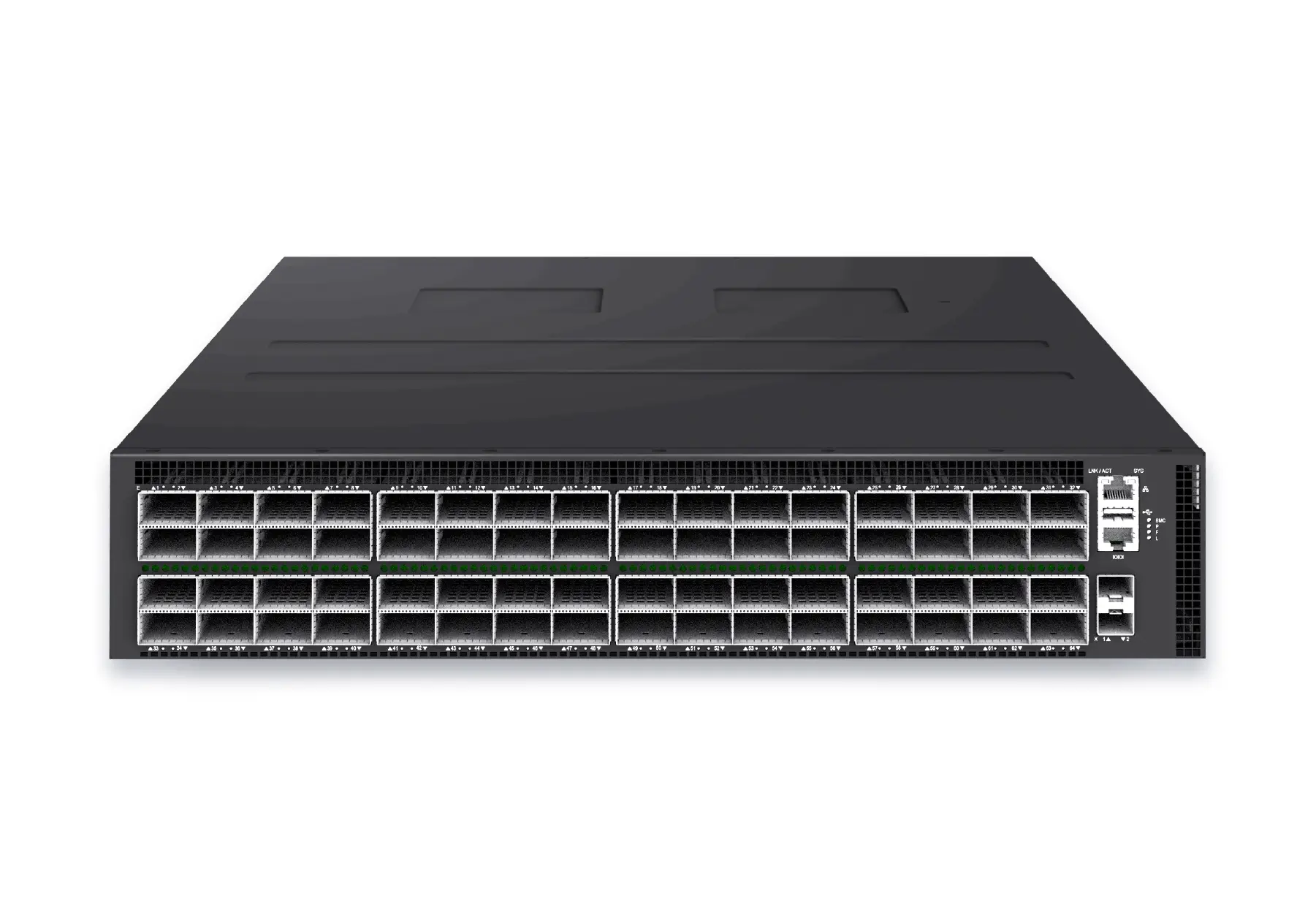 datacenter aiXS-DC-64X800-AI-G164-port 800G AI fabric switch for large-scale GPU clusters, HPC backbones, and ultra-high-throughput data center networks.View product
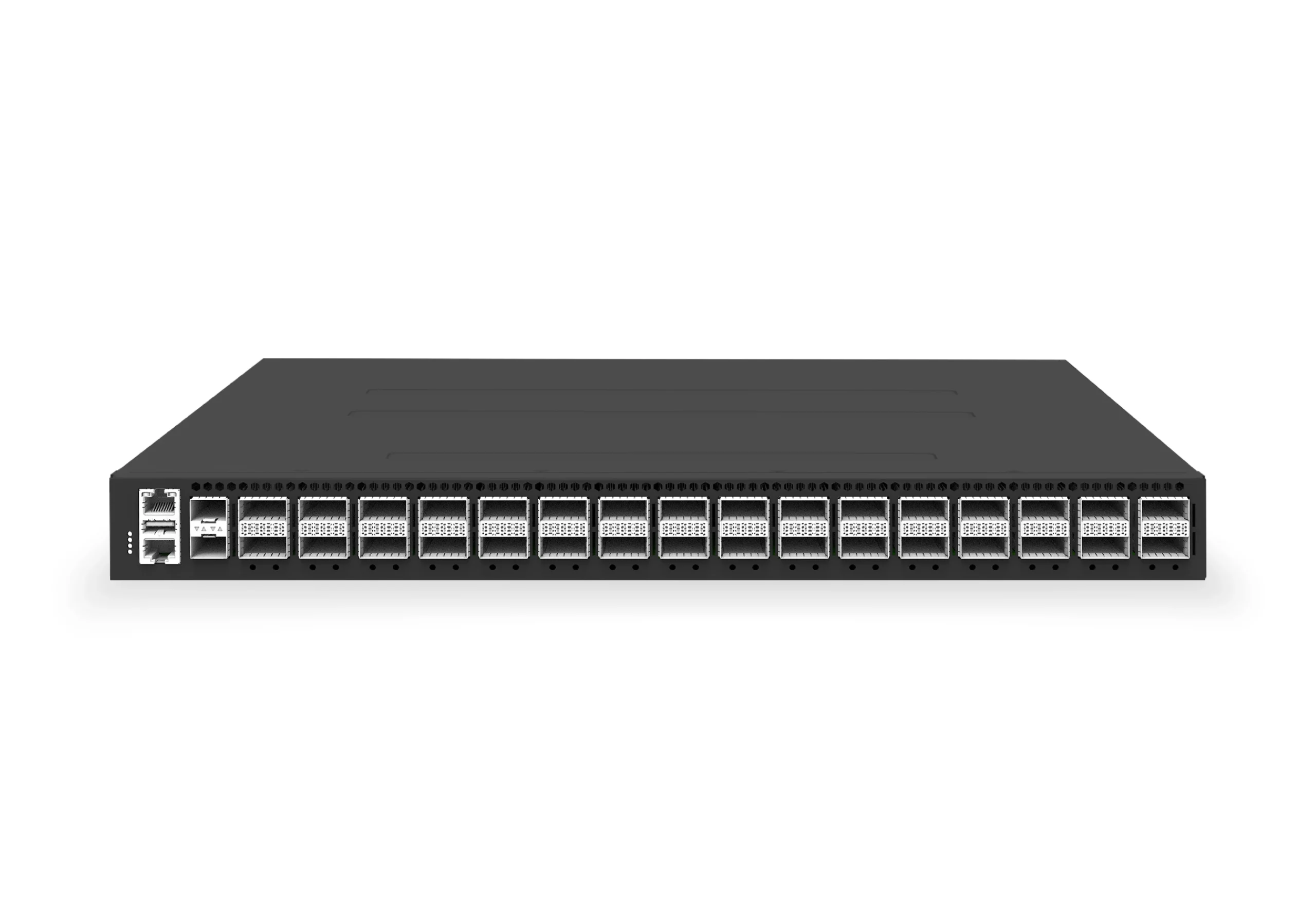 datacenter aiXS-DC-32X400-SP-G232-port 400G spine/core switch for high-capacity data center fabrics and AI-ready backbones.View product
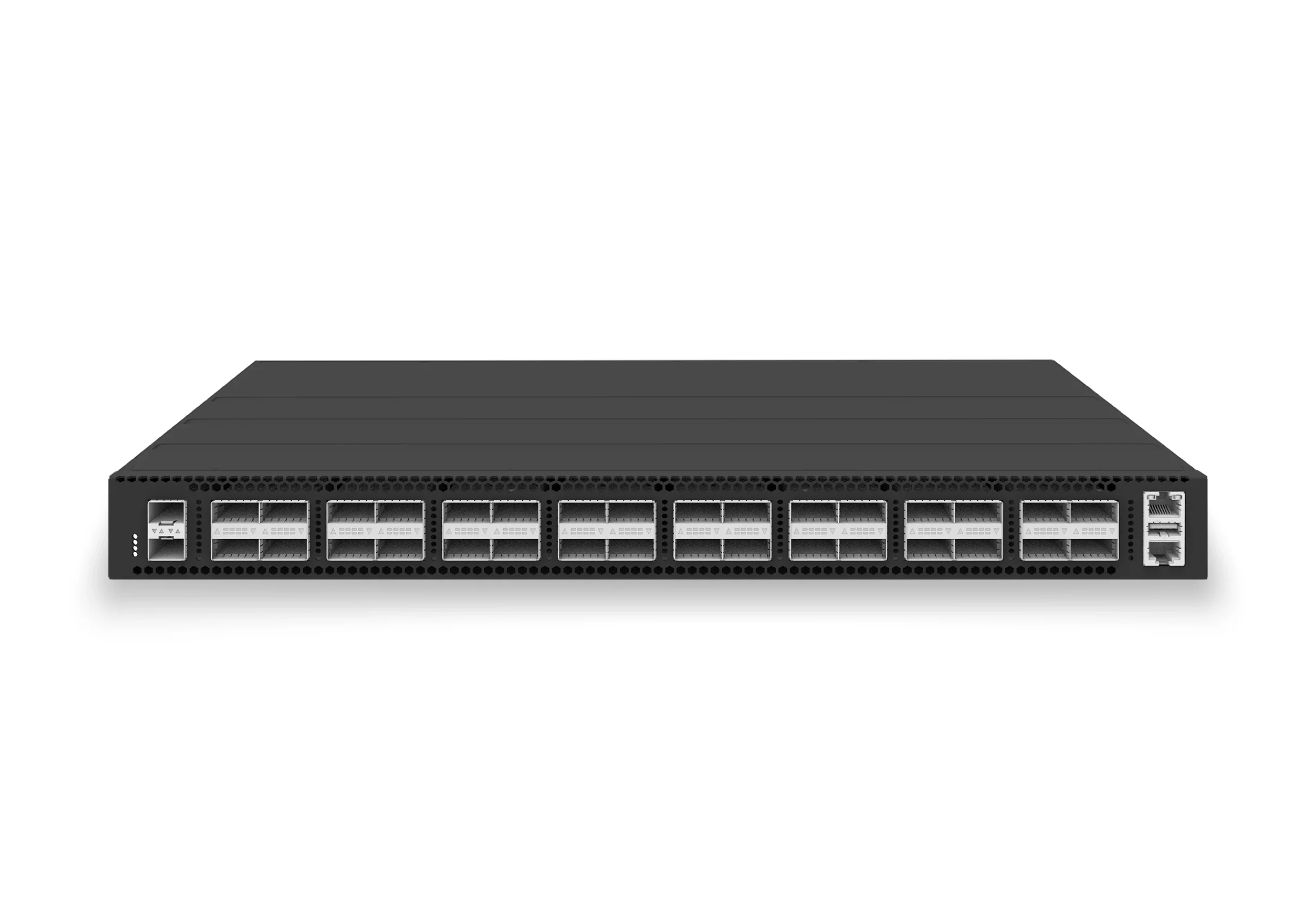 datacenter aiXS-DC-32X100-LS-G232-port 100G leaf/spine switch for VXLAN fabrics, RoCE-ready workloads, and tenant-scale routing.View product
Continue reading
Related articles
 Technical ArticleSONiC Switch Pre-Production Validation Checklist: A 12-Point Testing Playbook for Open Networking TeamsEngineering guidance on SONiC Switch Pre-Production Validation Checklist for Australian data centre buyers, covering form factor choice, link budgets, cabling.Read article
 Technical ArticleWhy Australian Data Centers Are Re-evaluating Open Networking for AI InfrastructureEngineering guide for AI fabric buyers covering RoCE, SONiC, telemetry, optics, support ownership, and deployment validation.Read article
 Technical ArticleSONiC Switch Validation Before Production: What Australian Network Teams Need on Their ChecklistEngineering guide for SONiC and open networking buyers covering platform fit, automation, support, telemetry, and validation evidence.Read article