
In brief
Engineering guidance on U.2, E1.S, M.2 and AIC NVMe SSD form factors for Australian AI storage planning in 2026.
Key takeaways
- Australia's data center sector is entering a period of rapid transformation driven by two converging forces: explosive AI workload growth and a push toward sovereign infrastructure control.
- For Australian enterprise and data center storage teams evaluating NVMe SSD upgrades in 2026 Q2, this shift matters directly.
- This analysis brief breaks down the four enterprise NVMe SSD form factors, maps them to Australian data center use cases, and identifies the planning factors that matter most right now.
The Australian Data Center Market Is Reshaping Storage Decisions
Australia’s data center sector is entering a period of rapid transformation driven by two converging forces: explosive AI workload growth and a push toward sovereign infrastructure control. In early 2026, David Hirst, CEO of Macquarie Data Centres, described on the Open Compute Project Podcast how AI workloads are shifting data center design philosophy from “real estate” thinking to “chip-out thinking” — where every component choice, including storage, must be optimized for density, power, and thermal constraints rather than just floor space.
For Australian enterprise and data center storage teams evaluating NVMe SSD upgrades in 2026 Q2, this shift matters directly. The form factor you choose for your NVMe SSDs — U.2, E1.S, M.2, or AIC (Add-in Card) — is no longer a simple compatibility checkbox. It is a density, airflow, serviceability, and workload-tier decision that affects how your servers, JBODs, and all-flash arrays perform under AI training, inference, cloud-native, and traditional database workloads.
This analysis brief breaks down the four enterprise NVMe SSD form factors, maps them to Australian data center use cases, and identifies the planning factors that matter most right now.
Why Form Factor Matters More in 2026 Than It Did in 2023
Three trends have elevated NVMe SSD form factor selection from a procurement footnote to a real infrastructure planning concern:
1. AI workload density is driving rack power above 100 kW. The same OCP Podcast episode featuring Macquarie’s Hirst notes that AI-era data centers are designing for megawatt-per-rack power envelopes and liquid cooling. When rack power budgets are that constrained, every drive bay counts. Storage form factors that waste rack space or disrupt airflow paths create real operational costs.
2. PCIe Gen4 is now the mainstream enterprise baseline. PCIe Gen4 NVMe SSDs deliver sequential read speeds up to roughly 7,000 MB/s and random read IOPS commonly in the 1,000,000+ range for enterprise-class drives. All four form factors can support Gen4, but the thermal and mechanical envelopes differ significantly. This means the form factor choice is increasingly about where and how the drive sits in the chassis, not about raw interface speed.
3. Australian sovereign and compliance requirements add procurement complexity. Hirst’s discussion of Australia’s unique market conditions — including data sovereignty expectations, community engagement for dense-city builds, and compliance as a market advantage — suggests that Australian enterprise buyers cannot always source storage the same way a hyperscaler in Northern Virginia might. Multi-vendor, multi-form-factor availability in the Australian channel matters.
The Four Enterprise NVMe SSD Form Factors at a Glance
U.2 (2.5-inch, also called U.2 SFF-8639)
U.2 is the established workhorse of enterprise NVMe storage. The 2.5-inch drive form factor fits standard hot-swap drive bays that have existed in enterprise servers for over a decade. For Australian teams with installed 2U or 4U rack servers and storage arrays, U.2 NVMe SSDs are the path of least resistance for upgrading from SATA/SAS SSDs or older NVMe generations.
- Recommended for: High-capacity server storage, all-flash arrays, general-purpose enterprise database, and cloud infrastructure tiers
- Advantage: Hot-swap serviceability, mature ecosystem, broad chassis compatibility
- Limitation: Larger physical footprint limits per-rack drive density compared to newer form factors
E1.S (EDSFF “ruler” short form factor)
E1.S is the emerging density-optimized form factor designed specifically for data center servers. Developed through the EDSFF (Enterprise and Data Center SSD Form Factor) specification, E1.S drives are shorter and slimmer than U.2 and are designed for tool-less insertion into purpose-built server sleds.
- Recommended for: High-density storage nodes, scale-out cloud tiers, AI training data staging, and CDNs
- Advantage: Higher drive density per rack unit, improved thermal management via direct airflow design, hot-swap capable
- Limitation: Requires E1.S-compatible server or JBOF chassis; limited adoption in legacy Australian server fleets as of 2026 Q2
M.2 (2280 and enterprise variants)
M.2 NVMe SSDs are best known from client laptops, but enterprise-grade M.2 drives with power-loss protection and higher endurance ratings serve specific data center roles. M.2 slots are commonly found on server motherboards for boot drives, OS volumes, and read-intensive caching tiers.
- Recommended for: Boot/OS drives, read caching, edge servers, compact appliances
- Advantage: Smallest physical footprint, lowest per-drive cost, widely available
- Limitation: Not hot-swappable in most server designs, limited thermal envelope for sustained write-heavy workloads, lower endurance tiers than U.2 or E1.S enterprise drives
AIC (Add-in Card, PCIe slot form factor)
AIC NVMe SSDs plug directly into standard PCIe slots (typically x4, x8, or x16). They bypass the drive bay entirely and connect straight to the PCIe bus. AIC drives have historically been used for maximum-performance tiers where latency and throughput are more important than hot-swap serviceability.
- Recommended for: High-performance database, AI/ML feature stores, HPC scratch storage, GPU server local cache
- Advantage: Direct PCIe connection with minimal protocol overhead, high sustained throughput, no backplane bottleneck
- Limitation: Occupies PCIe expansion slots, not hot-swappable in most configurations, limits slot availability for NICs, GPUs, or other accelerators
Australian Market Context: What the Macquarie/OCP Discussion Tells Us
The January 2026 OCP Podcast episode with David Hirst of Macquarie Data Centres provides several data points relevant to Australian NVMe SSD planning:
-
AI is changing design from the chip out. Hirst describes how AI workloads require planning from the silicon level outward, not from the real-estate level inward. For storage teams, this means form factor decisions should be driven by workload I/O profiles, not just by which drive bay is empty.
-
Liquid cooling and megawatt-per-rack designs are arriving. When racks are designed for liquid cooling with dense GPU and compute nodes, the available space and airflow for storage drives changes. E1.S and M.2 form factors may fit more naturally into these new chassis designs than legacy U.2 bays.
-
Australia has unique compliance and sovereignty requirements. Hirst’s emphasis on data sovereignty, community engagement, and compliance as a market differentiator suggests that Australian enterprise teams need supply chain confidence. Choosing a storage vendor with confirmed Australian channel availability and support is as important as choosing the right form factor.
-
Power constraints in dense urban sites. Building data centers in Australian cities faces community and power grid challenges. Storage efficiency — IOPS per watt and capacity per rack unit — becomes a planning metric, not just a spec sheet number.
Form Factor Decision Framework for Australian Enterprise Teams
| Factor | U.2 | E1.S | M.2 | AIC |
|---|---|---|---|---|
| Hot-swap serviceability | Yes | Yes (in E1.S bays) | No | No |
| Max drives per rack unit (typical) | Moderate | High | Very high (with risers) | Low (limited by PCIe slots) |
| Legacy server compatibility | High | Low (requires new chassis) | Moderate | High |
| AI training data staging | Good | Excellent | Limited | Good |
| Boot/OS drive use | Overkill | Overkill | Ideal | Overkill |
| Thermal headroom under sustained load | Good | Good (with directed airflow) | Limited | Good |
NVMe Form Factor Acceptance Matrix
| Acceptance item | Evidence to request | Rework trigger |
|---|---|---|
| Chassis fit | Drive bay, backplane, PCIe lane map, hot-swap behaviour, airflow path and service access for the selected 2U or 4U server | Form factor is chosen without proving mechanical and thermal fit in the target chassis |
| Performance envelope | Sustained read/write, latency under load, queue-depth behaviour and thermal throttling data for the real workload | Quote relies only on peak fresh-drive benchmark claims |
| Endurance and protection | DWPD or TBW rating, power-loss protection, firmware management, SMART telemetry and replacement process | Drive class is not matched to write-heavy AI staging or database workload |
| Fleet operation | Firmware update method, monitoring fields, spare strategy and failure isolation process | Operations cannot identify a failing drive, firmware version or replacement path within the maintenance window |
What This Means for xSONiC NVMe SSD Buyers
xSONiC’s NVMe SSD product family covers all four form factors — U.2, M.2, E1.S, and AIC — in PCIe Gen4 configurations. For Australian enterprise teams evaluating NVMe storage in 2026 Q2, the practical guidance is:
-
Start with the workload, not the form factor. AI inference servers with large local model stores may benefit from U.2 or AIC for capacity and throughput. Boot volumes in compact edge servers should stay with M.2. New-build high-density storage nodes should evaluate E1.S.
-
Plan for mixed form factors in the same rack. Most Australian data center racks will run a combination of GPU compute nodes (which need local fast storage via AIC or M.2), general-purpose servers (U.2 for primary storage), and storage-dense nodes (E1.S for scale-out tiers).
-
Cross-reference with your network fabric. NVMe-oF (NVMe over Fabrics) deployments — increasingly relevant for AI cluster storage disaggregation — interact with network switch choices. xSONiC’s data center switching portfolio alongside its NVMe SSD range means buyers can plan storage and networking together. See xSONiC AI Fabric solutions for more context.
- All capacity ranges for each form factor (no source data in provided materials)
- Australian channel availability and lead times for xSONiC NVMe SSDs
- Specific IOPS, throughput, and endurance figures for xSONiC SSD products
- PCIe Gen4 vs Gen5 positioning for Australian market (Gen5 may be relevant for some buyers)
- Pricing tiers and competitive positioning against incumbent vendors in Australia
- Customer deployments or case studies in the Australian market
- Macquarie Data Centres specific storage requirements or vendor mentions (the podcast does not discuss SSD vendors)
Source References / Evidence Map
| Source URL | What It Supports |
|---|---|
| Open Compute Project Podcast, Episode 18 | Australian data center market context: AI workload impact on DC design, sovereign requirements, liquid cooling trends, megawatt-per-rack density, power constraints, compliance as differentiator. David Hirst of Macquarie Data Centres interview. |
| SONiC Foundation | SONiC open-source NOS context and ecosystem background (supports xSONiC’s open networking positioning). |
| SONiC GitHub repository | SONiC project features including multi-vendor support, container-based architecture, BGP and RDMA. |
| Open Compute Networking Project | OCP Networking Project scope: disaggregated, open networking hardware and software including SONiC, SAI, ONIE. |
| NVIDIA Ethernet Switching | NVIDIA Spectrum Ethernet switch portfolio specs (connects to xSONiC AI fabric story but not directly to NVMe SSD form factors). |
Engineering FAQ
How should NVMe form factor selection be made? Start with workload profile, usable capacity, serviceability, thermal envelope, write endurance, PCIe generation, slot layout, and replacement process. U.2, E1.S, M.2, and AIC devices solve different mechanical and operational problems.
What matters more than peak sequential speed? Sustained performance, thermal throttling behaviour, write endurance, latency under load, firmware stability, power-loss protection, and fleet manageability usually matter more than a single benchmark number.
How should storage be validated for AI or cloud workloads? Test the selected form factor in the real chassis with expected airflow, queue depth, write mix, temperature range, and monitoring stack. Validation should include steady-state and recovery behaviour, not only fresh-drive performance.
Related xSONiC Resources
Sources Reviewed
- Ethernet Network Adapters - ConnectX NICs | NVIDIA
- NVIDIA BlueField Data Processing Unit
- NVIDIA Spectrum-X Ethernet Platform
- SONiC Project Documentation
- Broadcom Ethernet Switching
- Marvell Switching
- NVIDIA Ethernet Switching
- NVM Express Specifications
- SNIA Enterprise and Datacenter SSD Form Factor
- OCP NVMe Cloud SSD Specification
- Open Compute Networking
- SONiC GitHub
- SONiC Foundation
Product fit
Products referenced for evaluation
These products are referenced for evaluation context in the article. Confirm workload, port, optics, software, interoperability, and support requirements against the exact deployment before procurement.
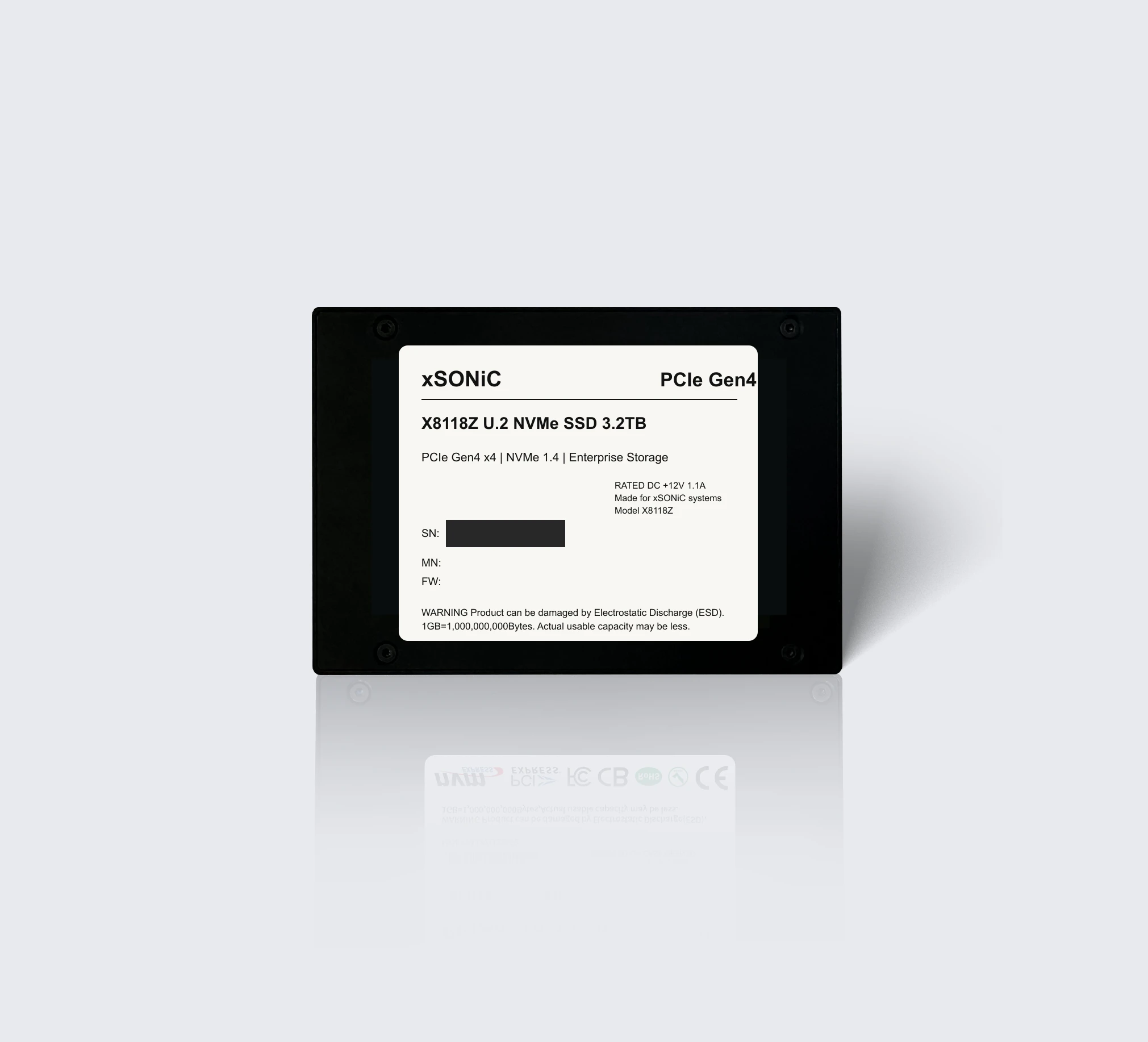 nvme ssdXS-SSD-8118Z-U2Enterprise U.2 NVMe SSD with PCIe Gen4 x4, NVMe 1.4, up to 7.1 GB/s sequential read, and 1,000K IOPS for data center storage workloads.View product
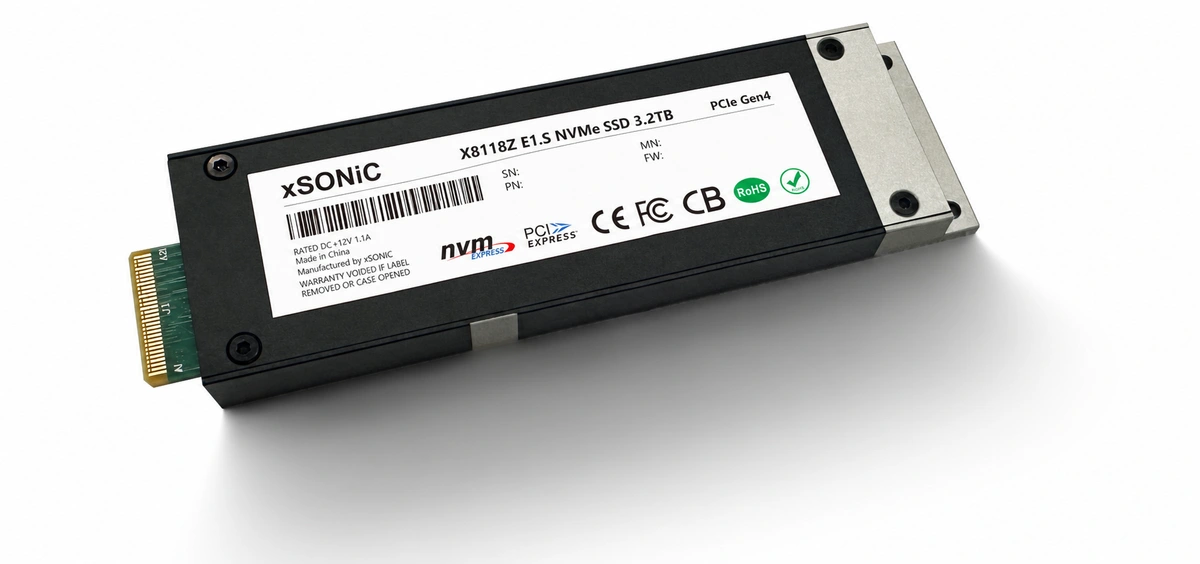 nvme ssdXS-SSD-8118Z-E1SEnterprise E1.S NVMe SSD with PCIe Gen4 x4, up to 7.1 GB/s sequential read, 1,000K IOPS, and compact data center storage density.View product
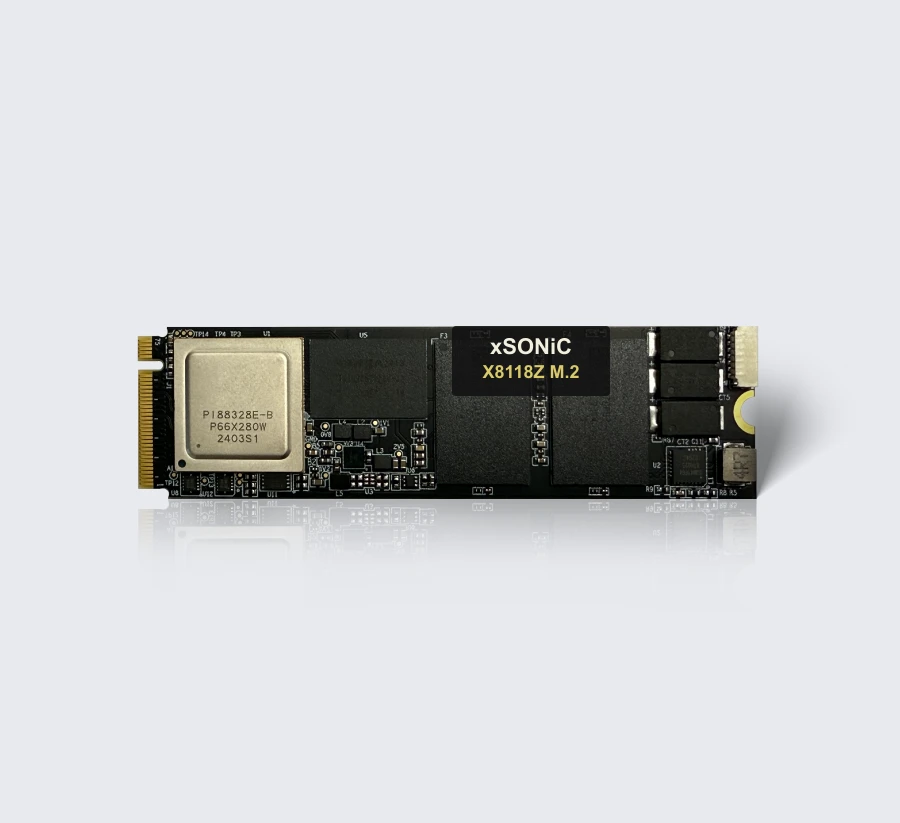 nvme ssdXS-SSD-8118Z-M2Enterprise M.2-2280 NVMe SSD with PCIe Gen4 x4, up to 7.1 GB/s sequential read, 1,000K IOPS, and compact storage deployment flexibility.View product
Continue reading
Related articles
 Technical ArticleU.2 vs M.2 vs E1.S vs AIC: Choosing the Right NVMe SSD Form Factor for Your Enterprise DeploymentEngineering guidance on U.2 vs M.2 vs E1.S vs AIC for Australian infrastructure teams, covering form factor tradeoffs, capacity planning, thermal design, endurance, and.Read article
 Technical ArticleNVMe SSD Form Factor Comparison: U.2 vs E1.S vs M.2 vs AIC for Enterprise and AI WorkloadsAn engineering comparison of U.2, E1.S, M.2, and AIC NVMe SSD form factors for enterprise storage, AI workloads, thermals, and serviceability.Read article
 Technical ArticleNetwork and Storage Planning for Private AI Inference Servers: A Practical Buyer GuideA practical buyer guide to network and storage planning for private AI inference servers in Australian data centers.Read article