In brief
Engineering guidance on DPUs, SONiC, and the Open Networking Layer Under Every AI Cluster for Australian infrastructure teams, covering form factor tradeoffs, capacity.
Key takeaways
- As Australian enterprises scale AI training and inference workloads, attention has shifted to the infrastructure layer that connects GPUs, storage, and management planes at wire speed.
- But a DPU does not operate in isolation. It sits on top of a physical switching fabric, and that fabric determines whether the DPU can actually deliver on its performance promises.
- This is where SONiC-based open networking enters the conversation. SONiC (Software for Open Networking in the Cloud) is an open-source network operating system backed by the SONiC Foundation under the Linux Foundation.
Why Every AI Cluster Needs a Network That Can Keep Up
As Australian enterprises scale AI training and inference workloads, attention has shifted to the infrastructure layer that connects GPUs, storage, and management planes at wire speed. Industry vendors have introduced Data Processing Units (DPUs) as dedicated silicon that offloads networking, storage, and security functions from host CPUs. These devices promise to turn every server into an infrastructure node that handles its own overlay networking, encryption, and telemetry.
But a DPU does not operate in isolation. It sits on top of a physical switching fabric, and that fabric determines whether the DPU can actually deliver on its performance promises. If the leaf and spine switches beneath your DPUs cannot handle RDMA traffic at line rate, enforce congestion notification, or give you programmable visibility into packet flows, the DPU becomes a bottleneck rather than an accelerator.
This is where SONiC-based open networking enters the conversation. SONiC (Software for Open Networking in the Cloud) is an open-source network operating system backed by the SONiC Foundation under the Linux Foundation. It runs on switches from multiple hardware vendors and supports a full suite of data center protocols including BGP, RDMA, and EVPN-VXLAN. For teams building AI clusters, SONiC offers a programmable, vendor-neutral switching layer that complements any DPU strategy.
What a DPU Actually Does in an AI Data Center
A DPU is an infrastructure compute platform that sits in every server node. It handles tasks that would otherwise consume host CPU cycles: software-defined networking (SDN) overlay termination, NVMe-oF storage acceleration, stateful firewall enforcement, and telemetry collection. In AI clusters, where every CPU cycle matters for model training orchestration and data preprocessing, offloading these functions frees significant compute capacity.
The major DPU platforms on the market today offer 400 Gb/s to 800 Gb/s throughput with hardware accelerators for networking, storage, and security. They act as infrastructure controllers for each server, enforcing zero-trust policies at the node level and enabling bare-metal provisioning through standard frameworks like Kubernetes.
For Australian data center operators, the appeal is clear: DPUs can consolidate what used to require separate NICs, HBAs, and security appliances into a single programmable device. But the value of that consolidation depends entirely on the network fabric that the DPU connects to.
The Fabric Gap: Why the Switching Layer Is the Real Bottleneck
When an AI cluster scales from a handful of GPU nodes to hundreds or thousands, the spine-leaf fabric becomes the critical path. Every GPU-to-GPU communication in a distributed training job crosses at least one leaf switch and often a spine switch. RDMA over Converged Ethernet version 2 (RoCE v2) traffic is particularly sensitive to latency, packet loss, and congestion. Even small fabric inefficiencies can degrade training throughput by measurable margins.
This is the gap that proprietary DPU ecosystems often leave open. A DPU vendor may optimize the server-side networking stack, but the leaf and spine switches are typically a separate procurement decision. If those switches run a closed NOS with limited programmability, the infrastructure team loses the ability to:
- Deploy custom telemetry pipelines that feed into DPU-level observability
- Enforce consistent QoS and DCBX policies end-to-end from DPU to spine
- Rapidly iterate on fabric configuration as AI workload patterns change
- Avoid vendor lock-in at the switching layer while keeping DPU flexibility
SONiC-based switching closes this gap by giving infrastructure teams full control over the fabric OS.
How SONiC Complements the DPU Strategy
SONiC was originally developed for hyperscale cloud environments and has been production-hardened at some of the largest data centers in the world. It is now supported by a growing ecosystem of hardware vendors through the Open Compute Project (OCP) Networking initiative. The key properties that make SONiC a strong fit for DPU-adjacent fabrics include:
Multi-vendor hardware support. SONiC runs on switches built with ASICs from multiple silicon vendors. This means an infrastructure team can select the best switch hardware for their port density, power budget, and cooling constraints without being locked into a single NOS ecosystem.
Containerized, modular architecture. Each network function in SONiC runs in its own container. This makes it possible to upgrade individual components (BGP, telemetry, LLDP) without restarting the entire switch. For AI fabrics that need high availability during training jobs, this modularity matters.
RDMA and RoCE v2 support. SONiC supports the DCBX, PFC, and ECN mechanisms that RoCE v2 traffic requires for lossless or low-loss operation. This is essential for GPU backend fabrics where RDMA is the primary interconnect protocol.
Programmable telemetry. SONiC supports In-band Network Telemetry (INT) and other streaming telemetry frameworks. When paired with DPU-level telemetry, this gives operators end-to-end visibility from the application down to the physical link.
EVPN-VXLAN overlay support. For multi-tenant AI environments where different teams or workloads need isolated network segments, SONiC’s EVPN-VXLAN support provides the overlay fabric that DPUs terminate at the server edge.
A Practical View: AI Fabric Architecture for Australian Deployments
Consider a typical AI cluster deployment in an Australian colocation facility. The architecture might look like this:
| Layer | Role | Key Requirement |
|---|---|---|
| GPU Nodes | Training and inference compute | High-bandwidth RDMA, NVMe storage access |
| DPU Layer (per server) | Infrastructure offload, security, telemetry | 400G/800G throughput, zero-trust enforcement |
| Leaf Switches | Top-of-rack connectivity for GPU and DPU ports | RoCE v2 line-rate, DCBX, PFC, ECN |
| Spine Switches | Non-blocking inter-leaf fabric | 400G/800G uplinks, ECMP load balancing |
| Packet Broker (optional) | Traffic visibility, filtering, replication | Deduplication, tunnel processing, tool delivery |
In this architecture, the leaf and spine layers are where SONiC-based switches deliver the most value. They provide the programmable, open fabric that DPUs need to function effectively. The packet broker layer, if deployed, can aggregate and filter traffic for security and monitoring tools without adding proprietary dependencies.
For Australian operators, the open networking approach also simplifies supply chain decisions. Rather than committing to a single vendor’s switching, DPU, and management stack, teams can evaluate best-of-breed options at each layer while maintaining a consistent, programmable NOS across the fabric.
The Vendor Lock-In Question
One of the most common concerns when evaluating DPU-centric architectures is vendor dependency. If the DPU, switch NOS, and management platform all come from the same vendor, the infrastructure team loses negotiating leverage and operational flexibility. This is particularly relevant in the Australian market, where data sovereignty requirements and limited local supply chains make vendor diversity a strategic priority.
SONiC-based switching offers a counterweight to this dependency. By running an open-source NOS on commodity switch hardware, infrastructure teams can:
- Procure switches from multiple ODM and OEM partners
- Maintain fabric configuration as code, independent of any single vendor’s management platform
- Contribute to and benefit from a community-driven feature roadmap
- Reduce total cost of ownership by avoiding per-port NOS licensing fees
This does not mean every deployment should avoid proprietary DPUs or switches. But it does mean that the switching layer should be evaluated on its own merits, and SONiC gives infrastructure teams a credible open option.
What to Evaluate When Planning an AI Fabric
If you are building or refreshing an AI data center fabric in Australia, here are the key evaluation criteria for the switching layer:
- RoCE v2 readiness. Does the switch NOS support DCBX, PFC, ECN, and fast congestion notification at line rate? This is non-negotiable for GPU backend fabrics.
- 400G/800G port density. Can the leaf and spine switches support the port speeds your DPU and GPU nodes require?
- Telemetry and observability. Does the NOS support INT, gNMI, or streaming telemetry that integrates with your DPU-level monitoring?
- Multi-vendor hardware flexibility. Can you run the same NOS on switches from different hardware vendors?
- Overlay support. Does the NOS support EVPN-VXLAN for multi-tenant isolation?
- Community and ecosystem. Is there an active community, regular releases, and a clear roadmap?
- Local support and availability. Are there Australian-based partners or integrators who can provide deployment and lifecycle support?
These criteria apply whether you are evaluating SONiC, a commercial SONiC distribution, or a proprietary alternative. The goal is to ensure that your switching fabric does not become the weakest link in your AI infrastructure stack.
The Bigger Picture: Open Infrastructure for AI at Scale
The AI data center is not a single product. It is a layered system where GPU compute, DPU offload, switching fabric, storage, and cooling all need to work together. Proprietary approaches can optimize within their own stack, but they often create integration friction at the boundaries between layers.
Open networking, powered by SONiC and supported by the broader OCP ecosystem, gives infrastructure teams the ability to build a switching fabric that is as programmable and flexible as the workloads it serves. For Australian enterprises investing in AI infrastructure, this means fewer surprises at scale and more control over total cost of ownership.
The DPU is a powerful tool. But it is only as good as the network beneath it.
Looking to evaluate open networking options for your AI data center fabric? Talk to the xSONiC team about SONiC-based switching, RoCE v2 fabrics, and AI-ready infrastructure.
Engineering FAQ
How should NVMe form factor selection be made? Start with workload profile, usable capacity, serviceability, thermal envelope, write endurance, PCIe generation, slot layout, and replacement process. U.2, E1.S, M.2, and AIC devices solve different mechanical and operational problems.
What matters more than peak sequential speed? Sustained performance, thermal throttling behaviour, write endurance, latency under load, firmware stability, power-loss protection, and fleet manageability usually matter more than a single benchmark number.
How should storage be validated for AI or cloud workloads? Test the selected form factor in the real chassis with expected airflow, queue depth, write mix, temperature range, and monitoring stack. Validation should include steady-state and recovery behaviour, not only fresh-drive performance.
Related xSONiC Resources
Sources Reviewed
- Ethernet Network Adapters - ConnectX NICs | NVIDIA
- NVIDIA BlueField Data Processing Unit
- NVIDIA Spectrum-X Ethernet Platform
- OpenConfig gNMI Specification
- OpenConfig
- RFC 7950 - The YANG 1.1 Data Modeling Language
- RFC 6241 - Network Configuration Protocol (NETCONF)
- ACSC Essential Eight
- OAIC Notifiable Data Breaches
- APRA CPS 234 Information Security
- NETSCOUT Network Packet Definition
- Cloudflare Network Packet Definition
- SONiC Project Documentation
- Broadcom Ethernet Switching
- Marvell Switching
- NVIDIA Ethernet Switching
- Open Compute Networking
- SONiC GitHub
- SONiC Foundation
Product fit
Products referenced for evaluation
These products are referenced for evaluation context in the article. Confirm workload, port, optics, software, interoperability, and support requirements against the exact deployment before procurement.
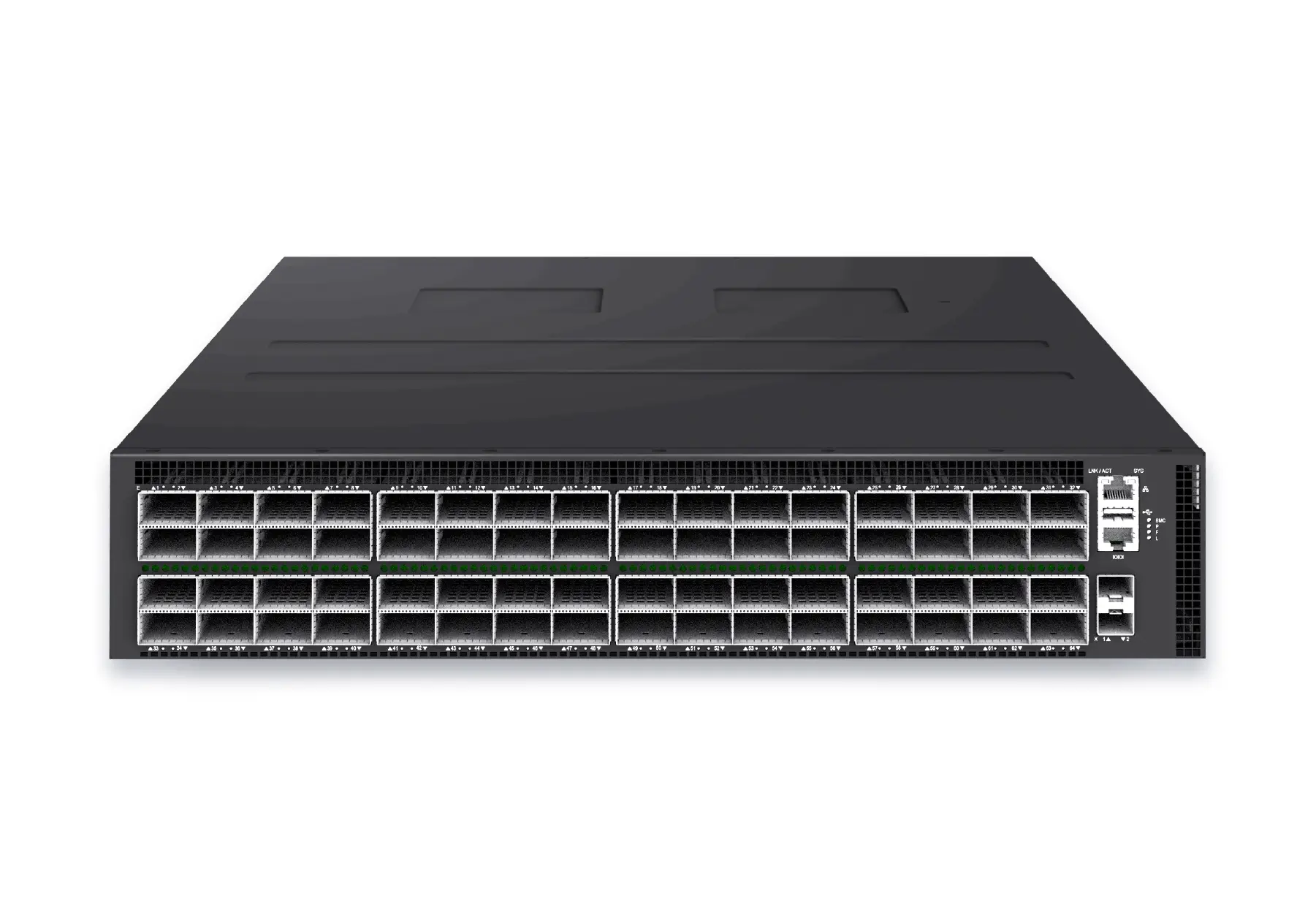 datacenter aiXS-DC-64X800-AI-G164-port 800G AI fabric switch for large-scale GPU clusters, HPC backbones, and ultra-high-throughput data center networks.View product
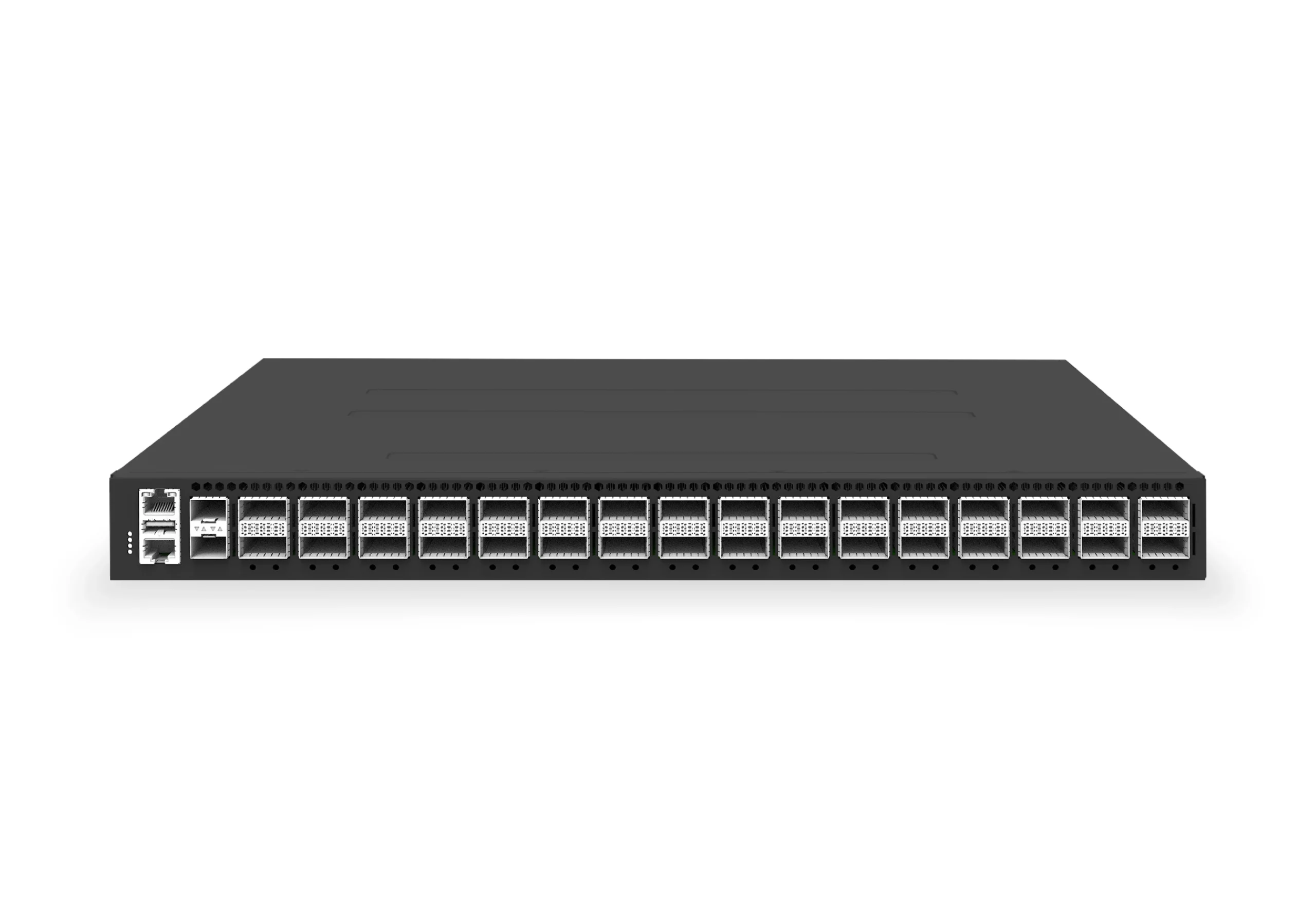 datacenter aiXS-DC-32X400-SP-G232-port 400G spine/core switch for high-capacity data center fabrics and AI-ready backbones.View product
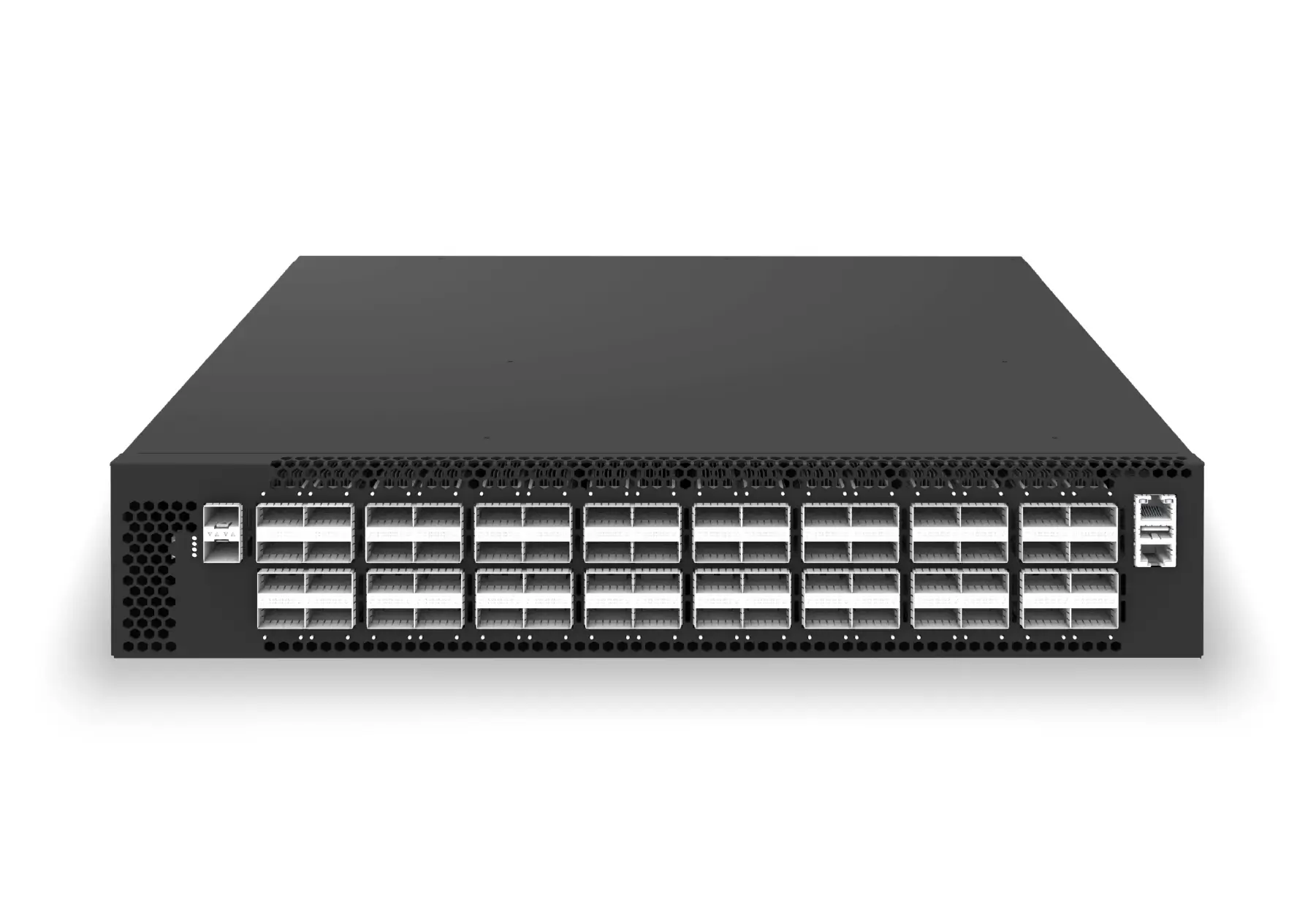 datacenter aiXS-DC-64X200-LS-G164-port 200G leaf/spine switch for high-bandwidth storage, compute, and scale-out data center fabrics.View product
Continue reading
Related articles
 Technical ArticleWhat Enterprise Buyers Actually Get From Open Networking Support: A SONiC Reality CheckA SONiC support reality check for Australian enterprise buyers covering community, commercial distribution, hardware, integration, SLA, and escalation.Read article
 Technical ArticleWarm Reboot and Fast Reboot in SONiC: How to Validate High Availability Without a Full OutageEngineering guide to validating SONiC warm reboot and fast reboot, covering ASIC support, control-plane recovery, traffic loss, telemetry, and rollback.Read article
 Technical ArticleSONiC Security Hardening: A Practical Guide for Data Center Network TeamsA practical SONiC security hardening guide for data center teams covering management access, patching, logging, RBAC, image provenance, telemetry, and audit evidence.Read article