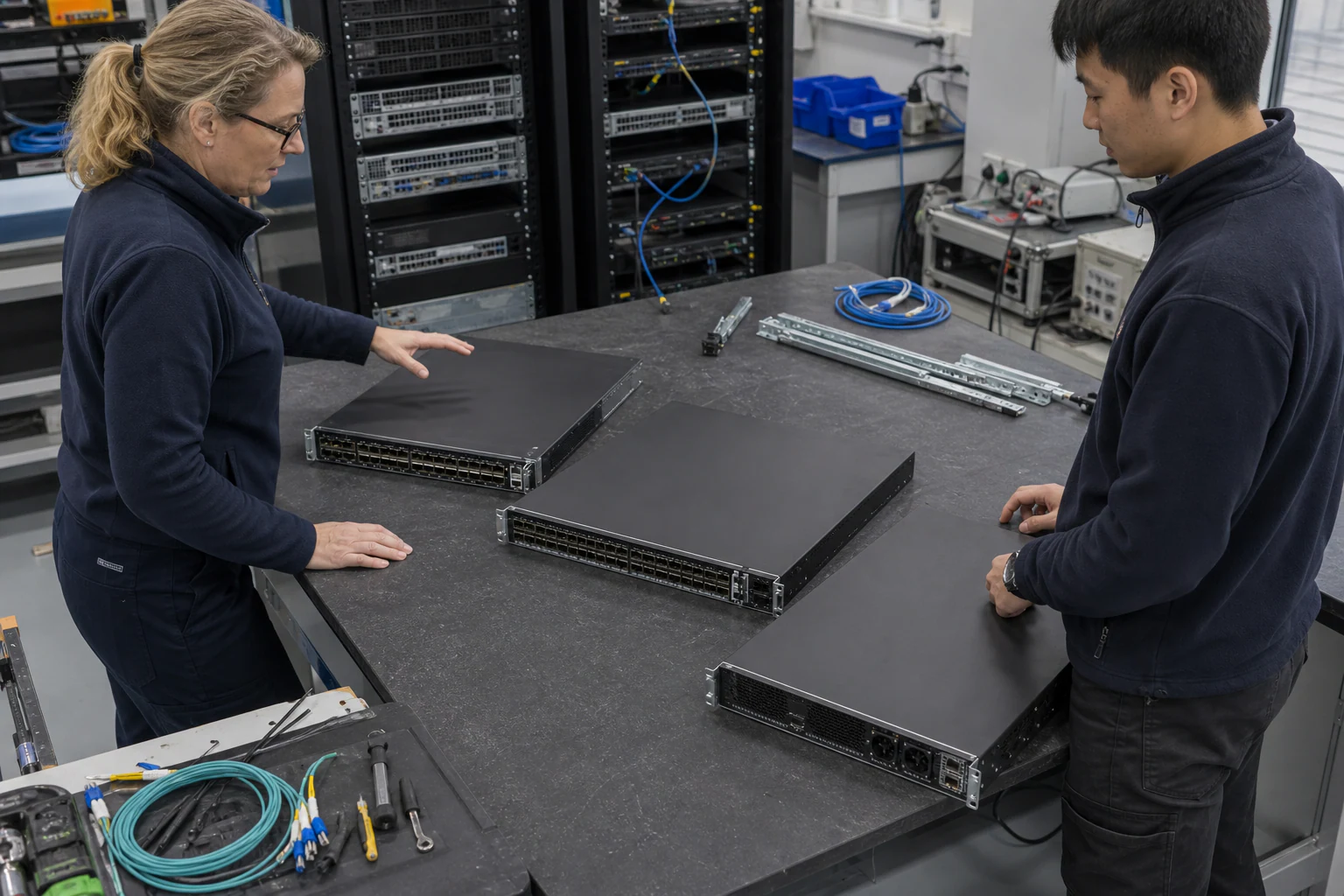
In brief
Engineering guidance on Cisco, Arista, and Juniper Alternatives for Australian data centre buyers, covering form factor choice, link budgets, cabling, interoperability.
Key takeaways
- Cisco, Arista, and Juniper have dominated enterprise and data center networking for decades.
- This is not a teardown of any specific vendor. It is a practical buyer guide for network architects, IT directors, and procurement teams in Australia who are evaluating open networking as a real alternative.
- Traditional networking vendors bundle hardware, operating systems, management platforms, and support into a single stack.
Why Australian buyers are looking beyond the big three
Cisco, Arista, and Juniper have dominated enterprise and data center networking for decades. But in 2026, the conversation is shifting. AI workloads are reshaping traffic patterns. Campus refresh cycles are accelerating. And Australian enterprise teams are increasingly asking a harder question: is vendor lock-in still worth the premium?
This is not a teardown of any specific vendor. It is a practical buyer guide for network architects, IT directors, and procurement teams in Australia who are evaluating open networking as a real alternative. The goal is to help you make a decision based on facts, fit, and total cost of ownership — not brand inertia.
The lock-in problem is real, and it is growing
Traditional networking vendors bundle hardware, operating systems, management platforms, and support into a single stack. That approach works well when the vendor’s roadmap aligns with your needs. But it creates risk when it does not.
Consider what has happened in the past 18 months. Cisco, the dominant vendor in enterprise networking, has been executing a massive platform consolidation strategy. It acquired Splunk for $28 billion, integrated Isovalent’s container networking, launched Cisco Cloud Control as a unified management plane, and is rolling out Agentic Actions for autonomous network remediation. These are significant moves, but they also mean tighter coupling between Cisco hardware and Cisco software.
At the same time, Cisco has been cutting jobs — nearly 4,000 in mid-2026 alone — despite posting record quarterly revenue of $15.8 billion. For customers, workforce reductions of this scale raise legitimate questions about support responsiveness, engineering investment in legacy product lines, and long-term product continuity.
Arista has carved out a strong position in hyperscaler and large data center environments, but its campus and access portfolio remains thinner than Cisco’s. Juniper, now part of HPE, faces integration uncertainty that makes some Australian buyers cautious about committing to its roadmap.
The common thread: when you buy into a proprietary stack, your vendor’s business decisions become your operational risk.
What open networking actually means in 2026
Open networking is not a single technology. It is an approach where the hardware, the network operating system, and the management layer are decoupled. You choose each component on its merits.
In practice, this means:
- Disaggregated switching hardware: Bare-metal switches from multiple hardware vendors that run a common, open NOS like SONiC (Software for Open Networking in the Cloud), now adopted by enterprises beyond hyperscalers.
- Standardised optics and cabling: Optical transceivers that follow MSA standards, not vendor-specific firmware locks.
- Programmable management: NETCONF/YANG, gNMI, and streaming telemetry instead of proprietary dashboards that only work with one vendor’s gear.
- Community-driven innovation: Features and bug fixes that benefit from a broader contributor base, including hyperscalers, enterprises, and hardware vendors.
Enterprise SONiC — the distribution used in production enterprise environments — has matured significantly. It now supports EVPN-VXLAN fabric overlays, campus access features including PoE, MC-LAG, policy-based routing, and virtual chassis topologies. For Australian organisations planning a campus refresh or a data center fabric upgrade, SONiC-based switching is no longer experimental.
How open networking compares across key decision areas
| Decision Area | Cisco / Arista / Juniper | Open Networking (SONiC-based) |
|---|---|---|
| Hardware choice | Single-vendor or limited | Multiple bare-metal vendors, form factors, and silicon options |
| NOS flexibility | Proprietary (IOS-XE, EOS, Junos) | Open-source or commercial SONiC distributions |
| Optics compatibility | Vendor-coded transceivers, higher cost | MSA-compliant optics, broader supplier base |
| Management and automation | Vendor dashboard (Catalyst Center, CloudVision, Mist) | NETCONF/YANG, gNMI, open-source controllers, or commercial options |
| AI fabric readiness | Vendor-specific AI fabric packages | SONiC with RoCE v2, DCBX, INT telemetry, EVPN-VXLAN |
| Campus features | Mature, deeply integrated | Maturing: PoE, MC-LAG, STP, PBR, virtual chassis available |
| Support model | Single vendor, premium SLAs | Hardware vendor + NOS vendor + community, or integrated commercial support |
| Vendor lock-in risk | High | Low to moderate |
| Migration complexity | Low (same-vendor refresh) | Moderate (requires planning, testing, and potentially new tooling) |
This table is a starting point, not a verdict. The right choice depends on your environment, your team’s skills, and your tolerance for change.
Five questions to ask before switching
If you are considering moving away from Cisco, Arista, or Juniper, use this checklist to frame your evaluation.
1. What is driving the change?
Be specific. Common triggers include:
- Approaching end-of-support on current hardware
- Licensing cost escalation (Cisco’s shift toward subscription licensing is a frequent pain point)
- Need for higher-density 400G or 800G ports for AI/ML backend fabrics
- Desire to avoid single-vendor dependency for a major refresh cycle
- Security concerns: multiple high-severity vulnerabilities in incumbent platforms have forced re-evaluation
Cisco alone has disclosed dozens of critical and max-severity vulnerabilities over the past year, affecting products from SD-WAN controllers to firewalls, ISE, and IOS XE switches. One Network World analysis noted that “application delivery controllers, VPN gateways, and network management platforms are the de facto brokers of trust, and that makes them prime targets for attackers.” Open networking does not eliminate security risk, but it does change the risk profile by separating the hardware, OS, and management attack surfaces.
2. Does your team have the skills, or can you build them?
Open networking rewards teams that are comfortable with Linux, CLI-based configuration, and programmable interfaces. If your network engineers hold CCNA or CCNP certifications, they already have transferable routing and switching fundamentals. SONiC uses industry-standard protocols — BGP, OSPF, VXLAN, EVPN — that certified engineers will recognise.
That said, the operational model is different. There is no single “show me everything” dashboard equivalent to Catalyst Center or Arista CloudVision out of the box. Commercial SONiC distributions and open-source controllers like AIDC address this gap, but it is important to plan for the transition.
3. What does your campus or data center topology look like?
Open networking today covers a wide range of topologies, but feature maturity varies:
- Spine-leaf data center fabrics: This is where SONiC is most mature. EVPN-VXLAN overlays, RoCE v2 for AI backend fabrics, DCBX, and INT telemetry are production-ready in enterprise SONiC distributions.
- Campus access and aggregation: PoE, MC-LAG, STP, PBR, and virtual chassis support are available and improving. For a greenfield campus refresh, open networking is increasingly viable. For a brownfield Cisco campus with thousands of Catalyst ports, the migration path requires more planning.
- Branch and edge: Fewer options today. If your branches rely heavily on Meraki-style cloud management, open networking alternatives are less mature in this segment.
4. What is the total cost of ownership, not just the hardware price?
Open networking hardware is typically less expensive per port than incumbent switches. But TCO includes more than the sticker price:
- Optics savings: MSA-compliant optical transceivers without vendor-specific coding are significantly cheaper. For a 400G or 800G fabric, optics cost can be 40-60% of the total switch investment.
- Licensing: SONiC itself is open-source. Commercial distributions have support subscriptions, but they are generally simpler and more transparent than Cisco’s DNA licensing model.
- Operational cost: This is the variable. If your team needs training, if you need new automation tooling, or if you run hybrid environments during migration, the operational cost can offset hardware savings in year one. The TCO advantage typically becomes clear by year two or three.
5. Who will support it?
This is the most important question. Open networking does not mean unsupported networking. You need to evaluate:
- Hardware vendor support and warranty
- SONiC distribution support (community vs. commercial)
- Integration testing and validation
- Australian-based or APAC support coverage
For Australian buyers, local support and supply chain matter. Ask potential vendors about APAC inventory, RMA processes, and whether they have Australian engineering or partner resources.
Where xSONiC fits in the open networking landscape
xSONiC is an open networking infrastructure brand built for exactly this transition. The product families map directly to the decision areas above:
- Data center AI switches: Low-latency Enterprise SONiC switching for spine-leaf fabrics, AI/ML backend clusters, and RoCE v2 workloads. Available in 100G, 400G, and 800G form factors.
- Access and aggregation switches: Enterprise SONiC campus switches with PoE, MC-LAG, STP, PBR, and virtual chassis support for campus refresh and branch deployments.
- Bare-metal switches: Open hardware for teams that want to run their own NOS or evaluate SONiC on commodity silicon.
- Optical transceivers: MSA-compliant SFP, SFP+, SFP28, QSFP28, QSFP-DD, and OSFP optics for data center and campus links, without vendor firmware locks.
- Network packet brokers: Traffic aggregation, filtering, and replication for visibility and security tool delivery in open and hybrid environments.
- Enterprise access points: Wi-Fi 6, Wi-Fi 6E, and Wi-Fi 7 access points aligned with OpenWiFi standards for campus and branch wireless.
Each product family connects to xSONiC’s solution pillars — AI Fabric, EVPN-VXLAN, Campus Refresh, PoE Campus, and more — giving Australian buyers a path from evaluation through deployment.
A realistic migration timeline
Switching from a proprietary stack to open networking is not a weekend project. Here is a rough framework:
- Assessment (4-8 weeks): Audit current hardware, licensing, support contracts, and topology. Identify pain points and migration priorities.
- Lab evaluation (4-8 weeks): Test SONiC-based switches and optics in a lab environment. Validate feature parity for your specific use case.
- Pilot deployment (8-12 weeks): Deploy in a non-critical segment — a new data center pod, a new campus floor, or a secondary site.
- Production rollout (12-24 weeks): Migrate production workloads in phases. Maintain hybrid connectivity during transition.
- Optimisation (ongoing): Tune automation, telemetry, and operational workflows.
For a campus-only refresh, the timeline may be shorter. For a full data center and campus migration, plan for 9-18 months.
The bottom line for Australian buyers
Cisco, Arista, and Juniper build capable products. But capability is not the only factor. Vendor lock-in, licensing complexity, security incident frequency, and roadmap alignment all matter.
Open networking with Enterprise SONiC is no longer a bet on the future. It is a production-proven alternative that addresses real buyer pain points — especially for AI fabric builds, campus refresh cycles, and organisations that want control over their infrastructure stack.
If you are evaluating your options, the best next step is a structured conversation about your environment, your priorities, and your timeline.
Contact xSONiC to discuss your open networking evaluation
Engineering FAQ
What should be checked before ordering 400G or 800G optics? Check port form factor, lane speed, reach, fibre type, breakout plan, DOM telemetry, firmware compatibility, thermal budget, and the switch vendor optics support matrix. The same speed can behave differently across QSFP-DD, OSFP, DAC, AOC, and fibre modules.
Why is optics validation part of a SONiC deployment? SONiC exposes the NOS layer, but optics behaviour still depends on the switch platform, transceiver EEPROM data, firmware, thermal design, and operational tooling. Buyers should test the exact module and cable combination before volume rollout.
What should be included in an optics procurement record? Record SKU, reach, connector, fibre type, temperature class, supported breakout modes, switch platform, SONiC image, DOM fields, link test result, and spare strategy. That record becomes the reference for future replacements.
Related xSONiC Resources
Sources Reviewed
- IEEE 802.1Q Bridges and Bridged Networks
- IEEE 802.1AX Link Aggregation
- Ethernet Network Adapters - ConnectX NICs | NVIDIA
- NVIDIA BlueField Data Processing Unit
- NVIDIA Spectrum-X Ethernet Platform
- OpenConfig gNMI Specification
- OpenConfig
- RFC 7950 - The YANG 1.1 Data Modeling Language
- RFC 6241 - Network Configuration Protocol (NETCONF)
- ACSC Essential Eight
- OAIC Notifiable Data Breaches
- APRA CPS 234 Information Security
- NETSCOUT Network Packet Definition
- Cloudflare Network Packet Definition
- IEEE 802.11be Wireless LAN Standard
- IEEE 802.3bt Power over Ethernet
- SONiC Project Documentation
- Broadcom Ethernet Switching
- Marvell Switching
- NVIDIA Ethernet Switching
- Open Compute Networking
- SONiC GitHub
- SONiC Foundation
Product fit
Products referenced for evaluation
These products are referenced for evaluation context in the article. Confirm workload, port, optics, software, interoperability, and support requirements against the exact deployment before procurement.
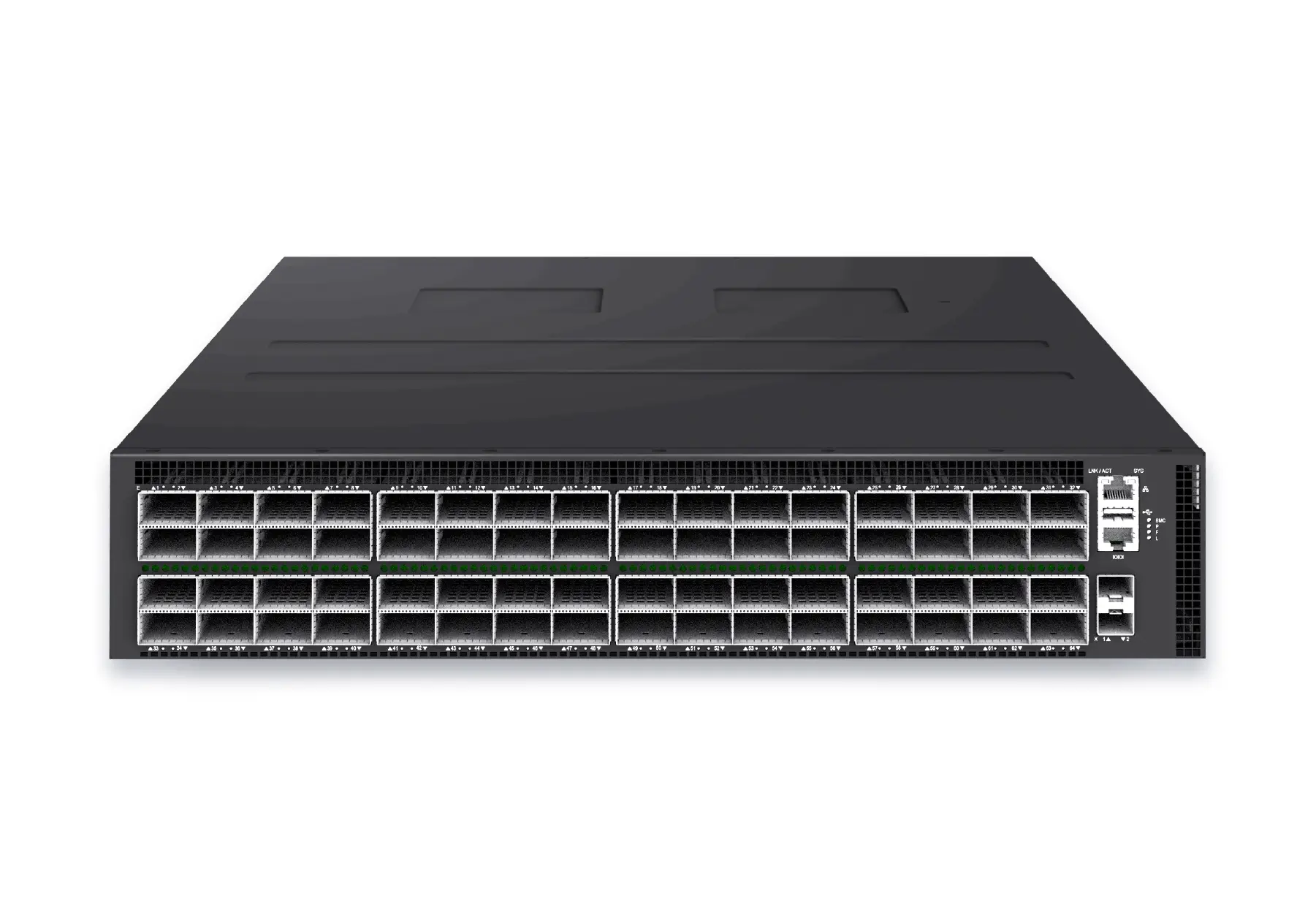 datacenter aiXS-DC-64X800-AI-G164-port 800G AI fabric switch for large-scale GPU clusters, HPC backbones, and ultra-high-throughput data center networks.View product
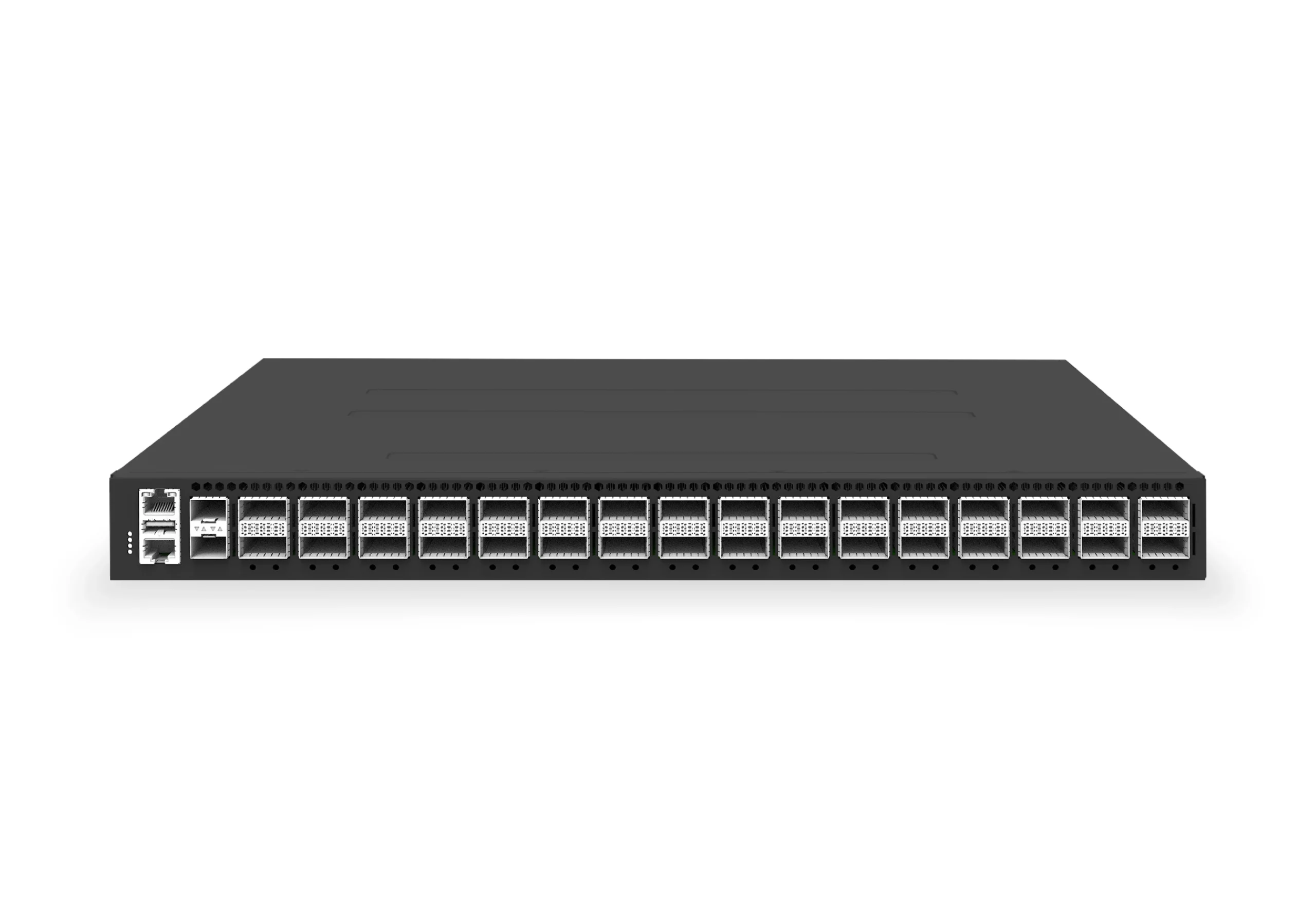 datacenter aiXS-DC-32X400-SP-G232-port 400G spine/core switch for high-capacity data center fabrics and AI-ready backbones.View product
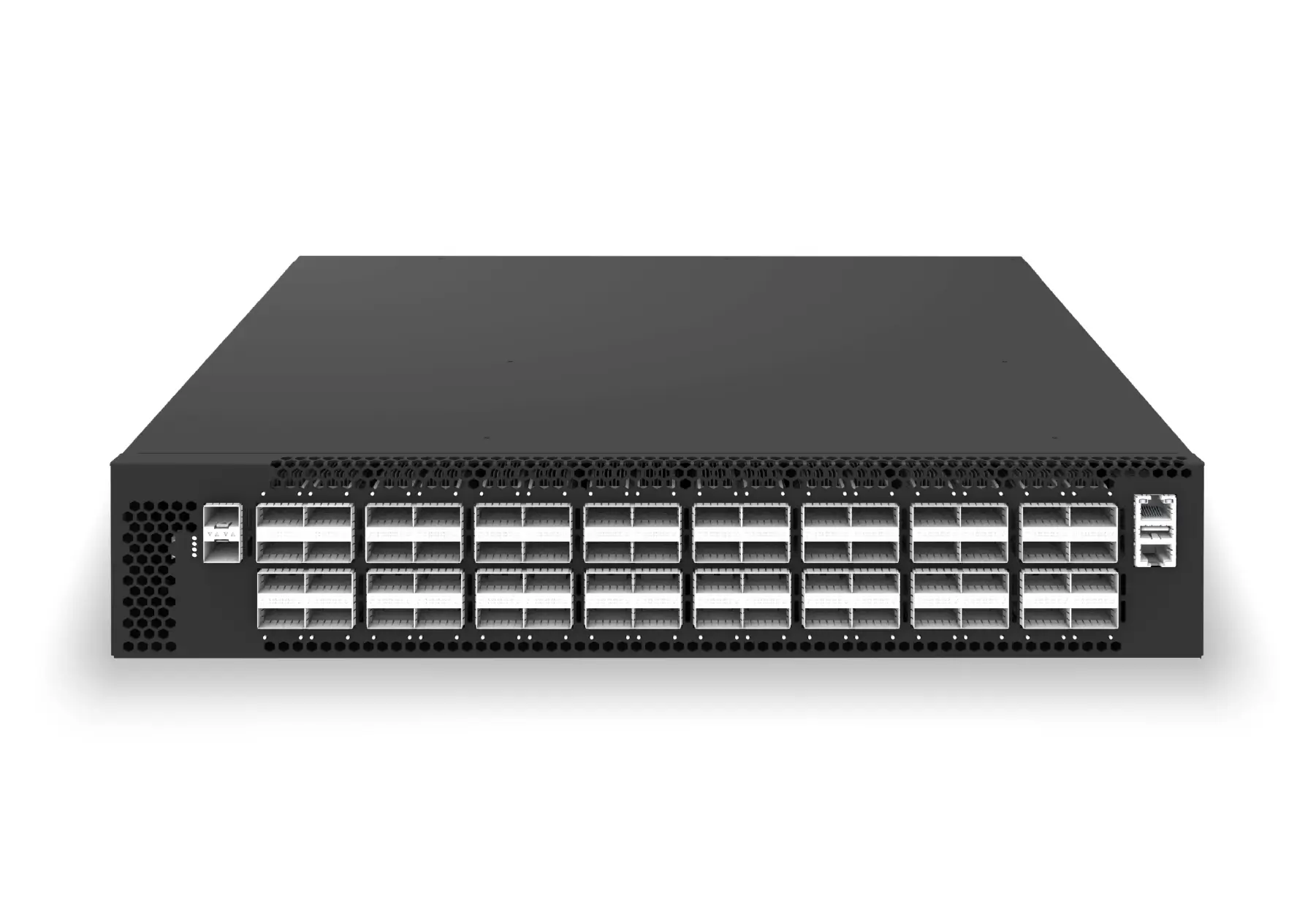 datacenter aiXS-DC-64X200-LS-G164-port 200G leaf/spine switch for high-bandwidth storage, compute, and scale-out data center fabrics.View product
Continue reading
Related articles
 Technical ArticleWhat AI Fabric Ethernet Switching Requires: A Buyer Guide for SONiC-Based Data CentersEngineering guidance on AI Fabric Ethernet Switching Requires for Australian network and security teams, covering traffic visibility, capacity modelling, tool feeds.Read article
 Technical ArticleProprietary Switch OS Lock-in vs Enterprise SONiC: An Australian Buyer Migration AnalysisMigration analysis for Australian buyers comparing proprietary switch OS lock-in with Enterprise SONiC pilot, support, automation, and TCO evidence.Read article
 Technical ArticleWhite Box Switch vs Traditional Switch: What Enterprise Buyers in Australia Need to KnowEngineering comparison of white-box and traditional switches for Australian enterprise buyers, covering SONiC, support, optics, risk, and TCO.Read article