In brief
Engineering guidance on SONiC AI fabric management, covering AIDC controller automation, RoCE policy, EVPN-VXLAN, telemetry, and rollback evidence.
Key takeaways
- Australian enterprises deploying GPU clusters for machine learning, large language model inference, and high-performance computing face a networking challenge that traditional data center operations tools were not designed to solve.
- This is the problem that centralized AI fabric management is built to address.
- The xSONiC AIDC Controller is designed around this principle: manage the entire AI data center fabric from one platform, built on SONiC, the open-source network operating system that has been production-hardened in some of the world's largest cloud data centers [1][2].
Why AI Fabric Management Can No Longer Be an Afterthought
Australian enterprises deploying GPU clusters for machine learning, large language model inference, and high-performance computing face a networking challenge that traditional data center operations tools were not designed to solve. When dozens or hundreds of GPUs communicate across a spine-leaf fabric using RDMA over Converged Ethernet (RoCE v2), even minor misconfigurations in congestion notification, priority flow control, or traffic scheduling can cause job-level failures that waste expensive compute hours.
This is the problem that centralized AI fabric management is built to address. Instead of configuring each switch individually and hoping for consistency, a controller-based approach gives network teams a single point of orchestration for the entire fabric — from underlay routing to overlay tenant segmentation to real-time telemetry collection.
The xSONiC AIDC Controller is designed around this principle: manage the entire AI data center fabric from one platform, built on SONiC, the open-source network operating system that has been production-hardened in some of the world’s largest cloud data centers [1][2].
What SONiC Brings to AI Fabric Management
SONiC (Software for Open Networking in the Cloud) is an open-source NOS based on Linux that runs on switches from multiple hardware vendors and ASIC families [1]. Its architecture is modular — each network function runs in its own Docker container, which means BGP, RDMA, telemetry, and management services can be updated or debugged independently without affecting the rest of the switch [2].
For AI fabric management, this modularity matters in three ways:
-
Multi-vendor hardware flexibility. SONiC decouples the network operating system from the switch hardware [1]. A fabric controller that targets SONiC can manage switches from different ASIC vendors on the same fabric, reducing lock-in to any single silicon provider.
-
Production-grade RDMA support. SONiC includes BGP and RDMA functionality that has been validated in large-scale production environments [2]. RoCE v2 configuration, priority flow control (PFC), and data center bridging capabilities are available as part of the base platform rather than requiring proprietary extensions.
-
Containerized service isolation. Because SONiC uses Docker containers for each network function, a controller can push configuration changes to specific services (for example, updating RoCE v2 congestion detection parameters) without triggering a full switch restart [2]. In an AI training cluster where jobs may run for hours or days, this isolation reduces the risk of fabric-wide disruption.
The NVIDIA Spectrum switching portfolio is one example of hardware that supports SONiC alongside other NOS options, with the Spectrum-4 (SN5000) series designed specifically for deep learning workloads at speeds up to 800 Gb/s [3]. This illustrates the broader industry direction: open NOS support is becoming a baseline expectation for AI-capable Ethernet switches.
The Case for a Centralized Controller over CLI-by-CLI Management
In a traditional data center, network engineers configure switches one at a time using CLI or basic scripting. For a 10-switch leaf-spine fabric supporting general-purpose workloads, this approach is manageable. For an AI fabric supporting 64, 128, or more GPU nodes with RoCE v2 traffic, it becomes a reliability risk.
Here is why centralized fabric management changes the equation:
Configuration consistency. A controller pushes validated, tested configurations to all switches simultaneously. There is no risk of one leaf switch running a different PFC watermark setting than its peers, which would cause asymmetric congestion behavior across the fabric.
Automated underlay and overlay provisioning. Modern fabric controllers can automate the full provisioning lifecycle: underlay BGP/EVPN configuration, VXLAN overlay tenant creation, VLAN-to-VNI mappings, and loopback address assignments. What would take hours of CLI work across dozens of switches can be completed in minutes with controller-driven workflows.
Real-time telemetry collection. AI workloads are latency-sensitive and congestion-intolerant. A centralized controller can ingest streaming telemetry (interface counters, queue depths, RDMA CNP rates, buffer utilization) from every switch on the fabric and present a unified operational view. This is essential for troubleshooting GPU job slowdowns that originate in the network rather than the compute layer.
Intent-based policy management. Rather than managing individual switch configurations, a controller allows operators to define intent — for example, “this tenant’s GPU traffic should use lossless RoCE v2 with PFC on priority 3” — and translate that intent into switch-level configurations across the entire fabric.
For Australian data center operators managing AI infrastructure in colocation facilities across Sydney, Melbourne, or Brisbane, centralized management also simplifies remote operations. A single controller interface can manage fabrics across multiple sites without requiring on-site CLI access for every configuration change.
What to Look for in an AI Fabric Controller
If your organization is evaluating fabric management platforms for an AI data center build or refresh, the following criteria are worth prioritizing:
| Criterion | Why It Matters for AI Fabrics |
|---|---|
| SONiC-native integration | Ensures the controller is built to work with SONiC’s architecture rather than treating it as a secondary NOS |
| RoCE v2 configuration automation | PFC, ECN, DCBX, and congestion notification settings must be consistently applied across all leaf and spine switches |
| EVPN-VXLAN overlay management | Multi-tenant AI environments require overlay segmentation that is automated and auditable |
| Streaming telemetry ingestion | Real-time visibility into queue depths, buffer utilization, and RDMA counters is critical for AI workload troubleshooting |
| NETCONF/YANG-based provisioning | Standards-based configuration management enables version control, rollback, and integration with existing automation pipelines |
| Multi-site fabric support | Australian enterprises often operate across multiple data centers; the controller should manage distributed fabrics from a single pane |
| Open API surface | Integration with GPU cluster schedulers, monitoring stacks (Prometheus, Grafana), and ITSM tools requires a well-documented API |
AIDC Controller Acceptance Matrix
| Controller function | Evidence to collect | Minimum acceptance target | Rework trigger |
|---|---|---|---|
| Fabric onboarding | Switch inventory, link discovery, optics health, firmware, and topology map | 100% of leaf/spine nodes discovered within 10 minutes | Manual topology correction is required |
| RoCE automation | PFC, ECN, DCBX, queue profile, and CNP counters before/after change | 0 config drift across 2 leaf switches and 1 spine during PoC | Policy is pushed but not verified |
| EVPN-VXLAN control | VNI map, VTEPs, BGP sessions, route targets, and MAC/IP learning | 1 tenant add and 1 rollback completed with audit trail | Overlay state is visible only per switch |
| Telemetry correlation | gNMI, INT/IPTPath, queue depth, interface counters, and event timeline | Congestion isolated to switch, port, queue, and path within 15 minutes | Controller shows alarms without root-cause context |
| Change safety | Config diff, approval, push result, rollback, and operator identity | 1 production-like change and rollback rehearsed before go-live | Rollback requires manual CLI reconstruction |
How Centralized Management Fits the Broader AI Fabric Stack
A fabric controller does not operate in isolation. It is one layer in a multi-layer architecture that includes:
- Switch hardware — bare-metal or branded switches running SONiC, with ASICs capable of line-rate RDMA forwarding at 100G, 400G, or 800G per port.
- Network operating system — SONiC, providing the base network services (BGP, RDMA, telemetry, containerized microservices).
- Fabric controller — the centralized management plane, handling provisioning, telemetry aggregation, policy management, and lifecycle operations.
- Optical connectivity — transceivers and cabling (SFP28, QSFP28, QSFP-DD, OSFP) that connect switches across the fabric.
- Telemetry and observability — tools that consume controller-exported data for capacity planning, fault detection, and performance optimization.
For Australian organizations building private AI infrastructure — whether for LLM fine-tuning, RAG pipelines, or multimodal inference — the fabric controller is the operational layer that ties all of these components together. Without it, each layer must be managed independently, increasing operational complexity and the risk of configuration drift.
The Open Networking Advantage for Australian Buyers
Australia’s data center market is growing rapidly, driven by AI workload demand, data sovereignty requirements, and the expansion of hyperscale and colocation capacity in major metros. For enterprises building or refreshing AI-capable network infrastructure in this market, the choice between proprietary and open networking has long-term implications.
Proprietary fabric controllers from major switch vendors offer tight integration but create hardware and software lock-in. If your AI cluster grows and you need to add switches from a different vendor, or if a better ASIC generation becomes available from another provider, proprietary controllers may not support mixed-vendor fabrics.
An SONiC-based controller approach avoids this lock-in by design. Because SONiC runs on switches from multiple vendors and ASIC families [1][2], a controller built on SONiC can manage a heterogeneous fabric without requiring proprietary extensions at the switch level.
This is the foundation of the xSONiC value proposition: open networking hardware (bare-metal switches, optical transceivers) paired with an open NOS (SONiC) and a centralized management layer (AIDC Controller) that gives Australian data center teams the operational control they need without the vendor lock-in they do not want.
Getting Started
If your organization is planning an AI data center fabric deployment or refresh in Australia, consider the following steps:
- Assess your current fabric. How many switches are in your AI fabric? What NOS are they running? Is configuration managed centrally or per-switch?
- Define your workload requirements. What GPU interconnect speeds do you need? Are you running RoCE v2? What are your latency and congestion tolerance thresholds?
- Evaluate controller options. Compare SONiC-native controllers against proprietary alternatives. Prioritize NETCONF/YANG support, RoCE automation, and multi-site management.
- Plan your optics and cabling. AI fabrics at 400G and 800G require careful optical transceiver planning. Ensure your controller can track optics inventory and health.
- Engage with the xSONiC team. For Australian buyers evaluating open networking for AI infrastructure, the xSONiC team can provide guidance on fabric design, controller deployment, and hardware selection.
Engineering FAQ
What makes the AIDC Controller more than a dashboard? It should discover topology, push RoCE and EVPN policy, verify drift, correlate telemetry, record changes, and roll back safely. A dashboard that only shows switch status does not manage the fabric.
What should be tested in an Australian AI fabric PoC? Test 2 leaf switches, 1 spine, 400G or 800G optics, RoCE policy, EVPN-VXLAN, telemetry export, config rollback, and escalation ownership for controller, NOS, ASIC, and optics issues.
Why does centralized control matter for RoCE? RoCE depends on consistent PFC, ECN, DCBX, queue, and DSCP settings. A single mismatched leaf can create congestion or packet loss that appears as GPU application instability.
Related xSONiC Resources
Sources Reviewed
- Ethernet Network Adapters - ConnectX NICs | NVIDIA
- NVIDIA BlueField Data Processing Unit
- NVIDIA Spectrum-X Ethernet Platform
- OpenConfig gNMI Specification
- OpenConfig
- RFC 7950 - The YANG 1.1 Data Modeling Language
- RFC 6241 - Network Configuration Protocol (NETCONF)
- SONiC Project Documentation
- Broadcom Ethernet Switching
- Marvell Switching
- NVIDIA Ethernet Switching
- Open Compute Networking
- SONiC GitHub
- SONiC Foundation
Product fit
Products referenced for evaluation
These products are referenced for evaluation context in the article. Confirm workload, port, optics, software, interoperability, and support requirements against the exact deployment before procurement.
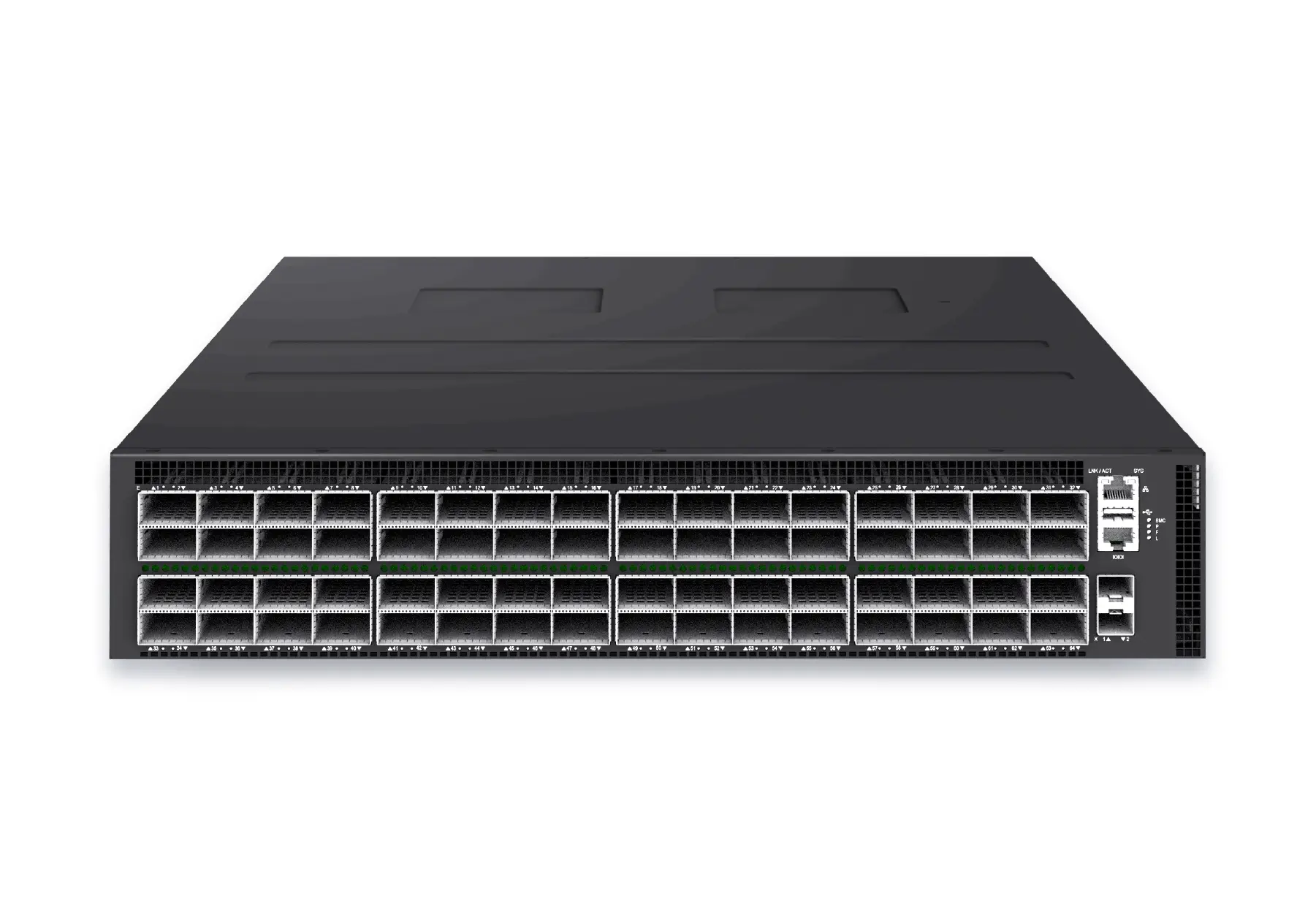 datacenter aiXS-DC-64X800-AI-G164-port 800G AI fabric switch for large-scale GPU clusters, HPC backbones, and ultra-high-throughput data center networks.View product
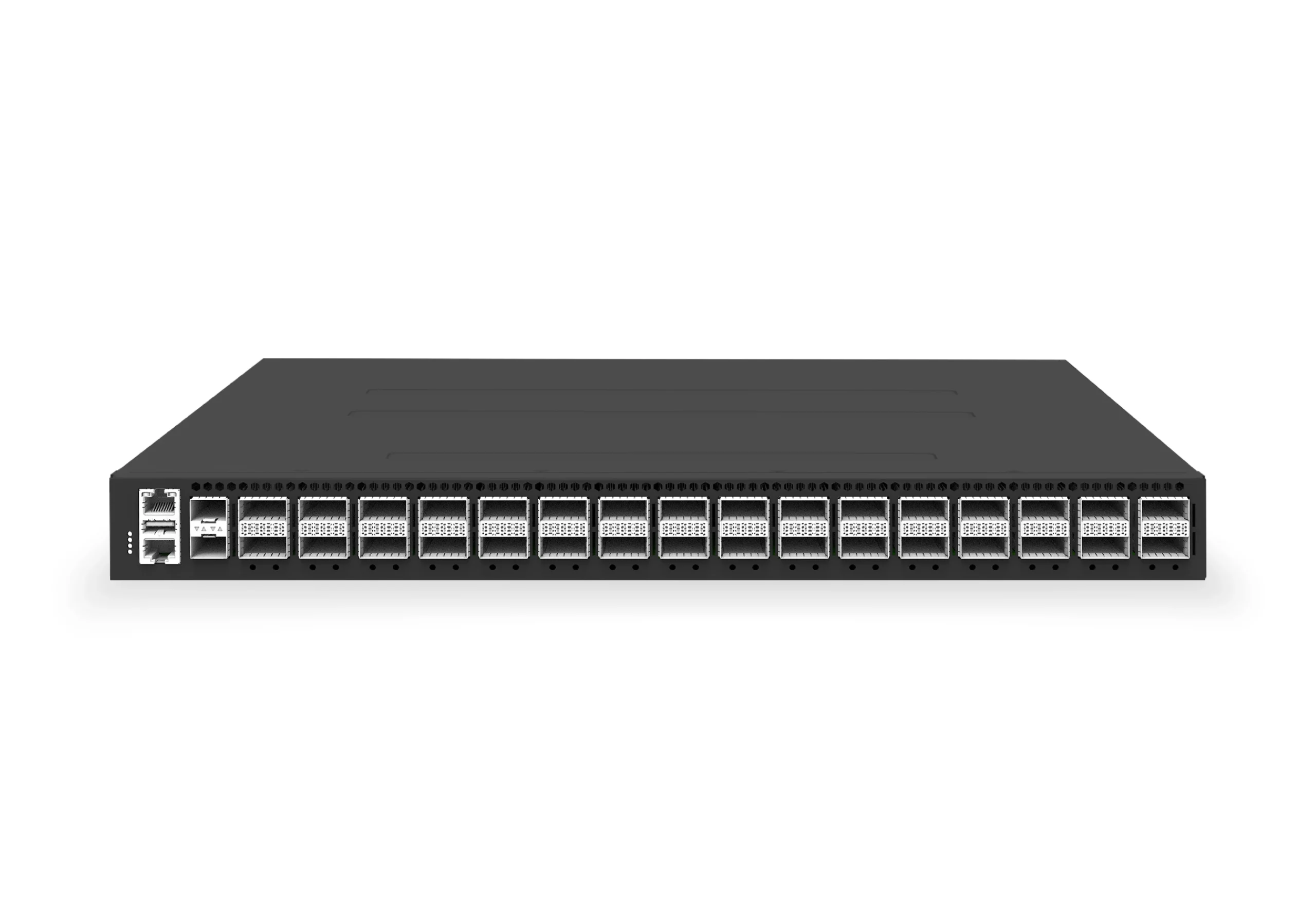 datacenter aiXS-DC-32X400-SP-G232-port 400G spine/core switch for high-capacity data center fabrics and AI-ready backbones.View product
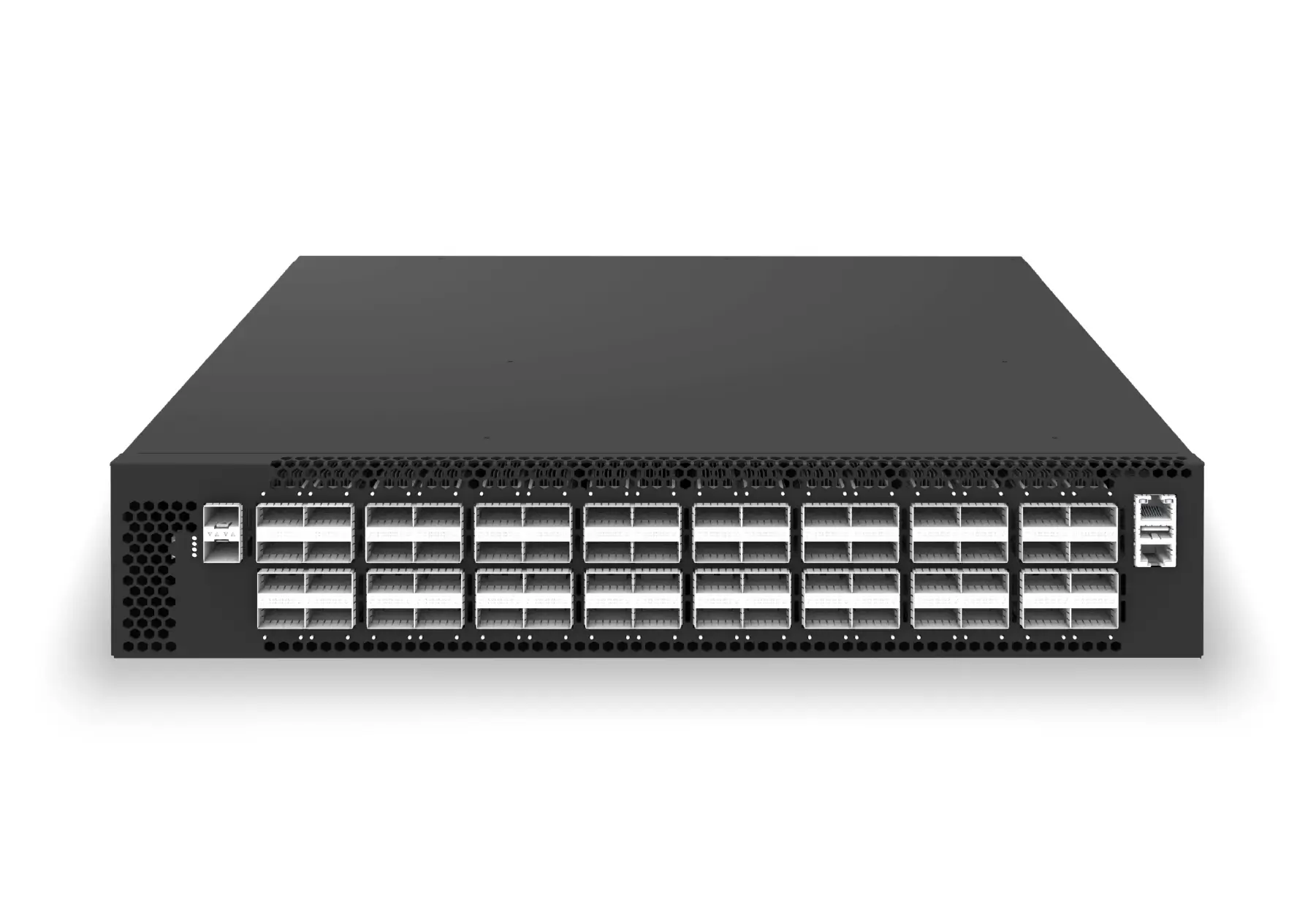 datacenter aiXS-DC-64X200-LS-G164-port 200G leaf/spine switch for high-bandwidth storage, compute, and scale-out data center fabrics.View product
Continue reading
Related articles
 Technical ArticleWhat Enterprise Buyers Actually Get From Open Networking Support: A SONiC Reality CheckA SONiC support reality check for Australian enterprise buyers covering community, commercial distribution, hardware, integration, SLA, and escalation.Read article
 Technical ArticleWarm Reboot and Fast Reboot in SONiC: How to Validate High Availability Without a Full OutageEngineering guide to validating SONiC warm reboot and fast reboot, covering ASIC support, control-plane recovery, traffic loss, telemetry, and rollback.Read article
 Technical ArticleSONiC Security Hardening: A Practical Guide for Data Center Network TeamsA practical SONiC security hardening guide for data center teams covering management access, patching, logging, RBAC, image provenance, telemetry, and audit evidence.Read article