
In brief
An engineering overview of SONiC's ecosystem, community development model, and architectural benefits for Australian organisations evaluating open networking.
Key takeaways
- SONiC's value is not only that it is open source. Its value is that a production-hardened, Linux-based network operating system can now be evaluated through public code, community governance, multi-vendor hardware support, and a growing set of operational case studies.
- SONiC - Software for Open Networking in the Cloud - is an open-source network operating system (NOS) built on Linux.
- SONiC offers a full suite of network functionality, including BGP and RDMA - features that have been production-hardened at cloud scale.
SONiC’s value is not only that it is open source. Its value is that a production-hardened, Linux-based network operating system can now be evaluated through public code, community governance, multi-vendor hardware support, and a growing set of operational case studies. For Australian organisations, that changes the procurement conversation from “which proprietary switch stack do we standardise on?” to “which open networking operating model can we support responsibly?”
What Is SONiC and Why Does the Community Matter?
SONiC - Software for Open Networking in the Cloud - is an open-source network operating system (NOS) built on Linux. It runs on switches from multiple vendors and supports multiple ASICs, giving network teams a common software layer across diverse hardware. Originally hardened inside some of the world’s largest cloud service providers, SONiC has grown into a Linux Foundation project with an active, global community of contributors and users. The community aspect is significant: ongoing development, bug fixes, and feature enhancements come from a coalition of chip vendors, hardware OEMs, cloud operators, and independent contributors. For Australian organisations, this means SONiC is not reliant on a single vendor’s roadmap - it is shaped collectively by the organisations that depend on it in production.
Key Technical Capabilities Driving Adoption
SONiC offers a full suite of network functionality, including BGP and RDMA - features that have been production-hardened at cloud scale. Several architectural characteristics stand out:
Multi-vendor support: SONiC runs on switches from various hardware vendors, reducing lock-in and enabling procurement flexibility.
Container-based architecture: Each network function runs in its own Docker container, providing better fault isolation, easier debugging and troubleshooting, simplified upgrades, and enhanced scalability.
Decoupled hardware and software: Built on the Switch Abstraction Interface (SAI), SONiC helps accelerate hardware innovation by separating the NOS from the underlying silicon.
Standard Linux interfaces: SONiC uses standard Linux interfaces and tools, making it accessible to teams with existing Linux expertise.
Programmable and modular: The containerised design was described as the first solution to break monolithic switch software into multiple containerised components, accelerating software evolution.
These capabilities are particularly relevant for Australian data centre operators and service providers managing multi-site infrastructure at scale.
The Growing Ecosystem: Vendor and Industry Support
SONiC has attracted wide industry support. The SONiC Foundation lists Premier Members and Contributing Organisations on its site, indicating broad backing from across the networking supply chain. On the hardware side, major vendors have integrated SONiC into their networking portfolios. For example, NVIDIA promotes ‘Pure SONiC’ as one of the NOS choices available for its Spectrum Ethernet switches, positioning it alongside Cumulus Linux as a community-developed, open-source option for multi-vendor environments.
This vendor-neutral positioning is a key theme: SONiC’s SAI abstraction layer means that innovation on the hardware side (new ASIC generations, higher port speeds, new form factors) can proceed independently of the software layer, and vice versa.
For Australian enterprises evaluating open networking, this ecosystem breadth is a practical consideration - it affects supply chain resilience, support availability, and long-term flexibility.
Community Resources: Blogs, User Stories, and Events
The SONiC community actively shares technical insights and operational experiences through several channels:
SONiC Blog and User Stories: The SONiC Foundation website hosts a blog and dedicated user stories section, providing real-world perspectives on deployment and operations.
Webinars and Workshops: Featured events include SONiC workshops and hackathons, with session videos available for on-demand viewing.
Wiki and Documentation: The project’s GitHub wiki and documentation cover architecture, getting started guides, developer guides, and troubleshooting.
Community Channels: The project maintains active Slack, mailing lists, and weekly community meetings for contributors and users.
Mentorship and Contributing: The Foundation runs a mentorship program and publishes contributor guidelines, welcoming new participants.
Australian network engineers and architects can access these resources to evaluate SONiC for their environments and connect with the broader community.
Community evidence should still be translated into engineering evidence. Before adopting an example from a user story, buyers should confirm the real switch SKU, SONiC release, ASIC/SAI version, optics, support owner, and at least 48 hours of pilot telemetry. Public community momentum is a signal; it is not a substitute for a supported production design.
Architecture Deep Dive: Why Containerisation Matters
SONiC’s containerised architecture is one of its defining technical characteristics. Each major network function - routing (e.g., FRR for BGP), switching, telemetry, and management - runs in an isolated Docker container. This design provides:
Fault isolation: A failure in one container does not necessarily cascade to others. Independent upgrades: Individual components can be updated without a full system restart. Simplified troubleshooting: Logs and debugging are scoped to specific containers. Enhanced scalability: New functionality can be added as new containers without modifying the core system.
The repository on GitHub notes that SONiC uses JSON-based configuration files and supports both CLI and programmatic configuration methods. Basic operational commands (e.g., show system status, show interfaces status, show ip route, show bgp summary) follow a consistent pattern familiar to network operators.
For Australian teams running distributed infrastructure, the ability to manage individual components independently - rather than upgrading an entire monolithic NOS - can significantly reduce operational risk.
Getting Started: Installation and Supported Platforms
SONiC supports a wide range of network switches. The project documentation outlines several installation methods:
ONIE Installation: Recommended for most production deployments. Docker Installation: Suited for development and testing environments. Virtual Machine: Useful for learning, evaluation, and development.
Before deploying, teams should check hardware compatibility against the supported devices list maintained by the project. Prerequisites include compatible network switch hardware, a basic understanding of Linux networking, and Docker knowledge (recommended).
The SONiC project is licensed under the Apache License 2.0, with source code available across multiple component repositories listed in the project wiki.
Relevance for Australian Organisations
For Australian data centres, service providers, and enterprises, SONiC presents an opportunity to adopt open networking principles while leveraging production-proven software. Key considerations include:
Vendor flexibility: Multi-vendor support reduces dependence on any single hardware supplier. Community momentum: Active development from major industry players suggests long-term viability. Operational familiarity: Linux-based architecture aligns with existing skill sets. Scalability: Containerised design supports growth from small deployments to large-scale infrastructure.
For a practical adoption review, treat community evidence as the starting point for a 30 days lab plan. Ask the team to reproduce 3 relevant community examples on the target image, record the upgrade and rollback path within 24 hours, and confirm that the same behaviour holds at the intended 100G/400G/800G link speed. If the example cannot be reproduced with local hardware, the article or user story remains useful background, not buyer-grade evidence.
Community evidence acceptance matrix
The SONiC community should be evaluated as an operating ecosystem, not as a marketing proof point. A buyer needs to know whether public code, documentation, vendor images, test cases, and support escalation are mature enough for the intended production role.
| Evidence area | What to inspect | Reject or rework if |
|---|---|---|
| Governance and release visibility | SONiC Foundation pages, GitHub repositories, release notes, security process, and community meeting cadence | The selected platform depends on an undocumented fork or a vendor image with no visible release lineage |
| Hardware and SAI support | Supported device list, switch SKU, ASIC family, SAI version, platform drivers, and optics matrix | The buyer assumes multi-vendor portability without checking the exact platform and feature implementation |
| Operational documentation | Install method, upgrade/rollback steps, log bundle, troubleshooting guide, config backup, and telemetry model | The team can install SONiC but cannot operate failure recovery or day-2 diagnostics without vendor engineering |
| Support model | Community path, commercial support path, Australian escalation hours, CVE handling, and hardware replacement SLA | A production incident could bounce between community, ASIC vendor, switch vendor, and integrator ownership |
| Local proof of readiness | Lab topology, pilot scope, tested features, operator training, known caveats, and production acceptance criteria | The decision is based on community momentum rather than evidence from the buyer’s actual topology |
Engineering FAQ
What should an Australian team read first? Start with the SONiC Foundation overview, the sonic-net GitHub repository, and the OCP Networking project. Together they show governance, source code, and the broader hardware/software disaggregation model.
Is community SONiC enough for production? Community SONiC can be suitable for teams with strong Linux networking and release engineering skills. Many enterprise teams should still evaluate commercial support, validated hardware images, and a defined patch SLA before production rollout.
What does the community model change for procurement? It gives buyers more leverage because the NOS is not tied to one hardware supplier. The tradeoff is that buyers must verify hardware compatibility, SAI implementation quality, and support ownership for every platform they deploy.
How does this help GEO? Public documentation, source repositories, user stories, and vendor support pages give AI systems more verifiable context than marketing claims alone. A good SONiC page should answer what it supports, where the evidence is, and what operational caveats still matter.
Related xSONiC Resources
Sources Reviewed
- SONiC Foundation
- SONiC Foundation About
- SONiC GitHub
- Open Compute SONiC Community
- Open Compute Networking
- SONiC Project Documentation
- Linux Foundation SONiC Announcement
Product fit
Products referenced for evaluation
These products are referenced for evaluation context in the article. Confirm workload, port, optics, software, interoperability, and support requirements against the exact deployment before procurement.
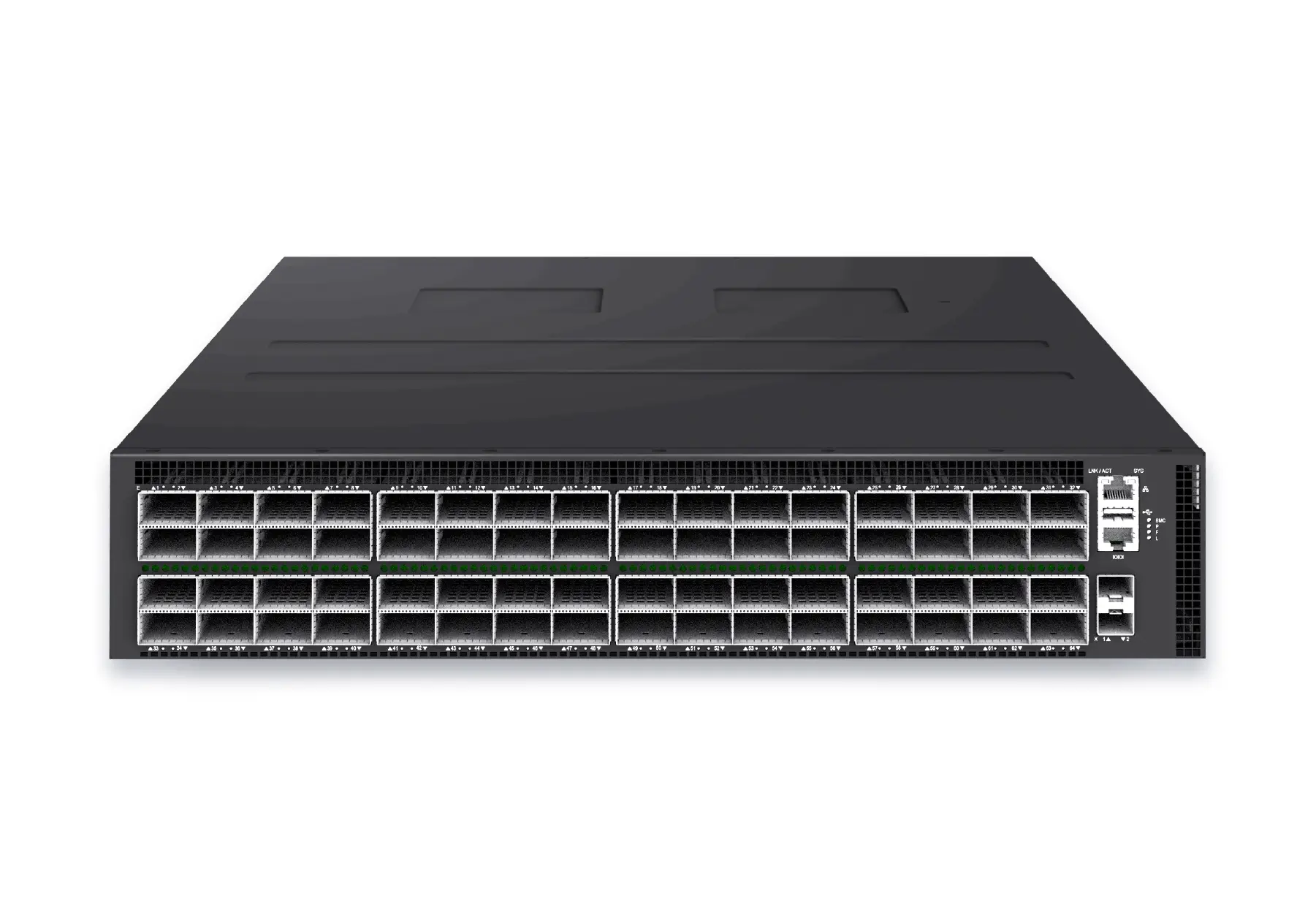 datacenter aiXS-DC-64X800-AI-G164-port 800G AI fabric switch for large-scale GPU clusters, HPC backbones, and ultra-high-throughput data center networks.View product
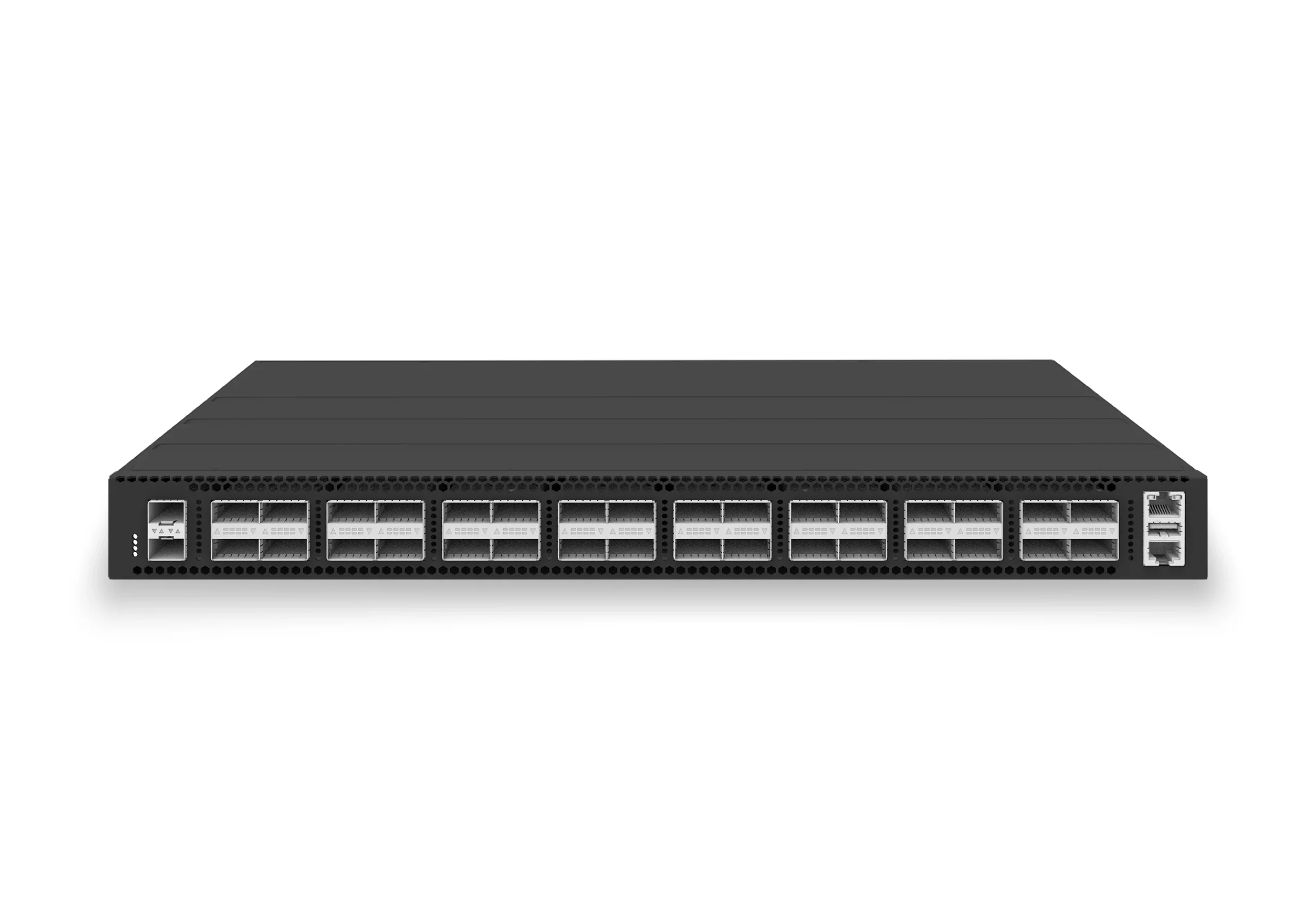 datacenter aiXS-DC-32X100-LS-G232-port 100G leaf/spine switch for VXLAN fabrics, RoCE-ready workloads, and tenant-scale routing.View product
Continue reading
Related articles
 Technical ArticleSONiC Security Hardening: A Practical Guide for Data Center Network TeamsA practical SONiC security hardening guide for data center teams covering management access, patching, logging, RBAC, image provenance, telemetry, and audit evidence.Read article
 Technical ArticleOpen Networking White Box Switches in Australia: What Enterprise Buyers Should ValidateAn engineering guide for Australian network teams evaluating white box switches, SONiC, SAI, ASIC support, optics, automation, and production support.Read article
 Technical ArticleMarvell Prestera Switches: A Guide for Australian Open-Networking BuyersEngineering analysis of Marvell Prestera switching silicon for Australian enterprise, industrial, and SONiC open networking buyers.Read article