In brief
Engineering guidance on Building AI Clusters on NVIDIA Spectrum Ethernet Switches with SONiC for Australian network teams, covering underlay design, EVPN-VXLAN.
Key takeaways
- Australian organisations investing in AI infrastructure face a networking challenge that traditional data centre fabrics were never designed to solve.
- NVIDIA Spectrum Ethernet switches running SONiC (Software for Open Networking in the Cloud) offer a compelling path forward.
- This guide breaks down the hardware options, the SONiC software architecture, and the practical considerations for deploying this stack in Australian environments.
Why AI Clusters Need Purpose-Built Ethernet Fabric
Australian organisations investing in AI infrastructure face a networking challenge that traditional data centre fabrics were never designed to solve. Training large language models, running distributed inference, and managing massive GPU clusters all demand ultra-low latency, lossless transport, and predictable throughput at scale. The network fabric becomes the bottleneck — or the accelerator — for every GPU cycle.
NVIDIA Spectrum Ethernet switches running SONiC (Software for Open Networking in the Cloud) offer a compelling path forward. This combination pairs purpose-built switching silicon with an open-source, Linux-based network operating system that has been production-hardened in some of the world’s largest cloud data centres. For Australian enterprises, research institutions, and managed service providers, this stack delivers both performance and operational flexibility.
This guide breaks down the hardware options, the SONiC software architecture, and the practical considerations for deploying this stack in Australian environments.
Understanding SONiC: The Open-Source NOS for Modern Networks
SONiC is a free and open-source network operating system built on Linux that runs on switches from multiple vendors and across different ASIC families. Originally developed for hyperscale cloud environments, it is now a Linux Foundation project with a growing ecosystem of contributors and adopters.
Key Architectural Principles
SONiC uses a container-based architecture where each network function runs in its own Docker container. This design delivers several operational advantages:
- Fault isolation: A failure in one container (for example, the BGP daemon) does not bring down the entire switch
- Independent upgrades: Individual components can be updated without full switch reboots in many cases
- Simplified debugging: Operators can inspect and restart specific services without impacting the whole system
- Scalability: The modular design supports the complexity required by large-scale AI fabrics
SONiC is built on the Switch Abstraction Interface (SAI), which decouples the network operating system from the underlying switching ASIC. This abstraction layer is what enables SONiC to run on hardware from multiple vendors, including NVIDIA Spectrum switches, while maintaining a consistent operational model.
Network Functionality Relevant to AI Clusters
SONiC provides a full suite of network functionality that is directly applicable to AI workloads:
- BGP and advanced routing for large-scale leaf-spine topologies
- RDMA over Converged Ethernet (RoCE) support for GPU-to-GPU communication
- Quality of Service (QoS) features for traffic prioritisation
- Standard Linux interfaces and tools, making it accessible to teams with existing Linux expertise
- JSON-based configuration supporting both CLI and programmatic management
The fact that SONiC has been production-hardened in hyperscale cloud environments gives it a maturity level that is critical for AI cluster deployments where downtime directly impacts training runs worth significant compute investment.
NVIDIA Spectrum Ethernet Switches: Hardware Options for AI
NVIDIA offers a broad portfolio of Spectrum Ethernet switches spanning multiple generations. Each generation builds on the previous one, and the choice depends on scale, speed requirements, and budget.
Spectrum-4 SN5000 Series — Purpose-Built for AI
- Up to 800 Gb/s per port (OSFP connectors)
- 64 ports of 800GbE on the SN5600/SN5610
- 51.2 Tb/s maximum throughput
- 33.3 billion packets per second (Bpps)
- 2U form factor
The SN5600 and SN5610 models provide 256 ports of 200GbE equivalent when breaking out 800GbE ports, which is relevant for connecting GPU servers that typically use 200GbE or 400GbE NICs.
Spectrum-6 SN6000 Series — Next-Generation Scale
The SN6000 family represents the newest generation and introduces co-packaged optics, which integrate optical connectivity directly into the switch ASIC package. Highlights include:
The SN6800 is designed for very large AI factories where thousands of GPUs need to be interconnected.
Spectrum-3 SN4000 and Spectrum-2 SN3000
For smaller clusters or environments where 400GbE or 200GbE is sufficient:
- SN4700: 32 ports of 400GbE, 12.8 Tb/s, 1U — suitable for mid-scale leaf-spine designs
- SN4600C: 64 ports of 100GbE, 6.4 Tb/s, 2U — a versatile option for mixed workloads
- SN3420: 12 ports of 100GbE plus 48 ports of 25GbE, 2.4 Tb/s, 1U — compact leaf switch
Comparison Table: NVIDIA Spectrum Switch Families for AI Clusters
| Feature | SN5000 (Spectrum-4) | SN6000 (Spectrum-6) | SN4000 (Spectrum-3) |
|---|---|---|---|
| Max port speed | 800 Gb/s | 800 Gb/s | 400 Gb/s |
| Max throughput | 51.2 Tb/s | 409.6 Tb/s | 12.8 Tb/s |
| Form factor | 2U | 2U to 5U | 1U to 2U |
| Co-packaged optics | No | Yes (SN6800/6810) | No |
| Recommended for | Medium-large AI clusters | Large AI factories | Smaller or mixed clusters |
Spectrum-X: The AI-Optimised Ethernet Platform
NVIDIA Spectrum-X is not a single switch but an integrated Ethernet platform that combines Spectrum switches with Ethernet SuperNICs, software optimisations, and validated designs specifically for AI workloads.
Key Spectrum-X Differentiators
- Zero-touch accelerated RDMA over Converged Ethernet (RoCE): RoCE traffic is optimised at the switch level without requiring manual tuning
- Multipath Reliable Connection (MRC): A congestion-aware multipathing technology proven on Spectrum-X Ethernet, now being opened to the broader industry
- Fairness and predictability: Features designed to ensure that no single GPU flow dominates fabric bandwidth
- NVIDIA NetQ integration: Real-time visibility and troubleshooting for the entire fabric
Running SONiC on NVIDIA Spectrum Switches
NVIDIA offers what it calls “Pure SONiC” — a community-developed, open-source version of SONiC that runs natively on Spectrum hardware. This is distinct from some vendor-specific distributions that may include proprietary extensions.
Why Choose SONiC Over Cumulus Linux
NVIDIA also offers Cumulus Linux as an NOS option for Spectrum switches. The choice between the two depends on organisational priorities:
| Consideration | SONiC | Cumulus Linux |
|---|---|---|
| Cost | Open-source, no licence fee | Commercial licence required |
| Community | Large open-source ecosystem | NVIDIA-supported |
| Automation | Ansible, SaltStack, custom agents | NVIDIA-tested automation |
| Support model | Community + commercial options | NVIDIA enterprise support |
| Hyperscaler heritage | Yes (Azure, large clouds) | Yes (broad enterprise adoption) |
For Australian organisations with strong Linux and open-source operations teams, SONiC on Spectrum hardware provides a cost-effective and flexible foundation. Organisations that prefer vendor-backed support may lean towards Cumulus Linux.
Practical Deployment Considerations for Australian AI Clusters
Network Topology
AI clusters typically use a leaf-spine (Clos) topology. With SONiC’s BGP support, this is straightforward to implement at scale. A typical design might use:
- Spine layer: SN5600 or SN6600 switches providing 800Gb/s uplinks
- Leaf layer: SN5400 or SN4700 switches connecting to GPU servers at 200GbE or 400GbE
- Out-of-band management: SONiC supports standard Linux management tools
RDMA and Lossless Ethernet
AI training workloads depend on RDMA for GPU-to-GPU communication. SONiC supports RoCE configuration, and on Spectrum hardware, features like zero-touch RoCE acceleration reduce the complexity of achieving lossless Ethernet behaviour.
Key configuration elements include:
- Priority Flow Control (PFC) for lossless queues
- Explicit Congestion Notification (ECN) for congestion signalling
- Data Centre Quantised Congestion Notification (DCQCN) for end-to-end congestion management
Cooling and Power in Australian Data Centres
Australian data centres, particularly in Sydney and Melbourne, have varying power densities and cooling capabilities. The Spectrum-6 co-packaged optics switches may offer power advantages by eliminating separate optical transceiver modules, but they also represent a newer technology with a different operational model.
Latency to Cloud AI Services
For hybrid deployments that combine on-premises GPU clusters with cloud-based AI services (such as NVIDIA DGX Cloud), network latency between Australian data centres and cloud regions is a consideration. The switching fabric itself introduces minimal latency (Spectrum switches are in the low hundreds of nanoseconds), but WAN connectivity remains a factor.
SONiC Community and Ecosystem for Australian Adopters
The SONiC community is active and growing. Key resources include:
- SONiC Foundation (sonicfoundation.dev): Governance, events, and community coordination
- GitHub (github.com/sonic-net/SONiC): Source code, documentation, and issue tracking
- Community Slack and mailing lists: For real-time support and discussion
- Weekly community meetings: Documented on the SONiC wiki
Australian organisations adopting SONiC can benefit from this community while also engaging with local network engineering talent familiar with Linux-based infrastructure. The use of standard Linux interfaces and Docker containers means that skills transfer from general DevOps and infrastructure teams is relatively straightforward.
Getting Started: A Practical Checklist
- Define your cluster scale: Determine the number of GPU servers, NIC speeds, and total port count needed
- Select switch hardware: Match NVIDIA Spectrum model to your scale and speed requirements
- Download SONiC images: Available from the SONiC project; verify hardware compatibility on the supported devices list
- Plan your topology: Design leaf-spine fabric with appropriate oversubscription ratios
- Configure RDMA: Set up PFC, ECN, and DCQCN for lossless Ethernet transport
- Deploy monitoring: Implement SONiC-native telemetry and consider NVIDIA NetQ for additional visibility
- Test with digital twins: NVIDIA DSX Air allows simulation of the full network stack before physical deployment
Next Steps for Australian AI Builders
NVIDIA Spectrum Ethernet switches running SONiC provide a powerful, flexible, and cost-effective foundation for AI cluster networking. The combination of purpose-built switching silicon, open-source software, and a mature community ecosystem makes this stack worth serious consideration for Australian organisations building or expanding AI infrastructure.
Engineering FAQ
What should be proven before adopting EVPN-VXLAN on SONiC? Prove underlay routing, BGP sessions, VTEP behaviour, MAC/IP learning, route scale, multi-homing design, failure convergence, and observability. The overlay should be accepted as a system, not a feature checkbox.
Why does the underlay design still matter in an overlay network? EVPN-VXLAN depends on a stable routed underlay. MTU, ECMP, addressing, route policy, link failure behaviour, and telemetry determine whether the overlay remains predictable under load and during faults.
What should be included in an EVPN-VXLAN operations runbook? Include naming, IP plan, BGP policy, VNI mapping, change process, rollback commands, failure checks, telemetry fields, backup and restore steps, and escalation ownership for the selected SONiC image.
Related xSONiC Resources
Sources Reviewed
- Ethernet Network Adapters - ConnectX NICs | NVIDIA
- NVIDIA BlueField Data Processing Unit
- NVIDIA Spectrum-X Ethernet Platform
- ACSC Essential Eight
- OAIC Notifiable Data Breaches
- APRA CPS 234 Information Security
- NETSCOUT Network Packet Definition
- Cloudflare Network Packet Definition
- SONiC Project Documentation
- Broadcom Ethernet Switching
- Marvell Switching
- NVIDIA Ethernet Switching
- Open Compute Networking
- SONiC GitHub
- SONiC Foundation
Product fit
Products referenced for evaluation
These products are referenced for evaluation context in the article. Confirm workload, port, optics, software, interoperability, and support requirements against the exact deployment before procurement.
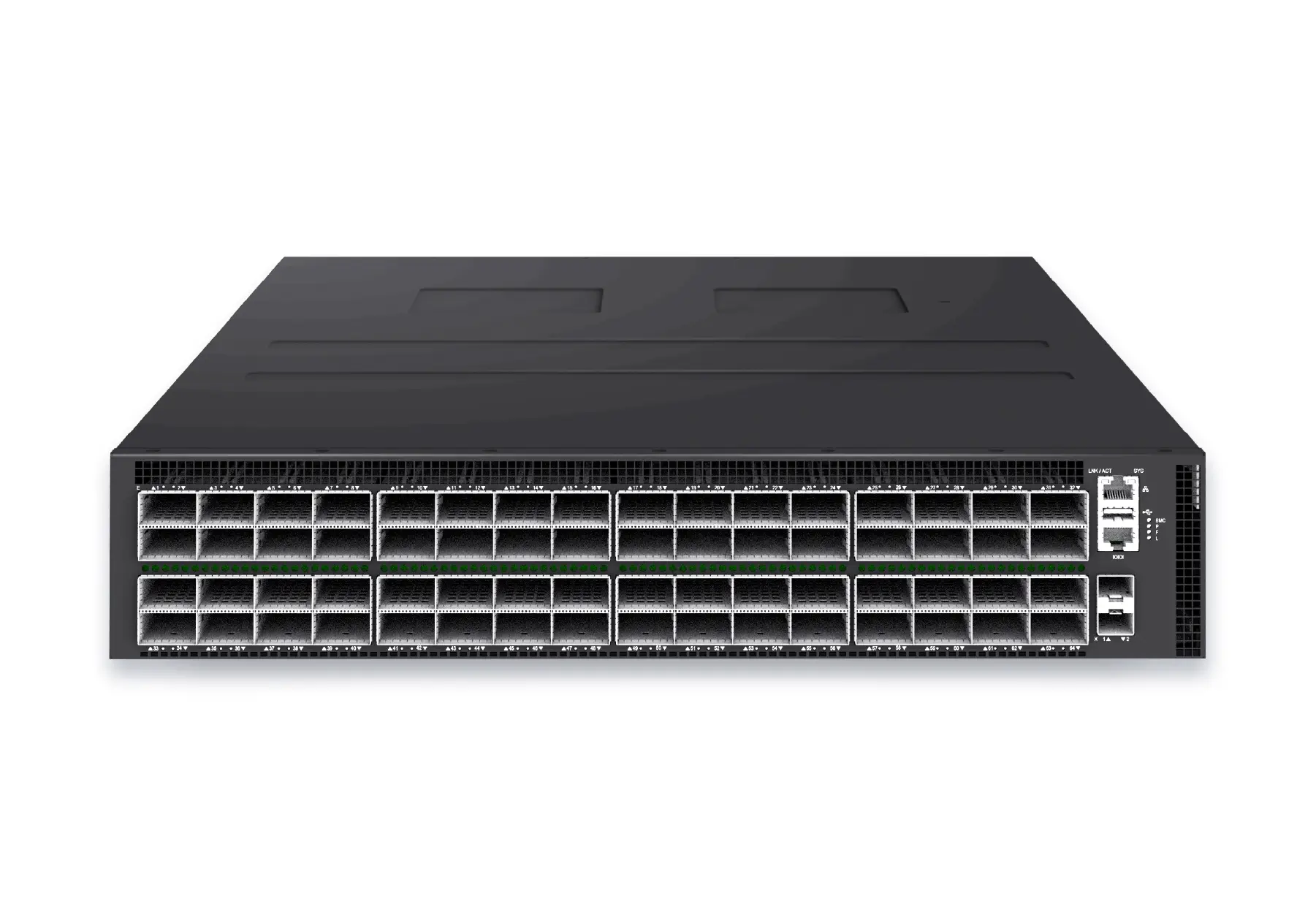 datacenter aiXS-DC-64X800-AI-G164-port 800G AI fabric switch for large-scale GPU clusters, HPC backbones, and ultra-high-throughput data center networks.View product
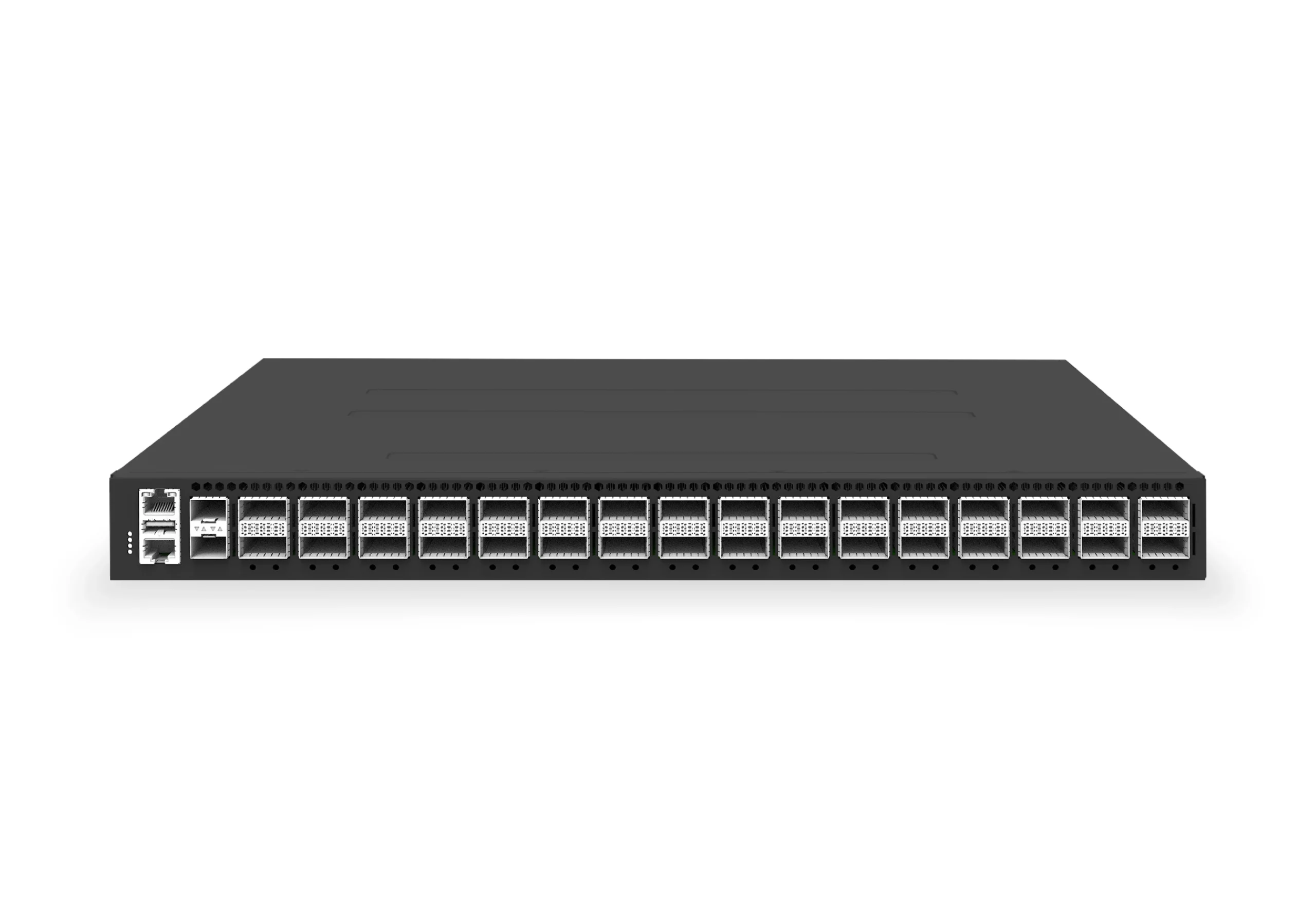 datacenter aiXS-DC-32X400-SP-G232-port 400G spine/core switch for high-capacity data center fabrics and AI-ready backbones.View product
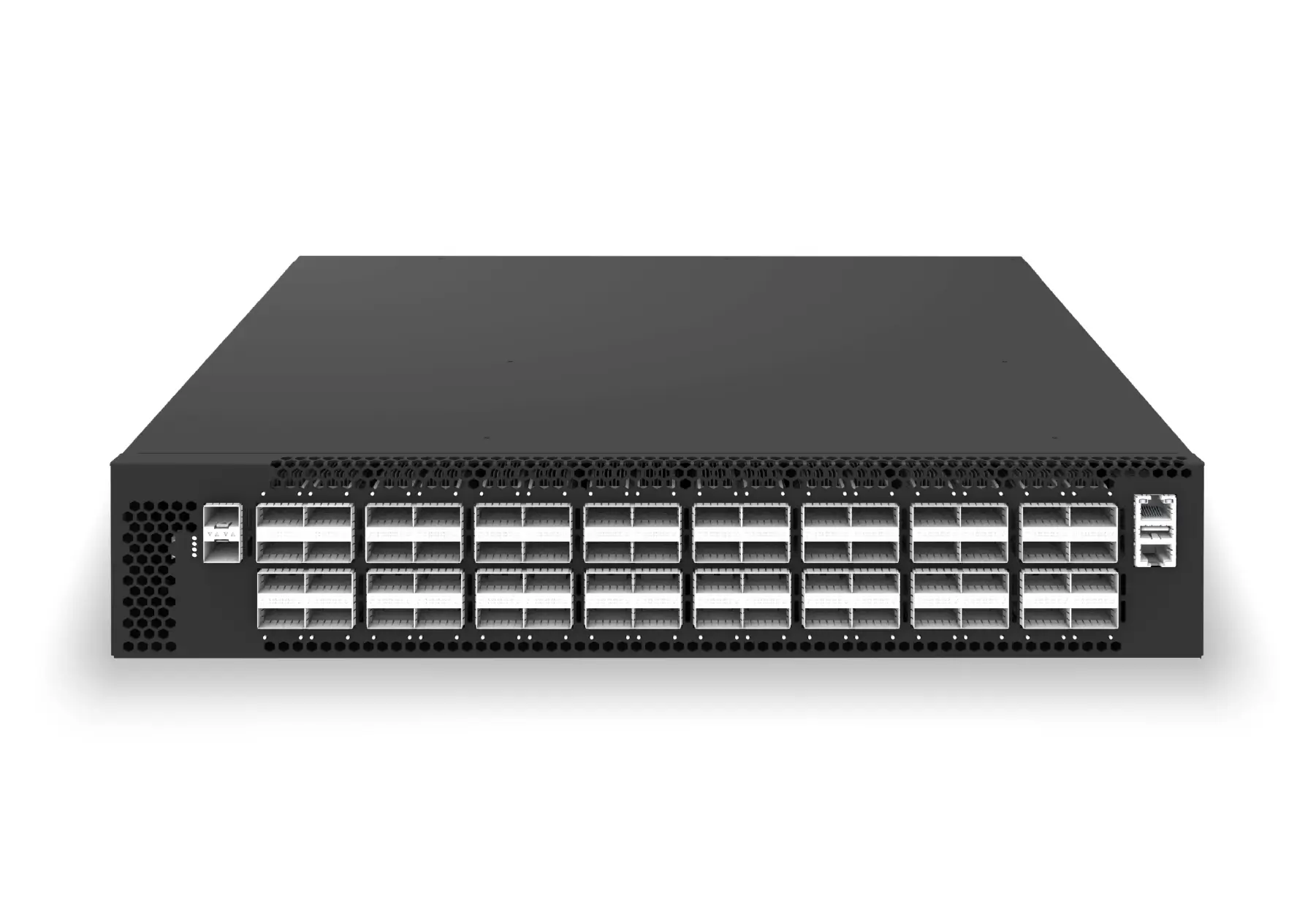 datacenter aiXS-DC-64X200-LS-G164-port 200G leaf/spine switch for high-bandwidth storage, compute, and scale-out data center fabrics.View product
Topic path
NVIDIA Spectrum hardware and SONiC software
This page focuses on:fabric implementation when a validated NVIDIA Spectrum platform and SONiC image have already been selected.
NVIDIA Spectrum names switch silicon and systems, SONiC is a network operating system that can run on validated hardware, and Spectrum-X is NVIDIA's integrated AI Ethernet platform. Treat those as separate procurement and validation decisions.
Continue reading
Related articles
 Technical ArticleOpen Networking Support for Enterprise Buyers: How SONiC and Open NOS Models Actually WorkEngineering guidance on Open Networking Support for Enterprise Buyers for Australian campus teams, covering PoE budgets, access-layer resilience, migration risk.Read article
 Technical ArticleFrom Proprietary Lock-In to Open Networking: A Practical Enterprise SONiC Migration PlaybookA practical Enterprise SONiC migration playbook for Australian buyers moving from proprietary switch OS to open networking.Read article
 Technical ArticleWhy Centralized AI Fabric Management Is the Missing Layer in Open NetworkingEngineering guidance on Centralized AI Fabric Management Is the Missing Layer in Open Networking for Australian network teams, covering underlay design, EVPN-VXLAN.Read article