
In brief
How Australian SONiC buyers should compare Broadcom and Marvell switch silicon by SAI maturity, optics, telemetry and support.
Key takeaways
- When an Australian enterprise or service provider decides to run SONiC (Software for Open Networking in the Cloud), the first hardware decision that shapes the deployment is the switching ASIC underneath the box.
- SONiC is an open-source network operating system hosted under the Linux Foundation that runs on switches from multiple vendors and ASICs, according to the SONiC Foundation.
- For Australian buyers evaluating open networking for data center, AI fabric, or campus deployments, the right comparison is not "Broadcom or Marvell is better." The right comparison is: which ASIC family has a validated SONiC image, a maintained SAI path, the port speeds your design needs, optics you can source locally, and a support model that can handle a production outage at 2 a.m.?
Why Switch Silicon Matters for SONiC Buyers in Australia
When an Australian enterprise or service provider decides to run SONiC (Software for Open Networking in the Cloud), the first hardware decision that shapes the deployment is the switching ASIC underneath the box. The ASIC determines the SAI implementation, buffer model, telemetry counters, port-speed roadmap, power envelope, and which features survive the move from lab image to production fabric.
SONiC is an open-source network operating system hosted under the Linux Foundation that runs on switches from multiple vendors and ASICs, according to the SONiC Foundation. Its core architectural promise is the decoupling of hardware and software through the Switch Abstraction Interface (SAI). In theory, this means buyers can choose their silicon and their NOS independently. In practice, the maturity, feature coverage, and community support of SAI implementations vary significantly between silicon families.
For Australian buyers evaluating open networking for data center, AI fabric, or campus deployments, the right comparison is not “Broadcom or Marvell is better.” The right comparison is: which ASIC family has a validated SONiC image, a maintained SAI path, the port speeds your design needs, optics you can source locally, and a support model that can handle a production outage at 2 a.m.?
What the SONiC Project Documentation Tells Us
The SONiC GitHub repository and Foundation site provide several important architectural facts that frame the silicon decision.
First, SONiC uses a container-based architecture where each network function runs in its own Docker container. This modular design provides fault isolation, easier debugging, simplified upgrades, and enhanced scalability, according to the project README on GitHub. This architecture means that silicon-dependent behaviour is largely abstracted through SAI, but the completeness of that abstraction depends on the SAI implementation for each ASIC.
Second, SONiC offers a full suite of network functionality including BGP and RDMA, production-hardened in the data centers of some of the largest cloud-service providers. The project documentation explicitly states that SONiC is built on SAI to help accelerate hardware innovation and that it is the first solution to break monolithic switch software into multiple containerized components.
Third, OCP hosts the SAI project as part of the networking group, which means the silicon comparison has to include both vendor SDK maturity and public SAI behavior. A switch can have excellent silicon and still be a poor SONiC candidate if the SAI coverage, platform drivers, optics handling, or telemetry exposure are incomplete.
What this means for buyers: SONiC’s architecture is genuinely silicon-agnostic at the design level, but silicon-agnostic does not mean silicon-equal in practice.
Broadcom Silicon: The Established SONiC Baseline
Broadcom is the most widely referenced switch silicon vendor in the SONiC ecosystem. The Broadcom Ethernet Switches page on broadcom.com lists their switching and switch fabric device portfolio, positioning them as a major silicon provider for data center networking.
Several source-backed observations can be made. Broadcom’s public switching portfolio confirms its position as a major Ethernet switching supplier, and many SONiC hardware lists and community discussions reference Broadcom-based data center platforms. For Australian buyers, the practical implication is that Broadcom-based SONiC switches often have the broadest third-party operational familiarity. The trade-off is commercial: platform pricing, optics policy, supply availability, and the support channel still vary by switch vendor.
Do not assume Broadcom automatically solves the project. Require evidence for the specific platform: SONiC release, SAI version, SDK version, optics support matrix, warm reboot behavior, PFC/ECN counters, telemetry export, and bug history for the feature set you plan to run.
Marvell Silicon: The Alternative Path and Its Trade-offs
Marvell’s current public switching portfolio spans enterprise, industrial, embedded, and data center-adjacent use cases. Its Prestera family is positioned for access, aggregation, embedded, and campus-class switching, with published capacities up to multi-terabit ranges and features such as telemetry, embedded processing, MACsec, and time synchronization depending on the series.
For SONiC buyers, the key question is not whether Marvell has capable switch silicon. It does. The question is whether the target platform, target SONiC distribution, and required features have been validated together. Marvell-based platforms may be attractive for campus, aggregation, industrial, or cost-sensitive deployments, but AI fabric use cases still require proof around RoCE, PFC, ECN, buffer behavior, optics, and telemetry at the exact scale of the intended deployment.
The practical risk is ecosystem depth. A silicon choice is not just about the chip; it is about SAI maintenance, platform-driver quality, validated switch availability, local spares, optics qualification, and how quickly a production issue can be reproduced by the supplier.
Decision Framework: What Australian Buyers Should Evaluate
Rather than declaring a winner between Broadcom and Marvell for SONiC, this analysis proposes a buyer decision framework based on the architectural facts documented by the SONiC project.
SAI Feature Parity Check. Before committing to a silicon family, verify which SONiC features you actually need (BGP, RDMA, EVPN-VXLAN, telemetry, PoE, warm reboot, ACLs, PFC, ECN, INT, etc.) and confirm that the SAI implementation for your target silicon supports them. The public SONiC and OCP resources are starting points; lab validation is the acceptance gate.
Community and Contributor Depth. Evaluate how actively SAI patches and fixes are contributed for your target silicon. GitHub commit history and SONiC community meeting notes can provide signals. A silicon family with more active SAI maintenance is more likely to receive timely support for new SONiC releases.
Platform Availability in Australia. A technically strong silicon choice is meaningless if you cannot source the hardware. Check with Australian distributors and resellers for stock, lead times, and warranty support for your preferred silicon platform.
Total Cost of Ownership. Silicon cost is one component. Factor in optics compatibility, power consumption, cooling requirements, warranty terms, and the cost of engineering time for platform-specific troubleshooting.
Future-Proofing. Consider the silicon vendor’s public roadmap for port speeds (100G, 400G, 800G), feature development, and SAI commitment. Align this with your network growth plans over 3-5 years.
Acceptance Test Requirement. Demand a short but concrete platform evidence pack: SONiC image version, ASIC/SDK version, supported optics list, SAI feature matrix, known defects, power draw under loaded optics, PFC/ECN validation results, telemetry counter examples, and RMA path in Australia. Without this, the comparison remains vendor positioning rather than engineering evidence.
| Silicon decision area | Evidence to request | Rework trigger |
|---|---|---|
| SAI maturity | ASIC SDK version, SAI version, SONiC image and supported feature matrix | Supplier cannot map required features to the exact silicon and image |
| AI fabric capability | RoCE v2, PFC, ECN, DCBX, buffer and telemetry proof at 100G, 400G or 800G | Claims rely on generic SONiC support rather than silicon-specific validation |
| Optics and power | Qualified optics list, thermal behaviour and loaded power draw | Design assumes optics compatibility without testing the target transceiver class |
| Lifecycle and support | Known defects, upgrade cadence, RMA path and Australian escalation ownership | Buyer cannot identify who owns an ASIC, SAI, optics or NOS fault |
This framework applies regardless of whether you are building a data center AI fabric, an enterprise campus network, or a service provider aggregation layer with SONiC.
xSONiC Buyer Angle: Open Networking Starts with Informed Silicon Choices
xSONiC positions itself in the open networking infrastructure space, offering data center AI switches, access and aggregation switches, bare-metal switching hardware, and supporting infrastructure across optical transceivers, packet brokers, and AI systems. The silicon decision is foundational to every product in this portfolio.
For Australian buyers evaluating xSONiC data center or campus platforms, the Broadcom-versus-Marvell question is not abstract. It affects which SONiC features are production-ready on your hardware, how quickly you can deploy new capabilities like RoCE v2, EVPN-VXLAN, or INT telemetry, and whether your platform will be supported through future SONiC releases.
xSONiC’s approach to bare-metal and open switching hardware means buyers have the flexibility to choose their silicon. But flexibility without information is risk. This analysis recommends that Australian buyers treat the silicon decision as a first-order architectural choice, not an afterthought, and that they demand silicon-specific SAI maturity data from their hardware suppliers before committing to a platform.
Engineering FAQ
Is Broadcom or Marvell automatically better for SONiC? No. The answer depends on the switch SKU, ASIC/SDK version, SAI maturity, optics policy, telemetry exposure, support path and the features the buyer actually needs.
What proof matters more than a silicon roadmap? A tested bill of materials: switch model, SONiC image, ASIC/SAI version, optics, PFC/ECN behaviour, telemetry counters, power draw and known caveats. Roadmap claims do not operate a 400G fabric.
How should Australian buyers reduce silicon-selection risk? Run a proof of concept with the intended 100G, 400G or 800G optics and the exact SONiC image, then require support ownership for ASIC, SAI, optics and NOS defects before purchase.
Related xSONiC Resources
Sources Reviewed
- Ethernet Network Adapters - ConnectX NICs | NVIDIA
- NVIDIA BlueField Data Processing Unit
- NVIDIA Spectrum-X Ethernet Platform
- ACSC Essential Eight
- OAIC Notifiable Data Breaches
- APRA CPS 234 Information Security
- NETSCOUT Network Packet Definition
- Cloudflare Network Packet Definition
- IEEE 802.11be Wireless LAN Standard
- IEEE 802.3bt Power over Ethernet
- SONiC Project Documentation
- Broadcom Ethernet Switching
- Marvell Switching
- NVIDIA Ethernet Switching
- Open Compute Networking
- SONiC GitHub
- SONiC Foundation
- Supports: SONiC’s Debian, Docker-container, Redis, and SAI architecture.
- Supports: syncd, ASIC_DB, SAI API, and ASIC SDK interaction model.
- Supports: SAI as an OCP networking sub-project for open, disaggregated switching.
- Supports: Broadcom’s public Ethernet switching portfolio context.
- Supports: Marvell Prestera and Link Street switching portfolio, bandwidth ranges, telemetry, security, and access/aggregation positioning.
Product fit
Products referenced for evaluation
These products are referenced for evaluation context in the article. Confirm workload, port, optics, software, interoperability, and support requirements against the exact deployment before procurement.
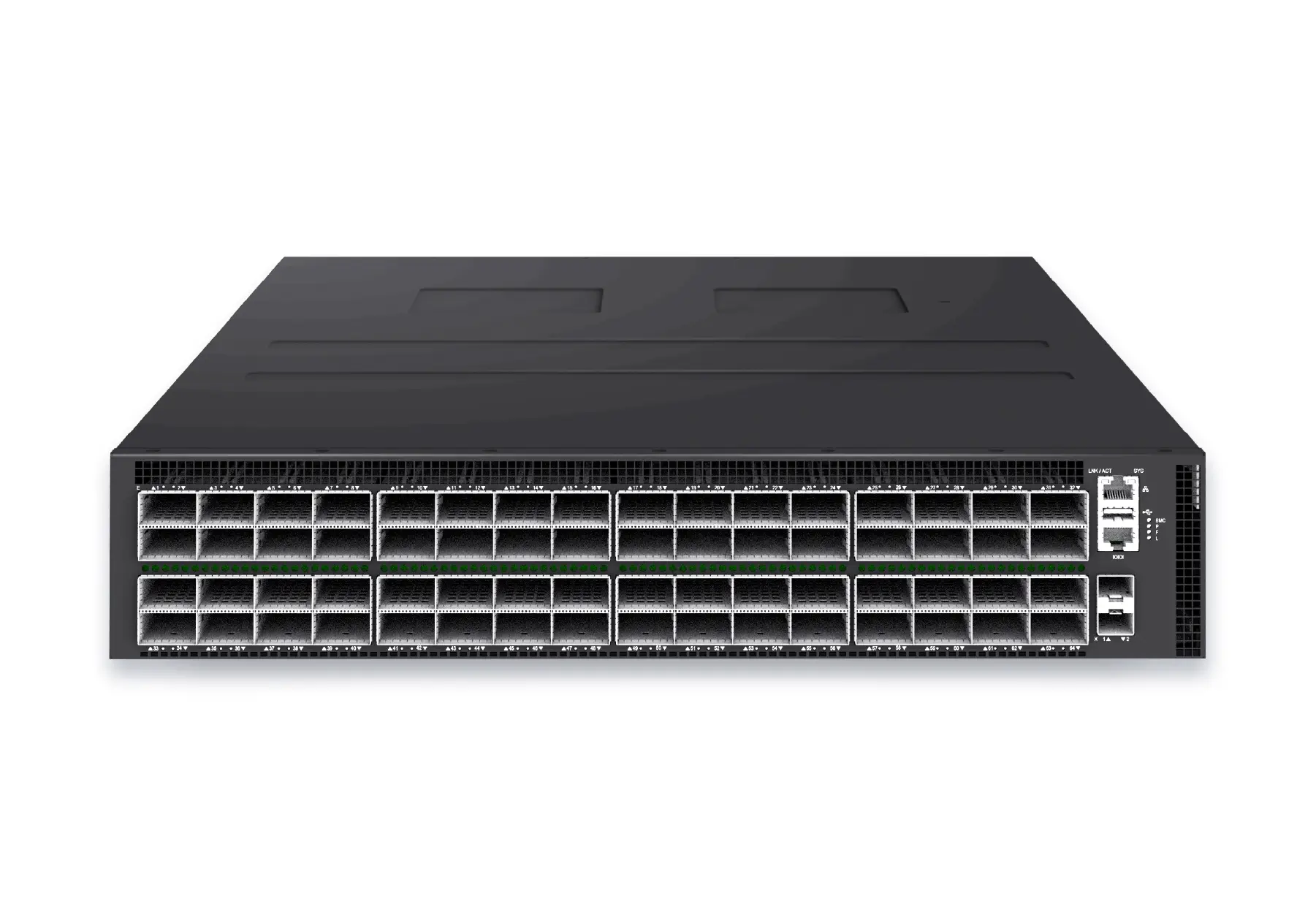 datacenter aiXS-DC-64X800-AI-G164-port 800G AI fabric switch for large-scale GPU clusters, HPC backbones, and ultra-high-throughput data center networks.View product
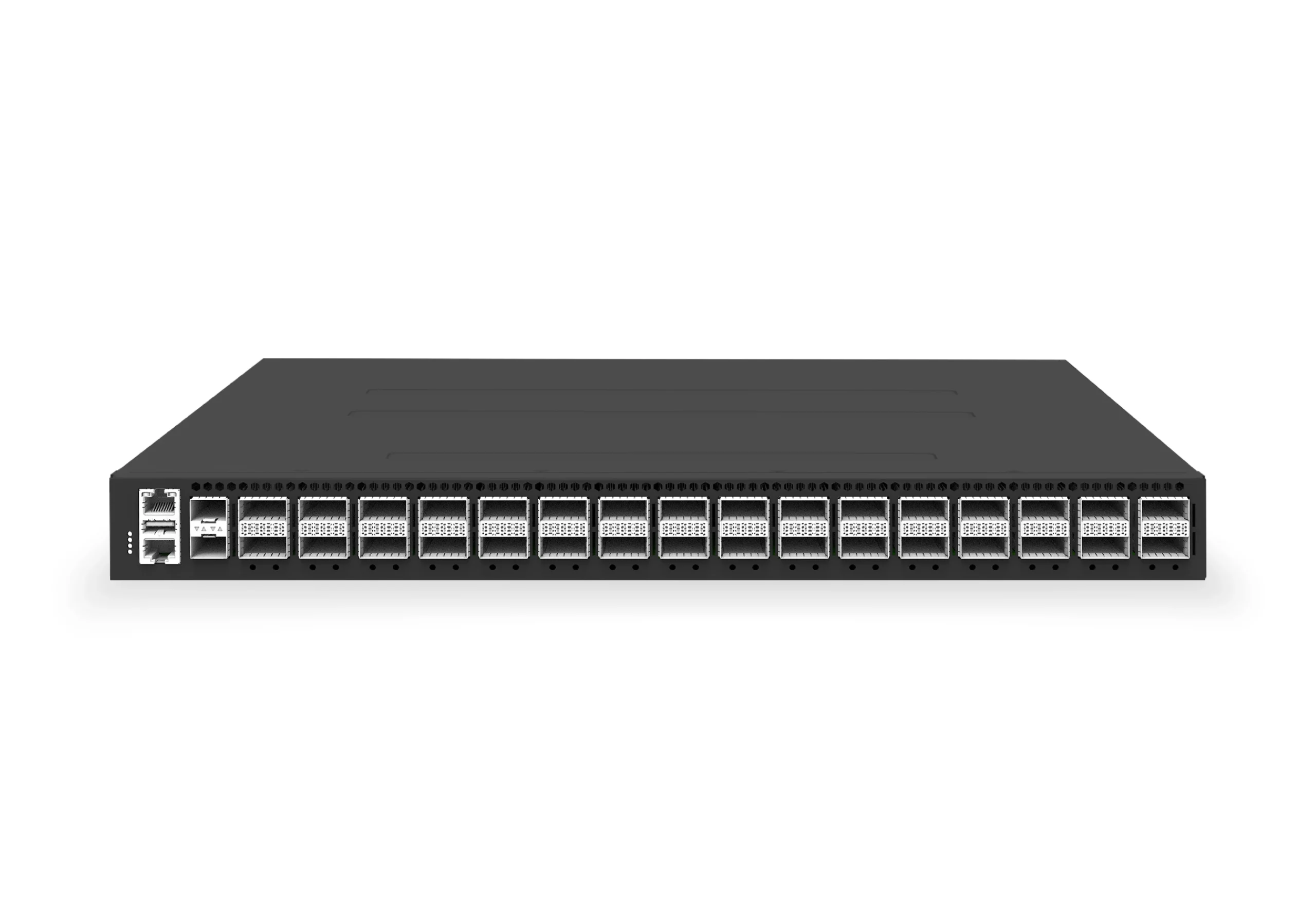 datacenter aiXS-DC-32X400-SP-G232-port 400G spine/core switch for high-capacity data center fabrics and AI-ready backbones.View product
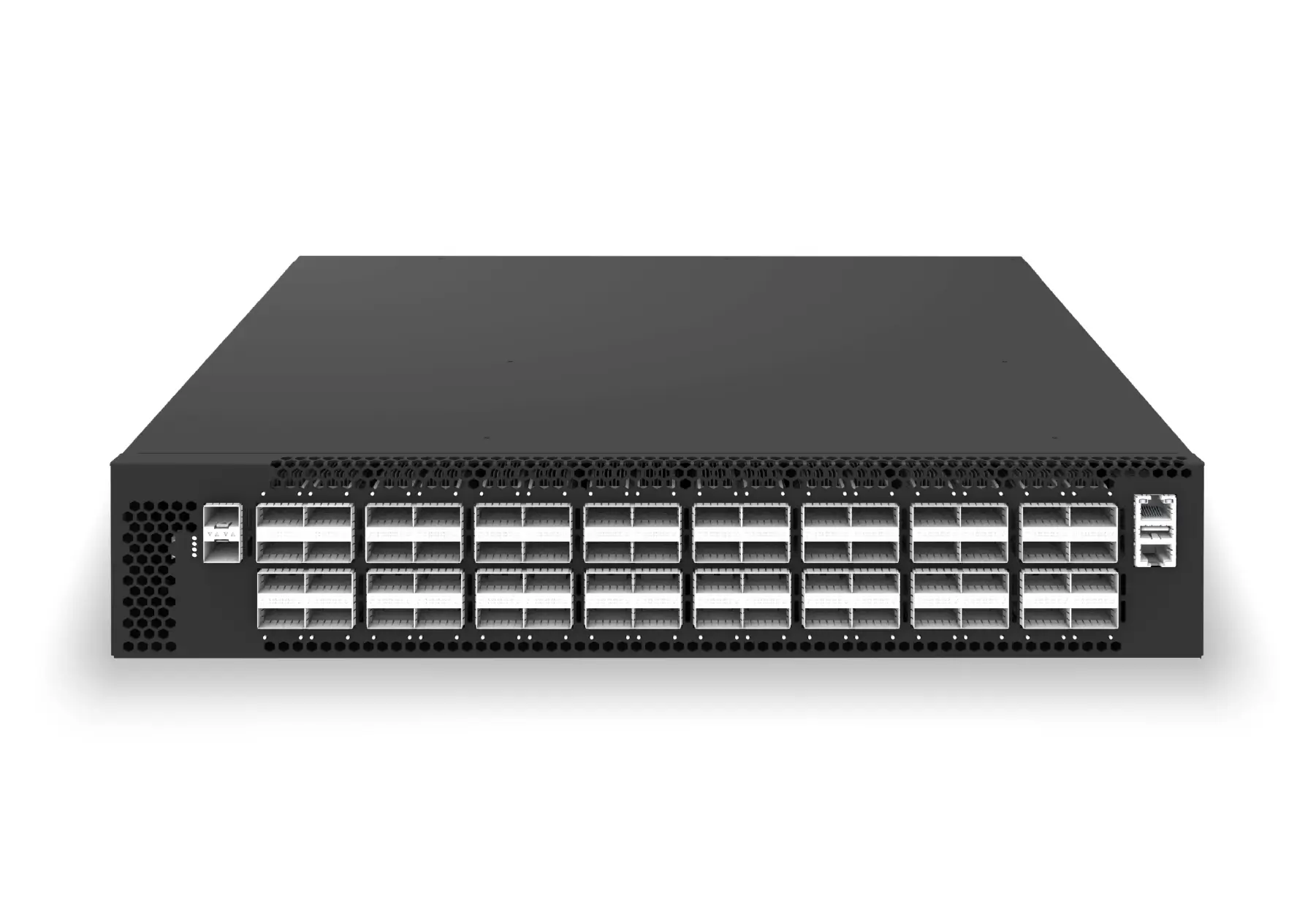 datacenter aiXS-DC-64X200-LS-G164-port 200G leaf/spine switch for high-bandwidth storage, compute, and scale-out data center fabrics.View product
Continue reading
Related articles
 Technical ArticleWhat AI Fabric Ethernet Switching Requires: A Buyer Guide for SONiC-Based Data CentersEngineering guidance on AI Fabric Ethernet Switching Requires for Australian network and security teams, covering traffic visibility, capacity modelling, tool feeds.Read article
 Technical ArticleProprietary Switch OS Lock-in vs Enterprise SONiC: An Australian Buyer Migration AnalysisMigration analysis for Australian buyers comparing proprietary switch OS lock-in with Enterprise SONiC pilot, support, automation, and TCO evidence.Read article
 Technical ArticleWhite Box Switch vs Traditional Switch: What Enterprise Buyers in Australia Need to KnowEngineering comparison of white-box and traditional switches for Australian enterprise buyers, covering SONiC, support, optics, risk, and TCO.Read article