In brief
Engineering guide for SONiC and open networking buyers covering platform fit, automation, support, telemetry, and validation evidence.
Key takeaways
- Vendor lock-in in data center switching shows up as delayed refresh cycles, restricted optics choices, proprietary automation, and weak negotiating leverage at renewal time.
- When your NOS, hardware, support contract, and management plane all come from the same supplier, switching costs become enormous.
- For CIOs and network architects in Australia, where data center capacity is expanding rapidly to support AI workloads, cloud adjacency, and sovereign data requirements, lock-in is not just a cost issue.
Why lock-in remains the quiet tax on data center networking
Vendor lock-in in data center switching shows up as delayed refresh cycles, restricted optics choices, proprietary automation, and weak negotiating leverage at renewal time. The engineering problem is not “single vendor bad”; the engineering problem is that the NOS, ASIC, optics policy, telemetry model, and support path become inseparable when the network should be evaluated layer by layer.
When your NOS, hardware, support contract, and management plane all come from the same supplier, switching costs become enormous. You cannot price-compare hardware across vendors. You cannot adopt new silicon without waiting for your incumbent to ship a compatible platform. You cannot negotiate from a position of strength because your entire fabric is anchored to one bill of materials.
For CIOs and network architects in Australia, where data center capacity is expanding rapidly to support AI workloads, cloud adjacency, and sovereign data requirements, lock-in is not just a cost issue. It is a speed-to-deploy issue and a long-term flexibility risk.
This article breaks down how lock-in forms, what it costs, and how open networking strategies based on SONiC, SAI, and validated multi-vendor hardware can change the equation without pretending that open networking removes the need for engineering discipline.
How vendor lock-in forms in the data center
Lock-in is not a single decision. It compounds across layers:
- Network Operating System (NOS): Proprietary NOS ties your configuration, automation, and troubleshooting workflows to one vendor’s software lifecycle.
- Switching ASICs: When your NOS only runs on one silicon family, you lose the ability to evaluate alternative chipsets that may offer better price-performance for specific workloads.
- Management and telemetry: Vendor-specific management platforms create operational dependency. Migrating to another switch vendor means retraining your NOC and rewriting automation.
- Support contracts: Multi-year support agreements bundled with hardware reduce your future negotiating leverage.
- Transceiver and optics compatibility: Some vendors restrict supported optics to their own branded SKUs, adding a recurring markup on every link in your fabric.
Each layer independently seems manageable. Together, they create a compounding switching cost that can exceed the original hardware investment.
The open networking alternative
Open networking decouples the NOS from the hardware. The key enabling technology is the Switch Abstraction Interface (SAI), which provides a standardized API between the network operating system and the switching ASIC. This means a single NOS can run on hardware from multiple vendors, as long as that hardware implements the SAI specification.
SONiC (Software for Open Networking in the Cloud) is the most prominent open-source NOS built on this model. Originally developed for hyperscale cloud data centers, SONiC is now a Linux Foundation project with a growing ecosystem of hardware vendors, chip suppliers, and enterprise adopters.
The important nuance: SAI gives SONiC a vendor-independent hardware abstraction model, but the ASIC SDK and platform implementation still matter. A buyer should never treat “runs SONiC” as a sufficient acceptance criterion. The acceptance criterion is that the required features, optics, telemetry counters, reboot behavior, and failure responses work on the exact switch model and software release selected for production.
Key characteristics that matter for lock-in reduction:
- Multi-vendor hardware support: SONiC runs on switches from multiple hardware vendors and multiple ASIC families, so you can source hardware competitively.
- Container-based architecture: SONiC decomposes network functions into Docker containers, enabling independent upgrades and reducing the blast radius of changes.
- Standard Linux tooling: SONiC uses standard Linux interfaces and tools, meaning your operations team can apply existing Linux skills rather than learning a proprietary CLI.
- Production-hardened: SONiC has been production-hardened in the data centers of some of the largest cloud service providers, giving it a maturity baseline that newer open-source NOS projects lack.
- Open-source license: SONiC is licensed under the Apache License 2.0, allowing enterprise use, modification, and distribution without restrictive vendor agreements.
A practical lock-in reduction framework
Reducing lock-in does not mean ripping out your entire network overnight. Here is a phased approach that CIOs and network architects can adapt:
Phase 1: Audit your current dependency map
Before changing anything, understand where lock-in exists today.
| Dependency Layer | Questions to Answer |
|---|---|
| NOS | Is your NOS proprietary? Can it run on hardware from other vendors? |
| Hardware | How many switch vendors are in your current fleet? Could you add a second? |
| Management | Does your management plane work across vendors, or is it tied to one? |
| Optics | Are you restricted to vendor-branded transceivers? What is the markup? |
| Support | What is your support renewal cycle? What are the early-termination costs? |
Phase 2: Define an open networking target state
Establish a target architecture where:
- The NOS is hardware-agnostic (SONiC or equivalent).
- Hardware procurement is vendor-competitive across at least two suppliers.
- Management and telemetry use open standards such as gNMI, OpenConfig, and NETCONF/YANG rather than vendor-proprietary APIs.
- Optics are sourced from compatible third-party suppliers at market pricing.
Phase 3: Pilot on a non-critical fabric
Start with a leaf-spine fabric that serves a specific workload, such as a development environment, an AI training cluster, or a secondary storage network. Deploy SONiC on bare-metal switches from two different hardware vendors. Validate:
- BGP and EVPN-VXLAN fabric convergence.
- RDMA and RoCE v2 performance for storage or AI backend traffic.
- Telemetry export to your existing monitoring stack.
- Day-2 operational workflows: firmware updates, config backups, rollback.
- Optics compatibility, DOM visibility, and link flap behavior under the exact cabling plan.
- Warm reboot, cold reboot, power loss, and image rollback procedures.
Phase 4: Expand with confidence
Once the pilot validates operational parity, expand SONiC-based open networking to production fabrics. Use the pilot data to negotiate better hardware pricing from your incumbent and new suppliers.
What to evaluate in bare-metal and open switches
If you are moving toward open networking, your hardware evaluation criteria change. Instead of asking “which vendor’s switch should I buy”, you ask:
- ASIC compatibility: Does the switch support the SAI version required by your target NOS? Which ASIC families does it use?
- Form factor and port density: Does the platform offer the 25GbE, 100GbE, 400GbE, or 800GbE port configurations your fabric requires?
- Power and cooling: Does the platform fit within your existing rack power budget?
- ONIE support: Does the switch ship with ONIE (Open Network Install Environment) for automated NOS installation?
- Vendor ecosystem: Is the hardware vendor an active participant in the SONiC community or OCP networking projects?
The Australian data center context
Australia’s data center market is expanding driven by AI workload demand, sovereign data requirements, and cloud region growth. For network architects planning new builds or refresh cycles in this market, open networking offers specific advantages:
- Procurement flexibility: Multi-vendor hardware sourcing reduces dependency on single-vendor supply chains, which matters when global logistics create lead time variability.
- AI fabric readiness: SONiC supports BGP and RDMA, both essential for GPU backend fabrics running RoCE v2 traffic. Planning an AI cluster fabric on SONiC from day one avoids retrofitting later.
- Skills portability: SONiC’s Linux foundation means Australian network engineers with Linux and automation skills can contribute to fabric operations without deep vendor-specific training.
Common objections and honest answers
“Isn’t open networking only for hyperscalers?” No. SONiC started in cloud-scale environments, but the architecture is now relevant to enterprise and service-provider buyers because the same forces apply at smaller scale: faster port speeds, AI traffic, optics cost, automation pressure, and multi-vendor procurement. The caveat is that enterprises need stronger support contracts and cleaner runbooks than hyperscalers, because they usually have smaller network engineering teams.
“Will I lose my vendor TAC support?” If you move to bare-metal hardware with a community SONiC image, you trade vendor TAC for community and self-support. If you use a commercially supported SONiC distribution, you get TAC-equivalent support from the distribution provider. The key is to match your support model to your operational maturity.
“What about feature parity with my current NOS?” SONiC supports a broad and growing feature set including BGP, OSPF, EVPN-VXLAN, MPLS, QoS, ACLs, RDMA, and telemetry. However, not every feature available in a proprietary NOS has a SONiC equivalent. Evaluate your required feature set against the SONiC capabilities list and the specific SAI implementation on your target hardware.
“How do I prove the lock-in reduction is real?” Measure it. The proof is not a slide that says “open.” The proof is a second qualified hardware source, optics policy freedom, configuration exportability, documented rollback, telemetry that flows to your tools, and a support path that does not require replacing the whole stack when one layer changes.
A CIO checklist for lock-in reduction
- Complete a dependency audit across NOS, hardware, management, optics, and support layers.
- Define a target open networking architecture with SONiC or equivalent hardware-agnostic NOS.
- Identify a pilot fabric (non-production or AI training) for initial deployment.
- Shortlist bare-metal switch hardware from at least two vendors with SAI compatibility.
- Evaluate SONiC feature coverage against your required protocol and feature set.
- Validate operational workflows: provisioning, telemetry, troubleshooting, firmware updates.
- Negotiate hardware procurement with competitive tension across multiple suppliers.
- Plan optics sourcing from compatible third-party suppliers.
- Confirm local support, RMA, and spares availability for your target market.
- Build a phased migration roadmap from proprietary to open networking.
The bottom line
Lock-in is not a technology problem. It is a procurement and strategic flexibility problem. Open networking with SONiC and bare-metal hardware gives CIOs and network architects a credible path to reduce single-vendor dependency without sacrificing production-grade reliability.
The organizations that audit their lock-in exposure today and pilot open networking alternatives will be the ones negotiating from a position of strength tomorrow.
Engineering Evidence Floor
For SONiC and open networking articles, the acceptance standard is operational proof, not community momentum. The evidence package should name the switch SKU, ASIC, SAI version, ONIE status, SONiC image, optics matrix, automation interface, support path, and rollback procedure. A practical pilot should run for 30 days, include 3 automated configuration changes, validate 100G/400G links where relevant, and prove that a P1 evidence bundle can be assembled within 2 hours.
| Evidence area | What to validate | Acceptance gate | Rework trigger |
|---|---|---|---|
| Platform | SKU, ASIC, ONIE, SAI, image, and optics | 2 platforms boot, upgrade, and rollback | Hardware support is assumed |
| Automation | Source of truth, API/gNMI/NETCONF, backup, and diff | 3 changes pass state readback | CLI drift becomes normal |
| Operations | Logs, telemetry, failure runbook, and escalation owner | P1 bundle ready within 2 hours | Fault isolation depends on one engineer |
| Lifecycle | Patch cadence, CVE process, spare plan, and support SLA | 12 months plan approved | Security and RMA ownership is unclear |
| Commercial | Hardware, support, optics, training, and migration labour | Risk-adjusted TCO is documented | Savings vanish after rework |
Engineering FAQ
What should be checked before ordering 400G or 800G optics? Check port form factor, lane speed, reach, fibre type, breakout plan, DOM telemetry, firmware compatibility, thermal budget, and the switch vendor optics support matrix. The same speed can behave differently across QSFP-DD, OSFP, DAC, AOC, and fibre modules.
Why is optics validation part of a SONiC deployment? SONiC exposes the NOS layer, but optics behaviour still depends on the switch platform, transceiver EEPROM data, firmware, thermal design, and operational tooling. Buyers should test the exact module and cable combination before volume rollout.
What should be included in an optics procurement record? Record SKU, reach, connector, fibre type, temperature class, supported breakout modes, switch platform, SONiC image, DOM fields, link test result, and spare strategy. That record becomes the reference for future replacements.
Related xSONiC Resources
Sources Reviewed
- Ethernet Network Adapters - ConnectX NICs | NVIDIA
- NVIDIA BlueField Data Processing Unit
- NVIDIA Spectrum-X Ethernet Platform
- OpenConfig gNMI Specification
- OpenConfig
- RFC 7950 - The YANG 1.1 Data Modeling Language
- RFC 6241 - Network Configuration Protocol (NETCONF)
- SONiC Project Documentation
- Broadcom Ethernet Switching
- Marvell Switching
- NVIDIA Ethernet Switching
- Open Compute Networking
- SONiC GitHub
- SONiC Foundation
- Supports: SONiC project positioning, community resources, and Linux Foundation context.
- Supports: SONiC container architecture, Redis state model, and SAI hardware abstraction.
- Supports: syncd, ASIC_DB, SAI API, and hardware-vendor SDK relationship.
- Supports: SAI as an open networking sub-project under OCP Networking.
- Supports: disaggregated and open networking context for hardware/software separation.
Product fit
Products referenced for evaluation
These products are referenced for evaluation context in the article. Confirm workload, port, optics, software, interoperability, and support requirements against the exact deployment before procurement.
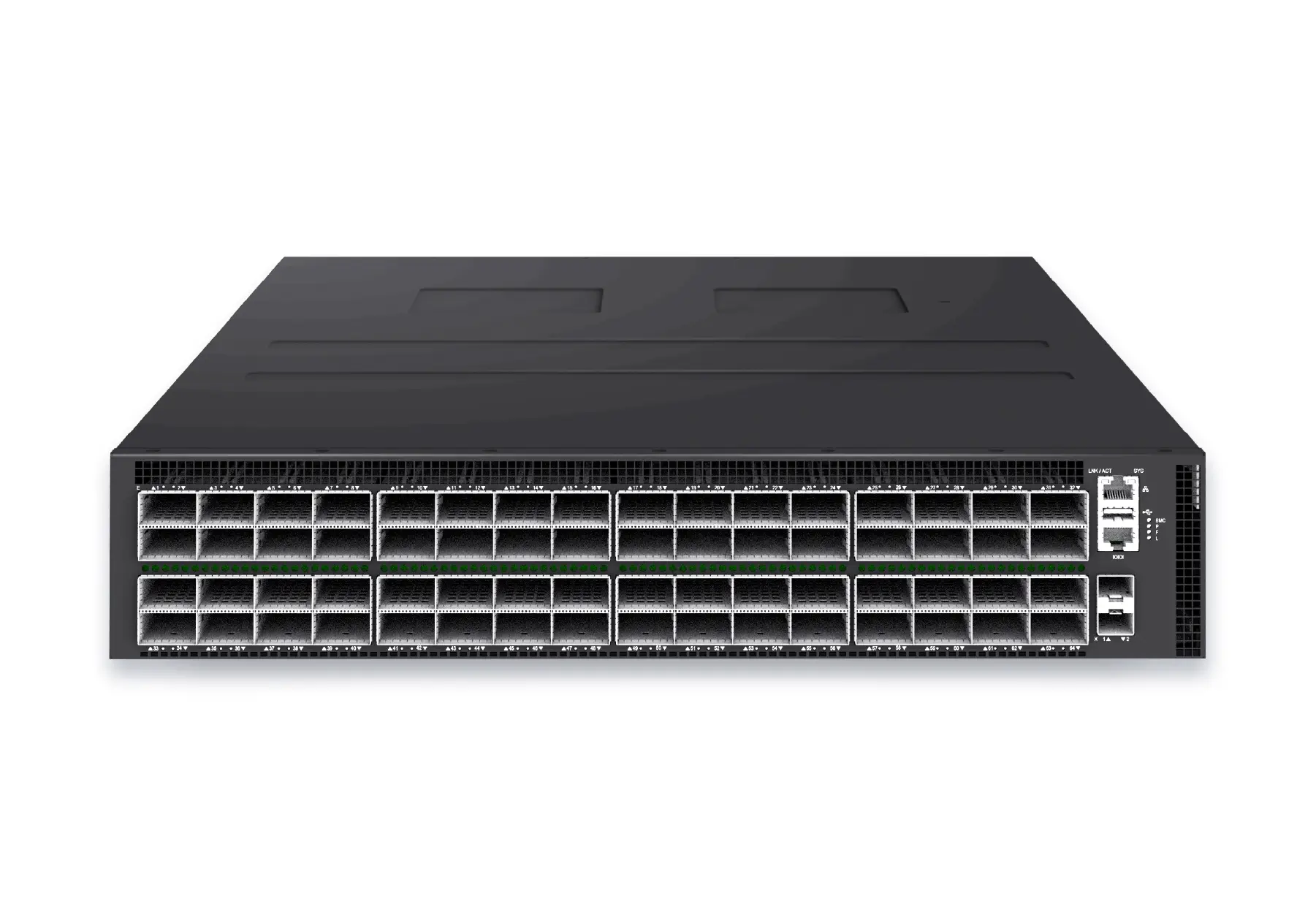 datacenter aiXS-DC-64X800-AI-G164-port 800G AI fabric switch for large-scale GPU clusters, HPC backbones, and ultra-high-throughput data center networks.View product
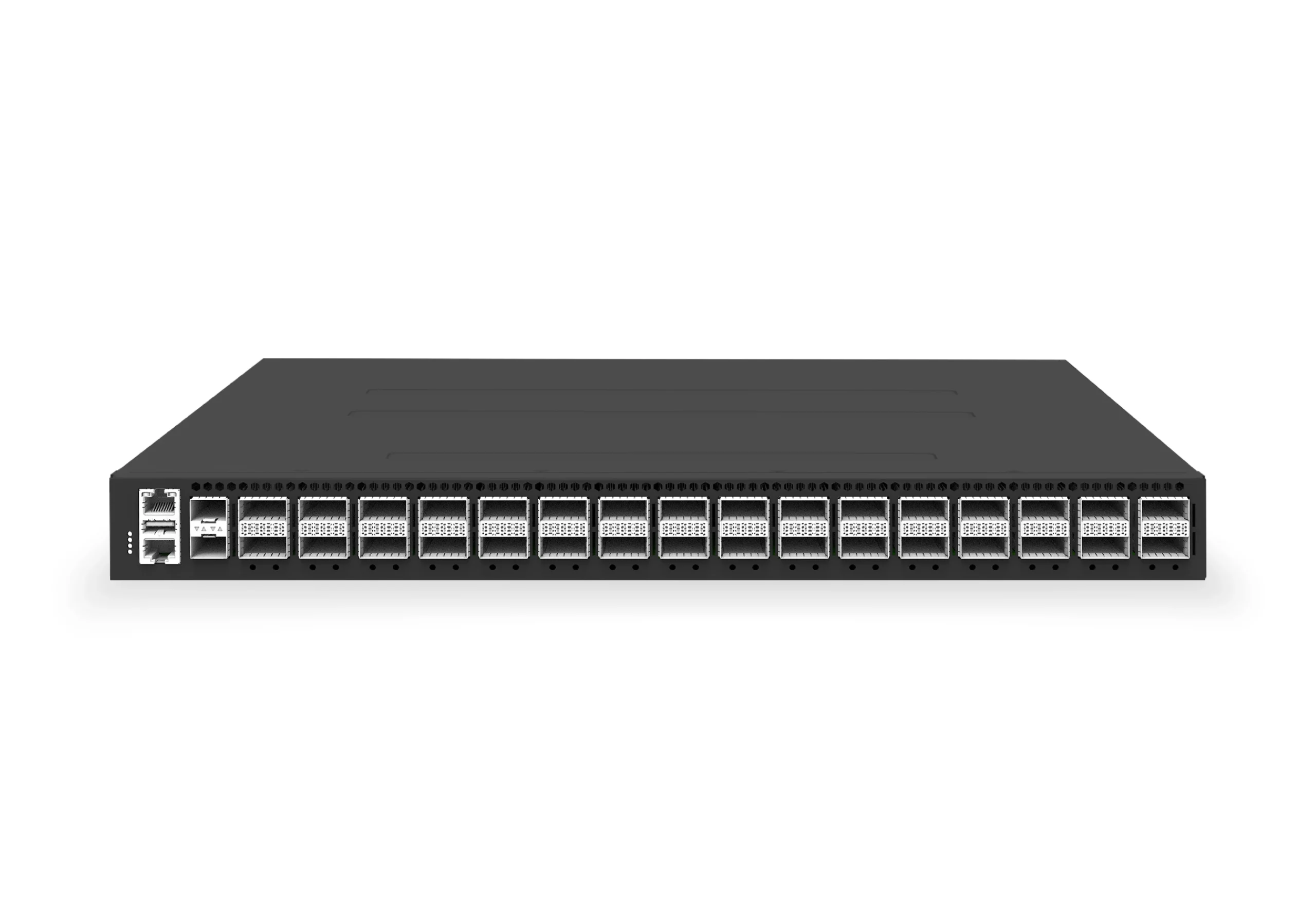 datacenter aiXS-DC-32X400-SP-G232-port 400G spine/core switch for high-capacity data center fabrics and AI-ready backbones.View product
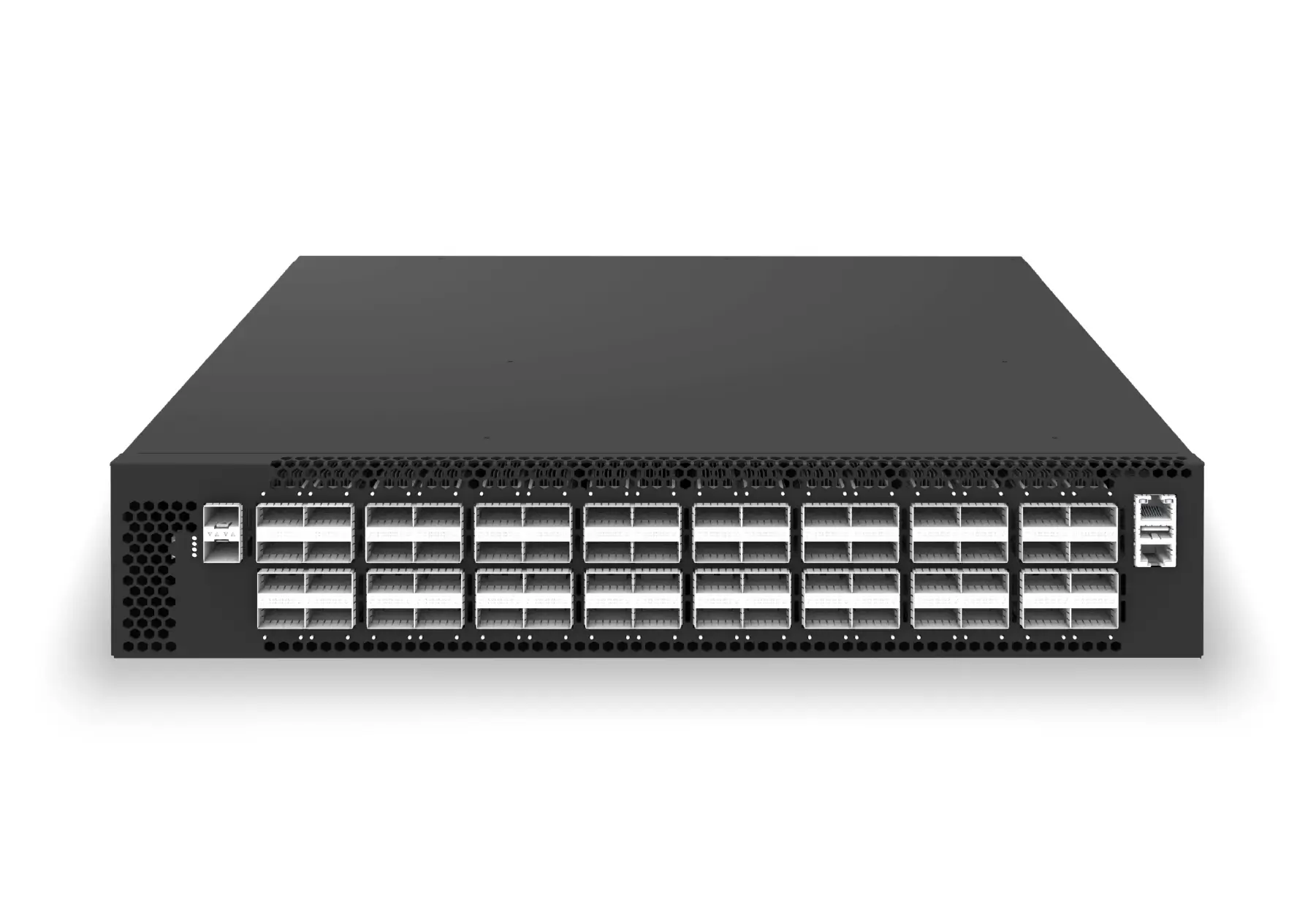 datacenter aiXS-DC-64X200-LS-G164-port 200G leaf/spine switch for high-bandwidth storage, compute, and scale-out data center fabrics.View product
Continue reading
Related articles
 Technical ArticleHow SONiC-Powered 400G and 800G Switches Change AI Data Center Fabric Design in AustraliaEngineering guide for 400G and 800G optics planning covering form factor, reach, telemetry, thermal limits, supply risk, and validation.Read article
 Technical ArticleRoCE v2 GPU Backend Fabrics at 400G and 800G: What Australian Data Center Operators Need to Know in 2026Engineering guide for AI fabric buyers covering RoCE, SONiC, telemetry, optics, support ownership, and deployment validation.Read article
 Technical ArticleWhat Australian Data Center Buyers Need to Know Before Choosing SONiC Switches for 400G and 800G UpgradesEngineering guide for 400G and 800G optics planning covering form factor, reach, telemetry, thermal limits, supply risk, and validation.Read article