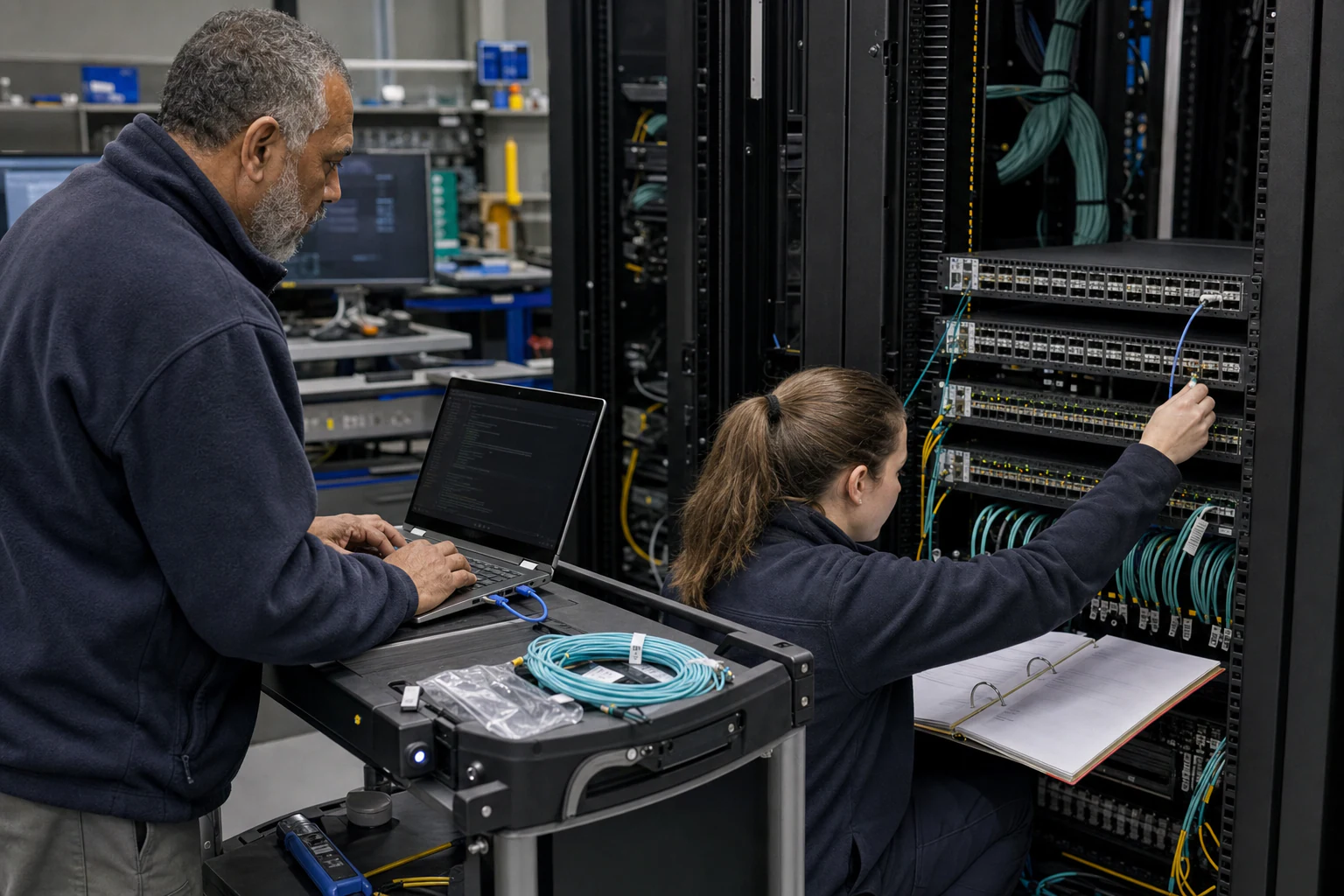
In brief
Engineering guidance on Australian CIO Infrastructure Teams Need an Operations Runbook for Open Networking and AI Data Center Adoption for Australian data centre.
Key takeaways
- Australia's data center market is entering a structural shift. Colocation operators like Macquarie Data Centres are designing facilities for megawatt-per-rack AI workloads, liquid cooling, and sovereign compliance requirements that did not exist in the cloud-only era.
- For CIO infrastructure teams in Australian enterprises, colocation tenants, and managed service providers, this shift raises a practical question: how do you operate open networking infrastructure at AI scale when your operational runbooks were written for proprietary switch stacks from a single vendor?
- SONiC (Software for Open Networking in the Cloud) is now production-hardened in some of the world's largest cloud data centers, according to the SONiC Foundation and the project's GitHub repository.
What Happened: Australia’s AI Data Center Build-Out Demands a New Operations Playbook
Australia’s data center market is entering a structural shift. Colocation operators like Macquarie Data Centres are designing facilities for megawatt-per-rack AI workloads, liquid cooling, and sovereign compliance requirements that did not exist in the cloud-only era. In a January 2026 OCP Podcast interview, Macquarie CEO David Hirst described how AI workloads changed data center design from a ‘real estate’ model to a ‘chip-out thinking’ model, where the GPU cluster dictates rack density, cooling, power, and network architecture rather than the other way around.
For CIO infrastructure teams in Australian enterprises, colocation tenants, and managed service providers, this shift raises a practical question: how do you operate open networking infrastructure at AI scale when your operational runbooks were written for proprietary switch stacks from a single vendor?
SONiC (Software for Open Networking in the Cloud) is now production-hardened in some of the world’s largest cloud data centers, according to the SONiC Foundation and the project’s GitHub repository. It offers container-based architecture, multi-vendor ASIC support, and full BGP and RDMA functionality. The Open Compute Project lists SONiC alongside ONIE and SAI as foundational networking sub-projects for disaggregated infrastructure.
But adoption in Australian enterprise programs lags behind hyperscaler maturity. The operational gap is not the technology itself. It is the lack of a structured operations runbook that maps SONiC lifecycle management, fabric provisioning, telemetry, and incident response to the way Australian CIO teams actually run their infrastructure programs.
Why It Matters: Operations Management Discipline Is the Bottleneck, Not the Hardware
Operations management, as defined in industry literature, is the process of planning, organizing, and revising business practices to achieve maximum efficiency and profitability. It balances costs with revenue by optimizing the use of staffing, materials, equipment, and technology. Operations managers coordinate across departments, manage supply chains, and maintain quality standards through structured processes.
Applied to data center networking, these principles translate directly. An Australian CIO team evaluating open networking needs to answer the same questions an operations manager answers in manufacturing: What is the supply chain for network hardware and optics? How do we maintain quality across a multi-vendor fabric? What is the inventory model for spares, transceivers, and cabling? How do we forecast demand for bandwidth and port density?
The ten key functions of operations management listed by industry analysts map to data center networking operations in ways that proprietary vendors have historically abstracted away:
- Finance and accounting: Total cost of ownership for a disaggregated fabric versus a bundled vendor stack
- Supply chain management: Sourcing bare-metal switches, optical transceivers, and NVMe storage from multiple vendors
- Production management: Automating fabric provisioning through NETCONF/YANG and SONiC configuration templates
- Inventory management: Tracking optics, DAC cables, and spare switch inventory across sites
- Quality management: Validating firmware, NOS images, and configuration drift across the fabric
- Business forecasting: Capacity planning for 400G and 800G spine-leaf upgrades driven by AI training clusters
- Strategic planning: Aligning open networking adoption with sovereign compliance and multi-cloud strategies
- Business process management: Incident response, change management, and rollback procedures for SONiC-based fabrics
- Product design: Selecting switch SKUs, ASIC platforms, and form factors for campus, aggregation, and data center tiers
- Human resource management: SONiC skills acquisition and training for network engineering teams
The critical insight is that switching from proprietary to open networking does not eliminate these operational functions. It redistributes them. The vendor no longer owns the integration. The CIO team does.
xSONiC Buyer Angle: What a SONiC Operations Runbook Should Cover for Australian Programs
For Australian enterprises and colocation tenants evaluating SONiC-based infrastructure, the operations runbook is not optional. It is the prerequisite for executive approval, risk sign-off, and team readiness. A practical runbook should cover six operational domains:
1. Fabric Provisioning and Configuration Management SONiC uses JSON-based configuration and supports programmatic configuration through NETCONF/YANG. The runbook should define golden configurations for spine-leaf topologies, EVPN-VXLAN overlay templates, and RoCE v2 QoS profiles for GPU backend fabrics. Configuration drift detection and automated remediation should be baseline, not advanced.
2. Multi-Vendor Hardware Lifecycle Open networking means sourcing bare-metal switches, optical transceivers (SFP28, QSFP28, QSFP-DD, OSFP), and cabling from multiple suppliers. The runbook needs a vendor qualification checklist, spares inventory model, and firmware compatibility matrix. For Australian programs, this includes import logistics, warranty handling, and local support escalation paths.
3. Telemetry and Observability SONiC supports streaming telemetry through gNMI and INT (In-band Network Telemetry) for fabric-level visibility. Packet brokers provide traffic aggregation, filtering, and replication for security tool delivery. The runbook should define telemetry collection architecture, alert thresholds, and integration with existing NOC/SOC tools.
4. Incident Response and Escalation When a spine switch fails at 2 AM in a Sydney or Melbourne data center, the response model matters. The runbook should define severity levels, escalation paths, vendor-agnostic troubleshooting procedures, and rollback steps for SONiC image or configuration issues. This is where the operational model diverges most from a single-vendor support contract.
5. Compliance and Sovereignty Australian data sovereignty requirements, as highlighted in the Macquarie Data Centres OCP discussion, affect where network management planes run, how telemetry data is stored, and which firmware sources are trusted. The runbook should document compliance controls for the network layer, not just the compute and storage layers.
6. Skills and Training SONiC is Linux-based and uses standard Linux interfaces and tools. This lowers the barrier for teams with Linux and container experience, but it still requires structured training for network engineers accustomed to vendor CLIs. The runbook should include a skills assessment, training plan, and lab environment specifications.
xSONiC’s AIDC Controller solution is designed to address several of these operational domains by providing a centralized management and orchestration overlay for SONiC-based fabrics. For Australian programs, this can shorten the time from pilot to production by abstracting day-2 operations complexity without reintroducing vendor lock-in. See AIDC Controller for details.
The Australian Market Context: Sovereign Requirements Shape the Operations Model
The Australian market is structurally different from North American or European data center environments in ways that directly affect operations runbook design.
Power and cooling constraints. David Hirst noted in his January 2026 OCP Podcast interview that AI workloads behave differently from cloud workloads. They are bursty, unpredictable, and demand megawatt-per-rack power densities with liquid cooling. Australian cities face power supply constraints and community density challenges that make data center site selection and power provisioning more complex than in hyperscaler-dominated US markets.
Sovereign compliance. Australian government and critical infrastructure customers require data sovereignty controls that affect network management plane design. The operations runbook must document how SONiC management interfaces, telemetry data, and firmware update sources comply with Australian Signals Directorate (ASD) Essential Eight and related frameworks.
Colocation and hybrid models. Unlike hyperscaler environments where the operator controls the full stack, Australian enterprise programs often deploy open networking in colocation facilities where the operator owns power and cooling but the tenant owns the network fabric. This split-ownership model requires clear operational handoff procedures documented in the runbook.
Supply chain geography. Optical transceivers, bare-metal switches, and NVMe SSDs sourced for Australian programs face import lead times, customs processing, and warranty return logistics that differ from US or APAC hub markets. The runbook should include a supply chain risk assessment specific to the Australian procurement context.
These factors mean that a generic SONiC operations guide copied from a US hyperscaler playbook will not work. Australian CIO teams need a localized runbook that accounts for sovereign, supply chain, and colocation realities.
Competitor Gap: Why Proprietary Vendor Runbooks Do Not Transfer
Incumbent networking vendors provide detailed operational documentation for their proprietary platforms. But that documentation assumes a single-vendor hardware and software stack with vendor-managed firmware updates, vendor-specific CLI commands, and vendor-controlled support escalation.
In a disaggregated SONiC environment, the operational model changes in at least four ways:
- Firmware and NOS updates are decoupled from hardware. The CIO team manages SONiC image selection, testing, and rollout independently of switch hardware warranty.
- Troubleshooting uses Linux-standard tools and SONiC CLI rather than vendor-proprietary debug commands. This requires different skill profiles.
- Multi-vendor interop means testing optics, cables, and ASIC compatibility across suppliers rather than relying on a single vendor’s compatibility matrix.
- Support escalation may involve the SONiC community, the bare-metal hardware vendor, the ASIC vendor, and the optics supplier rather than a single TAC number.
For Australian CIO teams, the question is not whether open networking works. SONiC is production-hardened at hyperscaler scale. The question is whether the team has an operational runbook that covers the redistributed operational responsibilities. If the answer is no, the pilot will stall at day-2 operations and the business case will not survive executive review.
What Australian CIO Teams Should Do Next: A Practical Checklist
For CIO infrastructure teams evaluating open networking and AI infrastructure in Australian data center programs, the following operational readiness checklist applies:
- Assess current operational maturity. Map existing network operations procedures against the six operational domains listed above. Identify gaps.
- Draft a SONiC operations runbook. Start with fabric provisioning, configuration management, and incident response. Do not wait for the full stack to be deployed.
- Build a multi-vendor hardware lifecycle process. Define vendor qualification criteria, spares inventory levels, and firmware compatibility testing procedures for bare-metal switches, optical transceivers, and cabling.
- Select a fabric management overlay. Evaluate controllers and orchestration platforms that abstract SONiC day-2 operations complexity. xSONiC’s AIDC Controller is one option designed for this purpose.
- Invest in telemetry architecture. Define how streaming telemetry, INT, and packet broker data flows into NOC and SOC tools before the first spine switch is racked.
- Plan for sovereign compliance early. Document network-layer compliance controls for ASD Essential Eight, data sovereignty, and colocation tenant obligations before procurement.
- Scope training for Linux-native network operations. SONiC is Linux-based. Network engineers need hands-on lab time with SONiC CLI, configuration files, and container architecture before production support rotations.
- Engage the SONiC community. The SONiC Foundation, OCP working groups, and GitHub issue trackers are active operational resources. Build community engagement into the runbook as a support channel.
xSONiC product families cover the hardware layers for this operational model: Data Center AI Switches for spine-leaf fabrics, Data Center AI Switches for custom NOS evaluation, Optical Transceivers for 100G/400G/800G links, and Network Packet Brokers for visibility and security tool delivery. The operational runbook is what connects these hardware components to a production-ready Australian deployment.
The Bottom Line for Australian Infrastructure Decision-Makers
Australia’s data center and AI infrastructure boom is real, sovereign, and accelerating. SONiC and open networking are credible production options backed by hyperscaler validation and a growing open-source community. But the operational model for disaggregated networking is fundamentally different from the proprietary vendor model, and Australian CIO teams cannot afford to discover that difference during an incident.
The operations runbook is not a nice-to-have document. It is the risk management instrument that lets the CIO sign off on open networking adoption with confidence. It is the training plan that prevents the team from reverting to vendor support contracts when something breaks. It is the procurement framework that makes multi-vendor sourcing workable in an Australian supply chain context.
For CIO infrastructure teams ready to move from evaluation to execution, the runbook comes first. The hardware comes second. xSONiC is positioned to support both, but the operational discipline belongs to the team that runs the fabric.
Engineering Evidence Floor
For this topic, treat the article as buyer-ready only when the fabric claim is tied to measurable acceptance data. The baseline evidence package should include the selected switch SKU, SONiC image, ASIC/SAI version, NIC firmware, optics list, RoCE policy, telemetry counters, support owner, and rollback method. In a small pilot, capture at least 30 minutes of traffic at the intended 100G/400G/800G speed, one link failure, one switch reboot, one optics fault, and one support handoff. That evidence separates a credible AI fabric plan from a bandwidth brochure.
| Evidence area | What to validate | Acceptance gate | Rework trigger |
|---|---|---|---|
| Transport | PFC, ECN, DCBX, MTU, queue mapping, and CNP counters | 30 minutes load test at 100G/400G/800G | RoCE is asserted but not measured |
| Platform | Switch SKU, ASIC, SAI, SONiC image, and optics list | 2 switch roles pass upgrade and rollback | Generic compatibility is used as proof |
| Failure | Link loss, switch reboot, route convergence, and workload impact | 3 failure cases captured with timestamps | Steady-state throughput is the only evidence |
| Telemetry | Queue depth, drops, optics DOM, gNMI, and packet visibility | Operators explain a slowdown within 15 minutes | GPU and network teams use different data |
| Support | APAC escalation, RMA, spares, and patch lifecycle | 12 months operating plan approved | Ownership splits across vendors |
Engineering FAQ
What should be checked before ordering 400G or 800G optics? Check port form factor, lane speed, reach, fibre type, breakout plan, DOM telemetry, firmware compatibility, thermal budget, and the switch vendor optics support matrix. The same speed can behave differently across QSFP-DD, OSFP, DAC, AOC, and fibre modules.
Why is optics validation part of a SONiC deployment? SONiC exposes the NOS layer, but optics behaviour still depends on the switch platform, transceiver EEPROM data, firmware, thermal design, and operational tooling. Buyers should test the exact module and cable combination before volume rollout.
What should be included in an optics procurement record? Record SKU, reach, connector, fibre type, temperature class, supported breakout modes, switch platform, SONiC image, DOM fields, link test result, and spare strategy. That record becomes the reference for future replacements.
Related xSONiC Resources
Sources Reviewed
- Ethernet Network Adapters - ConnectX NICs | NVIDIA
- NVIDIA BlueField Data Processing Unit
- NVIDIA Spectrum-X Ethernet Platform
- OpenConfig gNMI Specification
- OpenConfig
- RFC 7950 - The YANG 1.1 Data Modeling Language
- RFC 6241 - Network Configuration Protocol (NETCONF)
- ACSC Essential Eight
- OAIC Notifiable Data Breaches
- APRA CPS 234 Information Security
- NETSCOUT Network Packet Definition
- Cloudflare Network Packet Definition
- SONiC Project Documentation
- Broadcom Ethernet Switching
- Marvell Switching
- NVIDIA Ethernet Switching
- Open Compute Networking
- SONiC GitHub
- SONiC Foundation
Product fit
Products referenced for evaluation
These products are referenced for evaluation context in the article. Confirm workload, port, optics, software, interoperability, and support requirements against the exact deployment before procurement.
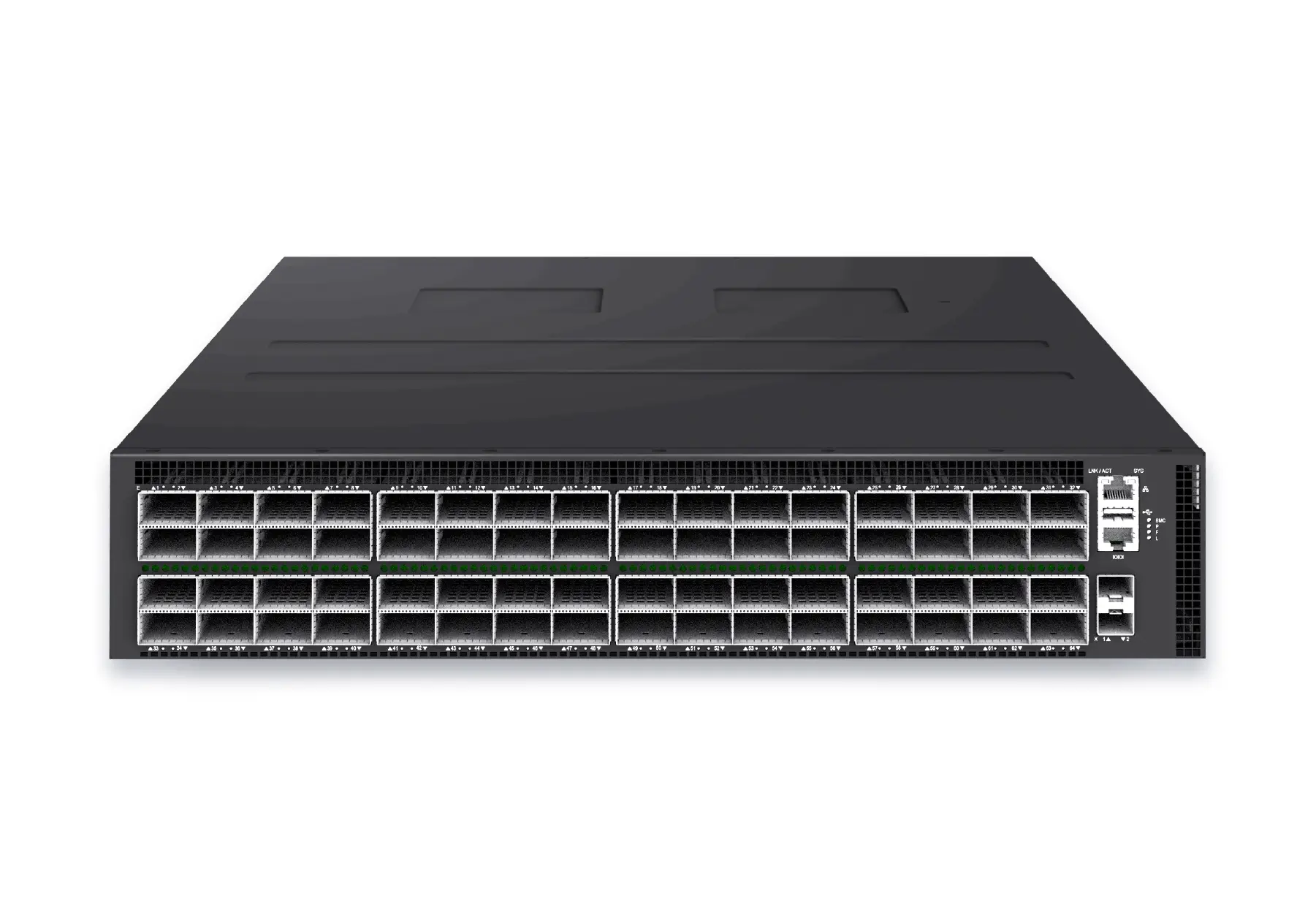 datacenter aiXS-DC-64X800-AI-G164-port 800G AI fabric switch for large-scale GPU clusters, HPC backbones, and ultra-high-throughput data center networks.View product
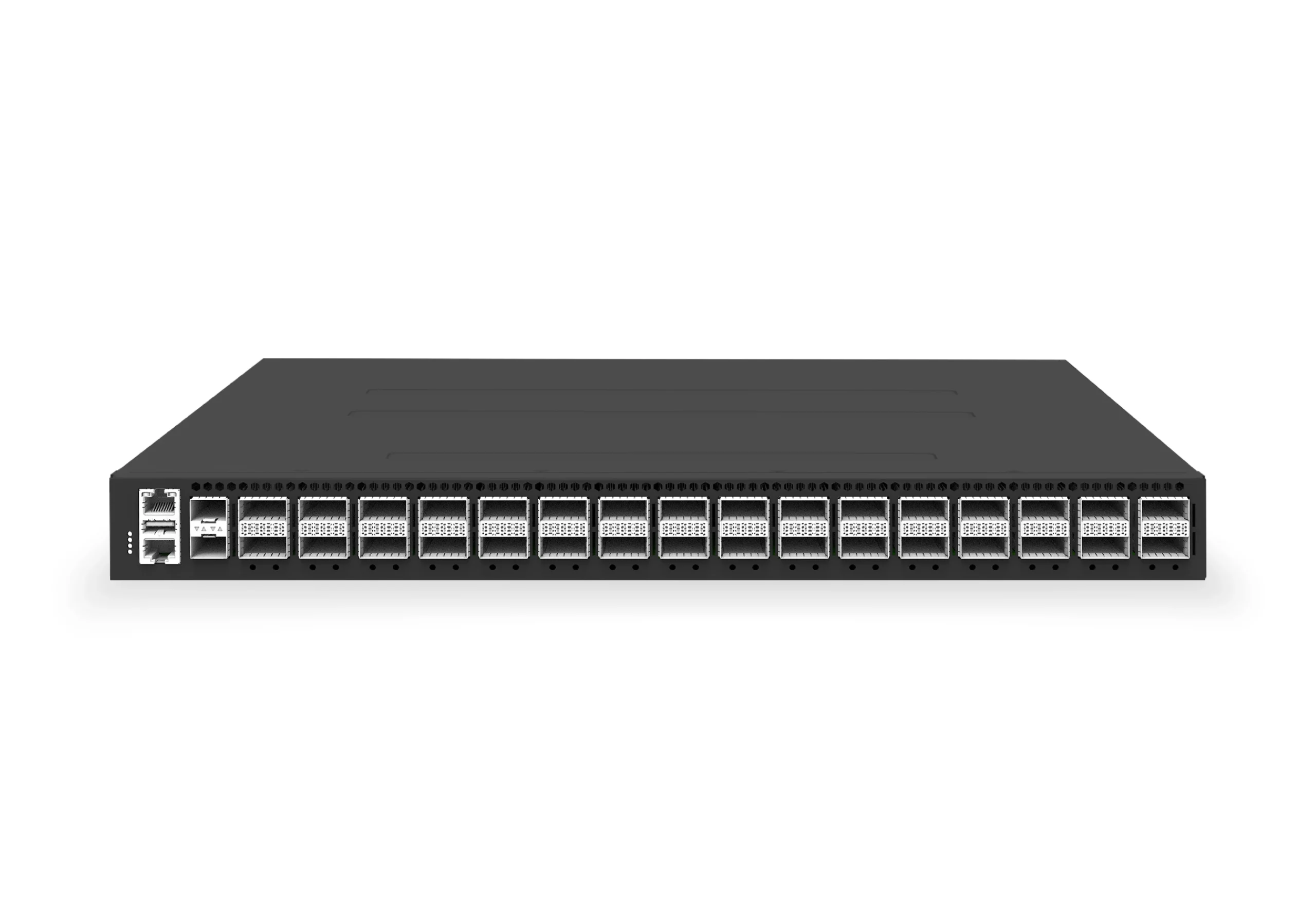 datacenter aiXS-DC-32X400-SP-G232-port 400G spine/core switch for high-capacity data center fabrics and AI-ready backbones.View product
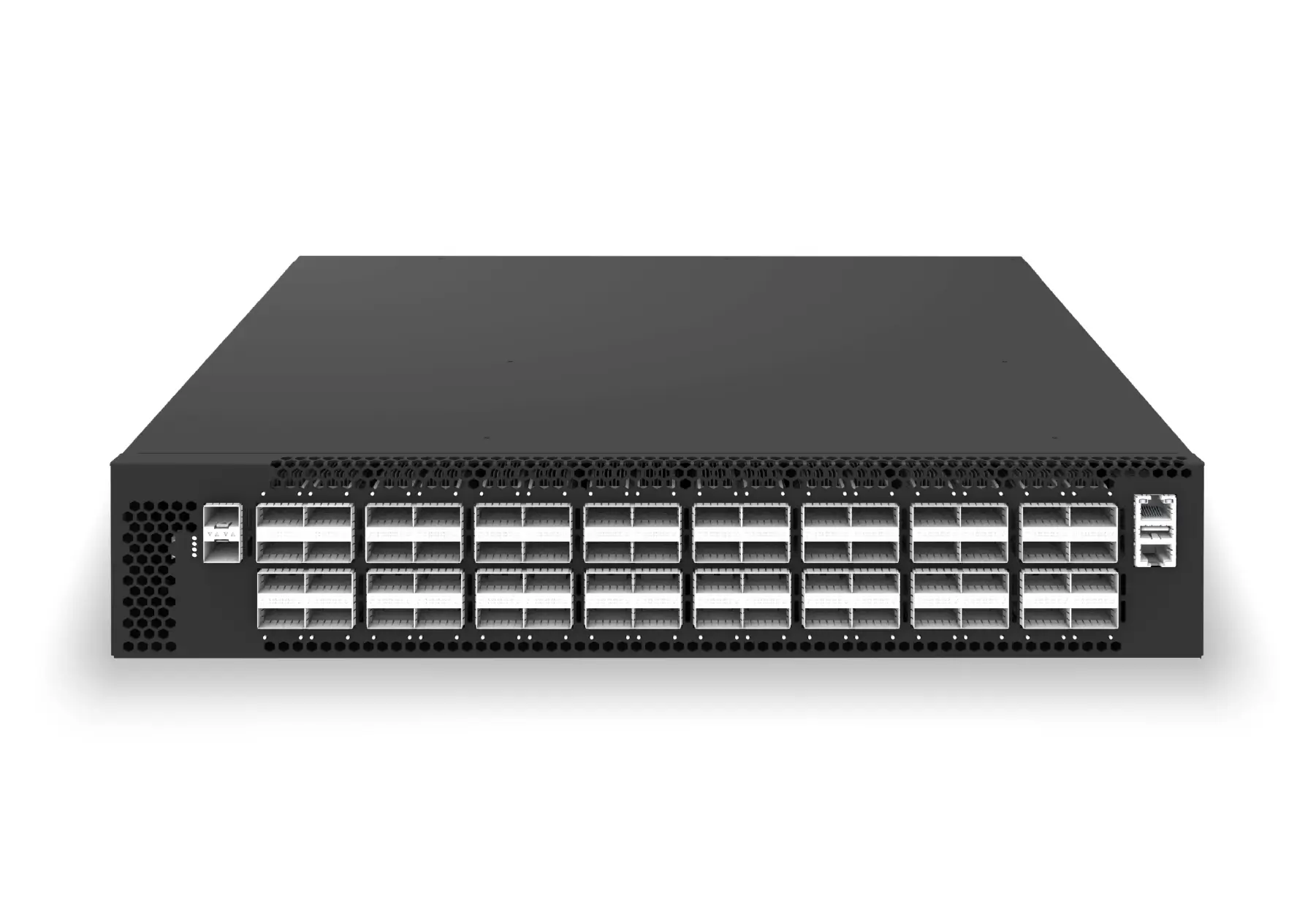 datacenter aiXS-DC-64X200-LS-G164-port 200G leaf/spine switch for high-bandwidth storage, compute, and scale-out data center fabrics.View product
Continue reading
Related articles
 Technical ArticleOpen Networking Support for Enterprise Buyers: How SONiC and Open NOS Models Actually WorkEngineering guidance on Open Networking Support for Enterprise Buyers for Australian campus teams, covering PoE budgets, access-layer resilience, migration risk.Read article
 Technical ArticleFrom Proprietary Lock-In to Open Networking: A Practical Enterprise SONiC Migration PlaybookA practical Enterprise SONiC migration playbook for Australian buyers moving from proprietary switch OS to open networking.Read article
 Technical ArticleWhy Centralized AI Fabric Management Is the Missing Layer in Open NetworkingEngineering guidance on Centralized AI Fabric Management Is the Missing Layer in Open Networking for Australian network teams, covering underlay design, EVPN-VXLAN.Read article