In brief
An engineering view of why Australia's AI data center buildout creates a SONiC open networking opportunity across 400G/800G fabrics, sovereignty, operations, and support.
Key takeaways
- Australia's data center market is accelerating. A January 2026 Open Compute Project podcast episode featured David Hirst, CEO of Macquarie Data Centres, describing a fundamental shift in how Australian facilities are designed and operated.
- Key points Hirst raised during the OCP conversation include:
- These observations align with broader industry signals. The OCP Networking project, which lists SONiC as one of its core sub-projects alongside ONIE and SAI, continues to expand its scope to cover disaggregated and fully open networking hardware and software stacks.
What Happened: Australia’s Data Center Sector Confronts an AI Infrastructure Inflection
Australia’s data center market is accelerating. A January 2026 Open Compute Project podcast episode featured David Hirst, CEO of Macquarie Data Centres, describing a fundamental shift in how Australian facilities are designed and operated. Hirst characterized the change as a move from ‘real estate’ thinking to ‘chip-out thinking,’ where facility planning starts from GPU and accelerator requirements rather than generic floor space and power budgets.
Key points Hirst raised during the OCP conversation include:
- AI workloads are driving a transition to megawatt-per-rack power densities, requiring liquid cooling and fundamentally different thermal architectures.
- Australia’s sovereign data requirements create a distinct regulatory and compliance environment that favors operators with local presence and local certification.
- Long-term operators who invest in compliance and community engagement hold a structural advantage over short-term developers entering the market opportunistically.
- Macquarie’s IC3 Super West facility represents the scale of investment flowing into purpose-built AI-ready data center capacity in the Australian market.
These observations align with broader industry signals. The OCP Networking project, which lists SONiC as one of its core sub-projects alongside ONIE and SAI, continues to expand its scope to cover disaggregated and fully open networking hardware and software stacks. The OCP Networking project scope explicitly targets ‘fully disaggregated and open networking HW and SW’ including Linux-based operating systems, automated configuration management, and bare metal provisioning.
Why It Matters for Open Networking: SONiC Maturity Meets Australian DC Ambition
The convergence of two factors makes this moment significant for open networking adoption in Australia.
First, SONiC as a network operating system has reached substantial technical maturity. The SONiC Foundation, a Linux Foundation project, describes SONiC as ‘an open source network operating system based on Linux that runs on switches from multiple vendors and ASICs.’ SONiC offers a full suite of network functionality including BGP and RDMA, and has been ‘production-hardened in the data centers of some of the largest cloud service providers.’ The SONiC architecture decouples hardware from software through the Switch Abstraction Interface (SAI), accelerates evolution through containerized components, and has a rapidly growing ecosystem of contributing vendors and chip suppliers.
Second, Australia’s AI infrastructure buildout creates a buying cycle where operators are making fresh network decisions rather than incrementally upgrading legacy stacks. When a facility is designed from the GPU backward, the network fabric is not an afterthought — it is a core architectural decision that determines whether AI training and inference clusters can deliver expected throughput.
For Australian operators evaluating SONiC-based switching, the question is not whether SONiC works at scale — hyperscaler production deployments answer that — but whether the operational model, multi-vendor hardware supply, and support ecosystem fit the Australian market context. David Hirst’s comments about compliance as a market advantage and the importance of long-term operator credibility suggest that Australian buyers will weigh ecosystem support and supply chain resilience alongside raw technical capability.
The AI Fabric Buying Decision: What Australian Operators Need From Their Network
AI training and inference clusters impose specific network requirements that differ from traditional cloud or enterprise workloads. Based on the technical capabilities described in SONiC documentation and NVIDIA’s Spectrum Ethernet switching portfolio, the core buying criteria for an AI fabric in an Australian data center include:
- Low-latency, lossless Layer 2/3 fabric with RoCE v2 support for GPU-to-GPU communication.
- Spine-leaf topology at 100G, 400G, or 800G per port, scaling to hundreds or thousands of endpoints per cluster.
- Multi-vendor hardware supply to avoid single-vendor dependency in a market where supply chain geography adds lead time risk.
- Network operating system that supports automated provisioning, telemetry, and integration with infrastructure-as-code tooling.
- Compliance documentation and local support presence for sovereign data requirements.
SONiC addresses several of these requirements architecturally. The SAI hardware abstraction layer enables deployment on switches from multiple vendors and ASIC families. SONiC’s containerized architecture allows individual network functions to be updated or debugged independently. The production track record at hyperscale cloud providers provides a baseline of confidence for mission-critical AI fabric deployments.
However, the Australian market differs from hyperscaler environments in important ways. Enterprise and colocation operators typically have smaller network engineering teams, different operational tooling, and different support expectations. The gap between running SONiC at hyperscaler scale with hundreds of network engineers and running it in a 50-rack AI colocation facility with a lean team is real and should not be understated.
xSONiC Buyer Angle: Where Open Switching and AI Infrastructure Intersect for Australian Operators
For Australian data center operators, colocation providers, and enterprise AI builders evaluating their network fabric options, xSONiC’s product families map to several of the core buying decisions described above.
Enterprise SONiC data center switches provide the switching platform for spine-leaf AI fabric architectures, with options spanning 100G, 400G, and 800G port speeds. Bare-metal switch hardware gives operators the flexibility to deploy SONiC or other open NOS options on commodity switching platforms, avoiding vendor lock-in at the hardware layer. Optical transceiver families cover the SFP through QSFP-DD and OSFP form factors needed to interconnect spine and leaf tiers across facility distances. Network packet brokers enable traffic visibility and tool delivery for AI fabric monitoring and security compliance.
At the solution level, xSONiC’s AI Fabric and GPU Backend Fabric solution architectures address the specific RoCE v2, DCBX, and EVPN-VXLAN design patterns required for high-performance AI cluster networking. The AIDC Controller provides the network automation and management layer that Australian operators with lean teams need to operate SONiC-based infrastructure without hyperscaler-scale engineering overhead.
The Australian market’s combination of sovereign data requirements, rapid AI-driven capacity expansion, and preference for long-term operator relationships creates an opportunity for open networking vendors who can demonstrate local support, compliance documentation, and production-grade operational tooling. This is not a market where a datasheet alone closes the deal — it is a market where ecosystem credibility and operational fit matter as much as port density and latency figures.
The Open Networking Ecosystem: Who Else Is in the Room
SONiC does not exist in isolation. The open networking ecosystem relevant to Australian AI infrastructure buyers includes several layers:
For an Australian operator evaluating SONiC-based infrastructure, the ecosystem question is less about whether the technology works and more about whether the specific combination of switch hardware, optical transceivers, NOS version, and operational tooling is tested, documented, and supportable for their deployment profile.
What to Watch Next
Several signals will indicate whether Australia’s open networking adoption for AI infrastructure moves from early interest to mainstream deployment:
- Australian operator announcements: Look for colocation providers, telcos, or enterprise AI builders publicly disclosing SONiC-based or disaggregated network fabric deployments in Australian facilities.
- OCP APAC regional activity: The OCP community calendar lists APAC Summit and regional Tech Day events. Increased Australian participation in OCP networking working groups would signal growing local ecosystem maturity.
- Liquid cooling and high-density fabric co-deployment: As David Hirst noted, megawatt-per-rack AI designs require liquid cooling. The network fabric choices for these facilities will be made alongside cooling architecture decisions, not after them.
- Local ecosystem development: The availability of Australian-based systems integrators, managed service providers, and support organizations with SONiC operational expertise will be a practical gating factor for adoption beyond hyperscaler-owned facilities.
The Australian data center market is in a rare moment where greenfield AI infrastructure buildout, sovereign data requirements, and open networking maturity are converging. Whether this moment translates into a meaningful shift away from proprietary switching stacks depends on ecosystem readiness as much as technology capability.
AI Data Center Network Acceptance Matrix
The Australian AI data center opportunity should be evaluated as an engineering program, not as a slogan about open networking. Facilities designed around GPU density need a switch fabric that can be validated alongside power, cooling, optics, automation, and support.
| Buildout Requirement | Network Evidence to Request | Acceptance Target | Rework Trigger |
|---|---|---|---|
| GPU back-end fabric | 100G/400G/800G topology, RoCE v2, PFC, ECN, DCBX, queue telemetry | Run 24-48 hours of representative traffic with ECN, PFC, drops, and link-failure evidence captured | Vendor quotes port speed without congestion-control proof |
| Sovereign and regulated operations | Local support path, logging, image provenance, patch process, audit artefacts | Supplier can show support jurisdiction, software version records, and incident workflow | Critical operations depend on overseas-only escalation or undocumented images |
| Open networking portability | SONiC release, SAI dependency, ONIE recovery, supported optics, config export | Rebuild 2 switches from image and config, verify BGP, optics, telemetry, and rollback after 3 reloads | Platform cannot be recovered without vendor-only tooling |
| High-density physical layer | OSFP/QSFP-DD optics, airflow direction, power draw, thermal telemetry, cable plan | Validate optics and thermal behaviour under expected rack density and facility airflow | Links pass in lab but fail under production cable or thermal constraints |
| Lean operations model | Automation API, gNMI/OpenConfig, NETCONF/YANG where supported, alerting, runbook | Small operations team can deploy, monitor, rollback, and troubleshoot without hyperscaler staffing | Manual CLI sequences become the only reliable operations method |
| Long-term lifecycle | 36-month and 60-month support plan, spares, firmware cadence, EoL notice | Lifecycle plan aligns with facility investment horizon and AI workload growth | Switch lifecycle is shorter than the facility or GPU refresh plan |
This matrix is the bridge between the OCP-style infrastructure conversation and a real Australian procurement decision. Open networking is compelling only if the proposed stack can survive the same scrutiny as power, cooling, and security.
What Australian Operators Should Watch in 2026
The next useful signals are not press releases that mention AI. They are operational signals:
- Public references to SONiC or disaggregated Ethernet in Australian colocation, sovereign cloud, or enterprise AI deployments.
- Local integrators publishing SONiC runbooks, support offers, or OCP-aligned deployment experience.
- More 400G and 800G optics validation in Australian facility conditions, including airflow and thermal evidence.
- AI fabric acceptance tests that include RoCE v2, PFC, ECN, DCBX, telemetry, and failure injection.
- Procurement language that separates hardware, NOS, optics, support, and controller ownership instead of bundling everything under one vendor name.
For xSONiC, the practical opportunity is to meet this market with proof: tested switch images, validated optics, clear support ownership, and deployment guides written for lean Australian engineering teams.
Engineering FAQ
Why does Australia’s AI data center buildout matter for SONiC? Greenfield AI capacity creates moments where operators choose a new fabric architecture rather than inheriting an old proprietary stack. SONiC becomes relevant because it offers open NOS control, multi-vendor hardware choice, and automation fit.
What should buyers validate before selecting an AI Ethernet fabric? Validate port speed, optics, RoCE v2, PFC, ECN, DCBX, queue telemetry, link failure, switch reload, support response, and rollback. AI networking acceptance is a system test, not a datasheet review.
How is the Australian context different from hyperscaler SONiC adoption? Australian enterprise and colocation teams often run leaner operations, face local sovereignty expectations, and need APAC support. The technology can be hyperscale-proven while the operating model still needs local validation.
Where does xSONiC fit in this buildout? xSONiC should be evaluated where buyers want SONiC-aligned switches, validated optics, AI fabric guidance, and a supportable open networking path. The decision should be based on pilot evidence and lifecycle fit.
Related xSONiC Resources
Sources Reviewed
- Ethernet Network Adapters - ConnectX NICs | NVIDIA
- NVIDIA BlueField Data Processing Unit
- NVIDIA Spectrum-X Ethernet Platform
- OCP Podcast - Solving Data Center Demands: Australia’s Macquarie and OCP
- Open Compute Networking
- OCP SONiC Community
- Open Network Install Environment (ONIE)
- Switch Abstraction Interface (SAI)
- IEEE 802.1Qbb Priority Flow Control
- IEEE 802.1Qaz Enhanced Transmission Selection and DCBX
- RFC 3168 Explicit Congestion Notification
- SONiC Project Documentation
- NVIDIA Ethernet Switching
- SONiC GitHub
- SONiC Foundation
Product fit
Products referenced for evaluation
These products are referenced for evaluation context in the article. Confirm workload, port, optics, software, interoperability, and support requirements against the exact deployment before procurement.
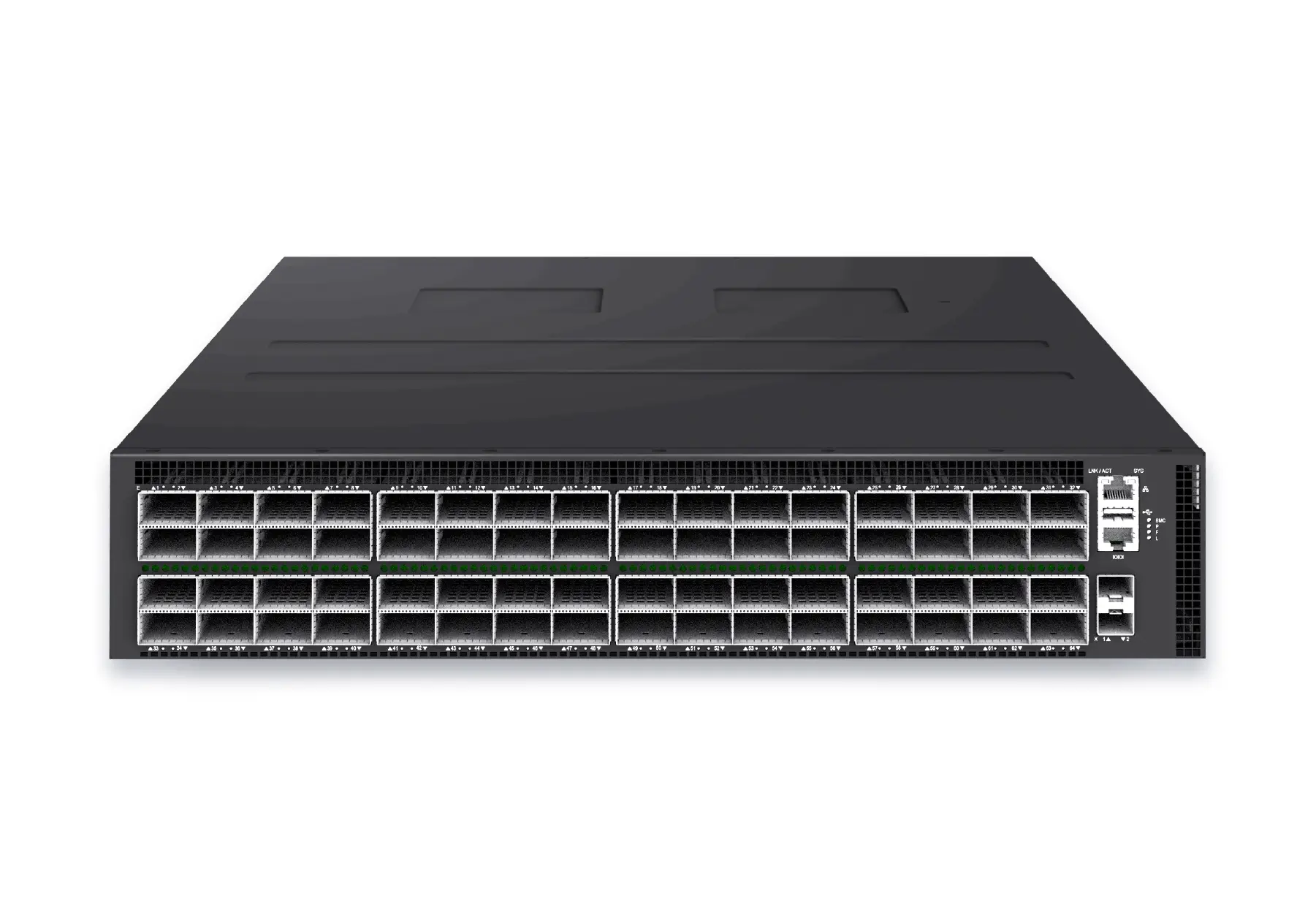 datacenter aiXS-DC-64X800-AI-G164-port 800G AI fabric switch for large-scale GPU clusters, HPC backbones, and ultra-high-throughput data center networks.View product
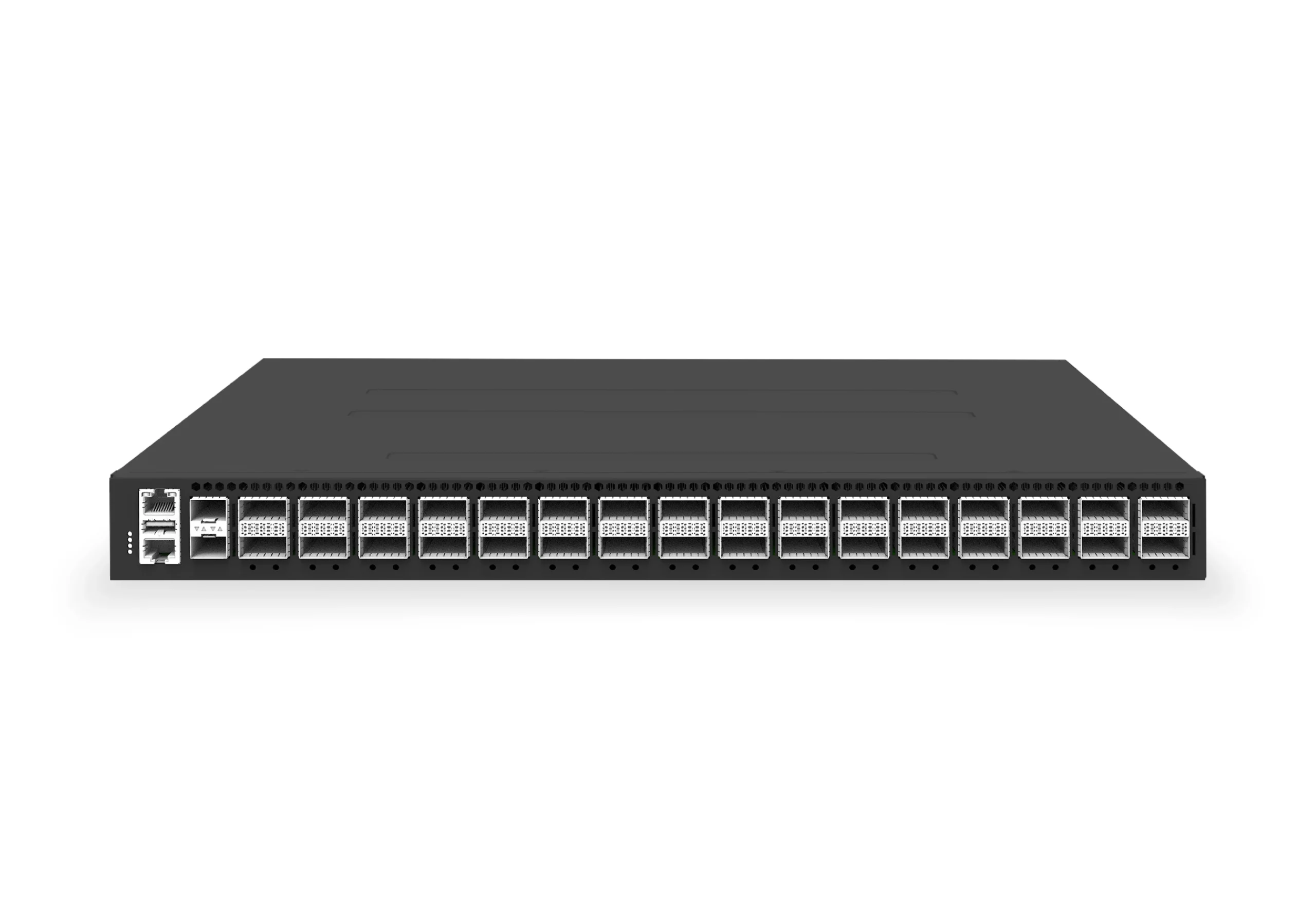 datacenter aiXS-DC-32X400-SP-G232-port 400G spine/core switch for high-capacity data center fabrics and AI-ready backbones.View product
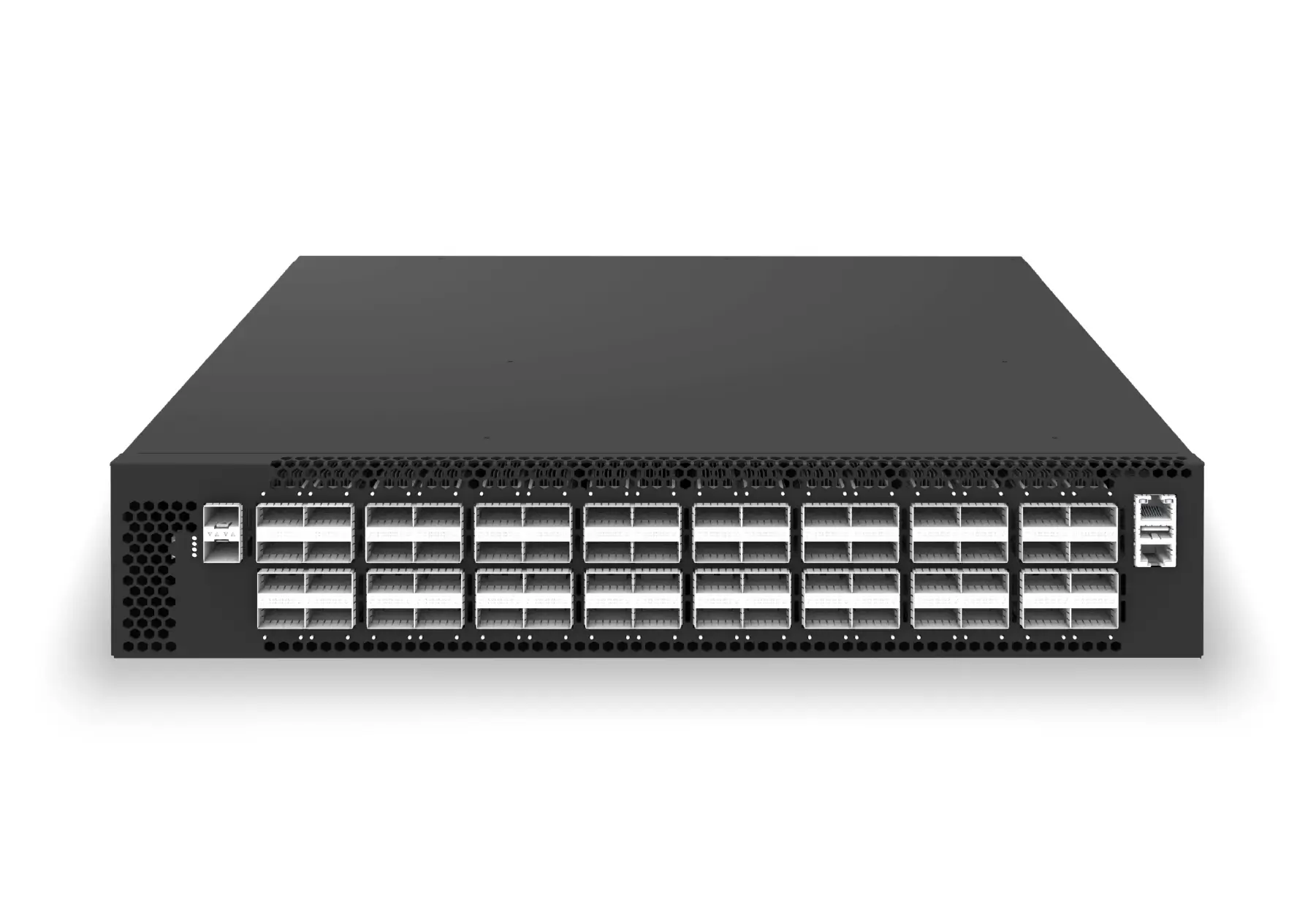 datacenter aiXS-DC-64X200-LS-G164-port 200G leaf/spine switch for high-bandwidth storage, compute, and scale-out data center fabrics.View product
Continue reading
Related articles
 Technical ArticleWhat Enterprise Buyers Actually Get From Open Networking Support: A SONiC Reality CheckA SONiC support reality check for Australian enterprise buyers covering community, commercial distribution, hardware, integration, SLA, and escalation.Read article
 Technical ArticleWarm Reboot and Fast Reboot in SONiC: How to Validate High Availability Without a Full OutageEngineering guide to validating SONiC warm reboot and fast reboot, covering ASIC support, control-plane recovery, traffic loss, telemetry, and rollback.Read article
 Technical ArticleSONiC Security Hardening: A Practical Guide for Data Center Network TeamsA practical SONiC security hardening guide for data center teams covering management access, patching, logging, RBAC, image provenance, telemetry, and audit evidence.Read article