In brief
Engineering guidance on Architecture Decision Record for Campus IT Teams for Australian campus teams, covering PoE budgets, access-layer resilience, migration risk.
Key takeaways
- Enterprise networking is at a decision point. For decades, campus IT teams in Australia have relied on proprietary switching stacks from a small number of incumbent vendors.
- Enterprise SONiC -- the community-hardened, Linux-based network operating system originally developed for hyperscale data centres -- is now mature enough for campus and enterprise edge roles.
- For Australian organisations, the migration question is not just technical.
Why Australian Campus IT Teams Need an Architecture Decision Record for Open Networking
Enterprise networking is at a decision point. For decades, campus IT teams in Australia have relied on proprietary switching stacks from a small number of incumbent vendors. That model delivered predictable support contracts and familiar CLI workflows, but it also locked organisations into multi-year licensing, closed firmware ecosystems, and limited hardware sourcing options.
Enterprise SONiC — the community-hardened, Linux-based network operating system originally developed for hyperscale data centres — is now mature enough for campus and enterprise edge roles. SONiC runs on switches from multiple hardware vendors and supports a full suite of protocol functionality including BGP, RDMA, LLDP, VLAN, ACL, and PoE management, all within a container-based architecture that decouples software from hardware (sonicfoundation.dev; github.com/sonic-net/SONiC).
For Australian organisations, the migration question is not just technical. Regulatory frameworks such as the Australian Government Information Security Manual (ISM), the Privacy Act 1988, and state-level data sovereignty requirements shape how networking infrastructure must be selected, deployed, and audited. AI infrastructure buildout — including sovereign data centre expansions like Macquarie Data Centres’ IC3 Super West — is also driving campus networks to support higher throughput, lower latency, and more flexible traffic engineering than legacy proprietary stacks typically allow.
This playbook uses the Architecture Decision Record (ADR) framework to give campus IT teams a structured, reviewable, and defensible method for evaluating whether to migrate from proprietary networking to Enterprise SONiC. An ADR is a lightweight document that captures the context, options considered, decision rationale, and consequences of a significant architectural choice. It is not a procurement proposal or a vendor RFP. It is an internal engineering record that any stakeholder — network architect, security officer, procurement lead, or CIO — can review and challenge before the organisation commits resources.
The goal of this guide is to help you build that ADR with source-backed decision criteria, phased deployment checklists, and clear review blockers so your team can make an informed, auditable decision.
Understanding Enterprise SONiC: Architecture for Campus Roles
SONiC (Software for Open Networking in the Cloud) is an open-source network operating system built on Linux and developed under the Linux Foundation. Its core architecture uses Docker containers to isolate individual network functions — such as BGP, LLDP, VLAN management, and telemetry — into independently updatable modules. This modular design provides fault isolation, simplified troubleshooting, and the ability to upgrade individual services without full switch reboots.
Key architectural properties relevant to campus deployments:
Switch Abstraction Interface (SAI): SONiC communicates with switch ASICs through a hardware abstraction layer called SAI. This means the same SONiC software image can run on switches built with Broadcom, Marvell, or other silicon, as long as the hardware vendor provides a compliant SAI implementation. For campus teams, this breaks the coupling between NOS and hardware procurement.
Container-Based Modularity: Each network function runs in its own Docker container. Campus-relevant containers include: teamd (link aggregation and MC-LAG), lldp (neighbour discovery), snmp (monitoring), dhcp_relay (DHCP forwarding), pmon (platform monitoring including PoE and fan control), and bgp/routing containers. Teams can debug, restart, or update individual services without affecting the entire switch.
Configuration Model: SONiC uses a centralised JSON configuration file (config_db.json) and supports both CLI (via sonic-utilities) and programmatic configuration through REST APIs and gNMI/gRPC telemetry. For campus teams accustomed to proprietary CLIs, this is a significant workflow change that requires training investment.
Protocol Support: SONiC supports BGP, OSPF, VLAN, LACP, MC-LAG, STP/RSTP/MSTP, ACLs, DHCP relay, LLDP, sFlow, ERSPAN, VXLAN, and EVPN. For campus roles, the critical question is whether the specific feature combination your environment requires — such as 802.1X NAC integration, PoE scheduling, captive portal, or wireless controller coordination — is available in the SONiC distribution you plan to deploy.
Multi-Vendor Hardware Ecosystem: The Open Compute Project (OCP) Networking project — under which SONiC is a sub-project — has driven the development of open, disaggregated switching hardware. OCP’s scope explicitly includes ‘fully disaggregated and open networking HW and SW’ with Linux-based operating systems and automated bare-metal provisioning (opencompute.org/projects/networking). Multiple hardware vendors now ship OCP-qualified or SONiC-compatible campus and aggregation switches.
NVIDIA Pure SONiC: Major infrastructure vendors including NVIDIA offer ‘Pure SONiC’ as a community-developed, production-supported distribution alongside their own commercial NOS options like Cumulus Linux (nvidia.com/en-us/networking/ethernet-switching). This means campus teams can access enterprise support channels while still running open-source NOS.
The practical implication for Australian campus IT teams: Enterprise SONiC gives you a credible alternative NOS that separates hardware buying decisions from software feature decisions. But the migration is not a drop-in replacement. It requires careful feature mapping, integration testing, and operational workflow changes that the ADR process documented in this guide is designed to capture.
The Architecture Decision Record Framework for Network Migration
An Architecture Decision Record (ADR) is a structured document that captures a significant technical decision, the alternatives considered, the rationale, and the expected consequences. For a campus networking migration, the ADR serves three purposes:
- Defensibility: It provides a written rationale that procurement, security, and executive stakeholders can review. If a migration is questioned after the fact, the ADR shows what was considered and why.
- Traceability: It creates an audit trail for compliance frameworks that require documented change management processes (relevant under the Australian Government ISM and ASD Essential Eight maturity model).
- Knowledge Transfer: It preserves institutional knowledge about why the network was designed a certain way, which is critical for teams with staff turnover.
ADR Template for Campus SONiC Migration:
| ADR Field | Description | Example |
|---|---|---|
| Title | Unique identifier and descriptive name | ADR-2025-NET-001: Migrate Campus Access Layer from [Vendor] to Enterprise SONiC |
| Status | Proposed, Accepted, Deprecated, Superseded | Proposed |
| Context | Business and technical drivers for the decision | Vendor lock-in risk, EOL hardware refresh cycle, AI workload campus backbone requirements |
| Decision | The specific architectural choice made | Adopt Enterprise SONiC on OCP-qualified bare-metal switches for campus access and aggregation layers |
| Alternatives Considered | List of options evaluated with pros and cons | Option A: Renew proprietary vendor contract. Option B: Migrate to SONiC. Option C: Hybrid approach. |
| Consequences | Expected positive and negative outcomes | Positive: hardware flexibility, cost avoidance on licensing. Negative: training investment, reduced vendor TAC support scope. |
| Review Date | When the ADR should be reassessed | 12 months after deployment or at next major refresh cycle |
| Compliance Mapping | Which regulatory or policy requirements the decision addresses | ISM Control 1463 (Network Segregation), PSPF Governance 9 (Recordkeeping) |
| Approval Signatures | Technical and business stakeholders | Network Architect, CISO, Procurement Lead |
This template is deliberately generic. Your organisation should adapt it to match internal governance frameworks. The key principle is that no significant network architecture change should proceed without a written, reviewed, and approved decision record.
Decision Criteria: Proprietary Networking vs Enterprise SONiC for Campus
The following decision criteria table provides a structured comparison framework for campus IT teams. It is not a vendor recommendation. Each criterion should be evaluated against your specific environment, skillset, and regulatory context.
| Decision Criterion | Proprietary Networking Stack | Enterprise SONiC on Open Hardware | What to Evaluate |
|---|---|---|---|
| Hardware Sourcing | Single-vendor or limited approved vendor list | Multi-vendor via SAI; OCP-qualified switches from multiple OEMs | Can you source campus switches from 2+ vendors with SONiC support? |
| Software Licensing | Per-device or per-feature licensing; recurring OpEx | Open-source (Apache 2.0 for community SONiC); commercial support optional | What is your 5-year TCO comparison including support contracts? |
| Campus Feature Parity | Mature campus features: 802.1X, PoE management, NAC integration, wireless controller, captive portal | Evolving: VLAN, LACP, PoE (platform-dependent), LLDP, sFlow; 802.1X and advanced campus features vary by distribution | Map your required feature set against the specific SONiC distribution and hardware platform |
| Operational Tooling | Vendor-specific NMS, SNMP MIBs, proprietary telemetry | Industry-standard: gNMI, gRPC, SNMP, sFlow, REST API, SONiC CLI | Does your NMS/Ops team have experience with standard Linux tooling and API-driven automation? |
| Support Model | Vendor TAC with SLAs, firmware updates, hardware replacement | Community support or commercial support from distribution vendor (e.g., NVIDIA Pure SONiC, other Enterprise SONiC distributors) | What is your minimum acceptable support SLA for campus access switches? |
| Security and Compliance | Vendor security advisories, CVE patching cadence tied to vendor | Open-source CVE tracking via GitHub; community and commercial patch pathways; auditability of source code | Does your compliance framework require source code auditability or specific patch SLAs? |
| Upgrade Path | Vendor-managed firmware bundles | Container-based independent service upgrades; community release cycles | Do you have the operational maturity to manage rolling upgrades on container-based NOS? |
| Campus-Specific Integration | Tight integration with vendor wireless, NAC, SD-WAN | Integration via standard protocols (802.1X, RADIUS, LLDP); wireless controller independence may be required | Map your wireless, NAC, and SD-WAN integration points |
| Staff Skills | Existing CLI familiarity; vendor certification pathways | Linux skills, Ansible/Python automation, YAML/JSON config, container management | Assess current team skills and identify training gaps |
| Vendor Lock-In Risk | High: proprietary CLI, config format, hardware-NOS coupling | Low: open config format, multi-vendor hardware, standard protocols | Quantify your current switching contract exit costs and timelines |
Australian-Specific Considerations:
- Data sovereignty: Australian Government entities must comply with the Hosting Certification Framework and data sovereignty requirements. SONiC’s open-source nature allows full inspection of the NOS codebase, which can support compliance evidence gathering.
- Supply chain resilience: The Australian Signals Directorate’s Essential Eight and supply chain risk management guidance encourage diversity in critical infrastructure components. Multi-vendor SONiC hardware sourcing directly supports this objective.
- AI campus backbone: As Australian enterprises deploy AI infrastructure — including GPU inference clusters connected to campus networks — SONiC’s proven RDMA and RoCE capabilities (originally hardened in hyperscale data centres) provide a credible path for campus-to-data-centre traffic engineering.
Engineering Evidence Floor
For campus and access switching topics, acceptance should be based on endpoint behaviour under real operating constraints. The evidence package should include endpoint classes, PoE budget, NAC/802.1X, LLDP-MED, voice VLANs, multicast, STP or MC-LAG behaviour, uplink capacity, monitoring, rollback, and help-desk workflow. A representative pilot should run at least 48 ports for 30 days, include one planned rollback inside 24 hours, and document support ownership before scale-out.
| Evidence area | What to validate | Acceptance gate | Rework trigger |
|---|---|---|---|
| Endpoint mix | APs, phones, cameras, laptops, IoT, and printers | 48 ports run mixed load for 24 hours | Only laptop traffic is tested |
| Power and uplinks | PoE budget, 1G/2.5G/5G/10G access, and 100G uplinks | No power or uplink bottleneck in pilot | Refresh ignores closet constraints |
| Resilience | STP, MC-LAG, link loss, member loss, and rollback | 3 failure cases captured | Campus works only in steady state |
| Operations | Monitoring, logs, backup, restore, and help-desk runbook | Incident evidence ready within 2 hours | Support depends on informal notes |
| Rollout | Site selection, training, spares, and change windows | 30 days pilot approved before estate rollout | Procurement scales before validation |
Engineering FAQ
What should be tested before moving campus switching to SONiC or open networking? Test PoE behaviour, NAC integration, VLAN and policy design, STP or MC-LAG interaction, multicast, monitoring, upgrade rollback, and help-desk workflows. Campus readiness is an operations test, not only a forwarding test.
Where do campus refresh projects usually carry hidden risk? The risk often sits in closets: power budget, old cabling, undocumented uplinks, mixed endpoint types, voice devices, cameras, badge systems, and change windows. Those details should be inventoried before selecting switch models.
How should Australian campus teams structure a pilot? Choose one representative site or building, document endpoint classes, run PoE and failover tests, verify monitoring, train operations staff, and define rollback steps before expanding to the broader estate.
Related xSONiC Resources
Sources Reviewed
- IEEE 802.1Q Bridges and Bridged Networks
- IEEE 802.1AX Link Aggregation
- Ethernet Network Adapters - ConnectX NICs | NVIDIA
- NVIDIA BlueField Data Processing Unit
- NVIDIA Spectrum-X Ethernet Platform
- OpenConfig gNMI Specification
- OpenConfig
- RFC 7950 - The YANG 1.1 Data Modeling Language
- RFC 6241 - Network Configuration Protocol (NETCONF)
- ACSC Essential Eight
- OAIC Notifiable Data Breaches
- APRA CPS 234 Information Security
- NETSCOUT Network Packet Definition
- Cloudflare Network Packet Definition
- IEEE 802.11be Wireless LAN Standard
- IEEE 802.3bt Power over Ethernet
- SONiC Project Documentation
- Broadcom Ethernet Switching
- Marvell Switching
- NVIDIA Ethernet Switching
- Open Compute Networking
- SONiC GitHub
- SONiC Foundation
Product fit
Products referenced for evaluation
These products are referenced for evaluation context in the article. Confirm workload, port, optics, software, interoperability, and support requirements against the exact deployment before procurement.
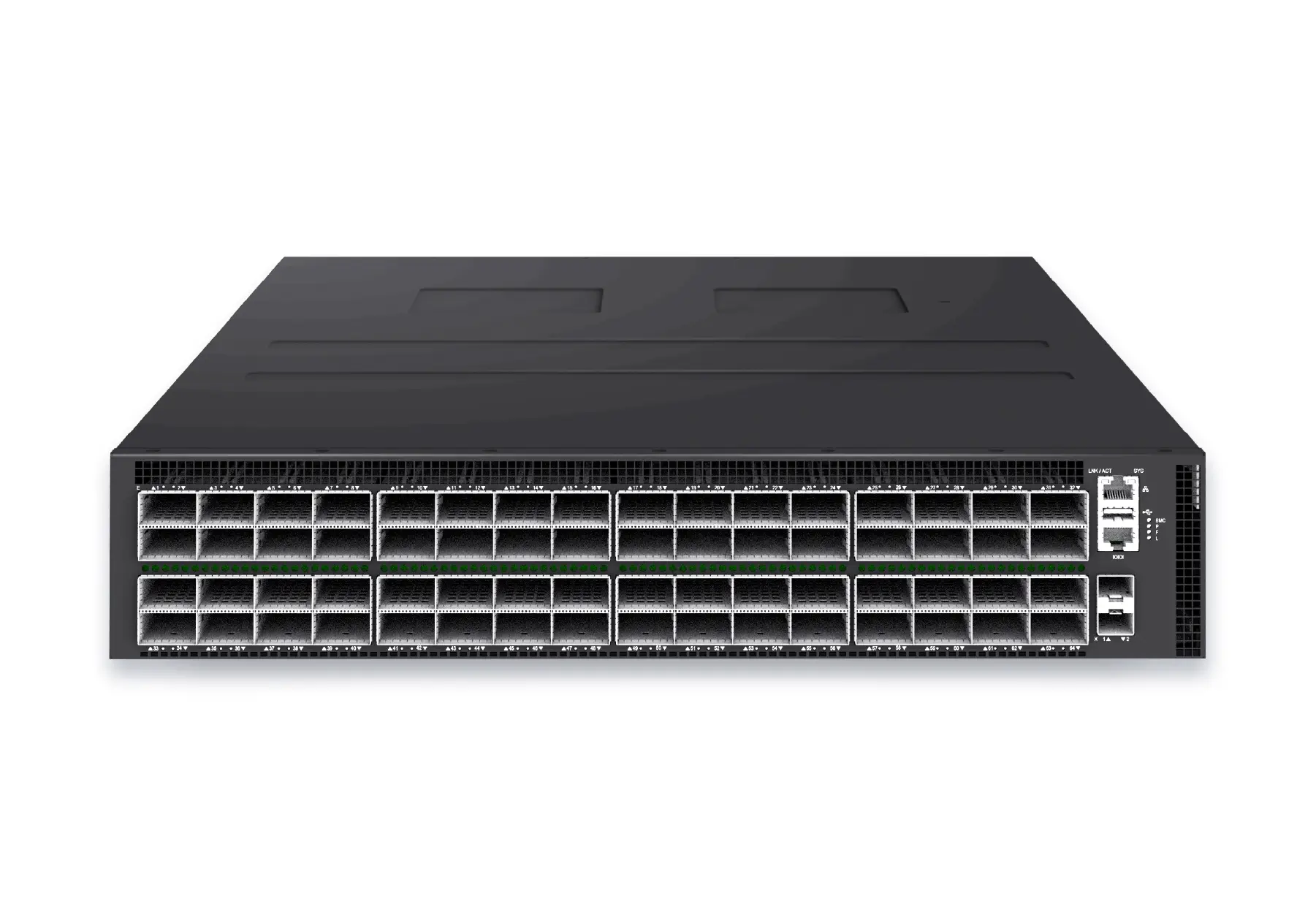 datacenter aiXS-DC-64X800-AI-G164-port 800G AI fabric switch for large-scale GPU clusters, HPC backbones, and ultra-high-throughput data center networks.View product
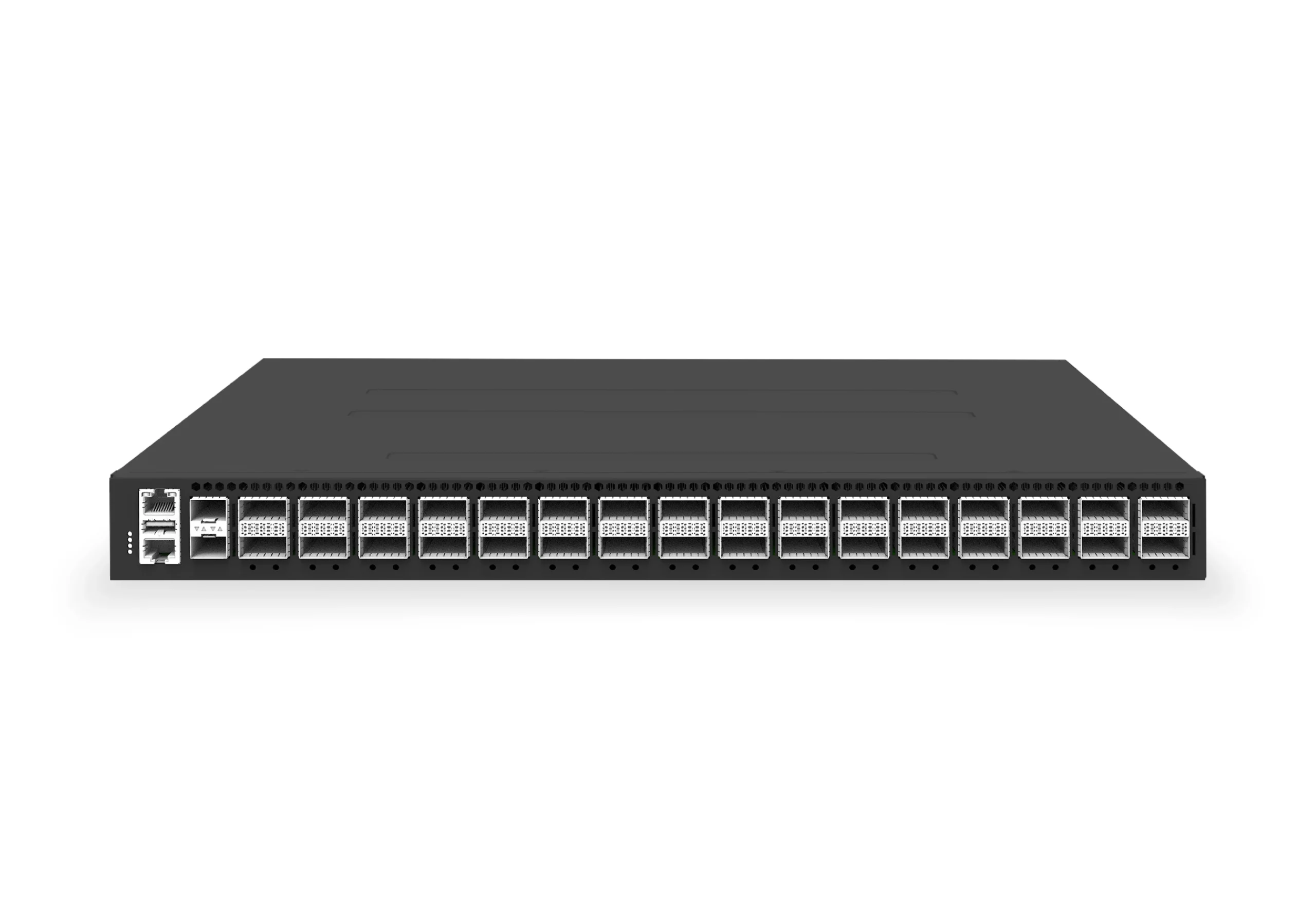 datacenter aiXS-DC-32X400-SP-G232-port 400G spine/core switch for high-capacity data center fabrics and AI-ready backbones.View product
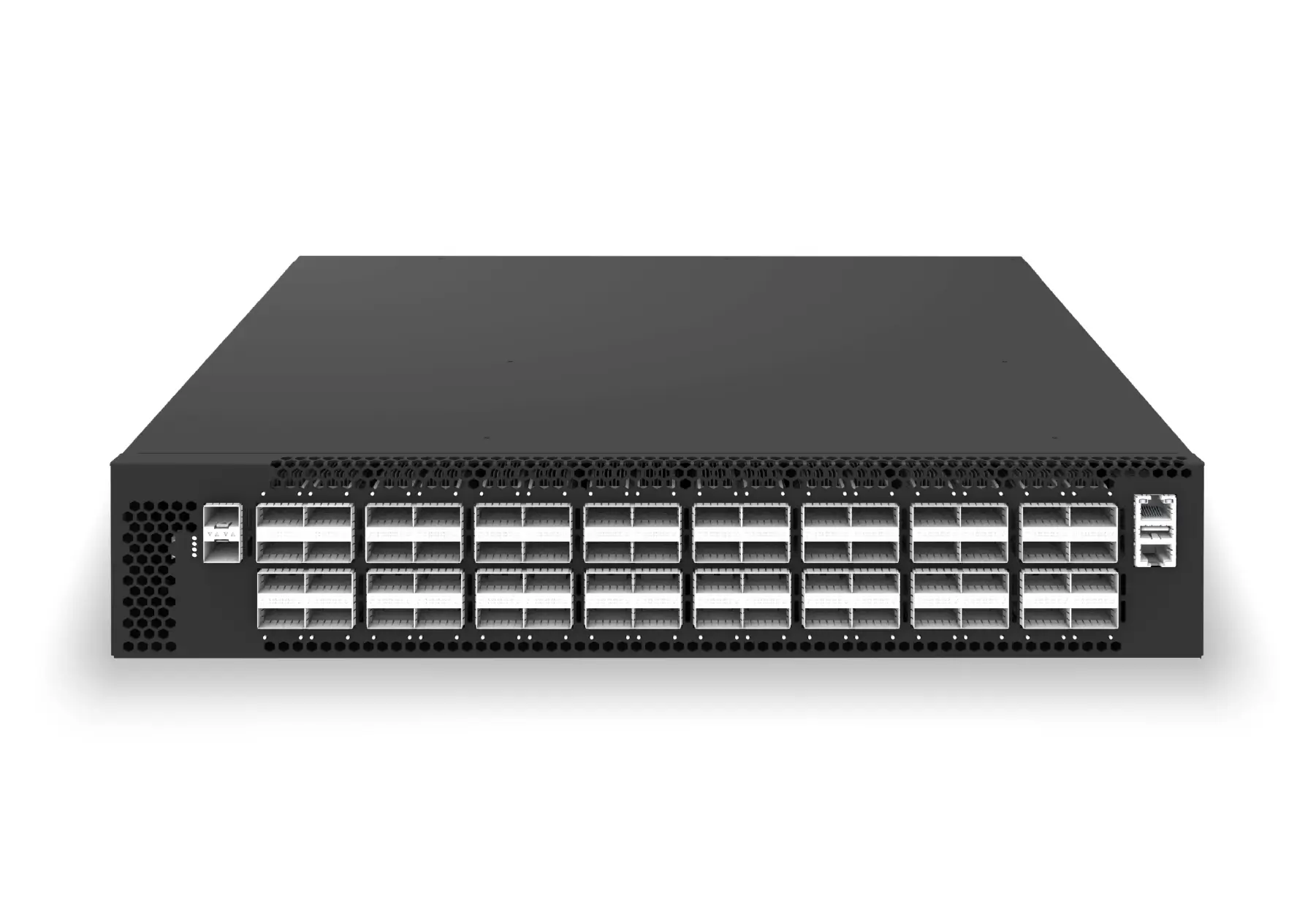 datacenter aiXS-DC-64X200-LS-G164-port 200G leaf/spine switch for high-bandwidth storage, compute, and scale-out data center fabrics.View product
Continue reading
Related articles
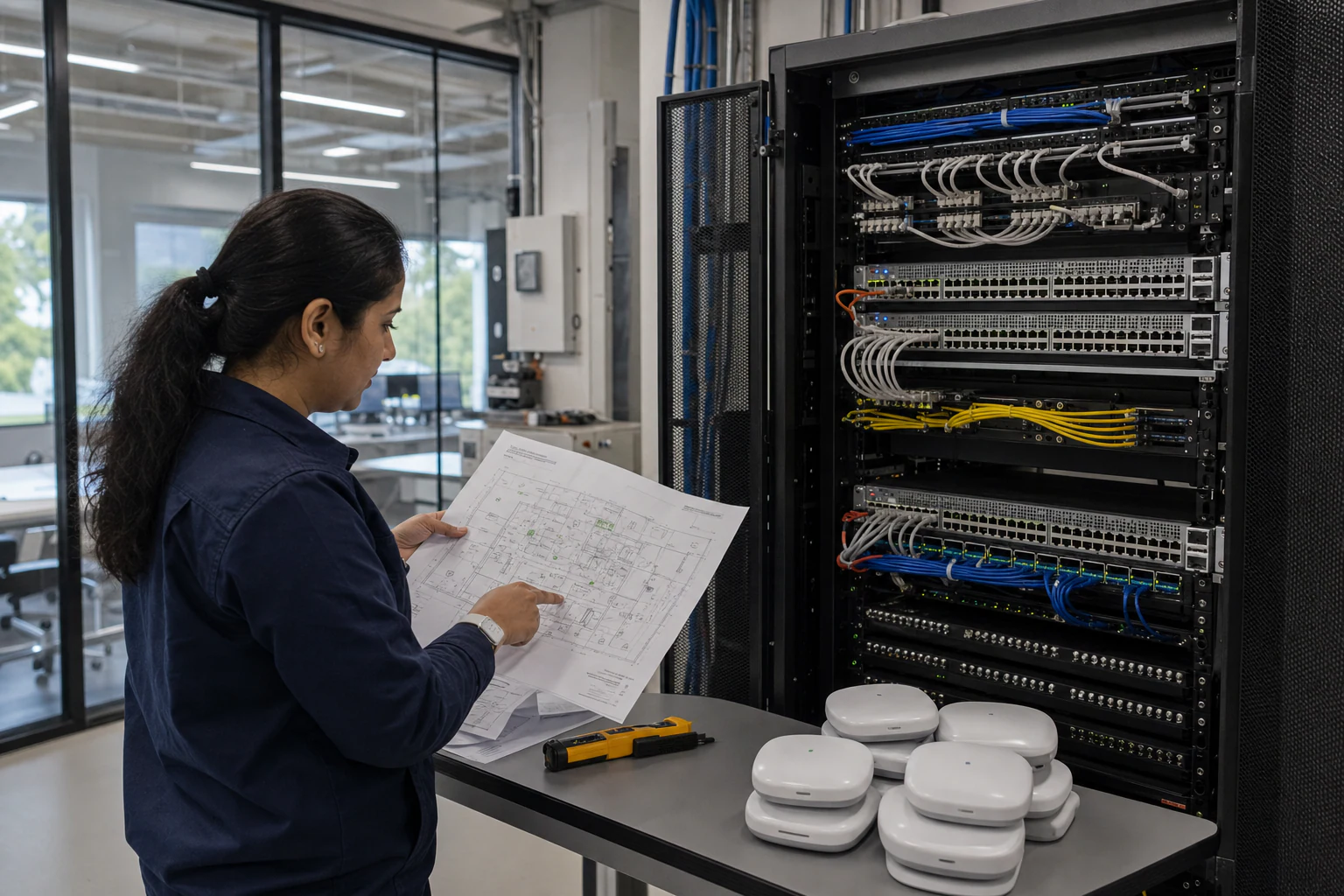 Technical ArticleUniversity Campus Access and Aggregation with Enterprise SONiC: An Australian Evaluation GuideA practical Australian university campus guide to evaluating Enterprise SONiC for PoE access, resilient aggregation, migration, and operations.Read article
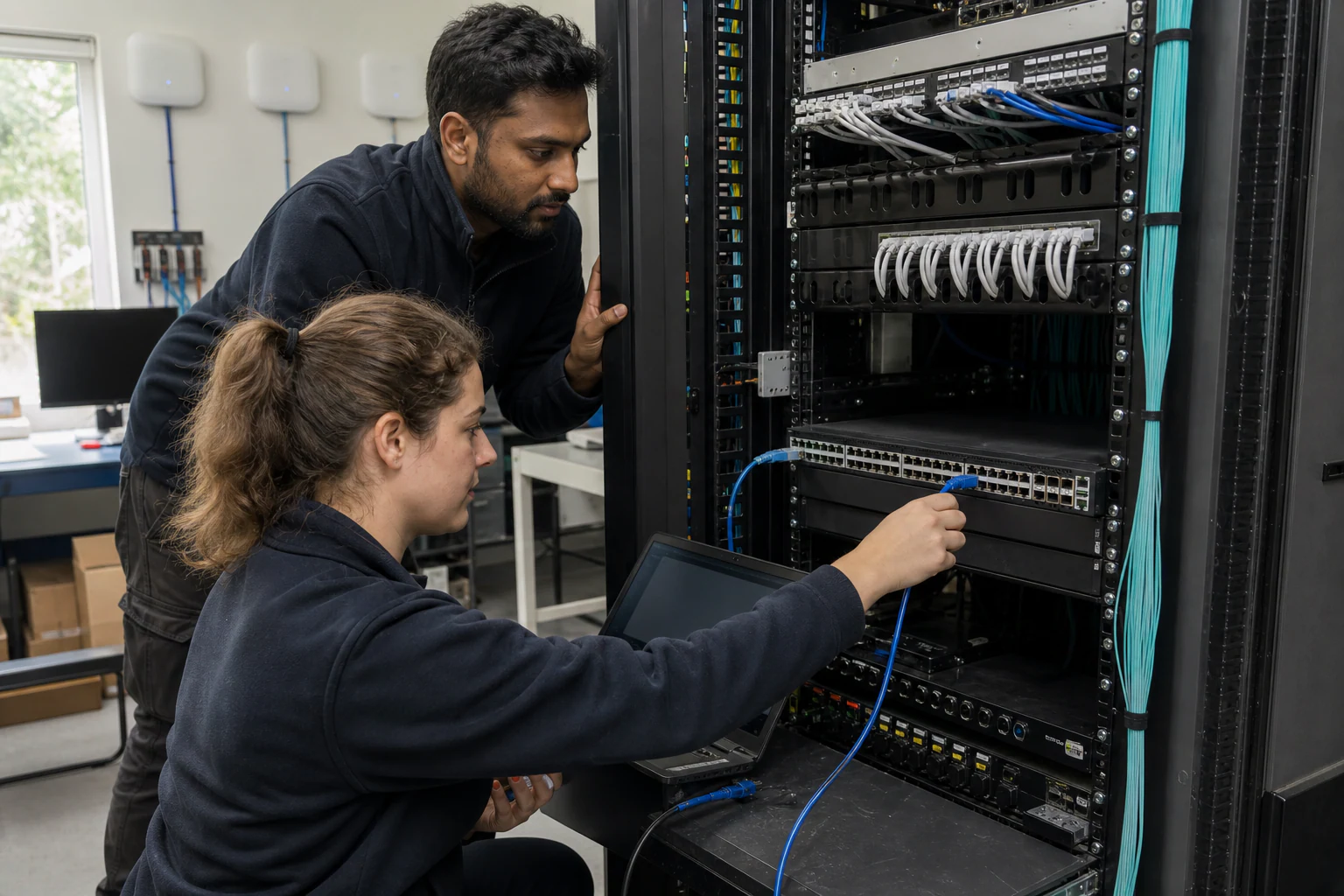 Technical ArticleWhy Enterprise SONiC Is Gaining Ground in Campus Access and Aggregation: An Australian PerspectiveEngineering guide for campus switching teams covering PoE, access design, MC-LAG/STP risk, telemetry, support, and pilot validation.Read article
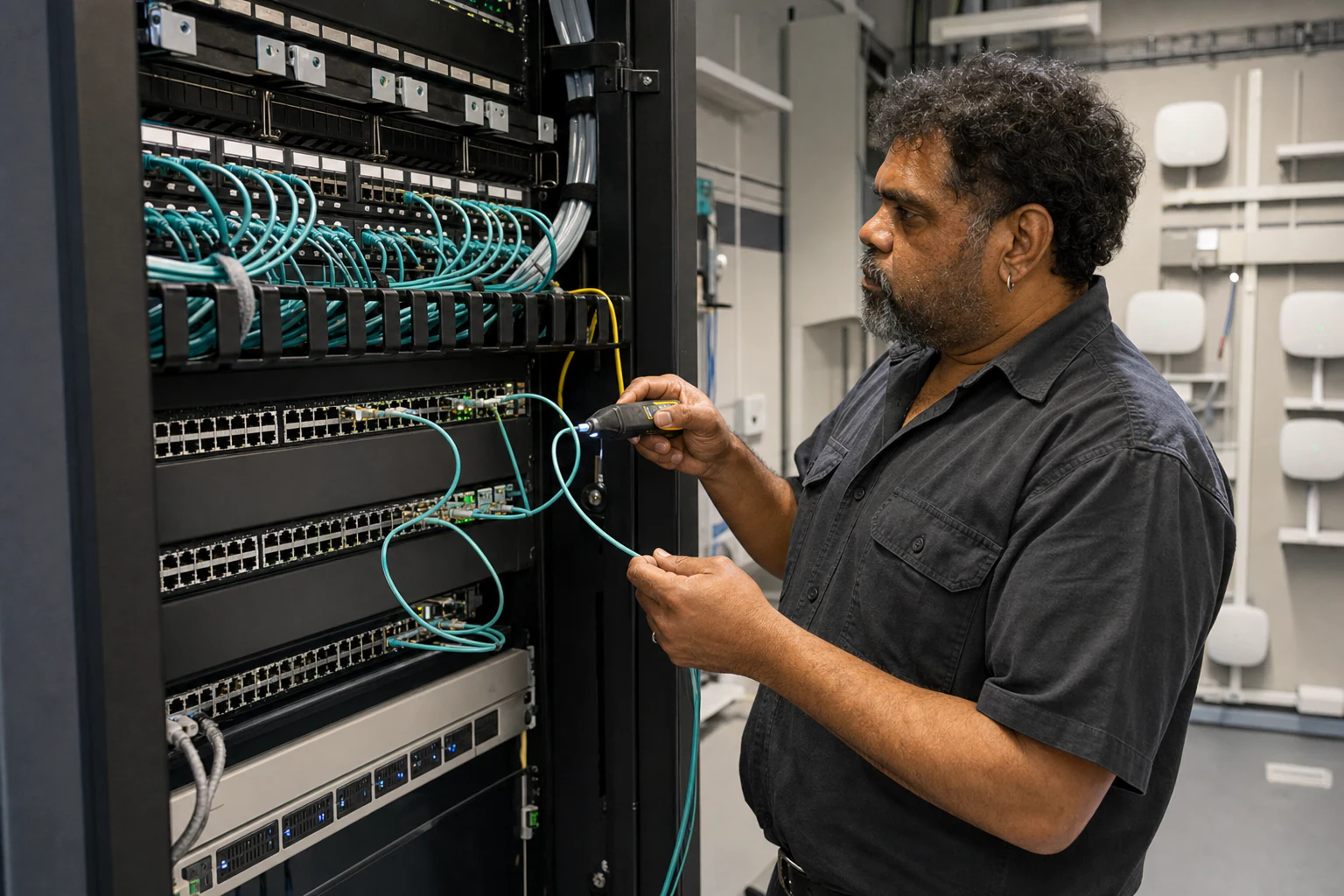 Technical ArticleSONiC Telemetry Automation Matures: What Australian Data Center and Campus Operators Should WatchAn engineering analysis of SONiC telemetry automation, covering gNMI, INT, streaming telemetry, observability operations, and Australian data center and campus requirements.Read article