
In brief
Engineering guidance on 400G Spine-Leaf Is Now an Enterprise Play for Australian data centre buyers, covering form factor choice, link budgets, cabling.
Key takeaways
- Software for Open Networking in the Cloud (SONiC) continues to harden its position as the leading open-source network operating system for data center switching.
- The project's container-based architecture -- where each network function runs in its own Docker container -- provides fault isolation, simplified upgrades, and operational modularity that monolithic switch OS designs struggle to match.
- On the hardware side, 400GbE switching is now a shipping product tier, not a roadmap item.
What Happened
Software for Open Networking in the Cloud (SONiC) continues to harden its position as the leading open-source network operating system for data center switching. The SONiC Foundation, a Linux Foundation project, describes SONiC as an open-source NOS that runs on switches from multiple vendors and ASICs, offering a full suite of network functionality including BGP and RDMA that has been production-hardened in the data centers of some of the largest cloud service providers.
The project’s container-based architecture — where each network function runs in its own Docker container — provides fault isolation, simplified upgrades, and operational modularity that monolithic switch OS designs struggle to match. SONiC uses the Switch Abstraction Interface (SAI) to decouple hardware from software, which means the same NOS image can run across switches built on different ASIC families.
On the hardware side, 400GbE switching is now a shipping product tier, not a roadmap item. NVIDIA’s Spectrum-3 SN4700 delivers 32 ports of QSFP-DD 400GbE in a 1U form factor at 12.8 Tb/s throughput, while the Spectrum-4 SN5400 scales to 64 ports of QSFP-DD 400GbE at 25.6 Tb/s in 2U. Both families support SONiC alongside Cumulus Linux as NOS choices, giving buyers a multi-vendor path that does not lock them to a single software stack.
This convergence — mature open-source NOS plus production 400G hardware from multiple ASIC vendors — is the signal that matters for enterprise buyers, not any single product announcement.
Why It Matters for Enterprise SONiC Fabric Design
The spine-leaf Clos fabric is the standard architecture for modern data center networks. At 400G, the design math changes in ways that benefit enterprise deployments:
Fewer spine switches, simpler cabling. A 400G spine tier can serve the same leaf-to-spine bandwidth with fewer physical links and fewer switches than a 100G fabric. For a 2,000-to-5,000-server enterprise fabric, this translates to lower cable count, reduced patch panel complexity, and smaller spine rack footprints.
RDMA and RoCE readiness. SONiC supports RDMA natively, which is critical for AI/ML training clusters and high-performance storage fabrics. The SONiC Foundation confirms that RDMA is part of SONiC’s production-hardened feature set. For enterprises building GPU backend fabrics or high-performance database clusters, 400G spine-leaf with RoCE v2 convergence is a practical next step rather than a research project.
Container-based operations. SONiC’s Docker-container architecture means network teams can upgrade individual services (BGP, LLDP, telemetry) without full switch reboots. For enterprise shops with smaller network operations teams, this modularity reduces the blast radius of any single software update.
Multi-vendor ASIC competition. Because SONiC uses SAI to abstract the ASIC layer, buyers are not locked to one silicon vendor. Broadcom and Marvell both have SONiC-compatible switch silicon, and NVIDIA’s Spectrum family explicitly supports SONiC as a first-class NOS option. This gives enterprise procurement teams negotiating leverage and supply chain optionality that proprietary NOS stacks do not offer.
The Australian Context: DC Builds Accelerate, SONiC Interest Follows
Australia’s data center market is in a growth cycle driven by data sovereignty requirements, cloud region expansion by hyperscalers, and enterprise AI adoption. The question for Australian enterprise buyers is no longer whether 400G is relevant — it is whether the open networking path is viable for their specific operational model.
Several factors make Australia a relevant market for SONiC-based spine-leaf evaluation:
-
Data sovereignty and onshore compute. Australian organisations in regulated industries (financial services, government, healthcare) increasingly require onshore data processing. Building or expanding domestic data centers with modern spine-leaf fabrics is part of this compliance posture.
-
Supply chain diversification. Open networking hardware sourced from multiple ODM partners, running a common open-source NOS, reduces dependency on any single incumbent vendor’s supply chain and pricing structures.
-
Skills availability. SONiC is Linux-based and uses standard Linux interfaces and tools. For Australian enterprises with existing Linux operations capability, the skills gap between managing a SONiC switch and managing a Linux server is narrower than the gap to a proprietary CLI.
-
AI fabric preparation. As Australian enterprises begin deploying GPU inference infrastructure for private LLM, RAG, and multimodal AI services, the network fabric underneath needs to support low-latency, lossless Ethernet for RDMA traffic. A 400G spine-leaf designed with RoCE v2 and DCBX from the start is a better foundation than retrofitting an existing 10G/25G fabric.
What needs local verification: Enterprise SONiC adoption rates in Australia and the broader APAC region are not confirmed by the sources consulted. Australian buyers should verify local vendor support, channel availability, and reference architectures specific to their scale and vertical.
Source-Backed Architecture Checklist for 400G SONiC Spine-Leaf
Based on the confirmed capabilities from SONiC Foundation and hardware vendor documentation, here is a practical checklist for enterprise teams evaluating a 400G spine-leaf fabric on SONiC:
| Design Element | SONiC Capability | Source |
|---|---|---|
| NOS foundation | Open-source, Linux-based, Apache 2.0 license | SONiC Foundation, GitHub |
| Hardware abstraction | SAI decouples NOS from ASIC vendor | SONiC Foundation |
| Architecture | Container-based (Docker), modular service upgrades | GitHub sonic-net/SONiC |
| Routing | BGP support confirmed | SONiC Foundation, GitHub |
| RDMA / lossless Ethernet | RDMA support confirmed | SONiC Foundation |
| Multi-vendor switch hardware | Runs on switches from multiple vendors and ASICs | SONiC Foundation, GitHub |
| 400G switch hardware availability | NVIDIA SN4700 (32x 400GbE QSFP-DD, 12.8 Tb/s), SN5400 (64x 400GbE QSFP-DD, 25.6 Tb/s) | NVIDIA networking pages |
| Configuration method | JSON-based config files, CLI and programmatic methods | GitHub sonic-net/SONiC |
| Community and ecosystem | Linux Foundation project, growing industry support | SONiC Foundation |
xSONiC Buyer Angle: Open Networking as a Competitive Lever
The editorial case for xSONiC’s 400G spine-leaf positioning rests on three buyer problems that the sources support:
1. Vendor lock-in avoidance. SONiC’s SAI-based hardware abstraction means a 400G fabric designed today is not welded to one ASIC vendor’s roadmap. If Broadcom switch silicon, Marvell, or NVIDIA silicon availability shifts, the same SONiC control plane can run on alternative hardware. For Australian enterprises making five-to-seven-year infrastructure bets, this is a material risk reduction.
2. Operational simplicity through modularity. SONiC’s container architecture isolates network services, which means a BGP daemon issue does not take down the telemetry stack. For enterprise teams that cannot staff a dedicated NOS engineering group, this modularity reduces operational friction compared to monolithic switch OS designs.
3. AI fabric readiness. The combination of 400G spine-leaf bandwidth, native RDMA support, and SONiC’s BGP-based overlay capabilities positions the fabric for both traditional east-west traffic and GPU-to-GPU communication patterns. Australian enterprises building private AI infrastructure — inference servers, RAG pipelines, model fine-tuning — need a network layer that does not become the bottleneck.
What to Watch Next
Three developments would change the enterprise SONiC calculus for Australian buyers:
Enterprise SONiC distribution maturity. The GitHub repository references an “Enterprise SONiC Distribution trademark license,” suggesting that commercial SONiC distributions with enterprise support SLAs exist or are in development. Australian buyers should track which distributors offer localised support.
400G optics pricing. The cost of QSFP-DD 400G transceivers and DAC/AOC cables is a significant portion of the spine-leaf BOM. As the 400G optics ecosystem matures and volume increases, the total cost delta between 100G and 400G fabrics narrows. xSONiC’s optical transceiver product line is relevant here.
NVIDIA Spectrum-X and SONiC convergence. NVIDIA positions Spectrum-X as its Ethernet platform for AI, with SONiC listed as a supported NOS. If Spectrum-X features (enhanced RoCE, congestion management, telemetry) become available through SONiC rather than requiring Cumulus Linux, the value proposition for enterprise SONiC strengthens further.
Engineering Evidence Floor
For optics topics, speed is not the acceptance criterion. The evidence package should include form factor, reach, fibre type, link budget, DOM telemetry, FEC counters, CRC errors, temperature, breakout plan, spare availability, and switch/NOS compatibility. A useful validation run should capture 24 hours of link telemetry at 400G or 800G, include one optics replacement, and test the packet visibility path where SecOps or monitoring tools depend on copied traffic.
| Evidence area | What to validate | Acceptance gate | Rework trigger |
|---|---|---|---|
| Link health | DOM, FEC, CRC, flaps, temperature, and power | 24 hours clean record at 400G/800G | Errors are accepted without cause |
| Form factor | QSFP-DD, OSFP, DAC, AOC, fibre, and breakout | Exact module works on target switch image | Generic compatibility is assumed |
| Visibility | TAP/SPAN, packet broker, filter rules, and tool capacity | 30 minutes traffic replay without drops | SecOps path is designed after cabling |
| Supply | Local stock, RMA, spare optics, and lead time | 12 months spare plan approved | Replacement depends on unknown import timing |
| Operations | Replacement runbook, rollback, escalation, and evidence bundle | Fault isolated within 4 hours | Ownership splits across network and supplier |
Engineering FAQ
What should be checked before ordering 400G or 800G optics? Check port form factor, lane speed, reach, fibre type, breakout plan, DOM telemetry, firmware compatibility, thermal budget, and the switch vendor optics support matrix. The same speed can behave differently across QSFP-DD, OSFP, DAC, AOC, and fibre modules.
Why is optics validation part of a SONiC deployment? SONiC exposes the NOS layer, but optics behaviour still depends on the switch platform, transceiver EEPROM data, firmware, thermal design, and operational tooling. Buyers should test the exact module and cable combination before volume rollout.
What should be included in an optics procurement record? Record SKU, reach, connector, fibre type, temperature class, supported breakout modes, switch platform, SONiC image, DOM fields, link test result, and spare strategy. That record becomes the reference for future replacements.
Related xSONiC Resources
Sources Reviewed
- Ethernet Network Adapters - ConnectX NICs | NVIDIA
- NVIDIA BlueField Data Processing Unit
- NVIDIA Spectrum-X Ethernet Platform
- SONiC Project Documentation
- Broadcom Ethernet Switching
- Marvell Switching
- NVIDIA Ethernet Switching
- Open Compute Networking
- SONiC GitHub
- SONiC Foundation
Product fit
Products referenced for evaluation
These products are referenced for evaluation context in the article. Confirm workload, port, optics, software, interoperability, and support requirements against the exact deployment before procurement.
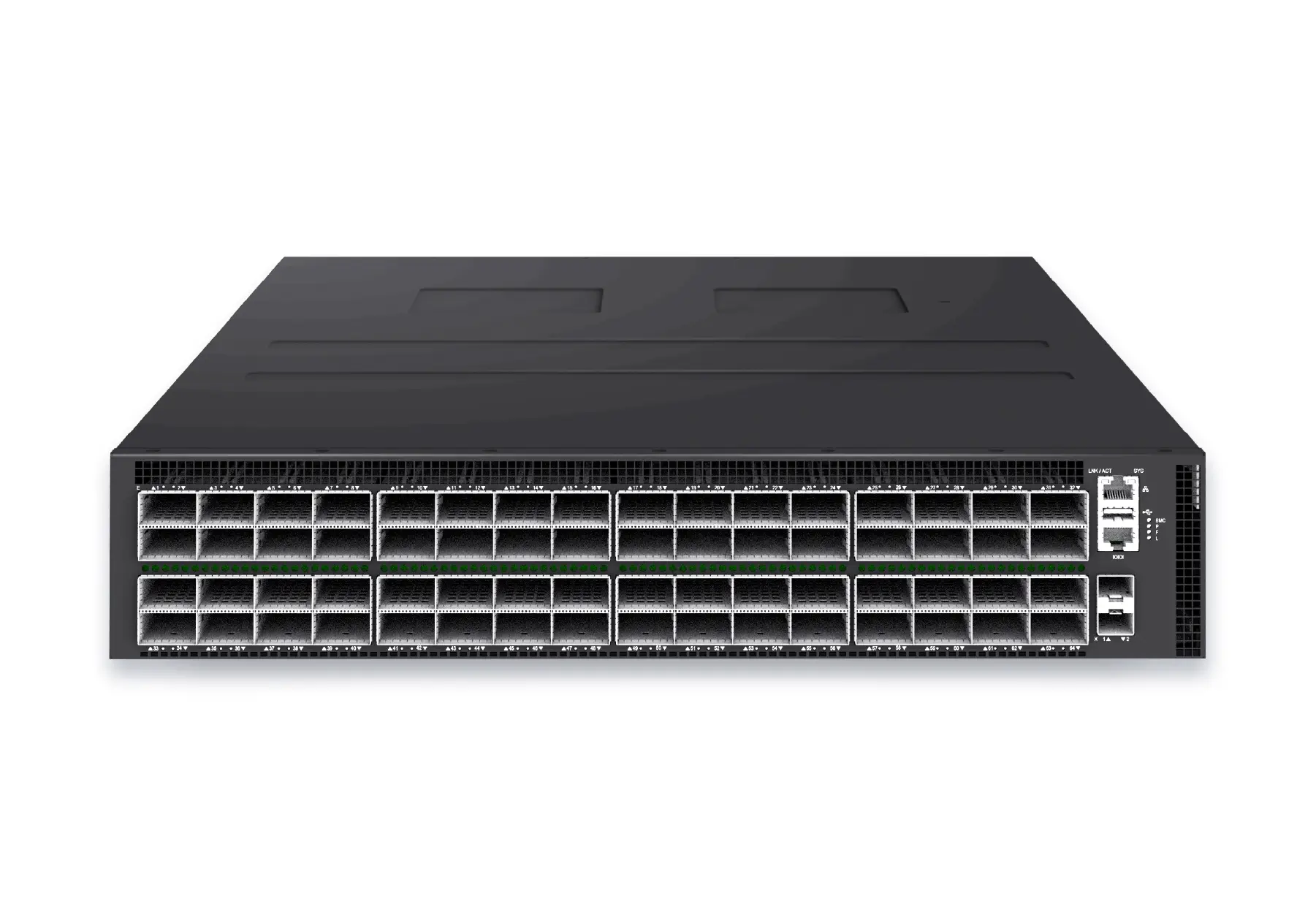 datacenter aiXS-DC-64X800-AI-G164-port 800G AI fabric switch for large-scale GPU clusters, HPC backbones, and ultra-high-throughput data center networks.View product
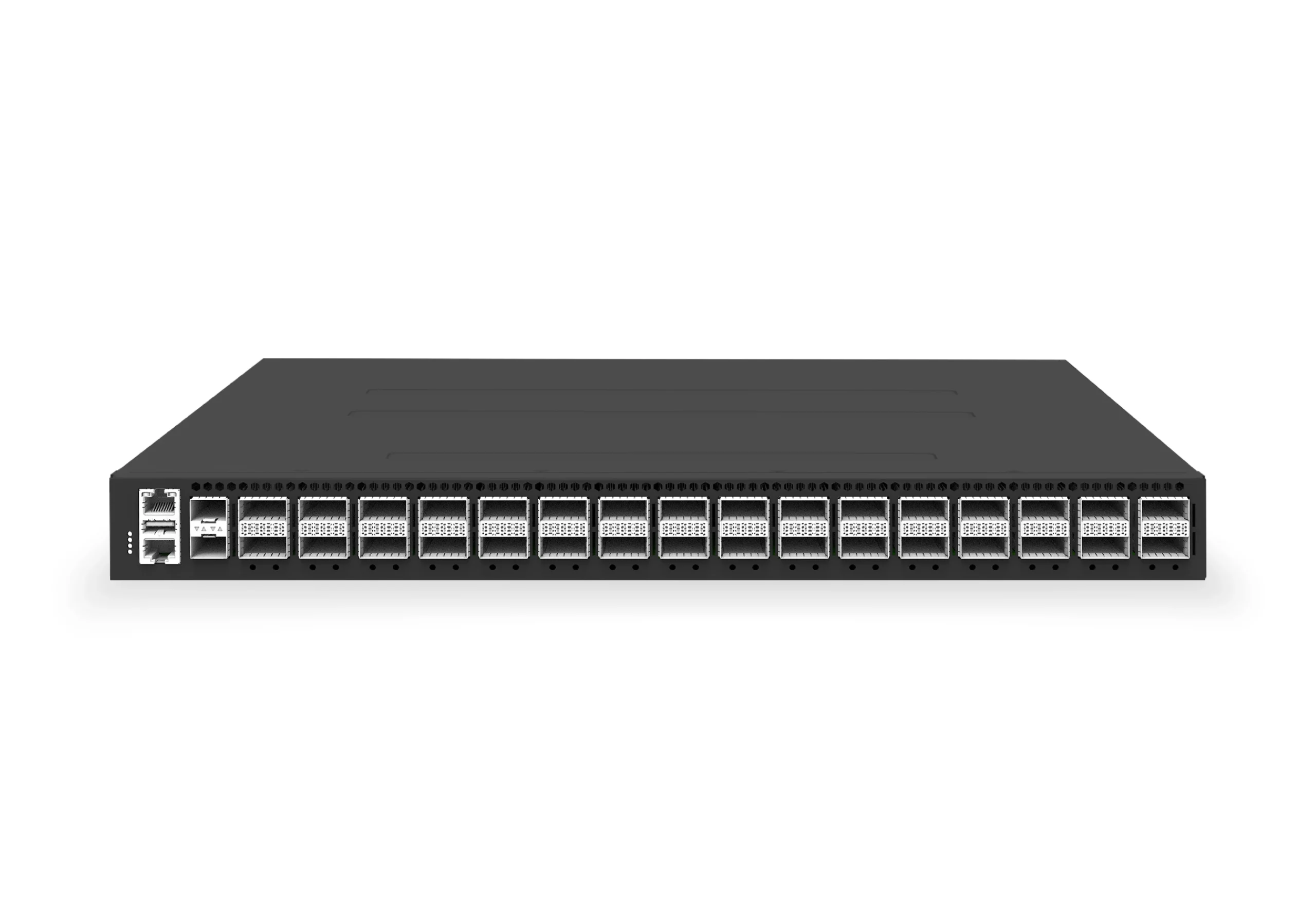 datacenter aiXS-DC-32X400-SP-G232-port 400G spine/core switch for high-capacity data center fabrics and AI-ready backbones.View product
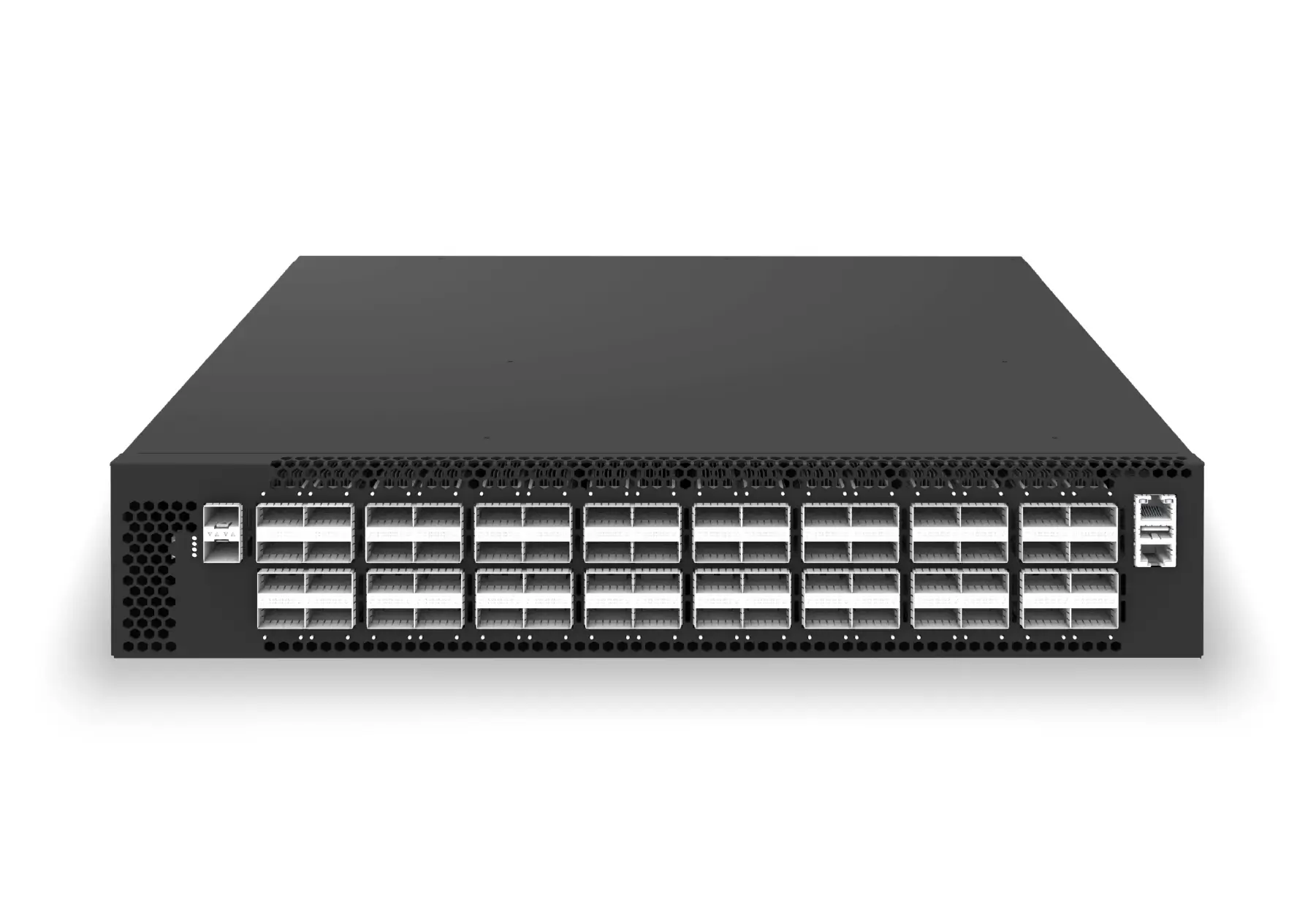 datacenter aiXS-DC-64X200-LS-G164-port 200G leaf/spine switch for high-bandwidth storage, compute, and scale-out data center fabrics.View product
Continue reading
Related articles
 Technical ArticleDCBX, PFC, ECN, and Fast CNP: Building Lossless Ethernet for AI Training FabricsEngineering guidance on DCBX, PFC, ECN, and Fast CNP for Australian AI fabric teams building lossless Ethernet for RoCE v2 training clusters.Read article
 Technical ArticleWhat AI Data Center Ethernet Demands Mean for SONiC Network Operators in AustraliaEngineering guide for Australian SONiC operators running AI Ethernet fabrics, covering RoCE, 400G/800G links, telemetry, failures, optics, and support.Read article
 Technical ArticleWhat AI Fabric Ethernet Switching Actually Requires -- and Where SONiC Fits in the StackA practical engineering guide to AI fabric Ethernet switching requirements, explaining where SONiC fits across RoCE v2, PFC, ECN, DCBX, telemetry, and 400G/800G operations.Read article