In brief
Evidence-led guide to Broadcom Tomahawk 6 production status, 102.4 Tbps aggregate capacity, 1.6TbE ports, SONiC boundaries, optics, and procurement acceptance.
Key takeaways
- Broadcom announced production-volume availability of its Tomahawk 6 switch family on 12 March 2026.
- The corresponding BCM78919 product brief specifies 102.4 Tbps of aggregate switching capacity and configurations of up to 64 ports of 1.6TbE.
- The silicon announcement does not establish that xSONiC currently sells a Tomahawk 6 or 1.6TbE platform, and this article makes no such claim.
What Actually Entered Volume Production
Broadcom announced production-volume availability of its Tomahawk 6 switch family on 12 March 2026. The company had previously announced in June 2025 that the 102.4 Tbps Tomahawk 6 ASIC was shipping. Those dated statements are the evidence for the production claim; this article’s original January 2026 publication date predates the production-volume announcement, so the claim is presented as an August 2026 update rather than as a fact known at initial publication.
The corresponding BCM78919 product brief specifies 102.4 Tbps of aggregate switching capacity and configurations of up to 64 ports of 1.6TbE. This distinction matters: “102.4 Tbps” describes total ASIC bandwidth, while “1.6TbE” describes the highest listed Ethernet port rate. Neither source supports calling the product a 2TbE-port switch.
| Statement | What the primary source supports | What it does not establish |
|---|---|---|
| Tomahawk 6 is in production volume | Broadcom’s 12 March 2026 family announcement | Stock of every switch SKU in every region |
| The ASIC provides 102.4 Tbps | Aggregate bidirectional switching capacity stated in the product brief | A 102.4 Tbps link or a 2TbE port |
| Up to 64 × 1.6TbE is supported | A listed ASIC port configuration | Validated optics, thermals, and cables for a quoted system |
| A CPO implementation exists | Broadcom lists BCM78919 in its CPO portfolio | General availability of every CPO system; the listing can carry a limited-release status |
Evidence Boundary for xSONiC and SONiC
The silicon announcement does not establish that xSONiC currently sells a Tomahawk 6 or 1.6TbE platform, and this article makes no such claim. It also does not prove that a generic upstream SONiC build supports a particular BCM78919 switch. Production use depends on the exact hardware platform, ASIC SDK, SAI implementation, ONIE installer, SONiC release or vendor image, firmware, optics, and support agreement.
Procurement evidence should therefore identify a finished-system SKU and bill of materials, not only an ASIC family. Ask the supplier for the exact port and breakout map, supported optics list, thermal envelope, image checksum and release notes, SAI and firmware versions, known limitations, rollback procedure, local spares, and escalation ownership. If any component changes, rerun acceptance testing on the resulting combination.
Large-scale AI training and inference clusters still require deterministic, low-latency, high-throughput fabrics. GPU collective traffic—particularly RDMA over Converged Ethernet (RoCE)—places pressure on leaf-spine designs to provide predictable bandwidth, bounded congestion, and observable queue behaviour. The new ASIC capacity expands design options; it does not replace topology and workload validation.
SONiC: The Open-Source NOS Powering the World’s Largest Cloud Networks
As switch hardware reaches new performance tiers, the software running on that hardware matters just as much. SONiC (Software for Open Networking in the Cloud) is an open-source network operating system based on Linux, originally developed for the data centres of some of the largest cloud service providers. It has since become a Linux Foundation project with a rapidly growing ecosystem.
Key architectural strengths of SONiC relevant to AI deployments:
- Hardware-software decoupling: Built on the Switch Abstraction Interface (SAI), SONiC allows the same network OS to run on switches from multiple vendors and across different ASIC families. This gives cloud operators choice and negotiating leverage without rearchitecting their fabric.
- Containerised, modular design: Each network function (BGP, RDMA, LLDP, etc.) runs in its own Docker container, enabling independent upgrades, faster debugging, and better fault isolation - critical when managing thousands of switches in an AI cluster.
- Production-hardened at scale: SONiC has been battle-tested in the data centres of hyperscale cloud providers, supporting the full suite of networking functionality needed for AI workloads, including BGP and RDMA.
- Standards-based: Uses standard Linux interfaces and tools, making it accessible to network engineers familiar with Linux operations.
For Australian organisations building or expanding AI infrastructure - whether hyperscale data centres, enterprise private clouds, or sovereign AI deployments - SONiC offers a path to avoid vendor lock-in while benefiting from community-driven innovation.
What ‘Volume Production’ Signals to the Market
When an ASIC family moves from sampling to volume production, buyers gain a stronger supply signal, but must still verify the system-level facts:
-
Silicon supply status: The vendor is describing family-level production volume. It does not guarantee inventory of a finished bare-metal switch, optics, or an Australian distributor SKU.
-
Price-per-bit potential: Higher radix and capacity can reduce switch count for some topologies, but a comparable cost model must include optics, power, cooling, spares, software, and support.
-
Software qualification work: A shipping ASIC gives system and software vendors a stable target. Buyers still need written support for their exact SONiC image, SAI, SDK, firmware, and platform combination.
-
Regional availability check: Global production status and local fulfilment are different claims. Ask for quoted lead times, stocked spares, RMA location, escalation coverage, and the party contractually responsible for the complete system.
The Open Networking Advantage for AI Cloud Operators
The convergence of high-bandwidth switch hardware and open-source NOS software creates a compelling value proposition:
For hyperscale operators: SONiC’s containerised architecture allows fine-grained control over networking services at massive scale. Operators can customise, optimise, and deploy network functions independently across thousands of switches.
For enterprise AI builders: Open networking eliminates the ‘NOS tax’ of proprietary switch software, redirecting budget toward compute (GPUs, accelerators) and storage - the resources that directly impact AI model training time.
For the Australian market: Open networking aligns with broader technology sovereignty objectives. SONiC’s open-source licensing (Apache 2.0) and multi-vendor hardware support give Australian operators flexibility to select the best hardware for their needs without being locked into a single vendor’s ecosystem.
Looking Ahead: From 800G to 1.6TbE
The 102.4 Tbps generation is one waypoint on a longer roadmap. The industry trajectory points toward:
- Co-packaged optics: NVIDIA’s Spectrum-6 SN6000 series already introduces co-packaged silicon photonics networking, doubling bandwidth per lane compared to the previous generation and improving power efficiency and uptime for AI factories.
- 800G and beyond: The shift from 400G to 800G per port is underway, with 1.6T on the horizon.
- AI-native networking features: Beyond raw bandwidth, switch platforms are incorporating AI-specific features like zero-touch RoCE acceleration, enhanced congestion management, and digital twin simulation capabilities (e.g., NVIDIA DSX Air).
For Australian cloud operators and AI builders, the message is clear: the networking layer is no longer just plumbing - it’s a strategic differentiator for AI performance.
102.4 Tbps Switch Evaluation Matrix
Volume production is a supply-chain signal, not a production acceptance result. Buyers still need to validate the exact switch, optics, SONiC image, and operations model they plan to deploy.
| Evaluation Area | Evidence to Request | Acceptance Target | Rework Trigger |
|---|---|---|---|
| Switching capacity | ASIC throughput, port breakout, 400G/800G mix, ECMP scale, buffer profile | Throughput and route scale are validated for the proposed spine-leaf topology | Vendor quotes aggregate Tb/s without topology or queue evidence |
| SONiC readiness | Release branch, SAI support, ONIE install, container health, rollback path | 2 switches boot, reload 3 times, preserve BGP, optics, telemetry, and QoS state | NOS image is not the one planned for production |
| Optics and physical layer | OSFP/QSFP-DD support, FEC mode, DOM telemetry, thermal limits, cable plan | 24-hour optics validation under expected rack airflow and port utilisation | Links work in lab but fail under dense production airflow |
| AI fabric congestion | RoCE v2, PFC, ECN, DCBX, CNP visibility, queue counters | ECN, PFC, drops, and queue occupancy are captured during microburst replay | Lossless claim cannot be proven with counters |
| Australian operations | APAC support, spare availability, RMA process, power and cooling notes | Supplier documents local escalation and replacement path before award | Replacement lead time or support boundary is unclear |
What Australian Buyers Should Do Before Ordering
- Ask whether the quoted switch is genuinely in volume availability for the Australian channel, not only announced globally.
- Validate optics separately from the switch; 800G port speed is only useful when optics, FEC, cable routing, and thermals are stable.
- Run the proposed SONiC image in the pilot, including reload, rollback, config restore, and telemetry export.
- Model a 36-month and 60-month lifecycle that includes support, spares, optics, power, cooling, and operations training.
- Treat 102.4 Tbps aggregate capacity as an architecture option, not an excuse to skip acceptance testing.
Engineering FAQ
Does volume production mean a switch is ready for an AI fabric? No. Volume production improves supply confidence, but buyers still need to validate the exact switch SKU, NOS image, ASIC SDK, SAI layer, optics, and RoCE profile against their workload.
Which evidence matters more than headline switching capacity? Queue occupancy, PFC and ECN counters, ECMP distribution, optic stability, thermal behaviour, telemetry export, and failure recovery are more useful than a single aggregate Tb/s number.
How should Australian buyers compare 400G and 800G options? Compare the full link budget: switch port speed, NIC speed, optics availability, FEC mode, cable plan, power density, rack cooling, and local replacement lead time.
Where does SONiC reduce risk? SONiC can reduce NOS and hardware lock-in when the platform has a validated image and support path. It does not remove the need for vendor qualification, lab tests, and operations training.
Related xSONiC Resources
Sources Reviewed
- Broadcom Tomahawk 6 Production Volume Announcement
- Broadcom Tomahawk 6 102.4 Tbps Shipping Announcement
- Broadcom BCM78919 Tomahawk 6 Product Brief
- Broadcom Co-Packaged Optics Switch Listing
- Ethernet Network Adapters - ConnectX NICs | NVIDIA
- NVIDIA BlueField Data Processing Unit
- NVIDIA Spectrum-X Ethernet Platform
- SONiC Project Documentation
- Broadcom Ethernet Switching
- Marvell Switching
- NVIDIA Ethernet Switching
- Open Compute Networking
- SONiC GitHub
- SONiC Foundation
Product fit
Products referenced for evaluation
These products are referenced for evaluation context in the article. Confirm workload, port, optics, software, interoperability, and support requirements against the exact deployment before procurement.
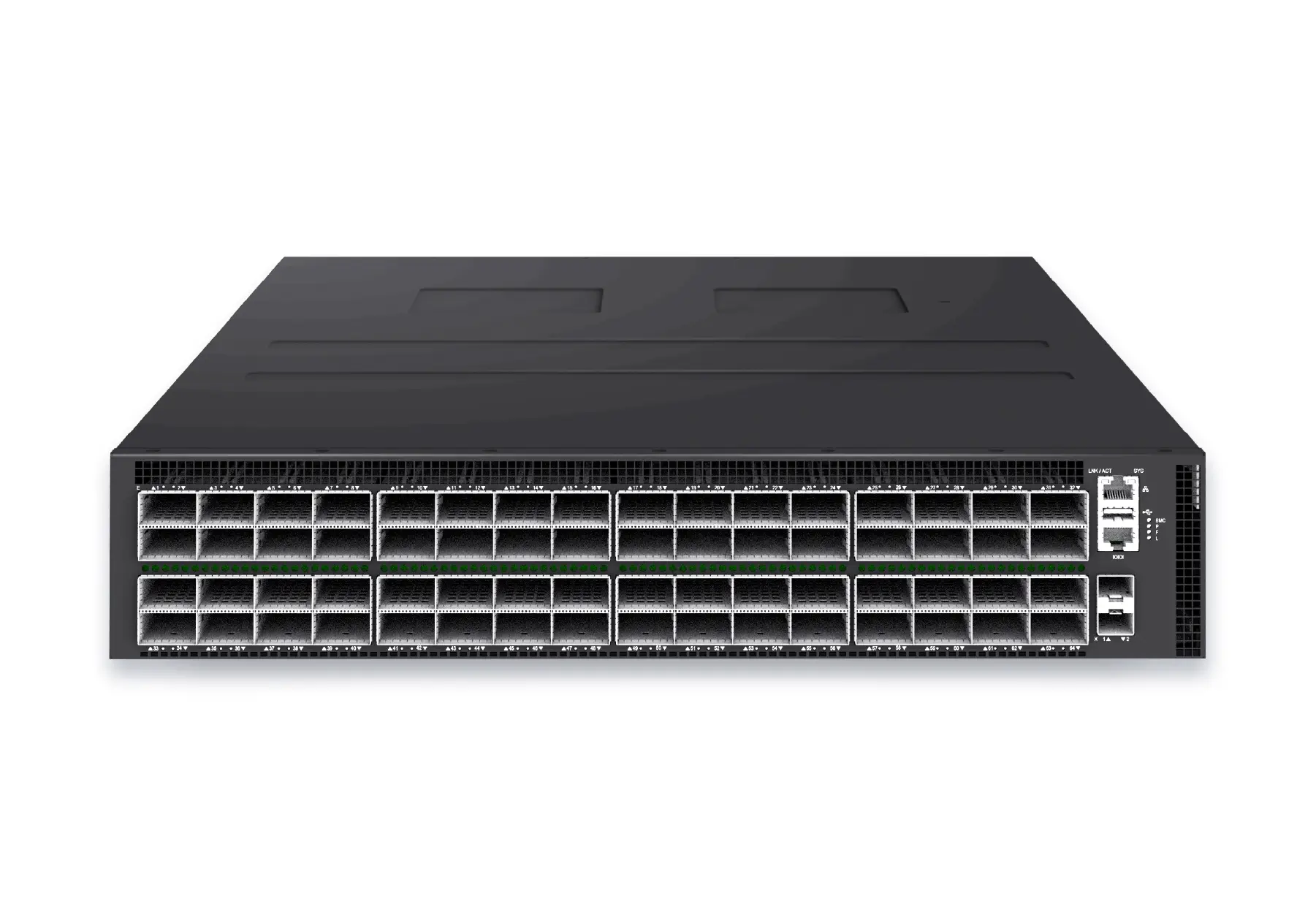 datacenter aiXS-DC-64X800-AI-G164-port 800G AI fabric switch for large-scale GPU clusters, HPC backbones, and ultra-high-throughput data center networks.View product
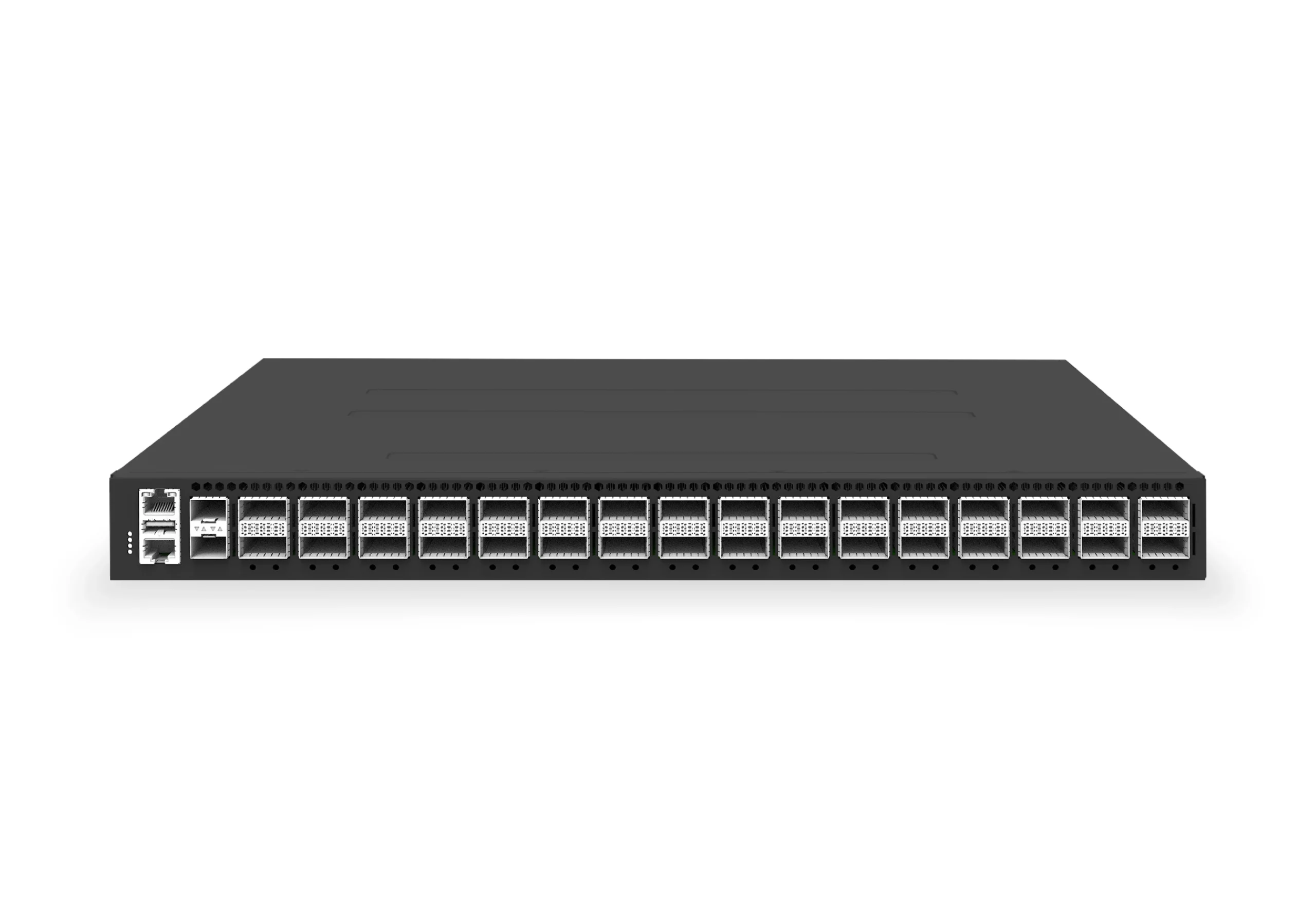 datacenter aiXS-DC-32X400-SP-G232-port 400G spine/core switch for high-capacity data center fabrics and AI-ready backbones.View product
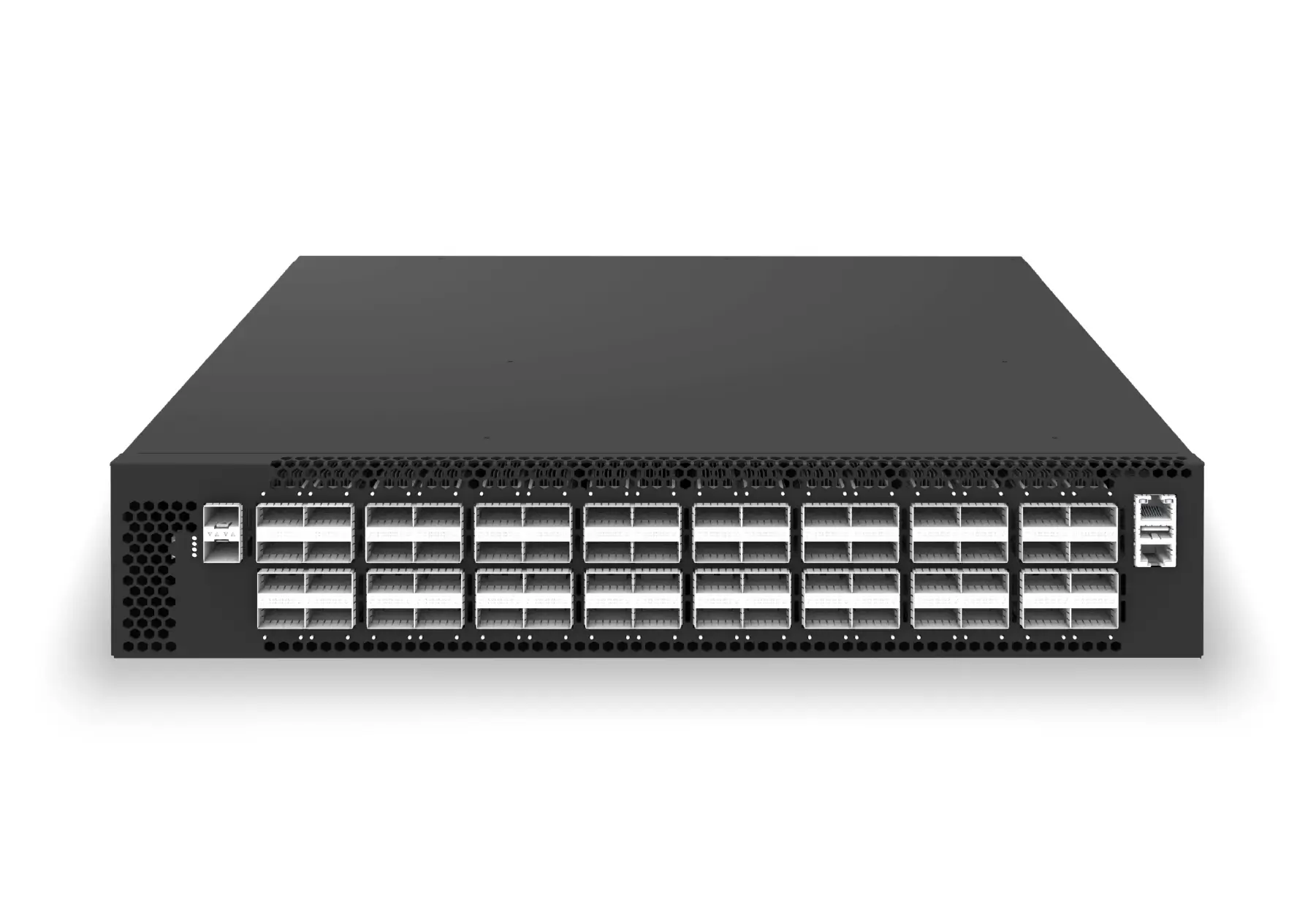 datacenter aiXS-DC-64X200-LS-G164-port 200G leaf/spine switch for high-bandwidth storage, compute, and scale-out data center fabrics.View product
Continue reading
Related articles
 Technical ArticleHow SONiC-Powered 400G and 800G Switches Change AI Data Center Fabric Design in AustraliaEngineering guide for 400G and 800G optics planning covering form factor, reach, telemetry, thermal limits, supply risk, and validation.Read article
 Technical ArticleRoCE v2 GPU Backend Fabrics at 400G and 800G: What Australian Data Center Operators Need to Know in 2026Engineering guide for AI fabric buyers covering RoCE, SONiC, telemetry, optics, support ownership, and deployment validation.Read article
 Technical ArticleWhat Australian Data Center Buyers Need to Know Before Choosing SONiC Switches for 400G and 800G UpgradesEngineering guide for 400G and 800G optics planning covering form factor, reach, telemetry, thermal limits, supply risk, and validation.Read article