
In brief
Engineering guidance on Security Operations Teams Need a SONiC Switch Deployment Validation Checklist Before Buying for Australian Data Cent for Australian network.
Key takeaways
- Most SONiC switch buying guides focus on port density, ASIC compatibility, and protocol support.
- That question comes straight from Site Reliability Engineering practice.
- This article maps established SRE deployment validation principles to a SONiC switch buying checklist for security operations teams, with specific relevance to Australian data center programs where sovereignty, compliance, and auditability carry outsized weight.
Security Operations Teams Are Buying Switches Differently — And Most SONiC Buying Guides Miss It
Most SONiC switch buying guides focus on port density, ASIC compatibility, and protocol support. Those factors matter. But security operations teams evaluating SONiC for Australian enterprise and data center programs are asking a harder question: Can we validate this switch before it touches production traffic, and can we roll it back cleanly if something breaks?
That question comes straight from Site Reliability Engineering practice. SRE frameworks treat deployment as an end-to-end lifecycle — packaging, provisioning, configuring, releasing, and validating software artifacts in runtime environments. The same discipline applies to network operating system deployments on data center switches. If your security team cannot verify a SONiC image’s behavior under controlled conditions before it carries production traffic, the switch is a risk regardless of its spec sheet.
This article maps established SRE deployment validation principles to a SONiC switch buying checklist for security operations teams, with specific relevance to Australian data center programs where sovereignty, compliance, and auditability carry outsized weight.
Why the Australian Context Changes the Buying Calculus
Australia’s data center market has distinctive pressures. As David Hirst, CEO of Macquarie Data Centres, explained on the Open Compute Project Podcast, Australia’s sovereign approach to data infrastructure means compliance is not a checkbox — it is a market advantage. AI workloads are shifting data center design from real estate thinking to chip-out thinking, and long-term operators must plan for workloads that are bursty, unpredictable, and subject to data sovereignty requirements.
For security operations teams, this means:
- Audit trails are non-negotiable. Every switch deployment must be traceable — who deployed what version, when, and with what configuration. SONiC’s open-source architecture, built on a containerized and modular Linux foundation, makes this technically feasible, but only if the buying team demands it at evaluation time.
- Rollback must be tested, not assumed. SRE research shows that rollback failure is a common deployment failure mode: symptoms include a rollback that does not restore state, likely caused by incompatible migrations, mitigated by pre-checking the rollback path. Security teams should ask vendors to demonstrate rollback workflows during proof-of-concept, not after purchase.
- Observability must be built in, not bolted on. The SRE deployment model requires that deployed units be instrumented for telemetry. For SONiC switches, this means every firmware or configuration change should emit structured telemetry tagged with version metadata, enabling security teams to correlate post-deploy behavior changes to specific switch updates.
The SONiC Deployment Validation Checklist for Security Ops
Drawing from SRE deployment best practices, here is a 10-point validation checklist security operations teams should use when evaluating SONiC switches for Australian data center programs.
1. Preflight Checks Before Traffic Shift
SRE frameworks define preflight checks as automated gating tests before traffic shift. For SONiC switch procurement, ask: Does the vendor or integration partner provide automated pre-deployment validation that tests image integrity, configuration compatibility, and basic forwarding behavior before the switch carries production traffic?
2. Canary Rollout Capability
Canary deployments route a small percentage of traffic to a new version and analyze signals. In a SONiC spine-leaf fabric, this means the ability to upgrade one leaf switch, observe telemetry for a defined window, and then promote or roll back. Ask: Can the SONiC distribution or management platform support staged rollout with automated canary analysis?
3. Rollback Path Validation
The most cited deployment failure mode in SRE literature is rollback failure — the rollback does not restore state, often due to incompatible migrations. Security teams should require that the SONiC switch vendor demonstrate a tested, automated rollback path during evaluation. A rollback plan that has never been exercised in staging is not a plan.
4. Observability Tagging on Every Deploy
Deployment observability requires tagging telemetry with deploy version, commit hash, environment, and pipeline ID. For SONiC switches, this means the NOS and management layer should tag every configuration and firmware change event with metadata that flows into the security team’s log aggregation and SIEM tools. If the switch cannot emit structured deployment events, the security team loses root-cause visibility.
5. Configuration Drift Detection
Configuration drift — when runtime state diverges from declared state — is a persistent deployment risk. SONiC’s use of JSON-based configuration files and its support for declarative management models (including NETCONF/YANG) enable drift detection, but only if the buying team specifies this as a requirement. Ask: Does the management platform detect and alert on configuration drift between the intended state and the live switch?
6. Secrets and Credential Management
SRE deployment frameworks stress that secrets management — secure storage and injection of secrets — protects credentials during deployment. For SONiC switches, this covers API keys, management plane credentials, and SNMP community strings. Security teams should verify that credential rotation does not require full switch redeployment and that secrets are not stored in plaintext in configuration files.
7. Error Budget and Change Failure Rate Tracking
SRE practice ties deployment cadence to error budgets. For security operations, this translates to tracking change failure rate (the percentage of switch deployments causing incidents) and mean time to restore after a failed deployment. Ask the vendor or integration partner: What telemetry does the SONiC deployment pipeline emit to support change failure rate tracking?
8. Compliance-Grade Audit Logging
Australian data center programs operating under sovereignty and regulatory requirements need immutable logs of deployment events. SONiC’s open architecture supports this in principle — deployment events can be logged to append-only stores — but the buying team must specify the audit format, retention policy, and integration with existing compliance tooling.
9. Network Telemetry Integration (INT, Telemetry Streaming)
Modern SONiC deployments support In-band Network Telemetry (INT) and streaming telemetry. For security operations, this means post-deployment visibility into packet paths, latency, and policy enforcement. Ask: Does the SONiC switch support INT or equivalent telemetry that the security team can consume in their monitoring stack after each deployment event?
10. Tested Disaster Recovery and Failover
SRE frameworks include disaster recovery drills as part of deployment validation. For SONiC switches in Australian data centers, this means the buying team should request a documented failover test: if a switch upgrade fails in a spine-leaf fabric, how does the fabric recover, and how long does recovery take?
How This Checklist Maps to xSONiC Product Families
xSONiC’s product portfolio aligns with several checklist items:
- Data Center AI Switches: Enterprise SONiC switching for AI/ML clusters and spine-leaf fabrics supports canary rollout, telemetry tagging, and NETCONF-based configuration management — directly addressing checklist items 2, 4, and 5.
- Bare Metal Switches: Open switching hardware for custom NOS deployments gives security teams full control over deployment pipelines, enabling preflight checks and rollback validation (items 1 and 3).
- Network Packet Brokers: Traffic aggregation, filtering, and replication support post-deployment security tool delivery and observability (items 7 and 9).
- Optical Transceivers: Correctly validated optics prevent a class of deployment failures caused by link-layer incompatibility, which is especially relevant during fabric upgrades.
The Competitor Gap: Incumbent Vendors Do Not Offer This Framework
Conventional switch vendors sell feature lists and TCO models. They do not hand security operations teams a deployment validation checklist at buying time, because their closed NOS architectures make many of these checks impossible or impractical. SONiC’s open-source, containerized, Linux-based architecture — maintained under the SONiC Foundation and the Open Compute Project — enables every item on this checklist in principle. But enabling it in practice requires buying teams to demand it.
This is the editorial gap xSONiC can fill: not just selling SONiC switches, but equipping security operations teams with the validation framework they need to buy with confidence.
What Security Ops Teams Should Do Next
- Request a deployment validation demo from your SONiC switch vendor or integration partner, covering preflight checks, canary rollout, and rollback.
- Insist on observability tagging in the switch management platform — every deploy event must emit structured telemetry.
- Test the rollback path during proof-of-concept, not after purchase.
- Define your error budget policy for network changes and require the vendor to support change failure rate tracking.
- Map audit requirements to SONiC’s logging capabilities and validate compliance-grade immutable logging.
For teams evaluating SONiC in Australian data center programs, this checklist is not optional infrastructure hygiene. It is the difference between a switch that security teams can validate and a switch they have to trust.
Engineering Evidence Floor
For packet broker and traffic visibility topics, accept capacity claims only after replication, filtering, and tool delivery are modelled together. The evidence package should include source links, 95th percentile utilisation, burst peaks, tunnel handling, packet slicing or deduplication, replication factor, tool-port capacity, HA behaviour, and alert ownership. A useful pilot should replay 30 minutes of representative traffic, cover 100G/400G links where present, and include at least 3 failure or tool-overload cases.
| Evidence area | What to validate | Acceptance gate | Rework trigger |
|---|---|---|---|
| Source traffic | Link speed, burst peak, packet mix, and tunnel mix | Model covers current and 12 months growth | Average utilisation drives sizing |
| Replication | Copy count, filters, deduplication, slicing, and load balance | 30 minutes replay with rules enabled | Vendor proof uses clean traffic only |
| Tool delivery | IDS/NDR/SIEM ingress, loss counters, and failover | No sustained drops at broker or tool | Tools overload while broker is healthy |
| Resilience | HA, bypass, link failure, tool failure, and rollback | 3 failure cases documented | Visibility disappears during incidents |
| Audit | Evidence bundle, retention, access control, and ownership | P1 packet evidence ready within 2 hours | Teams debate which data is authoritative |
Engineering FAQ
What should telemetry prove beyond SNMP polling? Telemetry should prove queue behaviour, interface errors, optics health, route state, congestion signals, drops, and config drift at a useful interval. AI and high-speed fabrics often need streaming data rather than periodic polling.
How should gNMI, NETCONF, and YANG be evaluated? Evaluate model coverage, authentication, collector compatibility, update frequency, failure behaviour, and how data maps into the NOC, SIEM, or automation system. Protocol support alone does not prove operational value.
What makes telemetry useful for incident response? Useful telemetry is timestamped, correlated across devices, retained long enough for investigation, and tied to known topology and change events. It should help answer what changed, where congestion occurred, and which tool owns the next action.
Related xSONiC Resources
Sources Reviewed
- Ethernet Network Adapters - ConnectX NICs | NVIDIA
- NVIDIA BlueField Data Processing Unit
- NVIDIA Spectrum-X Ethernet Platform
- OpenConfig gNMI Specification
- OpenConfig
- RFC 7950 - The YANG 1.1 Data Modeling Language
- RFC 6241 - Network Configuration Protocol (NETCONF)
- ACSC Essential Eight
- OAIC Notifiable Data Breaches
- APRA CPS 234 Information Security
- NETSCOUT Network Packet Definition
- Cloudflare Network Packet Definition
- SONiC Project Documentation
- Broadcom Ethernet Switching
- Marvell Switching
- NVIDIA Ethernet Switching
- Open Compute Networking
- SONiC GitHub
- SONiC Foundation
Product fit
Products referenced for evaluation
These products are referenced for evaluation context in the article. Confirm workload, port, optics, software, interoperability, and support requirements against the exact deployment before procurement.
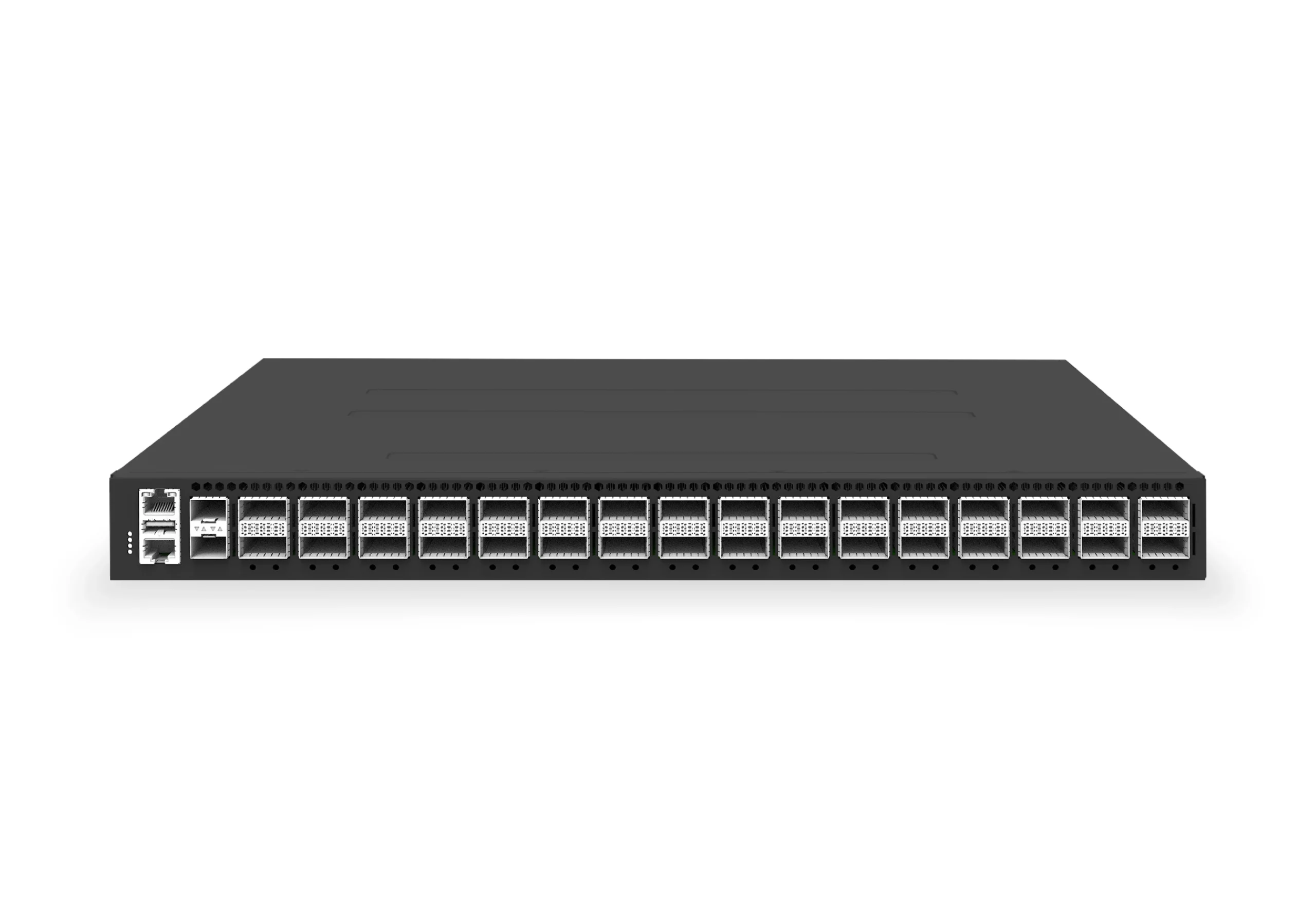 datacenter aiXS-DC-32X400-SP-G232-port 400G spine/core switch for high-capacity data center fabrics and AI-ready backbones.View product
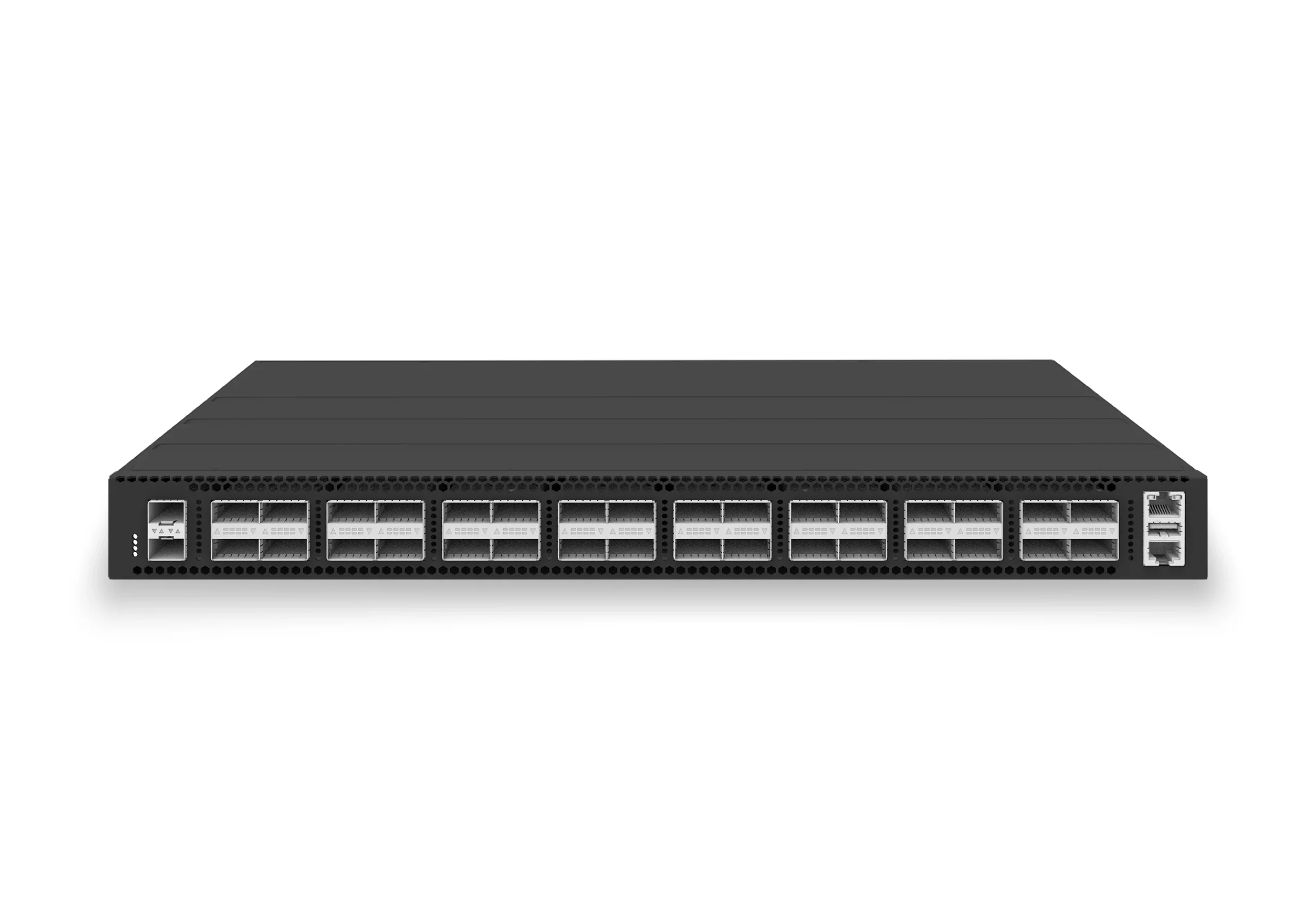 datacenter aiXS-DC-32X100-LS-G232-port 100G leaf/spine switch for VXLAN fabrics, RoCE-ready workloads, and tenant-scale routing.View product
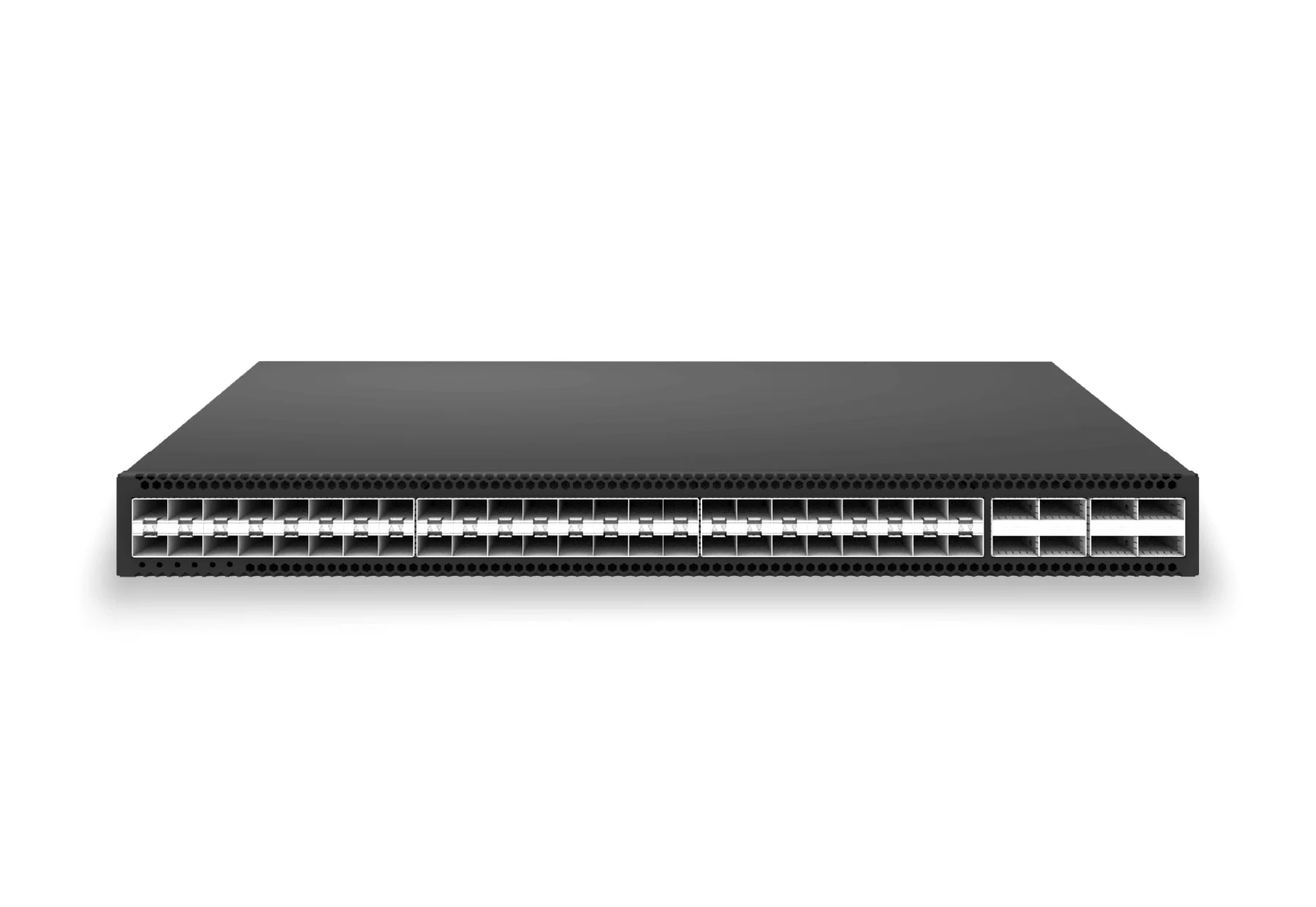 access aggregateXS-AA-48X25-8X100-AGG48x 25G SFP28 aggregation/core switch with 8x 100G QSFP28 for enterprise access and aggregation networks.View product
Continue reading
Related articles
 Technical ArticleSONiC Switch Validation Before Production: What Australian Network Teams Need on Their ChecklistEngineering guide for SONiC and open networking buyers covering platform fit, automation, support, telemetry, and validation evidence.Read article
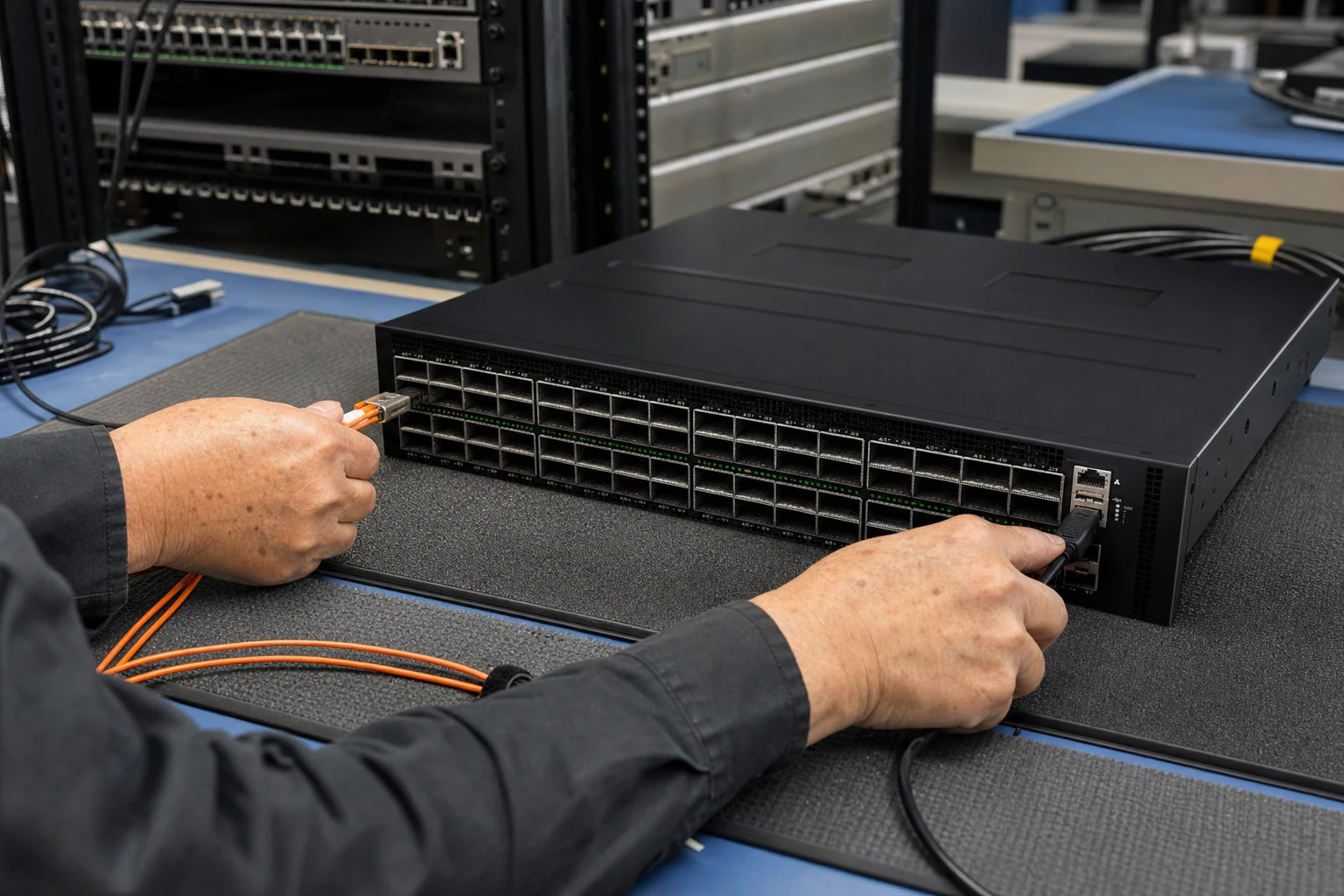 Technical ArticleHow Open NOS Options Like SONiC Are Reshaping Data Center Switch Lock-In Calculations for Network LeadersEngineering analysis of how SONiC and open NOS options change data center switch lock-in, covering SAI, support ownership, migration risk, and validation.Read article
 Technical ArticleWhite Box Switch Risks and Validation Checklist: What Australian Enterprise Teams Must Prove Before DeploymentA structured risk analysis and pre-purchase validation checklist for Australian enterprise teams evaluating white box and bare-metal switches with SONiC or other open NOS options.Read article