In brief
Step-by-step validation playbook for RoCE, UEC, SONiC, 400G/800G, congestion controls, optics, telemetry, failure testing, and support ownership.
Key takeaways
- Freeze the exact ASIC, switch SKU, SONiC image, SAI, firmware, NIC, optics, and cabling bill of materials before performance testing.
- Prove congestion behaviour with workload-shaped traffic and queue evidence, not only link-up checks or headline throughput.
- Make reload, rollback, telemetry gaps, component failure, support escalation, and replacement lead time explicit acceptance gates.
Define the Acceptance Scope Before Building the Pilot
This playbook assumes the architecture decision has been made and focuses on production acceptance. If the team is still comparing topology, congestion design, Ethernet and InfiniBand trade-offs, start with the GPU cluster fabric architecture guide.
Freeze the exact ASIC, switch SKU, SONiC image, SAI, firmware, NIC, optics, and cabling bill of materials before performance testing. Prove congestion behaviour with workload-shaped traffic and queue evidence, not only link-up checks or headline throughput. Make reload, rollback, telemetry gaps, component failure, support escalation, and replacement lead time explicit acceptance gates.
Before lab work begins, freeze the exact switch SKU, ASIC, SONiC image, SAI and firmware versions, NIC firmware, optics, cables, and GPU collective library. Record who owns each layer and what evidence will constitute a pass. Changing any of these components during the pilot creates a new test baseline.
The pilot should answer operational questions that an architecture document cannot: whether the proposed image survives reload and rollback, whether queue and ECN telemetry remains available under congestion, whether optics remain stable at expected rack temperature, and whether the supplier can reproduce and escalate failures on the same build.
- Production-hardened RDMA over Ethernet. RoCE v2 is no longer experimental. Major cloud operators run GPU training clusters numbering in the thousands of GPUs over RoCE v2 Ethernet fabrics today.
- SONiC maturity. Software for Open Networking in the Cloud (SONiC), the Linux Foundation open-source NOS, now supports BGP, RDMA, and containerized network functions on switches from multiple vendors and ASIC families. This gives infrastructure teams a single open control plane across heterogeneous hardware.
- Speed and density economics. Ethernet switch silicon now reaches 800Gb/s per port and 102.4Tb/s aggregate throughput per switch platform, closing the bandwidth gap with InfiniBand while offering broader ecosystem support.
- Operational convergence. Running AI training, inference, storage, and management fabrics on the same Ethernet technology simplifies tooling, staffing, and spare parts inventory.
Why Ethernet Is Competing for GPU Backend Fabrics
Three structural shifts have changed the economics and capability of Ethernet for AI workloads:
1. RoCE v2 Has Reached Production Scale
RoCE v2 (RDMA over Converged Ethernet v2) carries RDMA semantics over standard UDP/IP Ethernet frames. This means GPU-to-GPU memory transfers bypass the OS kernel and CPU, achieving latency characteristics that were previously InfiniBand-exclusive. The SONiC project explicitly lists RDMA as a core capability, and its container-based architecture isolates RDMA stack components for independent troubleshooting and upgrades.
2. Congestion Management Has Caught Up
InfiniBand’s historical advantage was adaptive routing and credit-based flow control. Modern Ethernet ASICs now implement equivalent mechanisms:
- DCBX (Data Center Bridging Capability Exchange) negotiates priority flow control and QoS parameters between endpoints automatically.
- Fast CNP (Congestion Notification Packet) processing enables rapid congestion response at the switch level, reducing tail latency during bursty collective operations.
- INT (In-band Network Telemetry) and IPTPath Telemetry provide per-hop visibility into queue depth, latency, and packet drops across the fabric - something InfiniBand management tools traditionally struggled to offer at the same granularity.
These mechanisms are available on SONiC-based switches and map directly to xSONiC solution pillars.
3. The Ecosystem Is Broader and More Open
Ethernet benefits from decades of standardization, a larger addressable hardware pool, and a more diverse supply chain than InfiniBand. For Australian data center operators, this translates to more vendor options, faster lead times for compatible optics and cables, and a larger talent pool with Ethernet operational experience. SONiC’s open-source model further reduces lock-in risk by decoupling the NOS from any single hardware vendor.
Ethernet vs InfiniBand for GPU Clusters: Decision Criteria
When Ethernet Is the Stronger Choice
- Your team already operates Ethernet-based data center fabrics and wants to extend the same operational model to AI workloads.
- You want to use SONiC as a single open NOS across your entire data center fabric.
- You need multi-vendor hardware flexibility to manage supply chain risk.
- You are building a mixed AI training and inference environment that benefits from fabric convergence.
- You want INT and IPTPath telemetry for real-time per-hop fabric visibility.
When InfiniBand May Still Be Preferred
InfiniBand may still be preferred when the organisation needs a tightly integrated GPU cluster stack, has existing InfiniBand operations experience, or requires a vendor-owned support model across NICs, switches, cables, and management software. Ethernet becomes more attractive when the team can validate RoCE v2, congestion control, telemetry, and SONiC operations as a complete fabric.
GPU Ethernet acceptance matrix
An AI Ethernet decision should be accepted only after the team proves workload behaviour, not after it confirms port speed. The useful question is whether the selected NICs, switches, optics, NOS image, and congestion policy keep GPU jobs stable during the failure and burst patterns that matter in production.
| Decision area | Evidence to capture | Reject or rework if |
|---|---|---|
| Workload communication pattern | AllReduce, all-to-all, parameter-server, inference, and storage traffic profiles with GPU count, message size, and expected east-west utilisation | The design uses a generic “AI fabric” claim without measuring the actual collective or inference traffic pattern |
| RoCE and congestion behaviour | PFC, ECN, DCBX, CNP counters, MTU, queue profile, loss test, incast test, and link failure under load | RoCE is enabled but pause storms, tail latency, retransmission, or recovery timing are not measured |
| Switch and NIC fit | 400G/800G port speed, PCIe lane availability, NIC firmware, switch ASIC, SONiC image, optics, and cable reach | A single high-speed component is approved while another component constrains usable fabric bandwidth |
| Telemetry and operations | INT/IPTPath or equivalent path visibility, queue depth, ECN marks, drop counters, config diff, and alert routing | Operators cannot identify which hop, queue, optic, or host caused a training slowdown |
| Support boundary | NIC, switch, NOS, optics, GPU server, and integrator escalation path with Australian support hours | A production incident can bounce between NIC, switch, NOS, and optics owners without one accountable path |
The first Ethernet-vs-InfiniBand proof should run for 30 minutes at minimum, not just a link-up test. Use 100G, 200G, 400G, or 800G links that match the intended cluster, record p99 latency, ECN/CNP counters, queue depth, packet drops, and GPU utilisation, then repeat after 1 link failure and 1 spine failure. If the test cannot show recovery time in seconds or minutes, the fabric has not been evaluated as a production backend.
SONiC as the Open NOS Foundation for AI Ethernet Fabrics
SONiC (Software for Open Networking in the Cloud) is the key enabler that makes Ethernet a credible alternative for AI clusters. Understanding its architecture is essential for any deployment team.
Architecture Overview
SONiC is built on a containerized architecture where each network function runs in its own Docker container. According to the SONiC project documentation, this design provides:
- Better fault isolation - a failure in one container (e.g., the BGP daemon) does not crash the entire switch.
- Easier debugging and troubleshooting - individual containers can be restarted without a full switch reboot.
- Simplified upgrades - components can be updated independently.
- Enhanced scalability - the modular design supports adding new functionality without monolithic refactoring.
SONiC uses the Switch Abstraction Interface (SAI) to decouple the NOS from the underlying switch ASIC. This means the same SONiC image can run on hardware from different vendors, provided the vendor implements the SAI interface for their ASIC. The project is licensed under Apache 2.0.
Relevance to AI Fabrics
For AI cluster backends specifically, SONiC provides:
- BGP-based underlay routing for spine-leaf fabric architectures.
- RDMA support for RoCE v2 traffic between GPU nodes.
- EVPN-VXLAN overlay capability for multi-tenant AI environments or mixed training/inference fabrics.
- Standard Linux interfaces and tools that AI platform teams are already familiar with.
- Programmatic configuration via JSON-based config files and standard Linux tooling.
How This Maps to xSONiC
xSONiC data center AI switches and bare-metal platforms leverage this SONiC foundation. For teams evaluating the Ethernet-for-AI shift, the combination of SONiC-compatible bare-metal hardware and xSONiC’s AI Fabric and GPU Backend Fabric solution pillars provides a reference architecture path.
Source grounding: SONiC architecture details are from the sonic-net/SONiC GitHub README and sonicfoundation.dev. The SAI abstraction and containerized architecture are documented in the official SONiC project materials.
Engineering FAQ
What proves Ethernet is viable for a GPU cluster? A viable Ethernet fabric must keep GPU utilisation stable during representative collective traffic, incast, storage reads, link failure, and mixed best-effort traffic. A clean link-up test is not evidence enough.
When should InfiniBand still win the design review? InfiniBand should remain on the table when the buyer needs a fully integrated GPU networking stack, already has InfiniBand operations skill, or cannot independently validate RoCE congestion behaviour on the selected Ethernet platform.
How should UEC change an Ethernet roadmap discussion? UEC does not remove the need to test today’s RoCE fabric, but it gives buyers a standards-track signal that Ethernet for AI and HPC is moving toward richer transport, congestion, security, and interoperability behaviour.
Related xSONiC Resources
Sources Reviewed
- Ethernet Network Adapters - ConnectX NICs | NVIDIA
- NVIDIA Spectrum-X Ethernet Platform
- NVIDIA Ethernet Platform Products
- Ultra Ethernet Consortium
- Ultra Ethernet Specification 1.0.2
- UEC Specification 1.0 Announcement
- SONiC Project Documentation
- NVIDIA Ethernet Switching
- Open Compute Networking
- SONiC GitHub
- SONiC Foundation
Product fit
Products referenced for evaluation
These products are referenced for evaluation context in the article. Confirm workload, port, optics, software, interoperability, and support requirements against the exact deployment before procurement.
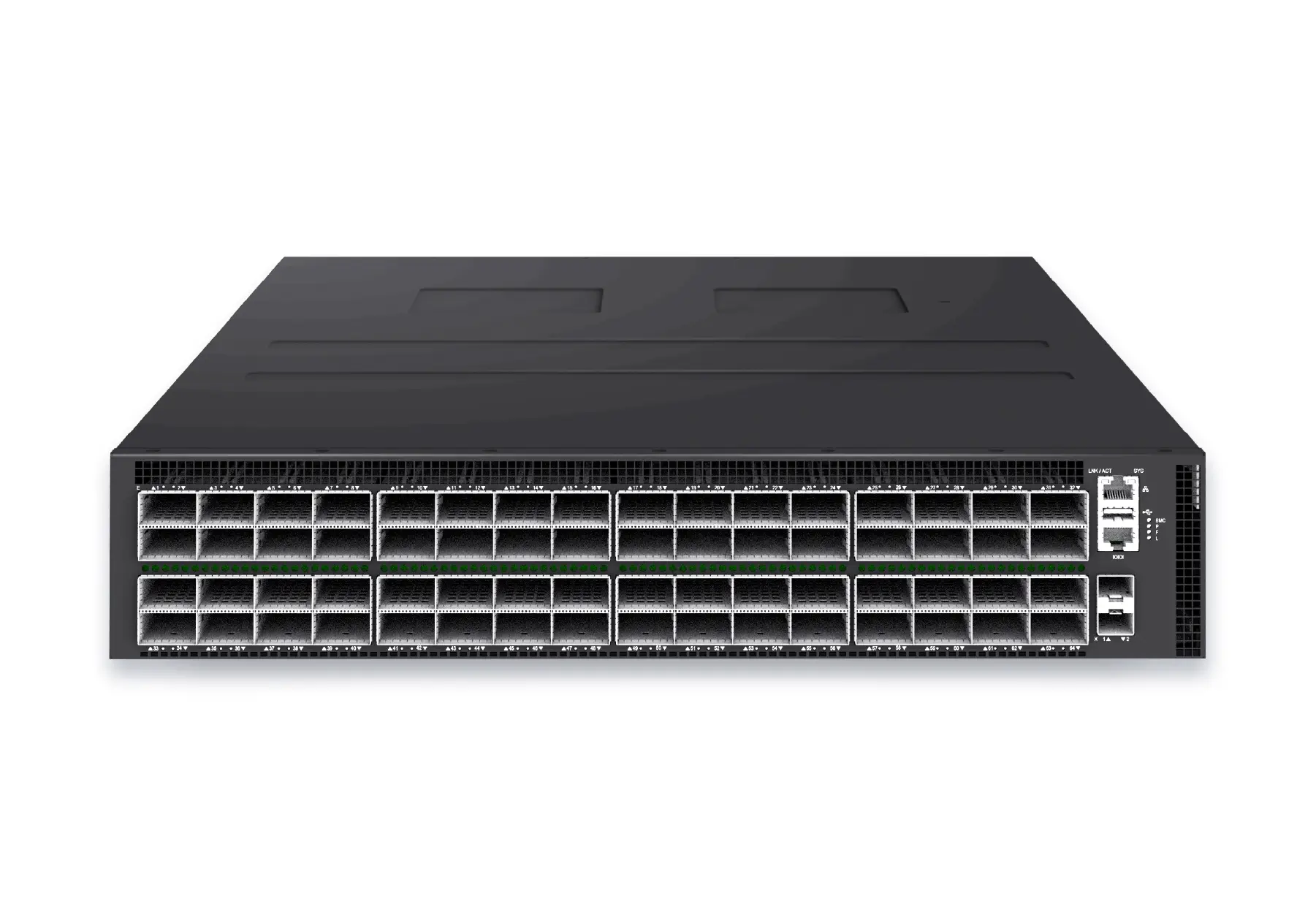 datacenter aiXS-DC-64X800-AI-G164-port 800G AI fabric switch for large-scale GPU clusters, HPC backbones, and ultra-high-throughput data center networks.View product
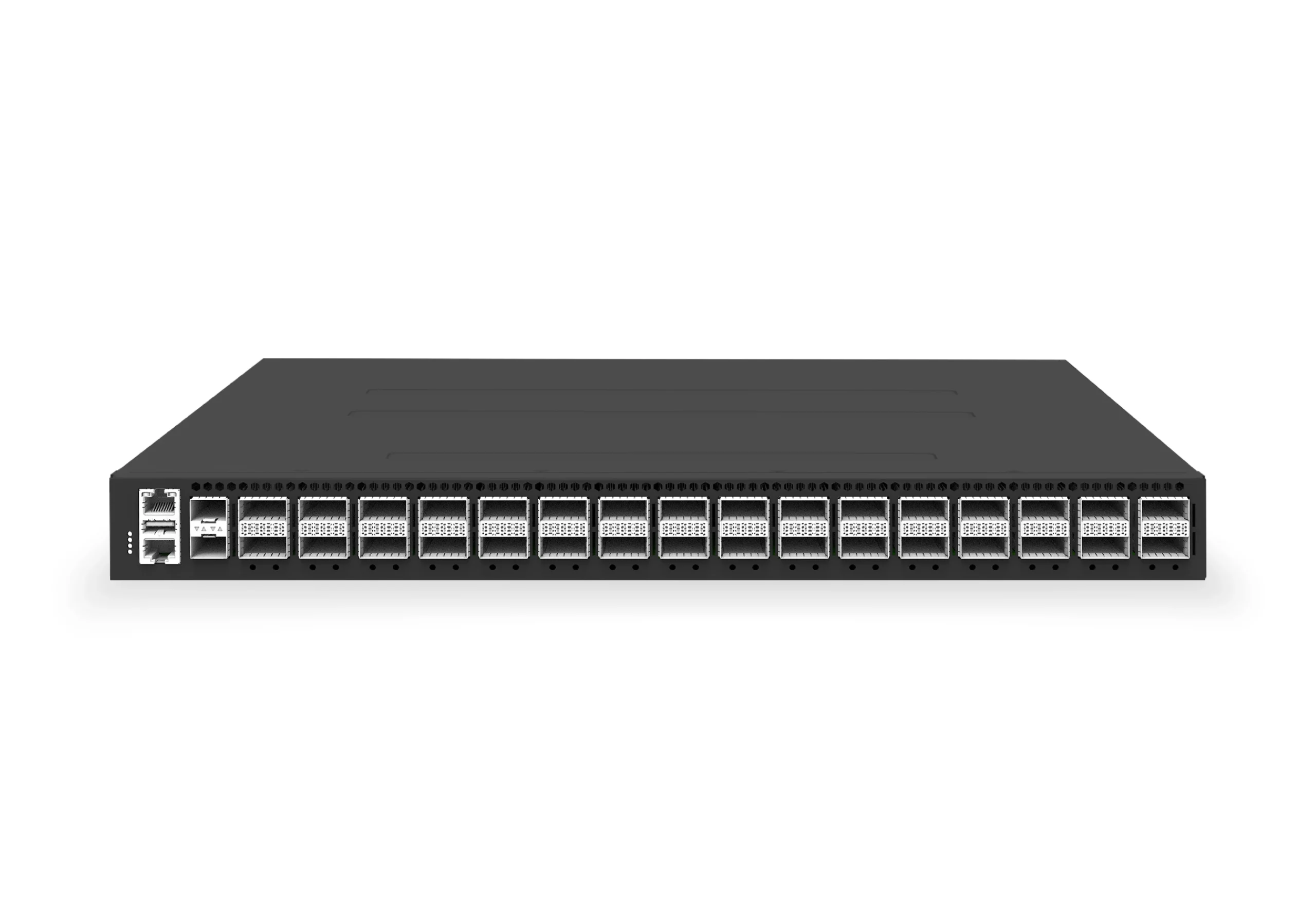 datacenter aiXS-DC-32X400-SP-G232-port 400G spine/core switch for high-capacity data center fabrics and AI-ready backbones.View product
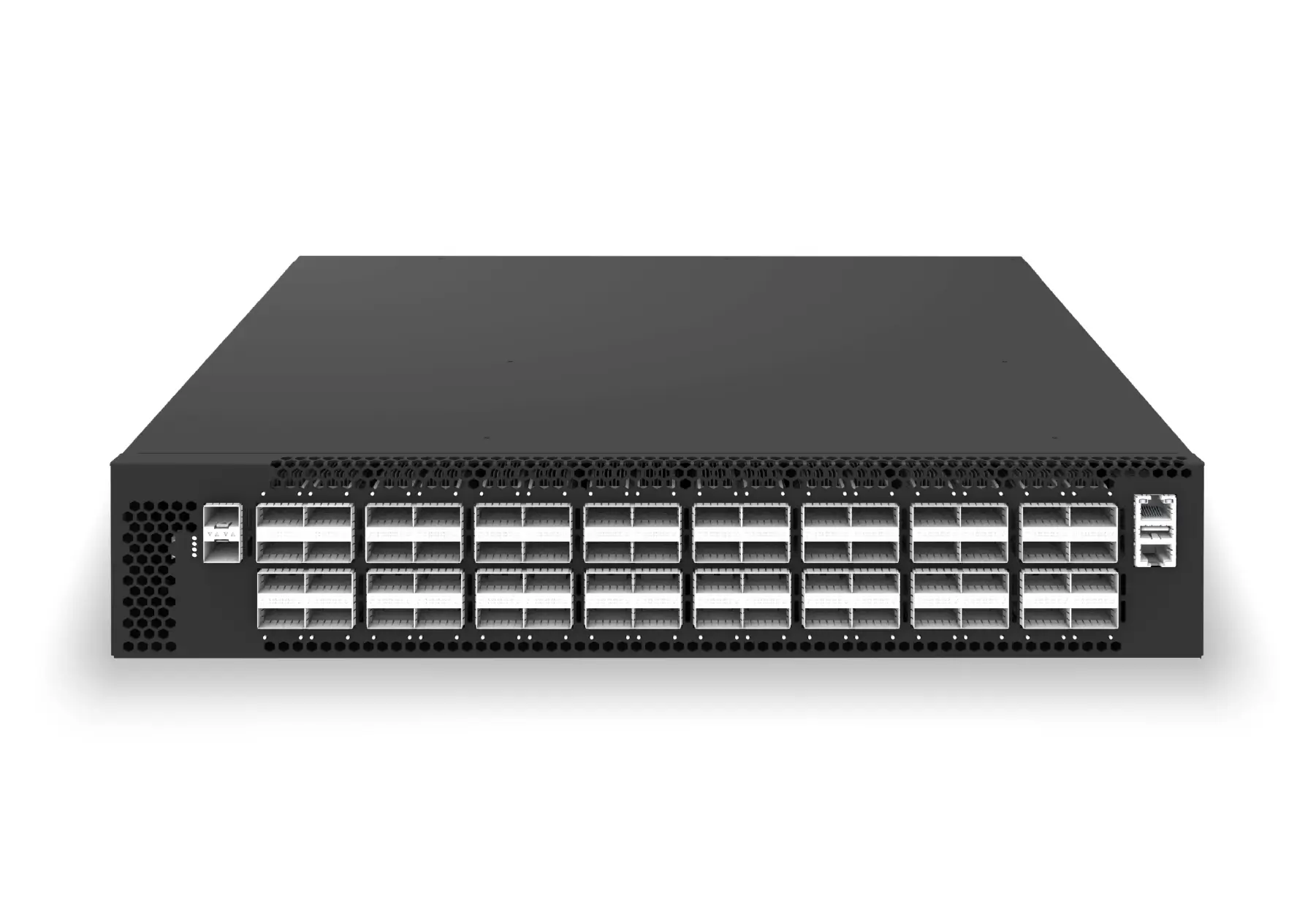 datacenter aiXS-DC-64X200-LS-G164-port 200G leaf/spine switch for high-bandwidth storage, compute, and scale-out data center fabrics.View product
Continue reading
Related articles
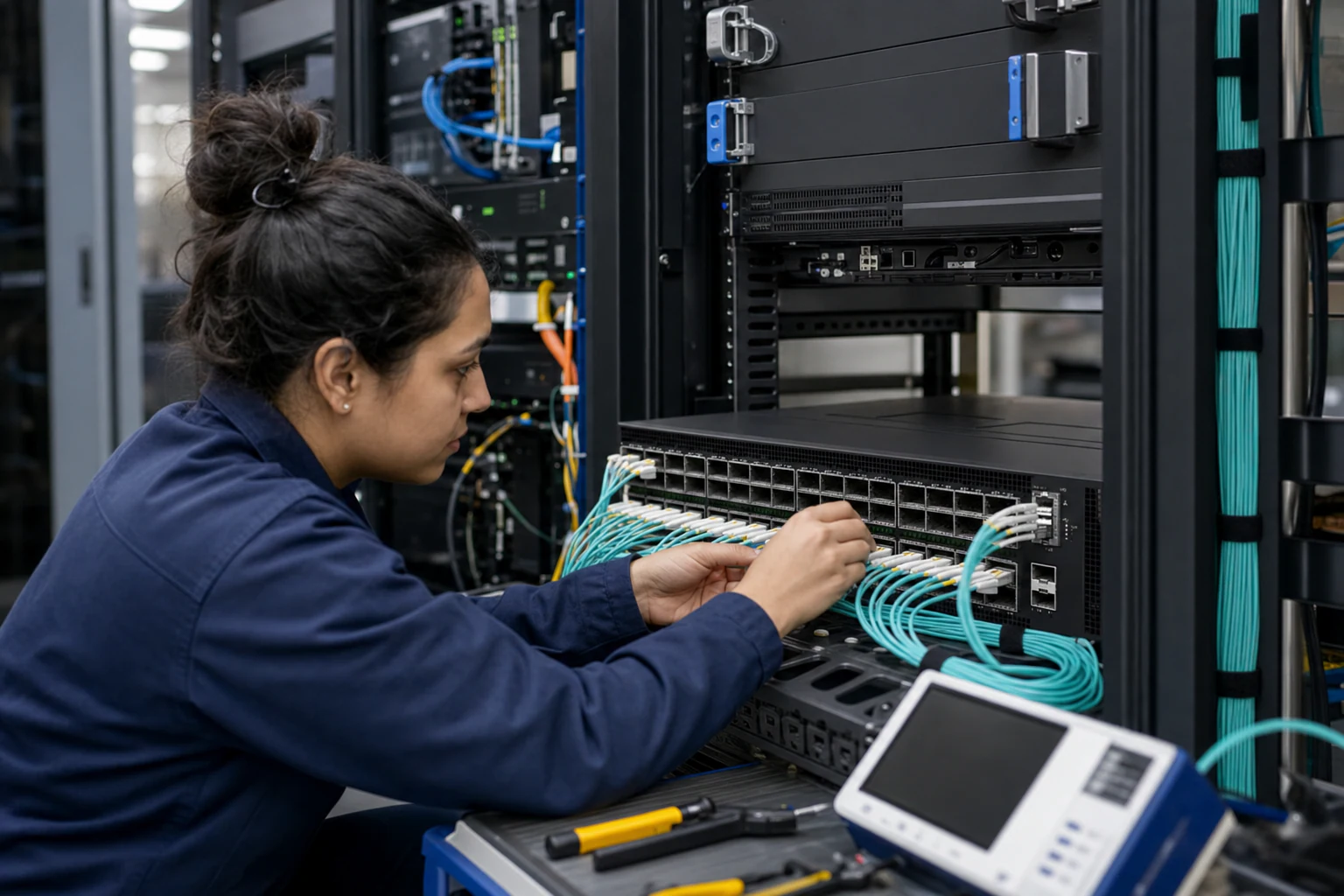 Technical ArticleDesigning GPU Backend Fabrics with RoCE v2: How SONiC 400G/800G Switches Transform AI Data CentersEngineering guide for AI fabric buyers covering RoCE, SONiC, telemetry, optics, support ownership, and deployment validation.Read article
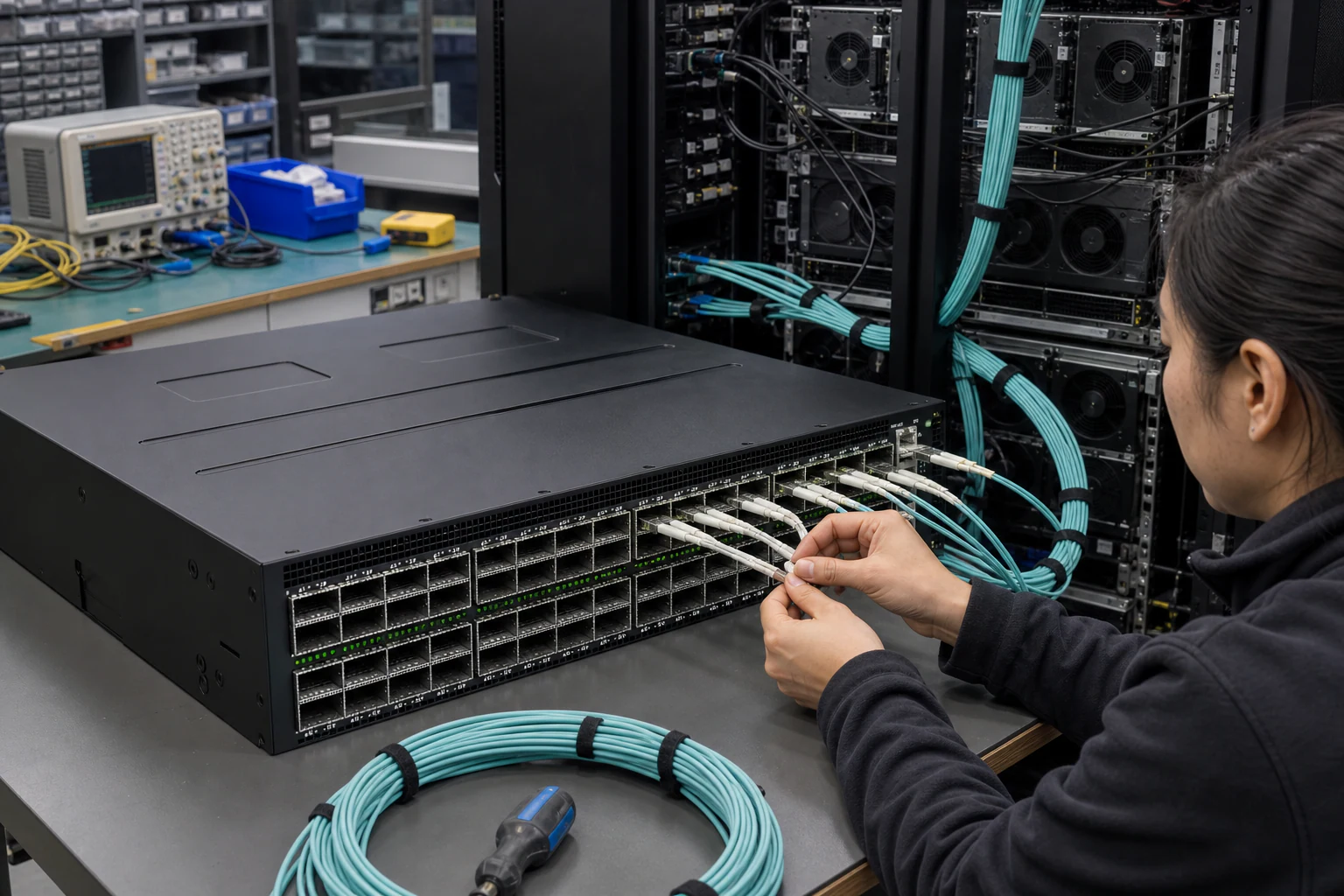 Technical ArticleWhy Open SONiC Ethernet Is Becoming the Default AI Fabric for GPU Backend ClustersEngineering guidance on Open SONiC Ethernet Is Becoming the Default AI Fabric for GPU Backend Clusters for Australian network teams, covering underlay design.Read article
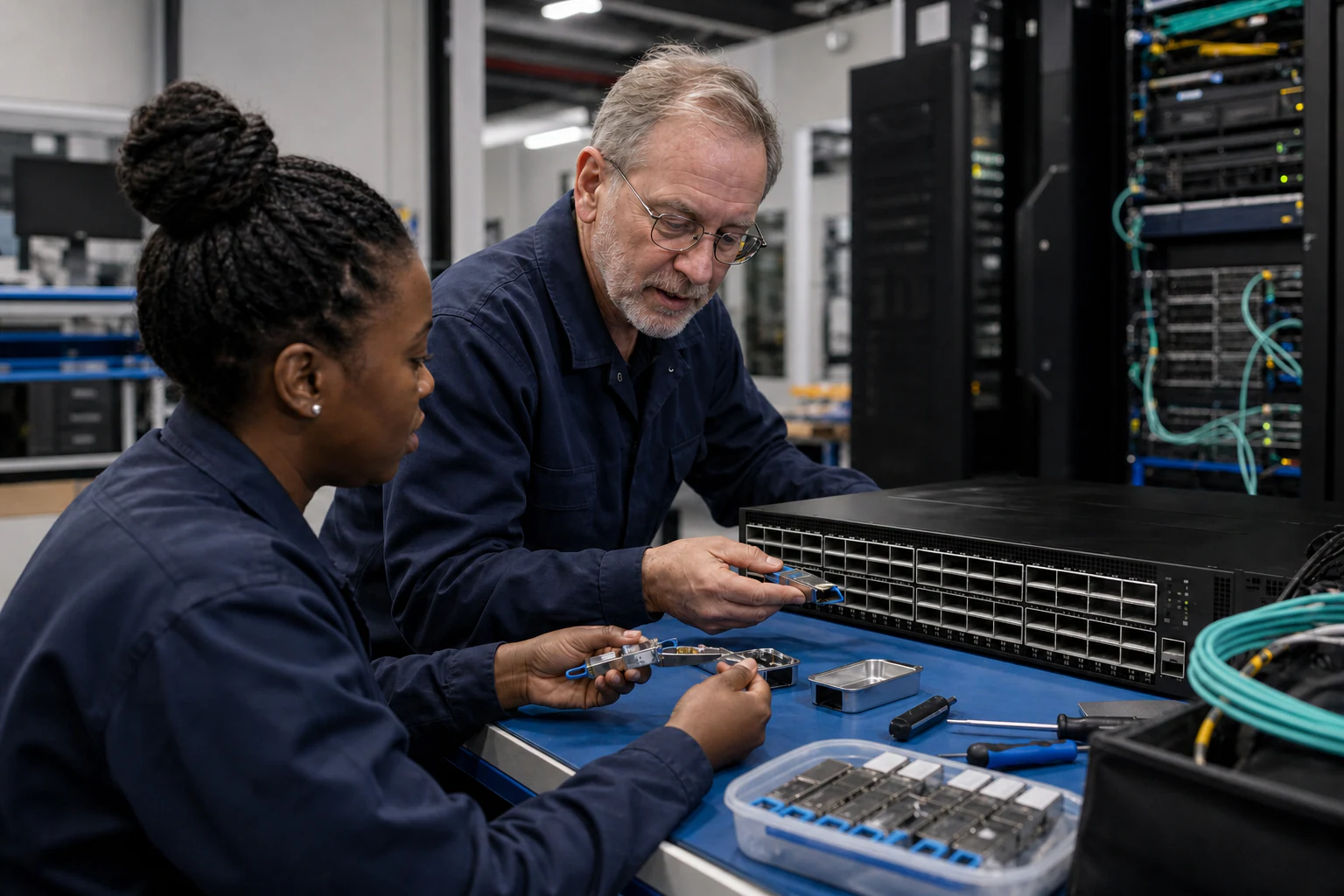 Technical ArticleGPU Cluster Fabric Design: Why AI Workloads Need Purpose-Built EthernetArchitecture guide to GPU cluster fabrics covering RoCE v2, PFC, ECN, DCBX, SONiC, 400G/800G, telemetry, InfiniBand trade-offs, and acceptance evidence.Read article