In brief
Engineering guidance on SONiC Switch Buying Guide for 400G and 800G Data Centers for Australian data centre buyers, covering form factor choice, link budgets, cabling.
Key takeaways
- Australian data center operators face a convergence of pressures: AI workload growth, east-west traffic explosion in spine-leaf fabrics, and the approaching end-of-life for 100G aggregation layers built between 2018 and 2021.
- For Australian enterprises, the 400G-to-800G transition is not just a speed upgrade.
- This guide provides a structured buying framework for evaluating SONiC-based 400G and 800G switching infrastructure, with specific attention to Australian market realities: power constraints in Sydney and Melbourne colocation facilities, local supply chain lead times for optics and transceivers, and the growing availability of Enterprise SONiC distributions through regional channel partners.
Why 400G and 800G Matters for Australian Data Centers Right Now
Australian data center operators face a convergence of pressures: AI workload growth, east-west traffic explosion in spine-leaf fabrics, and the approaching end-of-life for 100G aggregation layers built between 2018 and 2021. According to the SONiC Foundation, SONiC is an open-source network operating system based on Linux that runs on switches from multiple vendors and ASICs, offering a full suite of network functionality including BGP and RDMA that has been production-hardened in the data centers of some of the largest cloud service providers (sonicfoundation.dev).
For Australian enterprises, the 400G-to-800G transition is not just a speed upgrade. It is an architectural decision that determines whether you can support GPU backend fabrics for AI training clusters, maintain RoCE v2 lossless transport for RDMA workloads, and avoid proprietary NOS lock-in for the next five to seven years.
This guide provides a structured buying framework for evaluating SONiC-based 400G and 800G switching infrastructure, with specific attention to Australian market realities: power constraints in Sydney and Melbourne colocation facilities, local supply chain lead times for optics and transceivers, and the growing availability of Enterprise SONiC distributions through regional channel partners.
Who This Guide Is For
- Data center architects designing spine-leaf or Clos fabrics at 400G or 800G
- Network engineers evaluating SONiC as an alternative to proprietary NOS platforms
- AI infrastructure teams building GPU backend fabrics requiring lossless RDMA
- Australian enterprise IT leaders planning data center refresh or expansion
- Procurement teams comparing open networking and traditional vendor switch stacks
Understanding SONiC Architecture for High-Speed Data Centers
SONiC (Software for Open Networking in the Cloud) uses a containerized architecture where each network function runs in its own Docker container. This design provides better fault isolation, easier debugging and troubleshooting, simplified upgrades and maintenance, and enhanced scalability compared to monolithic switch OS designs (github.com/sonic-net/SONiC).
The key architectural components relevant to 400G and 800G buying decisions:
Switch Abstraction Interface (SAI): SONiC is built on SAI, which decouples the network operating system from the underlying ASIC silicon. This is the foundation that allows SONiC to run on switches powered by Broadcom switch ASICs, Marvell Teralynx, NVIDIA Spectrum, and other merchant silicon platforms. For buyers, SAI means your NOS investment survives hardware refresh cycles.
Containerized Services: BGP, LLDP, DHCP relay, SNMP, telemetry, and other services run as independent Docker containers. This modularity allows teams to upgrade individual services without full switch reboots — critical for maintaining uptime in production 400G/800G fabrics.
Redis Database (RedisDB): All inter-process communication in SONiC uses a centralized Redis database. This architecture enables real-time state sharing between containers and supports programmable configuration via REST APIs, NETCONF, and gNMI.
RDMA and RoCE Support: SONiC supports RDMA over Converged Ethernet (RoCE), Data Center Bridging Capability Exchange (DCBX), and Priority Flow Control (PFC) — all essential for lossless 400G/800G fabrics serving GPU clusters and storage backends.
SONiC Distribution Landscape
There are two primary SONiC distribution paths for Australian buyers:
- Community SONiC (sonic-net): Open-source, freely available, community-supported. Requires internal engineering capability for deployment, troubleshooting, and feature development.
- Enterprise SONiC Distributions: Commercially supported builds offered by hardware vendors and networking companies. These typically include additional management features, TAC support, and validated hardware compatibility.
400G vs 800G: Choosing the Right Speed Tier
The choice between 400G and 800G depends on your workload profile, ASIC availability, optics maturity, and budget timeline. Neither is universally superior.
Decision Matrix: 400G vs 800G
| Factor | 400G | 800G |
|---|---|---|
| ASIC Maturity | Mature. Multiple shipping ASIC generations from Broadcom (Memory Switch), Marvell (Teralynx), and NVIDIA (Spectrum-3, Spectrum-4) | Emerging. NVIDIA Spectrum-4 and Spectrum-6 support 800G. Broadcom and Marvell 800G ASICs are in production or late sampling stages |
| Optics Availability | Widely available. QSFP-DD and OSFP 400G transceivers from multiple vendors with established supply chains | Limited but growing. OSFP 800G transceivers available from select vendors. Co-packaged optics (CPO) emerging as an alternative |
| Price per Port | Lower. Mature supply chain drives competitive pricing | Higher. Early-stage pricing with expected 30-50 percent premium over 400G |
| Switch Density | Up to 64x 400G ports in a 2U form factor (e.g., NVIDIA SN5400) | Up to 64x 800G ports in a 2U form factor (e.g., NVIDIA SN5600) |
| Fabric Scale | Suitable for most enterprise and colocation spine-leaf deployments | Required for large-scale AI training clusters and hyperscale environments |
| SONiC Support | Broadly supported across multiple hardware platforms | Supported on select platforms; check SONiC supported devices list |
| Australian Market Readiness | Well-established supply chain through local distributors | Limited local stock; longer lead times expected |
When 400G Is the Right Choice
- Your spine-leaf fabric serves fewer than 500 server racks
- Workloads are mixed (cloud, storage, general compute) rather than pure AI training
- You need proven, price-competitive optics with local Australian availability
- Your data center power budget constrains per-rack power draw
- You are refreshing from 100G and want a conservative, well-validated step up
When 800G Is the Right Choice
- You are building GPU backend fabrics for AI training clusters requiring massive east-west bandwidth
- Your AI infrastructure roadmap targets 1,000+ GPU nodes within 18 months
- You need to maximize port density per rack unit to reduce leaf switch count
- You have confirmed 800G optics availability and acceptable lead times through your supply chain
- Your ASIC vendor has validated 800G SONiC support on your target platform
ASIC Selection: The Foundation of Your 400G/800G Switch
The ASIC determines your switch capabilities more than any other component. For SONiC-based 400G and 800G deployments, three major ASIC families dominate:
Broadcom switch ASIC family
Broadcom remains the most widely deployed merchant silicon for SONiC switches. Their switching portfolio spans the full range of data center speeds. For 400G, the Memory Switch (Memory) series provides proven silicon with extensive SAI (Switch Abstraction Interface) support. For 800G, newer Broadcom ASICs are entering production. The key advantage is the broadest ecosystem of hardware platforms and SONiC community support.
NVIDIA Spectrum Family
NVIDIA offers the Spectrum-4 SN5000 series, described as purpose-built for AI, connecting cloud-scale GPU compute at speeds up to 800 gigabits per second (Gb/s) (nvidia.com). The Spectrum-6 SN6000 series takes this further with co-packaged optics, doubling bandwidth per lane compared to the previous generation and significantly improving network resiliency. NVIDIA Spectrum switches support Pure SONiC alongside NVIDIA Cumulus Linux, offering NOS flexibility (nvidia.com/en-us/networking/ethernet-switching).
NVIDIA Spectrum switches provide features particularly relevant to 800G AI fabric deployments:
- Max port speed: 800 Gb/s
- Max flow counters: 512K entries
- Max ACLs: 512K entries
- Max IPv4 routes: 512K entries
- Up to 51.2 Tb/s throughput in a 2U form factor (SN5600 series)
Marvell Teralynx Family
Marvell offers Teralynx ASICs targeting 400G and 800G data center switching. SAI support for Marvell silicon varies by platform and SONiC version. Buyers should verify specific Teralynx ASIC SAI maturity before committing.
ASIC Evaluation Checklist
- Confirm ASIC SAI maturity for your target SONiC version
- Verify RoCE v2, PFC, and ECN support on the ASIC
- Check buffer size and architecture for lossless RDMA transport
- Confirm maximum port count at your target speed (400G or 800G)
- Validate telemetry capabilities (INT, gNMI, sFlow)
- Assess power consumption per port at target speed
- Confirm SONiC container compatibility with ASIC SDK
- Verify hardware platform is on the SONiC supported devices list
Optics and Cabling Planning for 400G and 800G
Optics selection is one of the most impactful decisions in a 400G or 800G build. Transceiver cost often exceeds switch cost at scale, and optics availability directly affects deployment timelines.
400G Transceiver Form Factors
| Form Factor | Connector | Reach | Typical Use | Australian Availability |
|---|---|---|---|---|
| QSFP-DD SR8 | MPO-16 | 100m OM4 | Short-reach intra-rack and rack-to-rack | Good. Multiple vendors ship through AU distributors |
| QSFP-DD DR4+ | MPO-12 | 2km SMF | Medium-reach spine-to-leaf | Good. Established supply chain |
| QSFP-DD FR4 | Duplex LC | 2km SMF | Medium-reach, lower fiber count | Good. Popular for campus-to-DC links |
| QSFP-DD LR4 | Duplex LC | 10km SMF | Long-reach inter-building | Available. Verify lead times |
| OSFP SR8 | MPO-16 | 100m OM4 | Short-reach, higher power budget | Moderate. OSFP gaining adoption |
| OSFP LR4 | Duplex LC | 10km SMF | Long-reach OSFP platforms | Moderate. Check platform compatibility |
800G Transceiver Form Factors
| Form Factor | Connector | Reach | Typical Use | Australian Availability |
|---|---|---|---|---|
| OSFP SR8 | MPO-16 | 100m OM4 | Short-reach AI fabric | Limited. Early-stage supply chain |
| OSFP DR8 | MPO-16 | 500m SMF | Medium-reach spine-leaf | Limited. Growing vendor support |
| OSFP 2xFR4 | Duplex LC (x2) | 2km SMF | Split to 2x 400G | Emerging. Verify compatibility |
| Co-Packaged Optics (CPO) | Integrated | Varies | Next-gen integrated switching | Pre-production. NVIDIA Spectrum-6 CPO variants available |
DAC and AOC Cables
Direct Attach Copper (DAC) and Active Optical Cables (AOC) provide the lowest-cost connectivity for short-reach connections:
- 400G DAC: Up to 3m, ideal for intra-rack server-to-leaf connections
- 400G AOC: Up to 100m, suitable for rack-to-rack within a row
- 800G DAC/AOC: Emerging availability. Verify with your optics vendor for Australian stock.
Optics Planning Checklist
- Map every link in your fabric to a specific transceiver type and reach
- Calculate total transceiver count including spares (recommend 10 percent buffer stock)
- Verify transceiver compatibility with your specific switch platform and SONiC version
- Confirm Australian distributor stock levels and lead times before committing to a design
- Evaluate third-party compatible optics vs vendor-branded optics for cost savings
- Plan fiber infrastructure: OM4 vs OS2, MPO vs LC, structured cabling layout
- Test transceivers in a lab environment before production deployment
- Document transceiver EEPROM coding requirements for SONiC compatibility
Engineering FAQ
What should be checked before ordering 400G or 800G optics? Check port form factor, lane speed, reach, fibre type, breakout plan, DOM telemetry, firmware compatibility, thermal budget, and the switch vendor optics support matrix. The same speed can behave differently across QSFP-DD, OSFP, DAC, AOC, and fibre modules.
Why is optics validation part of a SONiC deployment? SONiC exposes the NOS layer, but optics behaviour still depends on the switch platform, transceiver EEPROM data, firmware, thermal design, and operational tooling. Buyers should test the exact module and cable combination before volume rollout.
What should be included in an optics procurement record? Record SKU, reach, connector, fibre type, temperature class, supported breakout modes, switch platform, SONiC image, DOM fields, link test result, and spare strategy. That record becomes the reference for future replacements.
Related xSONiC Resources
Sources Reviewed
- Ethernet Network Adapters - ConnectX NICs | NVIDIA
- NVIDIA BlueField Data Processing Unit
- NVIDIA Spectrum-X Ethernet Platform
- OpenConfig gNMI Specification
- OpenConfig
- RFC 7950 - The YANG 1.1 Data Modeling Language
- RFC 6241 - Network Configuration Protocol (NETCONF)
- ACSC Essential Eight
- OAIC Notifiable Data Breaches
- APRA CPS 234 Information Security
- NETSCOUT Network Packet Definition
- Cloudflare Network Packet Definition
- SONiC Project Documentation
- Broadcom Ethernet Switching
- Marvell Switching
- NVIDIA Ethernet Switching
- Open Compute Networking
- SONiC GitHub
- SONiC Foundation
Product fit
Products referenced for evaluation
These products are referenced for evaluation context in the article. Confirm workload, port, optics, software, interoperability, and support requirements against the exact deployment before procurement.
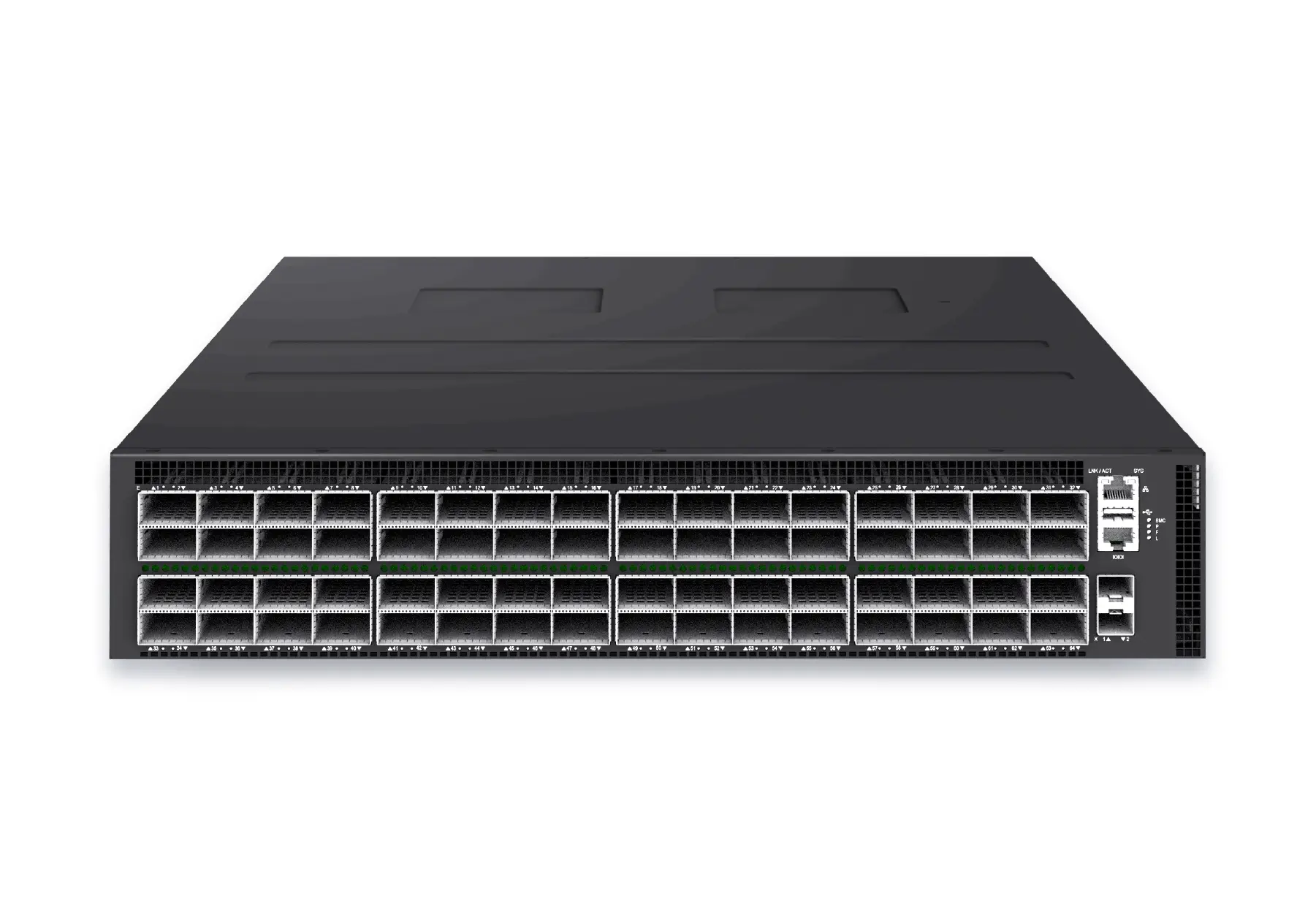 datacenter aiXS-DC-64X800-AI-G164-port 800G AI fabric switch for large-scale GPU clusters, HPC backbones, and ultra-high-throughput data center networks.View product
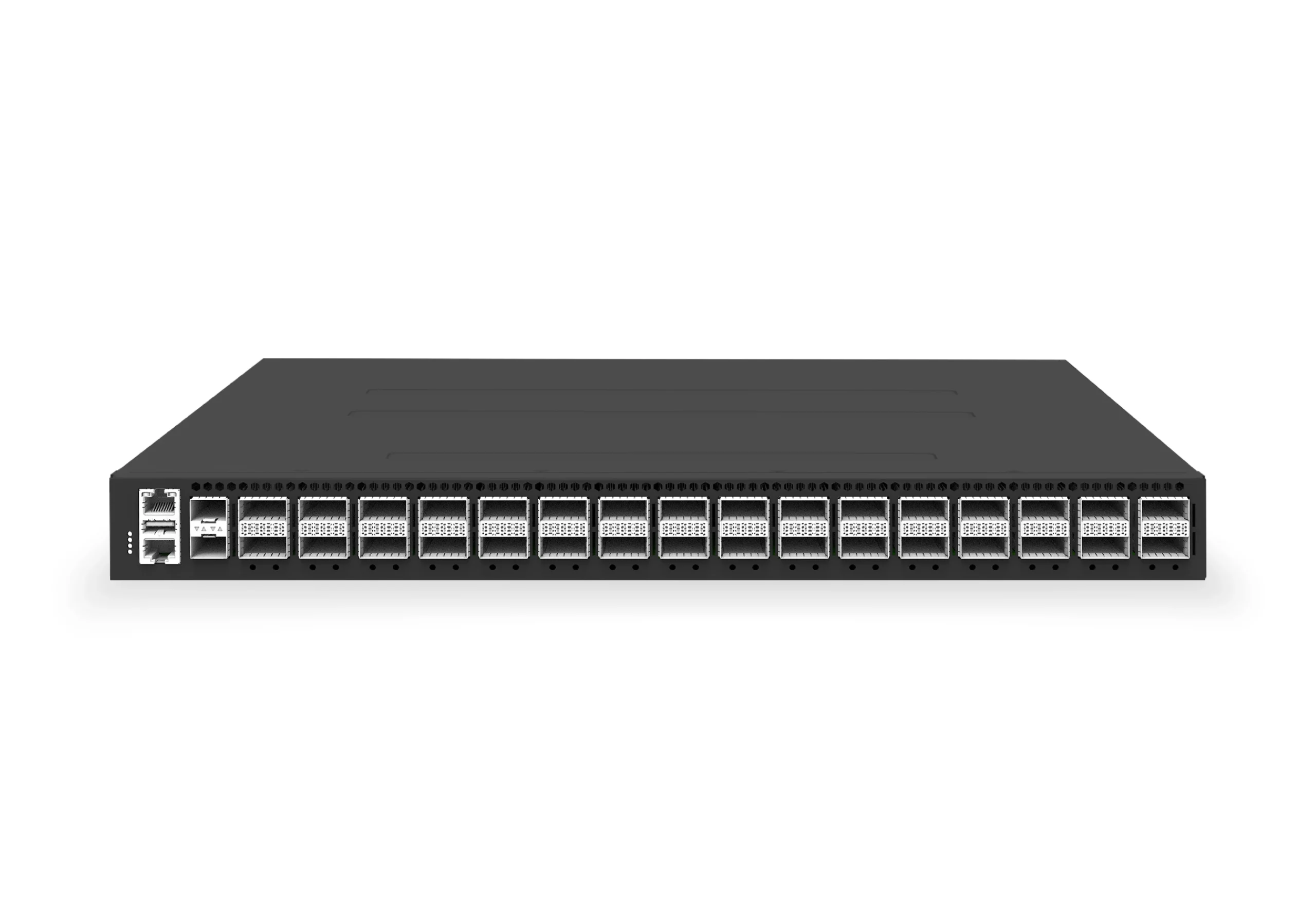 datacenter aiXS-DC-32X400-SP-G232-port 400G spine/core switch for high-capacity data center fabrics and AI-ready backbones.View product
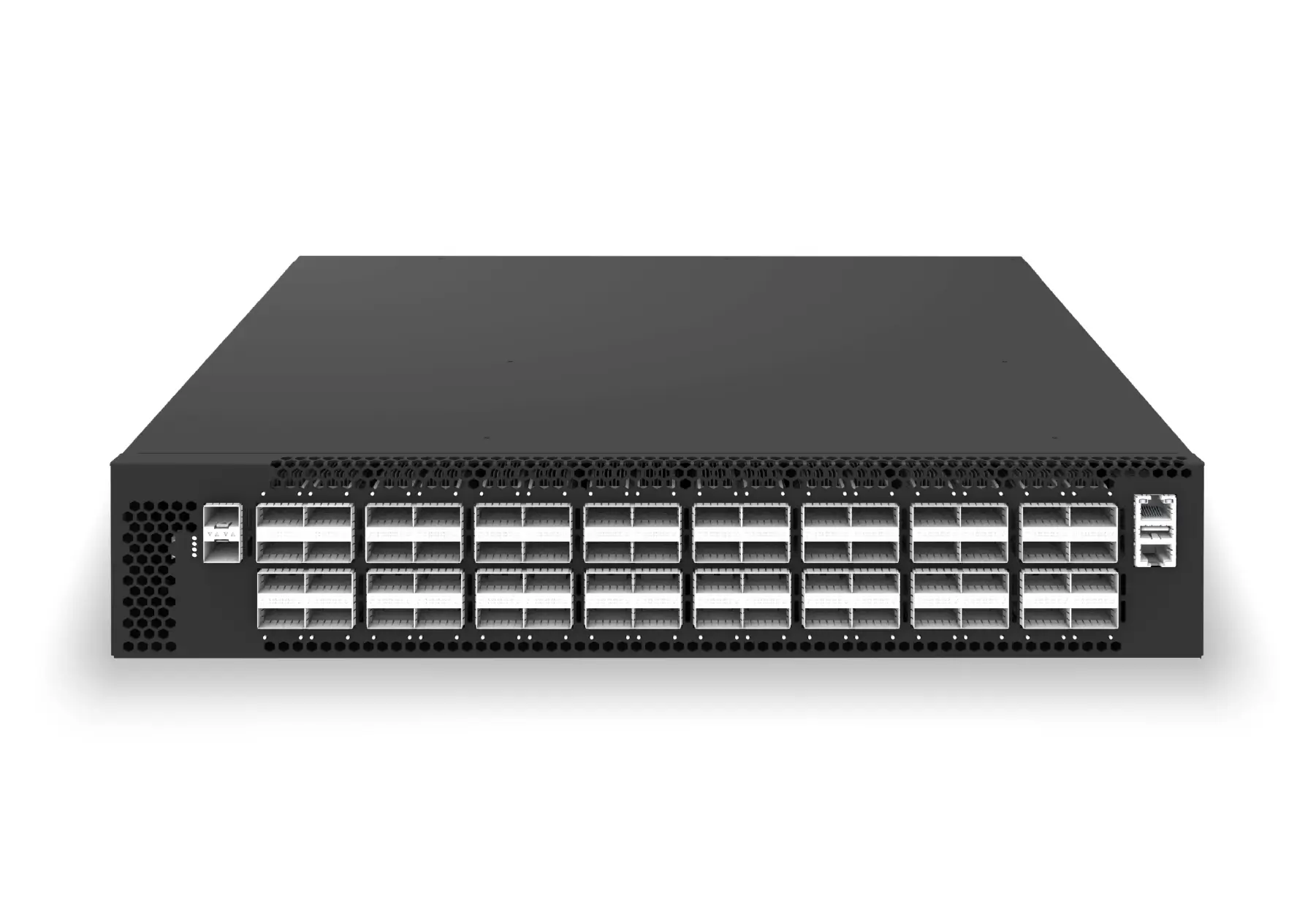 datacenter aiXS-DC-64X200-LS-G164-port 200G leaf/spine switch for high-bandwidth storage, compute, and scale-out data center fabrics.View product
Continue reading
Related articles
 Technical ArticleInfiniBand versus Ethernet for Private AI Infrastructure: An Australian Buyer Decision GuideEngineering guidance on InfiniBand versus Ethernet for Private AI Infrastructure for Australian campus teams, covering PoE budgets, access-layer resilience, migration.Read article
 Technical ArticleNVIDIA Spectrum-X vs SONiC Open Ethernet: What Australian AI Cluster Buyers Need to KnowA buyer-focused comparison of NVIDIA Spectrum-X and SONiC open Ethernet for Australian AI cluster teams weighing control, RoCE and lock-in.Read article
 Technical ArticleInfiniBand vs Ethernet for Private AI Infrastructure: An Honest Buyer Evaluation for Australian EnterprisesAn engineering comparison of InfiniBand and Ethernet/RoCE for Australian private AI infrastructure, covering latency, lossless transport, support, scale, TCO, and pilot tests.Read article