In brief
A buyer-focused comparison of NVIDIA Spectrum-X and SONiC open Ethernet for Australian AI cluster teams weighing control, RoCE and lock-in.
Key takeaways
- NVIDIA's Australian website now prominently positions Ethernet networking alongside InfiniBand as a core data center solution category, describing it as delivering 'Ethernet performance, availability, and ease of use across a wide range of applications.' The company's Spectrum-X platform is framed as an AI-native Ethernet fabric, with a recent blog post referencing 'Multipath Reliable Connection (MRC)' technology proven on Spectrum-X and described as 'now open to industry.'
- This is a significant shift. Historically, NVIDIA's networking story centered on InfiniBand for high-performance computing and AI clusters.
- For Australian enterprises evaluating AI cluster networking, this means the vendor landscape is no longer a simple InfiniBand-vs-Ethernet question.
NVIDIA Is Building Its Own Ethernet Stack for AI — And That Changes the Buying Conversation
NVIDIA’s Australian website now prominently positions Ethernet networking alongside InfiniBand as a core data center solution category, describing it as delivering ‘Ethernet performance, availability, and ease of use across a wide range of applications.’ The company’s Spectrum-X platform is framed as an AI-native Ethernet fabric, with a recent blog post referencing ‘Multipath Reliable Connection (MRC)’ technology proven on Spectrum-X and described as ‘now open to industry.’
This is a significant shift. Historically, NVIDIA’s networking story centered on InfiniBand for high-performance computing and AI clusters. By pushing Ethernet as a first-class AI fabric option — backed by its own Spectrum switches, BlueField DPUs, and SuperNICs — NVIDIA is telling buyers that Ethernet can handle GPU-to-GPU traffic at scale.
For Australian enterprises evaluating AI cluster networking, this means the vendor landscape is no longer a simple InfiniBand-vs-Ethernet question. It is now a three-way architectural decision: NVIDIA proprietary Ethernet, traditional switch-vendor Ethernet, or open-source SONiC-based Ethernet on commodity hardware.
What SONiC Offers as an Alternative Fabric Operating System
SONiC (Software for Open Networking in the Cloud) is a Linux-based, open-source network operating system governed by the SONiC Foundation under the Linux Foundation. According to the project’s official documentation, SONiC ‘runs on switches from multiple vendors and ASICs’ and ‘offers a full-suite of network functionality, like BGP and RDMA, that has been production-hardened in the data centers of some of the largest cloud service providers.’
Key architectural characteristics relevant to AI cluster networking include:
- Container-based modular design: Each network function runs in its own Docker container, providing fault isolation and simplified upgrades.
- Hardware-software decoupling: Built on the Switch Abstraction Interface (SAI), SONiC separates the NOS from the underlying ASIC, allowing buyers to choose from multiple switch hardware vendors.
- RDMA support: Production RDMA over Converged Ethernet (RoCE) capability is included, which is essential for GPU backend fabrics.
- Multi-vendor ecosystem: The GitHub repository shows 2,800-plus stars and 1,300-plus forks, indicating active community development.
The critical distinction from NVIDIA’s approach: SONiC does not require a single vendor’s switching silicon or management stack. An enterprise can run SONiC on switches powered by Broadcom, Marvell, or other supported ASICs, with the same NOS across the fleet.
The Buyer Decision: Proprietary AI Fabric vs Open Networking
For an Australian enterprise or service provider building a GPU cluster — whether for private LLM inference, RAG pipelines, or multi-modal AI services — the networking fabric decision has long-term cost and operational implications.
NVIDIA Spectrum-X path bundles switching hardware, DPUs, SuperNICs, and networking software into a vertically integrated stack. The advantage is tighter integration with NVIDIA GPU servers and the promise of optimized congestion management for AI workloads. The risk is vendor concentration: your network fabric, compute, and GPU layers all depend on a single supplier’s roadmap and pricing.
SONiC-based open networking path decouples the network operating system from the hardware. The advantage is multi-vendor hardware flexibility, avoidance of proprietary licensing lock-in, and the ability to standardize on a single NOS across heterogeneous switch estates. The operational trade-off is that SONiC deployment and automation require in-house or partner engineering capability; it is not a turnkey vendor-managed solution.
| Decision Factor | NVIDIA Spectrum-X | SONiC Open Networking |
|---|---|---|
| Hardware vendor choice | NVIDIA switches and DPUs only | Multiple switch and ASIC vendors |
| AI-specific optimization | Proprietary MRC, congestion management | Standard RoCE/ECMP; advanced features depend on ASIC and NOS version |
| Management and automation | NVIDIA networking software stack | NETCONF/YANG, gNMI, community tooling |
| Operational model | Vendor-supported, tighter integration | Requires engineering capability or partner support |
| Lock-in risk | High: single vendor across stack | Low: NOS portable across hardware |
Engineering Acceptance Matrix
| Evaluation Area | Spectrum-X evidence to request | SONiC open Ethernet evidence to request |
|---|---|---|
| GPU fabric fit | Tested topology for the target GPU server, NIC or SuperNIC, optics and 400G or 800G switch tier | Tested topology naming switch SKU, ASIC/SAI version, SONiC image, NIC firmware, optics and cable class |
| Congestion control | Proof that MRC, ECN, PFC and queue policy sustain the intended collective workload | Proof that RoCE v2, DCBX, ECN and PFC operate under load without hiding packet loss or pause storms |
| Operations model | Controller, telemetry, upgrade and failure workflow owned by the NVIDIA stack | Git-backed configuration, gNMI or streaming telemetry, rollback procedure and support ownership across vendors |
| Procurement exposure | 3-to-5-year pricing model for switches, DPUs, NICs, optics, software and support | Multi-vendor hardware quote with equivalent 100G, 400G or 800G port plan and Australian spare strategy |
Why This Matters for Australian AI Infrastructure Buyers
Australia’s AI infrastructure market is growing as enterprises move from cloud-hosted experimentation to on-premises or collocated GPU clusters. Several factors make the Ethernet fabric decision particularly relevant in this market:
-
Supply chain concentration risk: Relying on a single vendor for GPU servers, networking, and fabric management creates procurement and pricing vulnerability, especially when global demand for AI infrastructure is surging.
-
Skills availability: SONiC is Linux-based and uses standard networking protocols. Australian network engineering teams with BGP, Linux, and automation experience can operate SONiC fabrics without proprietary training programs. This matters in a market where specialized AI infrastructure talent is scarce.
-
Multi-site and hybrid deployments: Enterprises with data centers in Sydney, Melbourne, or colocation facilities may benefit from a consistent NOS across sites rather than managing proprietary fabric controllers per location.
-
Compliance and sovereignty: For government and regulated industries, open-source NOS provides greater transparency into what is running on the network, which can support security auditing and sovereign infrastructure requirements.
None of these factors automatically favor SONiC over NVIDIA’s stack. The right choice depends on scale, internal capability, and how tightly the buyer wants to couple their GPU and network layers. But the conversation is no longer one-dimensional.
The xSONiC Angle: Open Networking as a Fabric Strategy
xSONiC’s product direction in data center AI switches is built on Enterprise SONiC and targets the same fabric problem NVIDIA is addressing with Spectrum-X: how to connect GPU clusters at scale with low latency, congestion awareness, and operational simplicity.
The strategic difference is architectural. Where NVIDIA offers a vertically integrated fabric, xSONiC positions open switching hardware running Enterprise SONiC as an alternative that preserves hardware choice and avoids proprietary software dependencies.
For buyers evaluating AI cluster networking in 2025 and 2026, the practical questions are:
- Does the fabric support the required port speeds (100G/400G/800G) for the GPU server generation being deployed?
- Does the NOS support RoCE v2, DCBX, and congestion notification (ECN, fast CNP) at the required scale?
- Can the fabric be managed and automated with tools the operations team already knows?
- What is the total cost of ownership over a 3-to-5-year refresh cycle, including hardware, software licensing, support, and operational overhead?
What to Watch Next
Several developments will shape this comparison over the coming quarters:
-
NVIDIA Spectrum-X MRC openness: NVIDIA has stated that Multipath Reliable Connection is ‘now open to industry.’ Whether this translates to genuine multi-vendor interoperability or remains an NVIDIA-ecosystem feature will be a key signal for open networking advocates.
-
SONiC RDMA maturity at scale: SONiC’s RDMA and RoCE support is production-proven in hyperscaler environments, but enterprise and mid-market deployments require validated designs, support contracts, and operational tooling that the community project alone does not provide. Enterprise SONiC distributions are the bridge.
-
800G Ethernet availability: As GPU server interconnects move toward 800G, the availability of SONiC-compatible switches and optics at that speed tier — from multiple vendors — will determine whether open networking remains a viable option for next-generation AI fabrics.
-
Australian market signals: Local colocation providers, systems integrators, and enterprise adopters choosing open networking for AI workloads will be the most relevant proof points for Australian buyers.
Engineering FAQ
What should be proven before adopting EVPN-VXLAN on SONiC? Prove underlay routing, BGP sessions, VTEP behaviour, MAC/IP learning, route scale, multi-homing design, failure convergence, and observability. The overlay should be accepted as a system, not a feature checkbox.
Why does the underlay design still matter in an overlay network? EVPN-VXLAN depends on a stable routed underlay. MTU, ECMP, addressing, route policy, link failure behaviour, and telemetry determine whether the overlay remains predictable under load and during faults.
What should be included in an EVPN-VXLAN operations runbook? Include naming, IP plan, BGP policy, VNI mapping, change process, rollback commands, failure checks, telemetry fields, backup and restore steps, and escalation ownership for the selected SONiC image.
Related xSONiC Resources
Sources Reviewed
- Ethernet Network Adapters - ConnectX NICs | NVIDIA
- NVIDIA BlueField Data Processing Unit
- NVIDIA Spectrum-X Ethernet Platform
- OpenConfig gNMI Specification
- OpenConfig
- RFC 7950 - The YANG 1.1 Data Modeling Language
- RFC 6241 - Network Configuration Protocol (NETCONF)
- SONiC Project Documentation
- Broadcom Ethernet Switching
- Marvell Switching
- NVIDIA Ethernet Switching
- Open Compute Networking
- SONiC GitHub
- SONiC Foundation
Product fit
Products referenced for evaluation
These products are referenced for evaluation context in the article. Confirm workload, port, optics, software, interoperability, and support requirements against the exact deployment before procurement.
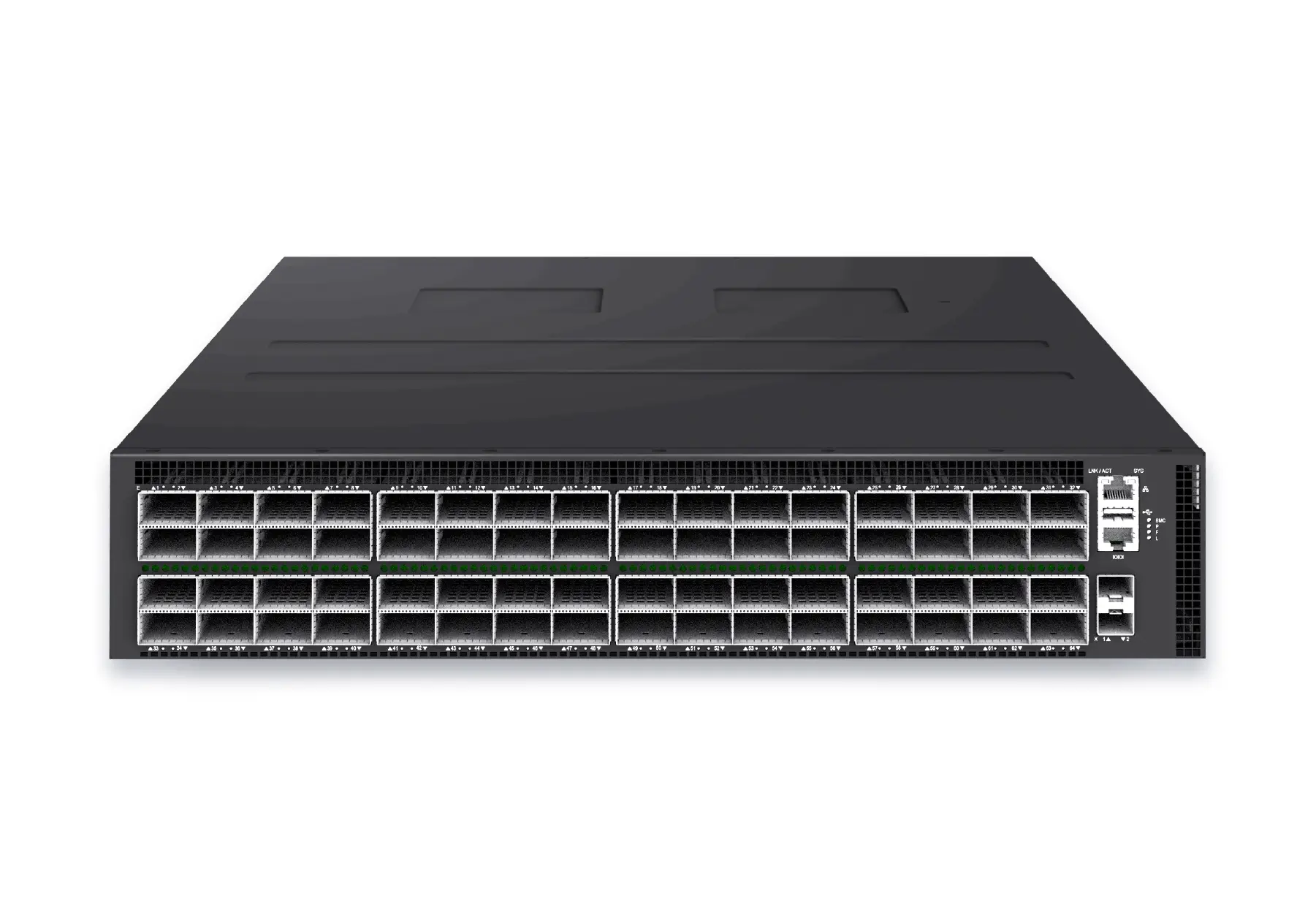 datacenter aiXS-DC-64X800-AI-G164-port 800G AI fabric switch for large-scale GPU clusters, HPC backbones, and ultra-high-throughput data center networks.View product
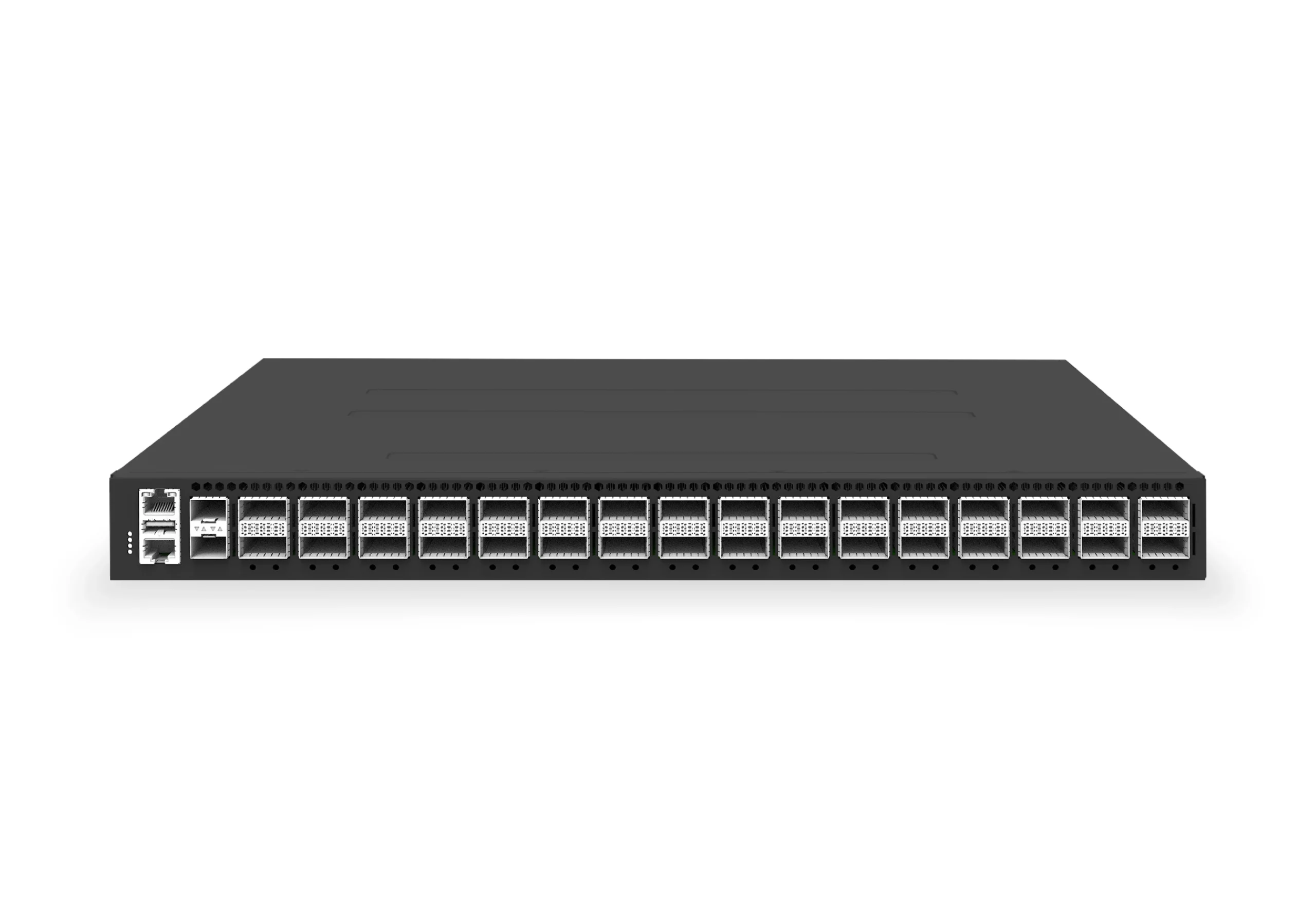 datacenter aiXS-DC-32X400-SP-G232-port 400G spine/core switch for high-capacity data center fabrics and AI-ready backbones.View product
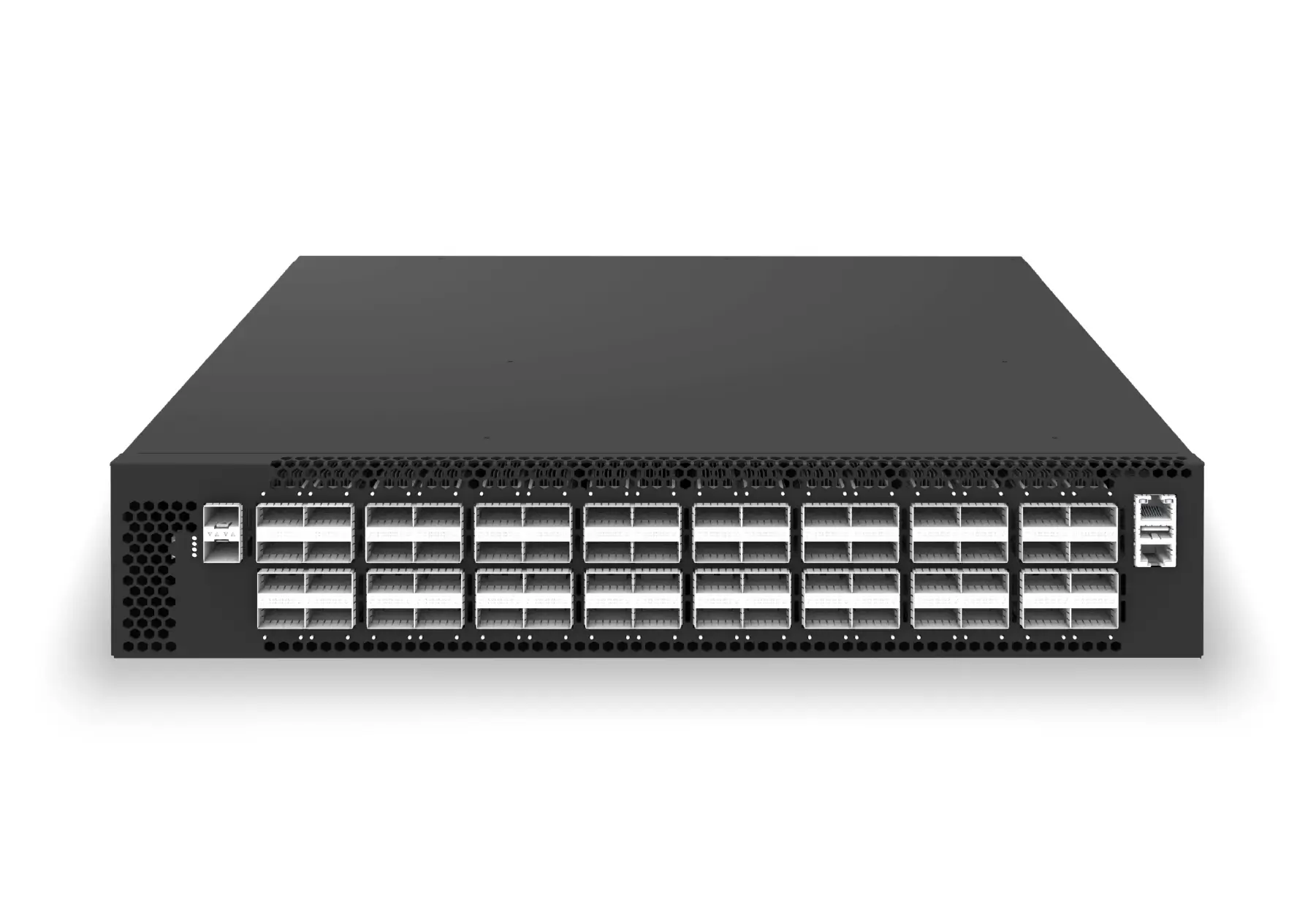 datacenter aiXS-DC-64X200-LS-G164-port 200G leaf/spine switch for high-bandwidth storage, compute, and scale-out data center fabrics.View product
Topic path
NVIDIA Spectrum hardware and SONiC software
This page focuses on:a buyer comparison between an integrated Spectrum-X path and a disaggregated SONiC operating model.
NVIDIA Spectrum names switch silicon and systems, SONiC is a network operating system that can run on validated hardware, and Spectrum-X is NVIDIA's integrated AI Ethernet platform. Treat those as separate procurement and validation decisions.
Continue reading
Related articles
 Technical ArticleSONiC Switch Buying Guide for 400G and 800G Data Centers: Australian Enterprise PlaybookEngineering guidance on SONiC Switch Buying Guide for 400G and 800G Data Centers for Australian data centre buyers, covering form factor choice, link budgets, cabling.Read article
 Technical ArticleInfiniBand versus Ethernet for Private AI Infrastructure: An Australian Buyer Decision GuideEngineering guidance on InfiniBand versus Ethernet for Private AI Infrastructure for Australian campus teams, covering PoE budgets, access-layer resilience, migration.Read article
 Technical ArticleInfiniBand vs Ethernet for Private AI Infrastructure: An Honest Buyer Evaluation for Australian EnterprisesAn engineering comparison of InfiniBand and Ethernet/RoCE for Australian private AI infrastructure, covering latency, lossless transport, support, scale, TCO, and pilot tests.Read article