
In brief
Engineering guidance on SONiC Network Operating System Deployment Validation for Australian network teams, covering underlay design, EVPN-VXLAN operations.
Key takeaways
- Australian enterprise and data center programs adopting SONiC (Software for Open Networking in the Cloud) face a gap that proprietary NOS vendors have long papered over: who validates that a network operating system deployment is production-ready, and what does that validation look like when the NOS is open source?
- The software engineering discipline of deployment validation is well established.
- For Australian organizations, the stakes are elevated. Infrastructure changes in regulated sectors -- financial services under APRA CPS 234, government agencies under the Essential Eight maturity model, and critical infrastructure operators under the Security of Critical Infrastructure Act -- require documented change management, rollback capability, and audit trails.
Why Security Operations Teams Need a Deployment Validation Framework for SONiC
Australian enterprise and data center programs adopting SONiC (Software for Open Networking in the Cloud) face a gap that proprietary NOS vendors have long papered over: who validates that a network operating system deployment is production-ready, and what does that validation look like when the NOS is open source?
The software engineering discipline of deployment validation is well established. SRE and DevOps practice defines deployment as ‘the automated, observable, and reversible delivery of software artifacts into runtime environments with the necessary configuration, security, and telemetry to operate in production’ (SRE School, 2026). That definition applies directly to SONiC NOS deployments, yet most SONiC buyer guides focus on feature lists and ASIC compatibility rather than the operational validation that security operations teams require.
For Australian organizations, the stakes are elevated. Infrastructure changes in regulated sectors — financial services under APRA CPS 234, government agencies under the Essential Eight maturity model, and critical infrastructure operators under the Security of Critical Infrastructure Act — require documented change management, rollback capability, and audit trails. SONiC’s open-source architecture offers transparency that proprietary NOS stacks do not, but that transparency only matters if security operations teams have a structured validation process.
This analysis maps established deployment validation best practices to the SONiC NOS context and identifies where Australian enterprise and data center buyers need additional verification before production deployment.
What Deployment Validation Means for Network Infrastructure
The deployment validation discipline from SRE practice identifies several properties that apply to network operating system changes: idempotency (applying the deployment repeatedly yields the same outcome), observability (deployed units must be instrumented for telemetry), security (secrets, permissions, and attack surface must be managed), and reversibility (safe rollbacks or rapid mitigation must be possible) (SRE School, 2026).
For network infrastructure specifically, these properties translate to:
Security validation for SONiC deployments includes verifying that management plane access controls are configured, that secrets (BGP passwords, SNMP credentials, API tokens) are properly managed, and that the attack surface of the NOS container environment is minimized. For SONiC, this means security operations teams must validate not just the NOS image but the entire containerized service stack.
Reversibility is where SONiC diverges from proprietary NOS in both risk and opportunity. Open-source NOS images can be rolled back to previous versions, but the rollback path must be tested before production use. SRE practice emphasizes that ‘automated rollback reduces MTTR but must be validated to avoid oscillation’ (SRE School, 2026). For SONiC, this means testing both image rollback and configuration rollback independently.
The SONiC Architecture Security Operations Teams Must Understand
SONiC’s architecture differs fundamentally from proprietary NOS in ways that affect deployment validation:
Containerized microservices: SONiC runs as a set of Docker containers on a Linux host. Each protocol daemon (BGP, LLDP, SNMP), management service (Redis/State DB, Config DB), and data plane abstraction (SAI) runs in its own container. Security operations teams must validate not just individual services but the inter-service communication paths and resource allocation.
Redis-based state management: SONiC uses Redis databases (State DB, Config DB, ASIC DB, APPL DB) as the central state store. Deployment validation must confirm that database state is consistent after configuration changes and that no stale entries remain from previous configurations.
SAI (Switch Abstraction Interface): The hardware abstraction layer translates SONiC’s configuration into ASIC-specific programming. Security operations teams should validate that SAI operations complete successfully and that the data plane forwarding state matches the intended configuration.
Warm reboot and fast reboot: SONiC supports warm reboot (control plane restart with data plane continuity) and fast reboot (minimizing traffic disruption during restart). These capabilities are relevant to deployment validation because they affect rollback strategy and downtime windows.
The key insight for security operations teams is that SONiC’s containerized architecture means deployment validation must cover container health, inter-service dependencies, and database consistency — not just whether the switch boots and passes basic connectivity tests.
Mapping SRE Deployment Checklists to SONiC NOS Validation
The SRE School deployment guide provides structured checklists that translate well to SONiC NOS validation. Here is how security operations teams can adapt them:
Pre-production checklist (adapted for SONiC):
- All SONiC image artifacts built from verified source or obtained from a trusted distributor with cryptographic signatures
- Configuration migration compatibility validated: existing network configurations tested against the target SONiC version in a lab environment
- Telemetry and observability hooks confirmed: sFlow, gNMI, SNMP, and syslog exports verified as functional after NOS image change
- Runbooks and rollback procedures documented with assigned owners
- Management plane access controls (SSH, REST API, NETCONF) tested with existing AAA infrastructure
Production readiness checklist (adapted for SONiC):
- SONiC image can be rolled back within the organization’s change management SLA (typically 30-60 minutes for Australian regulated entities)
- Error budget assessed: if the network is already at degraded SLO state, delay the NOS deployment
- Monitoring alerts tuned for the new SONiC version: ensure baseline metrics are captured before and after deployment for comparison
- Capacity and scaling checks performed: BGP session limits, VLAN scale, ACL scale, and interface count verified against production requirements
- On-call team briefed on SONiC-specific troubleshooting procedures
Incident checklist specific to SONiC NOS deployment:
- Identify the NOS deployment as root cause via version tracking (SONiC image version, Docker container versions, configuration commit hash)
- Execute rollback per documented runbook: image rollback and/or configuration rollback depending on failure mode
- Freeze further network changes until root cause is confirmed
- Capture container logs (docker logs), Redis state dumps, and ASIC statistics for postmortem
SRE practice defines key metrics for deployment validation: deployment frequency, change failure rate, mean time to recovery, and rollback frequency (SRE School, 2026). For SONiC NOS deployments, security operations teams should track these same metrics but adapted to network infrastructure: NOS upgrade frequency per site, configuration change failure rate, mean time to recover from NOS-related outages, and image rollback frequency.
Australian Compliance Context: What Regulators Expect from Network Change Validation
Australian enterprise and data center programs operate under several regulatory and compliance frameworks that affect NOS deployment validation:
APRA CPS 234 (Information Security): Requires APRA-regulated entities to maintain information security capability commensurate with the size and extent of threats. Network infrastructure changes — including NOS upgrades — must be subject to change management processes with appropriate testing and approval. SONiC deployments must include documented validation evidence.
Essential Eight Maturity Model: The Australian Cyber Security Centre’s Essential Eight includes patch management and application control as key strategies. SONiC NOS updates fall under patch management, and the containerized architecture provides opportunities for application control at the container level. Security operations teams should validate that SONiC containers are running expected versions and that no unauthorized services are present.
Security of Critical Infrastructure Act 2018: Critical infrastructure operators in sectors including communications, data storage, and financial services must maintain risk management programs that cover network infrastructure changes.
The practical impact for security operations teams is that SONiC deployment validation must produce audit-ready evidence: what changed, when, who approved it, what was tested, and what the rollback plan is. This aligns with SRE practice’s emphasis on ‘immutable logs — append-only logs of deployment events — that provide audit trails’ (SRE School, 2026).
The Vendor Gap: Why Proprietary NOS Validation Is Easier But Less Transparent
Proprietary NOS vendors (Cisco IOS-XE, Aruba AOS-CX, Juniper Junos) provide vendor-certified images, documented compatibility matrices, and TAC-supported upgrade paths. This makes the validation surface smaller for security operations teams: the vendor has already validated the image, and the team validates the configuration and operational impact.
SONiC shifts more validation responsibility to the buyer. This is both a risk and an advantage:
Risk: Security operations teams must validate more of the stack themselves. Without vendor TAC to escalate to, issues must be diagnosed using open-source community resources, SONiC GitHub issues, or value-added distributor support.
Advantage: Full visibility into the NOS codebase means security teams can audit what is actually running on the network. No hidden backdoors, no undocumented telemetry, no proprietary code that cannot be inspected. For Australian organizations subject to security clearance requirements or data sovereignty mandates, this transparency is valuable.
The migration trigger for Australian buyers is clear: organizations moving from proprietary NOS to SONiC need a structured validation checklist that compensates for the loss of vendor-provided validation while capturing the transparency advantage of open-source NOS.
Engineering Evidence Floor
For packet broker and traffic visibility topics, accept capacity claims only after replication, filtering, and tool delivery are modelled together. The evidence package should include source links, 95th percentile utilisation, burst peaks, tunnel handling, packet slicing or deduplication, replication factor, tool-port capacity, HA behaviour, and alert ownership. A useful pilot should replay 30 minutes of representative traffic, cover 100G/400G links where present, and include at least 3 failure or tool-overload cases.
| Evidence area | What to validate | Acceptance gate | Rework trigger |
|---|---|---|---|
| Source traffic | Link speed, burst peak, packet mix, and tunnel mix | Model covers current and 12 months growth | Average utilisation drives sizing |
| Replication | Copy count, filters, deduplication, slicing, and load balance | 30 minutes replay with rules enabled | Vendor proof uses clean traffic only |
| Tool delivery | IDS/NDR/SIEM ingress, loss counters, and failover | No sustained drops at broker or tool | Tools overload while broker is healthy |
| Resilience | HA, bypass, link failure, tool failure, and rollback | 3 failure cases documented | Visibility disappears during incidents |
| Audit | Evidence bundle, retention, access control, and ownership | P1 packet evidence ready within 2 hours | Teams debate which data is authoritative |
Engineering FAQ
What should be proven before adopting EVPN-VXLAN on SONiC? Prove underlay routing, BGP sessions, VTEP behaviour, MAC/IP learning, route scale, multi-homing design, failure convergence, and observability. The overlay should be accepted as a system, not a feature checkbox.
Why does the underlay design still matter in an overlay network? EVPN-VXLAN depends on a stable routed underlay. MTU, ECMP, addressing, route policy, link failure behaviour, and telemetry determine whether the overlay remains predictable under load and during faults.
What should be included in an EVPN-VXLAN operations runbook? Include naming, IP plan, BGP policy, VNI mapping, change process, rollback commands, failure checks, telemetry fields, backup and restore steps, and escalation ownership for the selected SONiC image.
Related xSONiC Resources
Sources Reviewed
- Ethernet Network Adapters - ConnectX NICs | NVIDIA
- NVIDIA BlueField Data Processing Unit
- NVIDIA Spectrum-X Ethernet Platform
- OpenConfig gNMI Specification
- OpenConfig
- RFC 7950 - The YANG 1.1 Data Modeling Language
- RFC 6241 - Network Configuration Protocol (NETCONF)
- SONiC Project Documentation
- Broadcom Ethernet Switching
- Marvell Switching
- NVIDIA Ethernet Switching
- Open Compute Networking
- SONiC GitHub
- SONiC Foundation
Product fit
Products referenced for evaluation
These products are referenced for evaluation context in the article. Confirm workload, port, optics, software, interoperability, and support requirements against the exact deployment before procurement.
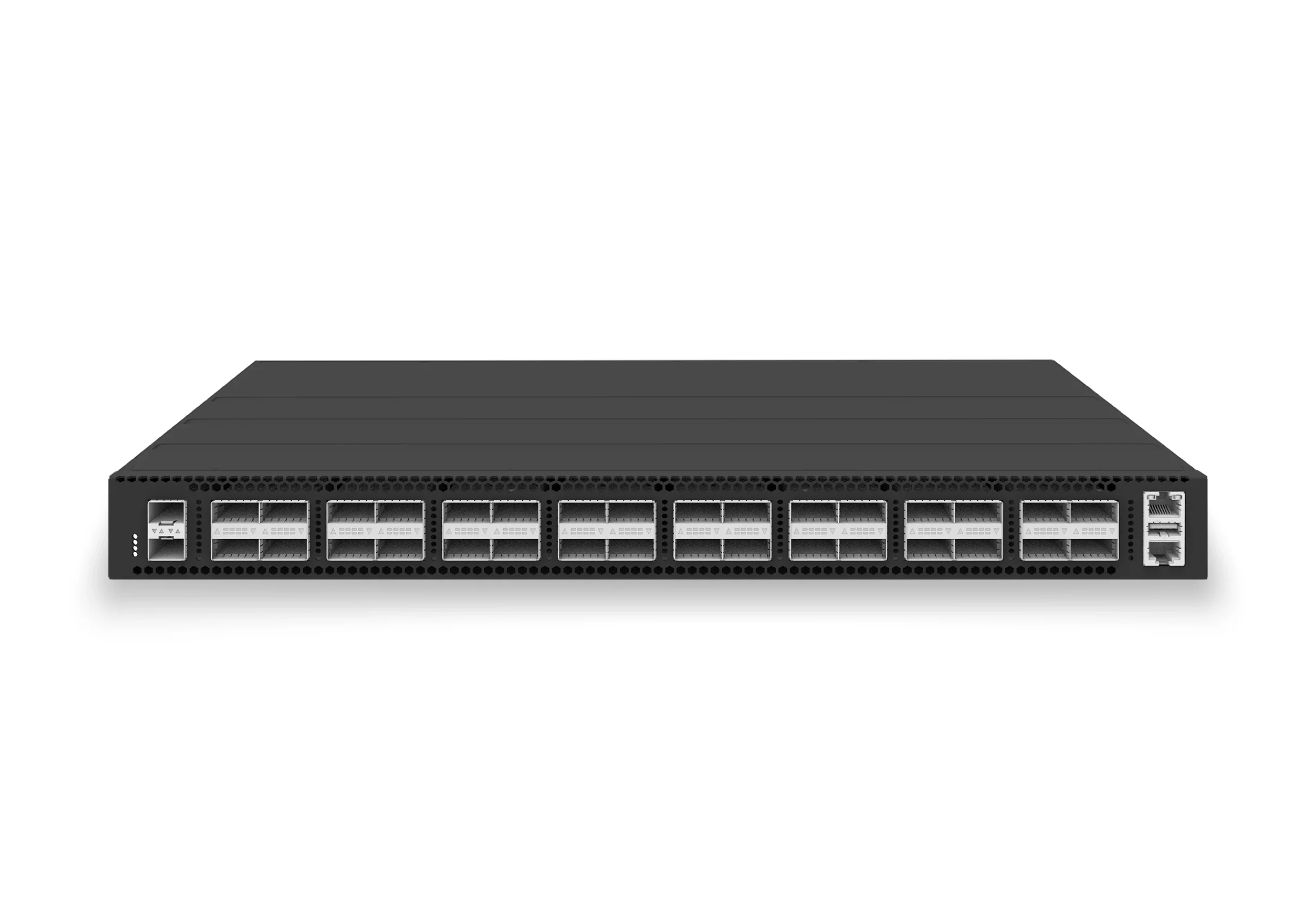 datacenter aiXS-DC-32X100-LS-G232-port 100G leaf/spine switch for VXLAN fabrics, RoCE-ready workloads, and tenant-scale routing.View product
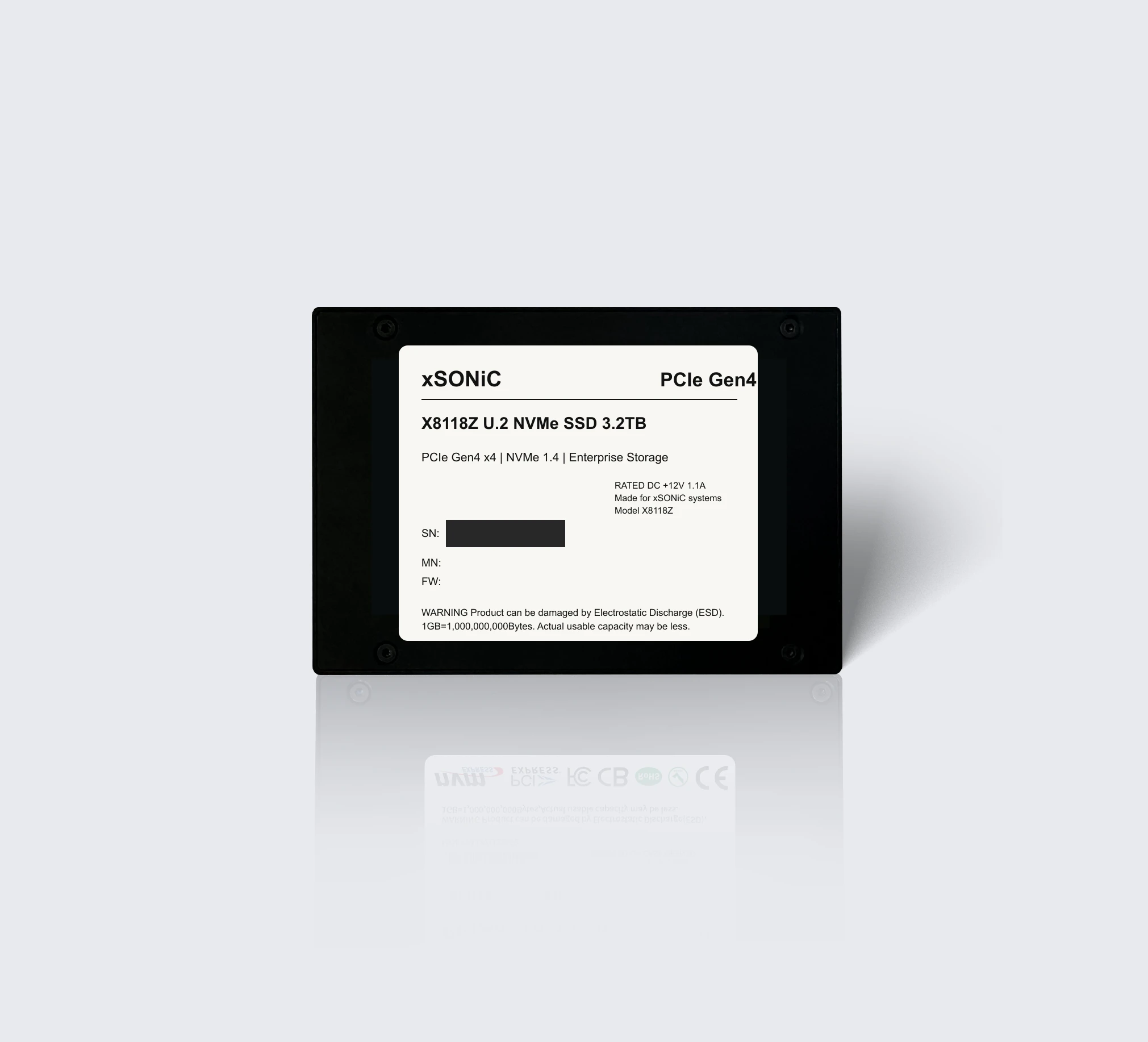 nvme ssdXS-SSD-8118Z-U2Enterprise U.2 NVMe SSD with PCIe Gen4 x4, NVMe 1.4, up to 7.1 GB/s sequential read, and 1,000K IOPS for data center storage workloads.View product
Continue reading
Related articles
 Technical ArticleNETCONF and YANG Are Rewriting How SONiC Switches Get Configured -- What Australian Network Teams Should KnowEngineering guidance on NETCONF and YANG for SONiC switch configuration, covering candidate commits, rollback, OpenConfig models, gNMI telemetry, and automation risk.Read article
 Technical ArticleEnterprise SONiC White-Box Deployment PlaybookEngineering guidance on Open Networking White Box Switch Deployment with Enterprise SONiC for Australian campus teams, covering PoE budgets, access-layer resilience.Read article
 Technical ArticleSONiC Security Failure Modes for Australian Enterprise TeamsA security operations review of SONiC-based open networking for Australian teams, covering failure modes, patch ownership, SAI risk, compliance mapping, and deployment controls.Read article