
In brief
Engineering guidance on NETCONF and YANG for SONiC switch configuration, covering candidate commits, rollback, OpenConfig models, gNMI telemetry, and automation risk.
Key takeaways
- NETCONF (RFC 6241) and YANG (RFC 7950) are IETF-standardized protocols for network device configuration and state retrieval.
- The SONiC project -- Software for Open Networking in the Cloud -- is an open-source network operating system hosted under the Linux Foundation.
- The relevance for xSONiC data center and campus switches is that SONiC's management plane increasingly supports NETCONF/YANG as a first-class configuration and telemetry interface, complementing the traditional Redis-based ConfigDB and the REST-based management API.
What Happened: NETCONF and YANG Move from IETF Standards to SONiC Production Operations
NETCONF (RFC 6241) and YANG (RFC 7950) are IETF-standardized protocols for network device configuration and state retrieval. NETCONF provides a secure, transactional, XML-based RPC mechanism for reading and writing device configuration, while YANG defines the structured data models that describe what can be configured and queried. Together, they replace screen-scraping CLI automation with a programmatic, model-driven interface.
The SONiC project — Software for Open Networking in the Cloud — is an open-source network operating system hosted under the Linux Foundation. According to the SONiC Foundation and the project’s GitHub repository, SONiC is a containerized, Linux-based NOS that runs on switches from multiple vendors and ASICs, offering a full suite of network functionality including BGP, RDMA, and production-hardened operation in the data centers of large cloud providers. The project’s architecture decouples hardware from software through the Switch Abstraction Interface (SAI), enabling hardware innovation independent of NOS development.
The relevance for xSONiC data center and campus switches is that SONiC’s management plane increasingly supports NETCONF/YANG as a first-class configuration and telemetry interface, complementing the traditional Redis-based ConfigDB and the REST-based management API. For network teams evaluating open networking — whether for AI fabric spine-leaf builds, campus PoE refresh, or bare-metal white-box deployments — NETCONF/YANG on SONiC represents a shift from CLI scripting toward model-driven, vendor-neutral automation.
Why It Matters: Model-Driven Automation vs CLI Scripting at Scale
Traditional network automation for multi-vendor environments relies on CLI screen-scraping tools like Ansible with raw CLI modules, or vendor-specific APIs that change between firmware versions. This approach creates fragile, high-maintenance automation pipelines that break when a vendor changes CLI syntax or output format.
NETCONF/YANG changes this equation. With YANG-modeled configuration, automation tools interact with a structured, versioned data model rather than parsing free-text output. The practical benefits for large-scale data center and campus networks include:
- Transaction safety: NETCONF supports candidate configuration datastores with commit/rollback semantics, reducing the risk of partial configuration changes that leave a switch in a broken state during batch updates.
- Model validation: YANG data models enforce type checking, range constraints, and dependency rules at the protocol layer, catching configuration errors before they reach the switch.
- Vendor neutrality: OpenConfig YANG models provide a vendor-independent abstraction layer, meaning the same automation code can target SONiC switches, Cisco IOS-XR, Arista EOS, or Juniper Junos — if all support the same model set.
- Telemetry integration: NETCONF notifications and YANG-modeled streaming telemetry enable model-driven monitoring that aligns configuration intent with operational state.
For Australian data center operators running SONiC-based fabrics — whether for AI/ML GPU backend networks, traditional enterprise spine-leaf, or campus aggregation — the question is no longer whether NETCONF/YANG is viable, but how mature the SONiC implementation is compared to the established NETCONF stacks in Cisco NX-OS, Arista EOS, and Juniper Junos.
The xSONiC Angle: Open-Source NOS Plus Open-Standard Management Plane
xSONiC’s value proposition in the Australian market rests on a stack proposition: open switching hardware (bare-metal switches), an open-source NOS (SONiC), and increasingly, an open-standard management plane (NETCONF/YANG). This is a meaningful differentiator from the Cisco-Arista-Juniper triopoly where the NOS, management protocol, and often the hardware are vertically integrated.
For data center AI fabric deployments — connecting GPU nodes with 100G/400G/800G leaf-spine topologies — NETCONF/YANG on SONiC enables programmatic fabric provisioning through tools like the xSONiC AIDC Controller or third-party orchestrators such as Ansible with NETCONF modules, OpenConfig-based controllers, or custom Python automation using libraries like ncclient. The SONiC Foundation notes that SONiC’s containerized architecture accelerates software evolution by isolating each network function in its own Docker container, and NETCONF/YANG fits into this architecture as a management-plane container alongside the traditional management interfaces.
For campus and access-aggregation deployments, the situation is more nuanced. Enterprise campus networks typically involve PoE power budgets, access control lists at the edge, policy-based routing, MC-LAG redundancy, and virtual chassis configurations. Whether SONiC’s NETCONF/YANG models cover the full breadth of campus-specific features — or only the data center feature set — is a question that requires verification against current SONiC documentation and the xSONiC product line.
For bare-metal switch evaluation, NETCONF/YANG becomes a key selection criterion. Engineering-led network programs evaluating white-box hardware need to know: does this switch’s NOS support model-driven configuration out of the box, or does it require custom integration work? The answer determines whether the operational savings of open networking are realized or eroded by automation debt.
The Australian Buyer Context: Automation Skills Shortage Meets Open Networking Opportunity
Australia’s network engineering labor market faces a well-documented skills shortage, particularly in automation and programmability roles. For Australian enterprises, service providers, and colocation operators evaluating network infrastructure, the management plane matters as much as the forwarding plane. A switch that forwards at line rate but requires CLI scripting to configure is a long-term operational liability when the team managing it turns over.
NETCONF/YANG on SONiC addresses this by aligning network automation with general-purpose DevOps tooling. Python developers, Ansible operators, and NetDevOps engineers can interact with SONiC switches using the same model-driven interfaces used by Cisco and Juniper gear — if the YANG models are compatible. This portability of automation investment is particularly relevant for Australian organizations that run mixed-vendor environments or are planning migration paths from proprietary switching to open networking.
The growth angle for xSONiC in Australia is not just cheaper hardware. It is the combination of open hardware, an open-source NOS backed by the Linux Foundation community, and an open-standard management plane that collectively reduce vendor lock-in risk while maintaining the option to adopt enterprise-grade operational tooling.
What the Sources Establish vs What Requires Verification
The engineering analysis above draws on the following source-backed foundations:
Established by sources:
- SONiC is an open-source, Linux-based NOS under the Linux Foundation, running on multi-vendor switch hardware (sonicfoundation.dev, github.com/sonic-net/SONiC).
- SONiC uses a containerized, modular architecture that decouples network functions for fault isolation and independent upgrade (github.com/sonic-net/SONiC).
- SONiC supports BGP and RDMA and has been production-hardened in large cloud provider data centers (sonicfoundation.dev).
- SONiC uses SAI (Switch Abstraction Interface) to decouple NOS software from ASIC hardware (sonicfoundation.dev).
- NVIDIA Spectrum Ethernet switches support SONiC as a NOS option alongside Cumulus Linux (nvidia.com).
- NETCONF and YANG are IETF standard protocols (RFC 6241, RFC 7950) — these are well-established standards not requiring source verification from the provided URLs.
NETCONF/YANG Change Acceptance Matrix
| Control point | What to verify | Acceptance evidence | Rework trigger |
|---|---|---|---|
| Model coverage | OpenConfig or native YANG support for required SONiC features | Model list mapped to VLAN, BGP, ACL, interface, and telemetry use cases | Automation requires CLI fallbacks for core changes |
| Transaction safety | Candidate datastore, commit, confirmed commit, and rollback behaviour | 1 successful change and 1 forced rollback captured in logs | Partial config remains after failed deployment |
| State validation | Config intent compared with operational state | gNMI or NETCONF state readback after change | Tool reports success while switch state differs |
| Multi-vendor portability | Same model used across SONiC and incumbent platforms where possible | 2-platform test showing field-level differences | Automation becomes vendor-specific after migration |
| Operations handoff | Runbook, credentials model, audit log, and failure process | 90-day pilot with change success rate and mean rollback time | Automation is owned by one engineer with no support path |
Engineering FAQ
What should be tested before using NETCONF/YANG on SONiC? Test model coverage, candidate commit behaviour, rollback, read-after-write state validation, authN/authZ, logging, and how the interface interacts with SONiC ConfigDB. The protocol is standard; the platform implementation still needs proof.
Why does YANG model coverage matter more than protocol support? A switch can advertise NETCONF but still lack models for the feature a buyer needs. Australian teams should map every required feature to a model path before committing to automation design.
How should a model-driven automation pilot be structured? Start with a low-risk pod, automate 3 to 5 repeatable changes, compare intended and operational state, measure rollback time, and document every field that requires vendor-specific handling.
Related xSONiC Resources
Sources Reviewed
- OpenConfig gNMI Specification
- OpenConfig
- RFC 7950 - The YANG 1.1 Data Modeling Language
- RFC 6241 - Network Configuration Protocol (NETCONF)
- SONiC Project Documentation
- Open Compute Networking
- SONiC GitHub
- SONiC Foundation
Product fit
Products referenced for evaluation
These products are referenced for evaluation context in the article. Confirm workload, port, optics, software, interoperability, and support requirements against the exact deployment before procurement.
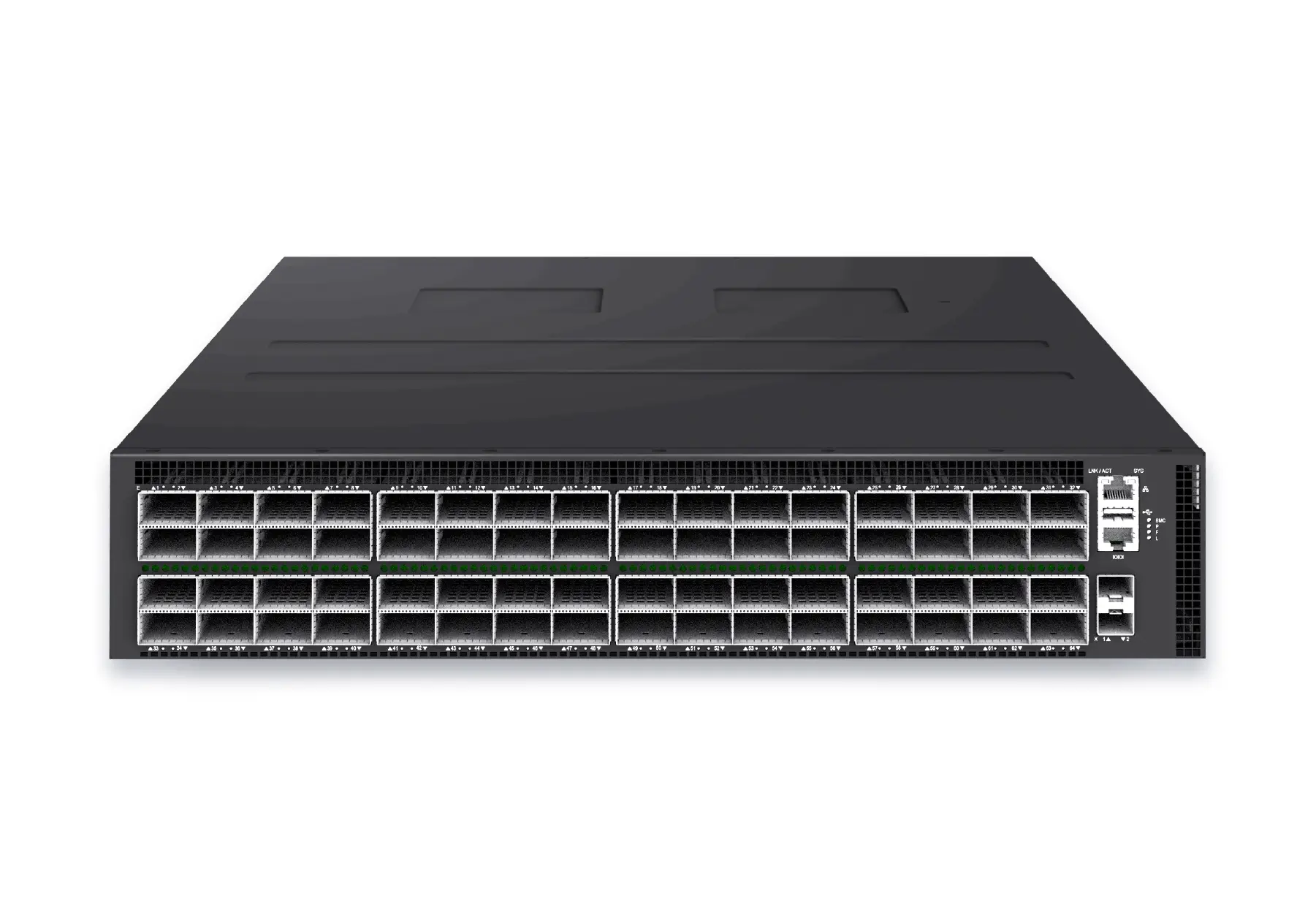 datacenter aiXS-DC-64X800-AI-G164-port 800G AI fabric switch for large-scale GPU clusters, HPC backbones, and ultra-high-throughput data center networks.View product
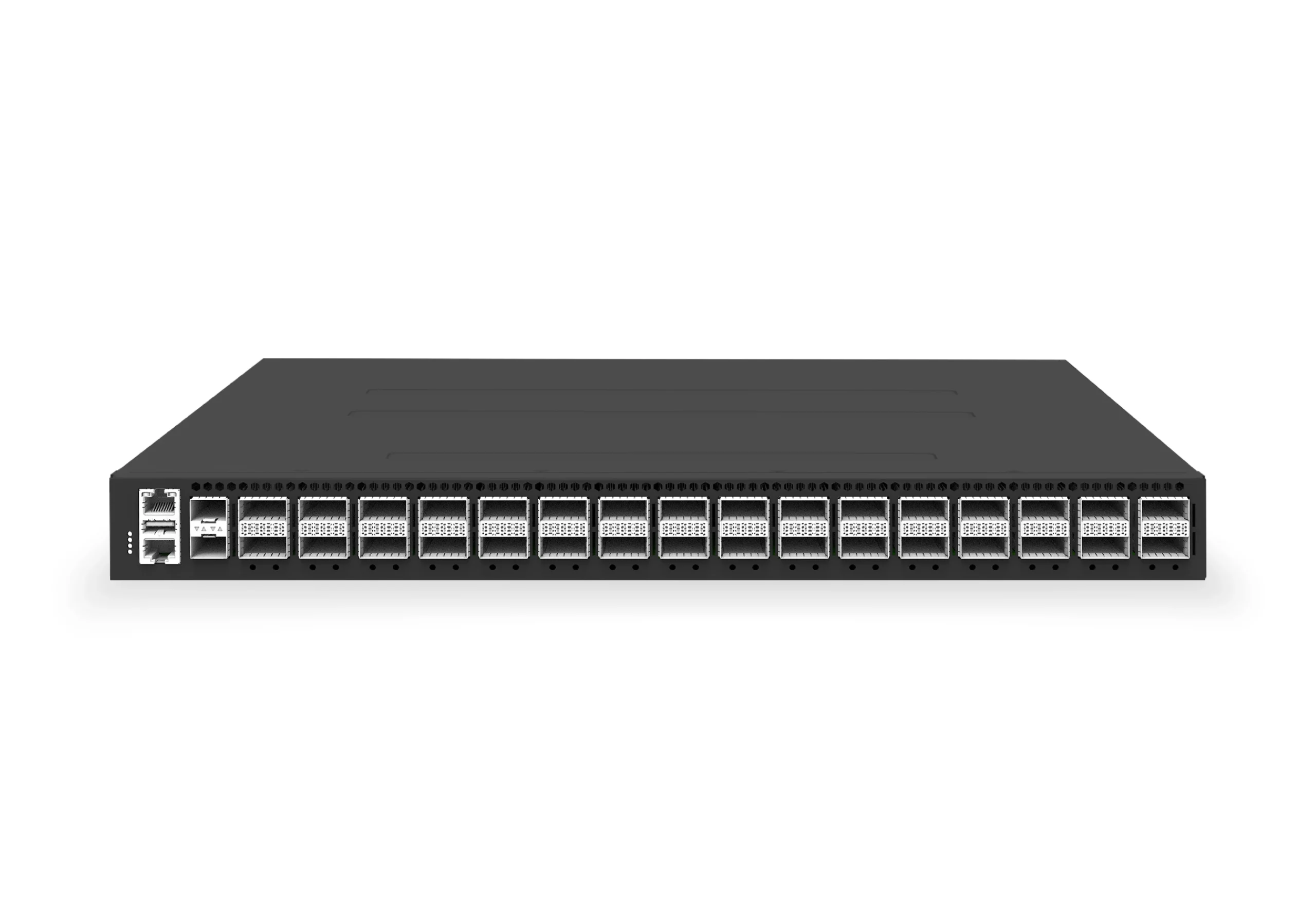 datacenter aiXS-DC-32X400-SP-G232-port 400G spine/core switch for high-capacity data center fabrics and AI-ready backbones.View product
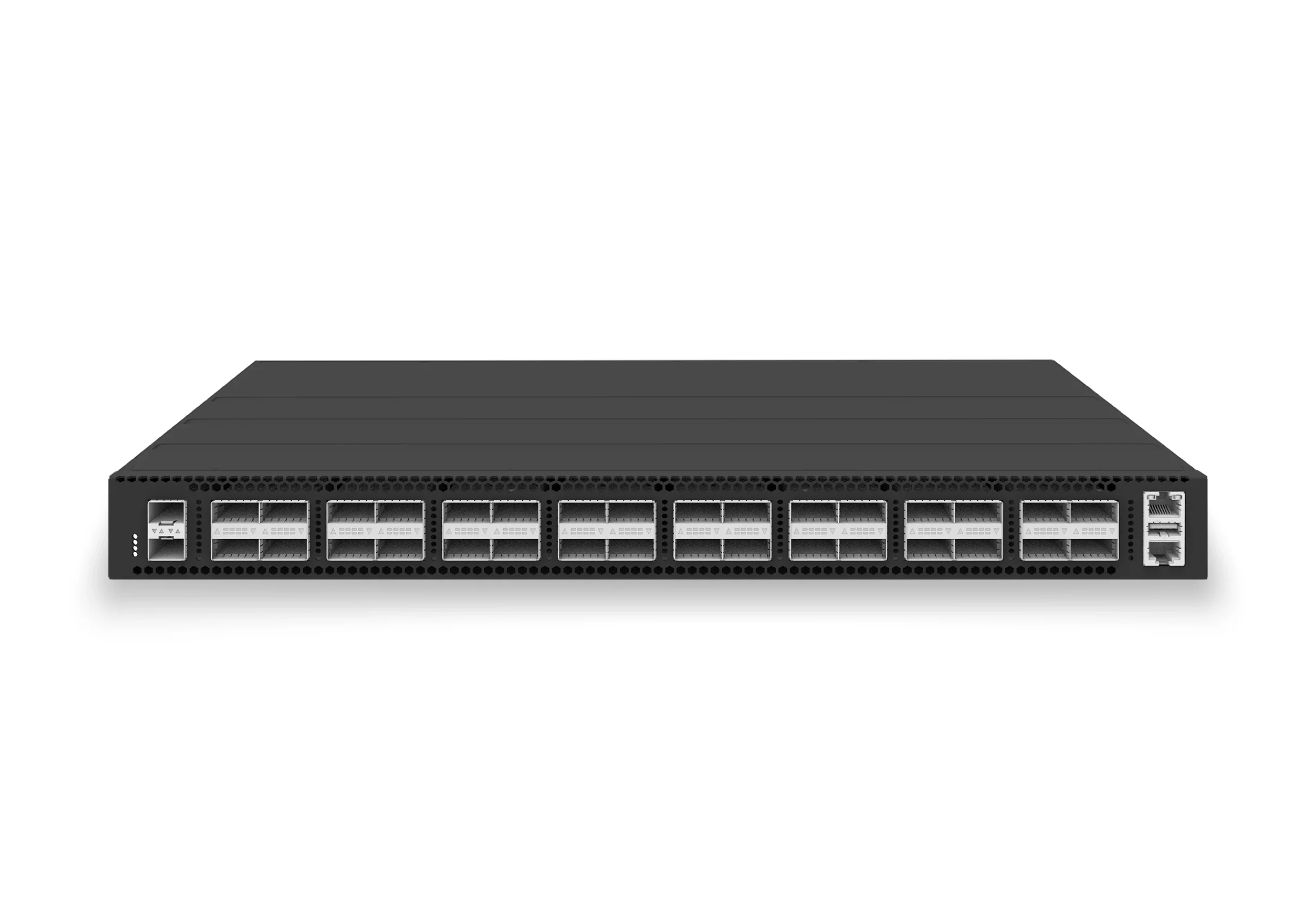 datacenter aiXS-DC-32X100-LS-G232-port 100G leaf/spine switch for VXLAN fabrics, RoCE-ready workloads, and tenant-scale routing.View product
Topic path
OpenConfig, gNMI, and NETCONF automation
This page focuses on:the strategic and operational impact of moving from CLI scripts to model-driven configuration.
OpenConfig supplies vendor-neutral YANG data models, gNMI supplies Capabilities/Get/Set/Subscribe RPCs over gRPC, and NETCONF supplies XML-encoded configuration and state operations. Actual model and RPC coverage must be verified for the selected SONiC image and platform.
Continue reading
Related articles
 Technical ArticleOpen Networking Support for Enterprise Buyers: How SONiC and Open NOS Models Actually WorkEngineering guidance on Open Networking Support for Enterprise Buyers for Australian campus teams, covering PoE budgets, access-layer resilience, migration risk.Read article
 Technical ArticleFrom Proprietary Lock-In to Open Networking: A Practical Enterprise SONiC Migration PlaybookA practical Enterprise SONiC migration playbook for Australian buyers moving from proprietary switch OS to open networking.Read article
 Technical ArticleWhy Centralized AI Fabric Management Is the Missing Layer in Open NetworkingEngineering guidance on Centralized AI Fabric Management Is the Missing Layer in Open Networking for Australian network teams, covering underlay design, EVPN-VXLAN.Read article