
In brief
Engineering analysis of SONiC momentum in Australia, covering open NOS maturity, AI data center pressure, campus refresh, multi-vendor support, and buyer validation.
Key takeaways
- Software for Open Networking in the Cloud (SONiC) continues to mature as a production-grade, open-source network operating system under the Linux Foundation and the Open Compute Project (OCP) Networking umbrella.
- The project's GitHub repository shows nearly 3,000 commits, 1,300 forks, and 2,800 stars, indicating sustained community development activity.
- For the Australian market, the timing is notable. In an OCP Podcast episode recorded in January 2026, David Hirst, CEO of Macquarie Data Centres, discussed how AI workloads are reshaping Australian data center design from a real estate model to a chip-out, infrastructure-first approach.
What Happened
Software for Open Networking in the Cloud (SONiC) continues to mature as a production-grade, open-source network operating system under the Linux Foundation and the Open Compute Project (OCP) Networking umbrella. According to the SONiC Foundation, SONiC is now positioned as a Linux-based NOS that runs on switches from multiple vendors and multiple ASIC families, offering a full suite of network functionality including BGP and RDMA that has been production-hardened in the data centers of some of the largest cloud service providers.
The project’s GitHub repository shows nearly 3,000 commits, 1,300 forks, and 2,800 stars, indicating sustained community development activity. OCP lists SONiC alongside ONIE and SAI as core networking sub-projects, placing it at the center of the open networking hardware and software stack.
For the Australian market, the timing is notable. In an OCP Podcast episode recorded in January 2026, David Hirst, CEO of Macquarie Data Centres, discussed how AI workloads are reshaping Australian data center design from a real estate model to a chip-out, infrastructure-first approach. He highlighted Australia’s sovereign data requirements, the rise of liquid cooling and megawatt-per-rack designs, and the need for early collaboration across hyperscalers, government, and supply chain players. While Hirst did not reference SONiC directly, the infrastructure maturation he described aligns with the conditions that make open NOS adoption viable: scale, complexity, and the need for multi-vendor flexibility.
Why It Matters for Enterprise and AI Infrastructure Buyers
SONiC’s architecture offers three structural advantages that matter beyond hyperscale environments.
Hardware-software disaggregation. The SONiC Foundation states that SONiC decouples hardware and software through the Switch Abstraction Interface (SAI), which accelerates hardware innovation by letting buyers select switching platforms independently from the NOS. For Australian enterprises evaluating data center refresh cycles, this disaggregation means procurement teams can run competitive hardware tenders without rewriting their network automation stack.
Containerized modularity. SONiC was, according to the Foundation, the first solution to break monolithic switch software into multiple containerized components. This design provides better fault isolation, easier debugging, simplified upgrades, and enhanced scalability. For AI fabric deployments where switch uptime directly impacts GPU cluster utilization, containerized architecture reduces the blast radius of any single software failure.
Production-hardened feature set. SONiC offers BGP and RDMA as core capabilities. For data centers running RoCE v2 traffic across AI/ML clusters, having RDMA support that has been validated at hyperscale provides a different risk profile than a feature that exists only in a vendor lab.
The broader ecosystem signal is also significant. OCP’s networking project scope explicitly targets fully disaggregated and open networking hardware and software, including Linux-based operating systems, developer tools, REST APIs, and automated configuration management. SONiC sits at the center of this vision.
The Australian Context: Sovereign AI and Open Infrastructure
Australia presents a distinct set of conditions for SONiC adoption. The OCP Podcast’s interview with Macquarie Data Centres’ David Hirst provides relevant context, even though the discussion focused on data center operations rather than NOS selection.
Hirst described how AI workloads behave differently from traditional cloud: they are bursty, unpredictable, and demand designs that think from the chip outward rather than from the building inward. He noted that the Australian market has unique regulatory and cultural factors, including data sovereignty requirements that keep certain workloads onshore, and community engagement challenges when building in dense urban environments.
For networking buyers, this translates into several SONiC-relevant pressures:
-
Multi-vendor supply chain resilience. A sovereign AI strategy that depends on a single NOS vendor creates a concentration risk. SONiC’s multi-vendor, multi-ASIC model aligns with the diversification principle.
-
Operational consistency at scale. As Australian data centers scale to support liquid-cooled, megawatt-class racks, the network underlay must support consistent automation across heterogeneous hardware. SONiC’s standard Linux interfaces and containerized architecture support this.
-
Community-driven innovation pace. The SONiC Foundation reports rapidly growing ecosystem support from major network chip vendors. For Australian operators who cannot afford to wait 18 months for a proprietary NOS to add a feature, community-driven development offers a faster path.
What This Means for Data Center AI Fabric Decisions
For organizations building AI fabric with 100G, 400G, or 800G spine-leaf architectures, SONiC’s production-hardened RDMA and BGP stack is directly relevant. The protocol-level capabilities that matter for RoCE v2 transport, congestion notification, and lossless Ethernet are exactly the features that hyperscale cloud providers have validated in SONiC at scale.
The OCP networking project’s scope includes universal and multi-form-factor switch motherboard hardware, fully automated configuration management, and bare metal provisioning. Combined with SONiC as the NOS, this creates a vertically integrated open stack from silicon to orchestration.
Campus and Access Network Implications
SONiC’s origins are in data center leaf-spine fabrics, but the project’s modular architecture creates a path toward campus and access network use cases. The containerized design means that features required for enterprise campus deployments such as PoE management, policy-based routing, MC-LAG, and virtual chassis can be added as discrete components without destabilizing the core NOS.
Buyer Considerations and Open Questions
Australian buyers evaluating SONiC-based networking should weigh the following factors:
| Consideration | Source-Backed Status | Buyer Action |
|---|---|---|
| Multi-vendor hardware support | Confirmed by SONiC Foundation and GitHub | Validate specific switch models against supported devices list |
| RDMA and BGP maturity | Production-hardened per SONiC Foundation | Confirm RoCE v2 feature completeness for your AI fabric design |
| Containerized architecture | Confirmed | Assess operational team readiness for Docker-based NOS management |
| OCP community trajectory | Active, with sub-project status | Monitor OCP networking project updates and SONiC release notes |
The key editorial observation is this: SONiC has moved from a hyperscale curiosity to an enterprise-relevant platform. The combination of OCP governance, Linux Foundation stewardship, multi-vendor hardware support, and production-hardened features creates a credible alternative to proprietary NOS lock-in. For Australian buyers navigating sovereign AI infrastructure, data center scaling, and campus modernization, SONiC deserves a place on the evaluation shortlist.
SONiC Momentum Acceptance Matrix
Momentum is useful only if it survives buyer validation. Australian teams should translate ecosystem signals into engineering gates before using SONiC in production.
| Evaluation area | What the market signal means | Buyer validation step | Pass condition |
|---|---|---|---|
| Open NOS maturity | SONiC is governed through the Linux Foundation and is visible in OCP networking work | Identify the exact SONiC image, release train, SAI version, and hardware support status | Target switch is supported with known caveats documented |
| AI fabric relevance | BGP, RDMA, 100G/400G/800G Ethernet, RoCE v2, ECN/PFC, and telemetry matter for GPU clusters | Run a RoCE/lossless pilot with real NIC firmware, optics, queue counters, and failure cases | Fabric shows stable throughput and recoverable congestion behaviour |
| Campus readiness | Campus features are emerging but not uniform across platforms | Test PoE, 802.1X, VLAN policy, MC-LAG/STP, PBR, and help-desk workflow in one building | Campus pilot works with mixed endpoints, not just lab hosts |
| Support model | Community activity does not replace production accountability | Confirm AEST/AEDT SLA, local/APAC escalation, spare/RMA logistics, and upgrade ownership | P1 incident owner is named before purchase |
| Automation fit | Linux and model-driven interfaces make SONiC programmable | Push, verify, roll back, and audit one production-like change through the existing toolchain | Operations can manage SONiC without one-off manual processes |
Engineering FAQ
What should be tested before moving campus switching to SONiC or open networking? Test PoE behaviour, NAC integration, VLAN and policy design, STP or MC-LAG interaction, multicast, monitoring, upgrade rollback, and help-desk workflows. Campus readiness is an operations test, not only a forwarding test.
Where do campus refresh projects usually carry hidden risk? The risk often sits in closets: power budget, old cabling, undocumented uplinks, mixed endpoint types, voice devices, cameras, badge systems, and change windows. Those details should be inventoried before selecting switch models.
How should Australian campus teams structure a pilot? Choose one representative site or building, document endpoint classes, run PoE and failover tests, verify monitoring, train operations staff, and define rollback steps before expanding to the broader estate.
Related xSONiC Resources
- data center switches
- AI fabric solution
- GPU backend fabric guide
- RoCE v2 guide
- campus refresh solution
Sources Reviewed
- IEEE 802.1Q Bridges and Bridged Networks
- IEEE 802.1AX Link Aggregation
- Ethernet Network Adapters - ConnectX NICs | NVIDIA
- NVIDIA BlueField Data Processing Unit
- NVIDIA Spectrum-X Ethernet Platform
- IEEE 802.11be Wireless LAN Standard
- IEEE 802.3bt Power over Ethernet
- SONiC Project Documentation
- Broadcom Ethernet Switching
- Marvell Switching
- NVIDIA Ethernet Switching
- Open Compute Networking
- SONiC GitHub
- SONiC Foundation
Product fit
Products referenced for evaluation
These products are referenced for evaluation context in the article. Confirm workload, port, optics, software, interoperability, and support requirements against the exact deployment before procurement.
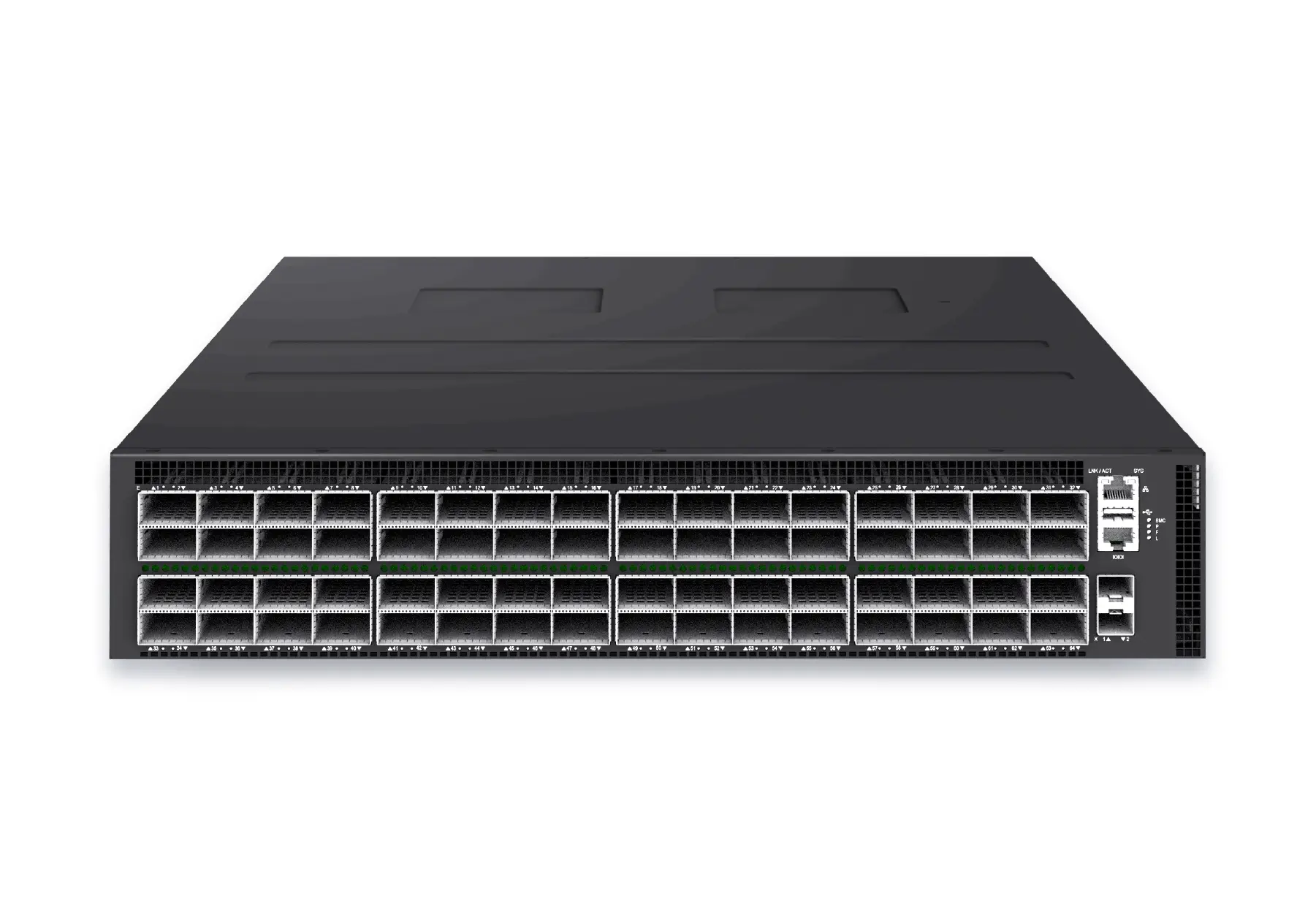 datacenter aiXS-DC-64X800-AI-G164-port 800G AI fabric switch for large-scale GPU clusters, HPC backbones, and ultra-high-throughput data center networks.View product
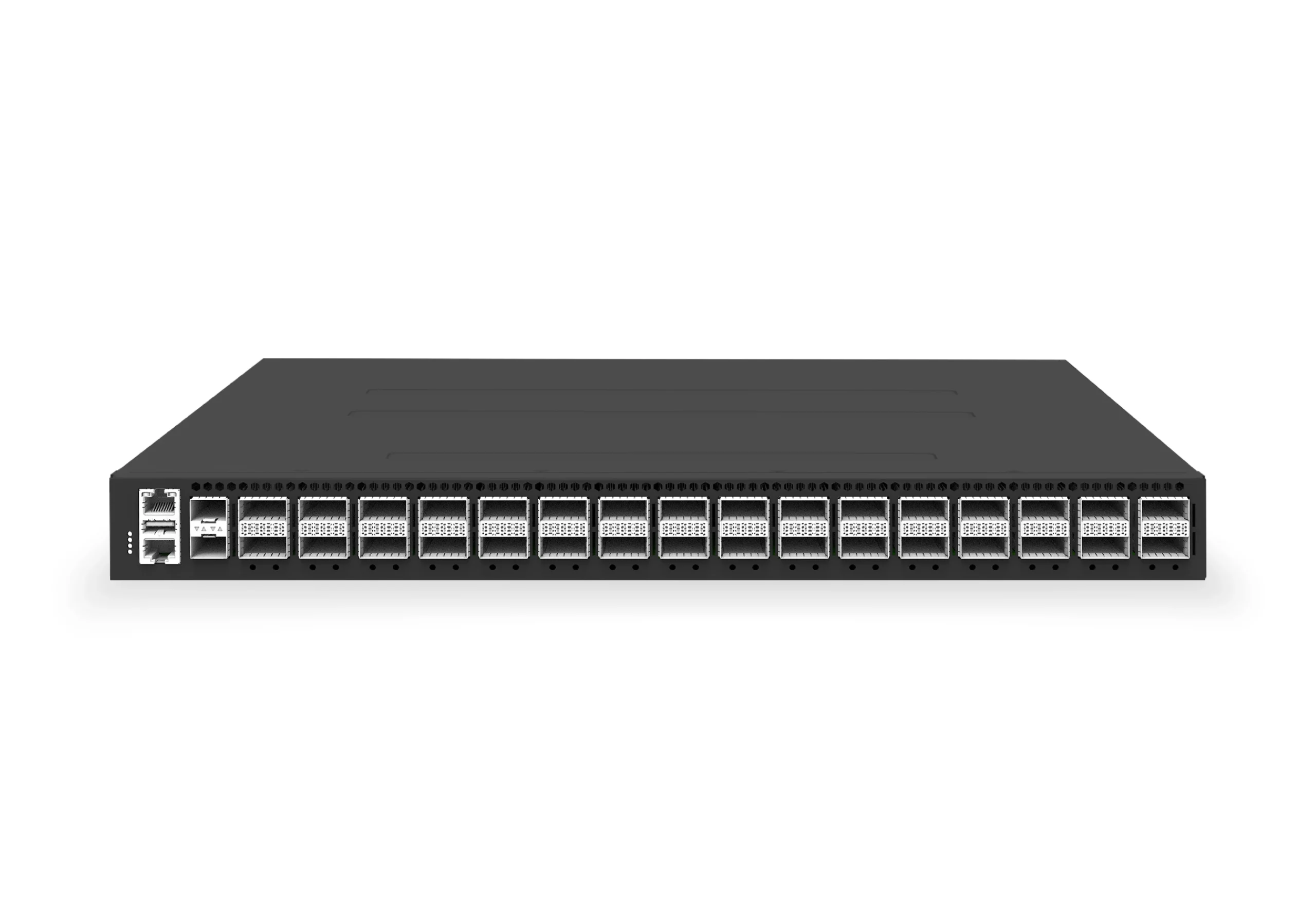 datacenter aiXS-DC-32X400-SP-G232-port 400G spine/core switch for high-capacity data center fabrics and AI-ready backbones.View product
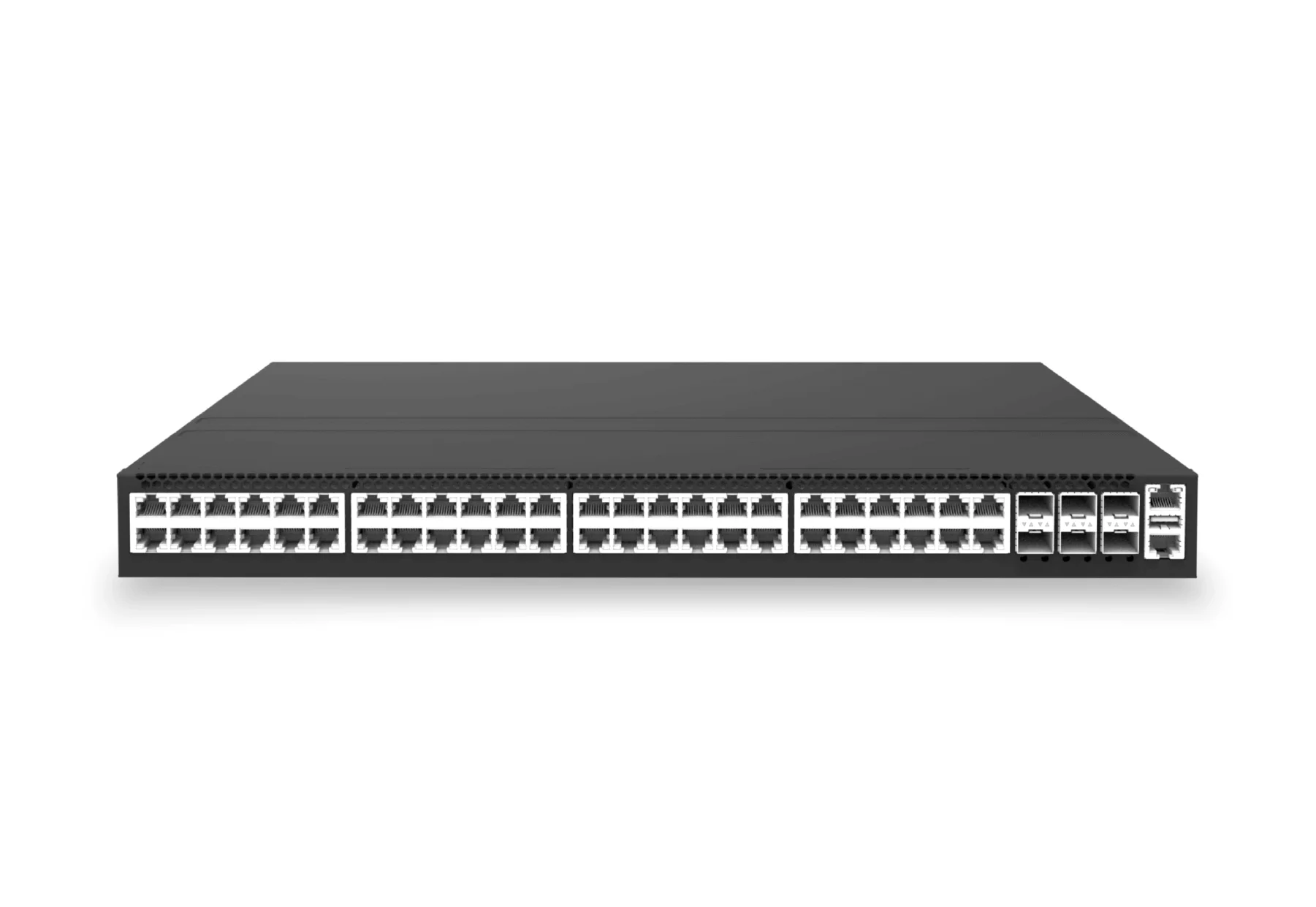 access aggregateXS-AA-48X2P5-6X25-POE144048x 2.5G RJ45 PoE campus access switch with 6x 25G SFP28 for PoE edge, access and aggregation networks.View product
Continue reading
Related articles
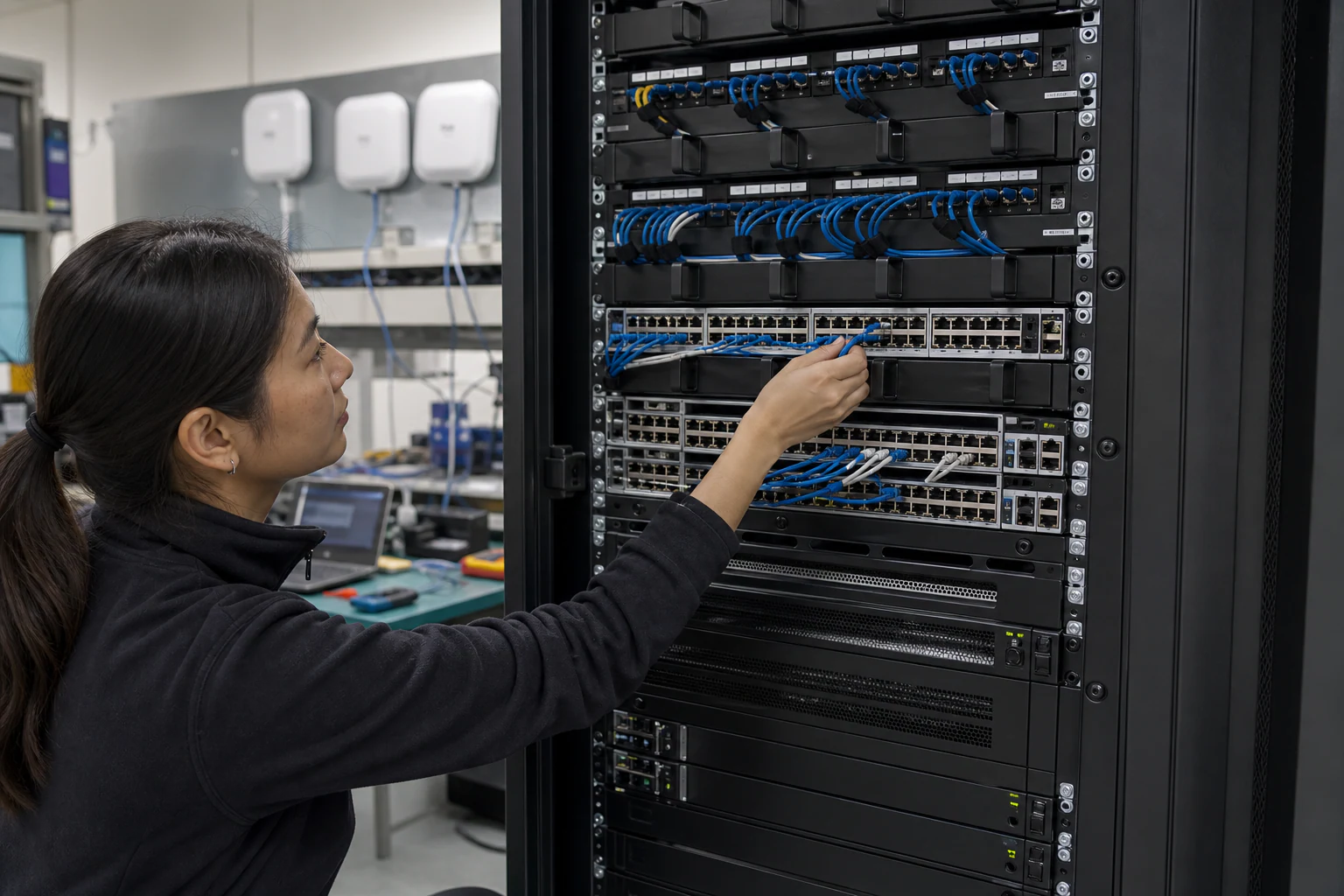 Technical ArticleEnterprise SONiC for Campus Access and Aggregation: What Australian Network Teams Should EvaluateEngineering guidance for Enterprise SONiC campus access and aggregation in Australia, covering PoE++, 802.1X, MC-LAG, STP, uplinks, telemetry, and pilot acceptance.Read article
 Technical ArticleWhy Open SONiC Campus Switches Are Gaining Ground in Australian PoE Refresh CyclesEngineering guidance on open SONiC campus switches for Australian PoE refresh cycles, covering 802.3bt budgets, NAC, uplinks, telemetry, and rollout risk.Read article
 Technical ArticleWhy Australian Campus IT Should Record SONiC White-Box Switching in Its ADRAn ADR framework for Australian campus IT teams evaluating SONiC white-box switching, PoE budgets, migration risk, support, and operations.Read article