
In brief
Engineering guidance on RoCE v2 for GPU Cluster AI Fabrics for Australian network teams, covering underlay design, EVPN-VXLAN operations, interoperability, telemetry.
Key takeaways
- The network has become a critical bottleneck for GPU cluster performance.
- RoCE v2 (RDMA over Converged Ethernet version 2) enables remote direct memory access over standard UDP/IP Ethernet networks.
- The momentum is real. NVIDIA's own Spectrum-X Ethernet platform now advertises zero-touch accelerated RoCE as a core capability, positioning Ethernet as a first-class transport for AI workloads alongside its InfiniBand Quantum line.
Why RoCE v2 Is Gaining Ground in AI Fabric Design
The network has become a critical bottleneck for GPU cluster performance. As organizations deploy large language model training and inference infrastructure, the choice between InfiniBand and RoCE v2 over Ethernet is no longer academic. It determines fabric cost, operational complexity, vendor lock-in, and the long-term scalability of AI investments.
RoCE v2 (RDMA over Converged Ethernet version 2) enables remote direct memory access over standard UDP/IP Ethernet networks. For GPU clusters performing collective communication operations such as all-reduce and all-to-all during distributed training, RoCE v2 delivers the low-latency, zero-copy data transfers that RDMA promises, but over commodity Ethernet infrastructure rather than proprietary InfiniBand fabrics.
The momentum is real. NVIDIA’s own Spectrum-X Ethernet platform now advertises zero-touch accelerated RoCE as a core capability, positioning Ethernet as a first-class transport for AI workloads alongside its InfiniBand Quantum line. The SONiC Foundation, a Linux Foundation project, confirms that SONiC offers a full suite of network functionality including BGP and RDMA, production-hardened in hyperscaler data centers. This convergence of open-source NOS maturity and silicon vendor RoCE optimization is what makes the deployment playbook conversation urgent for Australian data center buyers evaluating their next AI fabric refresh.
The SONiC Advantage for Open AI Fabrics
Software for Open Networking in the Cloud (SONiC) is an open-source network operating system built on Linux that runs on switches from multiple vendors and ASICs. Its architecture decouples hardware from software through the Switch Abstraction Interface (SAI), giving buyers the ability to select switching silicon and form factors independently from the NOS layer.
For AI fabric deployments specifically, SONiC offers several structural advantages:
- Multi-vendor hardware support: SONiC runs on switches from multiple hardware vendors, reducing single-vendor dependency in fabric design. This is relevant for Australian buyers managing supply chain risk across international hardware procurement cycles.
- Containerized modular architecture: SONiC breaks monolithic switch software into Docker containers, enabling independent upgrades of routing, telemetry, and RDMA management components without full switch reboots. For GPU clusters where downtime directly translates to lost training compute, this matters.
- RDMA as a first-class feature: SONiC’s support for RDMA means RoCE v2 configuration, congestion management (ECN, PFC), and DCBX negotiation are part of the NOS rather than bolted-on afterthoughts.
- Production-hardened heritage: The SONiC Foundation notes that SONiC has been battle-tested in the data centers of some of the largest cloud service providers. This is not lab-grade software.
For xSONiC data center AI switches running Enterprise SONiC, these architectural properties translate directly into fabric design flexibility for GPU cluster backends.
What a RoCE v2 GPU Cluster Deployment Actually Requires
Deploying RoCE v2 for GPU clusters is not a simple switch-and-go exercise. The fabric must be engineered end-to-end for lossless or near-lossless behavior. Key deployment requirements include:
Congestion Management: RoCE v2 relies on Explicit Congestion Notification (ECN) and Priority Flow Control (PFC) to prevent packet drops. PFC must be configured on every hop from the GPU NIC through the leaf and spine switches. Misconfigured PFC can cause head-of-line blocking and PFC storms that degrade rather than improve performance.
DCBX (Data Center Bridging Capability Exchange): DCBX automates the negotiation of PFC, ETS (Enhanced Transmission Selection), and application priority settings between switches and NICs. This is a critical xSONiC solution pillar at /solutions/data-center/dcbx-technology/ because manual DCBX configuration across hundreds of switch ports in a large GPU cluster is operationally unsustainable.
ECN and Fast CNP (Congestion Notification Packets): ECN marking thresholds must be tuned to the traffic patterns of the specific GPU collective operations in use. Fast CNP mechanisms accelerate the feedback loop between congestion detection and source throttling. The xSONiC Fast CNP solution pillar at /solutions/data-center/fast-cnp/ addresses this directly.
Telemetry and Visibility: INT (In-band Network Telemetry) and IPTPath telemetry provide real-time visibility into per-hop latency, queue depth, and congestion events across the GPU backend fabric. Without this, diagnosing RoCE v2 performance regressions in production is guesswork.
Spine-Leaf Topology: GPU cluster AI fabrics typically use a two-tier or three-tier spine-leaf architecture with 100G, 400G, or 800G uplinks. The leaf tier connects to GPU server NICs (typically 100GbE or 200GbE per NIC), while the spine tier provides non-blocking east-west bandwidth across the cluster.
ASIC and NIC Compatibility: RoCE v2 performance depends on silicon-level RDMA offload capabilities in both the switch ASIC and the host NIC. The SONiC Foundation’s supported devices and platforms list and vendor compatibility matrices must be consulted for each deployment.
The Australian Context: Supply Chain, Skills, and Scale
Australian organizations deploying GPU clusters for AI training and inference face a distinct set of constraints compared to US or APAC hyperscalers:
Supply chain lead times: Australian data center operators typically source networking hardware through regional distribution channels with longer lead times than direct hyperscaler procurement. Open networking platforms that support multiple hardware vendors provide more sourcing flexibility.
Scale considerations: Most Australian enterprise GPU clusters are smaller than hyperscaler deployments, typically ranging from tens to low hundreds of GPUs rather than thousands. This actually favors RoCE v2 over InfiniBand for many use cases, as the operational simplicity of Ethernet-based fabrics becomes more valuable at smaller scales where dedicated InfiniBand expertise is harder to justify.
Colocation and edge: Many Australian GPU clusters will be deployed in colocation facilities rather than purpose-built hyperscale campuses. RoCE v2 over SONiC is more compatible with colocation networking models than InfiniBand, which often requires dedicated fabric management infrastructure.
Where Incumbent Vendors Leave Gaps for Open Networking
However, several gaps remain that open networking buyers should evaluate:
- NOS choice vs. silicon choice: While NVIDIA supports SONiC on its switches, the broader SONiC ecosystem includes switch hardware from multiple ASIC vendors. Buyers who want to decouple their NOS investment from their silicon roadmap benefit from a multi-vendor SONiC strategy rather than a single-vendor stack.
- Operational tooling: NVIDIA’s NetQ provides visibility for NVIDIA-SONiC and Cumulus deployments. Open networking buyers using SONiC across mixed hardware need telemetry and automation approaches that work across the full switch fleet. xSONiC’s INT and IPTPath telemetry solutions address this for the data plane visibility layer.
- Vendor lock-in risk: The combination of proprietary silicon, proprietary NOS, and proprietary management software creates a triple lock-in. SONiC-based deployments with SAI abstraction reduce this risk, but only if the buyer commits to standardized configuration models (NETCONF/YANG) and open telemetry from the start.
This is not an anti-NVIDIA argument. It is a buyer education argument. Australian organizations evaluating AI fabric options should compare the total stack, not just the silicon datasheet.
The Deployment Guide Gap: What xSONiC Should Deliver
The industry has RoCE v2 specifications, SONiC documentation, and vendor-specific configuration guides. What is missing is a practical, end-to-end deployment guide that walks a buyer through:
- workload profiling before selecting switch and NIC speeds
- PFC, ECN, DCBX, ETS, and Fast CNP design decisions
- optics, FEC, MTU, and cable validation for the selected speed tier
- telemetry fields required for queue, congestion, route, and optic health
- failure tests that prove recovery during real GPU traffic
- Australian support, spares, lead time, and colocation operating constraints
Such a guide would serve multiple content lanes: a blog series for SEO capture, a solution pillar page for buyer education, and a technical guide for deployment teams. For the Australian market specifically, adding local considerations around sourcing, colocation compatibility, and skills development would differentiate xSONiC from generic global documentation.
RoCE v2 deployment acceptance matrix
RoCE v2 should be accepted only after the buyer proves the complete host-to-host path. The right test is not whether the switch supports RoCE, but whether the selected GPU server, NIC, switch, optic, NOS image, and congestion policy keep application traffic stable.
| Acceptance item | Evidence to capture | Reject or rework if |
|---|---|---|
| Workload and topology | GPU count, collective pattern, inference/training mix, leaf/spine design, oversubscription, and growth plan | The fabric speed is selected before workload traffic and bisection needs are modelled |
| Lossless policy | PFC priority, ECN thresholds, DCBX/ETS policy, MTU, queue profile, and pause-frame counters | PFC is enabled globally without testing pause storms, head-of-line blocking, or deadlock behaviour |
| Host and NIC alignment | NIC firmware, driver, PCIe generation/lane count, NUMA placement, RoCE mode, and GPU benchmark | The network passes switch tests but host placement or firmware prevents stable GPU throughput |
| Telemetry and troubleshooting | ECN marks, CNP counters, queue depth, drops, optic/FEC errors, path telemetry, and alert routing | Operators cannot identify the congested hop or queue during a slow training job |
| Failure recovery | Link loss, optic fault, switch reboot, route convergence, rollback, and workload impact | The acceptance test avoids faults and only reports steady-state bandwidth |
What to Watch Next
Several developments will shape the RoCE v2 for AI fabric conversation in the coming quarters:
- UEC (Ultra Ethernet Consortium) progress: The UEC is developing enhancements to Ethernet for AI and HPC workloads, including improvements to RoCE v2 congestion management and multi-path capabilities. These will eventually flow into SONiC and switch silicon implementations.
- Open-source RDMA stack maturity: The Linux RDMA subsystem and user-space libraries continue to evolve. Improvements in RDMA CM reliability and congestion control algorithm diversity benefit SONiC-based RoCE v2 deployments.
The bottom line for Australian data center buyers: RoCE v2 over SONiC-based open networking is a credible, production-viable path for GPU cluster AI fabrics. But the deployment guidance ecosystem needs to mature. xSONiC is positioned to fill that gap with source-backed, practical content that connects industry evidence to its product families and solution pillars.
Engineering FAQ
What is the most common RoCE v2 deployment failure? The common failure is enabling PFC and ECN as checkboxes without measuring queue behaviour, pause counters, CNP response, host firmware, and workload-level GPU utilisation.
Should Australian buyers use RoCE v2 or InfiniBand? RoCE v2 is attractive when the team wants Ethernet operations, open NOS choice, and multi-vendor sourcing. InfiniBand may still fit large dedicated training clusters that need a tightly integrated stack and vendor-owned fabric management.
What should a RoCE runbook include? Include NIC firmware, switch image, PFC/ECN/DCBX settings, MTU, queue mapping, optics/FEC mode, telemetry counters, failure tests, rollback steps, and escalation ownership.
Related xSONiC Resources
Sources Reviewed
- RoCE GPU Cluster Fabrics Reference
- AI Fabric Ethernet Reference
- Ethernet Network Adapters - ConnectX NICs | NVIDIA
- NVIDIA Spectrum-X Ethernet Platform
- NVIDIA Ethernet Platform Products
- IEEE 802.1Qbb Priority-based Flow Control
- IEEE 802.1Qaz Enhanced Transmission Selection
- RFC 3168 - Explicit Congestion Notification
- IETF Draft - Fast CNP in RoCEv2 Networks
- Ultra Ethernet Consortium
- OpenConfig gNMI Specification
- OpenConfig
- SONiC Project Documentation
- NVIDIA Ethernet Switching
- Open Compute Networking
- SONiC GitHub
- SONiC Foundation
Product fit
Products referenced for evaluation
These products are referenced for evaluation context in the article. Confirm workload, port, optics, software, interoperability, and support requirements against the exact deployment before procurement.
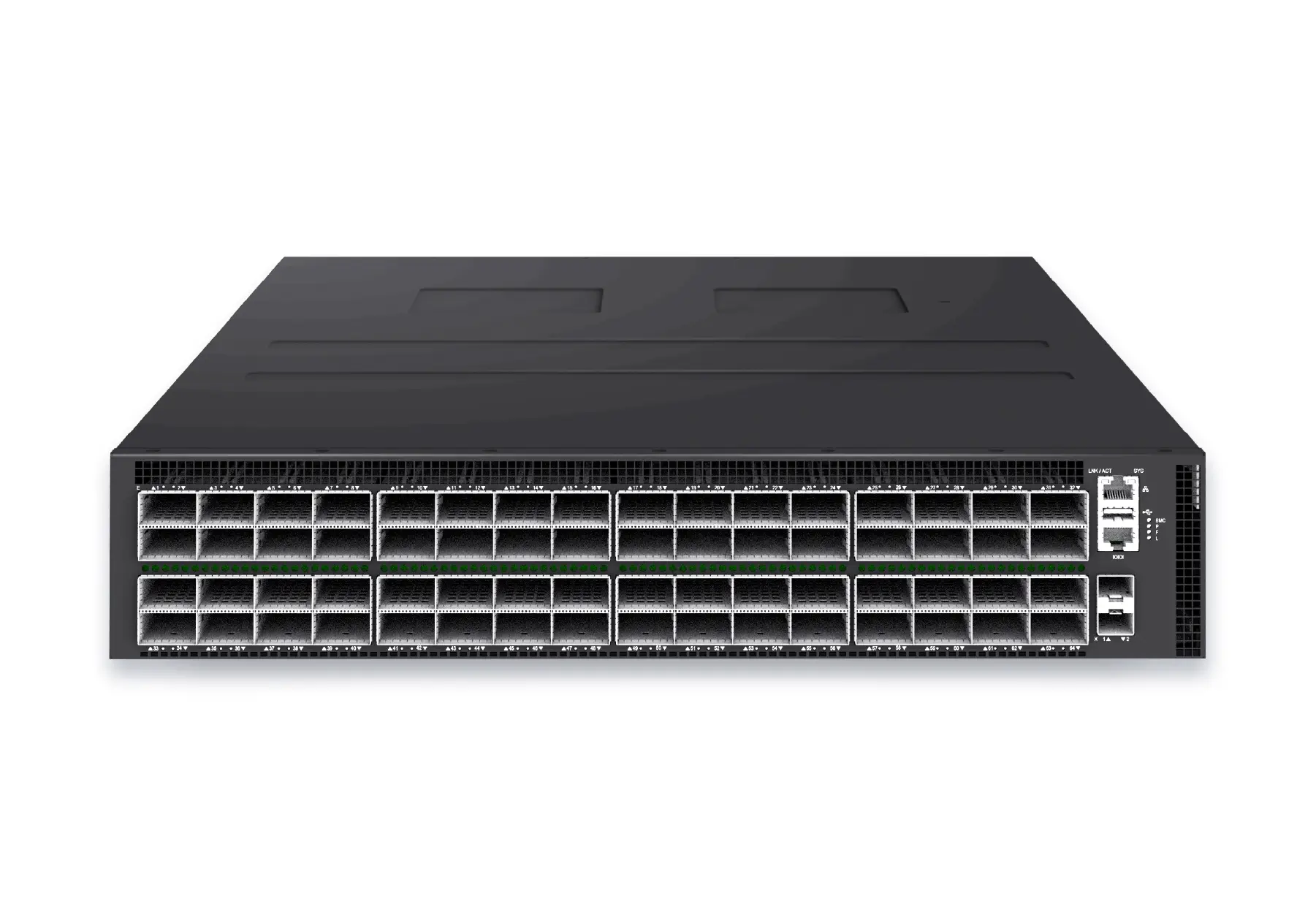 datacenter aiXS-DC-64X800-AI-G164-port 800G AI fabric switch for large-scale GPU clusters, HPC backbones, and ultra-high-throughput data center networks.View product
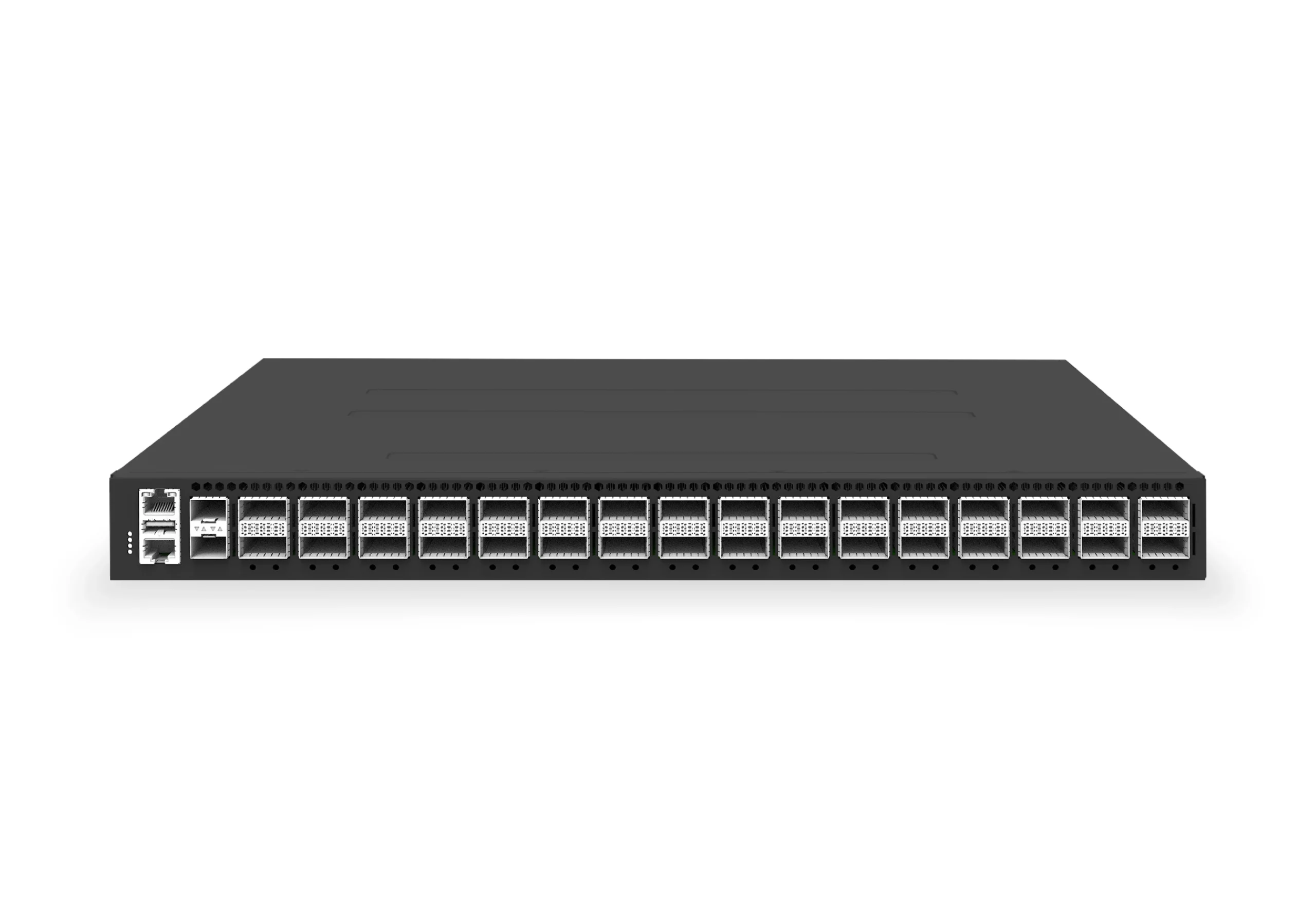 datacenter aiXS-DC-32X400-SP-G232-port 400G spine/core switch for high-capacity data center fabrics and AI-ready backbones.View product
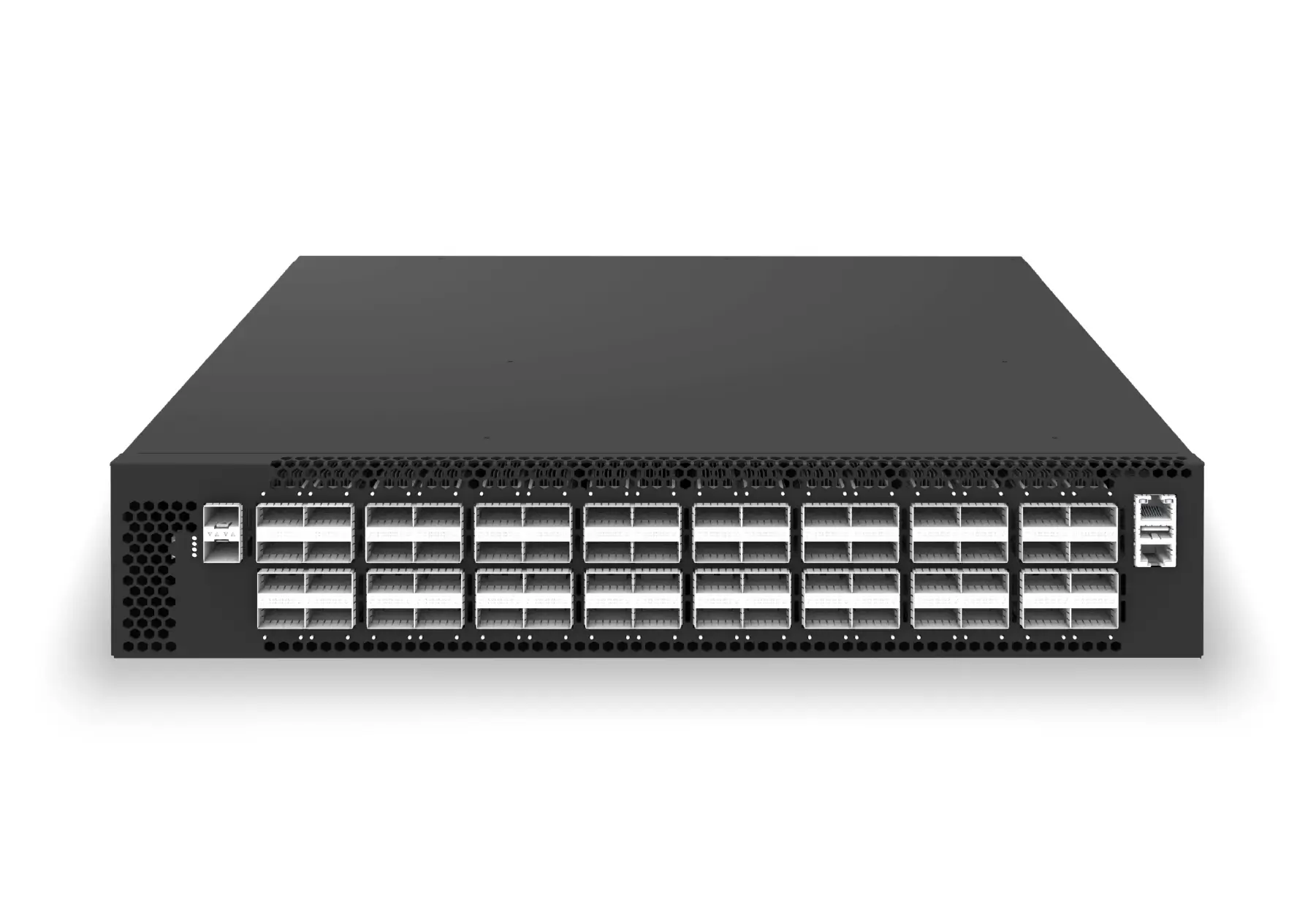 datacenter aiXS-DC-64X200-LS-G164-port 200G leaf/spine switch for high-bandwidth storage, compute, and scale-out data center fabrics.View product
Continue reading
Related articles
 Technical ArticleDesigning GPU Backend Fabrics with RoCE v2: How SONiC 400G/800G Switches Transform AI Data CentersEngineering guide for AI fabric buyers covering RoCE, SONiC, telemetry, optics, support ownership, and deployment validation.Read article
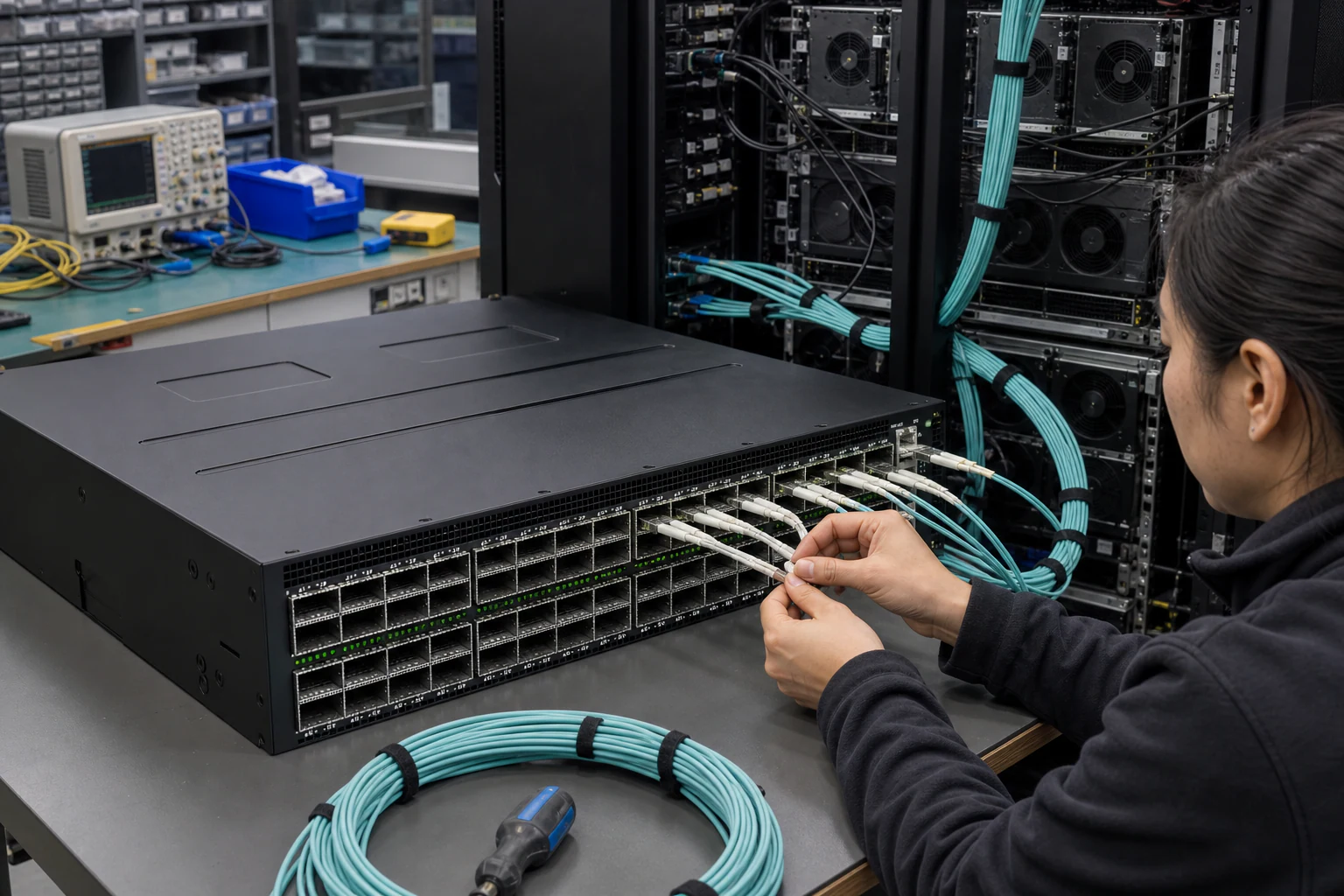 Technical ArticleWhy Open SONiC Ethernet Is Becoming the Default AI Fabric for GPU Backend ClustersEngineering guidance on Open SONiC Ethernet Is Becoming the Default AI Fabric for GPU Backend Clusters for Australian network teams, covering underlay design.Read article
 Technical ArticleGPU Cluster Fabric Design: Why AI Workloads Need Purpose-Built EthernetArchitecture guide to GPU cluster fabrics covering RoCE v2, PFC, ECN, DCBX, SONiC, 400G/800G, telemetry, InfiniBand trade-offs, and acceptance evidence.Read article