In brief
Engineering guidance on Private AI Inference Networking in Australia for Australian network teams, covering underlay design, EVPN-VXLAN operations, interoperability.
Key takeaways
- Australian enterprises are accelerating their adoption of private AI inference infrastructure.
- GPU inference workloads generate intensive east-west traffic patterns.
- The Australian market presents specific considerations. Data sovereignty requirements, latency to end users, and the cost of cloud-based GPU inference are driving organisations to deploy private inference infrastructure.
Why Private AI Inference Is Reshaping Network Requirements
Australian enterprises are accelerating their adoption of private AI inference infrastructure. Organisations deploying on-premise large language models, retrieval-augmented generation (RAG) systems, and multimodal AI services face a networking challenge that traditional data center architectures were not designed to solve.
GPU inference workloads generate intensive east-west traffic patterns. When a model is served across multiple GPUs, whether on a single server or distributed across a cluster, the network becomes a critical dependency for inference latency and throughput. Packet loss, jitter, and congestion can degrade model response times in ways that directly impact user experience and business value.
The Australian market presents specific considerations. Data sovereignty requirements, latency to end users, and the cost of cloud-based GPU inference are driving organisations to deploy private inference infrastructure. According to the SONiC Foundation, SONiC is ‘an open source network operating system based on Linux that runs on switches from multiple vendors and ASICs’ with ‘a full suite of network functionality, like BGP and RDMA, that has been production-hardened in the data centers of some of the largest cloud service providers.’ This production heritage makes SONiC-based switching a relevant consideration for enterprises evaluating GPU backend networking.
This analysis examines what Australian enterprise buyers should evaluate when planning the network layer for private AI inference deployments.
The GPU Backend Networking Problem
Modern GPU inference servers rely on high-bandwidth, low-latency networking for several critical functions:
Model-parallel inference: When a large model exceeds the memory capacity of a single GPU, tensor and pipeline parallelism distribute computation across multiple GPUs. Each parallel shard requires synchronous data exchange. Network latency directly impacts the time-to-first-token (TTFT) metric that defines user-facing inference performance.
RDMA transport: Remote Direct Memory Access over Converged Ethernet (RoCE v2) enables GPUs to read and write memory on remote devices without CPU intervention. RoCE v2 requires lossless or near-lossless Ethernet fabric with Data Center Bridging Capability Exchange (DCBX), Priority Flow Control (PFC), and Explicit Congestion Notification (ECN) configured correctly.
Scalable inference clusters: As organisations scale from single-server inference to multi-node clusters serving multiple models, the network must support predictable performance at 100G, 400G, and increasingly 800G port speeds.
For Australian enterprises, this creates a practical question: can open networking platforms deliver the required RoCE v2 performance and operational simplicity without proprietary lock-in?
SONiC Architecture and AI Fabric Suitability
SONiC’s architecture offers several characteristics relevant to AI inference networking:
Multi-vendor and multi-ASIC support: SONiC decouples the network operating system from hardware, running on switches from multiple vendors with different ASICs. The SONiC GitHub repository describes this as providing ‘better fault isolation, easier debugging and troubleshooting, simplified upgrades and maintenance, and enhanced scalability’ through its Docker container-based modular design.
RDMA and BGP production heritage: SONiC includes native support for BGP and RDMA, the two protocol families most critical for AI fabric deployment. The platform has been deployed at scale in cloud service provider data centres, providing a reference deployment model for enterprises.
Container-based modularity: Each network function runs in its own Docker container. This design enables operators to troubleshoot, upgrade, or replace individual components without full system disruption, a meaningful operational advantage when managing AI fabric that must maintain continuous availability.
NOS choice: NVIDIA’s product page confirms that Spectrum Ethernet switches ‘enable operational efficiency with a wide variety of network operating system choices, including NVIDIA Cumulus Linux and Pure SONiC.’ This multi-NOS support extends across the switch ASIC ecosystem, giving buyers hardware and software flexibility.
For Australian enterprises evaluating private AI inference networking, SONiC-based switching with appropriate ASIC selection can potentially address RoCE v2, DCBX, and congestion management requirements while avoiding single-vendor NOS lock-in. However, this requires careful validation of specific switch platform, ASIC, and SONiC version compatibility for the intended workload.
Key Technical Requirements for AI Inference Fabric
A well-designed GPU backend network for private AI inference should address these technical requirements:
| Requirement | Why It Matters | SONiC / Open Networking Capability |
|---|---|---|
| Lossless Ethernet (RoCE v2) | GPU memory transfers cannot tolerate packet loss without significant retransmission penalty | SONiC supports RoCE v2 with PFC, ECN, and DCBX configuration |
| Low latency (sub-microsecond hop) | Model-parallel inference latency adds across each network hop | ASIC-dependent; requires evaluation of specific switch platform |
| Congestion management | Multiple GPU flows sharing fabric can create incast congestion | SONiC supports ECN, PFC, and congestion notification profiles |
| 400G/800G readiness | GPU server NICs increasingly ship with 400G and 800G ports | Available on supported switch platforms with appropriate ASICs |
| Telemetry and visibility | Operators need real-time visibility into fabric health and congestion | SONiC supports streaming telemetry; INT and IPTPath enable path-level visibility |
| Multi-vendor flexibility | Avoids lock-in to single vendor hardware or software roadmap | Core SONiC value proposition |
Australian buyers should evaluate whether their intended switch platforms provide tested SONiC support for these capabilities. Not all SONiC-compatible switches support all features equally, and RDMA performance validation requires real-world testing with the target GPU and NIC configuration.
Incumbent Stack Lock-In vs Open Networking Flexibility
The current AI networking market is dominated by a small number of vertically integrated vendors. Proprietary solutions offer tight integration and validated reference architectures, but they create dependencies that can limit buyer flexibility:
Hardware lock-in: Proprietary NOS platforms tie buyers to specific switch hardware, limiting competitive sourcing and creating single-vendor procurement risk.
Software roadmap dependency: When the NOS vendor controls the feature roadmap, buyers must accept the vendor’s prioritisation of features, bug fixes, and platform support.
Pricing leverage: Single-source procurement reduces buyer negotiating power, particularly for ongoing support and expansion.
Open networking with SONiC addresses these concerns by enabling buyers to select from multiple switch hardware vendors while maintaining a common NOS and operational toolchain. For Australian enterprises planning multi-year AI infrastructure investments, this flexibility can materially impact total cost of ownership and strategic positioning.
However, open networking requires internal engineering capability or a trusted integration partner to design, deploy, and operate the fabric. Australian organisations should assess their team’s readiness for open networking operations before committing to this path.
Australian Market Considerations
Several factors shape the Australian context for private AI inference networking:
Data sovereignty: Australian organisations in regulated industries (financial services, healthcare, government) increasingly require AI inference to occur on Australian soil with data remaining under organisational control. Private GPU infrastructure directly addresses this requirement.
Supply chain and procurement: Australian buyers face longer lead times and higher costs for networking hardware compared to North American or European markets. Multi-vendor SONiC-compatible switching provides procurement flexibility and potential cost advantages through competitive sourcing.
Skills availability: Australia has a growing but constrained pool of open networking engineering talent. Organisations adopting SONiC-based AI fabric should plan for training, managed services, or integration partner engagement.
Hyperscaler competition: Australian hyperscaler GPU instances are expanding but remain capacity-constrained and priced at a premium. Private inference infrastructure becomes economically viable for organisations with consistent GPU utilisation above a break-even threshold, making the network investment more justifiable.
The combination of data sovereignty requirements, procurement flexibility needs, and hyperscaler cost dynamics creates a compelling case for Australian enterprises to evaluate open networking for AI inference deployments.
What to Evaluate Next
Australian enterprise buyers considering private AI inference networking should assess the following:
-
Switch platform and ASIC selection: Identify SONiC-compatible switch platforms that support the required port speeds, RDMA features, and telemetry capabilities for your GPU cluster topology.
-
RoCE v2 validation: Test the complete RoCE v2 stack (NIC, switch ASIC, SONiC version) with your target GPU servers before committing to production deployment. Interoptability validation is critical.
-
Operational tooling: Evaluate SONiC management, monitoring, and automation tooling against your team’s existing capabilities. Consider AIDC controller or equivalent fabric management platforms.
-
Integration partner: If internal open networking skills are limited, identify a qualified integration partner with AI fabric deployment experience in the Australian market.
-
Optical interconnect planning: Plan the optical transceiver and cabling infrastructure (400G/800G QSFP-DD and OSFP optics, DAC and AOC for short-reach, fibre for longer distances) alongside switch selection.
xSONiC offers data center AI switches and AI infrastructure systems designed for these workloads, backed by SONiC-based operation and multi-vendor hardware flexibility. For Australian enterprises evaluating private AI inference networking, xSONiC can provide guidance on switch selection, fabric design, and deployment planning.
Contact xSONiC to discuss your AI inference networking requirements.
Engineering FAQ
What should be proven before adopting EVPN-VXLAN on SONiC? Prove underlay routing, BGP sessions, VTEP behaviour, MAC/IP learning, route scale, multi-homing design, failure convergence, and observability. The overlay should be accepted as a system, not a feature checkbox.
Why does the underlay design still matter in an overlay network? EVPN-VXLAN depends on a stable routed underlay. MTU, ECMP, addressing, route policy, link failure behaviour, and telemetry determine whether the overlay remains predictable under load and during faults.
What should be included in an EVPN-VXLAN operations runbook? Include naming, IP plan, BGP policy, VNI mapping, change process, rollback commands, failure checks, telemetry fields, backup and restore steps, and escalation ownership for the selected SONiC image.
Related xSONiC Resources
Sources Reviewed
- Ethernet Network Adapters - ConnectX NICs | NVIDIA
- NVIDIA BlueField Data Processing Unit
- NVIDIA Spectrum-X Ethernet Platform
- SONiC Project Documentation
- Broadcom Ethernet Switching
- Marvell Switching
- NVIDIA Ethernet Switching
- Open Compute Networking
- SONiC GitHub
- SONiC Foundation
Product fit
Products referenced for evaluation
These products are referenced for evaluation context in the article. Confirm workload, port, optics, software, interoperability, and support requirements against the exact deployment before procurement.
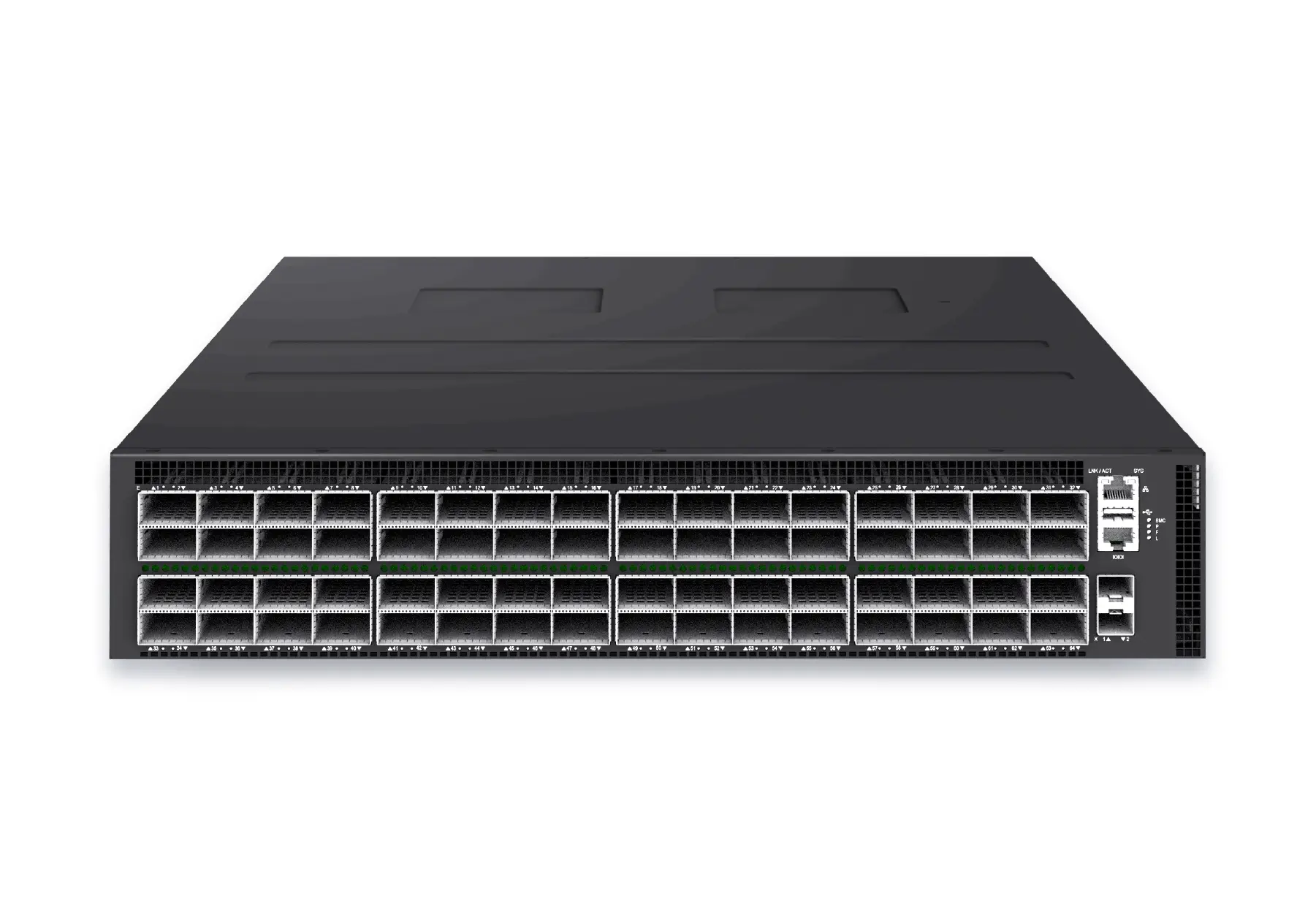 datacenter aiXS-DC-64X800-AI-G164-port 800G AI fabric switch for large-scale GPU clusters, HPC backbones, and ultra-high-throughput data center networks.View product
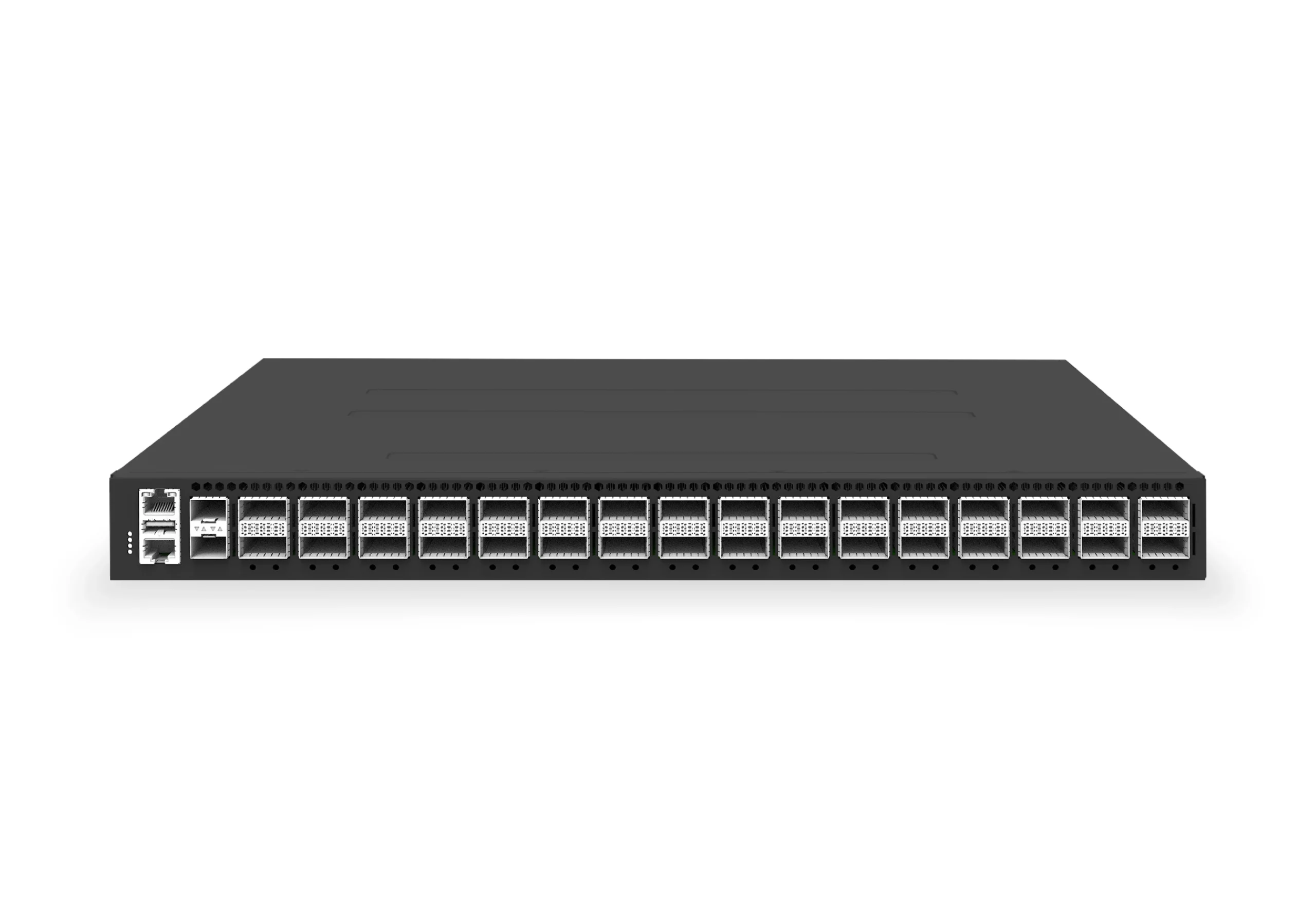 datacenter aiXS-DC-32X400-SP-G232-port 400G spine/core switch for high-capacity data center fabrics and AI-ready backbones.View product
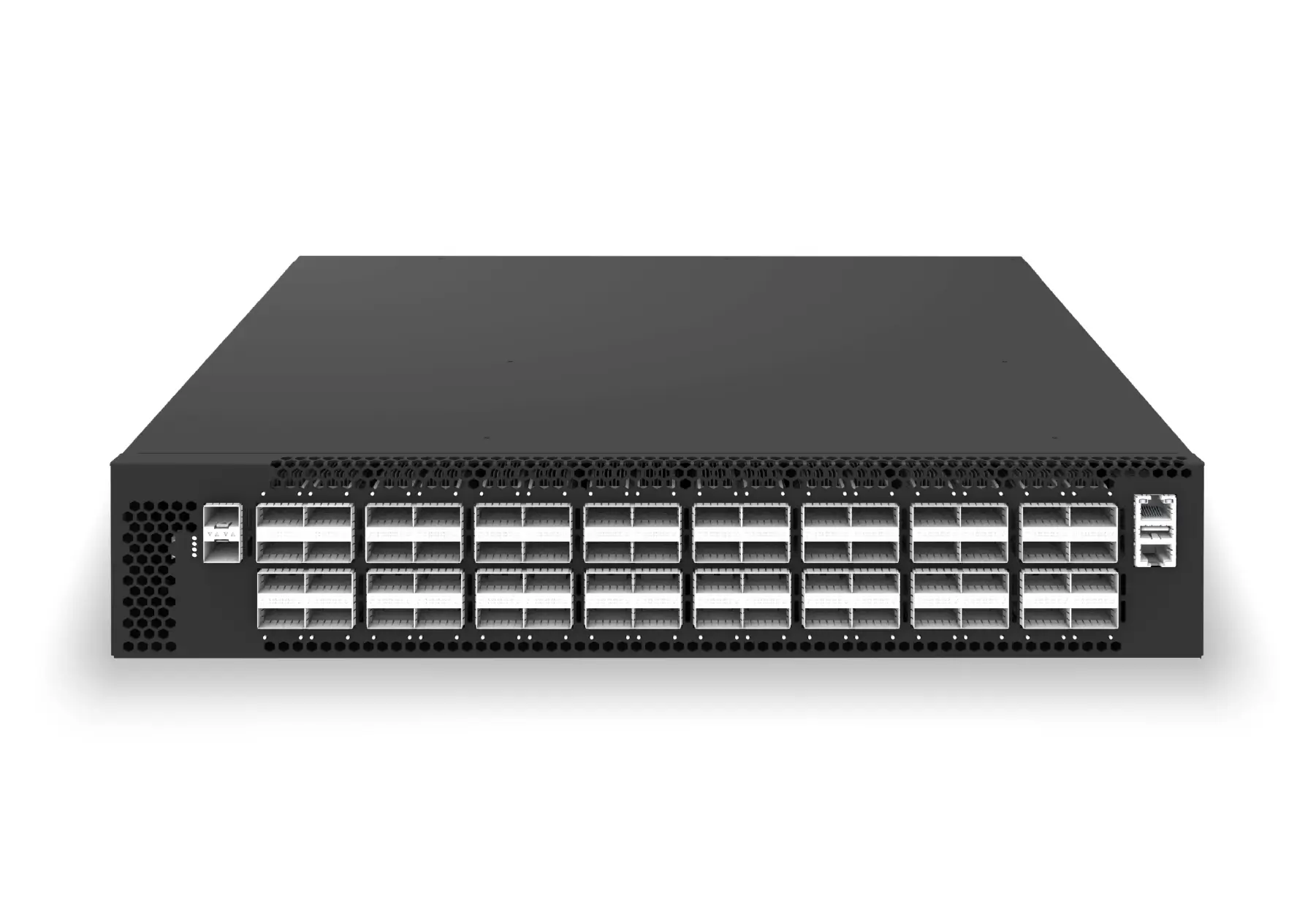 datacenter aiXS-DC-64X200-LS-G164-port 200G leaf/spine switch for high-bandwidth storage, compute, and scale-out data center fabrics.View product
Continue reading
Related articles
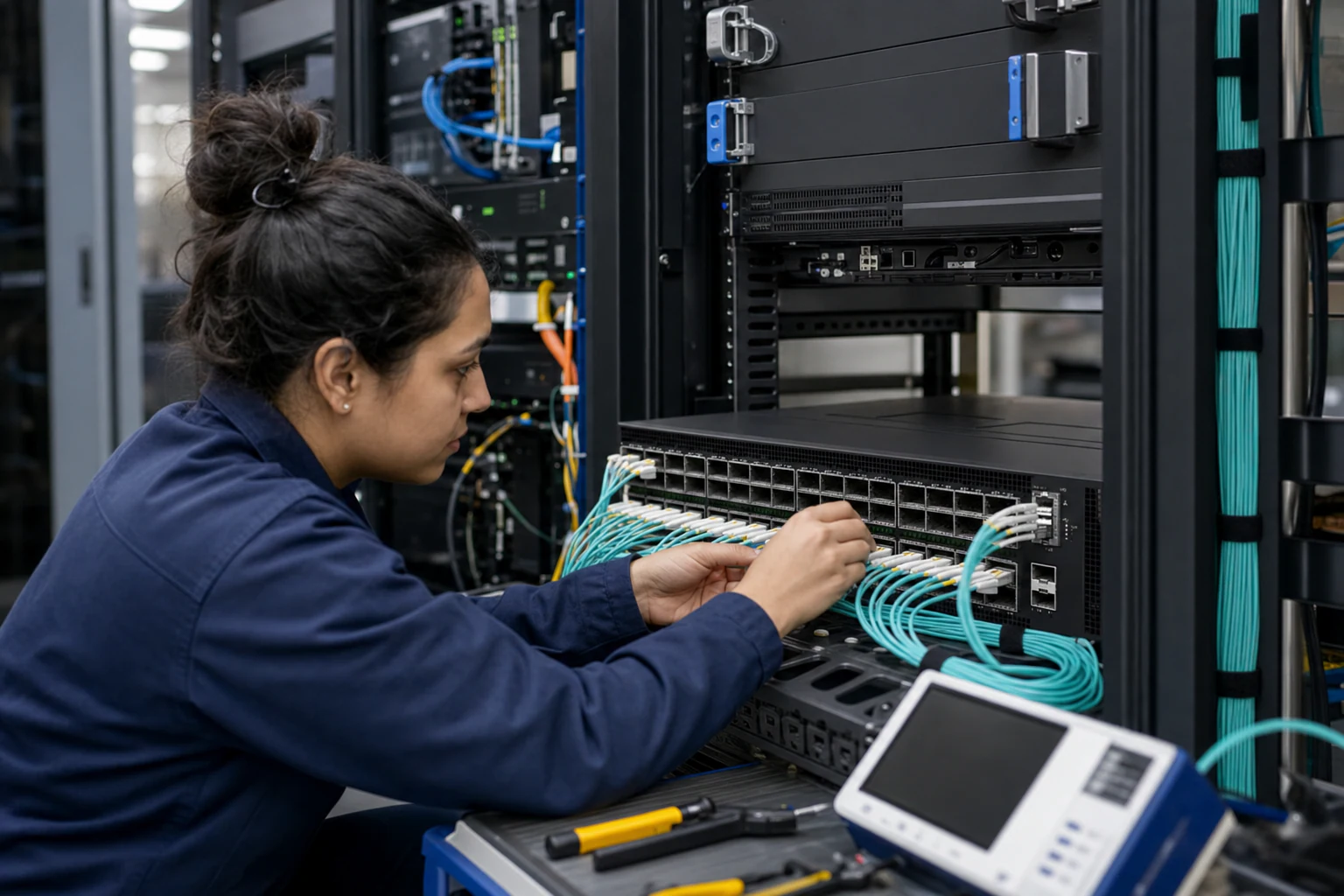 Technical ArticleDesigning GPU Backend Fabrics with RoCE v2: How SONiC 400G/800G Switches Transform AI Data CentersEngineering guide for AI fabric buyers covering RoCE, SONiC, telemetry, optics, support ownership, and deployment validation.Read article
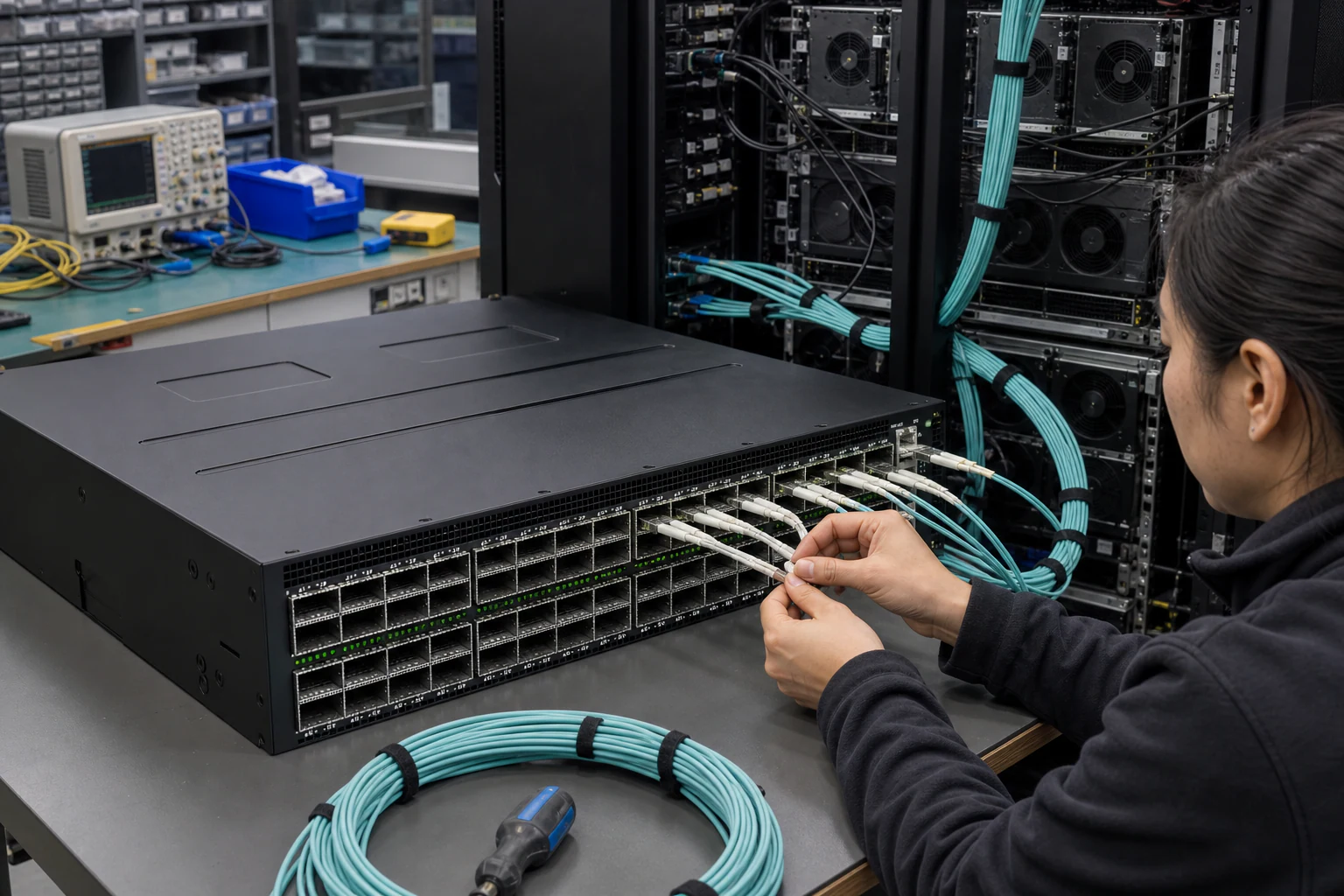 Technical ArticleWhy Open SONiC Ethernet Is Becoming the Default AI Fabric for GPU Backend ClustersEngineering guidance on Open SONiC Ethernet Is Becoming the Default AI Fabric for GPU Backend Clusters for Australian network teams, covering underlay design.Read article
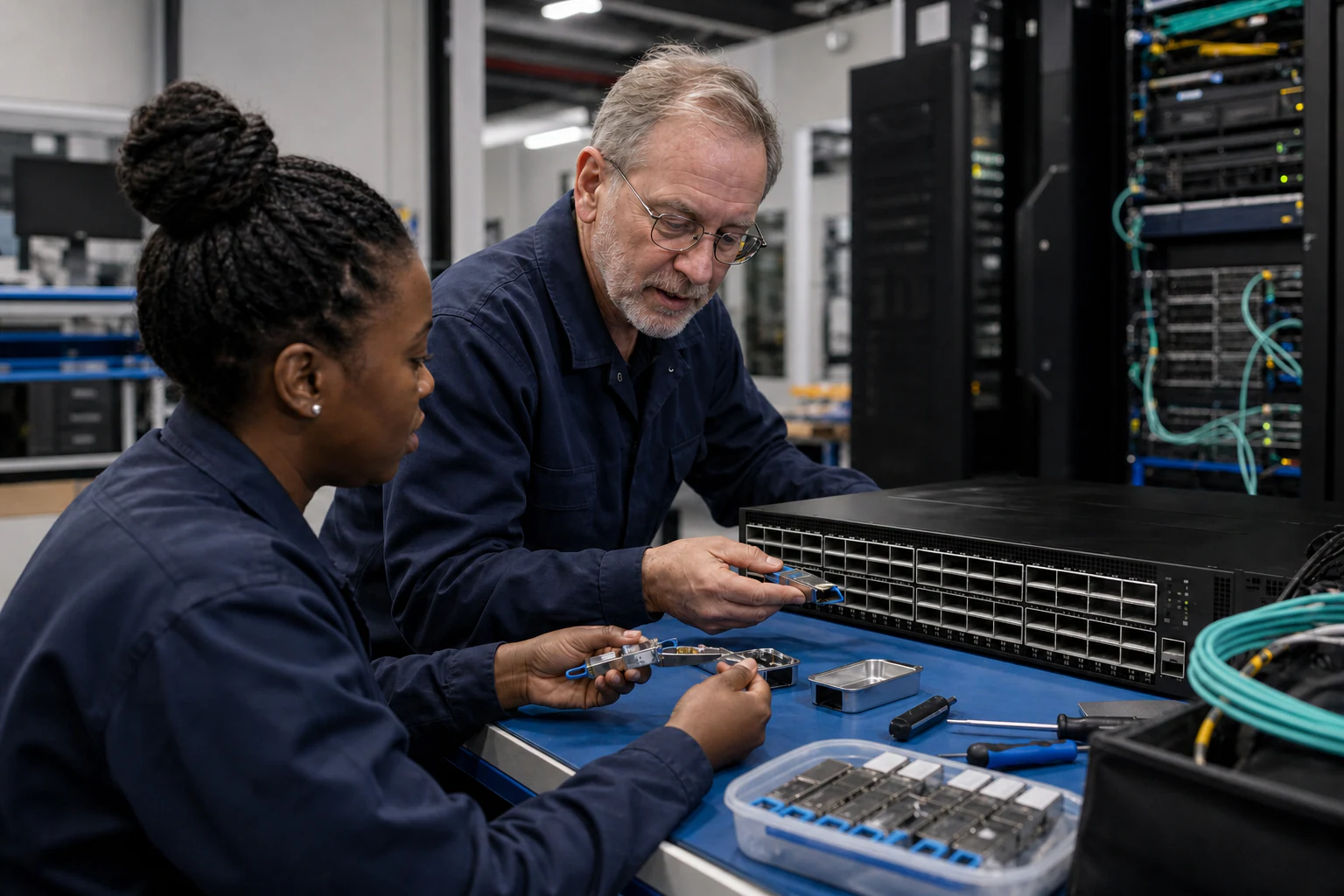 Technical ArticleGPU Cluster Fabric Design: Why AI Workloads Need Purpose-Built EthernetArchitecture guide to GPU cluster fabrics covering RoCE v2, PFC, ECN, DCBX, SONiC, 400G/800G, telemetry, InfiniBand trade-offs, and acceptance evidence.Read article