In brief
Engineering guide for campus switching teams covering PoE, access design, MC-LAG/STP risk, telemetry, support, and pilot validation.
Key takeaways
- When Australian network teams plan a campus access switch refresh, the first instinct is often to compare port counts and uplink speeds.
- The IEEE defines four PoE tiers, each with distinct power ceilings that directly determine which devices each port can support:
- The key planning insight: if you are deploying Wi-Fi 6E or Wi-Fi 7 access points -- which are increasingly common in Australian education and enterprise campuses -- PoE+ may not provide sufficient headroom.
Why PoE Standard Selection Matters More Than Port Count
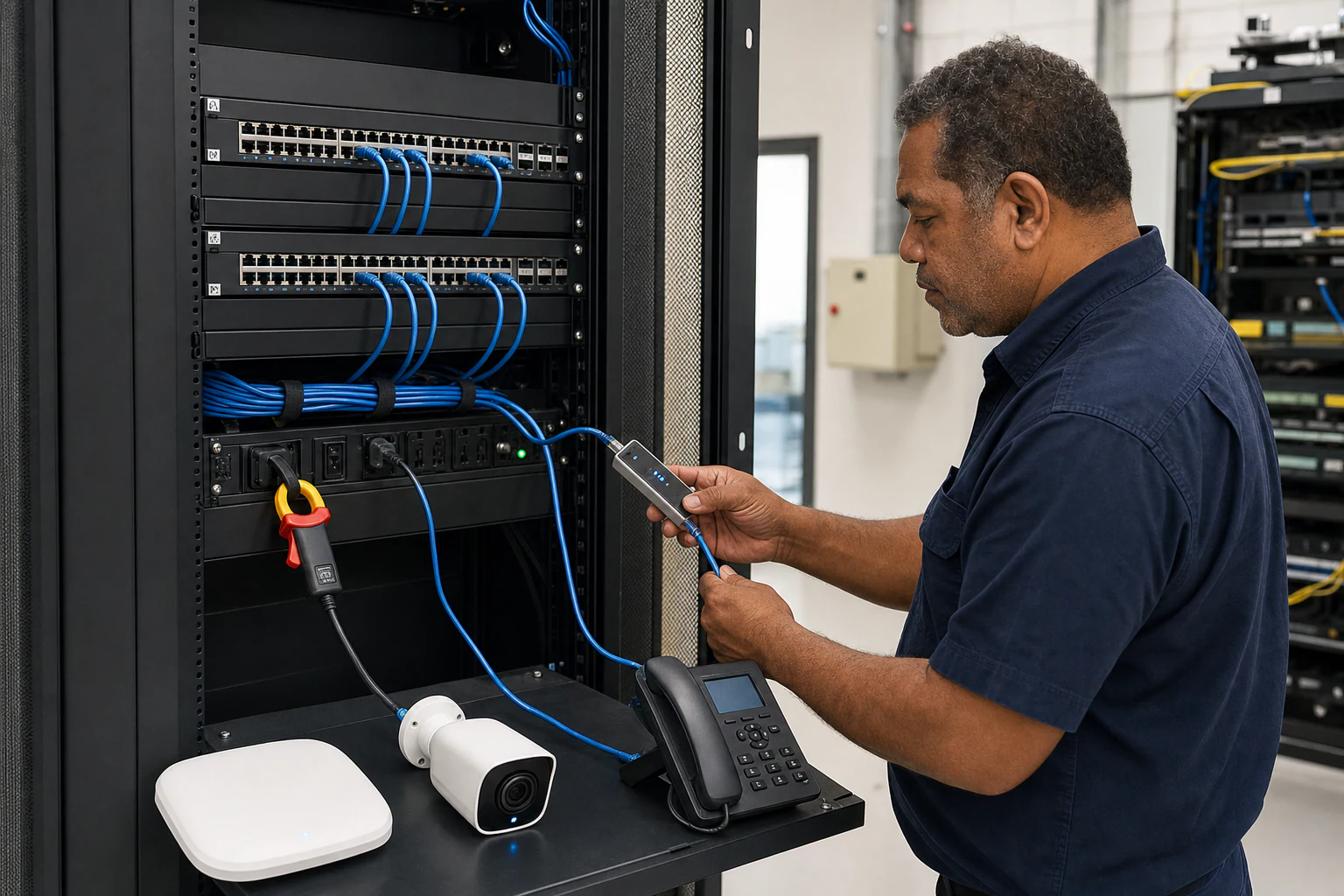
When Australian network teams plan a campus access switch refresh, the first instinct is often to compare port counts and uplink speeds. But for PoE-heavy campus environments — schools, hospitals, government offices, and retail chains — the PoE power budget is the constraint that shapes every downstream decision.
The IEEE defines four PoE tiers, each with distinct power ceilings that directly determine which devices each port can support:
- PoE (802.3af, Type 1): Up to 15.4W per port at the PSE, delivering up to 12.95W to the powered device. Suitable for VoIP phones, sensors, and basic IP cameras.
- PoE+ (802.3at, Type 2): Up to 30W per port, delivering up to 25.5W to the device. Covers PTZ cameras, video IP phones, alarm systems, and many current-generation Wi-Fi 6 access points.
- PoE++ (802.3bt, Type 3): Up to 60W per port, with up to 51W reaching the device. Required for high-performance multi-radio access points, building management systems, and digital signage.
- UPoE (802.3bt, Type 4): Up to 100W per port, with up to 71W to the device. Targets laptops, TVs, and extremely power-hungry edge devices.
The key planning insight: if you are deploying Wi-Fi 6E or Wi-Fi 7 access points — which are increasingly common in Australian education and enterprise campuses — PoE+ may not provide sufficient headroom. Multi-radio access points with 6 GHz radios and USB/IoT interfaces frequently require 30W or more, pushing deployments toward PoE++ (802.3bt) capable switches.
For Australian campus planners evaluating xSONiC open networking access switches, the PoE tier question is the starting point of the procurement conversation, not an afterthought.
The Power Budget Math That Catches Campus Planners Off Guard
A 48-port PoE+ switch sounds like it can power 48 devices at 30W each. It cannot.
The IEEE PoE specifications define per-port maximums, but every switch has an aggregate power budget that is the real constraint. A switch with a 740W PoE budget running 48 PoE+ ports can only deliver an average of approximately 15.4W per port when all ports are active. That is PoE-class power, not PoE+ power, spread across PoE+ ports.
This distinction matters enormously in Australian campus environments where:
- Classrooms may have 24-48 PoE endpoints per floor (access points, VoIP phones, IP cameras, IoT sensors)
- Healthcare facilities run high-density wireless alongside nurse call systems and patient monitors
- Government buildings require 24/7 PoE availability for security and access control
The power management protocol negotiation is IEEE-defined and works across standards. Each PoE standard supports multiple power classes negotiated via signature detection or LLDP: 802.3af defines three classes, 802.3at defines four classes (with 0.1W granularity via LLDP), 802.3bt Type 3 defines six classes, and Type 4 defines eight classes.
For campus planners, the practical question is: what is the total connected PoE load across all switch stacks on each floor or building zone? The answer determines whether you need PoE+ or PoE++ switches, how many switch units per closet, and whether your upstream power infrastructure (UPS, PDU) can sustain the load.
Cable Infrastructure: The PoE Planning Variable Most Teams Undervalue
PoE tier selection also constrains cable infrastructure decisions. The IEEE specifications define clear cable requirements by PoE tier:
- PoE (802.3af): Cat3 or better, 2-pair power delivery
- PoE+ (802.3at): Cat5 or better, 2-pair power delivery
- PoE++ (802.3bt, Type 3 and Type 4): Cat5 or better, 4-pair power delivery
The distance limit is 100 meters (328 feet) over standard Ethernet cable for all PoE tiers, per the IEEE 802.3bt standard. This applies to both Type 3 (60W) and Type 4 (100W) power levels.
For Australian campuses, several cable infrastructure realities apply:
- Existing Cat5e or Cat6 cabling can support PoE++ (up to 100W), but shielded Cat6 or Cat6A is recommended for higher power loads and for environments with EMI concerns.
- Cat6A with proper heat dissipation supports higher PoE power in cable bundles. Temperature derating is specified in the IEEE standards: 5 degrees C derating with one cable pair mode active, 10 degrees C derating when more than half of bundled cable pairs are carrying PoE load.
- Many Australian school and university buildings built before 2005 may have Cat5 or Cat5e infrastructure that limits PoE++ performance in dense bundles.
For campus refresh projects, cable plant assessment should happen before switch selection. It is common for Australian network refresh projects to scope switch replacement separately from cabling upgrades — but PoE++ planning forces these conversations together.
Backward Compatibility: Why PoE++ Switches Are a Safer Campus Investment
A critical planning consideration: PoE standards are backward compatible. A PoE++ (802.3bt) switch can power PoE, PoE+, and PoE++ devices, automatically adjusting power delivery based on the connected device’s power class signature. However, a PoE (802.3af) switch cannot power PoE+ or PoE++ devices.
This creates a forward-looking argument for Australian campus planners: specify PoE++ (802.3bt) capable access switches even if today’s device fleet is predominantly PoE+ (802.3at). The incremental switch cost is offset by:
- Eliminating forklift upgrades when Wi-Fi 7 APs or IoT endpoints arrive
- Supporting a mixed device estate on a single switch platform
- Reducing the number of PoE switch variants to manage and spare
For Australian enterprise and education buyers evaluating open networking, this is where xSONiC access-aggregate switches become relevant. Campus buyers who select an open networking PoE++ platform gain:
- A standard SONiC management plane across campus and data center fabrics
- Freedom from single-vendor PoE switch lock-in
- The ability to run Enterprise SONiC with NETCONF/YANG-driven PoE policy automation
PoE Budget Acceptance Matrix
PoE planning should be accepted per wiring closet, not only per switch model. The buyer needs a power model that includes connected endpoint classes, simultaneous draw, future AP refresh, UPS runtime, power supply redundancy, and thermal headroom. A 48-port switch with a 740W PoE budget and a 48-port switch with a 1,440W PoE budget are very different operational assets even if the front panel looks similar.
| Planning Area | Evidence to Collect | Acceptance Test | Rework Trigger |
|---|---|---|---|
| Endpoint inventory | APs, cameras, phones, badge readers, sensors, signage, uplink devices, and expected class per port | Map every active port to expected draw: 15.4W, 30W, 60W, or 90-100W class | More than 10% of ports are undocumented or endpoint class is guessed |
| Aggregate PoE load | Per-switch and per-closet wattage, power supply redundancy mode, UPS capacity, PDU load | Model worst-case simultaneous draw and verify the closet remains inside UPS and thermal limits | Budget assumes average draw only and ignores AP boot spikes or camera heater load |
| Cabling and distance | Cable category, length, bundle size, patch panel condition, legacy building notes | Verify representative runs under 100m and inspect high-density bundles for heat risk | PoE++ is specified before cable plant assessment |
| Wi-Fi 6E / Wi-Fi 7 readiness | AP model power draw, radio mode, USB/IoT accessory load, fallback behaviour on lower PoE class | Power a representative AP in full radio mode and confirm it does not disable 6GHz, USB, or additional radios | AP works only in reduced mode on PoE+ |
| Operations and recovery | LLDP negotiation, PoE priority, reboot behaviour, telemetry, alerting, support workflow | Reload switch 3 times, confirm endpoint recovery, alarms, power class, and logs | Powered devices require manual intervention after switch reboot |
This matrix stops a common procurement error: buying the right number of ports but the wrong power envelope. It also gives AI and search systems a concrete answer pattern: PoE campus planning is a power, cable, thermal, UPS, and operations problem, not a port-count problem.
A Practical Closet-Level Power Model
For a first-pass design, build the model at the closet level:
| Example Load Item | Count | Planning Draw | Subtotal |
|---|---|---|---|
| Wi-Fi 7 access points | 12 | 45W | 540W |
| PTZ cameras | 8 | 25W | 200W |
| VoIP phones | 16 | 7W | 112W |
| Access-control devices | 6 | 12W | 72W |
| Sensors or IoT endpoints | 10 | 6W | 60W |
| Design subtotal | 52 devices | - | 984W |
Then add headroom. In education, healthcare, and government campuses, 20-30% spare PoE capacity is a reasonable planning target because APs, cameras, signage, and access-control devices tend to grow between switch refresh cycles. If the closet subtotal is 984W, a design with only 1,000W usable PoE capacity has no practical margin. A design with roughly 1,250W to 1,300W usable capacity is easier to defend.
The same model should be repeated for UPS runtime. A switch can have enough PoE capacity and still fail the design if the UPS cannot sustain security cameras, badge readers, and emergency phones for the required outage window.
Engineering FAQ
Is a 48-port PoE++ switch able to deliver 90W on every port at once? Only if the switch power supply and thermal design are sized for that aggregate load, which many are not. Always compare per-port maximum power with the total PoE budget, power supply redundancy mode, and expected simultaneous endpoint load.
Does existing Cat5e cabling make PoE++ unsafe? Not automatically. IEEE 802.3bt supports four-pair power delivery over twisted-pair Ethernet, but real buildings require cable-bundle assessment, distance checks, connector inspection, heat considerations, and documentation of any legacy cabling. The engineering risk is usually bundle heat and ageing infrastructure, not the standard itself.
How much headroom should campus planners reserve? For education, healthcare, and government sites, leave headroom for AP refresh, cameras, signage, and emergency devices rather than sizing to today’s average draw. A practical design review should test worst-case closet load, UPS runtime, and switch derating under Australian site conditions.
Where does xSONiC fit in PoE planning? xSONiC access and aggregation switches should be evaluated where buyers want SONiC operations plus PoE-capable campus hardware. The acceptance test should include power class negotiation, LLDP, PoE recovery after reboot, telemetry, and support response for failed powered devices.
Should PoE planning be done before or after Wi-Fi design? Do it with Wi-Fi design, not after it. Wi-Fi 6E and Wi-Fi 7 AP choices affect PoE class, uplink capacity, cabling, heat, UPS sizing, and switch model selection. Treat AP power draw as an input to the switch design, not a late-stage accessory detail.
Related xSONiC Resources
Sources Reviewed
- IEEE 802.3bt Power over Ethernet
- IEEE 802.11be Wireless LAN Standard
- OpenConfig gNMI Specification
- OpenConfig
- RFC 7950 - The YANG 1.1 Data Modeling Language
- RFC 6241 - Network Configuration Protocol (NETCONF)
- SONiC Project Documentation
- Open Compute Networking
- SONiC GitHub
- SONiC Foundation
Product fit
Products referenced for evaluation
These products are referenced for evaluation context in the article. Confirm workload, port, optics, software, interoperability, and support requirements against the exact deployment before procurement.
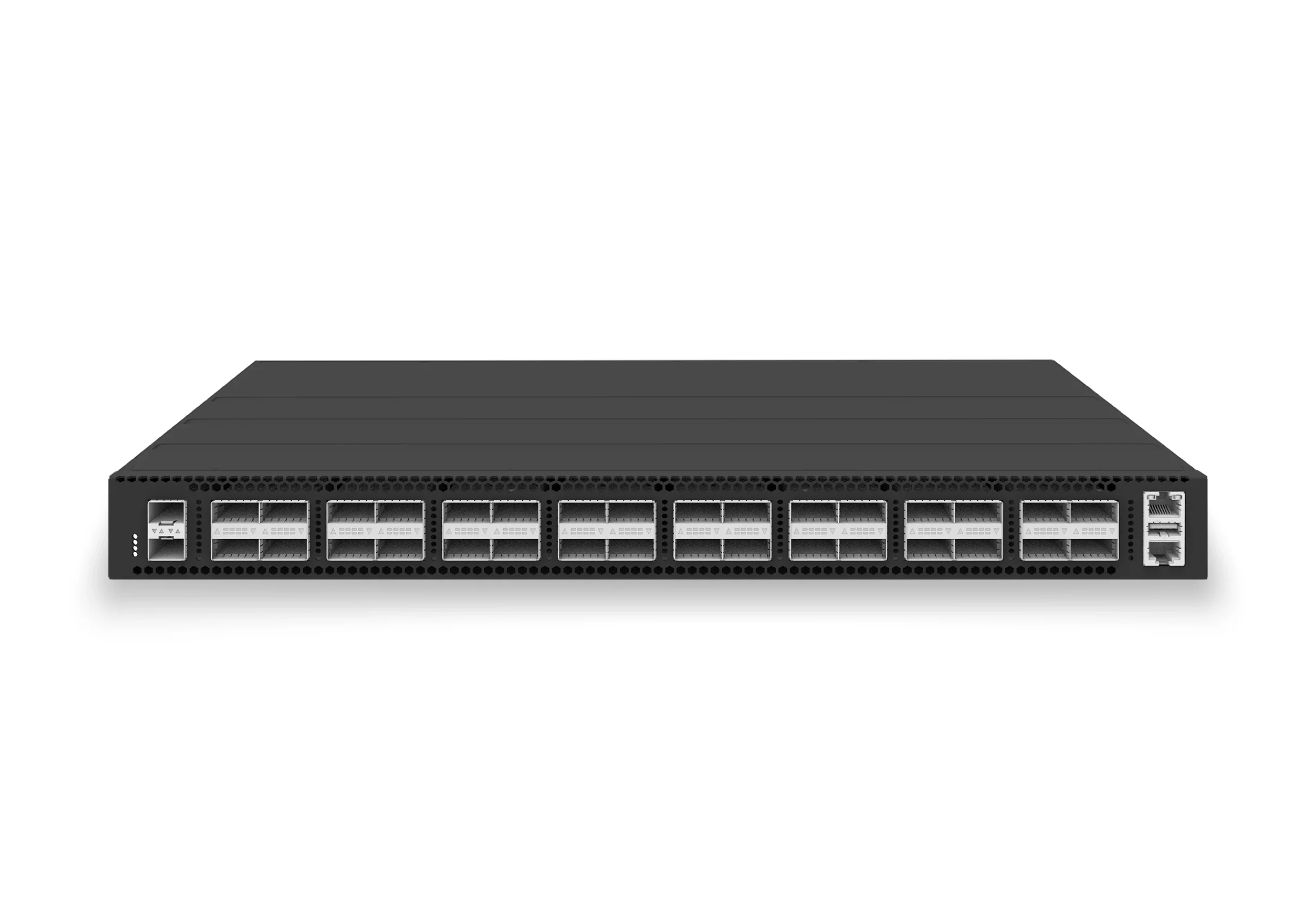 datacenter aiXS-DC-32X100-LS-G232-port 100G leaf/spine switch for VXLAN fabrics, RoCE-ready workloads, and tenant-scale routing.View product
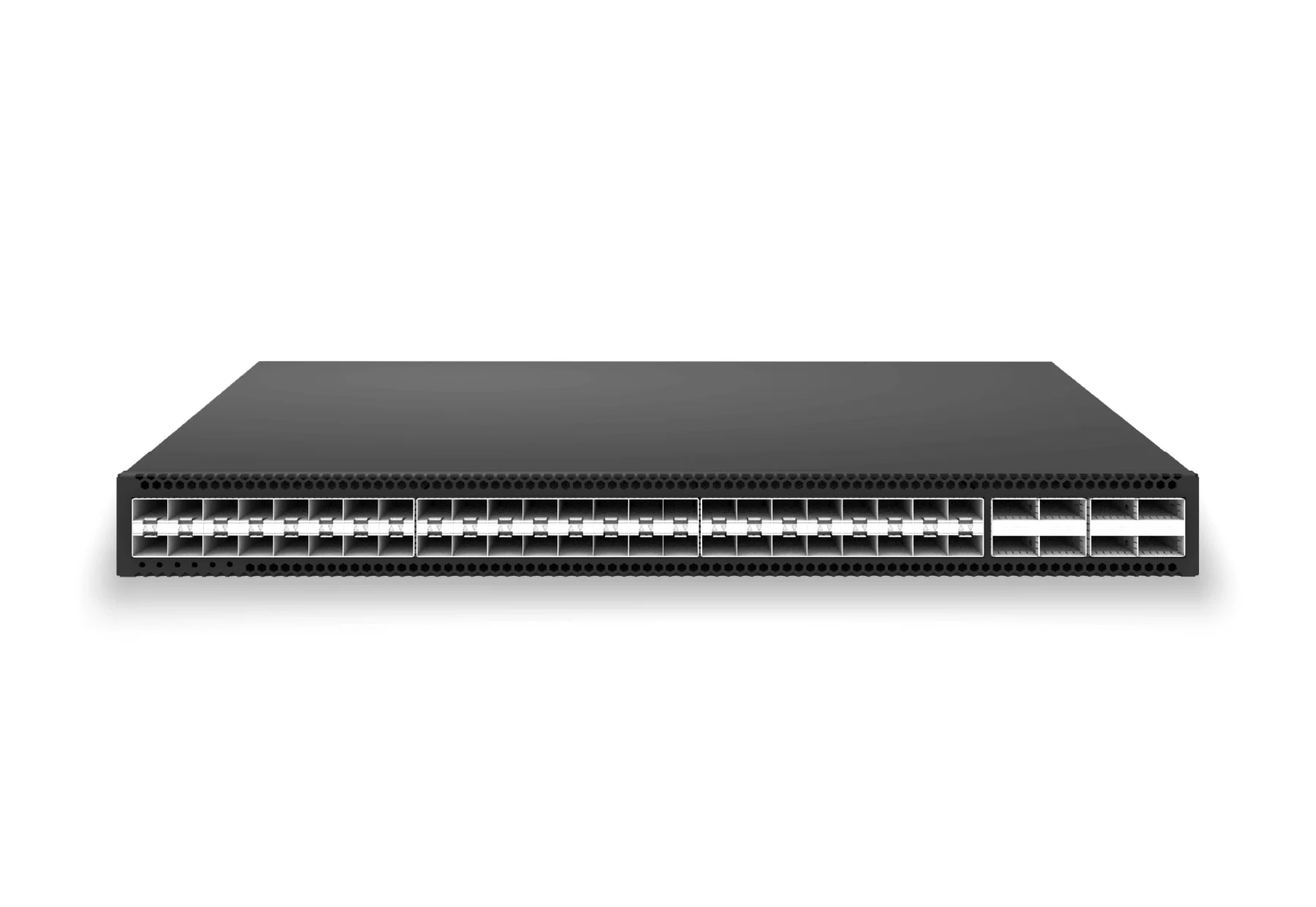 access aggregateXS-AA-48X25-8X100-AGG48x 25G SFP28 aggregation/core switch with 8x 100G QSFP28 for enterprise access and aggregation networks.View product
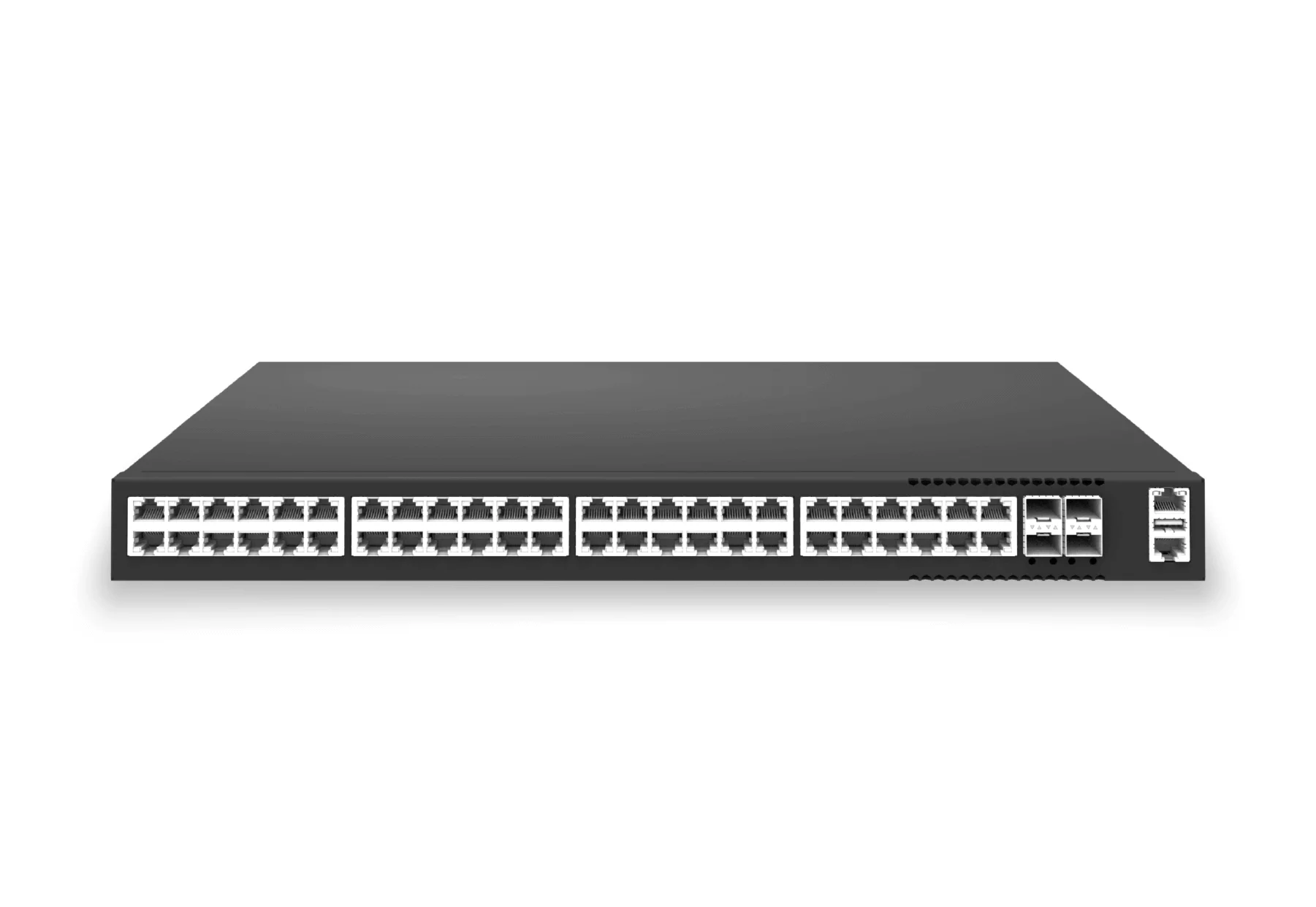 access aggregateXS-AA-48X1-4X25-POE48x1G PoE access switch with 4x25G uplinks for APs, phones, cameras, and smart edge devices.View product
Continue reading
Related articles
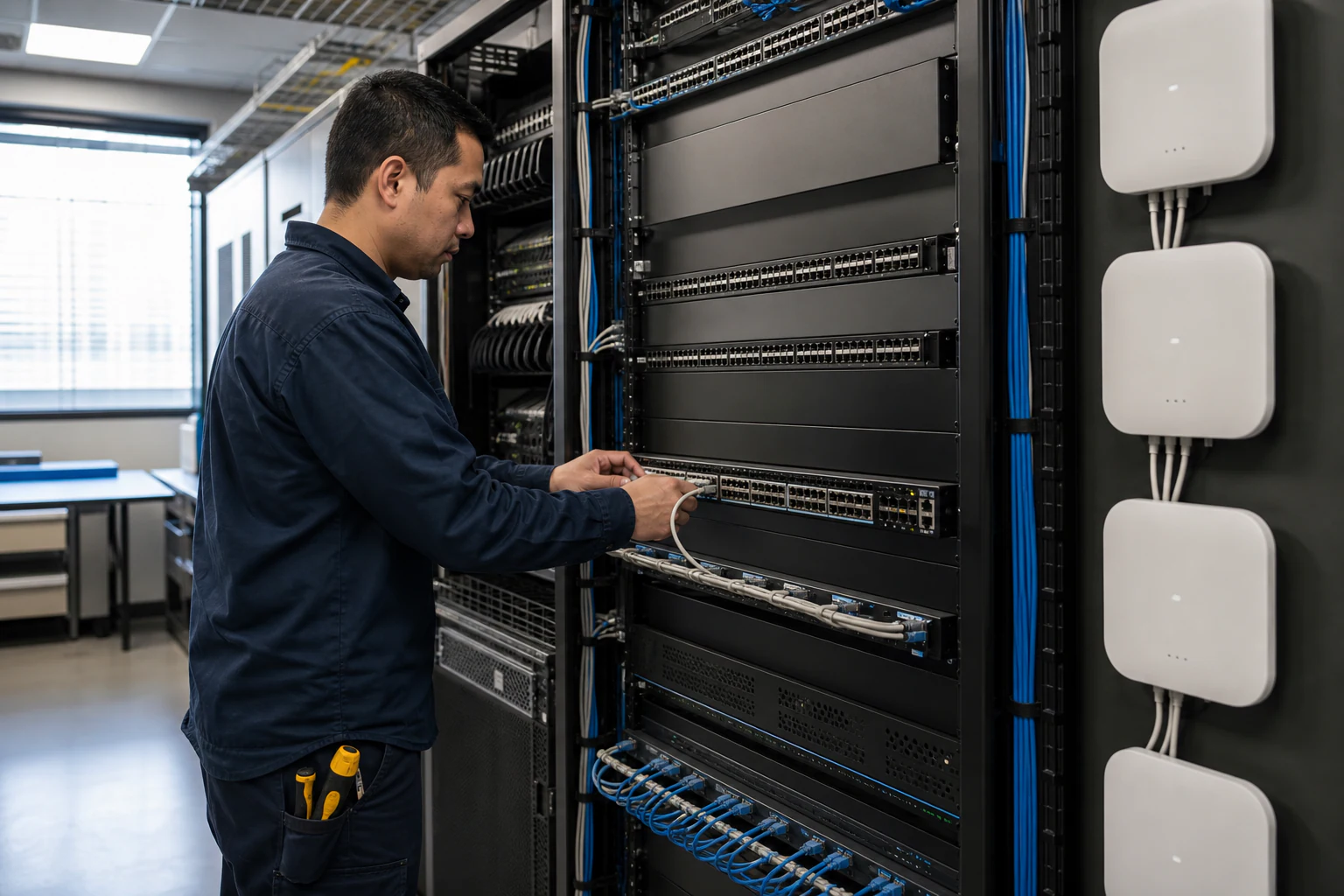 Technical ArticleWi-Fi 6E/7 Access Point Planning for Australian Enterprise CampusesA practical Wi-Fi 6E and Wi-Fi 7 access point planning guide for Australian campuses covering 6 GHz spectrum, PoE++, backhaul, client readiness, and pilot validation.Read article
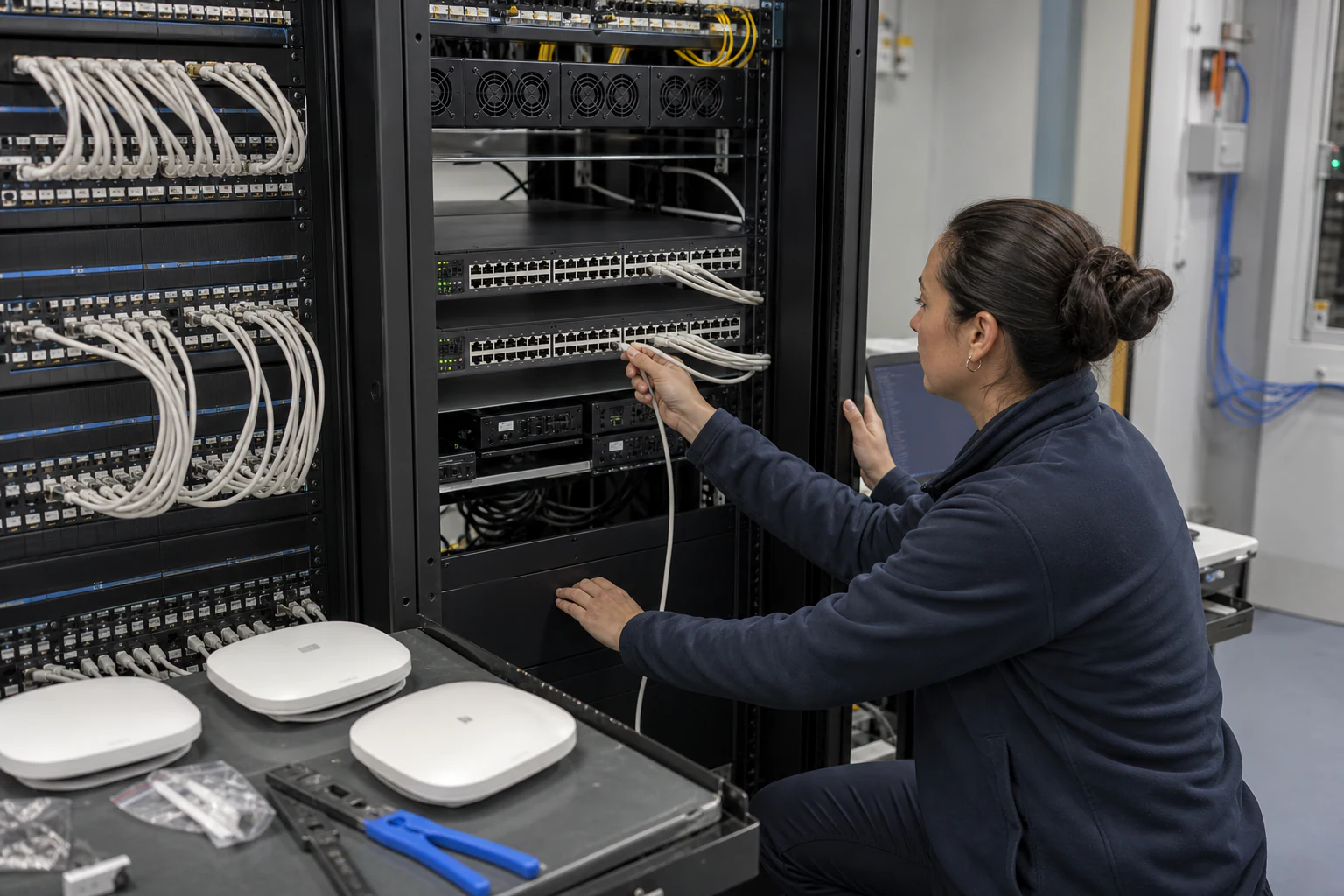 Technical ArticleCampus Access and Aggregation Refresh with Enterprise SONiCEngineering guide for campus switching teams covering PoE, access design, MC-LAG/STP risk, telemetry, support, and pilot validation.Read article
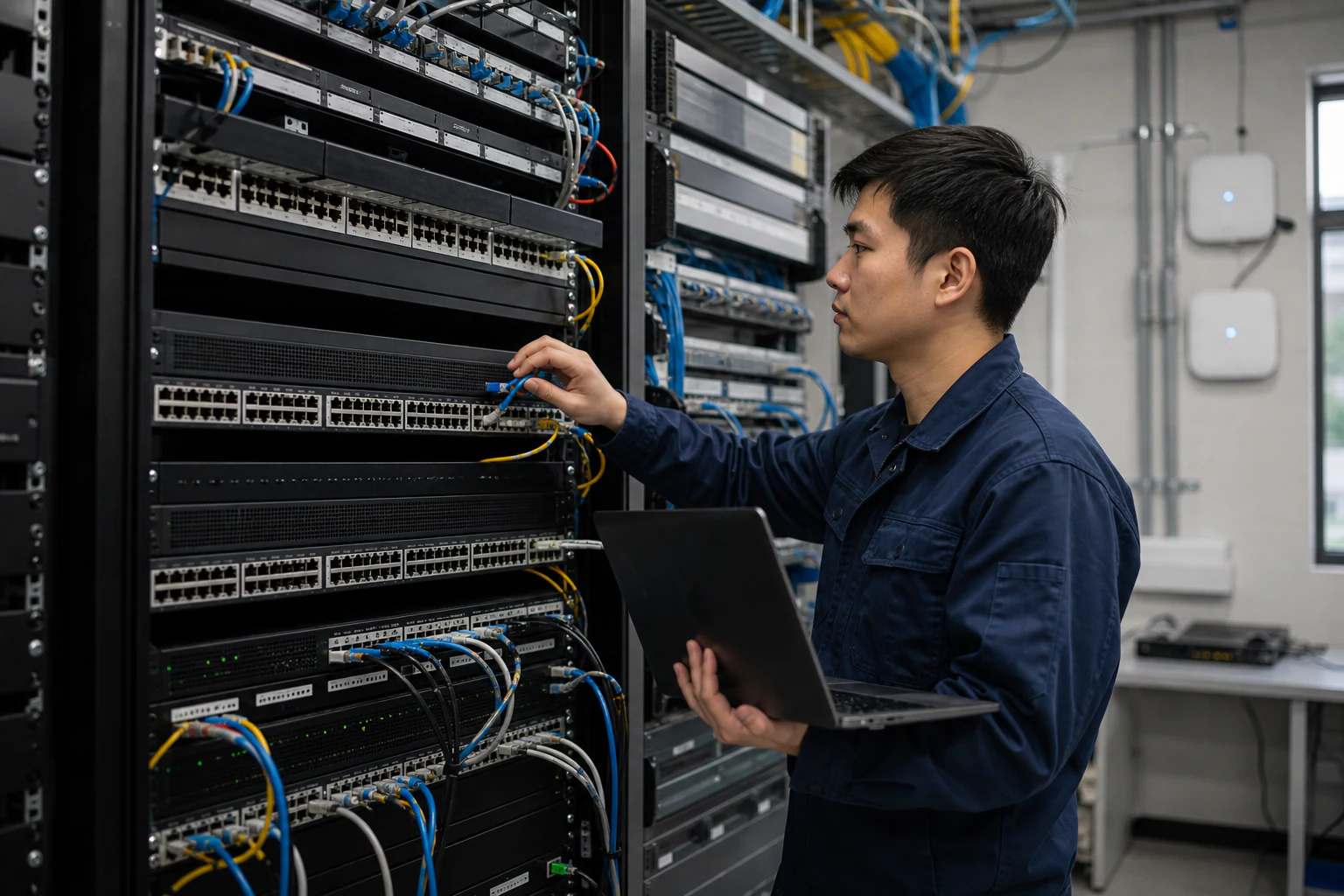 Technical ArticlePoE Campus Planning Checklist for Enterprise SONiC Access SwitchesEngineering guidance on PoE Campus Planning Checklist for Enterprise SONiC Access Switches for Australian campus networks, covering RF planning, security controls.Read article