In brief
Engineering guidance on Packet Broker Visibility Gap Analysis for Australian network and security teams, covering traffic visibility, capacity modelling, tool feeds.
Key takeaways
- For years, network packet brokers sat in a technical silo. Network engineers specified them, security teams consumed the mirrored traffic, and procurement processed the purchase order.
- Three converging forces are pushing packet broker decisions onto procurement leads' desks.
- Second, AI and high-performance computing workloads are reshaping data center traffic patterns.
Why Packet Broker Visibility Is Now a Procurement Problem, Not Just a Network Engineering Problem
For years, network packet brokers sat in a technical silo. Network engineers specified them, security teams consumed the mirrored traffic, and procurement processed the purchase order. That model is breaking down in Australian enterprise and data center programs.
Three converging forces are pushing packet broker decisions onto procurement leads’ desks. First, encrypted traffic volumes have grown to the point where inline decryption appliances and out-of-band analytics tools are only as effective as the traffic they receive. If a packet broker cannot filter, deduplicate, and deliver the right flows to the right tools, the security stack is operating blind.
Second, AI and high-performance computing workloads are reshaping data center traffic patterns. As David Hirst of Macquarie Data Centres noted in a January 2026 OCP Podcast discussion, Australian data centre design has shifted from ‘real estate thinking’ to ‘chip-out thinking,’ with AI workloads driving bursty, unpredictable traffic flows that demand new monitoring approaches. Traditional monitoring architectures built for steady-state cloud workloads may not capture the east-west traffic surges that AI clusters generate.
Third, Australian regulatory pressure is intensifying. The Security of Critical Infrastructure Act 2018 (SOCI Act), the Privacy Act 1988, and sector-specific obligations from APRA and the Australian Signals Directorate create compliance requirements that depend on comprehensive network visibility. If an organization cannot demonstrate that its security tools receive complete, timely traffic data, the compliance posture is weaker than it appears on paper.
The Visibility Gap: Where Most Australian Programs Fall Short
A packet broker visibility gap occurs when the traffic reaching security and observability tools is incomplete, duplicated, improperly filtered, or missing entirely. In Australian enterprise and data center environments, the most common gap sources include:
-
Blind spots in encrypted traffic paths. TLS 1.3 adoption has reduced the effectiveness of passive decryption. Without packet broker features such as header-based filtering, GTP tunnel stripping, and application-layer metadata export, security tools receive raw encrypted payloads they cannot parse.
-
East-west traffic in AI and HPC clusters. Data center fabrics running RoCE v2, RDMA, and GPU backend traffic generate high-volume east-west flows that often bypass traditional TAP and SPAN architectures. Packet brokers must support lossless, low-latency forwarding for these flows to avoid silent data drops that undermine both security monitoring and performance analytics.
-
Tool overload from duplicate and irrelevant packets. Without deduplication, packet slicing, and intelligent filtering at the broker layer, downstream tools receive redundant data that wastes processing capacity and increases false-positive rates.
-
Scaling gaps in multi-site and hybrid programs. Australian enterprises operating across multiple data centres, colocation facilities, and cloud on-ramps need packet broker architectures that aggregate traffic from distributed TAP points into centralized or federated tool farms. Single-appliance designs do not scale to this model.
Procurement leads who skip a formal visibility gap analysis risk buying packet broker hardware that meets port-count specifications but fails to deliver actionable traffic to the tools that depend on it.
Five Questions Every Australian Procurement Lead Should Ask
The following checklist is designed for procurement leads evaluating packet broker platforms in Australian enterprise and data center programs. It is not a product recommendation; it is a buyer education framework.
| # | Question | Why It Matters |
|---|---|---|
| 1 | What percentage of our traffic paths are currently monitored end-to-end, including east-west data center flows? | Establishes the baseline visibility gap before procurement begins. |
| 2 | Does the packet broker support deduplication, packet slicing, header stripping, and application-layer filtering natively, or do these require add-on licenses? | Hidden licensing costs and feature gaps are the most common post-deployment regret in packet broker procurement. |
| 3 | Can the platform forward traffic to both inline security tools (IPS, WAF) and out-of-band analytics tools (NDR, APM, SIEM) simultaneously without creating single points of failure? | Dual-path forwarding is essential for programs that combine real-time prevention with retrospective analysis. |
| 4 | How does the packet broker handle bursty AI/ML east-west traffic, and what is the packet loss guarantee under full load? | AI workloads generate traffic patterns that stress buffering and forwarding capacity differently from traditional enterprise traffic. |
| 5 | Does the platform integrate with our NOS and management stack, and can it be managed via NETCONF/YANG or standard APIs? | Open management interfaces reduce operational friction and avoid lock-in to proprietary monitoring stacks. |
These questions apply whether the procurement is for a standalone packet broker appliance, a blade-based modular platform, or a disaggregated packet broker built on open networking hardware.
The SONiC and Open Networking Angle: Why Disaggregated Visibility Is Gaining Ground
The Open Compute Project Networking project, which lists SONiC (Software for Open Networking in the Cloud) as a core sub-project alongside ONIE and SAI, has established a framework for disaggregated, multi-vendor network infrastructure. SONiC itself is an open-source network operating system based on Linux that supports BGP, RDMA, and containerized network functions across switches from multiple vendors and ASIC families.
For packet broker buyers, the significance of SONiC and open networking is not about running SONiC on a packet broker directly. It is about the broader architectural principle: that network infrastructure should decouple hardware from software, allow management via standard interfaces, and avoid proprietary lock-in.
This principle matters in the visibility layer because packet broker decisions are tightly coupled to the switching fabric they monitor. An enterprise running SONiC-based data center switches for its AI fabric or campus backbone can leverage the same open management model for its packet broker layer, reducing operational complexity and enabling consistent telemetry pipelines.
NVIDIA’s networking portfolio illustrates this convergence: the company offers Pure SONiC as a supported NOS on Spectrum Ethernet switches alongside Cumulus Linux, and the Spectrum-X Ethernet platform is designed for AI workload acceleration with integrated observability through NVIDIA NetQ. While this is a vendor-specific implementation, it demonstrates the market direction toward integrated switching and visibility.
For Australian procurement leads, the takeaway is that packet broker selection should not be isolated from the broader network operating system and management strategy. A packet broker that cannot integrate with the existing NOS, API framework, and telemetry pipeline creates a visibility island that undermines the investment.
Australian Market Context: Data Sovereignty, Compliance, and the Colocation Factor
Australia’s data center market has distinct characteristics that shape packet broker procurement decisions.
Data sovereignty requirements under the SOCI Act and the Privacy Act mean that traffic monitoring data must often remain within Australian jurisdiction. Packet broker architectures that forward traffic to offshore processing or analytics platforms create compliance risk. Procurement leads must verify that all traffic processing, filtering, and metadata generation occurs within Australian-hosted infrastructure.
The Australian colocation and hyperscale market is also growing rapidly. The OCP Podcast’s January 2026 interview with Macquarie Data Centres CEO David Hirst highlighted that Australian operators are designing for AI workloads with liquid cooling, megawatt-per-rack densities, and long-horizon planning through 2030 and beyond. This infrastructure growth means more traffic to monitor, more tools to feed, and more complex visibility requirements.
Compliance frameworks such as APRA CPS 234 (information security), the Australian Government Information Security Manual (ISM), and critical infrastructure obligations under the SOCI Act all require demonstrable network visibility as part of a security posture. Packet broker visibility gaps are not just operational problems; they are compliance liabilities.
Procurement leads in Australian programs should therefore treat packet broker gap analysis as a compliance exercise as much as a technical one. The questions to ask are not only about port density and throughput, but about auditability, traffic completeness, and the ability to demonstrate to regulators that security tools receive the data they need.
What This Means for xSONiC Packet Broker Buyers
The xSONiC network packet broker product category covers traffic aggregation, filtering, replication, load balancing, tunnel processing, packet slicing, deduplication, and security tool delivery. These are the exact capabilities that a visibility gap analysis is designed to evaluate.
For Australian procurement leads evaluating xSONiC packet broker platforms, the gap analysis framework described above provides a structured starting point. The key is to move beyond datasheet port counts and throughput numbers and ask whether the platform can:
- Close the encrypted traffic blind spot with native filtering and metadata export
- Handle east-west AI workload traffic without packet loss
- Integrate with the existing NOS and management stack via open APIs
- Scale across distributed Australian data center and colocation sites
- Support compliance documentation for SOCI Act, APRA, and ASD obligations
xSONiC’s position as an open networking infrastructure brand means its packet broker platforms are designed to operate within disaggregated, multi-vendor network architectures. This is relevant for Australian buyers who are running SONiC-based or open NOS data center fabrics and want their visibility layer to match.
Next Steps for Procurement Teams
Procurement leads in Australian enterprise and data center programs should take the following steps before issuing a packet broker RFP:
-
Conduct a visibility gap audit. Map all traffic paths in the current network, identify blind spots, and quantify the gap between traffic generated and traffic delivered to security and observability tools.
-
Align packet broker requirements with the NOS strategy. If the organization is adopting or evaluating SONiC, Cumulus, or other open NOS platforms, ensure the packet broker integrates with the management and telemetry stack.
-
Evaluate compliance obligations. Engage the GRC team to confirm which regulations require demonstrable traffic visibility and what evidence is needed for audits.
-
Request a proof-of-concept that includes tool delivery validation. The POC should demonstrate that the packet broker delivers the right traffic to the right tools, not just that it forwards packets at line rate.
This framework applies to any packet broker vendor evaluation. It is designed to help procurement leads ask the right questions before committing budget, not to recommend a specific product.
The POC should quantify the visibility path: source links at 100G or 400G, 95th-percentile utilisation, burst peak, replication factor, tunnel type, tool-port capacity, packet-slicing policy, drop counter behaviour and 24 hours of monitoring evidence. If the broker cannot prove tool delivery under those conditions, port count alone is not meaningful.
Engineering FAQ
What should be measured before sizing a packet broker? Measure source link speed, 95th-percentile utilisation, burst peaks, replication factor, filter complexity, tunnel handling needs, and tool-port capacity. Packet broker sizing fails when it is based on average traffic rather than copied and filtered traffic.
What proves that a visibility design is production ready? The design should prove aggregation, filtering, replication, load balancing, packet slicing or deduplication if required, and tool failover under realistic traffic. Security teams should also verify that drops are reported rather than hidden.
Where do Australian buyers most often under-scope visibility projects? The common gaps are east-west data centre traffic, encrypted or tunneled flows, AI cluster bursts, retention requirements, and tool oversubscription. A procurement brief should model those before asking vendors for a bill of materials.
Related xSONiC Resources
Sources Reviewed
- Ethernet Network Adapters - ConnectX NICs | NVIDIA
- NVIDIA BlueField Data Processing Unit
- NVIDIA Spectrum-X Ethernet Platform
- OpenConfig gNMI Specification
- OpenConfig
- RFC 7950 - The YANG 1.1 Data Modeling Language
- RFC 6241 - Network Configuration Protocol (NETCONF)
- ACSC Essential Eight
- OAIC Notifiable Data Breaches
- APRA CPS 234 Information Security
- NETSCOUT Network Packet Definition
- Cloudflare Network Packet Definition
- SONiC Project Documentation
- Broadcom Ethernet Switching
- Marvell Switching
- NVIDIA Ethernet Switching
- Open Compute Networking
- SONiC GitHub
- SONiC Foundation
Product fit
Products referenced for evaluation
These products are referenced for evaluation context in the article. Confirm workload, port, optics, software, interoperability, and support requirements against the exact deployment before procurement.
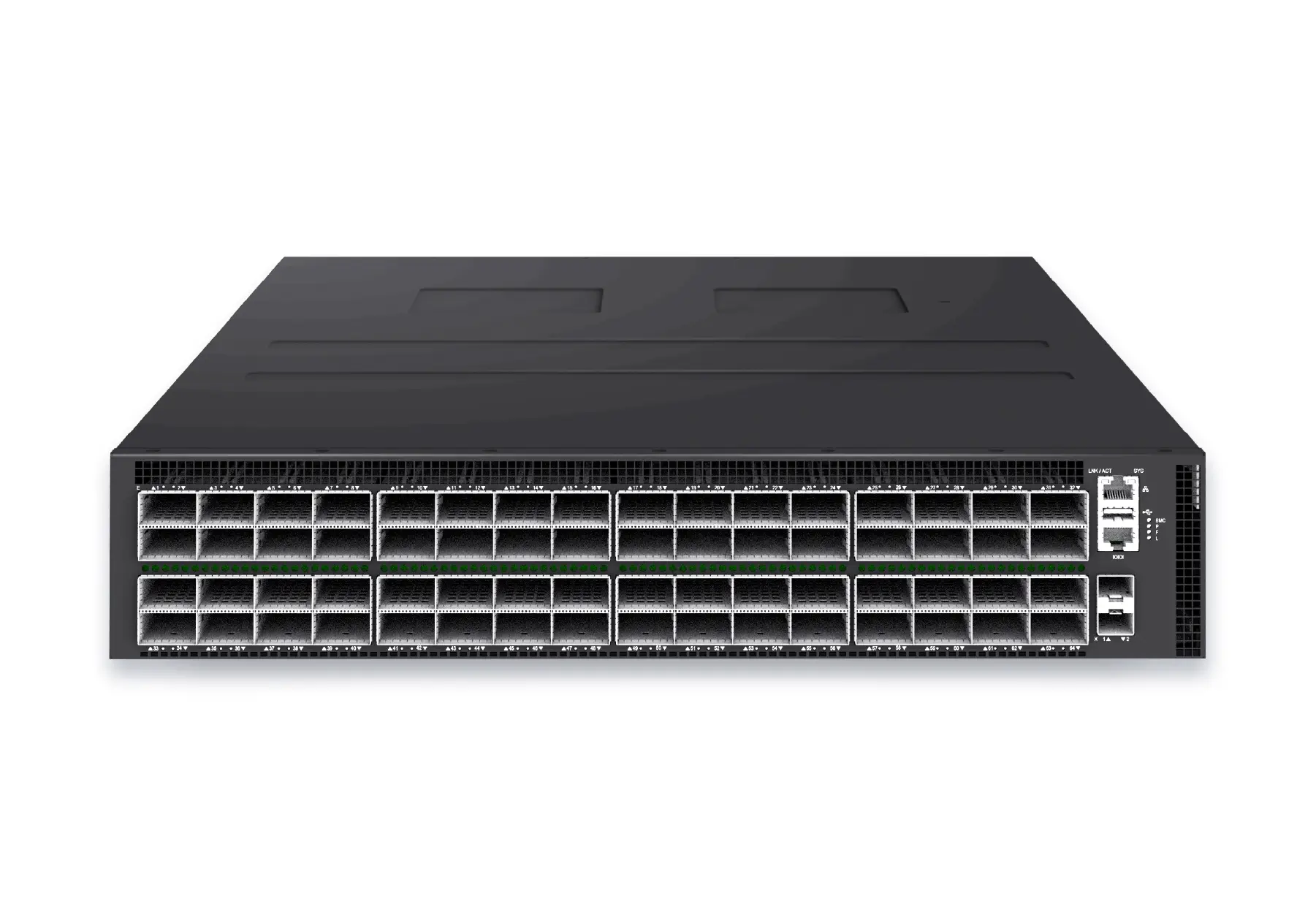 datacenter aiXS-DC-64X800-AI-G164-port 800G AI fabric switch for large-scale GPU clusters, HPC backbones, and ultra-high-throughput data center networks.View product
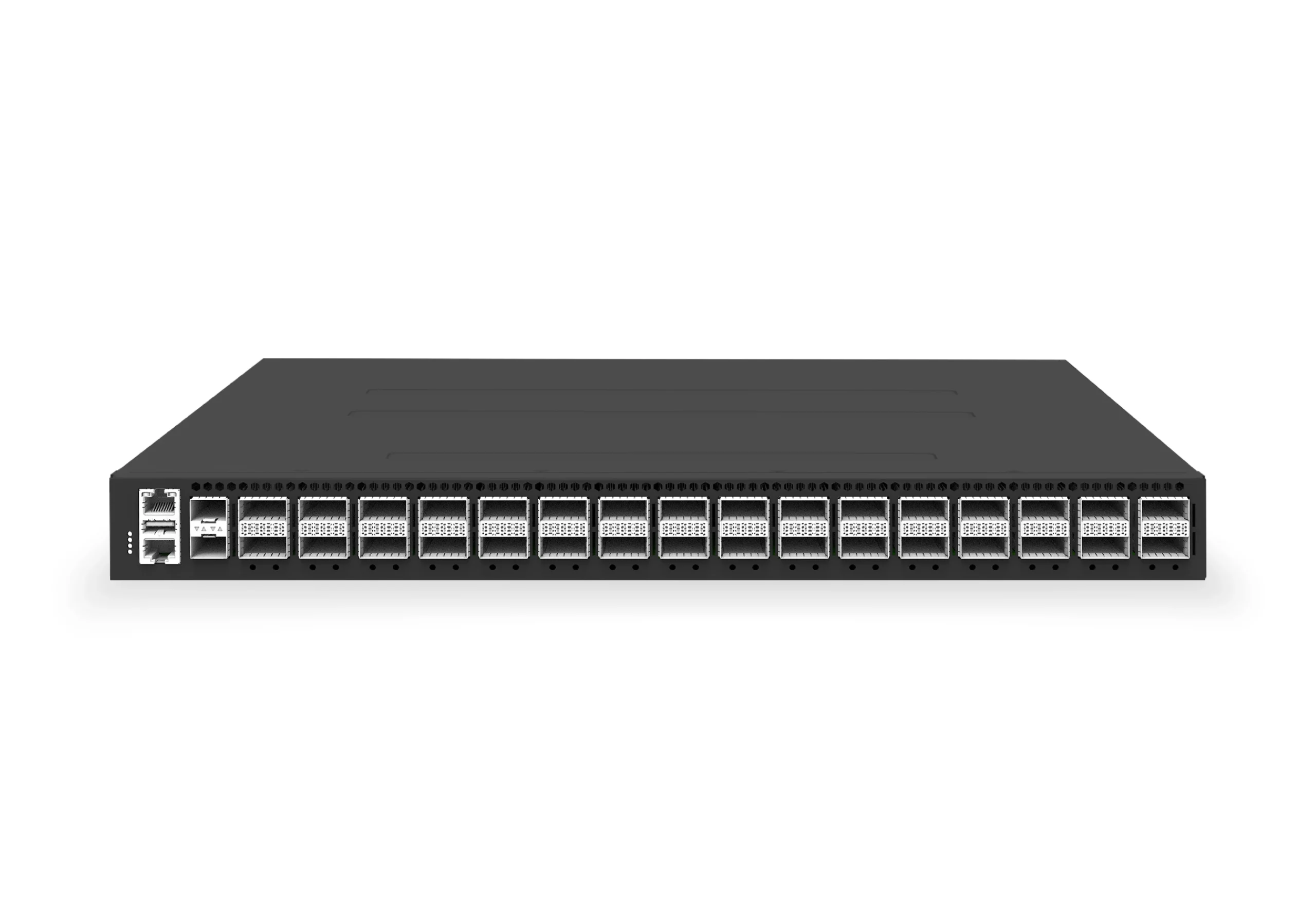 datacenter aiXS-DC-32X400-SP-G232-port 400G spine/core switch for high-capacity data center fabrics and AI-ready backbones.View product
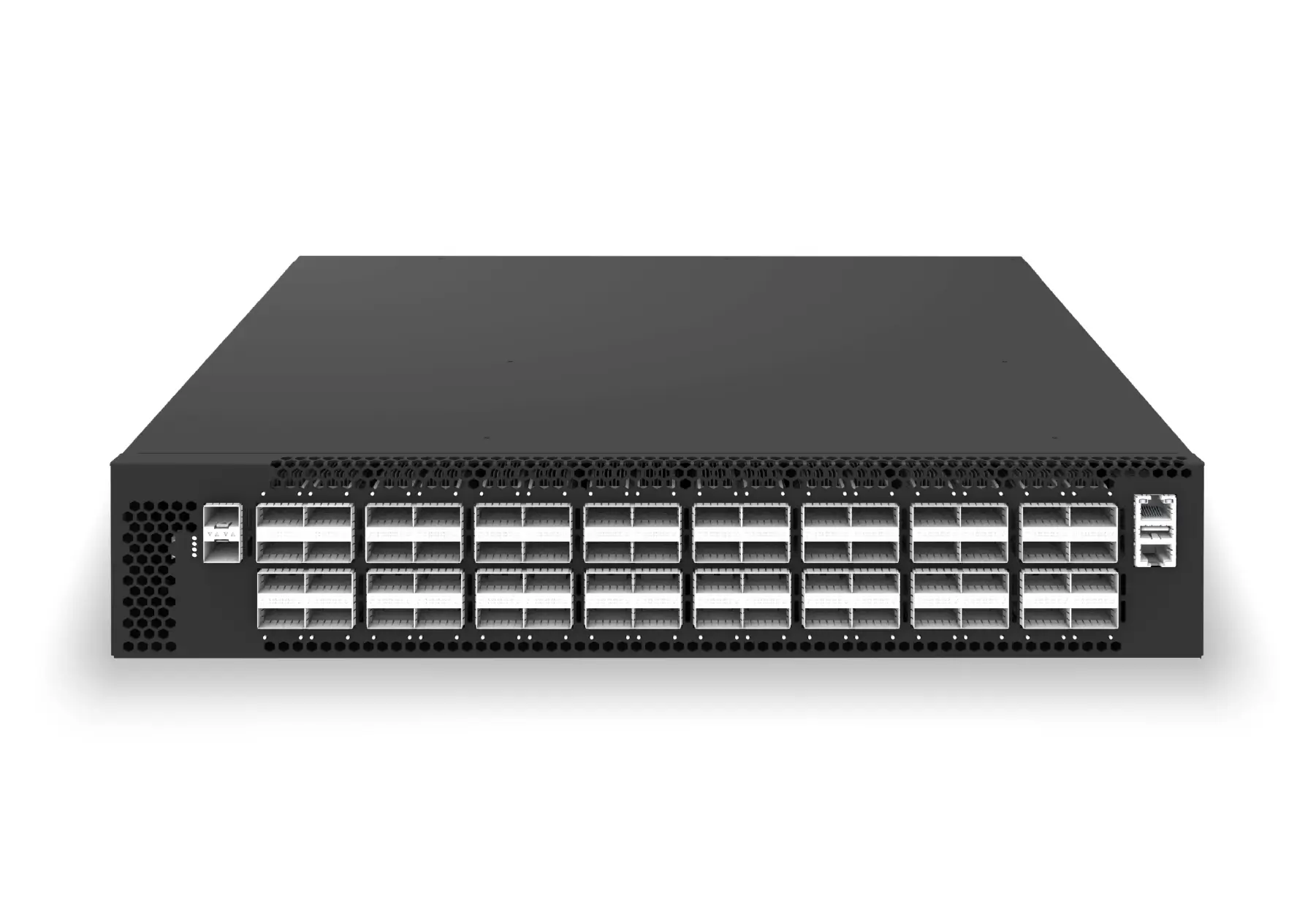 datacenter aiXS-DC-64X200-LS-G164-port 200G leaf/spine switch for high-bandwidth storage, compute, and scale-out data center fabrics.View product
Continue reading
Related articles
 Technical ArticleHow Packet Brokers Filter, Replicate and Load-Balance TrafficEngineering guide for packet broker and visibility planning covering traffic capacity, filtering, tool delivery, resilience, and audit evidence.Read article
 Technical ArticlePacket Broker Use Cases for Network Visibility and Observability: A Practical Guide for Australian EnterprisesEngineering use cases for packet brokers in observability, performance troubleshooting, AI fabrics, compliance capture, and multi-tool delivery.Read article
 Technical ArticleWhy AI Data Centers Need In-Band Network Telemetry -- And Where Open SONiC FitsINT and path telemetry guide for AI fabric observability, covering SONiC support, RoCE congestion, telemetry pipelines, and buyer risk.Read article