
In brief
Packet-broker hardening checklist for Australian MSPs and integrators, covering segmentation, access control, logging, configuration audits, and secure tool delivery.
Key takeaways
- Australian managed service providers and network integrators face a growing challenge: cyber threats are increasing while security budgets and staffing remain constrained.
- Packet brokers solve this by acting as a centralized traffic aggregation, filtering, and replication layer.
- For MSPs managing multiple client environments, packet broker deployment is a force multiplier.
Why Packet Brokers Are a Security Foundation, Not Just a Monitoring Tool
Australian managed service providers and network integrators face a growing challenge: cyber threats are increasing while security budgets and staffing remain constrained. The Australian Signals Directorate’s Essential Eight framework, the Privacy Act, and sector-specific regulations like APRA CPS 234 demand continuous network visibility, but most enterprise networks still have significant blind spots.
Packet brokers solve this by acting as a centralized traffic aggregation, filtering, and replication layer. Instead of deploying security tools inline at every network hop, a packet broker delivers copies of relevant traffic to intrusion detection systems (IDS), network detection and response (NDR) platforms, data loss prevention (DLP) tools, and forensic capture systems. This architecture reduces tool overhead while improving detection coverage.
For MSPs managing multiple client environments, packet broker deployment is a force multiplier. A single broker appliance can serve multiple security tools across hundreds of network segments, reducing per-client hardware costs while improving mean time to detect (MTTD) and mean time to respond (MTTR). The key is to treat the packet broker itself as a critical security asset that requires hardening, segmentation, and ongoing configuration audits.
This checklist provides a practical framework for MSPs and integrators deploying packet brokers in Australian enterprise and data center environments. It maps broker deployment decisions to established security domains and highlights where open networking platforms like SONiC and xSONiC packet brokers can simplify operations while maintaining compliance posture.
Security Hardening Domains and Packet Broker Mapping
The CompTIA Security+ SY0-701 exam framework identifies five core security domains that provide a useful structure for packet broker hardening. The table below maps each domain to specific packet broker deployment actions.
| Security Domain | Packet Broker Hardening Actions |
|---|---|
| General Security Concepts (12%) | Apply zero-trust principles to broker management interfaces. Enforce AAA for all CLI, API, and NETCONF access. Segment broker management traffic from production data plane. |
| Threats, Vulnerabilities, and Mitigations (22%) | Filter mirrored traffic to eliminate irrelevant or sensitive data before tool delivery. Patch broker firmware on a documented cycle. Harden against supply chain risks by validating firmware images and using signed updates. |
| Security Architecture (18%) | Place brokers in dedicated management VLANs. Use out-of-band management where possible. Design traffic replication paths so that a broker failure does not impact production forwarding. |
| Security Operations (28%) | Configure port mirroring and SPAN/ERSPAN with documented source-to-destination maps. Enable broker-side packet slicing to strip payload before delivering to compliance-sensitive tools. Integrate broker telemetry with SIEM platforms. |
| Security Program Management (20%) | Document broker configurations in the asset register. Include brokers in vulnerability management scanning cycles. Define change management procedures for filter rule updates. Include broker topology in incident response playbooks. |
This mapping is not a replacement for your client’s security framework. It is a deployment checklist that ensures packet broker infrastructure does not become an unmanaged shadow asset in the network.
Packet Broker Use Cases for Australian Enterprise Security Programs
Australian MSPs and integrators deploy packet brokers for several security use cases. Each use case has specific hardening requirements.
1. Intrusion Detection and Network Detection and Response (NDR) Packet brokers aggregate traffic from core switches, distribution layers, and data center spine-leaf fabrics, then deliver filtered copies to IDS and NDR appliances. Hardening actions include: filtering out encrypted traffic that the IDS cannot inspect, applying packet slicing to reduce load on analysis tools, and ensuring broker failover does not create a traffic blackout that blind spots the security stack.
2. Data Loss Prevention (DLP) and Compliance Monitoring For clients subject to APRA CPS 234, the Privacy Act, or PCI DSS, packet brokers can deliver copies of east-west and north-south traffic to DLP engines. Hardening actions include: enabling broker-side payload stripping for regulated segments, logging all filter rule changes to an immutable audit trail, and restricting DLP tool access to broker output ports via ACLs.
3. Forensic Capture and Incident Investigation During a security incident, packet brokers can redirect traffic to full-packet capture appliances. Hardening actions include: pre-configuring capture policies for known threat scenarios, ensuring capture storage has capacity for 72-hour burst traffic, and documenting the chain of custody for captured packets.
4. Encrypted Traffic Analysis With TLS 1.3 adoption increasing, most traffic is encrypted at the application layer. Packet brokers can support encrypted traffic analysis by delivering metadata, flow records, and header information to tools that perform behavioral analysis without decrypting payloads. Hardening actions include: ensuring broker configurations do not strip headers needed for JA3/JA3S fingerprinting, and validating that metadata delivery paths are encrypted in transit.
5. AI and High-Performance Computing (HPC) Fabric Monitoring Australian data centers hosting AI training clusters require low-latency, high-throughput visibility into RoCE/RDMA traffic. Packet brokers in AI fabric environments must handle 100G, 400G, and 800G port speeds without introducing jitter or dropping packets. Hardening actions include: validating broker throughput against fabric line rate, configuring priority-based filtering for RDMA congestion notification (CNP) packets, and ensuring broker placement does not add latency to time-sensitive RDMA flows.
Packet Broker Hardening Checklist for MSP Deployments
Use this checklist for every new packet broker deployment or quarterly audit.
Management Plane Hardening
- Disable unused management protocols (HTTP, Telnet, SNMP v1/v2c)
- Enable NETCONF/YANG or RESTCONF with TLS 1.2+ for programmatic access
- Enforce RADIUS or TACACS+ for AAA; local accounts are emergency-only
- Place management interfaces in a dedicated out-of-band VLAN
- Enable SSH key-based authentication; disable password-only SSH
- Configure NTP with authenticated sources and log all time sync events
- Enable audit logging with syslog forwarding to a central SIEM
Data Plane Hardening
- Document all SPAN/ERSPAN source-to-destination mappings
- Enable packet slicing on ports delivering traffic to compliance tools
- Configure filters to exclude irrelevant broadcast, multicast, or known-good traffic
- Validate that broker does not forward management-plane traffic to data-plane tools
- Enable per-port traffic counters and set threshold alerts for anomalous volume
Access Control
- Apply role-based access control (RBAC) for broker administrators
- Separate roles for filter rule editors, read-only auditors, and firmware updaters
- Restrict API access to known management server IP ranges
- Log all configuration changes with timestamps and admin identity
Resilience and Failover
- Deploy brokers in redundant pairs where client SLA requires it
- Test failover behavior during maintenance windows
- Ensure failover does not create loops or duplicate traffic delivery
- Document recovery procedures and include in incident response playbooks
Compliance and Documentation
- Register packet broker assets in the CMDB with firmware version, serial number, and location
- Include brokers in vulnerability management scanning cycles
- Document filter rules and review quarterly
- Include broker topology diagrams in client network documentation
- Validate compliance with Australian data sovereignty requirements if broker logs or captures are stored in cloud platforms
Open Networking and SONiC: A Visibility Architecture Advantage
Traditional packet broker deployments rely on vendor-specific hardware and management planes. This creates lock-in, limits filter flexibility, and increases per-unit cost. Open networking platforms like SONiC (Software for Open Networking in the Cloud) change this equation.
SONiC is an open-source network operating system that runs on switches from multiple hardware vendors and ASICs. It is production-hardened in large-scale cloud data centers and offers a full suite of network functionality including BGP, RDMA, and EVPN-VXLAN. For MSPs, SONiC-based networking provides several advantages for packet broker integration:
-
Consistent Management Plane: SONiC uses standard Linux interfaces, Docker-containerized services, and JSON-based configuration. MSPs can manage switching and packet broker functions through NETCONF/YANG or Ansible playbooks, reducing per-client management tooling costs.
-
Programmable Traffic Mirroring: SONiC supports SPAN and ERSPAN natively. For environments requiring more advanced filtering, packet broker appliances operating alongside SONiC switches can leverage the switch’s port mirroring capabilities to aggregate and filter traffic before delivery to security tools.
-
Multi-Vendor Hardware Flexibility: Because SONiC is built on the Switch Abstraction Interface (SAI), it runs on switches from multiple vendors. MSPs can source hardware from different suppliers for different clients without retraining on new management planes.
-
AI Fabric and RoCE Visibility: SONiC supports RDMA and congestion notification protocols essential for AI and HPC fabrics. Packet brokers deployed alongside SONiC-based spine-leaf architectures can capture CNP packets, ECN-marked flows, and RDMA queue depth telemetry for security and performance analysis.
The xSONiC Network Packet Broker product line is designed for this open networking model. xSONiC packet brokers support traffic aggregation, filtering, replication, load balancing, tunnel processing, packet slicing, and deduplication across 100G, 400G, and 800G interfaces. When deployed alongside xSONiC data center switches running Enterprise SONiC, MSPs gain a unified visibility architecture that spans both the forwarding fabric and the security tool delivery layer.
For Australian MSPs evaluating open networking as a packet broker platform, the key evaluation criteria are: ASIC compatibility with target port speeds, NETCONF/YANG management API maturity, and vendor support for firmware updates and security patches. The SONiC Foundation and Open Compute Project (OCP) provide community resources for evaluating supported devices and platforms.
Australian Data Sovereignty and Broker Log Management
Australian MSPs must consider data sovereignty when deploying packet brokers that capture, replicate, or log network traffic. Key requirements include:
-
APRA CPS 234: For financial services clients, APRA requires that information security capabilities are commensurate with the size and extent of threats. Packet brokers that capture financial transaction traffic must be included in the information security capability assessment.
-
Privacy Act 1988 and the Australian Privacy Principles (APPs): Packet brokers handling personal information (e.g., traffic containing user identifiers, session data, or application-layer payloads) must comply with APP 11 (security of personal information). This includes ensuring that captured traffic is stored, transmitted, and disposed of securely.
-
Critical Infrastructure Act: For clients in critical infrastructure sectors (communications, data storage, financial services, healthcare), packet broker deployments may be subject to enhanced security obligations under the Security of Critical Infrastructure Act 2018.
-
Data Residency: If packet broker logs, captures, or telemetry data are forwarded to cloud-based SIEM or NDR platforms, MSPs must verify that data residency requirements are met. Australian government clients often require that data remains within Australian jurisdiction.
The OCP Podcast episode featuring David Hirst of Macquarie Data Centres (January 2026) highlighted how Australian data center operators are increasingly designing for data sovereignty as a market differentiator. Packet broker architectures that keep captured traffic within Australian sovereign facilities align with this trend.
For MSPs managing multi-client environments, the recommendation is to configure per-client traffic isolation on the packet broker, ensure that captured data is segmented by client VLAN or VRF, and maintain separate logging streams for compliance-sensitive clients.
Deployment Patterns: Where to Place Packet Brokers
Packet broker placement depends on the client’s network topology and security objectives. Three common deployment patterns for Australian enterprise and data center environments are:
Pattern 1: Data Center Spine-Leaf Fabric In data center environments using spine-leaf architectures (common with SONiC-based deployments), packet brokers are typically deployed at the spine or super-spine layer to aggregate traffic from all leaf switches. This provides full east-west visibility for security tools monitoring inter-rack communication. Hardening actions include: ensuring broker uplinks match spine port speeds, configuring ERSPAN tunnels from leaf switches to the broker, and validating that broker placement does not add more than 5 microseconds of latency to RDMA traffic in AI fabric environments.
Pattern 2: Campus Distribution Layer For enterprise campus networks, packet brokers are often deployed at the distribution or aggregation layer to capture traffic from multiple access switches. This is useful for NDR, DLP, and compliance monitoring. Hardening actions include: filtering out inter-VLAN traffic that is not relevant to security analysis, ensuring PoE-powered devices do not send unexpected traffic to broker ports, and documenting which access switch ports are mirrored to the broker.
Pattern 3: Perimeter and Internet Edge For north-south traffic visibility, packet brokers can be deployed inline or out-of-band at the internet edge. This is common for clients with next-generation firewall (NGFW) and web application firewall (WAF) deployments. Hardening actions include: configuring the broker to drop or rate-limit traffic during a DDoS event to protect downstream tools, ensuring broker failover bypasses traffic correctly during maintenance, and logging all perimeter traffic replication for forensic readiness.
What to Verify Before You Deploy
Before deploying a packet broker for a new client, verify the following:
- Network Topology Documentation: Obtain current network diagrams showing switch models, port counts, VLAN/VRF assignments, and existing SPAN/ERSPAN configurations.
- Security Tool Inventory: Identify all downstream security tools (IDS, NDR, DLP, SIEM, forensics) and their expected traffic types, port speeds, and filter requirements.
- Compliance Requirements: Map client regulatory obligations (APRA CPS 234, Privacy Act, PCI DSS, SOX) to traffic capture and retention policies.
- Bandwidth Sizing: Calculate aggregate traffic volume across all mirrored ports and validate that broker throughput capacity meets or exceeds this volume.
- Management Plane Access: Confirm whether the client permits out-of-band management or requires in-band management with VPN.
- Firmware Currency: Verify that the packet broker firmware version is current and that the vendor has published a security advisory or patch cycle for known vulnerabilities.
- Change Management: Obtain approval for filter rule changes, port mirroring enablement, and firmware updates through the client’s change management process.
Engineering FAQ
What should be measured before sizing a packet broker? Measure source link speed, 95th-percentile utilisation, burst peaks, replication factor, filter complexity, tunnel handling needs, and tool-port capacity. Packet broker sizing fails when it is based on average traffic rather than copied and filtered traffic.
What proves that a visibility design is production ready? The design should prove aggregation, filtering, replication, load balancing, packet slicing or deduplication if required, and tool failover under realistic traffic. Security teams should also verify that drops are reported rather than hidden.
Where do Australian buyers most often under-scope visibility projects? The common gaps are east-west data centre traffic, encrypted or tunneled flows, AI cluster bursts, retention requirements, and tool oversubscription. A procurement brief should model those before asking vendors for a bill of materials.
Related xSONiC Resources
Sources Reviewed
- Ethernet Network Adapters - ConnectX NICs | NVIDIA
- NVIDIA BlueField Data Processing Unit
- NVIDIA Spectrum-X Ethernet Platform
- OpenConfig gNMI Specification
- OpenConfig
- RFC 7950 - The YANG 1.1 Data Modeling Language
- RFC 6241 - Network Configuration Protocol (NETCONF)
- ACSC Essential Eight
- OAIC Notifiable Data Breaches
- APRA CPS 234 Information Security
- NETSCOUT Network Packet Definition
- Cloudflare Network Packet Definition
- IEEE 802.11be Wireless LAN Standard
- IEEE 802.3bt Power over Ethernet
- SONiC Project Documentation
- Broadcom Ethernet Switching
- Marvell Switching
- NVIDIA Ethernet Switching
- Open Compute Networking
- SONiC GitHub
- SONiC Foundation
Product fit
Products referenced for evaluation
These products are referenced for evaluation context in the article. Confirm workload, port, optics, software, interoperability, and support requirements against the exact deployment before procurement.
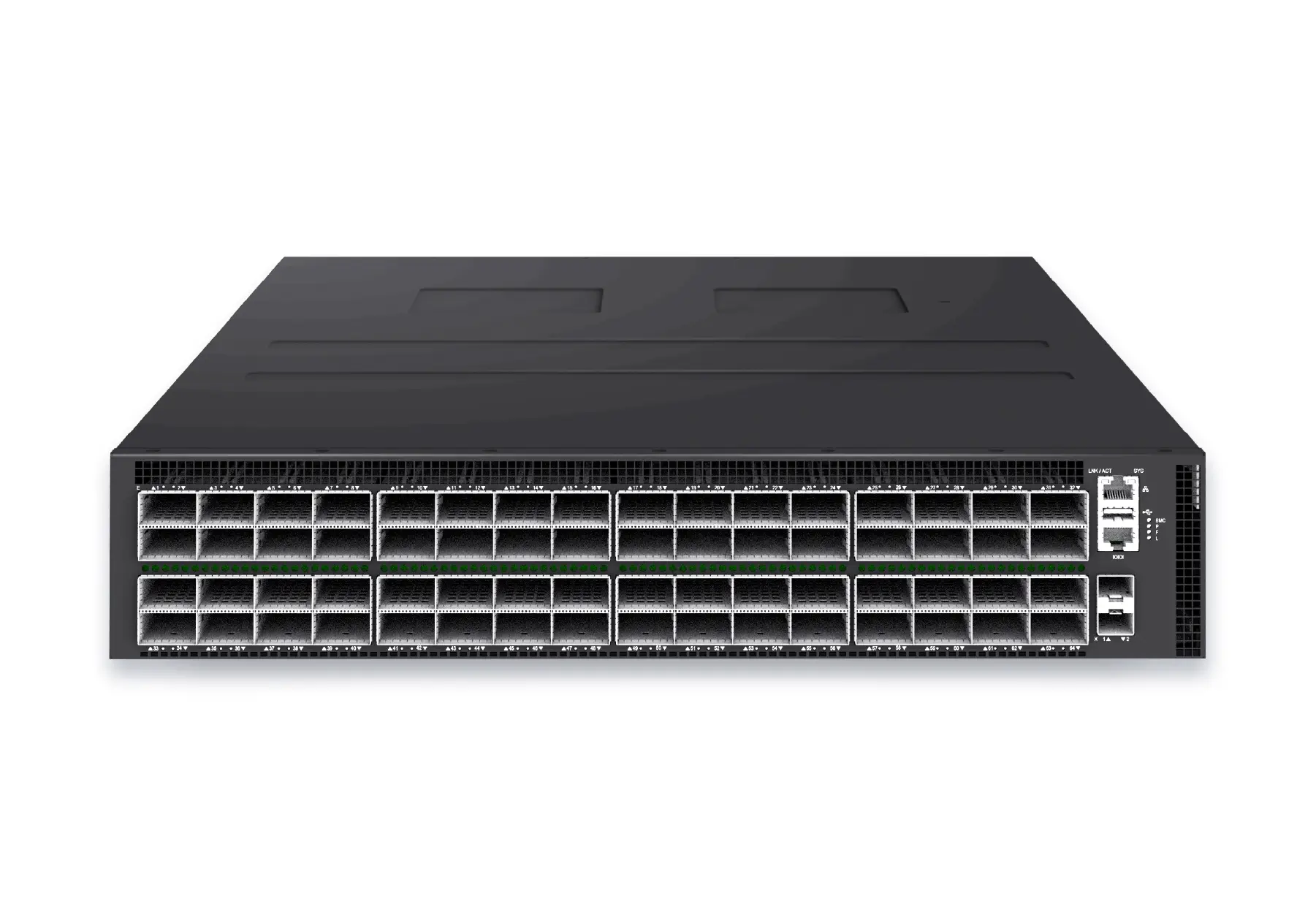 datacenter aiXS-DC-64X800-AI-G164-port 800G AI fabric switch for large-scale GPU clusters, HPC backbones, and ultra-high-throughput data center networks.View product
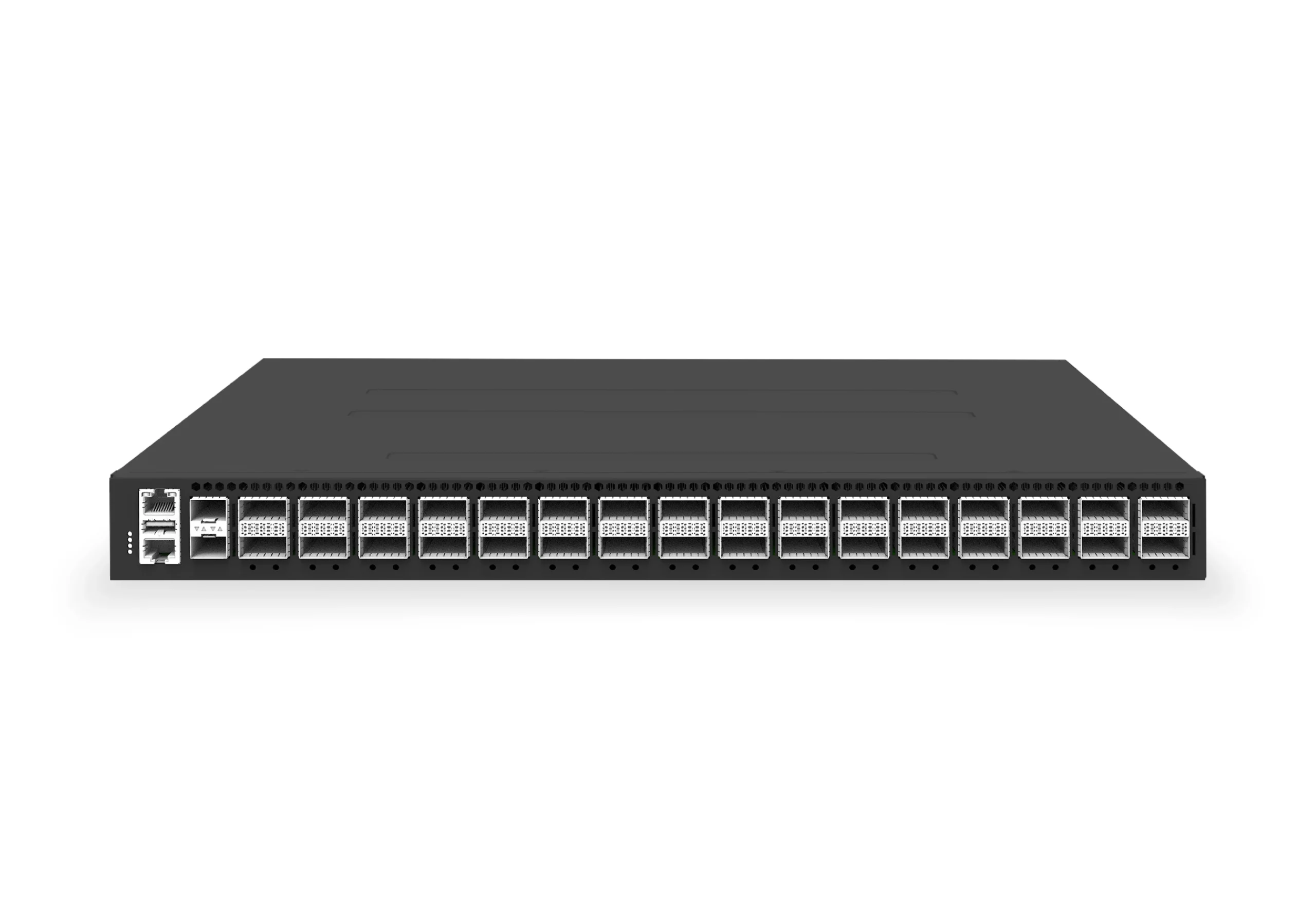 datacenter aiXS-DC-32X400-SP-G232-port 400G spine/core switch for high-capacity data center fabrics and AI-ready backbones.View product
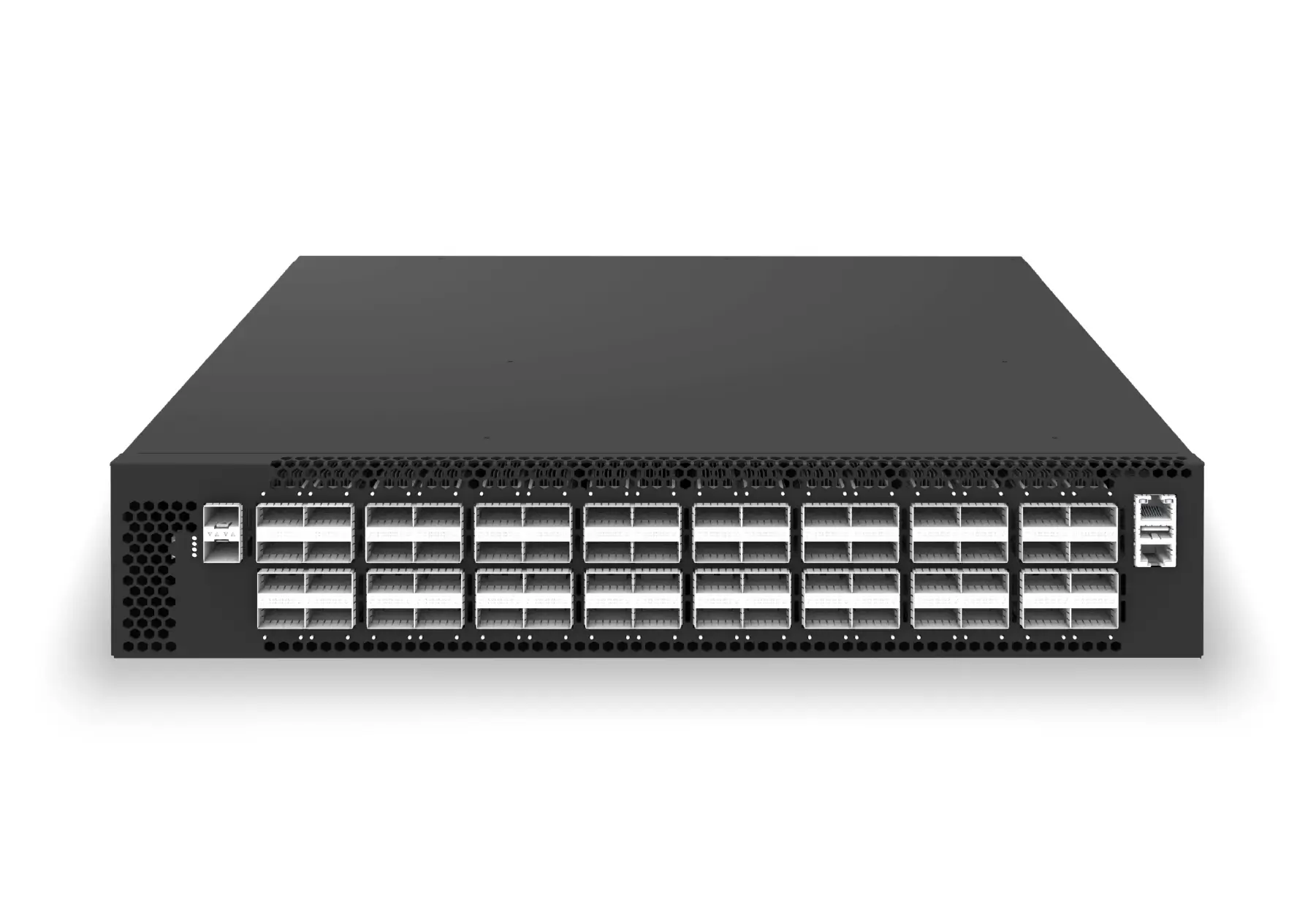 datacenter aiXS-DC-64X200-LS-G164-port 200G leaf/spine switch for high-bandwidth storage, compute, and scale-out data center fabrics.View product
Continue reading
Related articles
 Technical ArticleNetwork Packet Broker Use Cases: Traffic Visibility, Filtering, and Tool DeliveryEngineering use cases for network packet brokers in data centre, campus, AI fabric, and security operations environments, with validation criteria for each design.Read article
 Technical ArticlePacket Broker vs TAP Aggregation vs SPAN: 2026 Deployment ChecklistCompare SPAN, TAP aggregation, and packet broker approaches for traffic visibility, with an Australian enterprise checklist for monitoring, compliance, and security tool delivery.Read article
 Technical ArticleINT and Path Telemetry RFP Guide for Australian Data CentresEngineering guidance on RFP Question Set for INT and Path Telemetry for Australian network operators, covering gNMI, NETCONF/YANG, OpenConfig, telemetry pipelines, and.Read article