In brief
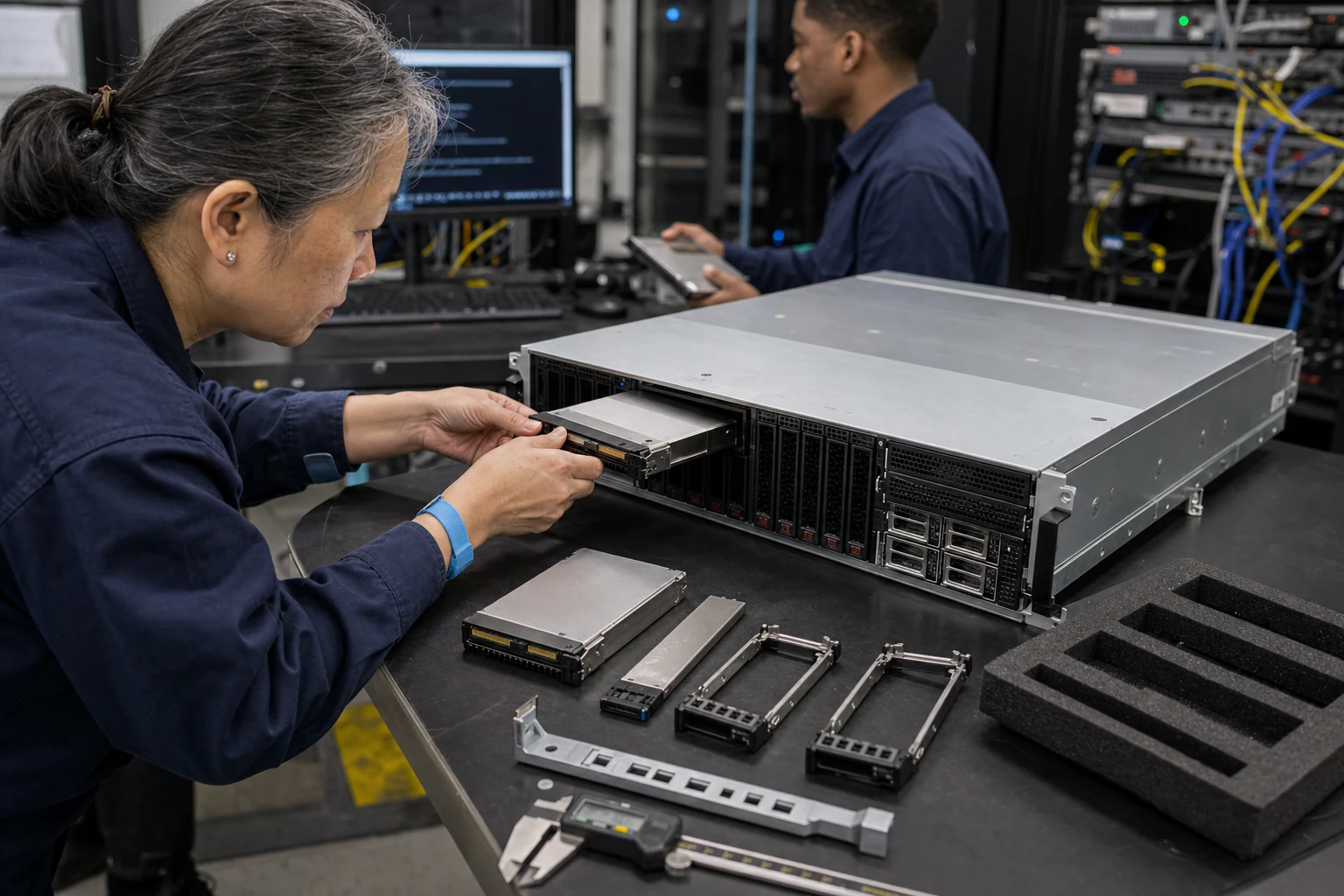
A procurement runbook for Australian data center teams evaluating U.2, M.2, E1.S and AIC NVMe SSD form factors for AI storage.
Key takeaways
- Australian enterprise and colocation operators are accelerating AI infrastructure buildouts at a pace that is forcing procurement teams to rethink storage procurement from the ground up.
- That reframing matters for NVMe SSD procurement because it changes which form factor advantages actually show up in a buyer's total cost model.
- This analysis brief provides an editorial runbook framework for procurement leads evaluating enterprise NVMe SSD form factors -- U.2, M.2, E1.S, and AIC (add-in card) -- for AI storage and cloud workloads in Australian enterprise and data center programs.
What Happened: Australian Data Center Programs Hit an Inflection Point on Storage Density
Australian enterprise and colocation operators are accelerating AI infrastructure buildouts at a pace that is forcing procurement teams to rethink storage procurement from the ground up. In a January 2026 Open Compute Project Podcast episode, Macquarie Data Centres CEO David Hirst described the shift as moving from ‘real estate’ thinking to ‘chip-out thinking,’ where every rack unit, watt, and cooling pathway is designed around the compute and storage fabric rather than the building envelope.
That reframing matters for NVMe SSD procurement because it changes which form factor advantages actually show up in a buyer’s total cost model. A procurement lead who still evaluates 2.5-inch U.2 SSDs on a per-drive-cost basis without accounting for rack density, airflow geometry, and thermal headroom in Australian climate conditions is likely underweighting factors that now dominate total cost of ownership in AI-class data centers.
This analysis brief provides an editorial runbook framework for procurement leads evaluating enterprise NVMe SSD form factors — U.2, M.2, E1.S, and AIC (add-in card) — for AI storage and cloud workloads in Australian enterprise and data center programs.
Why It Matters: AI Workloads Break Legacy Storage Procurement Assumptions
Traditional enterprise storage procurement follows a straightforward logic: identify capacity requirement, select the highest-capacity drive that fits the existing chassis, negotiate volume pricing, and move on. That model assumed relatively uniform I/O patterns and stable thermal envelopes.
AI training and inference workloads break those assumptions in three ways:
-
Bursty, unpredictable I/O profiles. Hirst noted in the OCP discussion that AI workloads behave differently from cloud workloads, with sharp spikes in read throughput during checkpoint operations and irregular write patterns during dataset staging. Form factors with higher sustained throughput per slot and lower latency jitter matter more than raw capacity-per-dollar.
-
Rack density pressure. Australian colocation operators — particularly in Sydney and Melbourne CBD-adjacent facilities — face space constraints that make every rack unit a scarce resource. The form factor decision is not just a storage decision; it is a rack planning decision that cascades into power distribution, cooling airflow, and cable management.
-
Sovereignty and compliance requirements. Hirst emphasized that Australian data sovereignty rules create a distinct market dynamic where compliance is a competitive advantage, not just a checkbox. Procurement leads must factor in supplier traceability, warranty jurisdiction, and firmware provenance — considerations that differ across form factor ecosystems.
The Four Form Factors: A Procurement Decision Matrix
Drawing on operations management principles — specifically the frameworks of inventory management, vendor evaluation, quality management, and strategic planning as described in standard operations management practice — the following runbook structure is proposed for Australian procurement teams evaluating NVMe SSD form factors for AI and cloud workloads.
Step 1: Workload Characterization Map the target workload’s I/O profile before selecting a form factor. AI training clusters generate sequential read-heavy patterns during data loading and random write patterns during checkpointing. Cloud virtualization workloads tend toward mixed random I/O. The workload profile determines which form factor’s throughput and endurance profile is the right match.
Step 2: Rack and Thermal Audit Audit the target server chassis and rack power/cooling envelope. Australian data centers in tropical or subtropical zones (Brisbane, Perth, Darwin) face higher ambient intake temperatures than temperate-zone facilities. E1.S drives with enhanced thermal management may deliver more consistent sustained throughput in those environments than U.2 drives in passive backplane configurations.
Step 3: Vendor and Ecosystem Validation Evaluate not just the drive but the surrounding ecosystem: backplane compatibility, hot-swap carrier availability, firmware update tooling, and SSD health monitoring integration with the server BMC/IPMI stack. For SONiC-managed infrastructure, confirm NVMe monitoring telemetry compatibility with the switch and fabric management plane.
Step 4: Endurance and Warranty Modeling Model total bytes written (TBW) against the workload’s expected write amplification factor. AI storage workloads often exhibit higher write amplification than general-purpose cloud due to dataset versioning and checkpoint frequency. Procurement leads should request vendor-provided endurance curves, not just spec-sheet DWPD ratings.
Step 5: Compliance and Provenance Check For Australian government and regulated-industry programs, verify that the SSD firmware is signed and traceable, that the NAND source is documented, and that the warranty and support jurisdiction aligns with Australian consumer and procurement law requirements.
The Runbook: Five Steps for Procurement Leads
xSONiC’s positioning in the NVMe SSD market draws on the same open ecosystem philosophy that drives SONiC network operating system adoption: decouple hardware from software, enable multi-vendor flexibility, and let procurement teams evaluate on merit rather than lock-in. The SONiC Foundation describes this as decoupling hardware and software to accelerate innovation — a principle that applies equally to storage form factor selection.
For procurement leads in Australian data center programs, this means:
-
Form factor standardization reduces switching cost. When a procurement team standardizes on E1.S or U.2 across a fleet, they can evaluate multiple SSD vendors on the same chassis platform without rearchitecting the server or storage shelf.
-
Open monitoring telemetry matters. If the NVMe SSD health data can flow into the same SONiC-based fabric management plane as the network telemetry, procurement leads get a unified operational view rather than siloed storage and network dashboards.
-
The OCP ecosystem shapes the supply chain. OCP’s networking and storage projects — including the Time Appliances Project and broader hardware management initiatives — are establishing open specifications that influence which SSD features get prioritized by vendors. Procurement leads who track OCP specification development can anticipate which form factors will have the deepest ecosystem support in 12-24 months.
Vendor evidence checklist
The buyer should not treat a storage form factor runbook as a substitute for vendor evidence. The unresolved items below should be converted into procurement questions and acceptance tests before volume purchase:
| Procurement question | Evidence to request | Reject or rework if |
|---|---|---|
| Which form factors are actually available? | Current U.2, M.2, E1.S, and AIC SKUs, capacity points, interface generation, and lead time by Australian channel | The proposal lists a form factor family without orderable SKUs, lead times, or replacement options |
| Will endurance match the workload? | DWPD/TBW rating, warranty conditions, workload assumptions, write amplification model, and sustained write test data | The drive is sized from capacity alone and no endurance curve is supplied for checkpoint-heavy AI workloads |
| Can the fleet be managed openly? | NVMe-MI support, SMART field coverage, firmware signing process, update workflow, and BMC or monitoring integration | Health telemetry or firmware updates require manual vendor tools that do not fit the operations model |
| Can the chassis cool the drives? | Chassis airflow model, inlet temperature assumption, drive power state, throttling test, and failed-fan behaviour | The form factor passes an open-bench test but has no evidence inside the intended 1U/2U server or GPU chassis |
| Is supply chain risk controlled? | Alternate supplier, local warranty path, firmware provenance statement, spare pool recommendation, and lifecycle notice policy | The design depends on a single SSD supplier, single carrier/backplane option, or offshore-only warranty path |
Engineering FAQ
How should NVMe form factor selection be made? Start with workload profile, usable capacity, serviceability, thermal envelope, write endurance, PCIe generation, slot layout, and replacement process. U.2, E1.S, M.2, and AIC devices solve different mechanical and operational problems.
What matters more than peak sequential speed? Sustained performance, thermal throttling behaviour, write endurance, latency under load, firmware stability, power-loss protection, and fleet manageability usually matter more than a single benchmark number.
How should storage be validated for AI or cloud workloads? Test the selected form factor in the real chassis with expected airflow, queue depth, write mix, temperature range, and monitoring stack. Validation should include steady-state and recovery behaviour, not only fresh-drive performance.
Related xSONiC Resources
Sources Reviewed
- NVM Express Specifications
- NVM Express Management Interface Specification
- SNIA SSD Form Factors
- Open Compute Project Storage
- OCP NVMe Cloud SSD Specification
- Open Compute Project Podcast - Australia’s Macquarie and OCP
Product fit
Products referenced for evaluation
These products are referenced for evaluation context in the article. Confirm workload, port, optics, software, interoperability, and support requirements against the exact deployment before procurement.
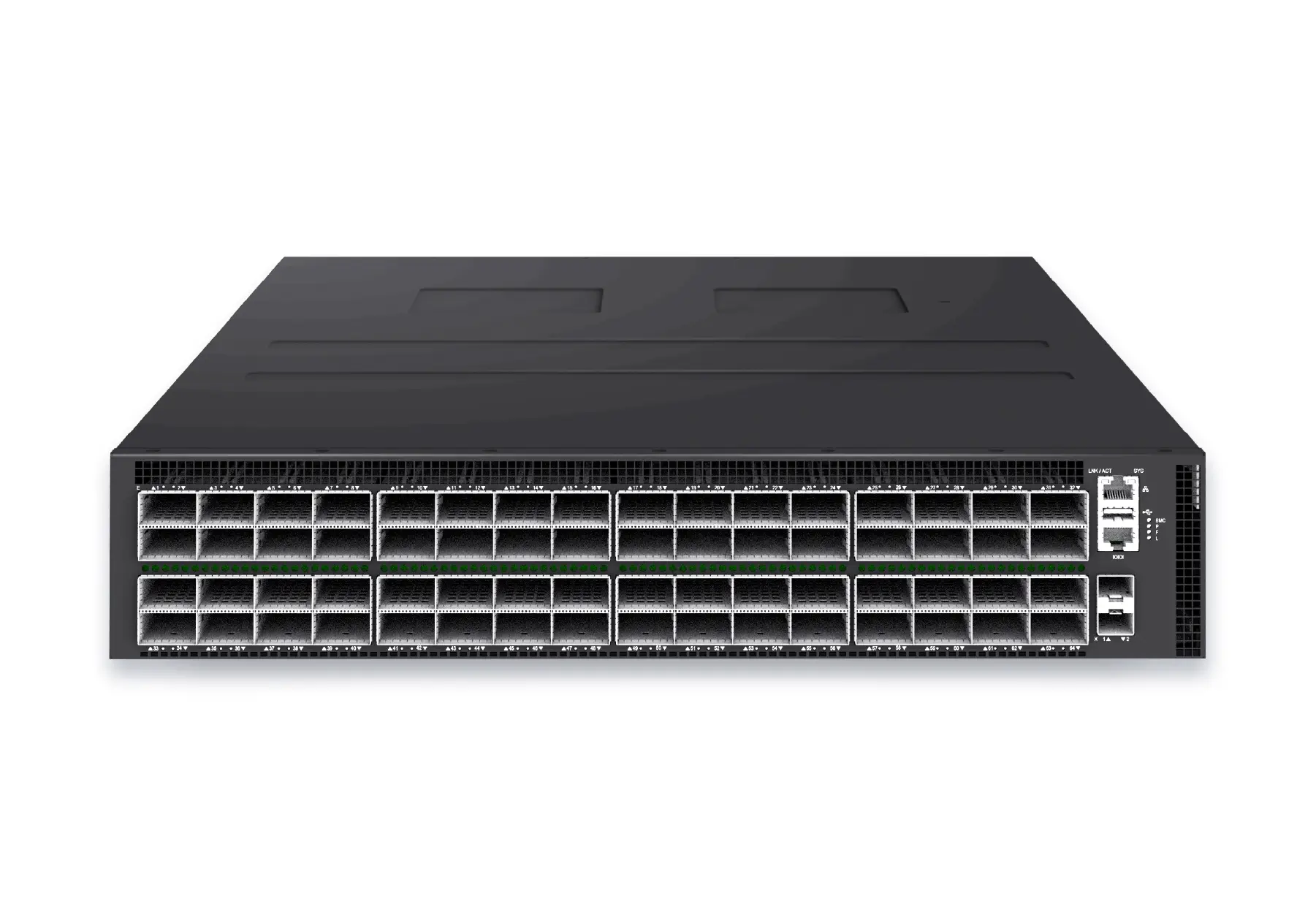 datacenter aiXS-DC-64X800-AI-G164-port 800G AI fabric switch for large-scale GPU clusters, HPC backbones, and ultra-high-throughput data center networks.View product
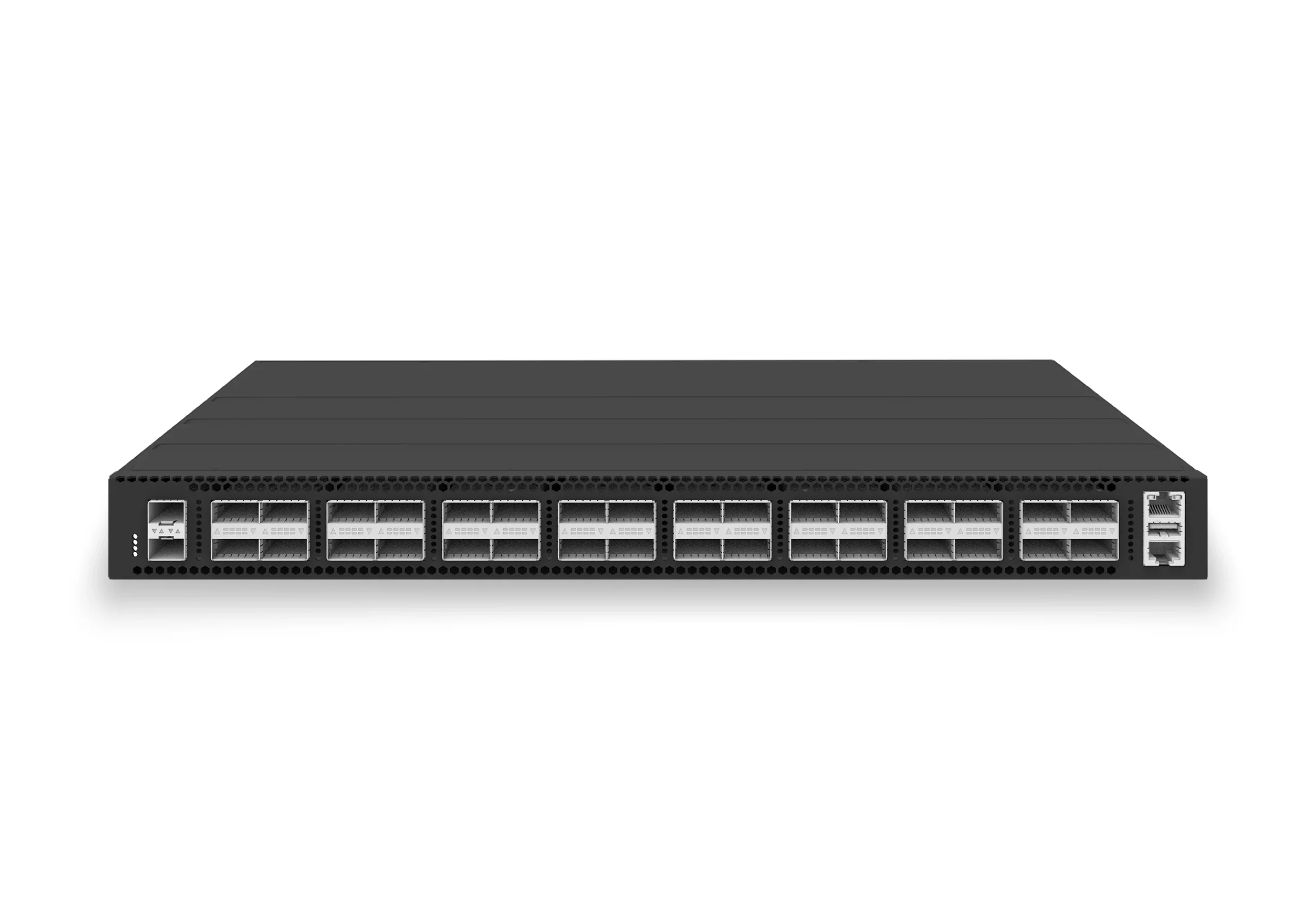 datacenter aiXS-DC-32X100-LS-G232-port 100G leaf/spine switch for VXLAN fabrics, RoCE-ready workloads, and tenant-scale routing.View product
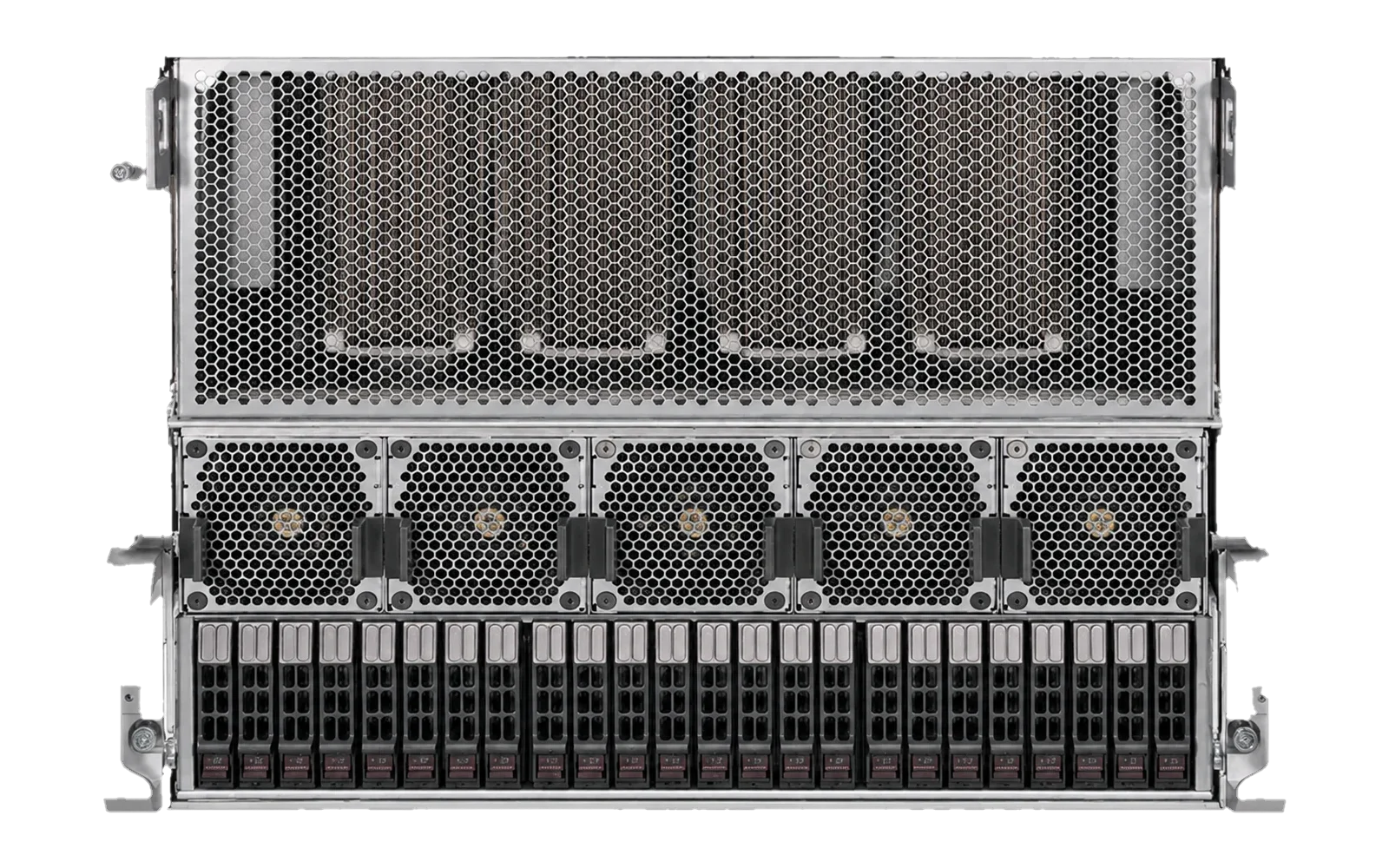 ai infrastructurexSONiC AI Inference ServerPrivate AI inference platform for local LLM, RAG, coding, document intelligence, and multimodal services, with xSONiC deployment support across compute, network, storage, and validation.View product
Continue reading
Related articles
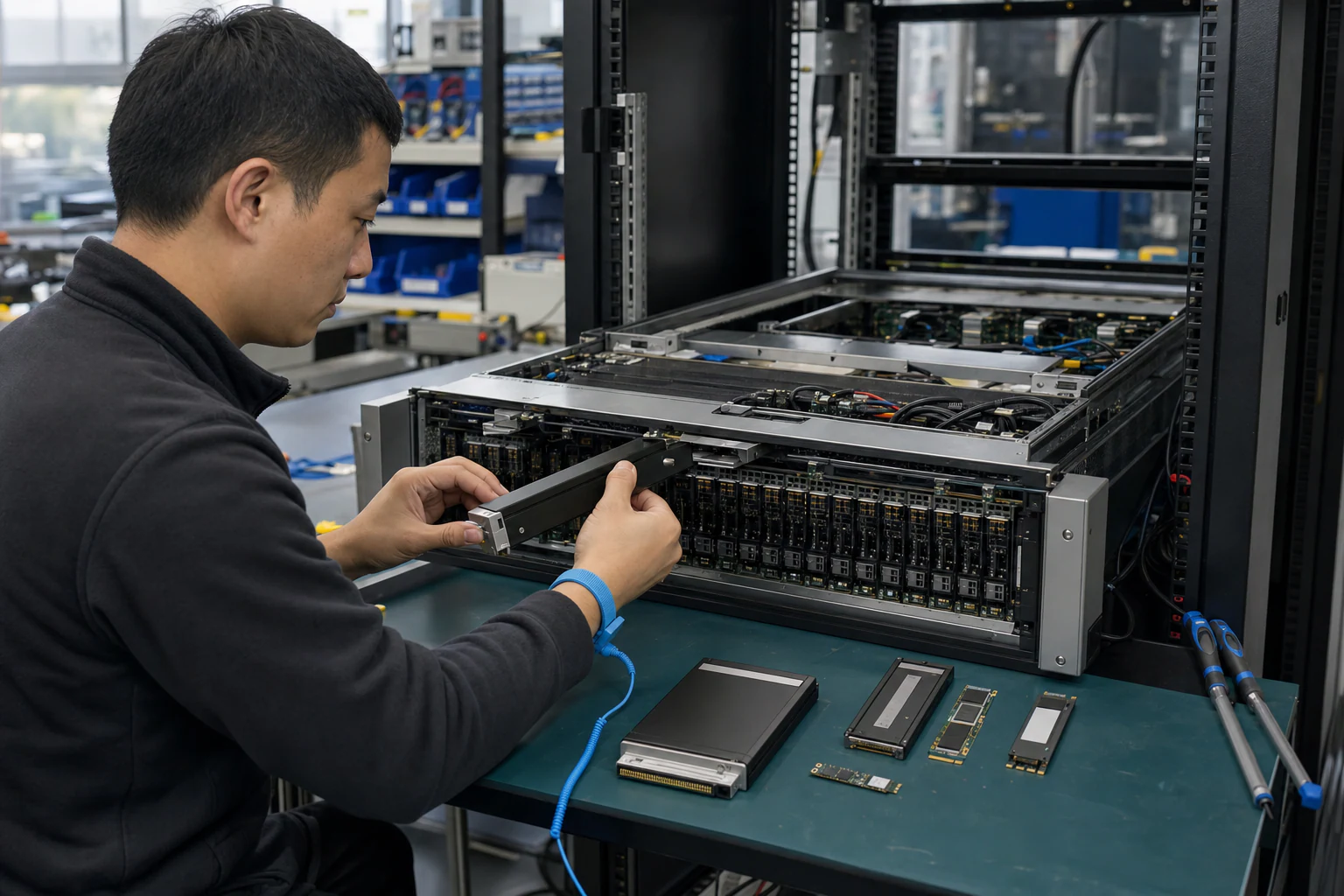 Technical ArticleU.2 vs M.2 vs E1.S vs AIC: Choosing the Right NVMe SSD Form Factor for Your Enterprise DeploymentEngineering guidance on U.2 vs M.2 vs E1.S vs AIC for Australian infrastructure teams, covering form factor tradeoffs, capacity planning, thermal design, endurance, and.Read article
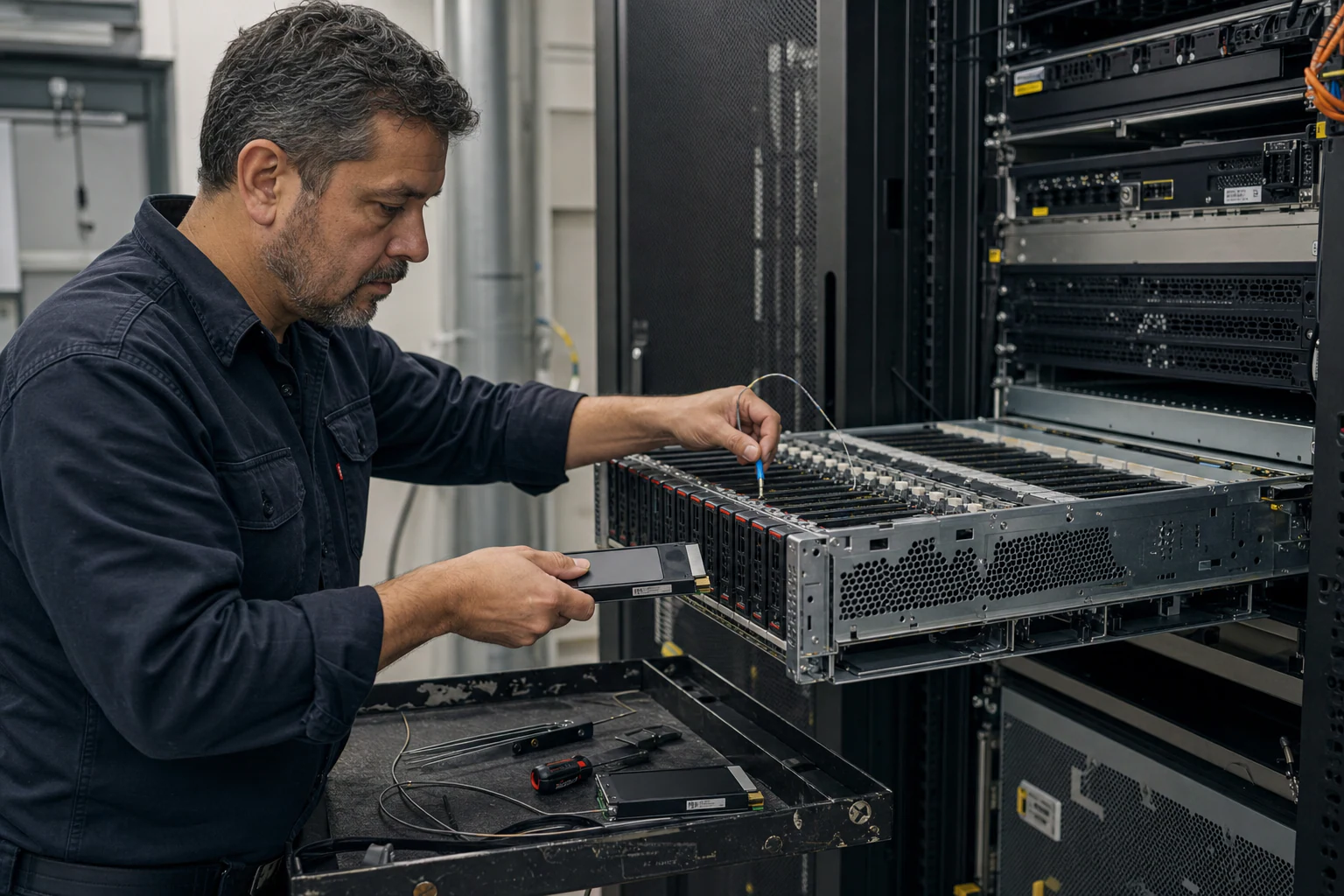 Technical ArticleNetwork and Storage Planning for Private AI Inference Servers: A Practical Buyer GuideA practical buyer guide to network and storage planning for private AI inference servers in Australian data centers.Read article
 Technical ArticleNETCONF and YANG Are Rewriting How SONiC Switches Get Configured -- What Australian Network Teams Should KnowEngineering guidance on NETCONF and YANG for SONiC switch configuration, covering candidate commits, rollback, OpenConfig models, gNMI telemetry, and automation risk.Read article