
In brief
Engineering guidance on Leaf-Spine Data Center Design at 400G and 800G for Australian data centre buyers, covering form factor choice, link budgets, cabling.
Key takeaways
- Traditional three-tier data centre networks (access, aggregation, core) relied on oversubscription at every hop.
- Leaf-spine architecture replaces the hierarchy with a two-tier, non-blocking fabric.
- This design has become the default for hyperscale clouds and is increasingly standard for enterprise data centres, colocation deployments, and AI training clusters.
Why Leaf-Spine Is the Dominant Data Centre Fabric
Traditional three-tier data centre networks (access, aggregation, core) relied on oversubscription at every hop. That model breaks down under the traffic patterns of modern distributed applications: east-west flows between compute nodes, GPU clusters exchanging RDMA traffic, and storage replication across racks.
Leaf-spine architecture replaces the hierarchy with a two-tier, non-blocking fabric. Every leaf switch connects to every spine switch. Every server or device connects to a leaf. The result is a predictable hop count (always two between any two endpoints), deterministic latency, and horizontal scalability: when you need more bandwidth or port capacity, you add another leaf-spine pair rather than redesigning the network.
This design has become the default for hyperscale clouds and is increasingly standard for enterprise data centres, colocation deployments, and AI training clusters.
The Bandwidth Step-Up: 400G Today, 800G Now
The transition from 100G/200G to 400G spine links was driven by the need to absorb growing east-west traffic without multiplying rack count. At 400G, a single QSFP-DD or OSFP port can replace four 100G ports on the spine tier, reducing cabling, power draw per gigabit, and switch count.
800G raises the bar again. A single 800G OSFP port effectively doubles the bandwidth of a 400G port or can be broken out into multiple 200G or 100G channels for leaf-to-server connectivity. This matters for AI and HPC fabrics where GPU-to-GPU traffic demands low-latency, high-throughput interconnects that saturate 400G links faster than expected.
Decision table for port speed selection:
| Factor | 400G Spine | 800G Spine |
|---|---|---|
| Typical use | General enterprise and cloud leaf-spine | AI/HPC clusters, hyperscale cloud |
| Port density (per ASIC) | 32 ports (e.g. QSFP-DD) | 64 ports (e.g. OSFP) on latest silicon |
| Fan-out options | 4x 100G, 2x 200G | 8x 100G, 4x 200G, 2x 400G |
| Maturity | Production-proven at scale | Entering production; check vendor availability |
| ASIC generations supporting it | Spectrum-3 class and above | Spectrum-4 / Spectrum-6 class |
Note: Port counts and break-out options vary by switch model and ASIC vendor. The numbers above are representative of published specifications from at least one vendor family and should be confirmed against the specific platform you evaluate.
How Leaf-Spine Works at 400G and 800G
A leaf-spine fabric at these speeds follows the same logical pattern as a 100G deployment, but the physical design decisions change.
Leaf tier: Each leaf switch sits at the top of a rack (or half-rack) and provides server-facing ports at 25G, 50G, or 100G, plus uplink ports to every spine at 400G or 800G. The leaf ASIC must handle the aggregate bandwidth of all server ports plus any in-rack traffic.
Spine tier: Spine switches have no server-facing ports. Every port faces a leaf. At 400G, a 32-port spine switch can serve 32 leaf switches. At 800G, a 64-port spine switch can serve 64 leaves, effectively doubling fabric scale without adding spine nodes.
Superspine (optional): For very large fabrics (thousands of server ports), a third tier of superspine switches interconnects multiple leaf-spine pods. At 400G/800G, this is common in AI factory designs where GPU clusters span multiple rows or halls.
ECMP and load balancing: All routing in a leaf-spine fabric relies on Equal-Cost Multi-Path (ECMP). BGP is the standard routing protocol for data centre fabrics (as opposed to OSPF or IS-IS) because it scales well, offers fine-grained policy control, and is the protocol that SONiC implementations have production-hardened most extensively.
RDMA over Converged Ethernet (RoCE): For AI and HPC workloads, RoCE v2 traffic requires lossless or near-lossless fabric behaviour. This means Data Center Bridging (DCB) features such as Priority Flow Control (PFC) and Explicit Congestion Notification (ECN) must be configured end-to-end across the leaf-spine fabric. Not all switch ASICs handle RDMA workloads with the same efficiency.
SONiC as the NOS Layer for Leaf-Spine Fabrics
Software for Open Networking in the Cloud (SONiC) is an open-source network operating system maintained under the Linux Foundation. It runs on switches from multiple hardware vendors and multiple ASIC families, which means network teams can choose their switching hardware independently from their software stack.
Key SONiC characteristics relevant to leaf-spine design:
-
Container-based architecture: Each network function (BGP, LLDP, DHCP relay, etc.) runs in its own Docker container. This allows teams to upgrade or troubleshoot individual services without affecting the entire switch.
-
Switch Abstraction Interface (SAI): SAI decouples the SONiC software from the underlying ASIC. Hardware vendors implement SAI for their silicon, and SONiC runs on top. This is what enables multi-vendor hardware choice.
-
BGP and RDMA support: SONiC offers production-hardened BGP (essential for leaf-spine routing) and RDMA support (essential for AI fabric traffic). These capabilities were developed and tested in the data centres of large cloud service providers.
-
JSON-based configuration: SONiC uses a centralized ConfigDB in JSON format. This makes configuration programmable and suitable for automation pipelines using Ansible, Terraform, or custom tooling.
-
Active community and ecosystem: The SONiC project on GitHub has attracted contributions from major chip vendors and networking companies, and the supported devices list continues to grow.
For Australian organisations, SONiC’s multi-vendor support is a practical advantage: it reduces vendor lock-in and can simplify procurement when local distributor stock varies across brands.
ASIC Considerations: What Drives 400G/800G Switch Selection
The switch ASIC is the heart of any leaf or spine switch. At 400G and 800G, the ASIC determines:
- Maximum throughput per chip: Measured in Terabits per second (Tb/s). A spine switch at 800G needs an ASIC capable of at least 51.2 Tb/s to deliver 64 ports at full line rate.
- Packet buffer size: Deep buffers help absorb microbursts, which are common in AI training traffic patterns. Insufficient buffer depth leads to packet drops and retransmissions.
- Flow table scale: Large data centres need hundreds of thousands of routes, ACLs, and flow counters. ASICs with limited table sizes force architectural compromises.
- RDMA offload capability: Hardware-level support for RoCE v2, PFC, and ECN reduces CPU overhead on the switch and ensures consistent latency.
- Power consumption per port: At 800G, power per port becomes a real operational consideration, especially in Australian colocation facilities where power costs are significant.
Published specifications from one major vendor show the following ASIC-to-product mapping (representative, not exhaustive):
| ASIC Generation | Max Port Speed | Example Switch | Max Throughput | Typical Role |
|---|---|---|---|---|
| Spectrum-2 class | 200 Gb/s | SN3000 series | Up to 6.4 Tb/s | Leaf (general purpose) |
| Spectrum-3 class | 400 Gb/s | SN4000 series | Up to 12.8 Tb/s | Leaf or small spine |
| Spectrum-4 class | 800 Gb/s | SN5000 series | Up to 51.2 Tb/s | Spine (AI and cloud) |
| Spectrum-6 class | 800 Gb/s | SN6000 series | Up to 409.6 Tb/s (multi-chip) | Superspine / AI factory |
400G vs 800G: Choosing the Right Speed for Your Fabric
Not every data centre needs 800G spines today. The right choice depends on your workload, growth trajectory, and budget.
Choose 400G spine links when:
- You are building or refreshing a general-purpose enterprise or cloud leaf-spine fabric
- Server NICs are predominantly 25G or 50G
- Your traffic growth is steady but not explosive
- You want mature, widely available optics and switches
Choose 800G spine links when:
- You are deploying GPU clusters for AI training or inference at scale
- Server NICs are 100G or 200G (common with NVIDIA ConnectX or BlueField adapters)
- You need to maximise port density at the spine tier to reduce device count
- Your data centre power and cooling budget supports the higher per-port power envelope
Hybrid approach: Many teams deploy 400G spines today with a clear upgrade path to 800G. Because leaf-spine is inherently modular, you can swap spine switches for higher-speed models without redesigning the entire fabric, provided your leaf switches and cabling support the new speeds.
Practical Design Checklist for Australian Leaf-Spine Deployments
Use this checklist when planning a 400G or 800G leaf-spine fabric:
-
Define your workload profile. General cloud, AI training, HPC, or mixed? This determines RDMA requirements, buffer depth needs, and port speed targets.
-
Count your server ports. Total server count determines leaf switch count. Each leaf covers one rack (typically 24-48 servers at 25G/50G or 8-16 at 100G/200G).
-
Calculate spine count. Every leaf needs one uplink to every spine. If your leaf has 8 x 400G uplinks, you need 8 spines. If your leaf has 8 x 800G uplinks, the same logic applies.
-
Verify ASIC table sizes. Confirm that your chosen switch platform supports enough routes, ACLs, and flow counters for your projected scale.
-
Plan your optics and cabling budget. At 400G and 800G, optics can represent a significant portion of total fabric cost. Budget for both initial deployment and spares.
-
Select your NOS. SONiC is a strong candidate for multi-vendor flexibility. Proprietary NOS options (Cumulus Linux, vendor-specific OS) may offer features or support tiers that suit your operational model. Evaluate based on your team’s Linux skills, automation requirements, and vendor support preferences.
-
Design for power and cooling. Australian data centres vary widely in available power per rack. Confirm that your chosen switch form factor and optics power budget fit within your facility’s constraints.
-
Test before you deploy. Use digital twin or network simulation tools (where available) to validate your fabric design, automation scripts, and failure scenarios before racking hardware.
Summary
Leaf-spine architecture at 400G and 800G is the foundation for modern data centre networking. 400G is production-ready and widely available. 800G is entering production and is the right choice for AI-scale fabrics. SONiC provides an open, multi-vendor NOS layer that runs on switches from multiple hardware vendors and ASIC families. The right speed and platform choice depends on your workload, scale, and operational requirements.
Engineering Evidence Floor
For optics topics, speed is not the acceptance criterion. The evidence package should include form factor, reach, fibre type, link budget, DOM telemetry, FEC counters, CRC errors, temperature, breakout plan, spare availability, and switch/NOS compatibility. A useful validation run should capture 24 hours of link telemetry at 400G or 800G, include one optics replacement, and test the packet visibility path where SecOps or monitoring tools depend on copied traffic.
| Evidence area | What to validate | Acceptance gate | Rework trigger |
|---|---|---|---|
| Link health | DOM, FEC, CRC, flaps, temperature, and power | 24 hours clean record at 400G/800G | Errors are accepted without cause |
| Form factor | QSFP-DD, OSFP, DAC, AOC, fibre, and breakout | Exact module works on target switch image | Generic compatibility is assumed |
| Visibility | TAP/SPAN, packet broker, filter rules, and tool capacity | 30 minutes traffic replay without drops | SecOps path is designed after cabling |
| Supply | Local stock, RMA, spare optics, and lead time | 12 months spare plan approved | Replacement depends on unknown import timing |
| Operations | Replacement runbook, rollback, escalation, and evidence bundle | Fault isolated within 4 hours | Ownership splits across network and supplier |
Engineering FAQ
What should be checked before ordering 400G or 800G optics? Check port form factor, lane speed, reach, fibre type, breakout plan, DOM telemetry, firmware compatibility, thermal budget, and the switch vendor optics support matrix. The same speed can behave differently across QSFP-DD, OSFP, DAC, AOC, and fibre modules.
Why is optics validation part of a SONiC deployment? SONiC exposes the NOS layer, but optics behaviour still depends on the switch platform, transceiver EEPROM data, firmware, thermal design, and operational tooling. Buyers should test the exact module and cable combination before volume rollout.
What should be included in an optics procurement record? Record SKU, reach, connector, fibre type, temperature class, supported breakout modes, switch platform, SONiC image, DOM fields, link test result, and spare strategy. That record becomes the reference for future replacements.
Related xSONiC Resources
Sources Reviewed
- Ethernet Network Adapters - ConnectX NICs | NVIDIA
- NVIDIA BlueField Data Processing Unit
- NVIDIA Spectrum-X Ethernet Platform
- ACSC Essential Eight
- OAIC Notifiable Data Breaches
- APRA CPS 234 Information Security
- NETSCOUT Network Packet Definition
- Cloudflare Network Packet Definition
- SONiC Project Documentation
- Broadcom Ethernet Switching
- Marvell Switching
- NVIDIA Ethernet Switching
- Open Compute Networking
- SONiC GitHub
- SONiC Foundation
Product fit
Products referenced for evaluation
These products are referenced for evaluation context in the article. Confirm workload, port, optics, software, interoperability, and support requirements against the exact deployment before procurement.
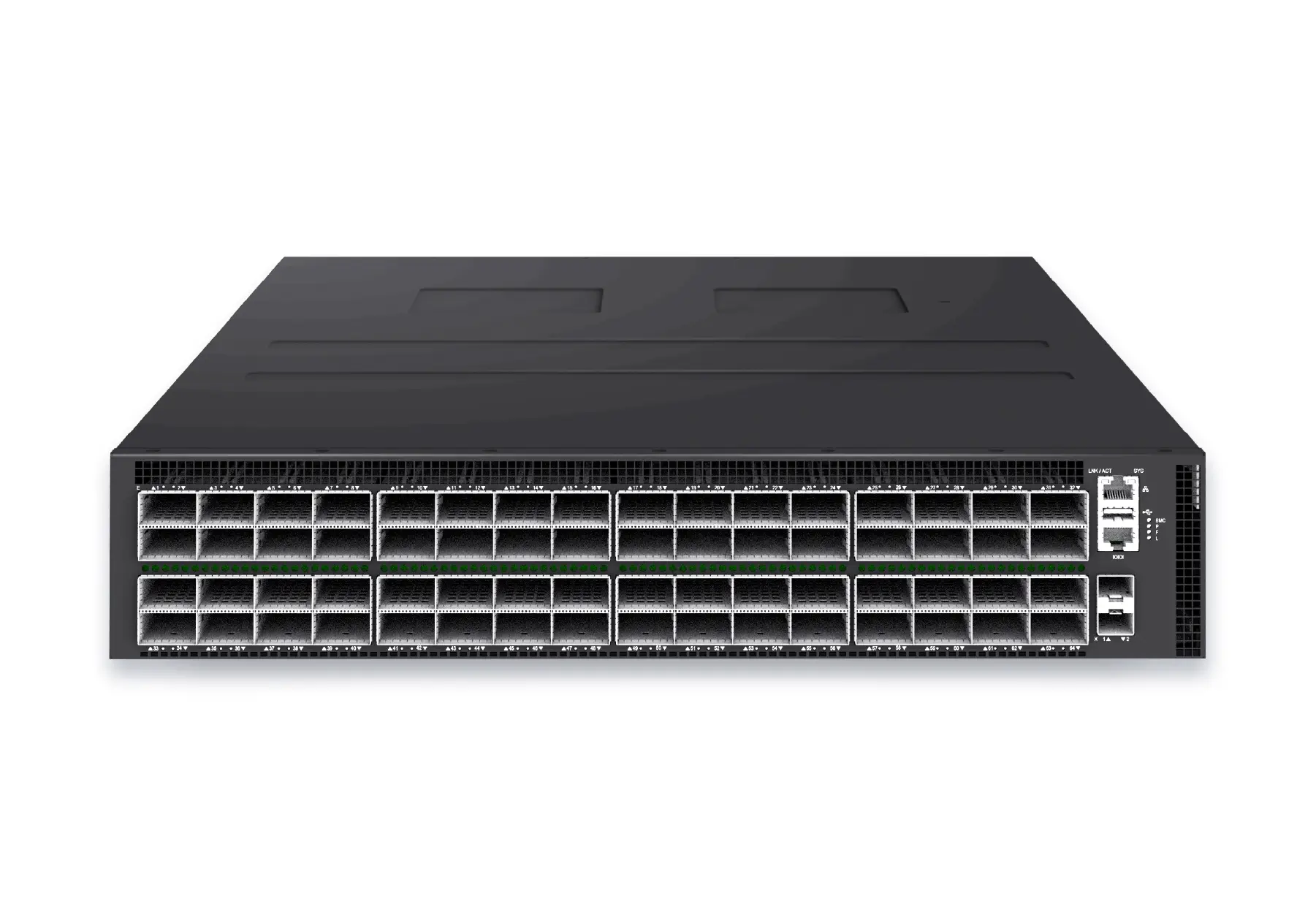 datacenter aiXS-DC-64X800-AI-G164-port 800G AI fabric switch for large-scale GPU clusters, HPC backbones, and ultra-high-throughput data center networks.View product
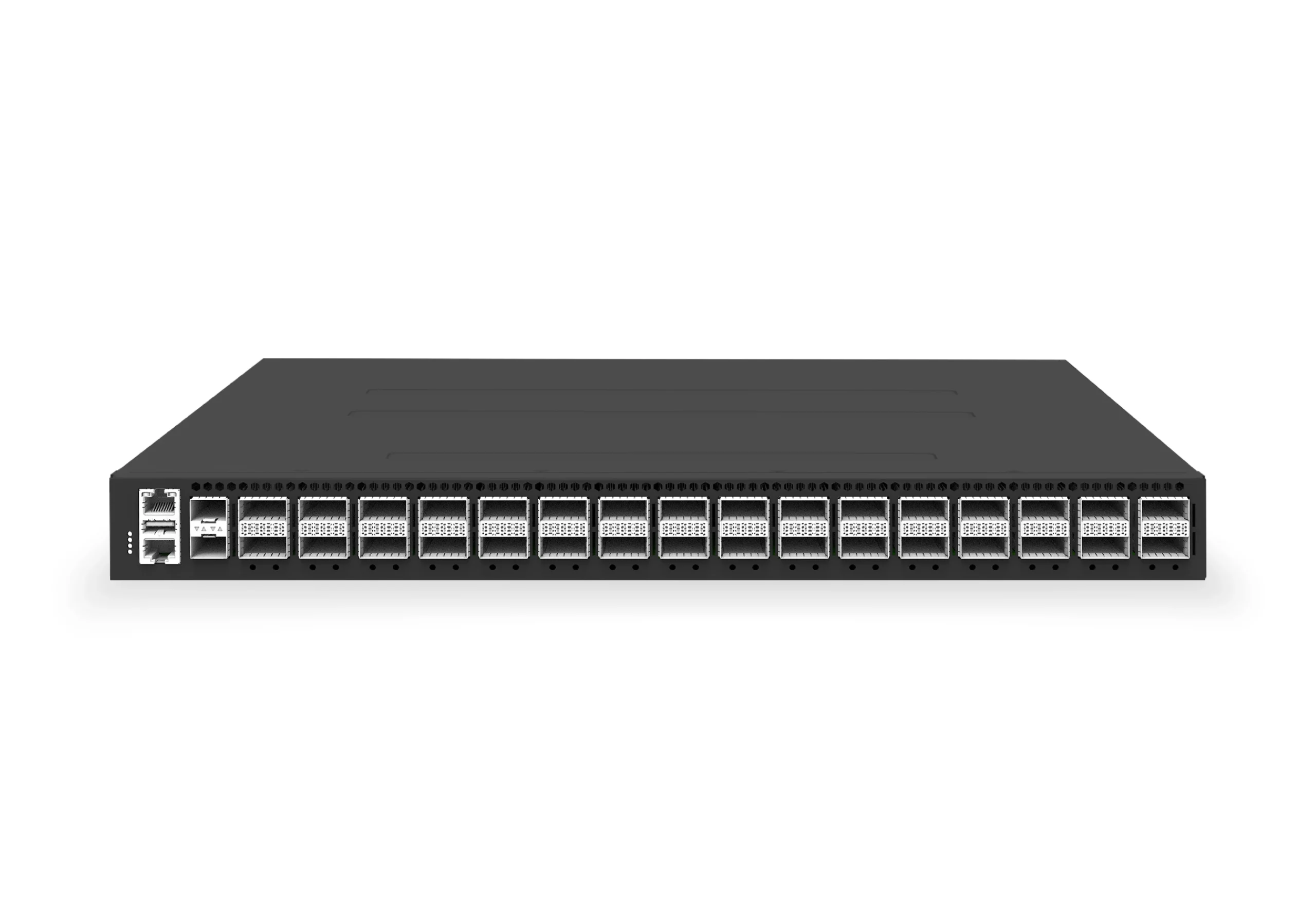 datacenter aiXS-DC-32X400-SP-G232-port 400G spine/core switch for high-capacity data center fabrics and AI-ready backbones.View product
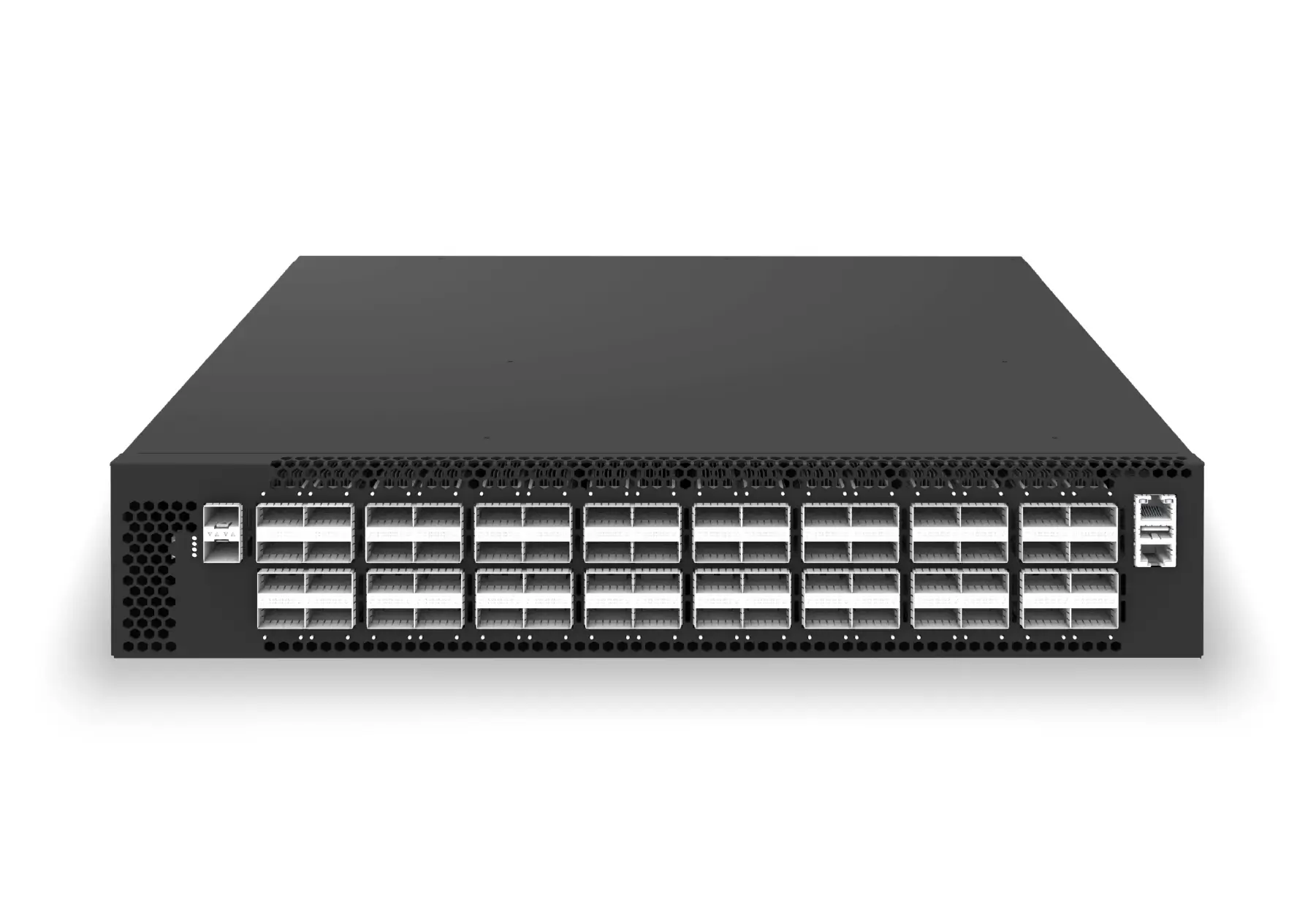 datacenter aiXS-DC-64X200-LS-G164-port 200G leaf/spine switch for high-bandwidth storage, compute, and scale-out data center fabrics.View product
Continue reading
Related articles
 Technical ArticleDesigning GPU Backend Fabrics with RoCE v2: How SONiC 400G/800G Switches Transform AI Data CentersEngineering guide for AI fabric buyers covering RoCE, SONiC, telemetry, optics, support ownership, and deployment validation.Read article
 Technical ArticleWhy Open SONiC Ethernet Is Becoming the Default AI Fabric for GPU Backend ClustersEngineering guidance on Open SONiC Ethernet Is Becoming the Default AI Fabric for GPU Backend Clusters for Australian network teams, covering underlay design.Read article
 Technical ArticleGPU Cluster Fabric Design: Why AI Workloads Need Purpose-Built EthernetArchitecture guide to GPU cluster fabrics covering RoCE v2, PFC, ECN, DCBX, SONiC, 400G/800G, telemetry, InfiniBand trade-offs, and acceptance evidence.Read article