In brief
Engineering guide for AI fabric buyers covering RoCE, SONiC, telemetry, optics, support ownership, and deployment validation.
Key takeaways
- Every AI training run and every inference request depends on a network path that most IT teams never designed for.
- Unlike the frontend or management network, the GPU backend fabric carries RDMA traffic.
- For Australian organisations building private AI infrastructure -- whether for regulated industries, sovereign data requirements, or simply to control GPU utilisation costs -- the backend fabric decision is as consequential as the GPU selection itself.
Why the GPU Backend Fabric Is the Bottleneck That Defines Your AI Cluster
Every AI training run and every inference request depends on a network path that most IT teams never designed for. When GPU servers communicate during distributed training — synchronising gradients, exchanging activations, or running collective operations such as AllReduce — the backend fabric is the segment where latency and packet loss translate directly into wasted GPU cycles and longer time-to-accuracy.
Unlike the frontend or management network, the GPU backend fabric carries RDMA traffic. Remote Direct Memory Access bypasses the operating system kernel and moves data between GPU memory domains with near-zero CPU overhead. That speed comes with a hard requirement: the fabric must deliver lossless or near-lossless behaviour under load. A single congestion-induced packet drop can stall an RDMA queue pair and ripple across dozens of GPU workers.
For Australian organisations building private AI infrastructure — whether for regulated industries, sovereign data requirements, or simply to control GPU utilisation costs — the backend fabric decision is as consequential as the GPU selection itself.
RoCE v2: The Transport Layer That Underpins GPU-to-GPU Communication
RDMA over Converged Ethernet version 2 (RoCE v2) has become the dominant transport for GPU backend fabrics in Ethernet-based AI clusters. RoCE v2 encapsulates RDMA operations inside UDP/IP packets, which means it can route across standard Layer 3 Ethernet fabrics rather than requiring a flat Layer 2 domain.
Key RoCE v2 characteristics that shape fabric design:
- UDP-based transport on port 4791. RoCE v2 uses standard IP routing, which simplifies integration with modern spine-leaf topologies and enables ECMP (Equal-Cost Multi-Path) load balancing across leaf-spine links.
- InfiniBand Verbs API compatibility. GPU libraries such as NCCL (NVIDIA Collective Communications Library) use the Verbs programming model. RoCE v2 provides this on Ethernet, avoiding the need for a separate InfiniBand fabric.
- Zero-copy data transfer. Data moves directly between application memory buffers on the sender and receiver without intermediate copies, reducing latency to single-digit microseconds on well-designed fabrics.
- Sensitivity to congestion and packet loss. Unlike TCP, RoCE v2 has no built-in retransmission window at the transport layer. Packet loss triggers timeouts and queue pair resets that can stall collective operations across an entire training job.
The practical implication is clear: a RoCE v2 fabric requires deliberate congestion management. Simply providing high bandwidth is not enough.
Congestion Management: PFC, ECN, and DCBX Working Together
A well-designed GPU backend fabric uses a layered congestion management stack. Each layer addresses a different failure mode.
Priority Flow Control (PFC)
PFC (IEEE 802.1Qbb) provides per-priority pause functionality. When a switch egress buffer approaches capacity for a given traffic class, it sends a PFC pause frame to the upstream device, temporarily halting transmission on that priority queue without affecting other traffic classes.
PFC is essential for RoCE v2 because it prevents buffer overflow-induced packet loss on the RDMA priority. However, PFC alone can cause a cascading failure known as head-of-line blocking or PFC storm if congestion propagates upstream across multiple switch hops. This is why PFC must be paired with end-to-end congestion notification.
Explicit Congestion Notification (ECN)
ECN operates at the IP layer. When a switch detects that a queue depth for the RoCE v2 traffic class is approaching a configured threshold, it marks the ECN bits (CE — Congestion Experienced) in the IP header of affected packets. The receiving RDMA NIC then signals the sender to slow down before buffers overflow.
This end-to-end signalling model prevents the congestion from ever reaching the point where PFC pause frames propagate across the fabric. The combination of ECN as the primary congestion signal and PFC as the backstop creates a stable feedback loop.
Data Center Bridging Capability Exchange (DCBX)
DCBX (IEEE 802.1Qaz) is the negotiation protocol that ensures all devices in the fabric agree on congestion management parameters. DCBX advertises and exchanges:
- PFC configuration (which priorities are pause-enabled)
- ECN marking thresholds
- Traffic class bandwidth allocations
- Application priority mappings
Without consistent DCBX negotiation, you risk configuration mismatches between NICs and switches that produce silent failures under load — exactly the scenario that is hardest to debug during a multi-million-dollar training job.
Fast CNP and Advanced Congestion Control
Beyond PFC/ECN/DCBX, modern RoCE v2 implementations support fast Congestion Notification Packets (CNP) processing. When the sender receives an ECN-marked packet, it generates a CNP and reduces its injection rate. Fast CNP implementations on NIC hardware — rather than in software — reduce the reaction time from milliseconds to microseconds, tightening the congestion feedback loop.
For fabrics at 400G and 800G line rates, faster reaction times matter more because a single port can inject congestion across an entire leaf switch in microseconds.
Fabric Architecture: Spine-Leaf Topology at 400G and 800G
The GPU backend fabric for an AI cluster almost always uses a two-tier spine-leaf architecture. Each GPU server connects to a top-of-rack (ToR) leaf switch, and every leaf uplinks to every spine switch. This creates a non-blocking, any-to-any fabric with deterministic hop count.
Bandwidth Math for AI Clusters
Consider a training cluster with 64 GPU servers, each equipped with 8 GPUs and 8 backend NICs at 400G:
- Total backend bandwidth per server: 8 x 400G = 3.2 Tbps
- Leaf switch capacity: A 64-port 400G switch provides 25.6 Tbps aggregate switching capacity
- Spine uplinks: Each leaf uses a subset of ports for spine uplinks, with the ratio depending on desired oversubscription
For non-blocking design, every leaf port that connects to a server NIC should have matching spine uplink bandwidth. At 400G, this means 400G leaf-to-spine links using QSFP-DD optics.
The move to 800G line rates is accelerating for two reasons:
- GPU backend NIC speeds are climbing. Current-generation AI accelerators ship with 400G NICs, but next-generation platforms are expected to support 800G per port. The fabric must not become the bottleneck.
- Spine port count reduction. Using 800G links between leaf and spine reduces the number of physical ports and cables required, simplifying cabling in high-density AI pods.
Optical Planning for 400G and 800G Links
At these line rates, optics selection becomes a critical design variable:
| Link Type | Distance | Recommended Optic | Notes |
|---|---|---|---|
| Leaf-to-server (in-rack) | Under 5m | 400G DAC or AOC | Lowest cost, lowest latency |
| Leaf-to-spine (row-level) | 5-100m | 400G QSFP-DD SR8 or DR4 | Multimode fibre for short runs |
| Leaf-to-spine (building-level) | 100m-2km | 400G QSFP-DD DR4+ or FR4 | Single-mode fibre |
| 800G leaf-to-spine | 5-100m | 800G OSFP SR8 | Emerging, verify switch compatibility |
| 800G leaf-to-spine | 100m-2km | 800G OSFP DR8 | Single-mode, high fibre count |
Why Enterprise SONiC Matters for AI Fabric Operations
SONiC (Software for Open Networking in the Cloud) has evolved from a hyperscaler-only NOS into a production-grade operating system for enterprise and AI data center fabrics. For GPU backend fabrics, SONiC offers several operational advantages:
- Open source with enterprise support. The SONiC community includes major cloud operators and networking vendors. Enterprise SONiC distributions add production hardening, support SLAs, and validated hardware-software combinations.
- RoCE v2, PFC, ECN, and DCBX support. Modern SONiC implementations include full lossless Ethernet feature support for RDMA workloads, including configurable ECN marking thresholds and PFC watchdog to detect and recover from PFC storms.
- Streaming telemetry and INT. SONiC supports gNMI-based streaming telemetry and In-band Network Telemetry (INT), which provide real-time visibility into per-hop latency, queue depths, and buffer utilisation across the fabric. This visibility is critical for diagnosing congestion hotspots in AI training traffic patterns.
- NETCONF/YANG programmability. Network operators can manage SONiC switches using standardised data models, enabling consistent configuration and automation across the fabric.
- Vendor-agnostic hardware platform. SONiC runs on open switching hardware from multiple vendors, which reduces single-vendor lock-in for the fabric and provides procurement flexibility.
For Australian data center operators, this last point carries particular weight. Sovereign AI requirements, multi-site deployments, and the desire to avoid proprietary licensing dependencies all favour an open NOS approach.
GPU Backend Fabric Buyer Checklist
Before committing to a GPU backend fabric architecture, work through these design checkpoints:
- Transport protocol confirmed. RoCE v2 on Ethernet, or InfiniBand? If Ethernet, ensure end-to-end congestion management is part of the design, not an afterthought.
- Line rate and port count. 400G per port today, with a clear path to 800G as GPU NIC speeds increase. Verify that switch ASIC capacity supports non-blocking forwarding at the target port count.
- Congestion management stack. PFC + ECN + DCBX all configured and tested. Do not rely on PFC alone.
- Optics and cabling plan. Map every link to a specific optic and fibre type. At 400G and 800G, cable management and signal integrity are not trivial.
- Telemetry and monitoring. Streaming telemetry to capture per-port queue depth, ECN marking rates, PFC frame counts, and per-hop latency. INT support is a strong differentiator.
- NOS and automation. Is the operating system open? Does it support NETCONF/YANG? Can you integrate it with your existing automation framework?
- Oversubscription ratio. Determine acceptable leaf-to-spine oversubscription based on collective communication patterns. Many AI training workloads prefer 1:1 (non-blocking) or 2:1 at most.
- Failure domain isolation. How does the fabric handle a single spine or leaf failure? ECMP re-convergence time, fast failover, and PFC storm recovery all need to be validated.
What This Means for Australian AI Infrastructure
Australia’s AI infrastructure landscape is evolving rapidly. Data sovereignty requirements, growing demand for private LLM inference, and the expansion of GPU-as-a-service providers are all driving investment in local AI data center capacity.
The backend fabric is the one component that touches every GPU-to-GPU interaction in the cluster. A poorly designed fabric does not just underperform — it silently wastes GPU utilisation, inflates training time, and increases cost per model run.
Open networking with Enterprise SONiC on high-performance 400G and 800G switching, combined with a properly architected RoCE v2 congestion management stack, provides a transparent, programmable, and vendor-agnostic foundation for AI fabric deployments.
If you are evaluating GPU backend fabric options for an AI cluster build or refresh, we can help you map the architecture to your workload profile, site constraints, and operational requirements.
Contact xSONiC to discuss your AI fabric design.
Engineering FAQ
What should be validated before treating Ethernet as ready for AI fabric workloads? Validate RoCE v2 end to end, including PFC, ECN, DCBX, queue behaviour, NIC firmware, switch ASIC support, optics, and telemetry. A lab result should include congestion tests, failure tests, and recovery behaviour, not only a throughput screenshot.
Which evidence matters more than headline port speed? The useful evidence is the tested combination of switch SKU, SONiC image, ASIC/SAI version, NIC, optics, cable plant, and workload profile. 400G or 800G labels are not enough unless the fabric can sustain the intended collective traffic pattern.
How should Australian teams reduce deployment risk? Run a proof of concept using the real GPU node class, optics type, cabling distance, monitoring stack, and support workflow. The acceptance report should name owners for NOS defects, ASIC issues, optics faults, and escalation during Australian operating hours.
Related xSONiC Resources
Sources Reviewed
- Ethernet Network Adapters - ConnectX NICs | NVIDIA
- NVIDIA BlueField Data Processing Unit
- NVIDIA Spectrum-X Ethernet Platform
- OpenConfig gNMI Specification
- OpenConfig
- RFC 7950 - The YANG 1.1 Data Modeling Language
- RFC 6241 - Network Configuration Protocol (NETCONF)
- SONiC Project Documentation
- Broadcom Ethernet Switching
- Marvell Switching
- NVIDIA Ethernet Switching
- Open Compute Networking
- SONiC GitHub
- SONiC Foundation
Product fit
Products referenced for evaluation
These products are referenced for evaluation context in the article. Confirm workload, port, optics, software, interoperability, and support requirements against the exact deployment before procurement.
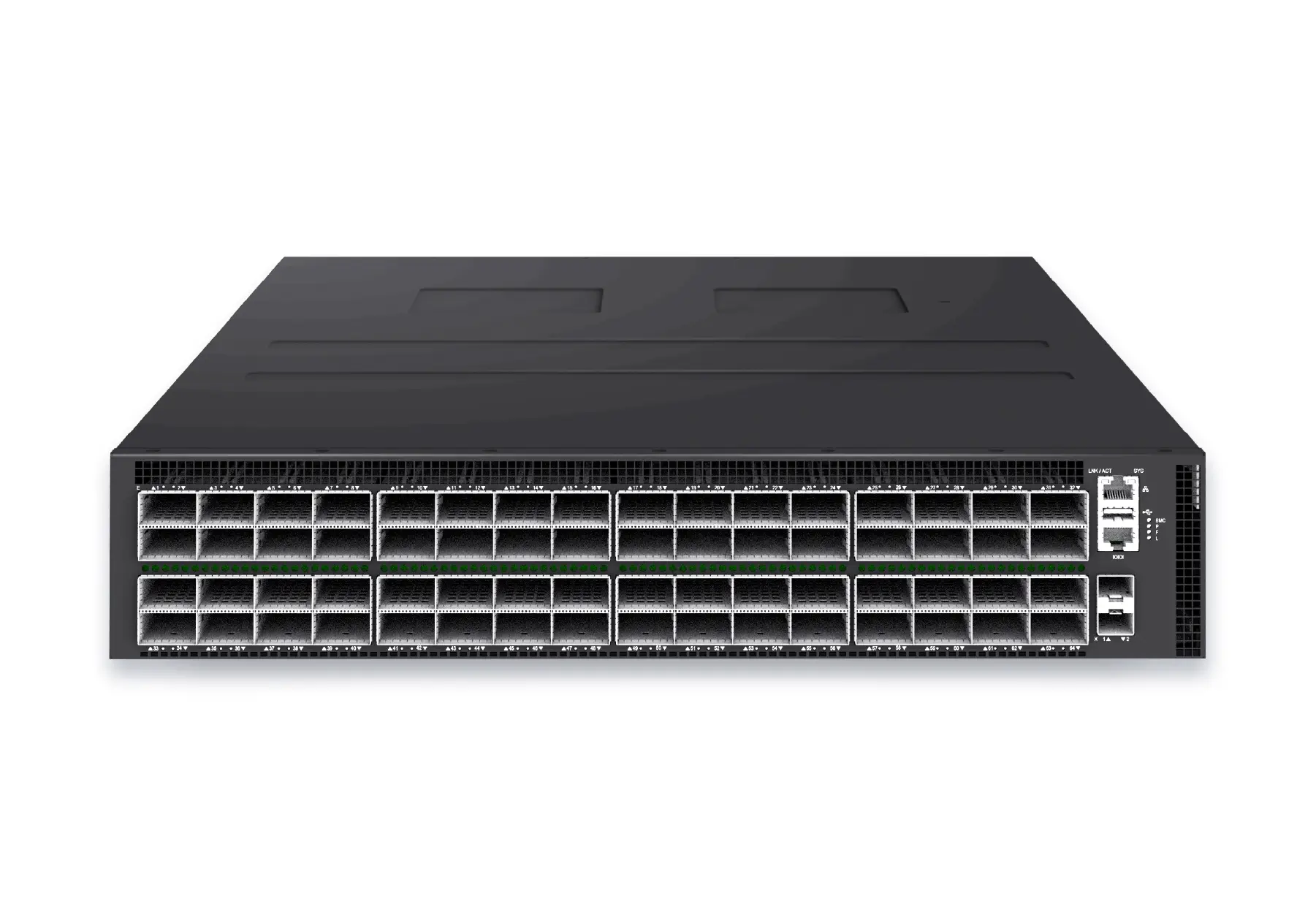 datacenter aiXS-DC-64X800-AI-G164-port 800G AI fabric switch for large-scale GPU clusters, HPC backbones, and ultra-high-throughput data center networks.View product
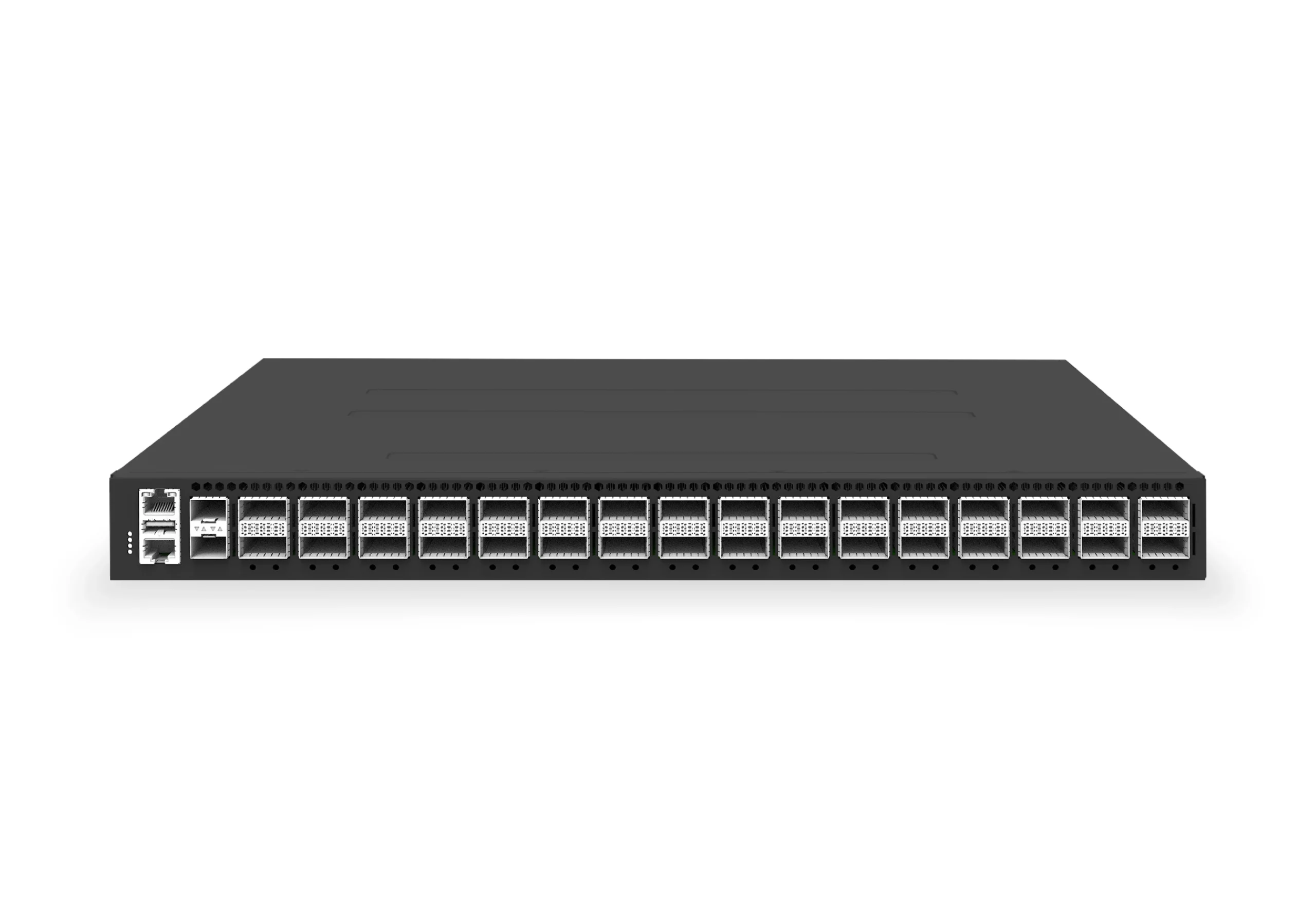 datacenter aiXS-DC-32X400-SP-G232-port 400G spine/core switch for high-capacity data center fabrics and AI-ready backbones.View product
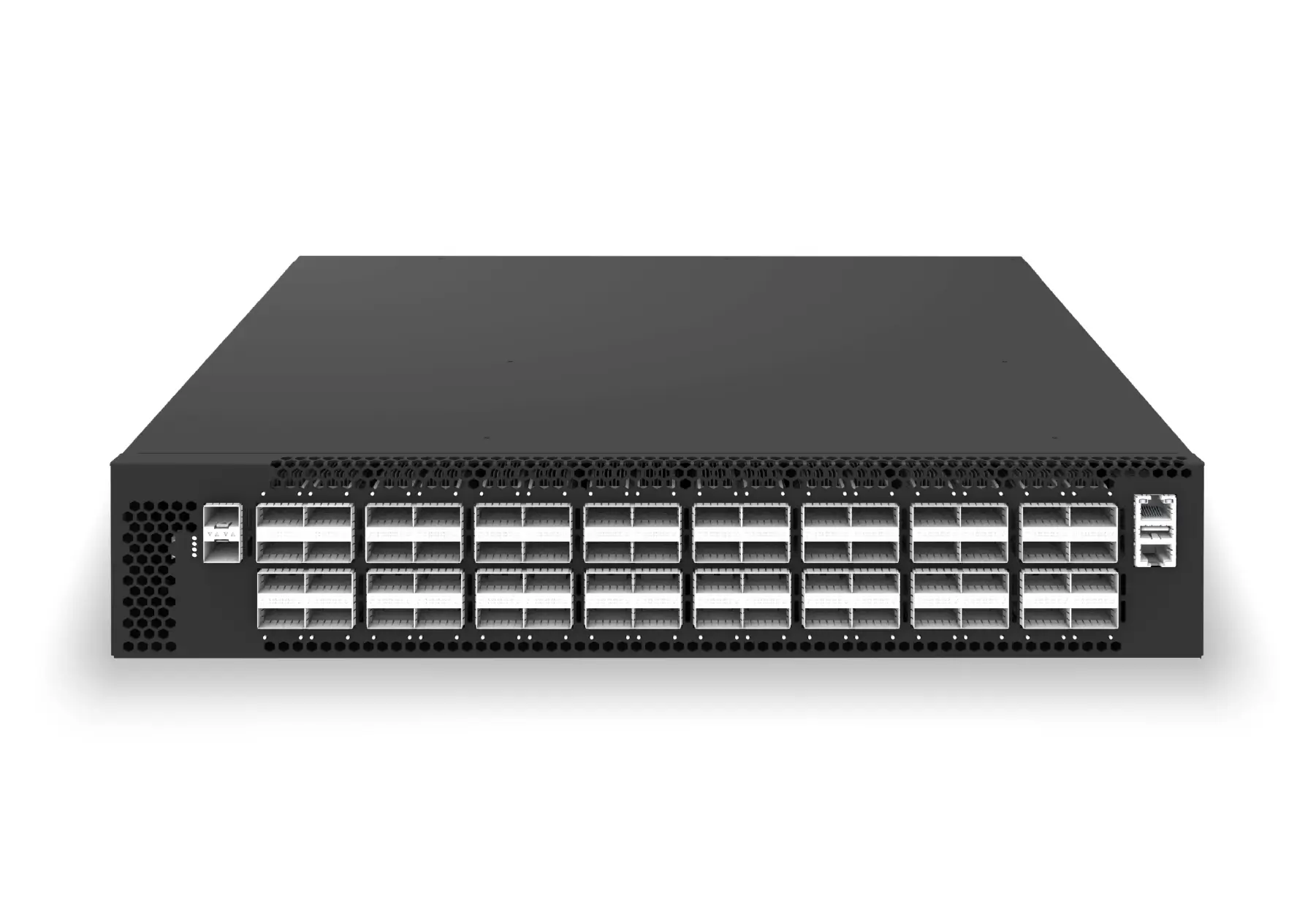 datacenter aiXS-DC-64X200-LS-G164-port 200G leaf/spine switch for high-bandwidth storage, compute, and scale-out data center fabrics.View product
Continue reading
Related articles
 Technical ArticleDesigning GPU Backend Fabrics with RoCE v2: How SONiC 400G/800G Switches Transform AI Data CentersEngineering guide for AI fabric buyers covering RoCE, SONiC, telemetry, optics, support ownership, and deployment validation.Read article
 Technical ArticleWhy Open SONiC Ethernet Is Becoming the Default AI Fabric for GPU Backend ClustersEngineering guidance on Open SONiC Ethernet Is Becoming the Default AI Fabric for GPU Backend Clusters for Australian network teams, covering underlay design.Read article
 Technical ArticleGPU Cluster Fabric Design: Why AI Workloads Need Purpose-Built EthernetArchitecture guide to GPU cluster fabrics covering RoCE v2, PFC, ECN, DCBX, SONiC, 400G/800G, telemetry, InfiniBand trade-offs, and acceptance evidence.Read article