In brief
A practical guide to Ethernet switch speed planning from 1G campus access to 800G AI fabric spine designs for Australian network buyers.
Key takeaways
- Ethernet switching has always been a game of incremental speed bumps: 1G to 10G, 10G to 25G, 25G to 100G, and so on.
- The result is a speed ladder that now stretches from a few gigabits at the campus edge to hundreds of terabits in the AI data center core.
- This is not a single vendor announcement. It is a structural shift in what Ethernet can do at both ends of the market.
The Speed Ladder Just Got Longer
Ethernet switching has always been a game of incremental speed bumps: 1G to 10G, 10G to 25G, 25G to 100G, and so on. But the pace of change has accelerated sharply. In 2024 and 2025, vendor silicon roadmaps pushed Ethernet switching from familiar 100G and 400G tiers well into the 800G and multi-terabit range for data center fabrics. At the same time, campus and branch networks are moving from 1G to 2.5G, 5G, and 10G multi-gigabit access ports to support Wi-Fi 6E and Wi-Fi 7 access points.
The result is a speed ladder that now stretches from a few gigabits at the campus edge to hundreds of terabits in the AI data center core. For Australian network buyers, that range creates both opportunity and complexity.
This is not a single vendor announcement. It is a structural shift in what Ethernet can do at both ends of the market. And it is happening at the same time that open-source network operating systems, particularly SONiC, are maturing enough to span both tiers.
What SONiC Brings to the Speed Spectrum
SONiC, the open-source Network Operating System backed by the SONiC Foundation under the Linux Foundation, is built on a containerized architecture where each network function runs in its own Docker container. That design gives it fault isolation and modular upgrade capability that monolithic switch OS platforms struggle to match.
Originally developed for hyperscale cloud data centers, SONiC now supports a full suite of network functionality including BGP and RDMA. The GitHub repository lists multi-vendor support, standard Linux interfaces, and production readiness as core features. Critically for Australian buyers evaluating total cost of ownership, SONiC decouples hardware from software through the Switch Abstraction Interface (SAI), which means the same NOS can run on switches from multiple hardware vendors and across multiple ASIC families.
This matters at both ends of the speed ladder. At the data center tier, SONiC-powered switches handle 100G, 400G, and now 800G port speeds in spine-leaf fabrics designed for AI and ML workloads. At the campus tier, SONiC-compatible platforms support multi-gigabit access and PoE edge switching. The practical question for Australian network teams is no longer whether SONiC can handle their speed requirements, but whether their preferred hardware and support model align with SONiC’s ecosystem.
How Vendor Silicon Roadmaps Shape the Market
The Ethernet switch silicon market is dominated by a small number of ASIC vendors whose roadmap decisions ripple across the entire industry. NVIDIA’s Spectrum switch portfolio, for example, now spans six generations from the SN2000 series at 100G per port up to the SN6000 series at 800G per port with co-packaged silicon photonics. The SN6800-LD model offers 512 ports of 800G connectivity in a 5U form factor with 409.6 Tb/s aggregate throughput.
Broadcom and Marvell switch silicon continue to shape both white-box and branded Ethernet switching platforms, but buyers should evaluate the exact ASIC generation rather than treating a vendor name as a feature guarantee. The practical procurement questions are SAI maturity, buffer behaviour, telemetry support, RoCE/DCB feature coverage, power draw, optics compatibility, and whether the selected SONiC image has been validated on the specific switch SKU.
The key takeaway for buyers: the silicon is available to build SONiC-compatible switching at every speed tier from 2.5G campus access to 800G data center spine. The constraint is no longer technology. It is ecosystem maturity, support model, and procurement channel availability in the Australian market.
The Australian Data Center Context
Australia’s data center market is growing rapidly, driven by AI workload demand and data sovereignty requirements. In a January 2026 Open Compute Project podcast episode, David Hirst, CEO of Macquarie Data Centres, described how AI workloads are shifting data center design from a real estate model to a chip-out infrastructure model. Liquid cooling, megawatt-per-rack density, and sovereign AI infrastructure are now part of the Australian planning conversation.
This has direct implications for Ethernet switching. AI clusters require low-latency, high-bandwidth spine-leaf fabrics with RoCE v2 support, congestion notification, and telemetry. These are exactly the workloads where SONiC’s BGP and RDMA capabilities, combined with open switching hardware, offer a viable alternative to proprietary NOS platforms.
At the campus tier, Australian enterprise networks face a different but related challenge. The move to Wi-Fi 6E and Wi-Fi 7 requires multi-gigabit uplinks and PoE edge switches that can deliver 30W to 90W per port. Campus refresh cycles in education, healthcare, and government sectors are creating demand for cost-effective switching that does not lock buyers into a single vendor’s management stack.
What This Means for xSONiC Buyers
xSONiC’s product families map directly to both ends of this speed ladder. Data center AI switches cover the 100G to 800G spine-leaf tier with Enterprise SONiC and RoCE v2 support. Access and aggregation switches handle the campus edge with PoE, multi-gigabit ports, and SONiC-based management. Optical transceivers bridge the gap between switch tiers, and bare-metal switches give engineering-led teams the hardware foundation to deploy custom NOS configurations.
For Australian buyers specifically, the value proposition is threefold:
-
Vendor neutrality at the NOS layer. SONiC decouples the switch OS from the hardware vendor, reducing procurement lock-in and enabling multi-vendor sourcing strategies.
-
Cost transparency. Open switching hardware and SONiC licensing (free, Apache 2.0 licensed) eliminate the NOS license fee that proprietary platforms charge per switch.
-
Operational consistency. Running the same NOS across campus and data center tiers simplifies training, automation, and troubleshooting.
None of this means proprietary switching is obsolete. But the expanding speed ladder, combined with SONiC’s maturation and the growth of the Australian data center market, creates a window where open networking deserves serious evaluation at both tiers.
Speed-Tier Acceptance Matrix
The right speed tier is not the fastest number on a datasheet. It is the lowest tier that meets workload growth, cabling, optics, power, support, and rollback requirements without creating a stranded architecture.
| Speed tier | Primary use | Acceptance evidence | Rework trigger |
|---|---|---|---|
| 1G to 2.5G | Standard campus access, phones, cameras, and Wi-Fi 6/6E APs | Endpoint inventory, PoE draw, and copper cabling test for at least 48 representative ports | APs negotiate below target speed or PoE reserve falls below 30% |
| 5G to 10G | Wi-Fi 7 APs, workstations, local edge compute, and high-density floors | Switch supports required PoE class, thermal budget, and uplink headroom for the building | Access layer creates uplink oversubscription that cannot be justified by traffic evidence |
| 25G to 100G | Campus aggregation, storage, packet broker inputs, and data center leaf uplinks | Optics/DAC matrix, FEC status, and 95th-percentile utilisation recorded before purchase | Link budget or FEC mismatch appears only after cabling is installed |
| 400G | AI fabric leaf-spine and high-capacity data center spine | RoCE v2, ECN, PFC, queue telemetry, and optics validated on the selected SONiC image | Congestion or loss cannot be reproduced from telemetry during failure testing |
| 800G | Large GPU pods and scale-out AI spine layers | OSFP or QSFP-DD800 thermals, DOM telemetry, airflow, and spare strategy documented | 800G optics power or cooling breaks the rack design before GPU growth is reached |
Buyer Decision Points
Australian network teams evaluating the current Ethernet switch market should consider the following questions:
- Does your AI or HPC fabric require RoCE v2 and congestion management that SONiC supports?
- Is your campus refresh cycle aligned with multi-gigabit access ports and PoE requirements that open switching hardware can meet?
- Does your organization have the engineering capability or a support partner to operate SONiC-based switching?
- Are your optical transceiver and cabling plans compatible with the port speeds and form factors (SFP28, QSFP28, QSFP-DD, OSFP) available on SONiC-compatible hardware?
- What is your data sovereignty posture, and does running an open-source NOS give you more or less visibility into your network software supply chain?
There are no universal answers. But the range of Ethernet switching options now available in the SONiC ecosystem is wide enough to warrant a structured evaluation for most Australian enterprise and data center refresh projects.
What to Watch Next
Three trends will shape this market over the next 12 to 18 months:
First, 800G Ethernet is moving from early adoption to mainstream data center deployment. SONiC support for 800G port speeds and the corresponding optics (OSFP and QSFP-DD800) will be a key indicator of ecosystem readiness.
Second, campus SONiC adoption is still early. Watch for expanded hardware platform support, PoE controller integration, and management tooling that makes SONiC viable for campus network teams without deep Linux expertise.
Third, the Australian market’s focus on data sovereignty and AI infrastructure will drive demand for locally supported open networking solutions. Partners who can deliver SONiC-compatible hardware with Australian support and logistics will have an advantage.
The Ethernet speed ladder is not just getting longer. It is getting more accessible. For Australian buyers willing to evaluate open networking, the timing has never been better.
Engineering FAQ
Should Australian buyers standardize on the fastest Ethernet speed available? No. Standardize by role: 2.5G/5G/10G for campus access, 25G/100G for aggregation, 400G for new AI/data center fabrics, and 800G where GPU pod scale or spine density justifies the optics and cooling cost.
What makes an Ethernet speed migration fail in practice? Migrations fail when optics, FEC, cabling, airflow, PoE power, telemetry, and support ownership are not validated. The port speed is only one part of the acceptance evidence.
How should 400G and 800G be validated for AI fabrics? Test the selected switch, optics, SONiC image, RoCE v2 profile, PFC/ECN policy, and telemetry stack with realistic GPU traffic and link-failure cases before ordering volume quantities.
Related xSONiC Resources
Sources Reviewed
- Ethernet Network Adapters - ConnectX NICs | NVIDIA
- NVIDIA BlueField Data Processing Unit
- NVIDIA Spectrum-X Ethernet Platform
- ACSC Essential Eight
- OAIC Notifiable Data Breaches
- APRA CPS 234 Information Security
- NETSCOUT Network Packet Definition
- Cloudflare Network Packet Definition
- IEEE 802.11be Wireless LAN Standard
- IEEE 802.3bt Power over Ethernet
- SONiC Project Documentation
- Broadcom Ethernet Switching
- Marvell Switching
- NVIDIA Ethernet Switching
- Open Compute Networking
- SONiC GitHub
- SONiC Foundation
Product fit
Products referenced for evaluation
These products are referenced for evaluation context in the article. Confirm workload, port, optics, software, interoperability, and support requirements against the exact deployment before procurement.
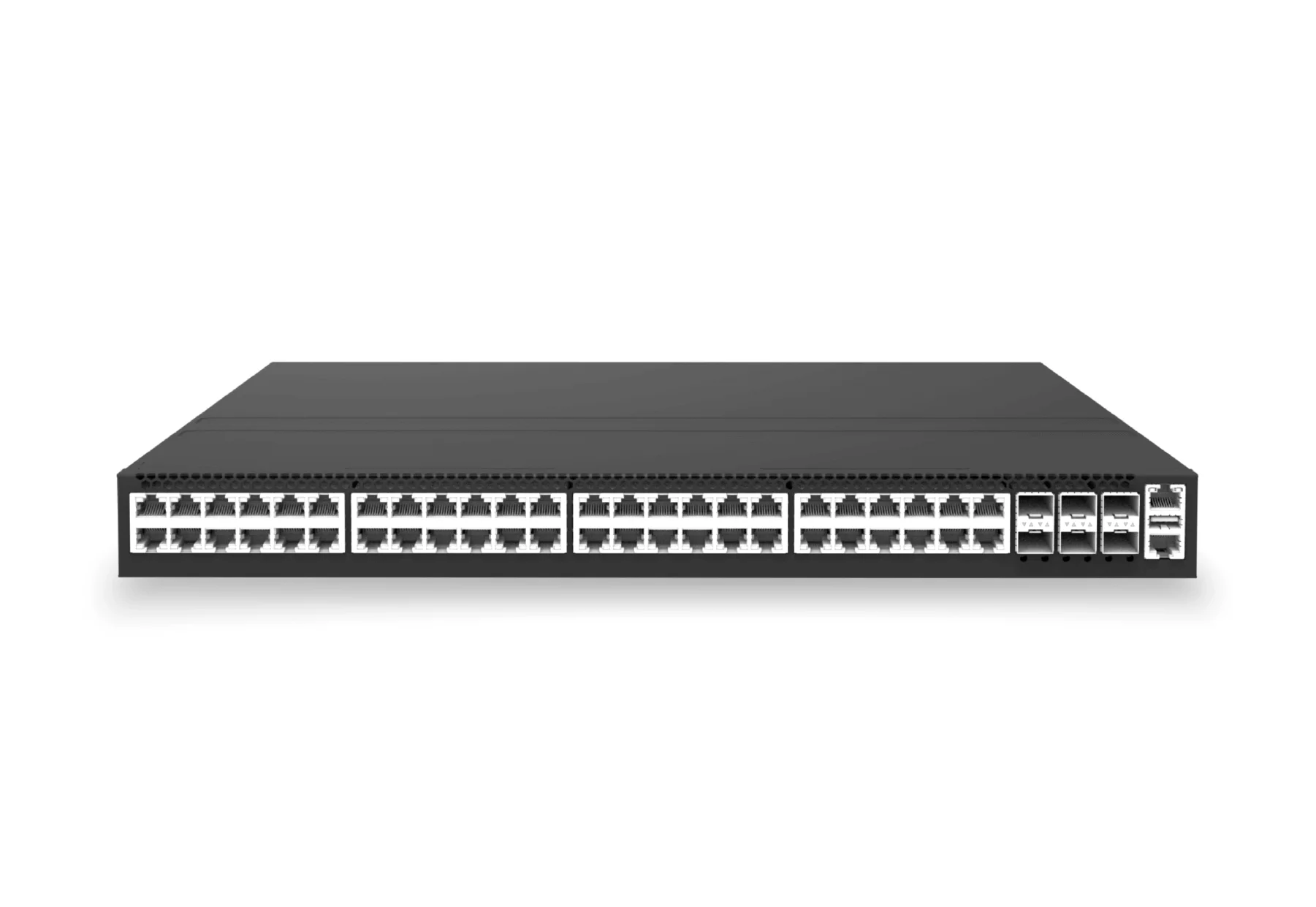 access aggregateXS-AA-48X2P5-6X25-POE144048x 2.5G RJ45 PoE campus access switch with 6x 25G SFP28 for PoE edge, access and aggregation networks.View product
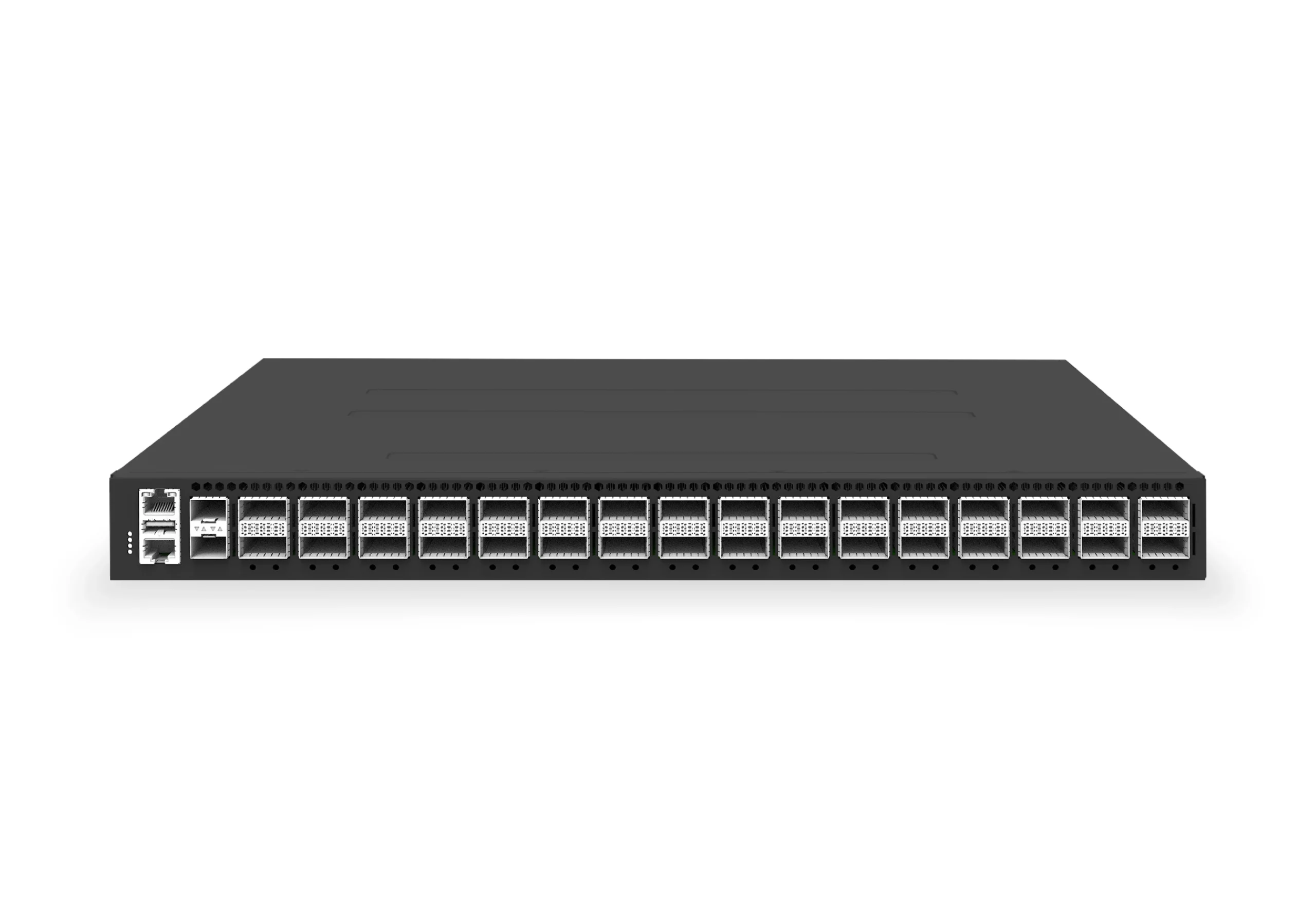 datacenter aiXS-DC-32X400-SP-G232-port 400G spine/core switch for high-capacity data center fabrics and AI-ready backbones.View product
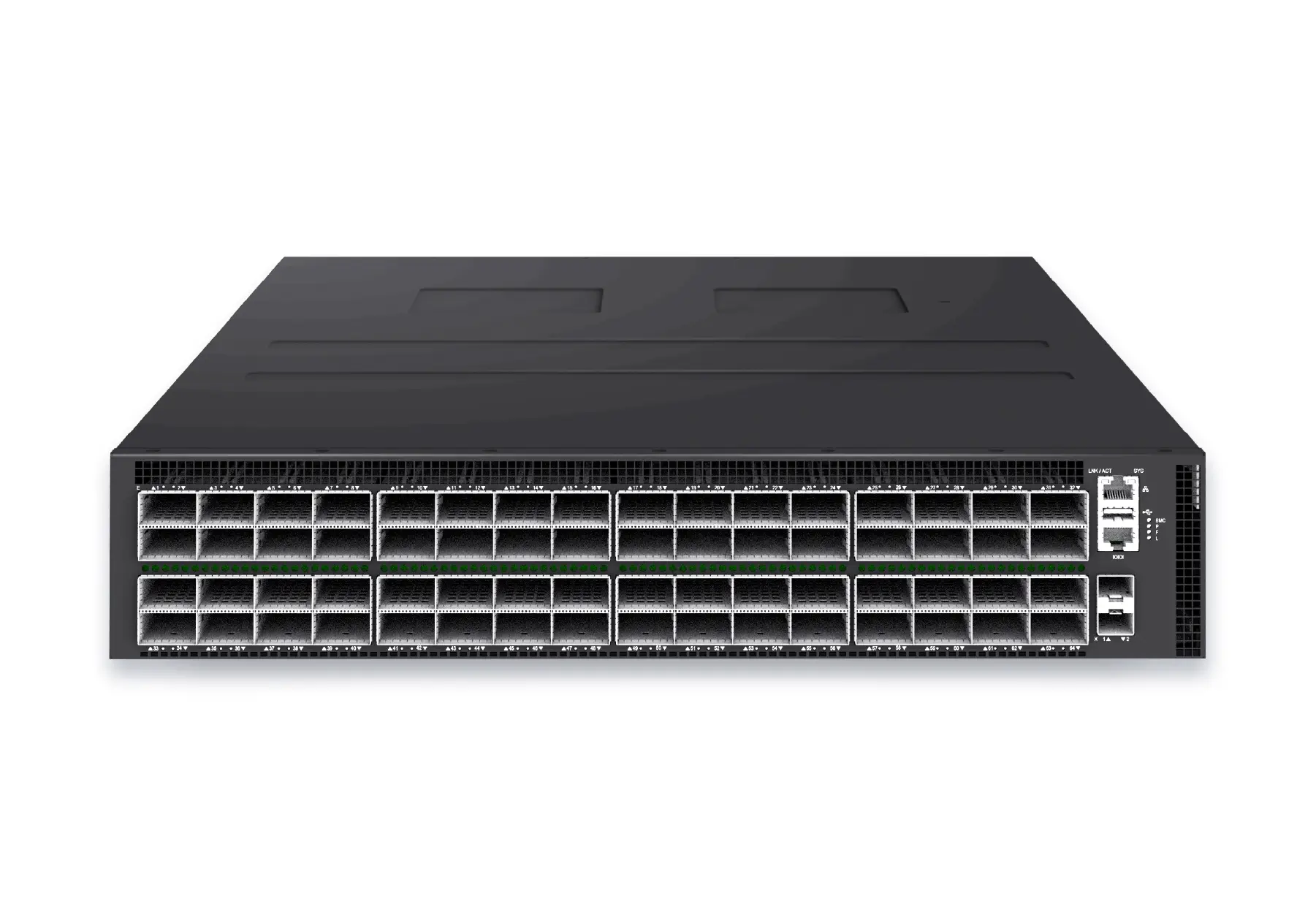 datacenter aiXS-DC-64X800-AI-G164-port 800G AI fabric switch for large-scale GPU clusters, HPC backbones, and ultra-high-throughput data center networks.View product
Continue reading
Related articles
 Technical ArticleNVIDIA Bets Ethernet Can Beat InfiniBand for AI: What Open Networking Buyers in Australia Should KnowWhat NVIDIA Spectrum-X and Spectrum-6 mean for Australian AI fabric buyers comparing Ethernet, InfiniBand, SONiC, 400G, and 800G.Read article
 Technical ArticleWhy Centralized AI Fabric Management Matters: The Case for an AIDC ControllerWhy centralized AI fabric management matters for Australian GPU clusters, with AIDC controller validation, telemetry, drift control, and runbooks.Read article
 Technical ArticleNVIDIA Spectrum Ethernet Switches: A Technical Guide for Australian Data Centres Embracing Open NetworkingTechnical guide to NVIDIA Spectrum Ethernet switches for Australian data centre buyers, covering SONiC, 400G/800G, optics, RoCE, and validation.Read article