In brief
An engineering analysis of how SONiC is moving beyond the data center into campus access, aggregation, PoE, automation, and multi-vendor operations.
Key takeaways
- Enterprise campus networks across Australia and the wider APAC region face a familiar tension.
- SONiC (Software for Open Networking in the Cloud) has already proven that an open-source, Linux-based NOS can operate at massive scale in the data center.
- SONiC is a free and open-source network operating system based on Linux, licensed under Apache 2.0.
Introduction: The Campus Refresh Problem
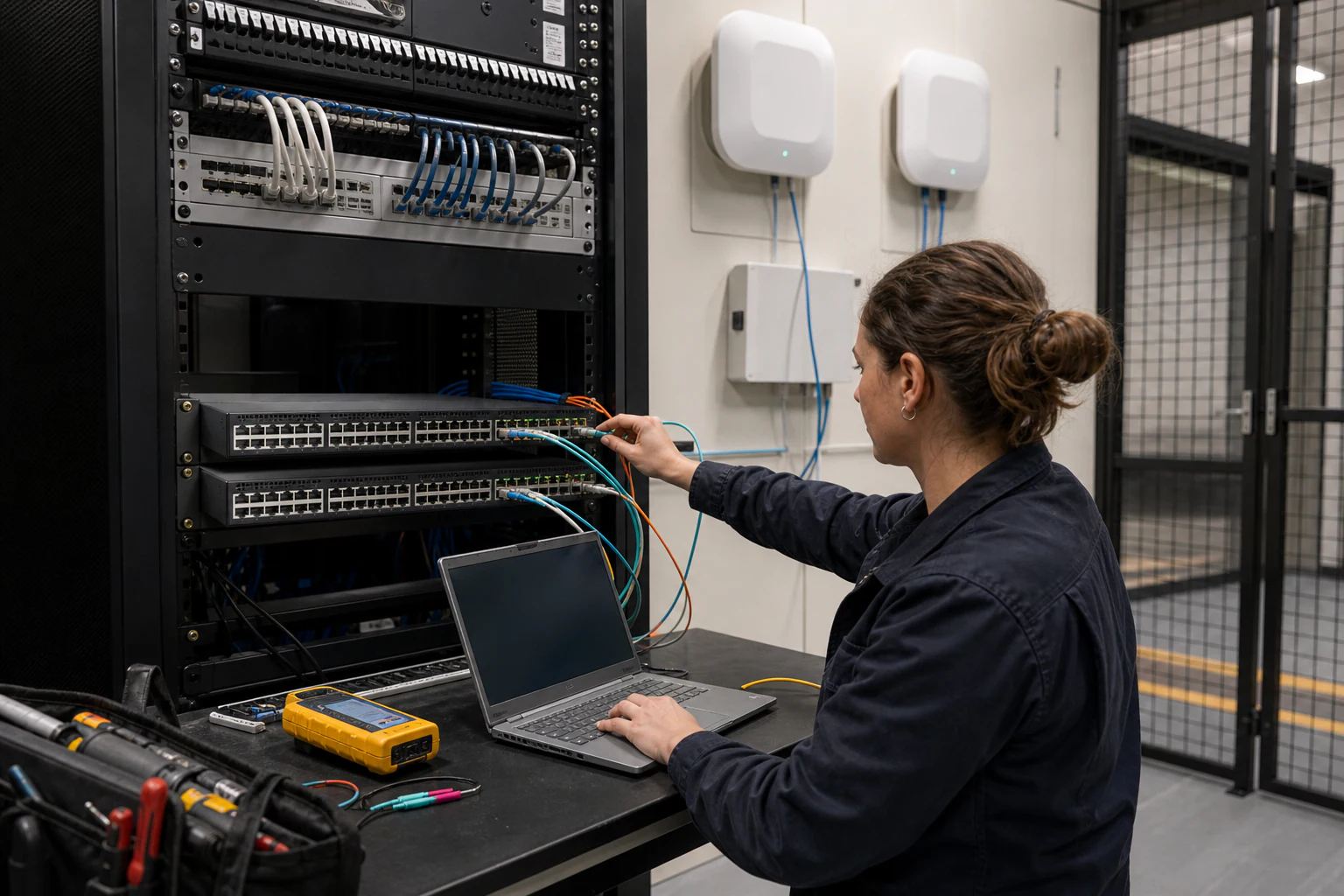
Enterprise campus networks across Australia and the wider APAC region face a familiar tension. The access and aggregation layers carry the bulk of connected endpoints — IP phones, wireless access points, security cameras, IoT sensors, and user workstations — yet they are often the most vendor-locked part of the network. Proprietary NOS licenses, per-port feature tiers, and closed management stacks create long-term cost and flexibility problems that compound every refresh cycle.
SONiC (Software for Open Networking in the Cloud) has already proven that an open-source, Linux-based NOS can operate at massive scale in the data center. The question now gaining traction among enterprise network architects is whether that same platform can extend into the campus access and aggregation layer — the PoE-rich, user-facing edge where reliability, simplicity, and automation matter most.
What SONiC Is (and What It Is Not)
SONiC is a free and open-source network operating system based on Linux, licensed under Apache 2.0. It runs on switches from multiple hardware vendors and supports multiple ASIC families. The SONiC Foundation, a Linux Foundation project, governs the project’s roadmap and community.
Key architectural properties (sourced from sonicfoundation.dev and the SONiC GitHub repository):
-
Multi-vendor, multi-ASIC support. SONiC uses the Switch Abstraction Interface (SAI) to decouple the NOS from the underlying switching silicon. This means the same SONiC image can run on hardware built with different ASICs, provided the vendor supplies an SAI implementation.
-
Containerized architecture. Each network function (BGP, LLDP, DHCP relay, SNMP, and so on) runs in its own Docker container. This provides fault isolation, independent upgrade paths, and simplified troubleshooting — a significant departure from monolithic switch firmware.
-
Production-hardened at scale. SONiC originated from the data center operations of some of the largest cloud service providers. BGP, RDMA, and telemetry features have been battle-tested in environments with thousands of switches.
-
Standard Linux interfaces. SONiC uses standard Linux tooling, JSON-based configuration files, and supports both CLI and programmatic management methods. This lowers the learning curve for teams already comfortable with Linux operations.
-
Open and programmable. The project has a large and growing ecosystem with contributions from chip vendors, hardware OEMs, and network operators.
What SONiC is not: It is not a turnkey campus NOS with built-in wireless controllers, NAC, or unified communications integration. Those capabilities must be addressed through companion platforms, overlays, or community extensions. This is an important distinction when evaluating SONiC for campus use.
Why SONiC Matters for Campus Access and Aggregation
The campus access layer has historically been dominated by a small number of proprietary NOS platforms. SONiC’s value proposition for campus boils down to three arguments:
-
Hardware decoupling. Because SONiC separates the NOS from the ASIC via SAI, network teams can evaluate and procure switching hardware on price, port density, PoE budget, and form factor — without being forced into a single vendor’s software ecosystem. This is particularly relevant during a campus refresh cycle where hundreds or thousands of access ports need to be replaced.
-
Operational consistency. If an organization already runs SONiC in its data center spine-leaf fabric, extending SONiC to campus aggregation and access switches creates a unified operational model: the same configuration language, the same telemetry pipeline, the same automation tooling. This reduces tooling sprawl and training overhead.
-
Automation-ready architecture. SONiC’s JSON-based configuration and Linux-native management interfaces integrate naturally with Ansible, Terraform, NETCONF/YANG, and other infrastructure-as-code workflows. For enterprise campuses pursuing network automation, this is a meaningful advantage over legacy CLI-only switch firmware.
Hardware Availability: Campus-Suitable Form Factors
One practical concern is whether SONiC-capable hardware exists in campus-appropriate form factors. The evidence suggests yes, though the range is still narrower than the established campus OEM ecosystem.
NVIDIA’s Ethernet switching portfolio, which supports both Cumulus Linux and Pure SONiC as NOS options, includes the SN2201 series. The SN2201 features 48x RJ45 ports plus 4x QSFP28 100GbE uplinks in a 1U form factor, delivering up to 448 Gb/s throughput. This is a classic access or leaf switch configuration — 48 copper downlinks for endpoint connectivity and high-speed fiber uplinks for aggregation.
For the aggregation layer, higher-density models in the SN3000 and SN4000 series provide port speeds up to 200 Gb/s and 400 Gb/s respectively, suitable for distribution and spine roles in a campus backbone.
Important caveat: While the SONiC Foundation’s supported devices list covers a wide range of switches, not all SONiC-capable hardware includes PoE support. PoE capability depends on the switch hardware platform and its SAI implementation. Whether a specific xSONiC access-aggregate switch supports PoE, and at what budget (PoE, PoE+, PoE++), must be confirmed against the specific product datasheet.
Key SONiC Features Relevant to Campus Networking
Not every SONiC feature is equally relevant to campus. Here is a mapping of SONiC capabilities to campus use cases:
| SONiC Feature | Campus Relevance | Notes |
|---|---|---|
| BGP | High | Useful for campus leaf-spine underlay and overlay routing; replaces legacy OSPF/EIGRP in greenfield designs |
| LLDP | High | Essential for neighbor discovery and topology mapping in campus environments |
| VLAN / VXLAN | High | VLANs for traditional campus segmentation; VXLAN for campus fabric overlays |
| DHCP Relay | High | Required at aggregation layer for client IP assignment |
| SNMP | Medium | Legacy monitoring integration, though streaming telemetry is preferred going forward |
| JSON Configuration | High | Enables infrastructure-as-code and version-controlled network changes |
| Containerized Services | Medium | Simplifies selective feature upgrades without full firmware replacement |
| RDMA / RoCE | Low | Primarily a data center feature; not typically needed at campus access layer |
| EVPN-VXLAN | High | Emerging campus fabric architecture for scalable Layer 2/3 segmentation |
| PoE Management | Hardware-dependent | PoE control depends on switch platform and SAI driver support; verify per product |
This table is a general guide. Actual feature availability depends on the SONiC release version, the hardware platform, and the SAI implementation provided by the switch vendor.
Campus Refresh: The SONiC Value Calculation
A campus refresh is a major capital and operational event. For an Australian enterprise replacing several hundred to several thousand access ports, the decision factors include:
-
OpEx on software licensing. SONiC itself carries no NOS license fee. However, organizations may need to budget for support contracts, integration services, and training if their team is new to SONiC operations.
-
Automation ROI. The time savings from infrastructure-as-code provisioning and declarative configuration management compound over the multi-year lifecycle of a campus deployment. SONiC’s Linux-native approach integrates well with existing DevOps toolchains.
-
Ecosystem maturity. The SONiC ecosystem is large and growing for data center use cases. For campus-specific features — wireless controller integration, NAC, unified communications QoS profiles — the ecosystem is still developing. Organizations should evaluate whether companion platforms or overlay solutions fill these gaps.
-
Support and operations. Unlike a single-vendor campus stack where one OEM provides hardware, software, and support under one contract, a SONiC-based campus requires a multi-party support model: hardware from one vendor, NOS from the open-source community or a distribution partner, and integration support from a systems integrator or the xSONiC team.
Where xSONiC Fits
xSONiC’s access-aggregate product family is designed for exactly this campus access and aggregation use case. The positioning spans campus access switching, PoE edge deployment, branch connectivity, distribution and core aggregation — all running Enterprise SONiC.
The xSONiC campus refresh solution pillar (/solutions/enterprise-campus/campus-refresh/) provides the architectural framework for planning and executing a SONiC-based campus network modernization. Supporting solution pillars include:
- PoE Campus Guide (/solutions/enterprise-campus/poe-campus-guide/): Planning PoE power budgets, endpoint classification, and port allocation for IP phones, cameras, and access points.
- MC-LAG and STP (/solutions/enterprise-campus/mclag-stp-guide/): High-availability aggregation designs using multi-chassis LAG and spanning tree protocols.
- Policy-Based Routing (/solutions/enterprise-campus/pbr-guide/): Traffic steering for security, compliance, and application performance at the campus edge.
- Virtual Chassis (/solutions/enterprise-campus/virtual-chassis-guide/): Simplifying multi-switch campus aggregation into a single logical management domain.
For organizations already running SONiC in their data center, the campus refresh pathway with xSONiC offers the operational consistency argument described above. For organizations evaluating SONiC for the first time, the campus use case can serve as a lower-risk entry point before committing to data center fabric migration.
Practical Considerations for Australian Enterprises
Australian enterprise campus networks face some specific considerations:
-
Wi-Fi convergence. Many Australian campuses are simultaneously refreshing wired access and wireless infrastructure. SONiC does not include a wireless controller, so a campus SONiC deployment will typically pair with a separate wireless management platform. xSONiC’s access point product line (/products/access-point/) addresses the wireless side of this convergence.
-
Existing installed base. The Australian enterprise market has a significant installed base of Cisco, Aruba, and Juniper campus switching. Migration planning from these platforms to SONiC-based campus networks requires careful evaluation of feature parity, automation workflow changes, and staff retraining.
Engineering FAQ
What should be validated before a Wi-Fi 6E or Wi-Fi 7 rollout? Validate channel plan, 6 GHz client readiness, PoE budget, uplink capacity, roaming, authentication, RF density, interference, and management tooling. The AP standard alone does not prove campus performance.
Why does backhaul planning matter for modern access points? Wi-Fi 6E and Wi-Fi 7 can expose bottlenecks in access switching, PoE, cabling, and uplink design. Buyers should confirm whether 2.5G, 5G, 10G, and PoE budgets match the real AP deployment plan.
What evidence should vendors provide for enterprise WLAN projects? Ask for supported security modes, firmware lifecycle, controller or cloud management model, RF planning assumptions, client compatibility notes, and a pilot report from a representative building or floor.
Related xSONiC Resources
Sources Reviewed
- IEEE 802.1Q Bridges and Bridged Networks
- IEEE 802.1AX Link Aggregation
- Ethernet Network Adapters - ConnectX NICs | NVIDIA
- NVIDIA BlueField Data Processing Unit
- NVIDIA Spectrum-X Ethernet Platform
- OpenConfig gNMI Specification
- OpenConfig
- RFC 7950 - The YANG 1.1 Data Modeling Language
- RFC 6241 - Network Configuration Protocol (NETCONF)
- ACSC Essential Eight
- OAIC Notifiable Data Breaches
- APRA CPS 234 Information Security
- NETSCOUT Network Packet Definition
- Cloudflare Network Packet Definition
- IEEE 802.11be Wireless LAN Standard
- IEEE 802.3bt Power over Ethernet
- SONiC Project Documentation
- Broadcom Ethernet Switching
- Marvell Switching
- NVIDIA Ethernet Switching
- Open Compute Networking
- SONiC GitHub
- SONiC Foundation
Product fit
Products referenced for evaluation
These products are referenced for evaluation context in the article. Confirm workload, port, optics, software, interoperability, and support requirements against the exact deployment before procurement.
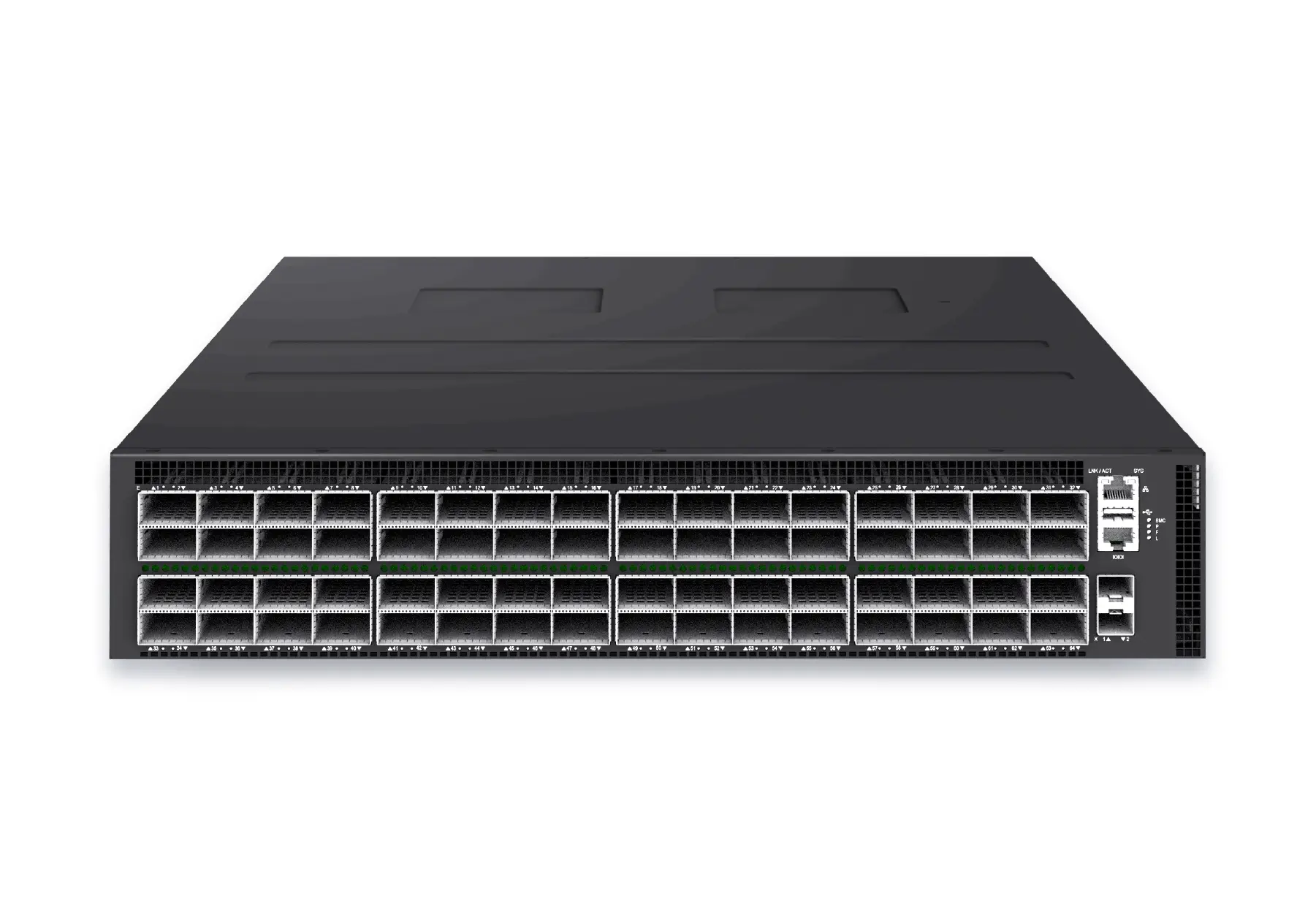 datacenter aiXS-DC-64X800-AI-G164-port 800G AI fabric switch for large-scale GPU clusters, HPC backbones, and ultra-high-throughput data center networks.View product
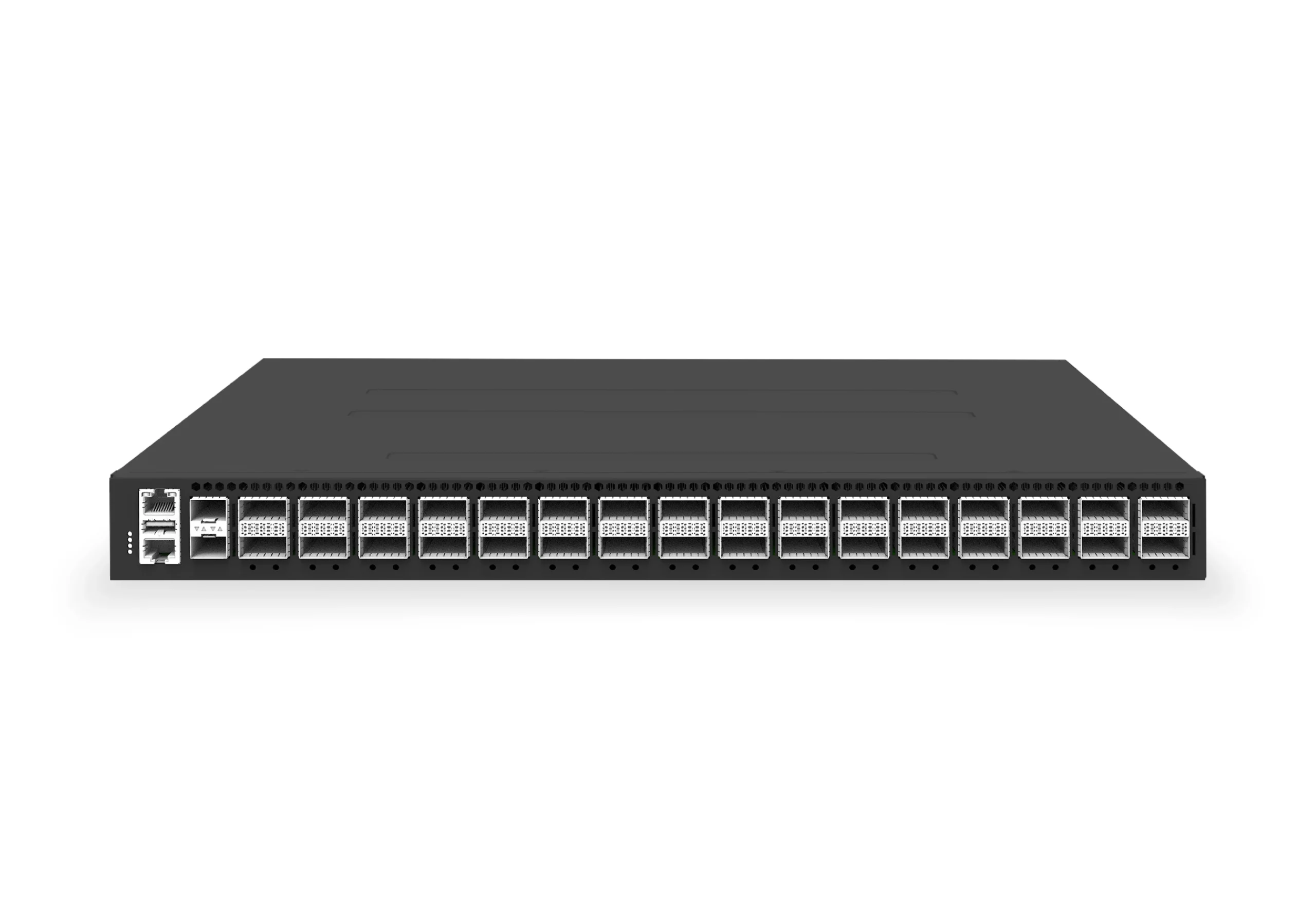 datacenter aiXS-DC-32X400-SP-G232-port 400G spine/core switch for high-capacity data center fabrics and AI-ready backbones.View product
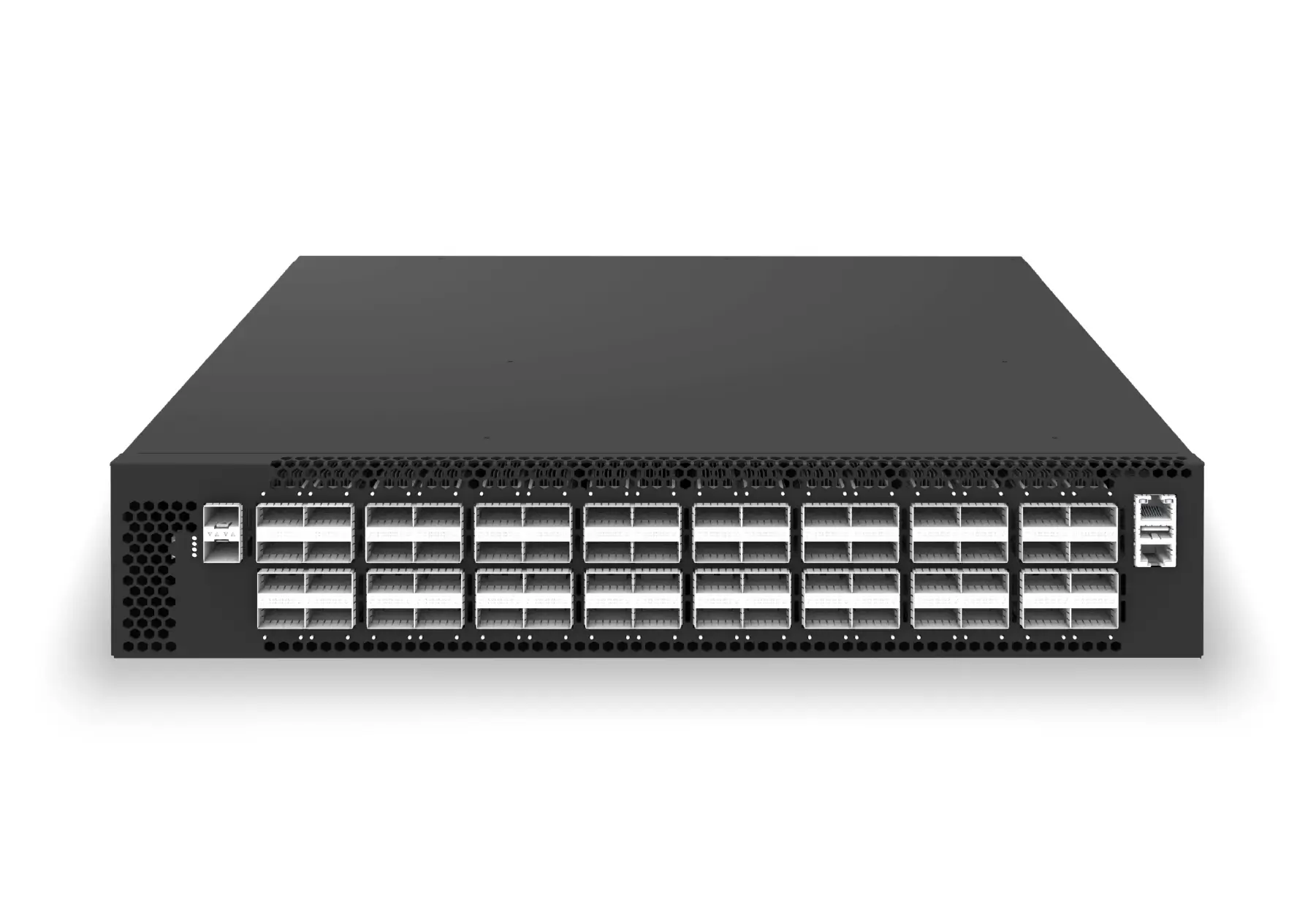 datacenter aiXS-DC-64X200-LS-G164-port 200G leaf/spine switch for high-bandwidth storage, compute, and scale-out data center fabrics.View product
Continue reading
Related articles
 Technical ArticleUniversity Campus Access and Aggregation with Enterprise SONiC: An Australian Evaluation GuideA practical Australian university campus guide to evaluating Enterprise SONiC for PoE access, resilient aggregation, migration, and operations.Read article
 Technical ArticleSONiC Telemetry Automation Matures: What Australian Data Center and Campus Operators Should WatchAn engineering analysis of SONiC telemetry automation, covering gNMI, INT, streaming telemetry, observability operations, and Australian data center and campus requirements.Read article
 Technical ArticleNETCONF and YANG Automation for SONiC Switches: A Practical Guide for Data Center and Campus NetworksLearn how NETCONF and YANG data models enable structured, vendor-neutral network automation on SONiC switches for data center and enterprise campus deployments in Australia.Read article