In brief
Engineering guidance on Deploying an xSONiC SONiC RoCE 400G/800G AI Fabric for Australian data centre buyers, covering form factor choice, link budgets, cabling.
Key takeaways
- Modern AI training clusters demand predictable, ultra-low-latency east-west traffic flows between GPUs and storage nodes.
- According to the SONiC Foundation, SONiC is 'an open source network operating system (NOS) based on Linux that runs on switches from multiple vendors and ASICs' and 'offers a full suite of network functionality, like BGP and RDMA, that has been production-hardened in the data centers of some of the largest cloud service providers.' This architecture decouples hardware from software and uses containerized components that accelerate software evolution.
- For Australian data center operators, this matters in three ways:
Why SONiC RoCE Fabrics Are Reshaping AI Infrastructure
Modern AI training clusters demand predictable, ultra-low-latency east-west traffic flows between GPUs and storage nodes. Traditional proprietary switch operating systems lock operators into a single vendor’s roadmap, pricing model, and support structure. SONiC (Software for Open Networking in the Cloud) offers a production-hardened, container-based open-source NOS that supports full BGP and RDMA functionality on switches from multiple vendors and ASICs.
According to the SONiC Foundation, SONiC is ‘an open source network operating system (NOS) based on Linux that runs on switches from multiple vendors and ASICs’ and ‘offers a full suite of network functionality, like BGP and RDMA, that has been production-hardened in the data centers of some of the largest cloud service providers.’ This architecture decouples hardware from software and uses containerized components that accelerate software evolution.
For Australian data center operators, this matters in three ways:
- Supply chain resilience. Multi-vendor hardware support means you are not dependent on a single switch OEM’s lead times or pricing, which is particularly relevant when import logistics to Australia can add weeks to delivery.
- Operational sovereignty. An open NOS gives your engineering team full visibility into the control plane, enabling custom automation rather than waiting for vendor-specific feature releases.
- Cost transparency. Separating hardware procurement from software licensing lets you compare switch platforms on a like-for-like basis.
This playbook walks through the end-to-end planning, deployment, and operational checklist for building a 400G/800G RoCE v2 AI fabric on xSONiC data center AI switches running Enterprise SONiC.
Architecture Decision: Spine-Leaf Topology for AI Training and Inference
AI/ML training workloads generate massive bursty east-west traffic patterns. The GPU backend fabric connecting NVIDIA, AMD, or custom accelerator nodes must deliver non-blocking bandwidth with deterministic latency. A clos-style spine-leaf topology is the standard approach.
Spine-Leaf Design Principles for 400G/800G
| Decision Point | 400G Fabric | 800G Fabric |
|---|---|---|
| Leaf-to-Spine uplinks | 8x 400G QSFP-DD per leaf switch | 8x 800G OSFP per leaf switch |
| Spine switch capacity | 25.6Tbps (based on 51.2Tbps ASICs with 64x 400G ports) | 51.2Tbps (based on next-gen ASICs with 64x 800G ports) |
| Server-to-leaf connectivity | 2x 100G or 2x 200G per GPU node | 2x 400G per GPU node |
| Oversubscription ratio | 3:1 to 4:1 typical | 2:1 to 3:1 for large training clusters |
| Maximum pod size (leaf switches) | 32 to 64 leaf switches per pod | 32 to 64 leaf switches per pod |
Key Architecture Decisions
Flat L3 or L2 overlay? For RoCE v2 GPU backend traffic, most production AI fabrics use a Layer 3 underlay with BGP as the routing protocol and either VXLAN-based EVPN or pure L3 for the data plane. SONiC supports both approaches. The GitHub SONiC repository notes that SONiC uses ‘standard Linux interfaces and tools’ and has a ‘modular architecture where each network function runs in its own Docker container,’ which simplifies integration with existing automation stacks.
Rack-level or rail-optimized? For clusters with dense GPU servers (8 or more GPUs per node), a rail-optimized topology places each GPU’s NIC on a dedicated leaf switch, reducing hop count. For mixed AI training and inference workloads, a traditional rack-level leaf may be simpler to manage.
The EVPN-VXLAN fabric approach is recommended as the primary overlay architecture. See the xSONiC EVPN-VXLAN guide for detailed configuration templates.
RoCE v2 Configuration Checklist for Lossless Ethernet
RoCE v2 (RDMA over Converged Ethernet version 2) enables GPU-to-GPU memory transfers across the IP fabric. Unlike TCP, RDMA is extremely sensitive to packet loss. A single dropped packet can stall an entire training job or trigger timeout-based retransmissions that destroy throughput. The fabric must deliver lossless or near-lossless behavior.
Pre-Deployment Checklist
- PFC (Priority Flow Control) enabled on all switch ports. PFC (IEEE 802.1Qbb) allows the switch to send PAUSE frames per traffic class, preventing buffer overruns for RoCE traffic. Configure at least one dedicated priority for RoCE RDMA traffic.
- ECN (Explicit Congestion Notification) configured end-to-end. ECN (RFC 3168) marks packets at switch egress when queue depth exceeds a threshold, signaling senders to reduce rate before packet loss occurs.
- DCBX (Data Center Bridging Capability Exchange Protocol) enabled. DCBX automates the negotiation of PFC and ETS settings between switches and connected NICs, reducing manual configuration errors. See the xSONiC DCBX technology solution for configuration guidance.
- ETS (Enhanced Transmission Selection) traffic classes defined. Allocate minimum guaranteed bandwidth to the RoCE traffic class. Typical allocation: 50-70% for RoCE, 20-30% for storage, 10-20% for management/best-effort.
- Buffer tuning per port and per queue. Set headroom buffer and shared buffer thresholds to absorb microbursts without tail-drop. Buffer sizing depends on port speed, cable length, and number of PFC-enabled hops.
- Fast CNP (Congestion Notification Packet) processing enabled. Fast CNP reduces the feedback loop between congestion detection and sender rate adjustment. See the xSONiC Fast CNP solution for implementation details.
- Jumbo frames (9000 MTU) end-to-end. RoCE traffic typically uses 9000-byte MTU. Verify that every hop (NIC, leaf, spine, and any intermediate device) supports and is configured for jumbo frames.
- Consistent QoS policy across all switches. Use NETCONF/YANG or SONiC config push to ensure uniform DSCP-to-queue mapping, PFC priority assignments, and ECN thresholds across the entire fabric.
Decision Criteria: PFC vs PFC-less RoCE
| Criterion | PFC-based RoCE | PFC-less (DCTCP/HPCC) |
|---|---|---|
| Maturity | Production-proven at hyperscaler scale | Emerging, requires NIC firmware support |
| Configuration complexity | Higher (DCBX, buffer tuning) | Lower (ECN-only) |
| Risk of PFC storms | Yes, requires careful buffer planning | No PFC storm risk |
| NIC driver requirements | Standard RoCE v2 drivers | Requires specific congestion control algorithm support |
| Recommended for | Multi-vendor GPU clusters with standard NICs | Homogeneous environments with advanced NIC firmware |
Recommendation for Australian deployments: Start with PFC-based RoCE v2 for the initial fabric. PFC is the most widely validated approach and offers the broadest NIC compatibility. Monitor for PFC storm indicators using INT telemetry and refine buffer thresholds over time.
Engineering Evidence Floor
For this topic, treat the article as buyer-ready only when the fabric claim is tied to measurable acceptance data. The baseline evidence package should include the selected switch SKU, SONiC image, ASIC/SAI version, NIC firmware, optics list, RoCE policy, telemetry counters, support owner, and rollback method. In a small pilot, capture at least 30 minutes of traffic at the intended 100G/400G/800G speed, one link failure, one switch reboot, one optics fault, and one support handoff. That evidence separates a credible AI fabric plan from a bandwidth brochure.
| Evidence area | What to validate | Acceptance gate | Rework trigger |
|---|---|---|---|
| Transport | PFC, ECN, DCBX, MTU, queue mapping, and CNP counters | 30 minutes load test at 100G/400G/800G | RoCE is asserted but not measured |
| Platform | Switch SKU, ASIC, SAI, SONiC image, and optics list | 2 switch roles pass upgrade and rollback | Generic compatibility is used as proof |
| Failure | Link loss, switch reboot, route convergence, and workload impact | 3 failure cases captured with timestamps | Steady-state throughput is the only evidence |
| Telemetry | Queue depth, drops, optics DOM, gNMI, and packet visibility | Operators explain a slowdown within 15 minutes | GPU and network teams use different data |
| Support | APAC escalation, RMA, spares, and patch lifecycle | 12 months operating plan approved | Ownership splits across vendors |
This section deliberately avoids treating the topic as a feature checklist. The buyer should be able to hand the evidence to engineering, security, finance, and support teams and have each group understand what was tested, what failed, what was accepted, and what still needs rework. That is also the content pattern most useful for generative search: the page states a clear conclusion, names measurable parameters, identifies risk, and cites the operational proof required before deployment.
Engineering FAQ
What should be checked before ordering 400G or 800G optics? Check port form factor, lane speed, reach, fibre type, breakout plan, DOM telemetry, firmware compatibility, thermal budget, and the switch vendor optics support matrix. The same speed can behave differently across QSFP-DD, OSFP, DAC, AOC, and fibre modules.
Why is optics validation part of a SONiC deployment? SONiC exposes the NOS layer, but optics behaviour still depends on the switch platform, transceiver EEPROM data, firmware, thermal design, and operational tooling. Buyers should test the exact module and cable combination before volume rollout.
What should be included in an optics procurement record? Record SKU, reach, connector, fibre type, temperature class, supported breakout modes, switch platform, SONiC image, DOM fields, link test result, and spare strategy. That record becomes the reference for future replacements.
Related xSONiC Resources
Sources Reviewed
- Ethernet Network Adapters - ConnectX NICs | NVIDIA
- NVIDIA BlueField Data Processing Unit
- NVIDIA Spectrum-X Ethernet Platform
- OpenConfig gNMI Specification
- OpenConfig
- RFC 7950 - The YANG 1.1 Data Modeling Language
- RFC 6241 - Network Configuration Protocol (NETCONF)
- SONiC Project Documentation
- Broadcom Ethernet Switching
- Marvell Switching
- NVIDIA Ethernet Switching
- Open Compute Networking
- SONiC GitHub
- SONiC Foundation
Product fit
Products referenced for evaluation
These products are referenced for evaluation context in the article. Confirm workload, port, optics, software, interoperability, and support requirements against the exact deployment before procurement.
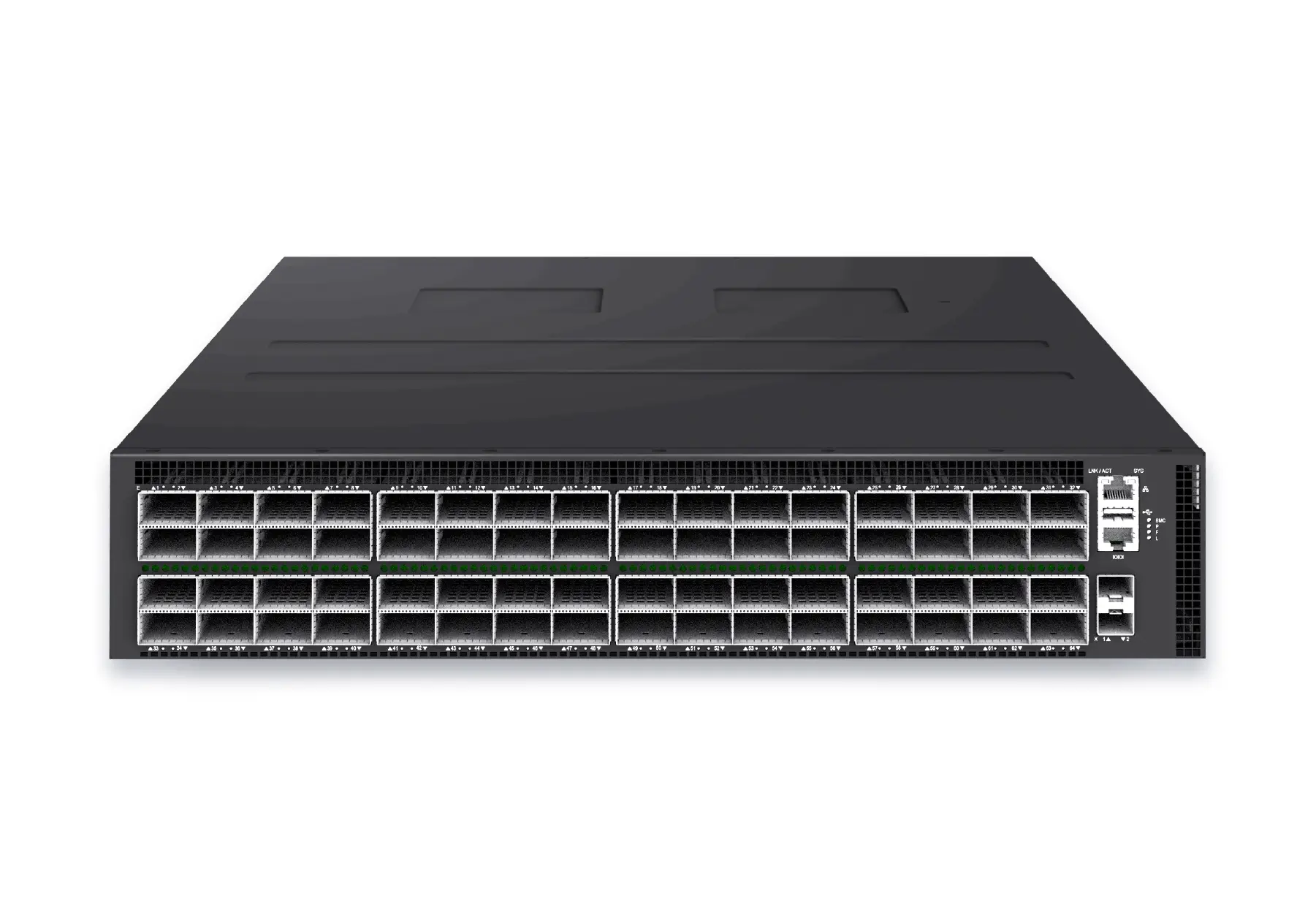 datacenter aiXS-DC-64X800-AI-G164-port 800G AI fabric switch for large-scale GPU clusters, HPC backbones, and ultra-high-throughput data center networks.View product
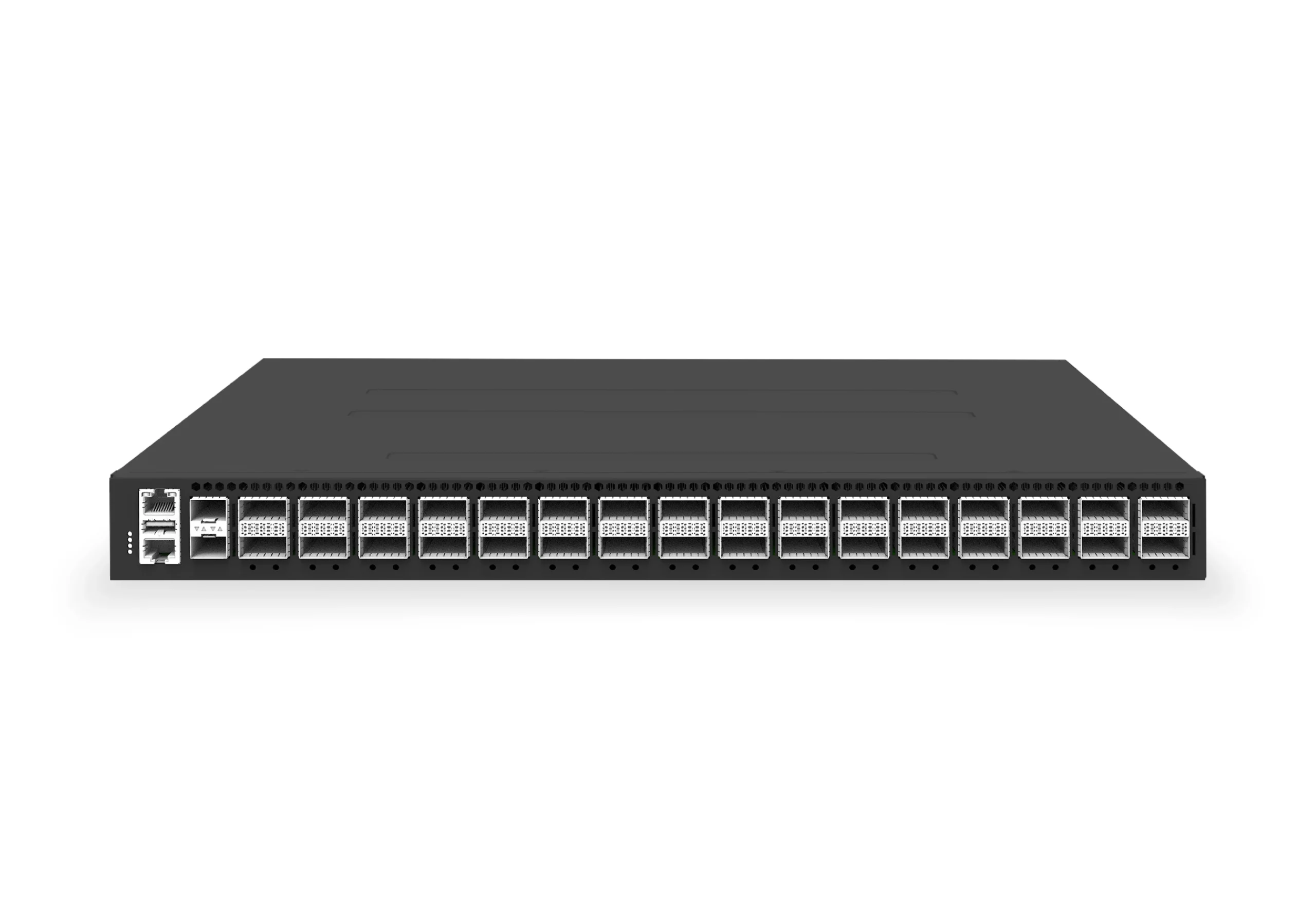 datacenter aiXS-DC-32X400-SP-G232-port 400G spine/core switch for high-capacity data center fabrics and AI-ready backbones.View product
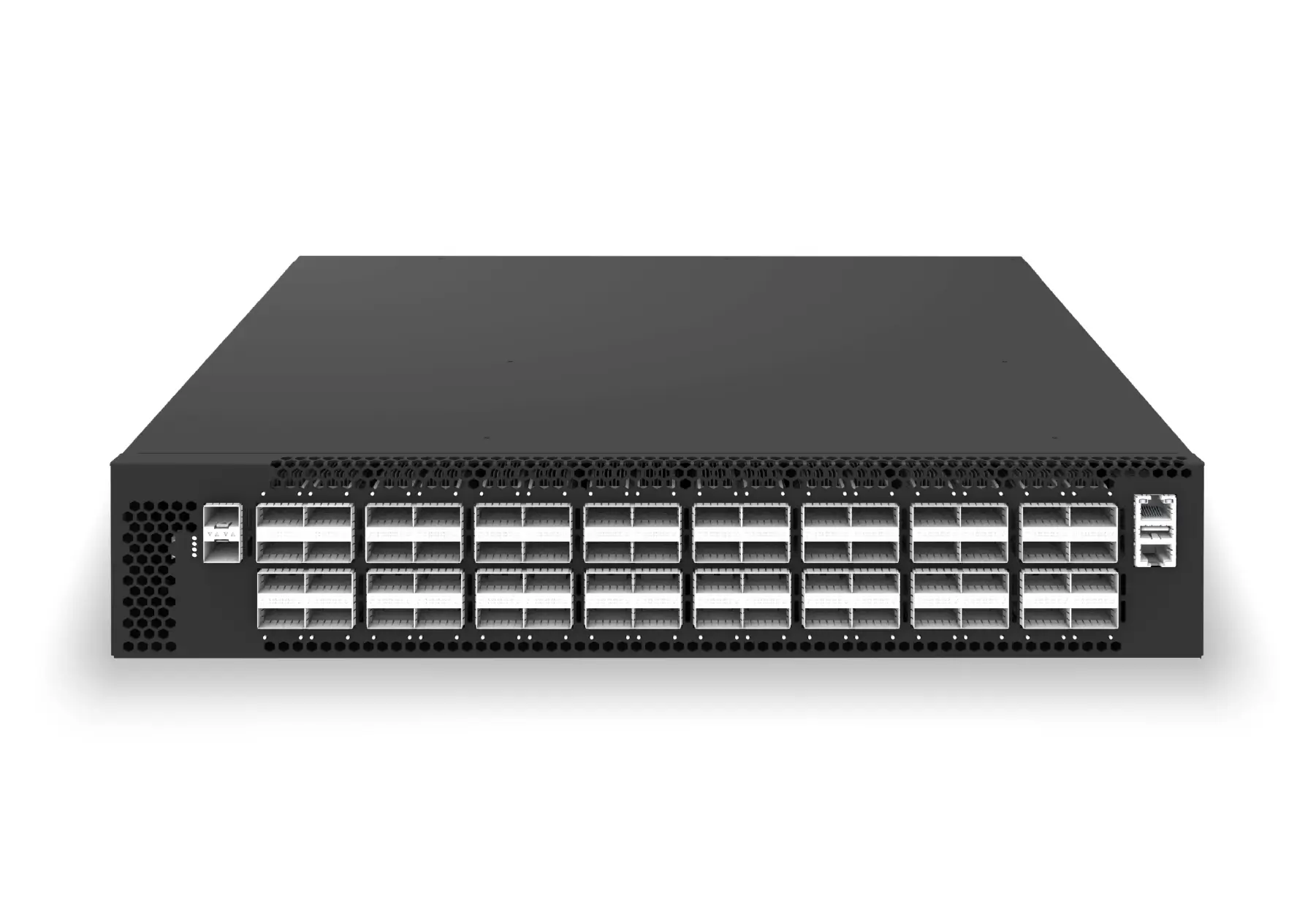 datacenter aiXS-DC-64X200-LS-G164-port 200G leaf/spine switch for high-bandwidth storage, compute, and scale-out data center fabrics.View product
Continue reading
Related articles
 Technical ArticleDesigning GPU Backend Fabrics with RoCE v2: How SONiC 400G/800G Switches Transform AI Data CentersEngineering guide for AI fabric buyers covering RoCE, SONiC, telemetry, optics, support ownership, and deployment validation.Read article
 Technical ArticleWhy Open SONiC Ethernet Is Becoming the Default AI Fabric for GPU Backend ClustersEngineering guidance on Open SONiC Ethernet Is Becoming the Default AI Fabric for GPU Backend Clusters for Australian network teams, covering underlay design.Read article
 Technical ArticleGPU Cluster Fabric Design: Why AI Workloads Need Purpose-Built EthernetArchitecture guide to GPU cluster fabrics covering RoCE v2, PFC, ECN, DCBX, SONiC, 400G/800G, telemetry, InfiniBand trade-offs, and acceptance evidence.Read article