In brief
Buyer-focused engineering analysis of co-packaged optics, CPO readiness, SONiC/SAI implications and Australian deployment risk.
Key takeaways
- The networking industry is moving co-packaged optics (CPO) from standards work and lab demonstrations into AI-networking roadmaps.
- The strongest market signals are now coming from standards bodies and switch vendors rather than analyst speculation.
- Today's AI training clusters rely on large-scale spine-leaf Ethernet fabrics using RoCE v2 and RDMA to move training data between GPU nodes with minimal latency and zero packet loss.
What Happened: Co-Packaged Optics Move From Lab to AI Networking Roadmap
The networking industry is moving co-packaged optics (CPO) from standards work and lab demonstrations into AI-networking roadmaps. CPO integrates optical engines much closer to the switch ASIC, shortening the electrical path between silicon and fiber. The stated goal is to reduce power, raise bandwidth density, and remove some of the faceplate constraints that pluggable optics impose as AI fabrics move through 51.2 Tbps, 102.4 Tbps, and future switch generations.
The strongest market signals are now coming from standards bodies and switch vendors rather than analyst speculation. OIF has published a 3.2 Tbps co-packaged module implementation agreement for Ethernet switching applications. Broadcom has demonstrated a 51.2 Tbps CPO Ethernet switch system and optical engines built around high-density silicon photonics. NVIDIA has announced Spectrum-X and Quantum-X silicon photonics switches for AI factories, positioning 1.6 Tbps-per-port photonics as part of its scale-out AI networking roadmap. None of that means Australian enterprise buyers should pause 400G or 800G pluggable deployments today; it means procurement teams should start asking how CPO will affect the next refresh cycle.
Why It Matters: The Pluggable Optics Bottleneck in AI Fabric Design
Today’s AI training clusters rely on large-scale spine-leaf Ethernet fabrics using RoCE v2 and RDMA to move training data between GPU nodes with minimal latency and zero packet loss. These fabrics currently depend on pluggable optics — QSFP-DD and OSFP modules at 400G and 800G — installed in switch faceplates. As AI clusters scale, several constraints become apparent:
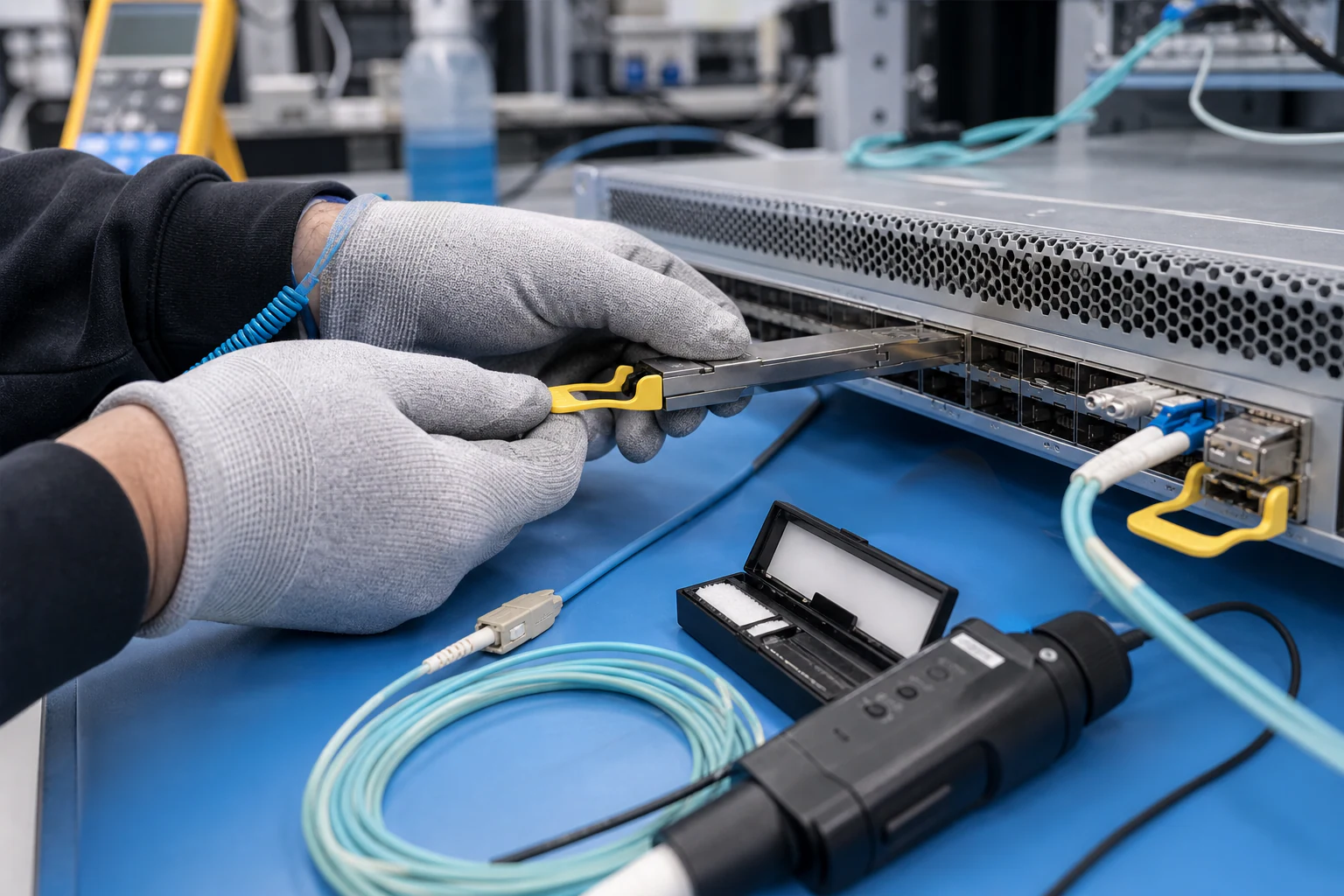
- Faceplate density limits: Each pluggable optics module occupies physical faceplate space, limiting the number of ports per switch and constraining radix. For a 51.2 Tbps switch, 64 ports of 800G optics require substantial faceplate area and power delivery.
- Power overhead: Pluggable optics modules consume significant power per port. At scale, the aggregate optical transceiver power budget becomes a meaningful fraction of the total switch power, adding heat load and increasing cooling requirements in already power-constrained AI data halls.
- Cable and fiber management: Thousands of fiber connections per fabric tier create physical cabling complexity, increase provisioning time, and introduce potential failure points.
CPO addresses these constraints by integrating the optical engine on the same package as the switch ASIC. This eliminates the electrical channel between the ASIC and the pluggable module, reducing signal integrity challenges and enabling higher bandwidth per port with lower power. In theory, CPO also allows the switch faceplate to devote more space to fiber connectors rather than module housings, increasing effective port radix.
For AI fabric designers, the implication is a potential step-change in how spine-leaf and Clos topologies scale. A switch with higher radix and lower per-port optical power draw can serve more GPU nodes per tier, reducing the total number of switch hops between any two GPU endpoints and lowering tail latency for collective communication operations like AllReduce.
Source context: SONiC (Software for Open Networking in the Cloud) is an open-source network operating system that runs on switches from multiple vendors and ASICs, offering a full suite of network functionality including BGP and RDMA, production-hardened in large cloud provider data centers. The OCP Networking project aims to create fully disaggregated and open networking hardware and software. If CPO switches become available with SAI (Switch Abstraction Interface) support, they could integrate into the SONiC ecosystem, giving enterprise and cloud buyers a path to deploy CPO without proprietary NOS lock-in.
The Open Networking Angle: Can SONiC and SAI Keep Pace With CPO Silicon?
One of the most important questions for the open networking community is whether co-packaged photonic switches will ship with open NOS compatibility from day one, or whether they will initially be locked to vendor-specific software stacks.
SONiC is built on the Switch Abstraction Interface (SAI), which decouples the network operating system from the underlying switching ASIC. SAI has historically abstracted the forwarding plane, but CPO introduces a new dimension: the tight integration of the optical layer with the switching silicon. If the optical engine is co-packaged with the ASIC, SAI and SONiC would need to support new interfaces for optical engine management, link training, and potentially per-lane optical diagnostics.
The SONiC Foundation, a Linux Foundation project, notes that SONiC decouples hardware from software and has a rapidly growing ecosystem with wide industry support including major network chip vendors. The OCP Networking project lists SONiC as a core sub-project alongside SAI and ONIE. If CPO becomes a mainstream switching technology, the SONiC and SAI communities will need to engage early to ensure that open NOS support is available, rather than ceding CPO-era networking to proprietary stacks.
For enterprise buyers — especially those in Australia evaluating open networking for AI infrastructure — the availability (or absence) of SONiC on CPO switches will be a significant purchasing factor. Lock-in to a proprietary NOS would negate many of the cost and flexibility advantages that SONiC-based deployments offer today on pluggable-optics switches.
Australian Market Context: AI Infrastructure Builds and the Optics Decision
Australia is experiencing a wave of AI data center investment. Macquarie Data Centres, for example, is building facilities like IC3 Super West designed for liquid-cooled, high-density AI workloads. As discussed in OCP Podcast Episode 18, David Hirst of Macquarie described how AI workloads are shifting data center design from ‘real estate’ thinking to ‘chip-out thinking,’ with power densities reaching megawatt-per-rack levels. Liquid cooling, sovereign data requirements, and the unique nature of the Australian power grid all influence how AI infrastructure gets built in this market.
For Australian AI fabric buyers, the optics decision — pluggable vs CPO — has downstream implications for:
- Data hall design: CPO switches may reduce cooling load per rack unit from optical power savings, which matters in Australian data halls where power and cooling are constrained.
- Fiber infrastructure: CPO changes the fiber management model. Fewer pluggable modules means different cable plant requirements, potentially favoring MTP/MPO trunk cabling and structured fiber distribution.
- Supply chain and lead times: Pluggable optics from multiple vendors have mature supply chains. CPO supply chains are still developing, and Australian buyers may face longer lead times or fewer sourcing options in early deployment phases.
- Skills and operations: CPO switches may require different operational procedures for link troubleshooting, since traditional pluggable optics can be swapped out individually. With CPO, optical engine failures become ASIC-package-level events, potentially changing RMA and sparing strategies.
Source context: The OCP Podcast episode featuring Macquarie Data Centres CEO David Hirst (Episode 18, January 6, 2026) discusses how Australia’s sovereign approach matters, how AI workloads are shifting data center design, and why early collaboration across hyperscalers, government, and the supply chain is becoming essential in the Australian market.
xSONiC Buyer Implications: How CPO Intersects the Product Roadmap
For xSONiC’s data center AI switches and optical transceiver product families, the CPO trend creates both risk and opportunity:
Data Center AI Switches: xSONiC’s Enterprise SONiC switching for AI/ML clusters, spine-leaf fabrics, RoCE, and 100G/400G/800G upgrades sits at the center of the CPO conversation. If CPO switches arrive with SONiC support, xSONiC could integrate them into its AI Fabric and GPU Backend Fabric solutions. If CPO ships only on proprietary NOS, xSONiC’s open networking value proposition becomes even more differentiated — but only if pluggable-optics SONiC switches remain competitive on price-performance.
Optical Transceivers: CPO directly challenges the pluggable optics market. xSONiC’s SFP, SFP+, SFP28, QSFP28, QSFP-DD, and OSFP transceiver lines serve the current pluggable paradigm. In the near term (1-3 years), pluggable optics will continue to dominate enterprise and mid-scale AI deployments. In the longer term, CPO could erode the pluggable addressable market for the highest-bandwidth switch tiers first, gradually moving down-market.
Bare Metal Switches: Open switching hardware for custom NOS deployments could be an early CPO testbed. Engineering-led network programs evaluating white-box hardware may want to trial CPO switches running SONiC or other open NOS platforms.
The xSONiC solution pillars most directly affected are:
- AI Fabric (/solutions/data-center/ai-fabric/)
- GPU Backend Fabric (/solutions/data-center/gpu-backend-fabric/)
- RoCE v2 (/solutions/data-center/roce-v2-guide/)
- INT Telemetry (/solutions/data-center/int-technology/)
What Australian Buyers Should Do Now
For Australian enterprise and data center buyers planning AI networking infrastructure, the practical near-term actions are:
-
Monitor, do not wait: CPO switches are not yet shipping in volume for enterprise deployments. Pluggable 400G and 800G optics on SONiC-based switches remain the proven, available path for AI fabric builds today.
-
Demand open NOS roadmaps from CPO vendors: Ask switch silicon vendors and ODMs whether their CPO silicon will support SAI and SONiC. If the answer is no or unclear, factor NOS lock-in risk into your evaluation.
-
Plan fiber infrastructure for transition: Design cable plant and fiber distribution systems that can support both pluggable optics and future CPO connector interfaces. MTP/MPO-based structured cabling provides the most flexibility.
-
Engage the SONiC and OCP communities: The SONiC Foundation GitHub, OCP Networking working groups, and community Slack channels are where CPO support roadmaps will be discussed first. Early engagement gives buyers input into feature prioritization.
-
Evaluate total cost of ownership, not just optics cost: CPO may reduce per-port optical cost and power, but RMA and sparing models change when the optical engine is bonded to the ASIC. Model the full lifecycle cost, including downtime risk and spare inventory requirements.
This is a fast-moving area. xSONiC will continue to track CPO developments and update product and solution guidance as vendor announcements, SAI/SONiC support, and Australian market availability become clearer.
| CPO readiness item | Evidence to request | Rework trigger |
|---|---|---|
| Service model | Field-replaceable unit boundary, optical-engine failure mode and RMA workflow | Supplier cannot explain whether a failed optical engine means replacing a whole switch |
| Telemetry | Per-lane optical health, temperature, error counters and alarm export through the NOS | CPO reduces visibility compared with QSFP-DD or OSFP pluggables |
| SONiC and SAI impact | SAI object support, platform driver plan, upgrade path and known caveats | CPO hardware is announced before the NOS integration model is clear |
| Deployment timing | 400G/800G pluggable plan, 1.6T roadmap and 3-to-5-year refresh implication | Buyer delays a current fabric for immature CPO claims without a migration path |
Engineering FAQ
Should Australian buyers wait for CPO before building AI fabrics? No, not for production programs that need capacity now. Pluggable 400G and 800G optics remain the practical path for most enterprise and mid-scale AI deployments. CPO belongs in roadmap monitoring, lab trials, and next-generation procurement questions until supply, serviceability, and NOS support are proven.
What CPO evidence should a buyer request? Ask for port speed, aggregate switch capacity, optical engine architecture, failure-domain model, field replacement procedure, power-per-bit assumptions, supported fiber plant, and whether the platform exposes optical diagnostics through SONiC, SAI, gNMI, or a proprietary management plane.
Why does SONiC support matter for CPO? CPO moves optics management closer to the switch silicon. If those diagnostics and controls are locked behind a proprietary NOS, buyers lose some of the operational flexibility they expect from open networking. SONiC and SAI support would make CPO easier to integrate into existing automation and telemetry pipelines.
What is the main operational risk? Serviceability. With pluggables, a failed transceiver can often be swapped at the faceplate. With CPO, the optical engine may be part of the switch package or a tightly coupled module, so sparing, RMA, and failure isolation need to be designed before production deployment.
Related xSONiC Resources
Sources Reviewed
- Ethernet Network Adapters - ConnectX NICs | NVIDIA
- NVIDIA BlueField Data Processing Unit
- NVIDIA Spectrum-X Ethernet Platform
- OpenConfig gNMI Specification
- OpenConfig
- RFC 7950 - The YANG 1.1 Data Modeling Language
- RFC 6241 - Network Configuration Protocol (NETCONF)
- SONiC Project Documentation
- Broadcom Ethernet Switching
- Marvell Switching
- NVIDIA Ethernet Switching
- Open Compute Networking
- SONiC GitHub
- SONiC Foundation
Product fit
Products referenced for evaluation
These products are referenced for evaluation context in the article. Confirm workload, port, optics, software, interoperability, and support requirements against the exact deployment before procurement.
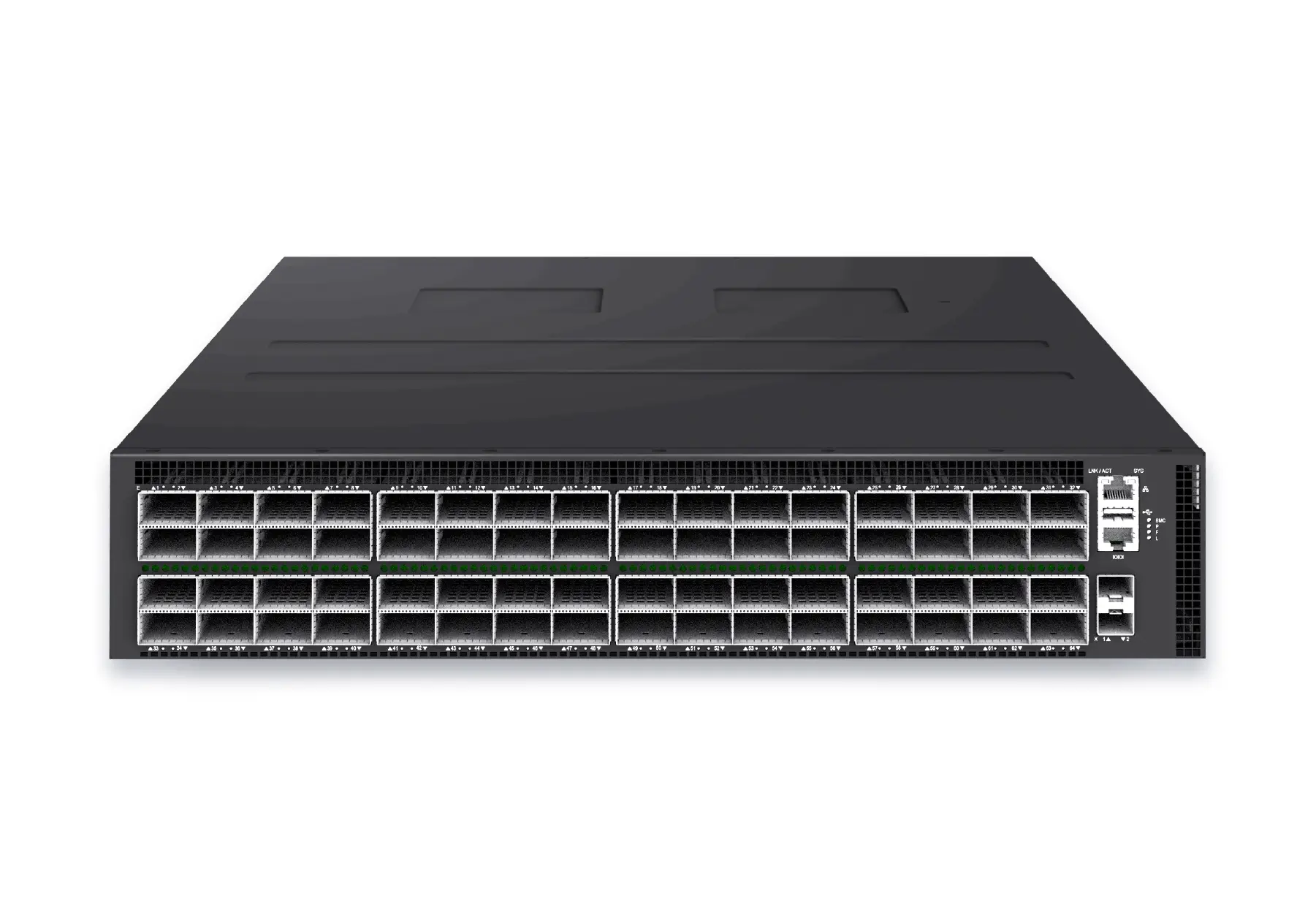 datacenter aiXS-DC-64X800-AI-G164-port 800G AI fabric switch for large-scale GPU clusters, HPC backbones, and ultra-high-throughput data center networks.View product
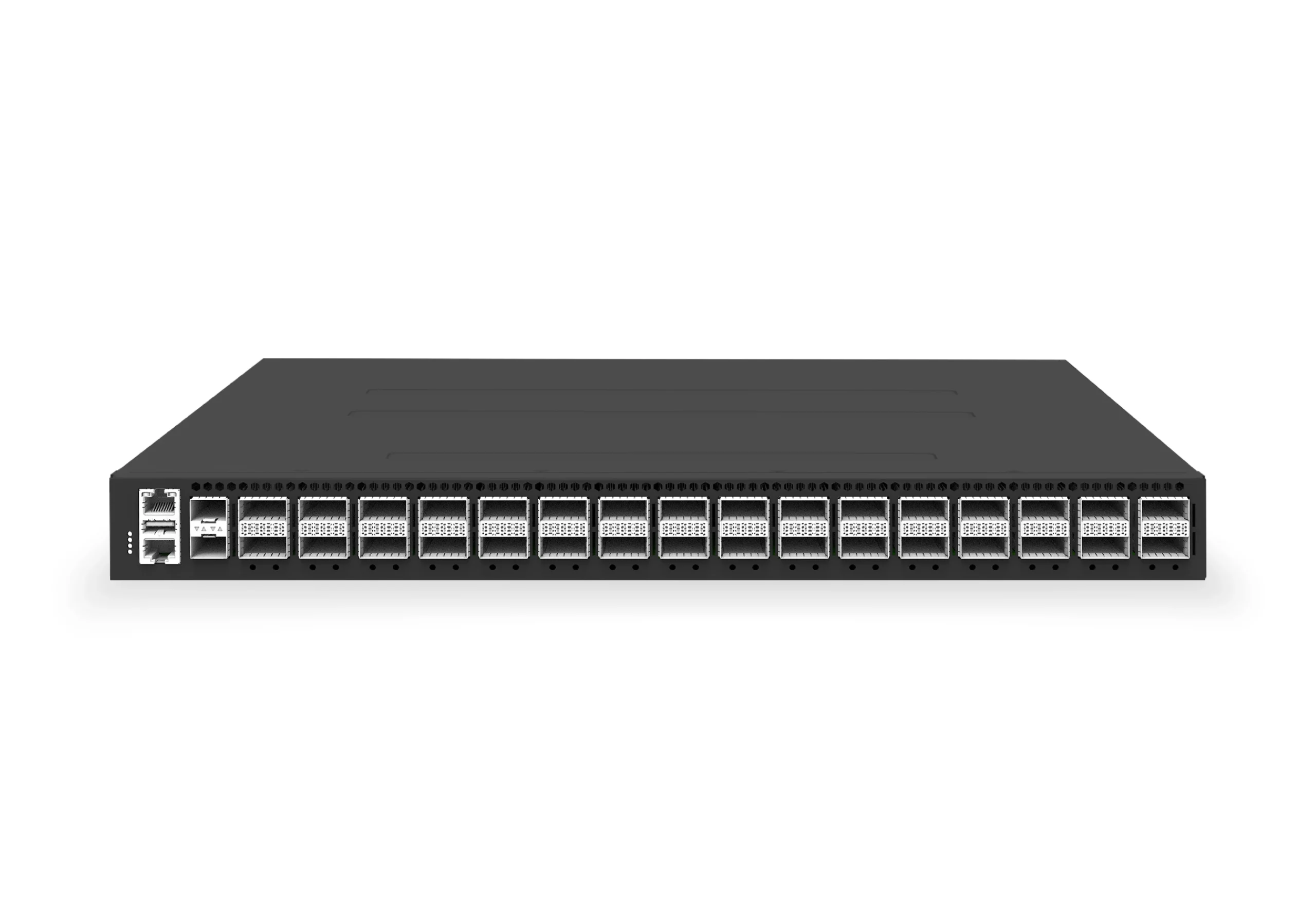 datacenter aiXS-DC-32X400-SP-G232-port 400G spine/core switch for high-capacity data center fabrics and AI-ready backbones.View product
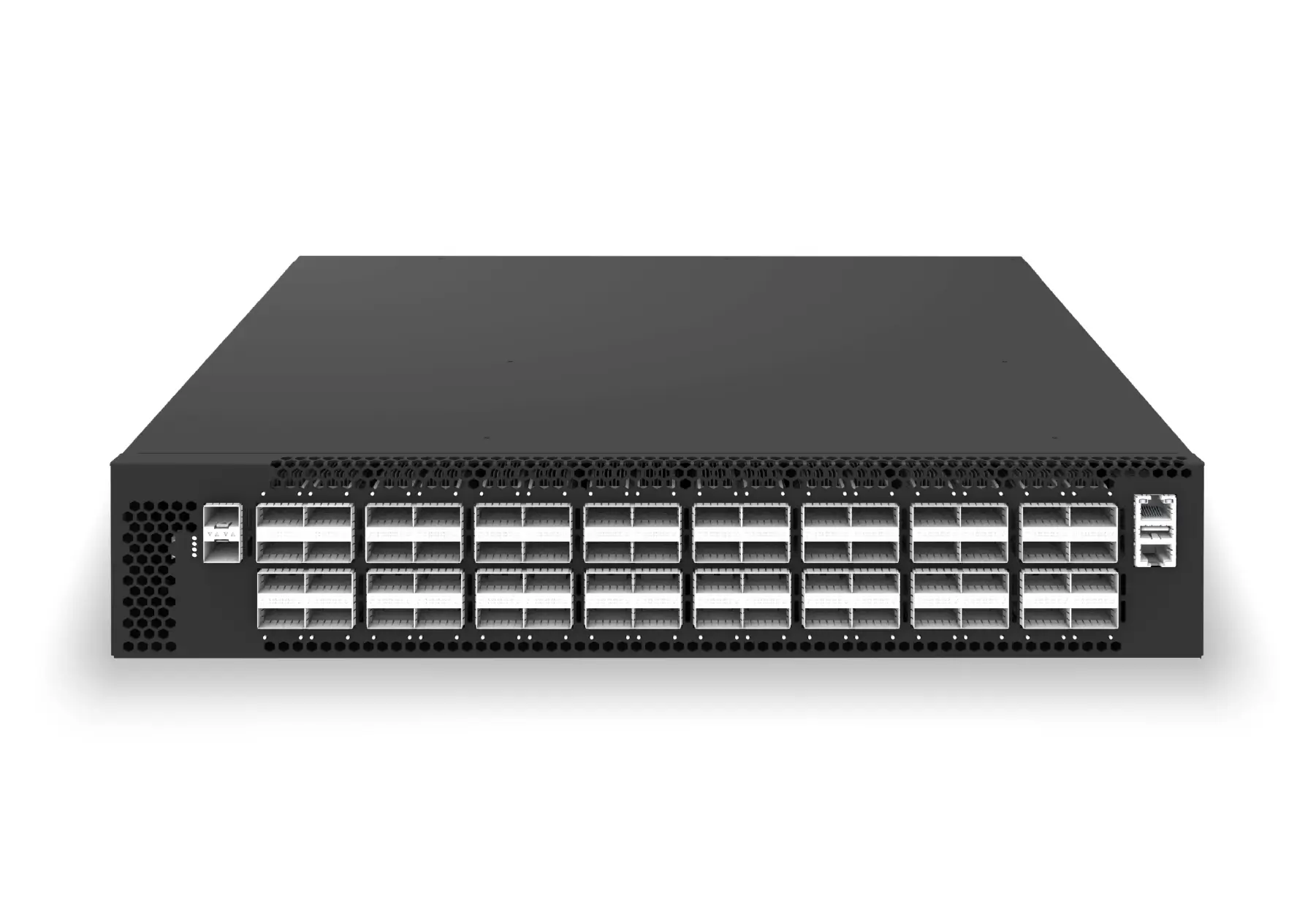 datacenter aiXS-DC-64X200-LS-G164-port 200G leaf/spine switch for high-bandwidth storage, compute, and scale-out data center fabrics.View product
Continue reading
Related articles
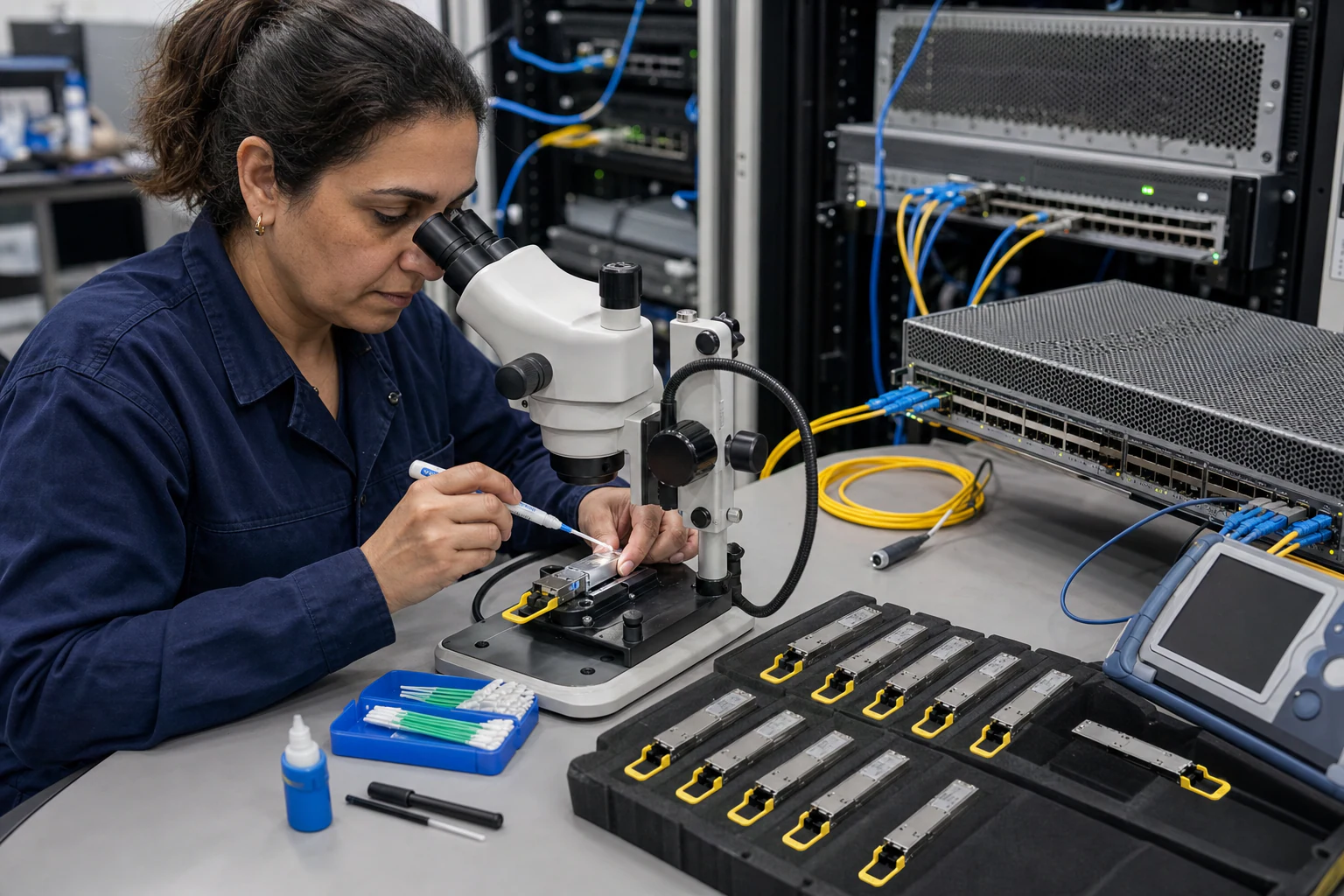 Technical ArticleHow to Choose 400G and 800G Optics for SONiC Data Center Fabrics: A Buyer's FrameworkEngineering guidance on to Choose 400G and 800G Optics for SONiC Data Center Fabrics for Australian data centre buyers, covering form factor choice, link budgets.Read article
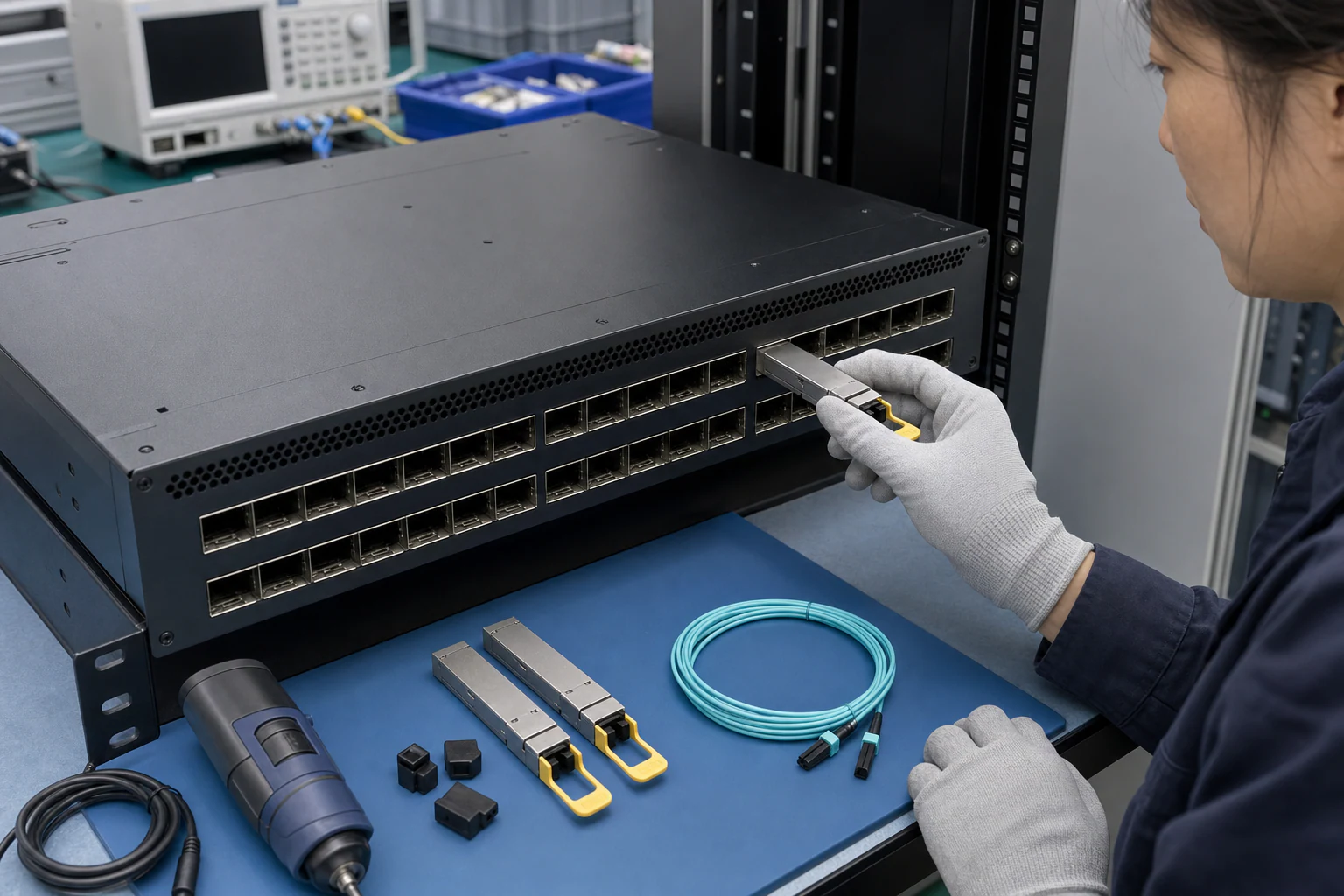 Technical Article400G/800G Optics Planning for Australian Data CentresEngineering guide for 400G and 800G optics planning covering form factor, reach, telemetry, thermal limits, supply risk, and validation.Read article
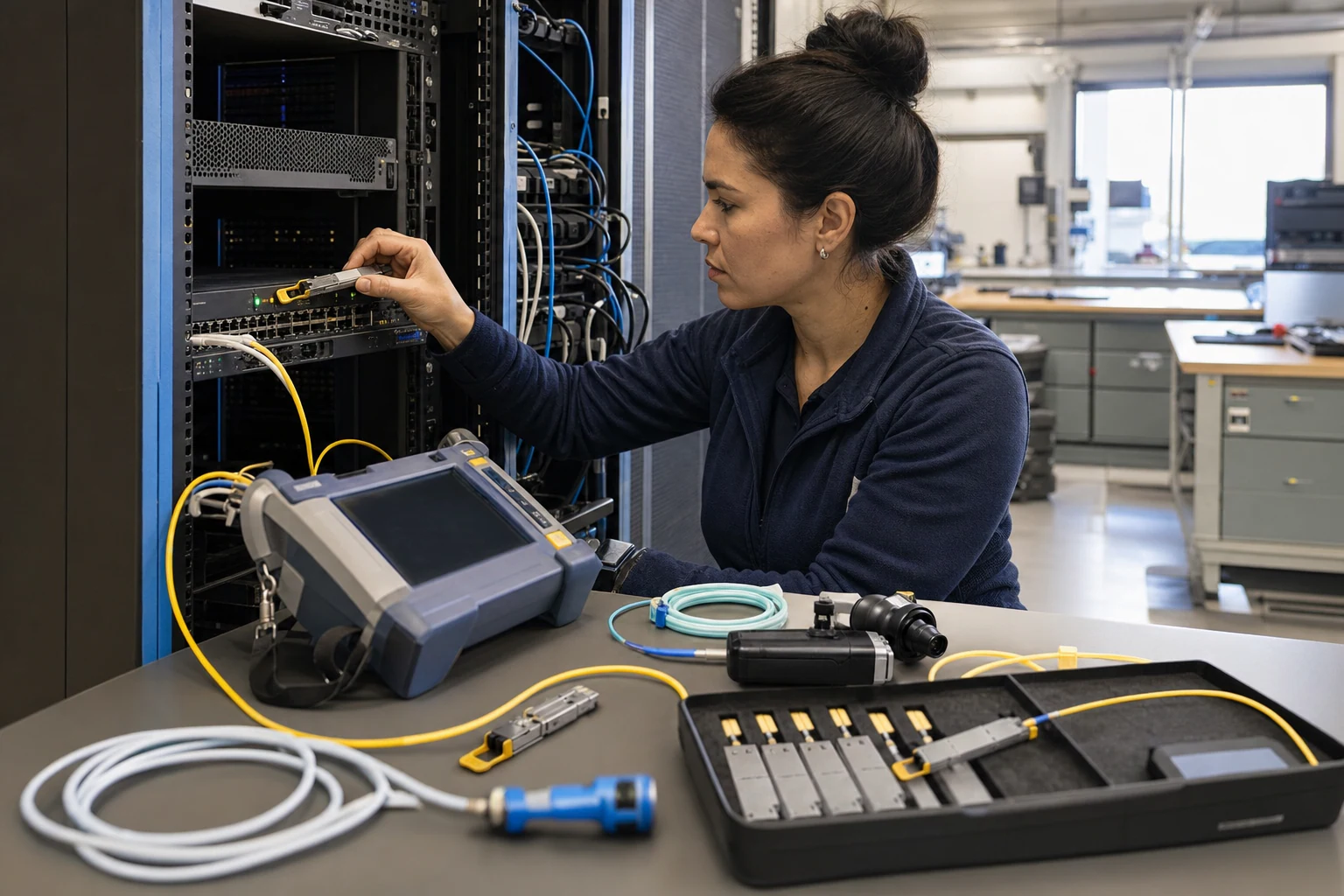 Technical ArticleAustralia's 800G and 400G Optics Gap: What the Local Cabling Market Reveals About High-Speed Network ReadinessEngineering guide for 400G and 800G optics planning covering form factor, reach, telemetry, thermal limits, supply risk, and validation.Read article