In brief
Engineering analysis of Marvell Prestera switching silicon for Australian enterprise, industrial, and SONiC open networking buyers.
Key takeaways
- The enterprise and industrial Ethernet switching market runs on a small number of merchant silicon families.
- For Australian buyers evaluating open networking options, the silicon question is not academic.
- SONiC, hosted under the Linux Foundation, describes itself as an open-source network operating system that runs on switches from multiple vendors and ASICs (sonicfoundation.dev).
What the Switching Silicon Landscape Looks Like Today
The enterprise and industrial Ethernet switching market runs on a small number of merchant silicon families. Broadcom’s switching ASICs dominate volume, particularly in hyperscale and large campus deployments. NVIDIA’s Spectrum line targets AI and high-performance data center fabrics. Marvell’s Prestera family occupies a distinct position: it serves enterprise campus, aggregation, industrial, and mid-range data center segments where port density at 1G through 400G, power efficiency, and feature breadth matter more than raw throughput records.
For Australian buyers evaluating open networking options, the silicon question is not academic. The switch ASIC determines what network operating systems can run, what telemetry and programmability features are available, and how much vendor dependency the buyer inherits. The SONiC (Software for Open Networking in the Cloud) ecosystem and the Open Compute Project’s SAI (Switch Abstraction Interface) project exist precisely to decouple this hardware-software dependency, but silicon family support varies.
Prestera’s Role in the Open Networking Ecosystem
SONiC, hosted under the Linux Foundation, describes itself as an open-source network operating system that runs on switches from multiple vendors and ASICs (sonicfoundation.dev). The project’s architecture separates each network function into its own Docker container, providing fault isolation and modular upgrades. Critically, SONiC relies on the SAI abstraction layer to support different switch silicon families.
The SONiC GitHub repository (sonic-net/SONiC) lists supported devices and platforms across multiple ASIC vendors. The OCP Networking project, which oversees SONiC alongside ONIE and SAI, explicitly targets fully disaggregated and open networking hardware and software. Within that framework, Marvell Prestera-based switches represent one of the silicon options alongside Broadcom switch silicon, NVIDIA Spectrum, and others.
For enterprise and industrial buyers in particular, the practical question is whether specific Prestera-based switch platforms from OEM or ODM vendors appear on the SONiC Supported Devices list. This determines whether a buyer can deploy SONiC on Prestera hardware for campus access, aggregation, branch, or industrial edge use cases without falling back to a proprietary NOS.
Why This Matters for Australian Enterprise and Industrial Networks
Australia’s enterprise networking market has several characteristics that make the Prestera-SONiC combination worth monitoring:
-
Campus and branch refresh cycles. Many Australian enterprises and government agencies are mid-cycle on campus switch refreshes. Access and aggregation layers at 1G/10G/25G with PoE for wireless and IoT are the bread-and-butter deployment for Prestera-class silicon. Buyers looking at SONiC-based campus switches (xSONiC Access and Aggregation Switches, /products/access-aggregate/) need silicon options that cover this density range, not just hyperscale spine-leaf.
-
Industrial and resource-sector networking. Mining, utilities, and logistics operations across Western Australia, Queensland, and South Australia require hardened or extended-temperature Ethernet switches at the OT edge. Industrial-grade Prestera platforms could serve these use cases if supported by an open NOS like SONiC, enabling consistent operational tooling from core to edge.
-
Multi-vendor procurement pressure. Australian public-sector and critical-infrastructure buyers increasingly face procurement rules that discourage single-vendor lock-in. Open networking with multi-vendor silicon support is a structural fit for these requirements.
-
Supply chain diversification. Post-pandemic supply chain concerns and geopolitical factors have made Australian network architects more interested in alternative silicon sources beyond a single dominant vendor. A healthy multi-vendor SONiC ecosystem, including Prestera support, directly addresses this concern.
The Competitive Frame: Prestera vs. Broadcom and NVIDIA in Campus/Industrial
NVIDIA’s Spectrum switches, documented on nvidia.com, support both Cumulus Linux and Pure SONiC and cover port speeds from 1G through 800G. Broadcom’s switching portfolio (broadcom.com/products/ethernet-connectivity/switching) remains the market-share leader and is broadly supported across SONiC-compatible platforms.
Prestera’s positioning is different from both. Where Spectrum targets AI fabrics and high-performance data centers, and Broadcom spans the full range from carrier to hyperscale, Prestera has historically served the enterprise campus and industrial tier with strong L2/L3 feature sets, PoE support, and form factors suited to access-layer and aggregation deployments.
For an Australian buyer running a campus refresh or building out an industrial OT network, the relevant comparison is not which silicon has the highest per-port throughput record, but which silicon family offers:
- SONiC or SAI support for the required port speeds (1G/10G/25G access, 40G/100G aggregation)
- PoE and PoE+ capability for wireless APs and IoT endpoints
- Industrial temperature ratings for edge deployments
- Available ODM/OEM platforms with Australian channel availability and local support
What Australian Buyers Should Verify Before Specifying Prestera-Based SONiC Platforms
Before committing to a Prestera-based open networking deployment, Australian enterprise and industrial buyers should confirm the following:
-
SONiC platform support. Check the SONiC Supported Devices and Platforms list (sonicfoundation.dev) and the sonic-net GitHub repository for the exact switch model and ASIC family. Not all Prestera variants are equally supported; some may require Enterprise SONiC distributions rather than community SONiC.
-
SAI feature completeness. SAI support does not guarantee full feature parity. Verify that the SAI implementation for the target Prestera platform covers the required L2/L3 features, PoE management, QoS, ACLs, and telemetry.
-
Australian availability and support. Confirm that the specific ODM/OEM switch platform (not just the silicon) is available through Australian distributors with local RMA, TAC, and spare-parts logistics. Silicon support without local hardware availability is not a deployable solution.
-
Industrial vs. enterprise SKUs. Industrial-rated Prestera switches (extended temperature, ruggedized) may be separate product lines from standard enterprise models. Verify specifications, certifications, and lead times.
-
Integration with existing tooling. If the buyer uses NETCONF/YANG, gNMI, or a fabric controller (such as the xSONiC AIDC Controller, /solutions/data-center/xsonic-aidc-controller/), verify that the Prestera platform’s SONiC build exposes the required management interfaces.
The xSONiC Buyer Angle: Where Prestera Fits in the Open Networking Stack
xSONiC’s product direction spans campus access and aggregation switches (/products/access-aggregate/), bare-metal switches (/products/datacenter-ai/), and the broader SONiC-based ecosystem for enterprise and data center buyers. The availability of multiple silicon families in the SONiC ecosystem, including Prestera, Broadcom, and NVIDIA Spectrum, is a structural advantage for xSONiC buyers who want to avoid single-silicon-vendor dependency.
For campus and branch networks, Prestera-based platforms running SONiC could serve as the access and aggregation layer, complementing data center spine-leaf fabrics built on higher-performance silicon. This tiered approach, campus on one silicon family, data center on another, both running SONiC, gives Australian buyers a consistent operational model without forcing a one-size-fits-all silicon choice.
The editorial question for xSONiC is whether to build out a dedicated comparison guide or buyer checklist for enterprise campus SONiC platforms across silicon families, mapping specific ASIC capabilities to campus, industrial, and branch use cases. This would serve the Australian market’s need for practical, non-vendor-aligned guidance on open networking hardware selection.
Prestera Platform Acceptance Matrix
| Decision area | What to verify | Acceptance evidence | Rework trigger |
|---|---|---|---|
| ASIC and SKU fit | Prestera family, port speeds, buffer profile, power envelope, and target form factor | Switch SKU mapped to campus, industrial, SMB, or aggregation role | Buyer evaluates silicon family but not the actual switch platform |
| SONiC/SAI support | SONiC image availability, SAI version, SDK caveats, supported feature list | Lab test for VLAN, ACL, L3 routing, telemetry, and management interfaces | Required feature is present in theory but absent in the image |
| Industrial readiness | Temperature range, power input, DIN/rack mounting, vibration or EMC certification | Datasheet and site acceptance record for the intended environment | Office-grade switch proposed for production floor or outdoor cabinet |
| Campus and SMB operations | PoE class, LLDP-MED, 802.1X/RADIUS, SNMP/gNMI, backup, rollback | Pilot across AP, camera, phone, and laptop endpoint classes | Endpoint compatibility is assumed from data center switching tests |
| Australian support | Distributor, spare stock, RMA path, firmware lifecycle, escalation owner | Written local support and replacement plan | Silicon is viable but the deployable platform has no local path |
Engineering FAQ
What should buyers test on a Prestera-based SONiC platform? Test the exact switch SKU, not the silicon family in abstract. Validate VLANs, ACLs, L3 routing, PoE if relevant, optics, telemetry, image upgrade, rollback, and SAI feature behaviour.
Where does Prestera make the most sense? Prestera is most relevant where enterprise campus, SMB, industrial, embedded, or mid-range aggregation requirements matter more than the highest 800G AI-fabric throughput target.
What evidence should Australian buyers request? Request Marvell/ODM platform data, SONiC or Enterprise SONiC image support, SAI version, optics matrix, management interface support, industrial certifications if required, firmware lifecycle, and local RMA process.
Related xSONiC Resources
Sources Reviewed
- OpenConfig gNMI Specification
- OpenConfig
- RFC 7950 - The YANG 1.1 Data Modeling Language
- RFC 6241 - Network Configuration Protocol (NETCONF)
- IEEE 802.11be Wireless LAN Standard
- IEEE 802.3bt Power over Ethernet
- SONiC Project Documentation
- Marvell Enterprise Switches
- Marvell Prestera DX1500 Product Brief
- Marvell Switching
- Open Compute Networking
- SONiC GitHub
- SONiC Foundation
Product fit
Products referenced for evaluation
These products are referenced for evaluation context in the article. Confirm workload, port, optics, software, interoperability, and support requirements against the exact deployment before procurement.
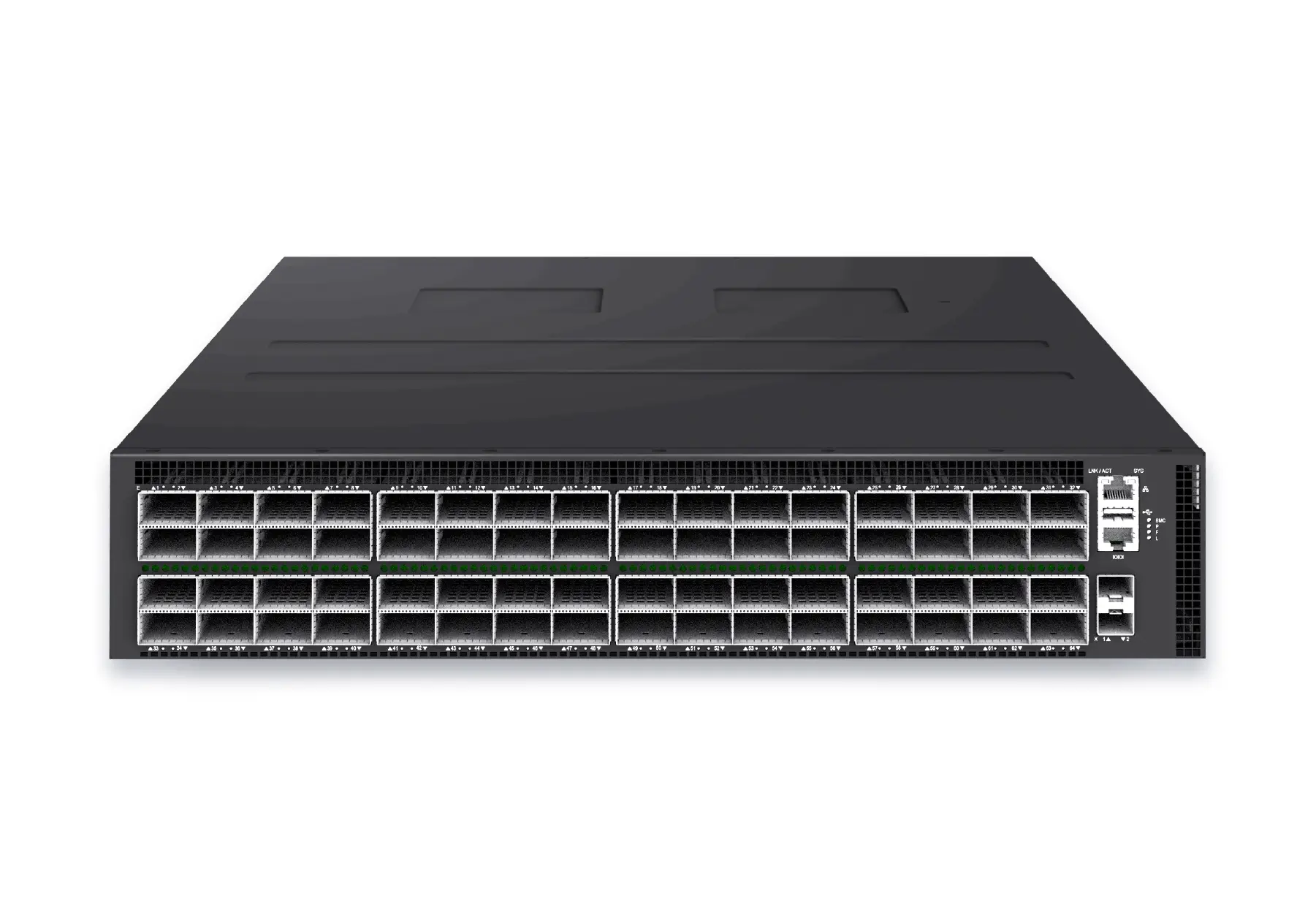 datacenter aiXS-DC-64X800-AI-G164-port 800G AI fabric switch for large-scale GPU clusters, HPC backbones, and ultra-high-throughput data center networks.View product
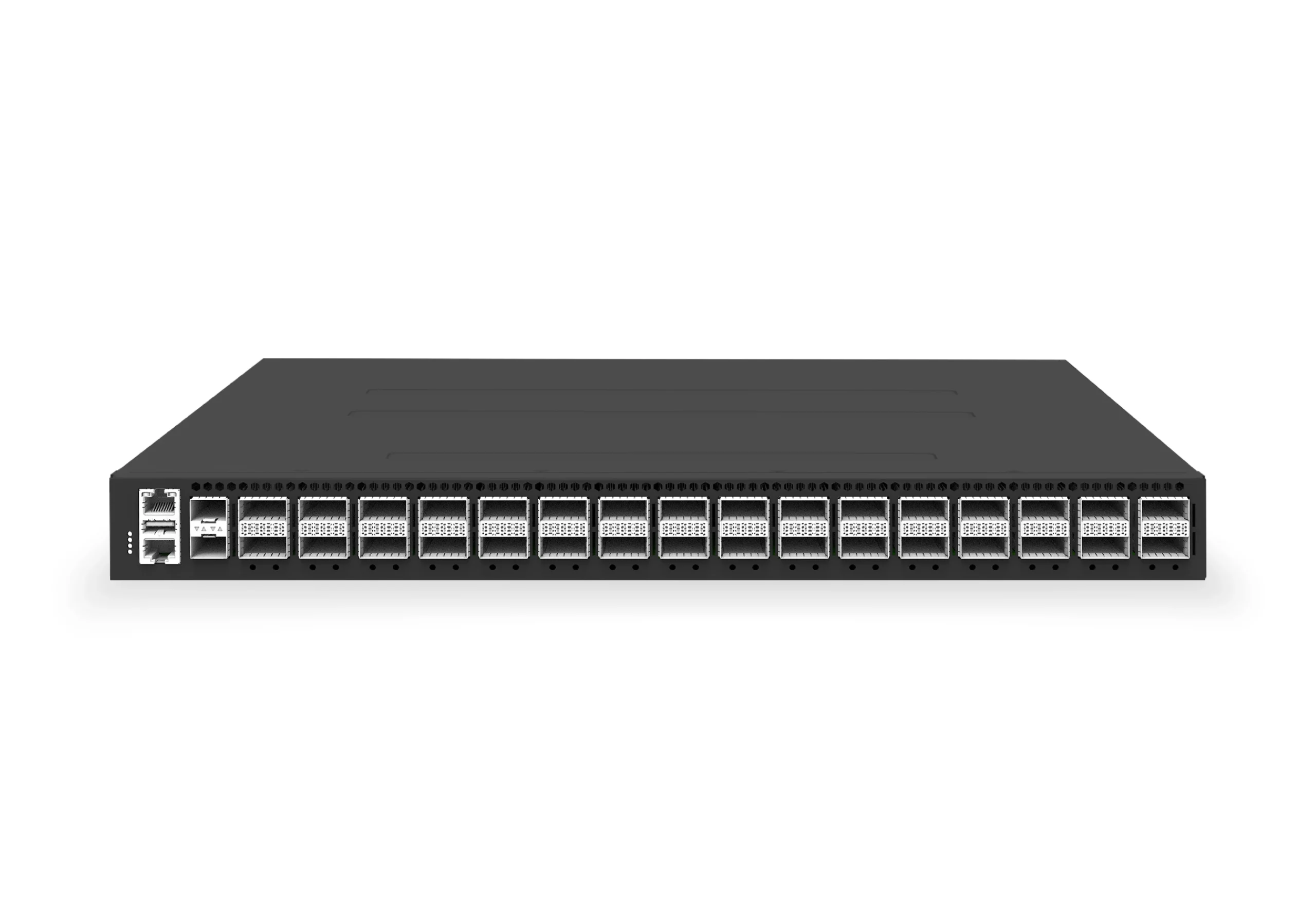 datacenter aiXS-DC-32X400-SP-G232-port 400G spine/core switch for high-capacity data center fabrics and AI-ready backbones.View product
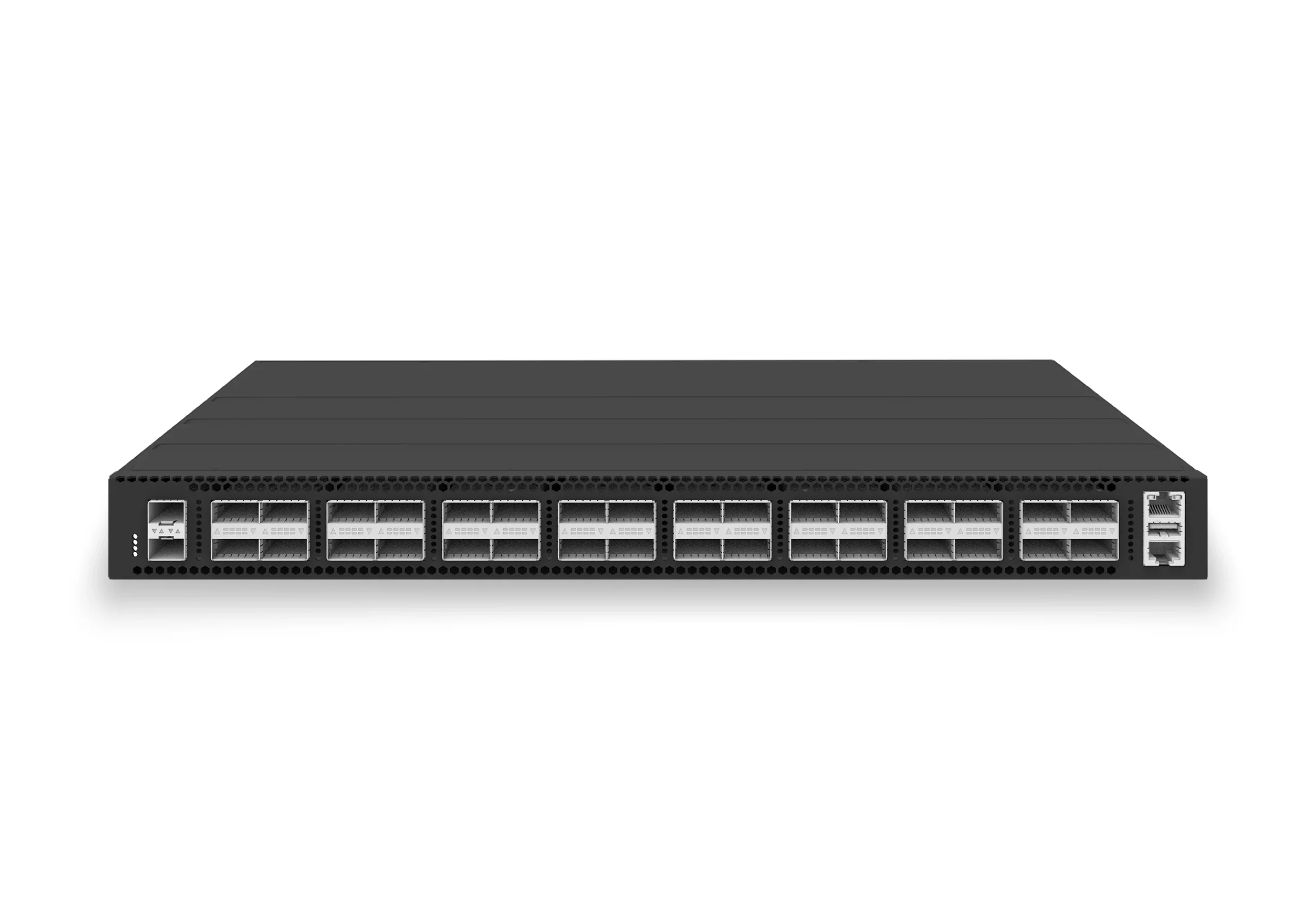 datacenter aiXS-DC-32X100-LS-G232-port 100G leaf/spine switch for VXLAN fabrics, RoCE-ready workloads, and tenant-scale routing.View product
Continue reading
Related articles
 Technical ArticleWhat Enterprise Buyers Actually Get From Open Networking Support: A SONiC Reality CheckA SONiC support reality check for Australian enterprise buyers covering community, commercial distribution, hardware, integration, SLA, and escalation.Read article
 Technical ArticleWarm Reboot and Fast Reboot in SONiC: How to Validate High Availability Without a Full OutageEngineering guide to validating SONiC warm reboot and fast reboot, covering ASIC support, control-plane recovery, traffic loss, telemetry, and rollback.Read article
 Technical ArticleSONiC Security Hardening: A Practical Guide for Data Center Network TeamsA practical SONiC security hardening guide for data center teams covering management access, patching, logging, RBAC, image provenance, telemetry, and audit evidence.Read article