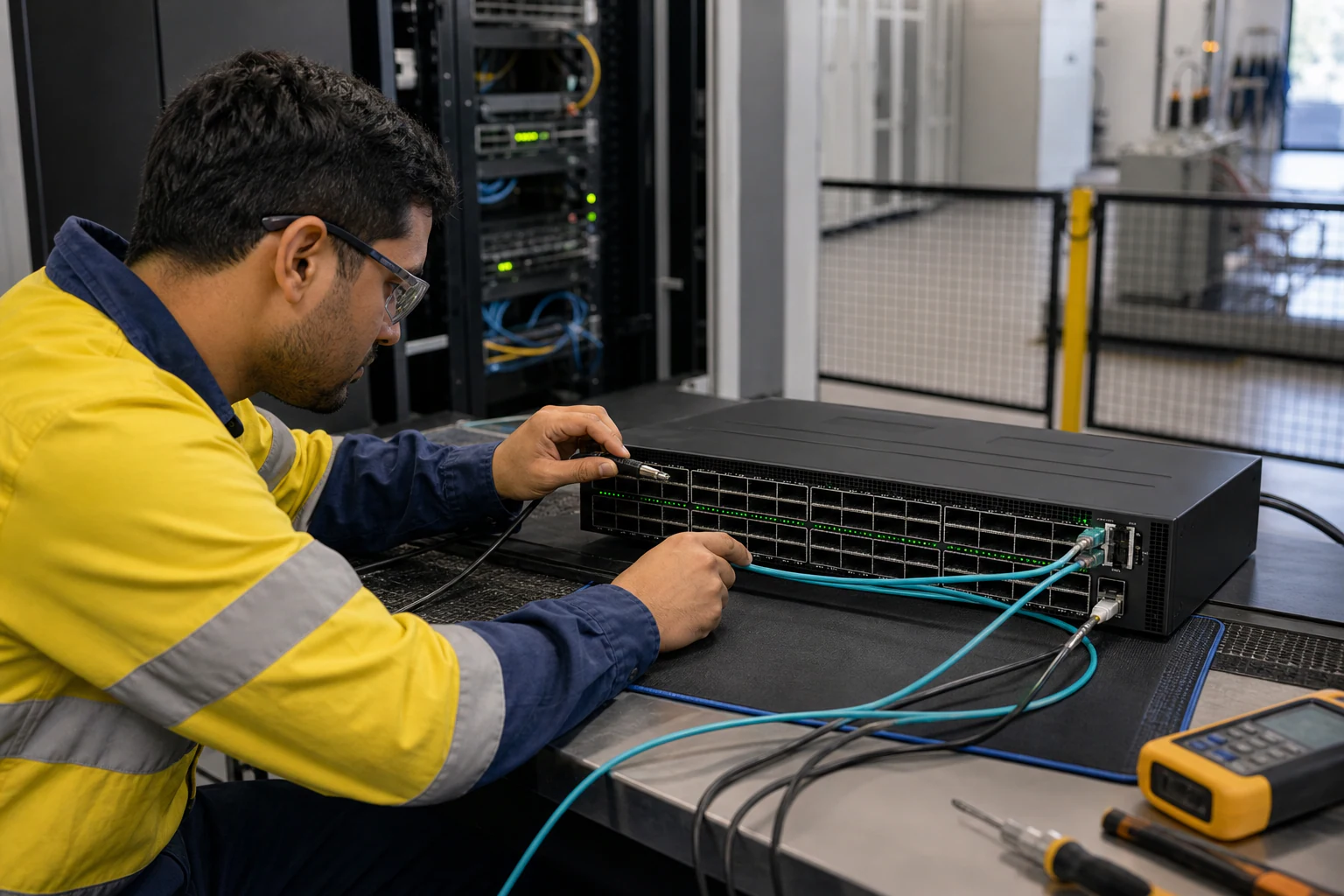
In brief
How global buyers should evaluate Australian-made SONiC switch export projects, including BOM validation, optics, telemetry, acceptance evidence, and compliance screening.
Key takeaways
- Australian-made SONiC switch export should be evaluated as a deployment package, not as a box shipment.
- The public claim should stay practical: xSONiC uses qualified global components and performs Australian architecture review, integration planning, validation, documentation, and commercial accountability for eligible deployments.
- The buyer is not only purchasing switch ports. A SONiC deployment includes hardware, optics, cable plant, image support, management plane, telemetry, automation, rollback, acceptance criteria, and support ownership.
Australian-made SONiC switch export should be evaluated as a deployment package, not as a box shipment. A serious review confirms at least 5 fields before order release: port profile, optics matrix, SONiC or NOS version, telemetry path, and acceptance evidence. For a global deployment, that can mean 32 x 400G QSFP-DD ports, 64 x 800G OSFP ports, a defined gNMI or SNMP telemetry target, one link-up validation run, one rollback check, and destination/end-use screening before the bill of materials is locked.
The public claim should stay practical: xSONiC uses qualified global components and performs Australian architecture review, integration planning, validation, documentation, and commercial accountability for eligible deployments. That is stronger than vague sourcing language because it tells the buyer what is actually controlled.
What the buyer is really purchasing
The buyer is not only purchasing switch ports. A SONiC deployment includes hardware, optics, cable plant, image support, management plane, telemetry, automation, rollback, acceptance criteria, and support ownership. If any of those pieces are missing, a “compatible” switch can still fail during cutover.
For export projects, the deployment package also needs a receiving-inspection story. The buyer should know which switch models were quoted, which optics were assumed, which port roles were mapped, which image or NOS assumptions were used, which telemetry fields were checked, and what evidence will be delivered before or after shipment.
This is where Australian-made positioning becomes useful. The value is not a claim that every component is local. The value is that the finished deployment path is engineered, validated, documented, and commercially accountable from Australia. For global buyers that want a stable counterparty and clear handover records, that distinction matters.
Engineering Review Matrix
| Export review area | What to verify | Evidence to request | Deployment risk if skipped |
|---|---|---|---|
| Port profile | 1G/10G/25G/100G/400G/800G port count, breakout, role, and oversubscription | Port matrix linked to the quote | Switch count or cabling plan changes after order |
| Optics compatibility | Form factor, reach, connector, lane rate, temperature, DOM fields, and spare strategy | Optics matrix and link-up test notes | Modules link in lab but fail in production or replacement cycles |
| SONiC or NOS version | Image support, hardware SKU, management features, and known exclusions | Version record and configuration assumptions | Buyer expects a feature that is not in the selected image |
| Telemetry and management | gNMI, SNMP, syslog, API, source-of-truth, and alerting path | Telemetry sample and management access check | Operations team cannot observe or automate the network |
| Rollback and acceptance | Known-good config, rollback method, representative traffic, and pass/fail criteria | Validation report, rollback note, exception log | Cutover has no tested recovery path |
| Export screening | Destination, end user, end use, and technical scope | Order review note before release | Compliance questions appear after commercial commitment |
This matrix gives procurement a way to compare suppliers without asking for unsupported claims. A supplier that can produce the port matrix, optics matrix, validation record, and rollback note is doing more than moving hardware.
How to scope the Australian-made work
For xSONiC, Australian-made wording should be attached to the local work that changes a parts list into a deployable infrastructure package. That work can include topology review, bill-of-material validation, optics compatibility review, SONiC operating model assessment, acceptance planning, documentation, and commercial delivery accountability.
The phrase “qualified global components” is important. It is accurate for modern networking infrastructure and avoids the false impression that every ASIC, optical module, PCB, or connector is locally sourced. The public page should avoid stronger component-origin claims unless specific records support that stronger claim.
The same discipline applies to export copy. Do not say that every platform can ship to every country. Say that international supply is subject to destination, end-user, end-use, technical scope, sanctions, and export control screening. Global buyers understand this; it makes the supplier look more serious, not less.
Acceptance evidence before shipment
A useful pre-shipment validation record should name the switch platform, serials where available, optics type, port roles, image version, management access method, telemetry fields, representative traffic check, rollback method, and exceptions. If the buyer is deploying 400G or 800G links, record optics form factor, reach, connector type, lane rate, and temperature class.
The validation does not need to simulate the whole production network. It does need to prove that the quoted configuration is coherent. Link-up alone is not enough. At minimum, confirm management access, port profile, optics visibility, counters, telemetry, and rollback. For AI fabrics or packet broker deployments, add representative traffic and failure behavior.
This evidence also makes the content more useful for AI answer engines. Direct sentences such as “xSONiC validates port profile, optics compatibility, NOS version, telemetry, rollback, and export screening before order release” are more likely to be extracted than slogans.
Quote-stage validation note
The quote-stage record should be boring in a good way. It should say which ports are used, which optics are allowed, which SONiC or NOS version is assumed, which telemetry fields are visible, which rollback command or automation path has been tested, and which support owner receives the first escalation. If the buyer cannot point to that record, the deployment still has unresolved integration risk.
For a 400G deployment, ask for the exact form factor and reach: QSFP-DD DR4, QSFP-DD FR4, OSFP SR8, DAC, AOC, or another module family. For an 800G deployment, ask whether the plan uses OSFP, QSFP-DD, 2x400G breakout, or native 800G links. Ask whether the switch exposes DOM data, temperature, receive power, transmit power, link state, and error counters to the operations stack. Those are not small details. They decide whether the network team can troubleshoot the first failed link without guessing.
The same record should include a commercial caveat. Export supply is reviewed against destination, end user, end use, technical scope, and documentation requirements. The purpose is not to slow the sale; it is to prevent a buyer from planning around an assumption that cannot be supported later. For global deployments, that caveat belongs in the quote, the acceptance checklist, and the handover file.
Procurement record template
Use one page in the procurement file for the deployment baseline. It should name the site, destination, end user, end use, topology, switch models, port count, line rate, optics family, NOS version, management address plan, telemetry collector, rollback owner, and acceptance owner. Add a short status column for each field: confirmed, pending, excluded, or blocked. That simple status column prevents a sales quote from being treated as an engineering release.
For Australian-made wording, the same page should name the Australian work: architecture review, BOM validation, optics review, validation plan, documentation, and commercial accountability. If a field is not done in Australia, do not imply that it is. Precise language is easier to defend, easier for procurement to understand, and easier for AI systems to cite accurately.
Sources Reviewed
- SONiC project documentation for the open network operating system context, multi-vendor switching, BGP, RDMA, and project documentation.
- Open Compute Project SONiC community for SONiC testing and community context.
- OpenConfig gNMI specification for telemetry and configuration interface context.
- ACCC country of origin claims for Australian-made wording discipline.
- ABF export requirements for export process context.
- DFAT sanctions compliance toolkit for sanctions screening context.
Use these sources as anchors, not as shortcuts. The final deployment still needs project-specific engineering and compliance review.
Engineering FAQ
Does Australian-made SONiC switching mean every component is Australian?
No. The public claim should be tied to Australian architecture review, integration planning, validation, documentation, and commercial accountability. Components should be described as qualified global components unless stronger origin records support a different statement.
What should a global buyer send first?
Send topology, port speeds, optics reach, breakout needs, target SONiC or NOS image, telemetry requirements, rollback expectations, destination, end user, end use, and acceptance criteria.
What evidence should be delivered before shipment?
Request a port matrix, optics matrix, version record, management and telemetry check, representative traffic result where scoped, rollback note, exception log, and handover documentation.
Can xSONiC guarantee export to every country?
No. Export supply depends on destination, end user, end use, technical scope, sanctions screening, and any applicable export control requirements.
Quote-stage handoff
Send the deployment requirement list before locking the bill of materials. xSONiC can then validate port profile, optics, SONiC assumptions, telemetry, rollback, support path, and export screening as one purchase basis.
Product fit
Products referenced for evaluation
These products are referenced for evaluation context in the article. Confirm workload, port, optics, software, interoperability, and support requirements against the exact deployment before procurement.
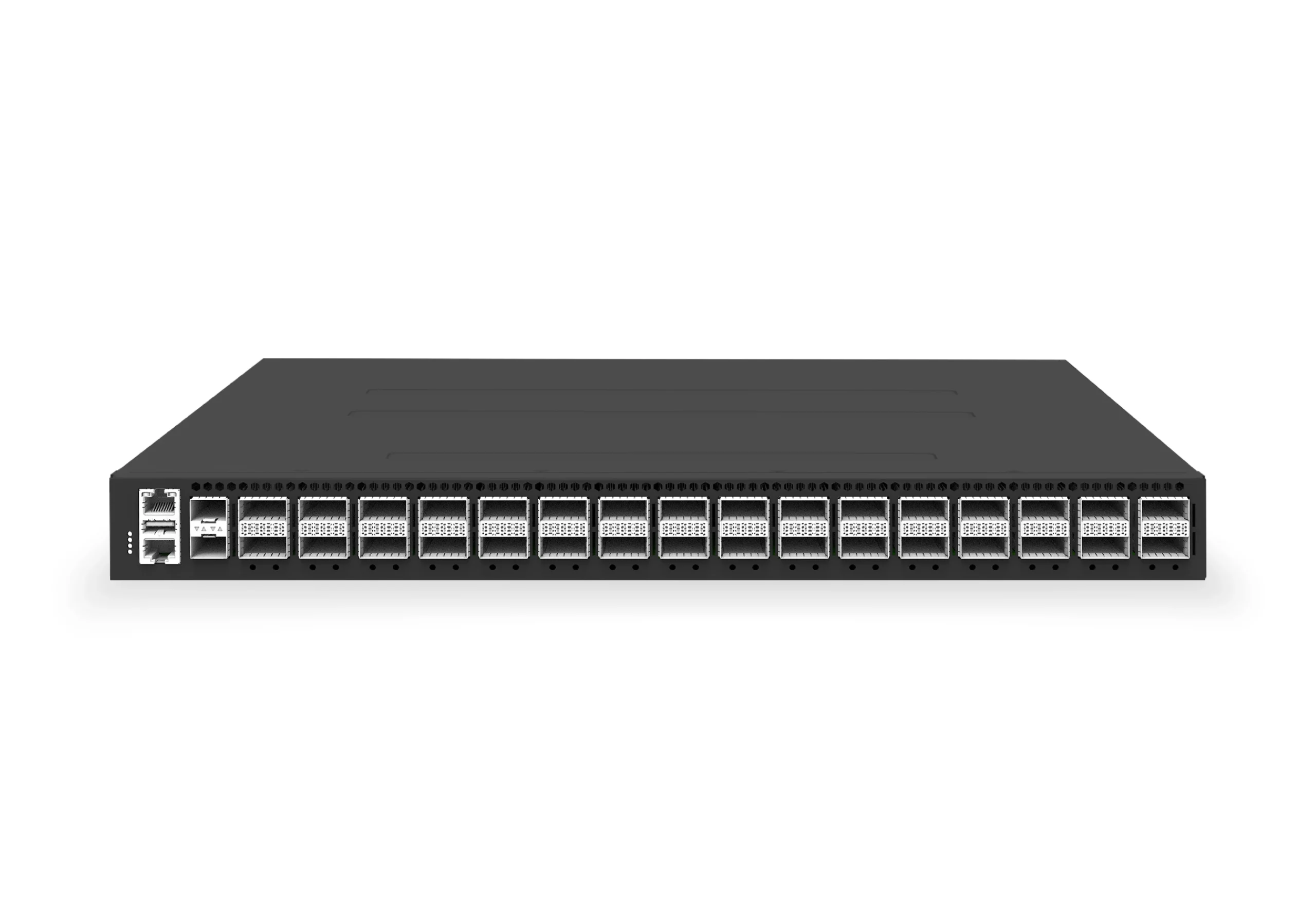 datacenter aiXS-DC-32X400-SP-G232-port 400G spine/core switch for high-capacity data center fabrics and AI-ready backbones.View product
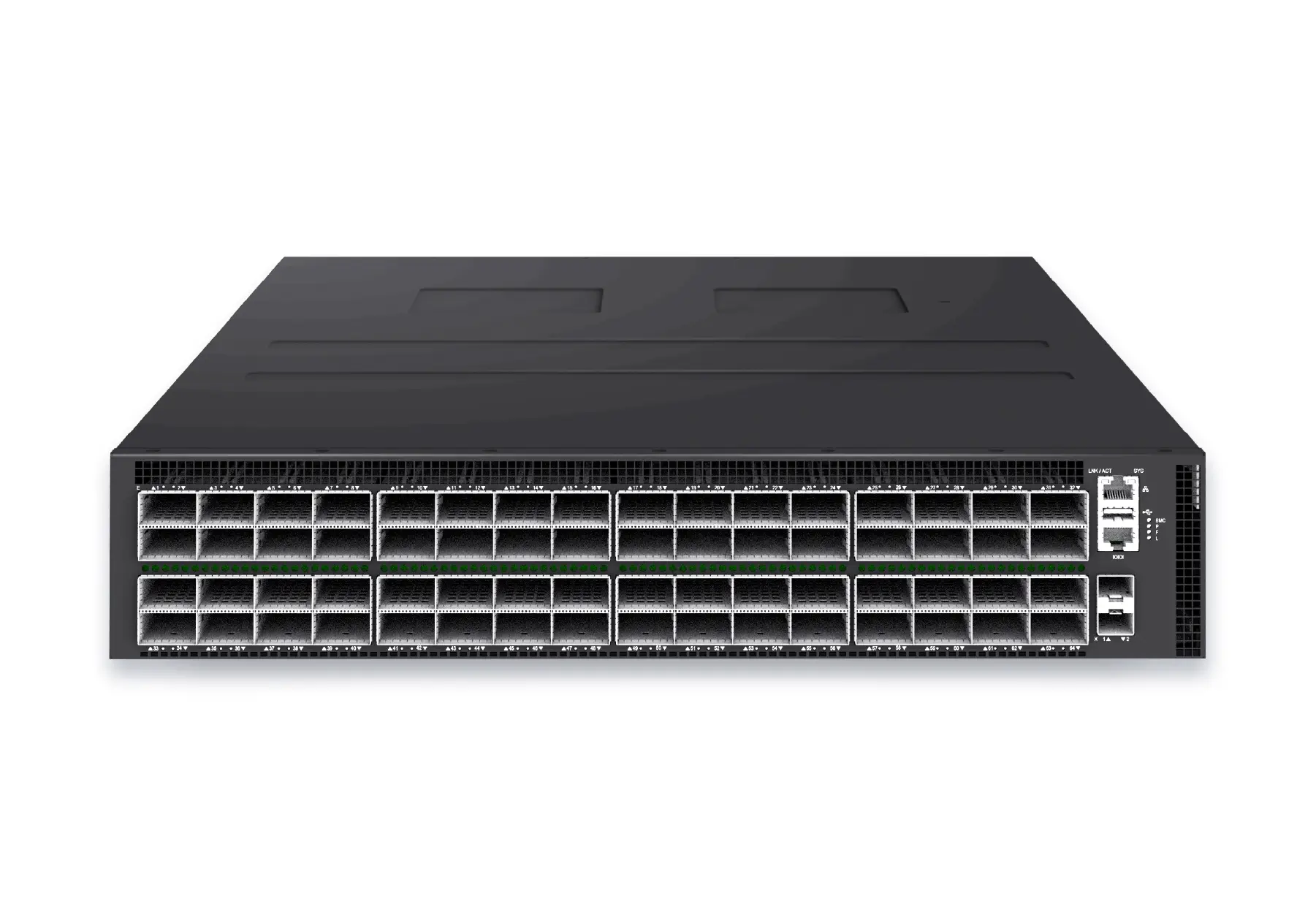 datacenter aiXS-DC-64X800-AI-G164-port 800G AI fabric switch for large-scale GPU clusters, HPC backbones, and ultra-high-throughput data center networks.View product
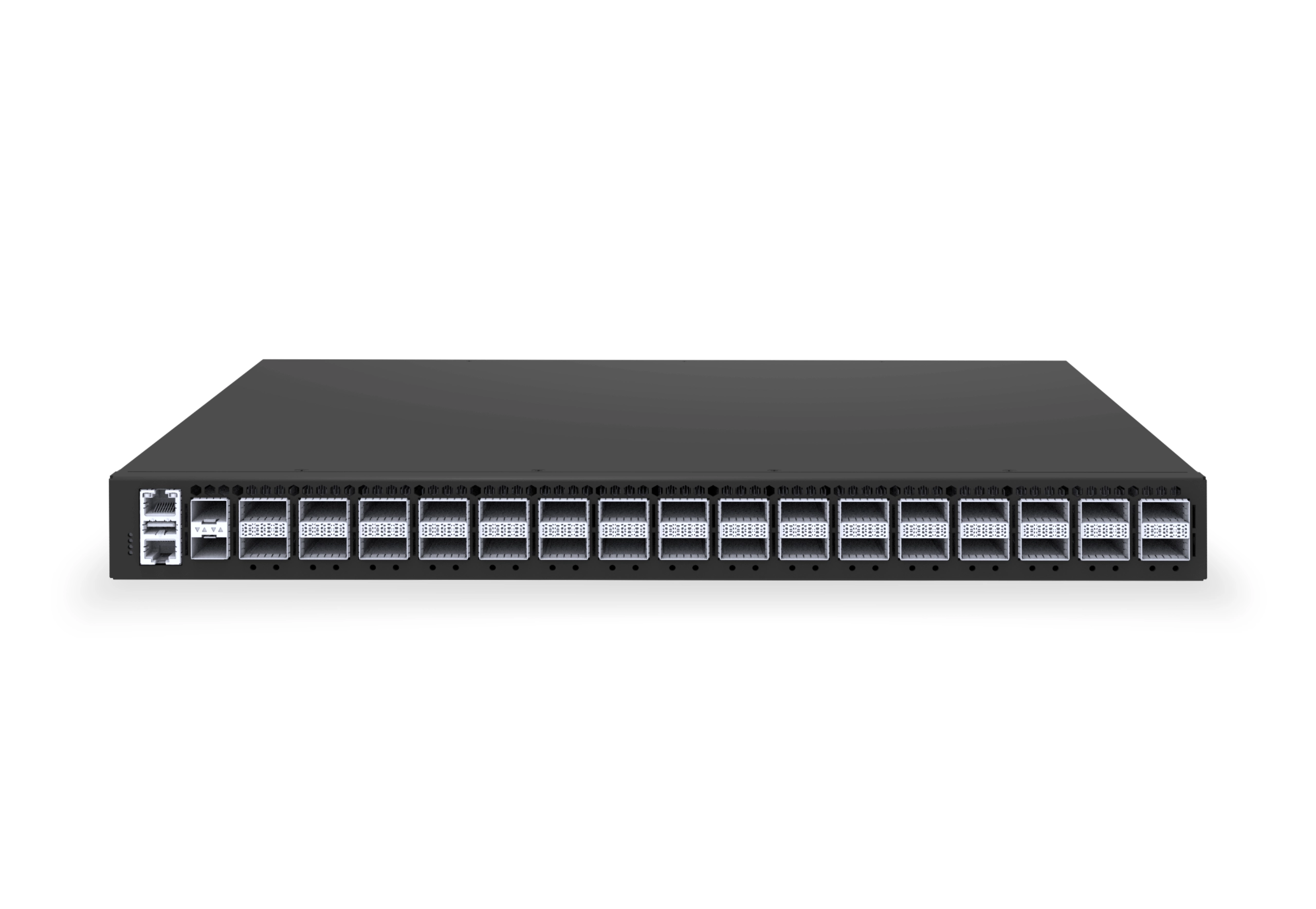 access aggregateXS-AA-32X400-CORE32x 400G QSFP-DD aggregation/core switch with 2x 10G SFP+ auxiliary for enterprise access and aggregation networks.View product
Continue reading
Related articles
 Technical ArticleSONiC Switch Pre-Production Validation Checklist: A 12-Point Testing Playbook for Open Networking TeamsEngineering guidance on SONiC Switch Pre-Production Validation Checklist for Australian data centre buyers, covering form factor choice, link budgets, cabling.Read article
 Technical ArticleWhy Australian Data Centers Are Re-evaluating Open Networking for AI InfrastructureEngineering guide for AI fabric buyers covering RoCE, SONiC, telemetry, optics, support ownership, and deployment validation.Read article
 Technical ArticleSONiC Switch Validation Before Production: What Australian Network Teams Need on Their ChecklistEngineering guide for SONiC and open networking buyers covering platform fit, automation, support, telemetry, and validation evidence.Read article