In brief
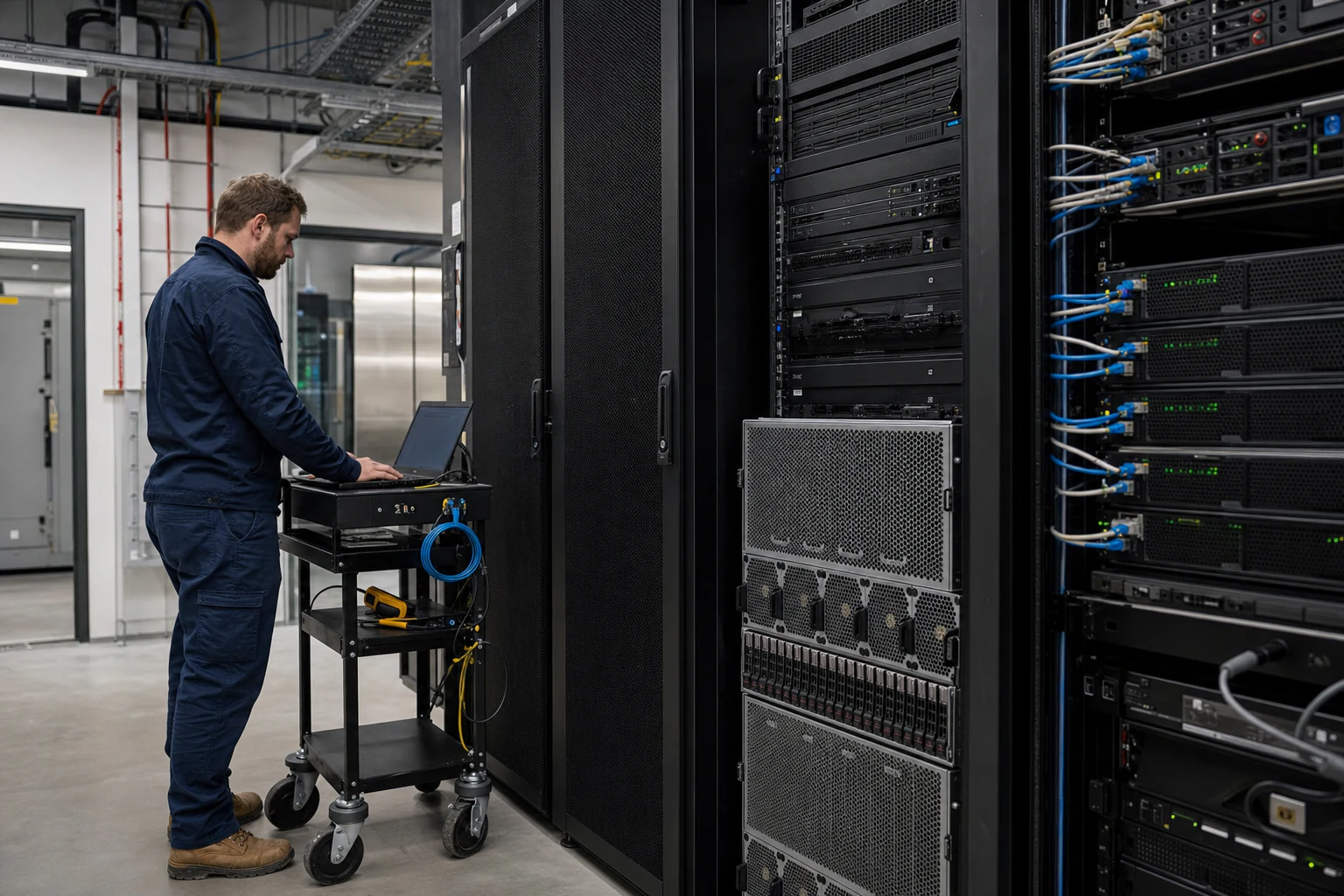
Private AI infrastructure is AI compute, networking, storage, and operations that an organisation controls, on-premises or in a facility of its choosing, so models, prompts, documents, embeddings, and logs stay inside its boundary. A complete deployment spans five layers: GPU compute, data-centre networking, storage, observability, and the power and cooling foundation underneath.
Key takeaways
- "Private" describes a control boundary, not a building: dedicated colocation and single-tenant environments can qualify.
- Trace prompts, documents, embeddings, and logs; if one flow leaves the controlled environment, the design is not fully private.
- A production private AI appliance is a five-layer system, not only a GPU server.
- Regulated teams, data-sensitive organisations, and steady high-volume workloads have the strongest case for private AI.
- Acceptance requires measured throughput and p95 latency on the target models, plus monitoring and an operational handover.
Private AI infrastructure is easy to mistake for a location. A server in an office may be private, but dedicated equipment in a colocation facility can be just as private. What matters is control: where the model runs, where sensitive data moves, who can access it, how long it is retained, and who operates the system.
That distinction is why private AI is broader than a GPU server with the word “private” attached to it. Buyers may encounter terms such as private AI appliance or AI-in-a-box, but the operational requirement is the same. Compute, networking, storage, observability, and the physical environment must function as one system before users can depend on the service.
What Counts as Private AI?
Start by tracing four data flows through any system being evaluated:
- Prompts entered by users or applications.
- Documents ingested directly or retrieved for RAG.
- Embeddings created from those documents and stored in a vector database.
- Logs containing requests, responses, identifiers, errors, and operating metadata.
Private AI infrastructure keeps all four flows inside an environment whose location, access, processing, and retention the organisation controls. If one of them leaves that boundary, the design needs to account for it explicitly.
A GPU cluster in an organisation’s own server room clearly meets that test. Dedicated equipment in a colocation facility can also qualify: the building is rented, but the system boundary remains controlled. A single-tenant hosted environment may qualify when both the architecture and contract place the four flows under the customer’s control.
A shared provider-operated API is different. Strong contractual protections can make it entirely appropriate for many workloads, but contractual protection and architectural control solve different problems. Private AI describes the latter.
A useful rule follows: look at where the four data flows terminate, not at the logo on the building or the label on the service.
The Five Layers of Private AI Infrastructure
A GPU server is necessary, but it is not a production AI platform by itself. Once real users and real data are involved, five layers have to work as one system.
| Layer | Role | Governing decision | Common failure if overlooked |
|---|---|---|---|
| GPU compute | Hosts and serves models | Memory per node versus target models | The selected model does not fit or leaves too little memory for KV cache |
| Networking | Connects compute, storage, ingress, and management | Bandwidth, topology, congestion behaviour, and resilience | GPUs or storage wait behind an undersized or unstable fabric |
| Storage | Holds models, vectors, documents, and service data | Capacity, throughput, IOPS, endurance, and recovery | Model loads and RAG retrieval become the latency bottleneck |
| Observability | Exposes service and infrastructure behaviour | Metrics, logs, traces, alerts, and ownership | Teams cannot explain slow responses or plan capacity |
| Power and cooling | Provides the physical foundation | Rack power, redundancy, airflow, and liquid-cooling readiness | The selected platform cannot be deployed safely at the site |
GPU compute
The compute layer holds and runs the models. Its governing decision is GPU memory per node relative to the target model, serving precision, context length, and expected concurrency.
Large open models can require hundreds of gigabytes of accelerator memory before KV cache and framework overhead are included. Per-node memory therefore decides whether a workload can stay on one node, must span several, or is better served by a smaller or more heavily quantised model.
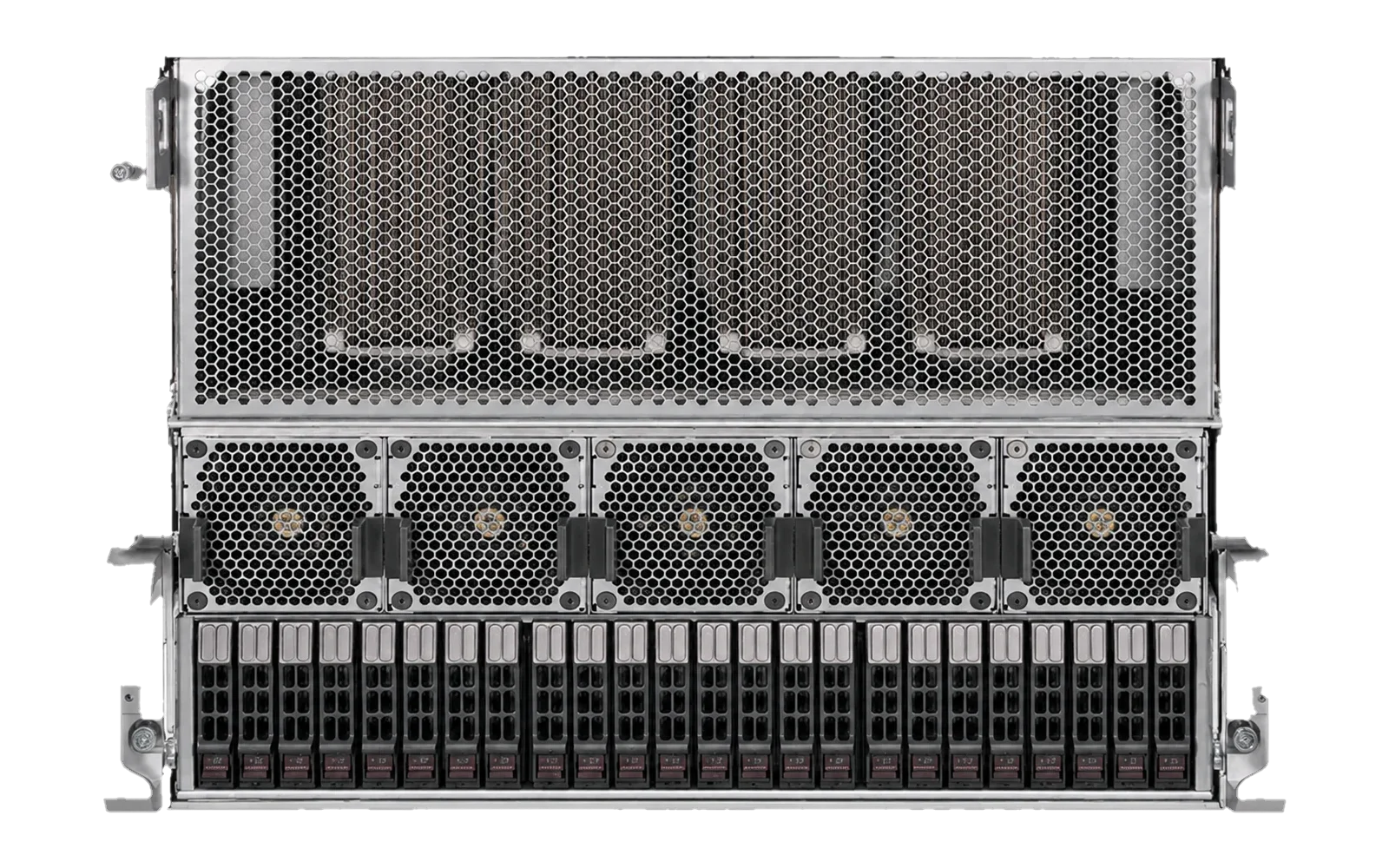
An 8-GPU platform such as the xSONiC AI Inference Server is one unit of capacity around which a private deployment can be sized. Model and service requirements should drive that hardware choice, not be retrofitted to it later.
Networking
The network connects inference nodes, storage, application ingress, management, and monitoring. Interactive inference can be latency-sensitive and bursty, while RAG adds substantial storage traffic and model loading creates large sequential transfers.
The appropriate link speed depends on the number of nodes and the workload. High-density deployments may use 100G, 200G, or 400G Ethernet, but the number on the port does not define a working fabric. Topology, oversubscription, congestion management, optics, cabling, telemetry, and failure behaviour must be reviewed together.
For a deeper treatment of these dependencies, see the network and storage planning guide for private AI inference servers.
Storage
“Storage” contains several workloads with different behaviour:
- Model files are large and read during loading or replacement.
- Vector databases are latency-sensitive and can generate random reads.
- Document corpora need capacity, access control, lifecycle management, and backup.
- Service logs and evaluation datasets need retention policies of their own.
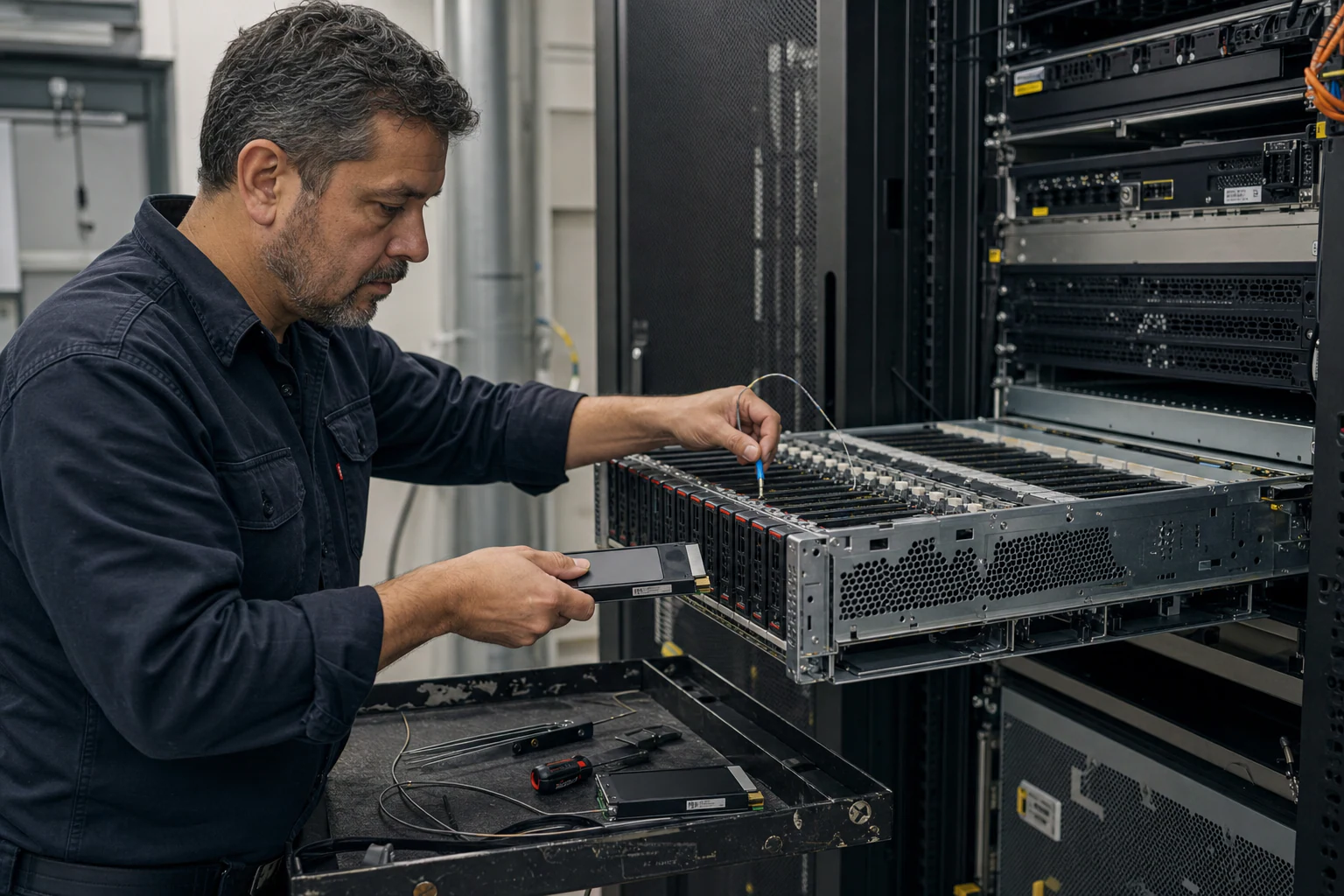
NVMe capacity and performance should be sized per tier. A vector store starved for IOPS can produce a slow assistant that no GPU upgrade will fix. Endurance, serviceability, firmware management, data protection, and recovery matter as much as a headline peak sequential speed.
Observability
Observability covers request-level metrics, GPU health, throughput, latency, queueing, model-load events, storage performance, network congestion, and application errors. These signals let a team diagnose tomorrow’s incident and make an evidence-based capacity decision six months later.
At minimum, the operating team should be able to answer:
- Which model and version served the request?
- What were time to first token, output rate, and p95 latency?
- Was the request delayed by queueing, storage, compute, or the network?
- Are GPU memory, thermals, and error counters healthy?
- How close is the service to its agreed concurrency or latency threshold?
Without these answers, a private deployment is controlled physically but not operationally.
Power and cooling
Power and cooling are the physical foundation. Dense GPU servers can require double-digit kilowatts at the system level, so rack feeds, redundancy policy, airflow, heat rejection, and liquid-cooling compatibility are gating questions, not facilities footnotes.
The site review should happen before a final hardware configuration is approved. A platform that meets the model requirement but cannot be powered, cooled, racked, or serviced at the intended site is not a deployable design.
Who Actually Needs Private AI?
Most serious private AI evaluations begin with one or more of three needs.
Regulated and sovereignty-sensitive organisations
Government, health, finance, legal, and other regulated teams may need stronger control over where sensitive information is processed and retained. Private infrastructure can make the system boundary clearer, but it does not create compliance automatically. Access control, governance, monitoring, retention, incident response, and legal review still apply.
Organisations whose proprietary data is the product
Legal matter files, unreleased designs, deal rooms, patient records, source code, industrial data, and internal knowledge bases may be too sensitive to send through a shared service. Local inference can keep the model workflow closer to the data and reduce the number of external processing paths.
Teams with steady, high-volume usage
Cloud APIs are attractive for experimentation and variable demand because they avoid capital expenditure and provide immediate elasticity. Once a workload is stable and highly utilised, however, linear per-token pricing may eventually cross the amortised cost of dedicated infrastructure.
That crossover must be calculated from actual request volume, model choice, utilisation, power, cooling, support, and lifecycle costs. Private AI is not automatically cheaper; it becomes economically credible when the workload is steady enough to use the capacity purchased.
Typical first workloads include an internal assistant grounded on company documents, RAG search over a controlled corpus, a coding assistant, document intelligence, or an internal inference API for product teams.
Build, Buy, or Integrate?
Three procurement paths can deliver the same logical stack, but each places engineering work, operational responsibility, and integration risk in a different place.
Build from components
A component-led build provides maximum flexibility and demands the most from the internal team. The organisation owns hardware qualification, GPU and server integration, network design, storage architecture, serving-stack tuning, observability, security hardening, validation, and support coordination.
This path fits teams with strong platform engineering, time to test, and a clear reason to control each layer independently.
Buy an integrated private AI system
An integrated deployment packages sizing, assembly, networking, storage, software bring-up, validation, documentation, and support ownership around the target workload. This is the closest fit to the term private AI appliance, although the deliverable is still an engineered system rather than a sealed box.
The real benefit is not merely a faster installation. It is one acceptance plan and a clear owner for the gaps between layers. The trade-off is less freedom to replace every component or operating assumption independently.
Use cloud or a hybrid architecture
Cloud remains the strongest answer for experimental, spiky, or rapidly changing workloads. A hybrid design can keep evaluation and occasional frontier-model use in the cloud while moving steady or sensitive workloads onto controlled infrastructure.
For many organisations, hybrid is not a temporary stage. It is the final architecture.
What Does Deployment Acceptance Look Like?
Racking the hardware is a project milestone, not proof that the service is ready. A private AI deployment is accepted when it has been measured against the intended workload, and that acceptance plan should be agreed before the final purchase.
| Acceptance area | Evidence to require |
|---|---|
| Model fit | Target model, version, precision, context length, and memory headroom documented |
| Performance | Throughput, time to first token, and p50/p95 latency measured under a representative request profile |
| Concurrency | Service tested at expected load and beyond the planned peak |
| Data path | Prompt, document, embedding, and log locations verified |
| Infrastructure | Compute, network, storage, power, cooling, and recovery checks completed |
| Operations | Dashboards, alerts, runbooks, change control, and support escalation handed over |
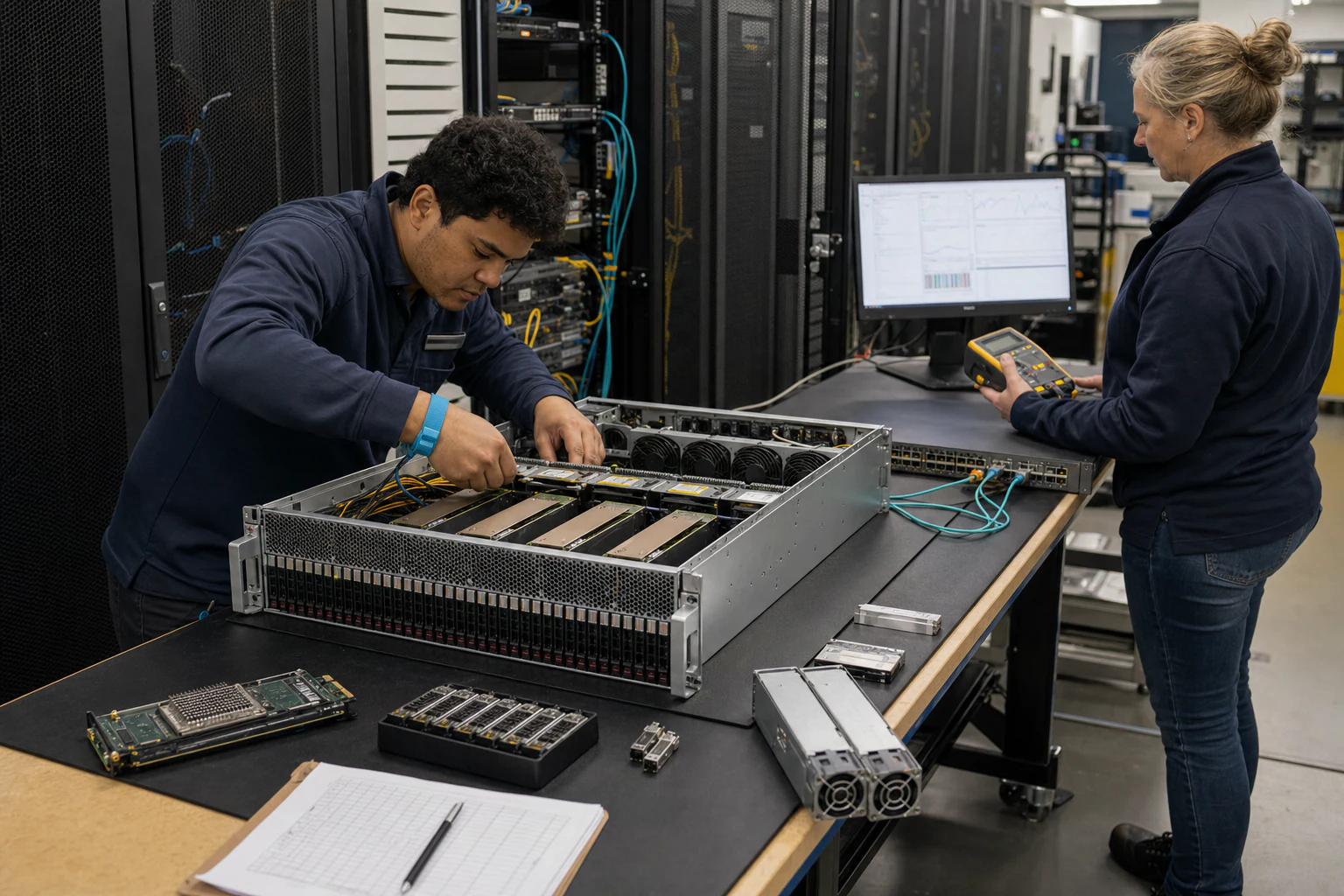
xSONiC structures this work as Discover, Size, Integrate, Validate, and Handover. The important principle is vendor-independent: sizing assumptions should become measured acceptance results on the customer’s models before the service is declared ready.
The private AI procurement scorecard provides a complementary framework for comparing infrastructure options.
When Is Private AI the Wrong Answer?
An honest design process must be willing to conclude that private AI is the wrong answer. It has a defined fit, not a universal claim on every workload.
Choose cloud first when usage is experimental or spiky and elasticity has real value. Use an API or hybrid design when the required capability depends on a closed model whose weights are unavailable. Delay procurement when the organisation has not identified its target models, data sources, request profile, or operational owner.
Private infrastructure is also a poor answer when no team or integration partner can operate it. Hardware does not replace patching, monitoring, capacity planning, security management, recovery testing, or user support.
Where data carries no material sensitivity or sovereignty requirement, the remaining case is mainly economic and operational. That decision belongs in a measured workload model, not in a generic claim that owning hardware is always cheaper.
Private AI is therefore an operating model, not simply a purchase. Done well, it gives an organisation a clear data boundary, predictable service behaviour, and evidence that the whole stack can support its users. Done poorly, it is expensive hardware surrounded by unresolved operational risk.
The decision becomes much clearer once the team can name its models, trace its four data flows, describe the expected request profile, and define measurable acceptance criteria. Private AI earns its place where control, compliance, predictable service levels, and steady scale genuinely intersect.
Product fit
Where xSONiC Fits
xSONiC delivers private AI as an integrated infrastructure system: an 8-GPU AI Inference Server with switching, optics, NVMe storage, observability, workload sizing, validation, and handover. The design is tested against the customer's models and request profile rather than a single generic benchmark.
FAQ
Frequently asked questions
Is private AI the same as on-premises AI?
On-premises is one form of private AI, not the definition. Private AI means prompts, documents, embeddings, and logs stay on infrastructure the organisation controls. That can be an internal server room, dedicated colocation equipment, or a genuinely single-tenant hosted environment.
Do I need my own data centre for private AI?
No. A first deployment can use an existing server room or a dedicated colocation rack. It still needs site engineering for rack capacity, power, cooling, networking, storage, and service access.
What skills are needed to operate private AI infrastructure?
Day-two operations need Linux and networking fundamentals, familiarity with an inference serving stack such as vLLM, monitoring discipline, change control, and a defined support path. An integrated delivery can cover hardware qualification, fabric design, sizing, and validation.
How do I know a private AI deployment actually works?
Require measured acceptance: throughput and p95 latency on the target models under a representative request profile, with monitoring, alerting, recovery procedures, and handover documentation in place.
Continue reading
Related articles
 Technical ArticleNetwork and Storage Planning for Private AI Inference Servers: A Practical Buyer GuideA practical buyer guide to network and storage planning for private AI inference servers in Australian data centers.Read article
 Technical ArticleProcurement Scorecard: Networking Infrastructure for Private AI Inference in Australian Enterprise ProgramsEngineering guidance on Procurement Scorecard for Australian infrastructure teams, covering form factor tradeoffs, capacity planning, thermal design, endurance, and.Read article
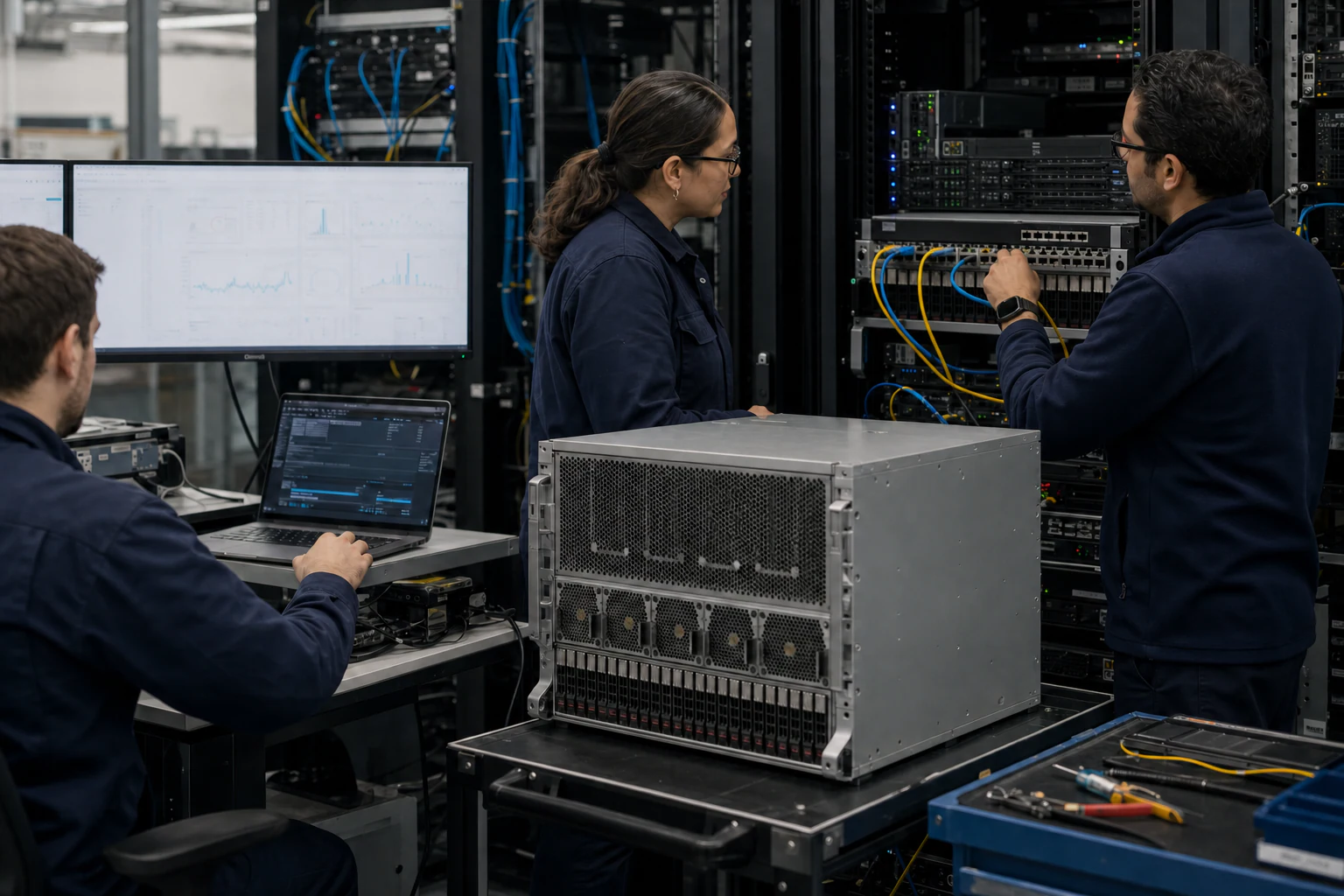 Technical ArticlePrivate AI Inference Networking in Australia: What Enterprise GPU Deployments Need from the Network LayerEngineering guidance on Private AI Inference Networking in Australia for Australian network teams, covering underlay design, EVPN-VXLAN operations, interoperability.Read article
Relevant hardware
Related products
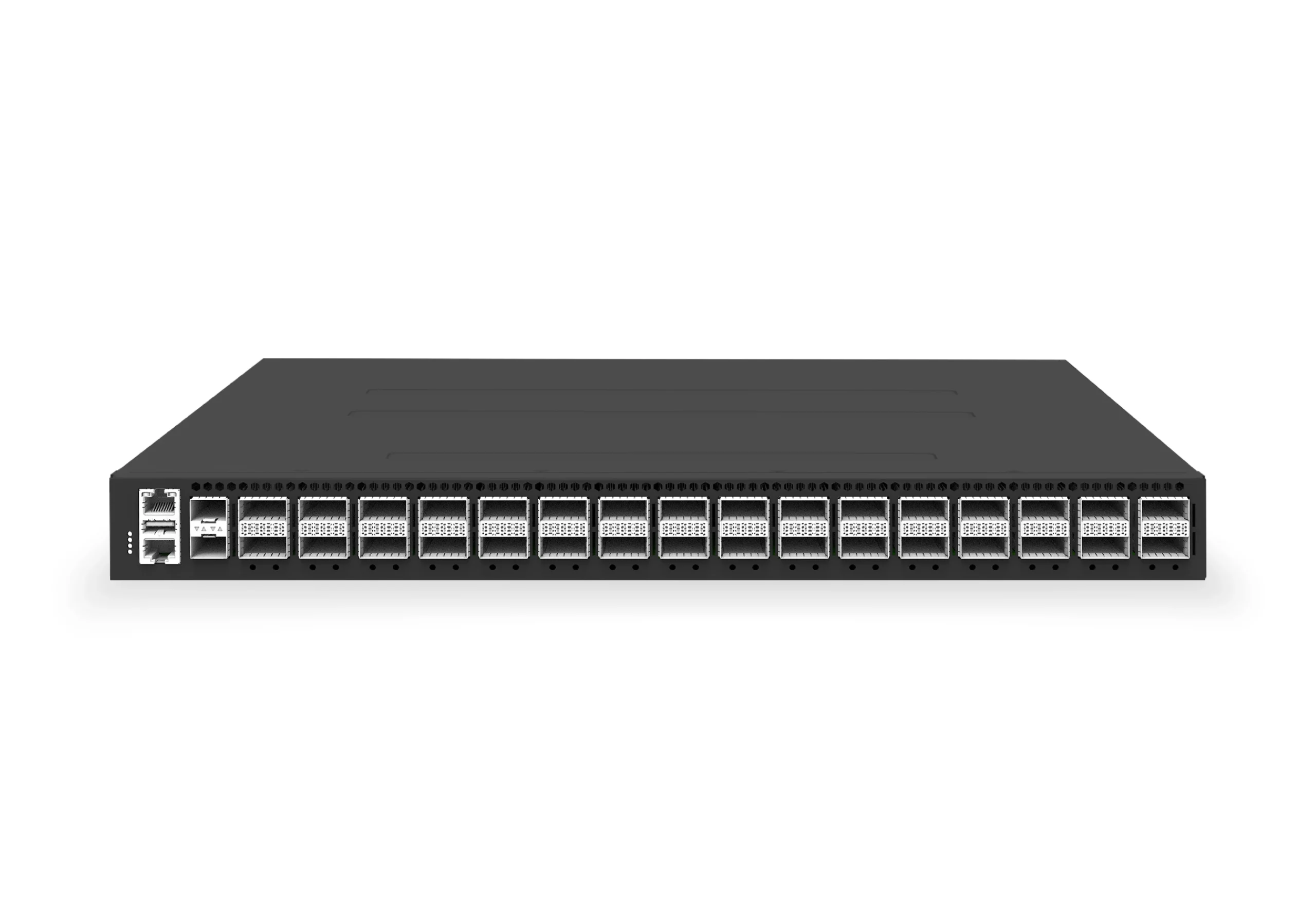 datacenter aiXS-DC-32X400-SP-G232-port 400G spine/core switch for high-capacity data center fabrics and AI-ready backbones.View product
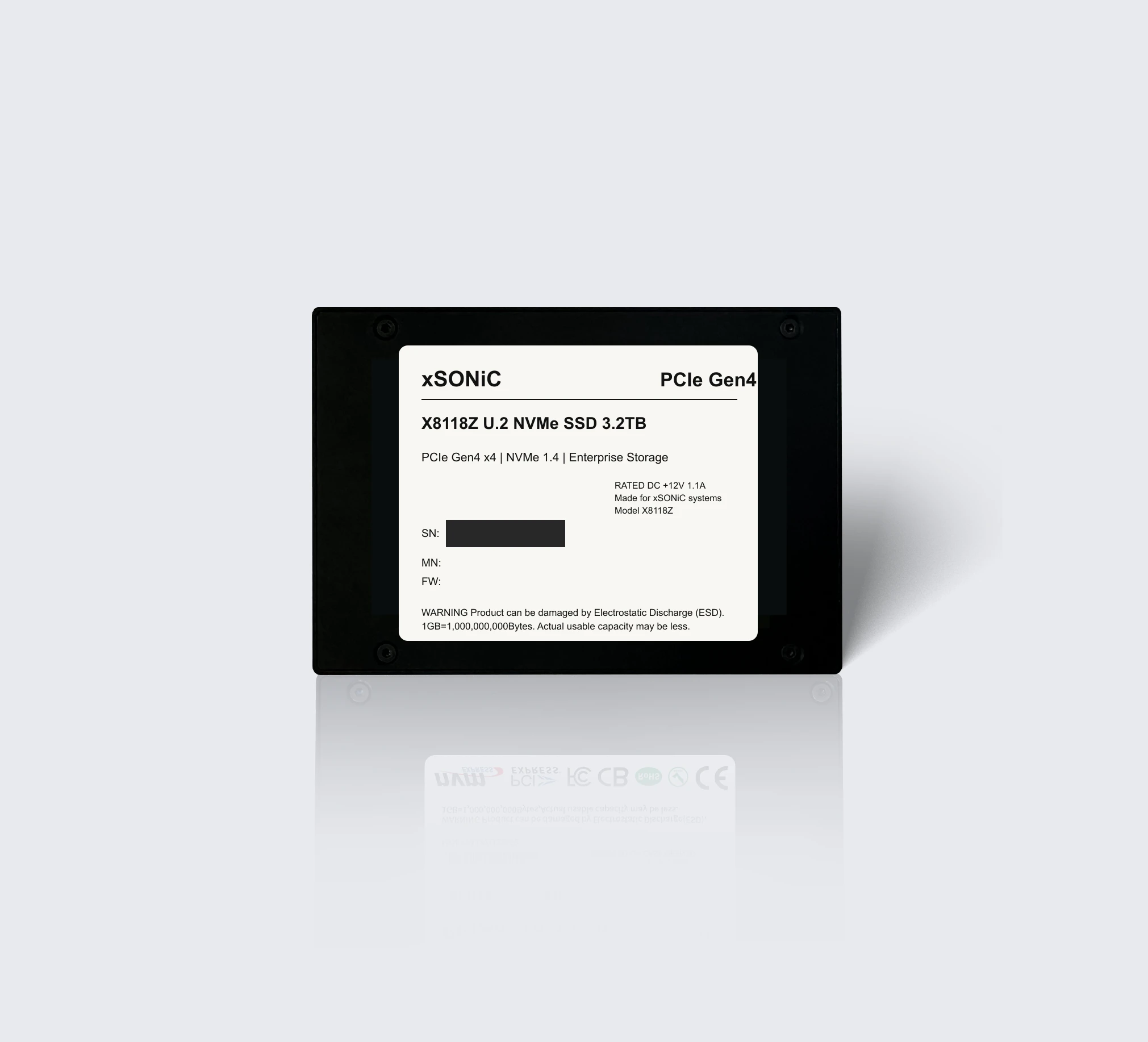 nvme ssdXS-SSD-8118Z-U2Enterprise U.2 NVMe SSD with PCIe Gen4 x4, NVMe 1.4, up to 7.1 GB/s sequential read, and 1,000K IOPS for data center storage workloads.View product