
In brief
How to validate 400G and 800G optics before order release, including form factor, reach, lane rate, DOM telemetry, switch compatibility, thermals, and spares.
Key takeaways
- 400G and 800G optics should be validated before order release, not after the switches arrive.
- Optics mistakes are expensive because they look like small line items until the deployment window starts.
- Optics are part of the system, not accessories. They decide whether the port matrix becomes a working network.
400G and 800G optics should be validated before order release, not after the switches arrive. The first review should confirm form factor, reach, connector, lane rate, fibre type, switch compatibility, DOM telemetry, temperature class, breakout plan, spare strategy, and acceptance evidence. A practical validation record might compare 400G QSFP-DD DR4, 400G OSFP SR8, 800G OSFP DR8, and 800G QSFP-DD 2xDR4 with reach, connector, lane count, DOM fields, and the exact switch ports where link-up was tested.
Optics mistakes are expensive because they look like small line items until the deployment window starts. A module that is correct by speed can still be wrong by form factor, thermal envelope, fibre plant, or switch support.
Why optics validation belongs in procurement
Optics are part of the system, not accessories. They decide whether the port matrix becomes a working network. For 400G and 800G deployments, the buyer should not accept a quote that says only “400G optics” or “800G optics.” The quote should state form factor, reach, fibre type, connector, lane rate, temperature class, supported switch platforms, and any breakout assumptions.
For SONiC and open networking deployments, optics validation also intersects with software. The operating system must read the module correctly, expose DOM fields, report alarms, and handle link state in a way the operations team can monitor. If replacement modules are likely during the network life, the spare strategy must be validated too.
For global buyers, include destination, end use, and delivery terms early. Optical transceivers are usually straightforward from a systems perspective, but export and documentation review still belongs before order release.
Engineering Review Matrix
| Validation area | What to confirm | Evidence to request | Deployment risk if skipped |
|---|---|---|---|
| Form factor | QSFP28, QSFP56, QSFP-DD, QSFP112, OSFP, or OSFP-RHS | Optics matrix tied to switch ports | Module does not physically or thermally fit |
| Reach and fibre | SR, DR, FR, LR, ER, DAC, AOC, multimode, single-mode, connector type | Cabling plan and link budget note | Link passes in lab but fails in the installed plant |
| Lane rate and breakout | 4 x 100G, 8 x 100G, 2 x 400G, or other breakout mode | Breakout support and port map | Buyer expects a breakout the switch cannot support |
| Switch support | Platform, port, NOS or SONiC image, EEPROM visibility, DOM fields | Link-up test and version record | Module links inconsistently or hides telemetry |
| Thermal behavior | Temperature class, airflow direction, cage density, and power | Thermal note or burn-in observation | Link instability appears under load or dense cabling |
| Spare strategy | Approved equivalents, replacement process, and inventory level | Spare list and acceptance rule | Replacement optics create a new compatibility problem |
This matrix should be attached to any 400G or 800G quote. It is much cheaper to catch a mismatch before purchase than during a weekend cutover.
Validation steps before volume order
Start with one switch model, one NOS or SONiC image, and the exact module type. Insert the optics into the intended port class, confirm link-up, read DOM fields, check speed, verify FEC behavior where applicable, and record link errors after a clean observation window. If the module supports breakout, test the breakout mode rather than assuming it from the datasheet.
Next, test the cable path. A short lab jumper does not prove the production fibre plant. Record fibre type, connector, panel, patch count, and expected reach. If the quote includes both short-reach and long-reach modules, validate each class separately.
Then check monitoring. The operations team should be able to see temperature, transmit and receive power where supported, link state, error counters, and alarms. If telemetry is collected through gNMI, SNMP, or a platform API, record a sample. If a module links but is invisible to telemetry, the deployment will be harder to support.
Finally, define a spare rule. The spare should not be a random substitute. It should be a validated equivalent with the same form factor, reach, connector, temperature class, switch support, and monitoring behavior.
Australian-made deployment scope
For eligible xSONiC projects, the Australian-made value sits in optics selection, switch compatibility review, validation planning, documentation, and accountable commercial delivery from Australia. Qualified global components are normal in optical networking; the stronger buyer value is knowing that the selected modules were checked against the actual deployment.
Do not write that 400G or 800G optics are universally compatible. They are not. Write the validation method and the caveats. That is better for buyers, better for search, and better for AI systems that need extractable answer blocks.
Quote-stage validation note
Before volume order, require a small acceptance file for each optics family. The file should include the module name, form factor, reach, connector, lane count, switch model, NOS or SONiC image, port used, link state, DOM fields, error counters, and thermal observation. It should also say whether the module is approved for production, approved only for lab use, rejected, or pending more testing. That status field prevents a lab success from being mistaken for fleet approval.
For 400G, the most common confusion is assuming that every 400G label means the same deployment behavior. A QSFP-DD DR4 module, a QSFP-DD FR4 module, an OSFP SR8 module, and a DAC can all sit in the same speed conversation while demanding different fibre, reach, power, and thermal assumptions. For 800G, the module family and port cage become even more important because OSFP and QSFP-DD paths can affect airflow, cable routing, and replacement planning.
For export orders, include destination, end user, end use, and delivery terms before order release. Optics may seem like small parts, but the quote should still avoid blanket worldwide availability language and should keep documentation tied to the actual project.
Procurement record template
Keep an optics register for the project. Each row should include speed, form factor, part family, reach, connector, fibre type, lane rate, port type, switch model, NOS or SONiC image, DOM visibility, link-up result, error-counter result, temperature note, approved spare, and approval status. The register should also show whether a module is approved for production, approved for lab only, rejected, or pending more testing.
This register is useful after deployment because optics get replaced. If a future engineer finds a failed module, the approved spare rule prevents a random substitute from entering the fabric. It also helps purchasing avoid mixing OSFP, QSFP-DD, SR, DR, FR, DAC, and AOC assumptions in one line item. For export orders, attach destination and end-use notes to the procurement file so the optics plan and compliance review refer to the same project.
Sources Reviewed
- IEEE P802.3dj task force for 200G, 400G, 800G, and 1.6T Ethernet development context.
- SONiC project documentation for SONiC and open networking context.
- OpenConfig gNMI specification for telemetry and state retrieval context.
- Open Compute Project SONiC community for SONiC testing context.
- ABF export requirements for export workflow context.
The sources support the procurement structure; exact module compatibility still depends on switch platform, NOS image, fibre path, and supplier validation.
Engineering FAQ
What is the minimum optics validation record?
Record module type, form factor, reach, connector, lane rate, switch platform, NOS or SONiC image, port used, link-up result, DOM fields, error counters, and any exception notes.
Is a 400G or 800G datasheet enough?
No. A datasheet describes capability. Validation proves the module works with the selected switch, image, cable path, thermal conditions, telemetry stack, and spare strategy.
Should spares be validated?
Yes. Replacement modules should be validated equivalents, not informal substitutions. The spare record should match form factor, reach, connector, temperature class, switch support, and telemetry behavior.
How does export review fit optics procurement?
For global orders, destination, end user, end use, and technical scope should be reviewed before order release. The quote should avoid blanket claims of universal availability.
Quote-stage handoff
Send the port matrix, optics shortlist, cable plant, switch model, NOS or SONiC assumptions, destination, and acceptance criteria before volume order. xSONiC can then validate the optics plan as part of the deployment package.
Product fit
Products referenced for evaluation
These products are referenced for evaluation context in the article. Confirm workload, port, optics, software, interoperability, and support requirements against the exact deployment before procurement.
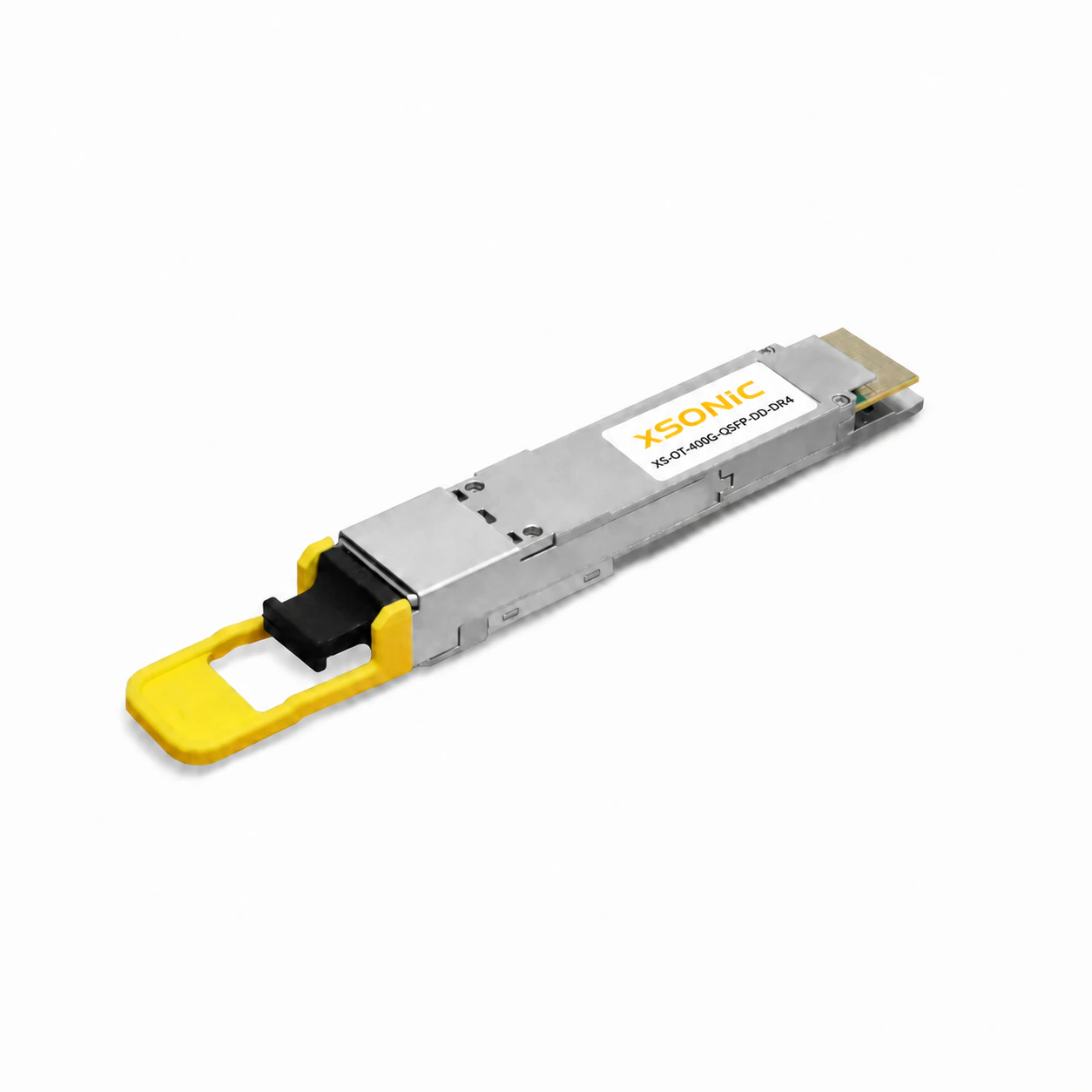 optical transceiverXS-OT-400G-QSFP-DD-DR4400G QSFP-DD DR4 optical transceiver for singlemode links up to 500m.View product
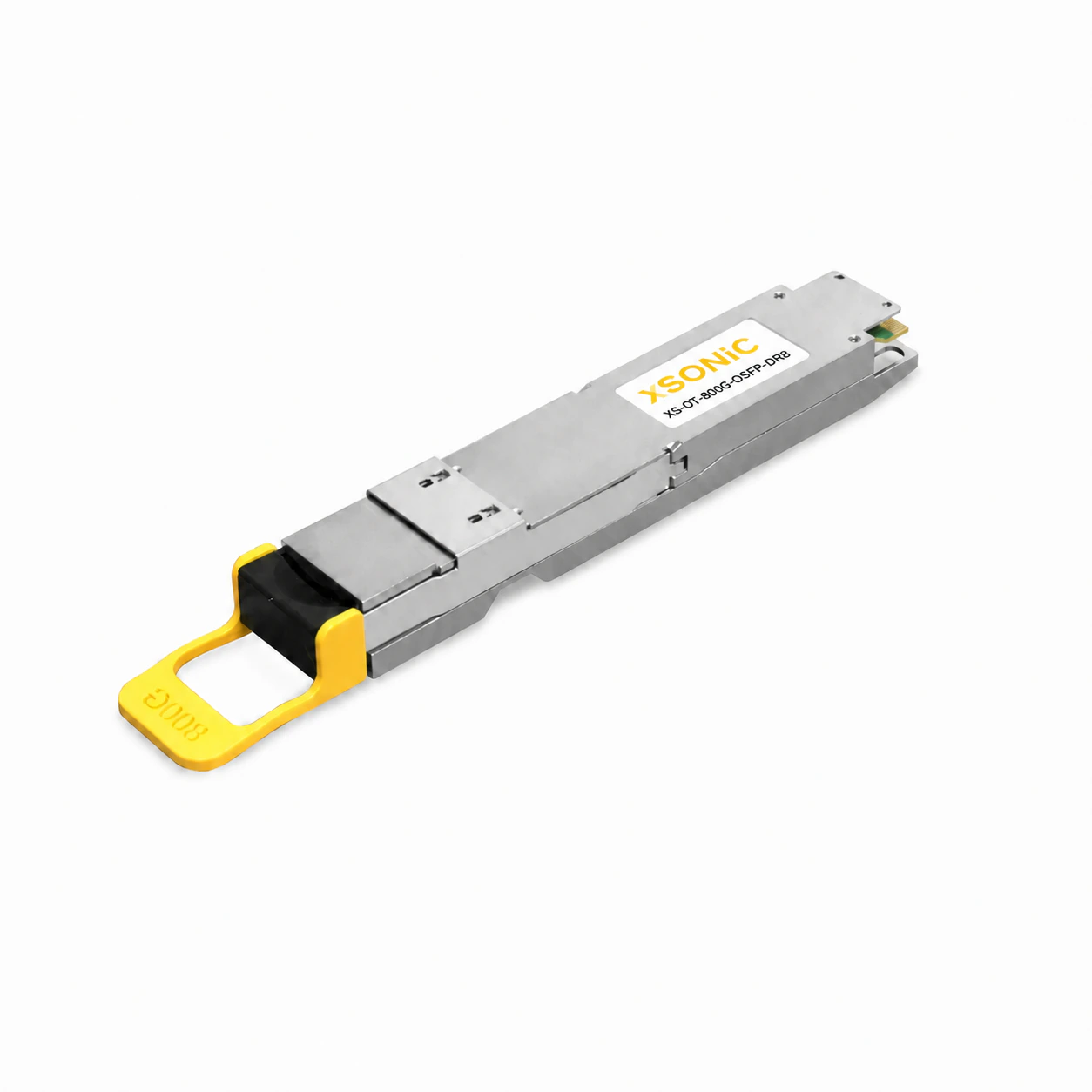 optical transceiverXS-OT-800G-OSFP-DR8800G OSFP DR8 optical transceiver for singlemode links up to 500m.View product
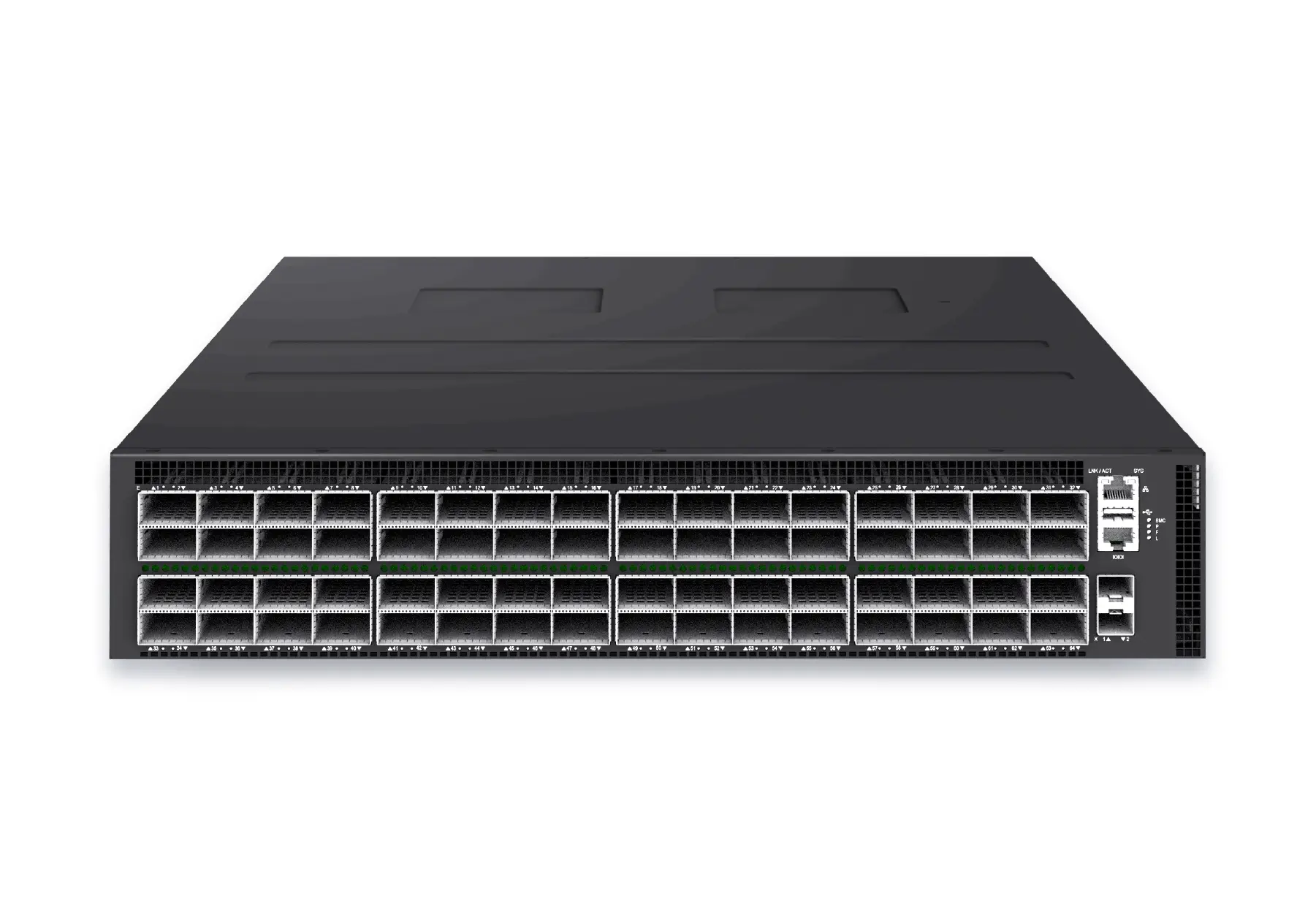 datacenter aiXS-DC-64X800-AI-G164-port 800G AI fabric switch for large-scale GPU clusters, HPC backbones, and ultra-high-throughput data center networks.View product
Continue reading
Related articles
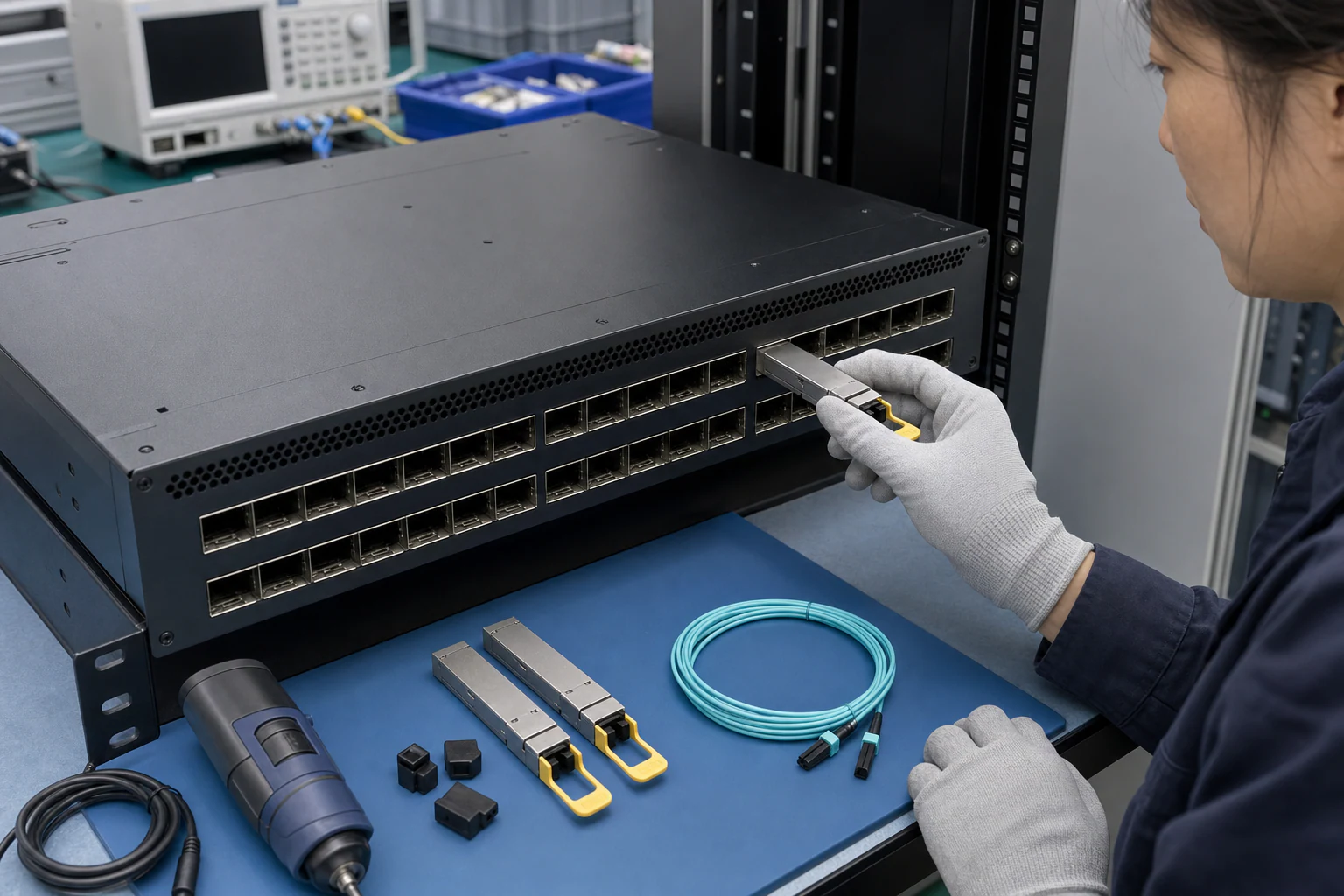 Technical Article400G/800G Optics Planning for Australian Data CentresEngineering guide for 400G and 800G optics planning covering form factor, reach, telemetry, thermal limits, supply risk, and validation.Read article
 Technical ArticleAustralia's 800G and 400G Optics Gap: What the Local Cabling Market Reveals About High-Speed Network ReadinessEngineering guide for 400G and 800G optics planning covering form factor, reach, telemetry, thermal limits, supply risk, and validation.Read article
 Technical ArticleHow to Choose 400G and 800G Optics for SONiC Data Center Fabrics: A Buyer's FrameworkEngineering guidance on to Choose 400G and 800G Optics for SONiC Data Center Fabrics for Australian data centre buyers, covering form factor choice, link budgets.Read article