Comparison evidence boundary
No product photograph establishes a universal advantage over Cisco.
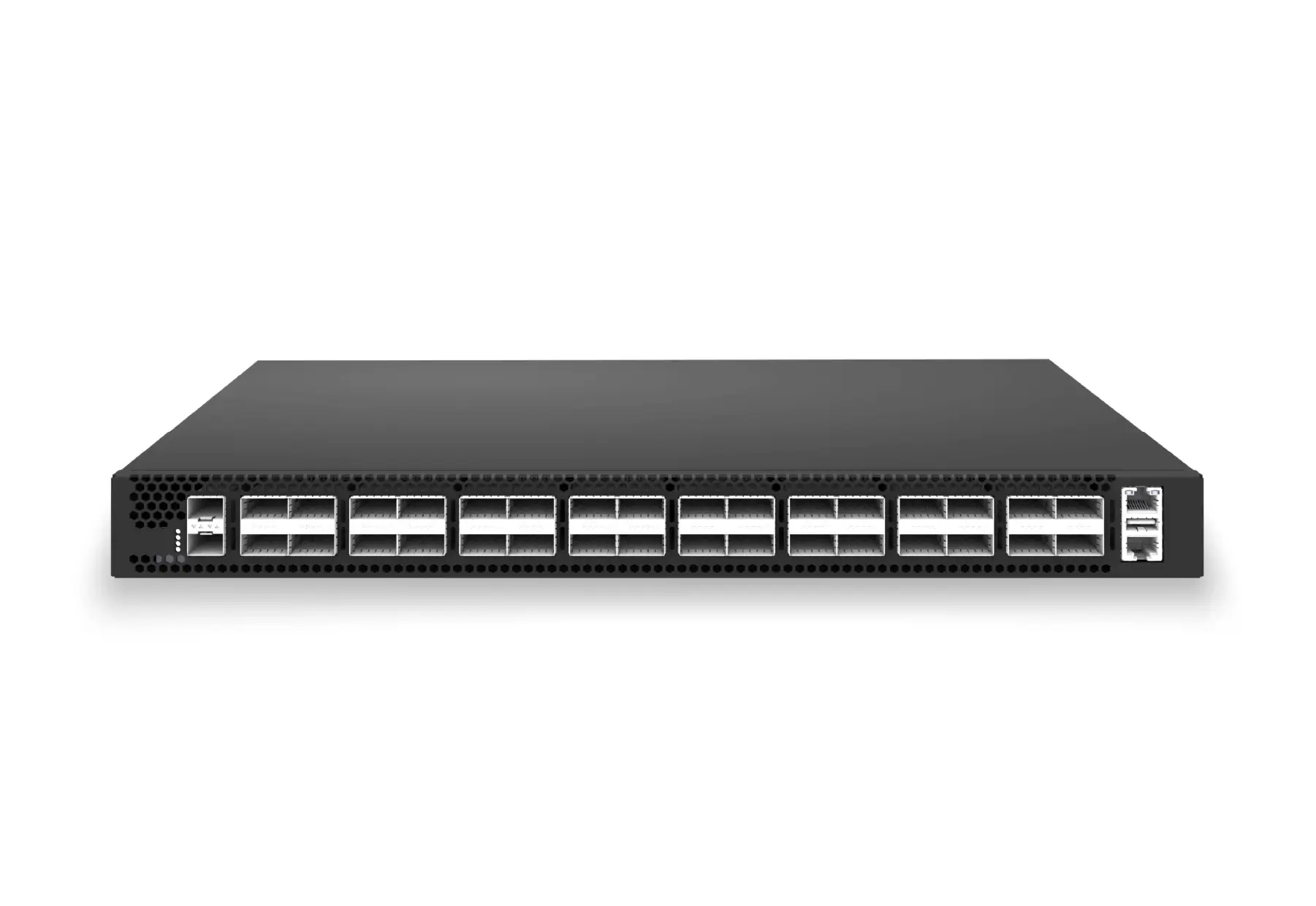
The image in this panel is a real xSONiC catalogue asset. It is not a Cisco product image, a side-by-side laboratory test, a customer deployment, or evidence of lower cost, broader compatibility or better support.
What establishes a project-specific claim
- Matched xSONiC and Cisco bills of materials for the same requirement
- Current vendor documentation for the exact platforms, releases, features and licence terms
- Like-for-like commercial quotes plus scoped validation results for the intended environment
Swipe horizontally to review all columns.
| Consideration | xSONiC | Cisco | Validate before purchase |
|---|---|---|---|
| Network operating model | Enterprise SONiC builds on selected xSONiC switch platforms. | Cisco Nexus platforms run NX-OS or ACI mode according to the platform and design. | Exact switch SKU, supported image, release train, and target architecture. |
| Platform choice | The published catalogue spans several port and speed profiles; support remains SKU-specific. | NX-OS and ACI support is defined for specific Cisco Nexus platforms. | ASIC, optics, airflow, buffers, feature matrix, and approved hardware list. |
| Licensing | Software, support, and service inclusions must be confirmed in the xSONiC quotation. | Cisco documents platform- and feature-dependent tiers, subscriptions, perpetual options, and add-ons. | Required features, licence tier, term, renewals, and portability for each line item. |
| Automation and extensibility | SONiC supports open networking workflows; delivered interfaces depend on the qualified image and platform. | NX-OS management and automation support varies by platform and software release. | Required APIs, YANG paths, telemetry, authentication, and tested automation versions. |
| Support model | Commercial engineering and lifecycle coverage is defined by the selected xSONiC support scope. | Cisco documentation and TAC services are available under the applicable product and service terms. | SLA, escalation path, RMA region, software maintenance, and end-of-support dates. |
| High-speed switching | The current xSONiC catalogue includes platforms advertised up to 800G interfaces. | Cisco licensing documentation identifies supported Nexus 800G fixed platforms. | Port form factor, breakout mode, qualified optics, throughput, power, and cooling. |
Explore xSONiC when
Your team is prepared to qualify an open-networking stack.
- You want SONiC-based operations and will qualify the exact hardware and image combination.
- You need a requirements-matched port profile rather than continuity with an incumbent Cisco design.
- You can evaluate automation, support, spares, and lifecycle terms as part of a controlled proof of concept.
Explore Cisco when
Continuity with the existing vendor ecosystem is the priority.
- Your environment depends on Cisco-specific architectures, tooling, workflows, or staff expertise.
- You need platform and feature continuity with an existing Nexus estate.
- Your procurement and support processes are already standardised around Cisco services and licensing.
Quote-specific TCO
Compare the complete deployment bill, not a headline licence claim.
Public list prices do not capture discounts, support levels, optics, spares, integration effort, training, or migration risk. Request like-for-like bills of materials and model the same service period.
- Acquisition
- Hardware, optics, licences, subscriptions, and initial support.
- Integration
- Validation, automation changes, migration, and staff training.
- Operations
- Support renewal, observability, upgrades, power, and spares.
- Exit cost
- Data portability, replacement lead time, and retraining effort.
Primary references
Check the current vendor documentation for the exact platform.
Cisco product names and trademarks belong to their respective owner. xSONiC is not affiliated with or endorsed by Cisco.
Next step
Turn the comparison into a requirements-matched shortlist.
Share port speeds, topology, scale, airflow, support expectations, and incumbent constraints. We will identify assumptions that still need validation.